Tag: data centers

  • AI, Cloud, and Cybersecurity: The Three Forces Reshaping Tech Stocks in 2026

    AI, Cloud, and Cybersecurity: The Three Forces Reshaping Tech Stocks in 2026

    Technology stocks are entering a pivotal period as artificial intelligence, cloud computing, cybersecurity, and shifting enterprise spending patterns reshape the IT sector. For investors tracking technology companies, the focus is moving from traditional outsourcing growth to how businesses adapt to newer technology cycles.

    In India, this transition is already influencing the outlook for IT services companies. Recent industry assessments point to muted near-term growth as clients remain cautious about discretionary technology spending, while AI simultaneously creates new demand for cloud, data engineering, cybersecurity, and digital transformation.

    AI Is Changing the IT Services Model

    AI will be a major factor influencing technology stocks in the coming years. But AI will not only open new avenues for companies—AI-driven productivity gains are also pressuring IT service providers’ business models.

    According to Crisil Ratings, the IT services industry in India would see subdued revenue growth of 1-3% this fiscal year and next, driven by disruption from artificial intelligence, subdued discretionary spending, and geopolitical uncertainties. Companies will have to reimagine their models and move into newer services, the rating agency said.

    Meanwhile, ICRA forecasts an annualized revenue growth rate of 3-5% for its basket of Indian IT services firms in FY2027 from 3.5% in FY2026. It says demand for traditional services will continue to be affected by delays in discretionary spending tied to generative AI.

    Cloud Spending Remains Key Growth Area

    Cloud computing remains an important part of the technology investment cycle as businesses move more applications and workloads to scalable infrastructure.

    Gartner forecasts that end-user spending on public cloud services in India will grow 28.1% in 2026 to USD 17.5 billion, up from USD 13.7 billion in 2025. The research firm said demand for AI-ready infrastructure and application modernization is driving this increase.

    For technology companies, this creates opportunities beyond traditional application development. Cloud migration, modernization, and consumption-based technology models are becoming increasingly connected to enterprise AI strategies.

    Data Centers and Semiconductors Gain Importance

    The AI revolution is creating investment opportunities not only for software companies but also for the technologies needed to build and sustain AI infrastructure.

    According to Deloitte, India’s data center power capacity will increase from around 1.5 GW in 2025 to around 10 GW by 2030. Moreover, the sector’s electricity consumption would be around 57 TWh in FY2030.

    This indicates that tech investors are increasingly interested in firms that build infrastructure for AI and cloud-based computing, rather than focusing only on software firms.

    Importance of Cybersecurity Grows

    As more companies adopt cloud computing and AI applications, cybersecurity is becoming a critical area of technology investment. As per CRISIL, Indian IT firms will invest selectively in AI, cloud, cybersecurity, and digital engineering in the future. Healthy balance sheets and cash flow will enable these investments.

    What It Means for IT Stocks

    The evolving technology ecosystem is adding complexity for IT stocks. Firms heavily dependent on legacy services face pressure from subdued discretionary spending and productivity gains from artificial intelligence. On the other hand, AI deployment, cloud adoption, cybersecurity, and modernization create business opportunities.

    Recent market trends stem from this uncertainty. As reported by The Economic Times in September, the Nifty IT index surged 5% in a single day of trading, adding Rs 1.13 lakh crore to market cap.

    The Next Phase of Technology Growth

    The future performance of tech stocks is likely to depend not on AI use alone but on companies’ ability to turn AI demand into revenue and preserve margins despite improved productivity. For the Indian IT industry, this transition will also mean shifting its focus toward offering higher value-added services like AI-driven transformation, application modernization, data engineering, cloud, and cybersecurity solutions.

    According to ICRA, these verticals are expected to grow as organizations move generative AI initiatives from pilots to broader implementations across the company. Overall, the technology industry is currently experiencing a structural change cycle, not just a boom cycle, driven by AI changing how technology is developed and used, growing cloud infrastructure demand, and cybersecurity becoming crucial to operations.


  • Power Constraints Delay Oracle-Blue Owl AI Data Center, Raising Financing Questions

    Power Constraints Delay Oracle-Blue Owl AI Data Center, Raising Financing Questions

    A New Mexico AI Campus Hits a Snag

    A large data center project tied to Oracle and Blue Owl is facing a potential one-year delay, putting a spotlight on the financial and operational risks behind the AI infrastructure boom. The campus, known as Jupiter, is being developed by a Blue Owl unit, STACK Infrastructure, to support AI infrastructure linked to OpenAI.

    Oracle has issued a force majeure notice related to possible delays at the site. People familiar with the matter told Reuters that securing enough power for the facility was a central concern.

    Why Power Is the Bottleneck

    AI data centers consume vast amounts of electricity, making reliable power access a critical part of infrastructure planning. When power contracts or grid connections slip, construction timelines and expected returns can move with them.

    Billions in Equity and Debt at Stake

    Blue Owl has roughly $3 billion of equity invested in the project, according to a person familiar with the terms cited by Reuters. Oracle is responsible for covering the project’s debt costs. A delay of about a year could affect when the facility becomes operational and when project-linked returns begin to scale.

    Investors Scrutinize Contract Protections

    The situation is being watched across the AI infrastructure financing market. Bankers and investors are reviewing how contracts allocate risks from unexpected delays. Lenders are also looking more closely at how AI infrastructure risks are shared, even as demand for computing capacity remains strong. Higher U.S. interest rates are adding pressure to financing economics.

    A Wider Ripple Effect

    The delay has reportedly influenced discussions around other proposed data center financings, including an Ohio project involving SB Energy and OpenAI. That suggests the Oracle-Blue Owl case could become a reference point for how the market prices and structures large AI infrastructure deals.

    The takeaway: AI’s buildout is not only a technology race. It is also a test of power procurement, construction execution and financial risk management.

  • Alibaba Stock Rallies on New AI Chip and Flagship Model as China’s AI Ambitions Intensify

    Alibaba Stock Rallies on New AI Chip and Flagship Model as China’s AI Ambitions Intensify

    Alibaba shares rose in premarket trading on Tuesday after the Chinese technology giant unveiled its latest artificial intelligence chip and its most powerful flagship AI model to date. The announcements mark another step in China’s efforts to close the gap with US tech leaders, though significant challenges remain.

    Alibaba Unveils Its Most Powerful AI Chip

    The company introduced the Zhenwu V900, which it described as its most powerful AI chip to date. Alibaba said the new chip delivers three times the performance of its predecessor, which was released just four months ago. Alongside the chip, Alibaba also launched Qen3.8-Max, its most powerful flagship AI model so far.

    Data-Center Expansion Plans

    Alibaba CEO Eddie Wu said the company expects significant growth in annual AI chip shipment volumes. He also pointed to shortages across the global AI data-center supply chain as a constraint on the pace at which Alibaba can expand its computing infrastructure. Wu said Alibaba would work with partners to address these challenges.

    Alibaba Cloud is targeting more than 20 gigawatts of global data-center capacity by 2032. The company sees expanding computing infrastructure as a core part of its broader AI strategy as demand for AI services continues to grow.

    Alibaba Still Trails US AI Leaders

    Despite the latest announcements, Alibaba’s AI infrastructure still lags behind leading US companies. The Zhenwu V900 is considered competitive with NVIDIA’s Hopper hardware, which is now two generations old. The data-center gap is also significant: one major US player has said it intends to have enough power and cooling to support 20 gigawatts of computing capacity by the end of next year.

    Parv Sharma, senior analyst at Counterpoint Research, said China’s AI infrastructure is more supply-constrained because AI has become a strategic priority. He noted that Alibaba’s 20-gigawatt target by 2032 should be viewed against the scale already operated by US hyperscalers.

    US-China Talks Could Shape AI Competition

    Investors are also watching talks between US President Donald Trump and Chinese President Xi Jinping, particularly for any developments affecting AI technology and access to advanced chips. According to Barron’s, China’s ability to close the gap with the US could remain constrained unless access to cutting-edge chips improves.

    Before Tuesday’s trading session, Alibaba’s American depositary receipts had fallen 21% so far this year.

  • Nanophotonics Could Bring Optical Computing Into the Mainstream

    Nanophotonics Could Bring Optical Computing Into the Mainstream

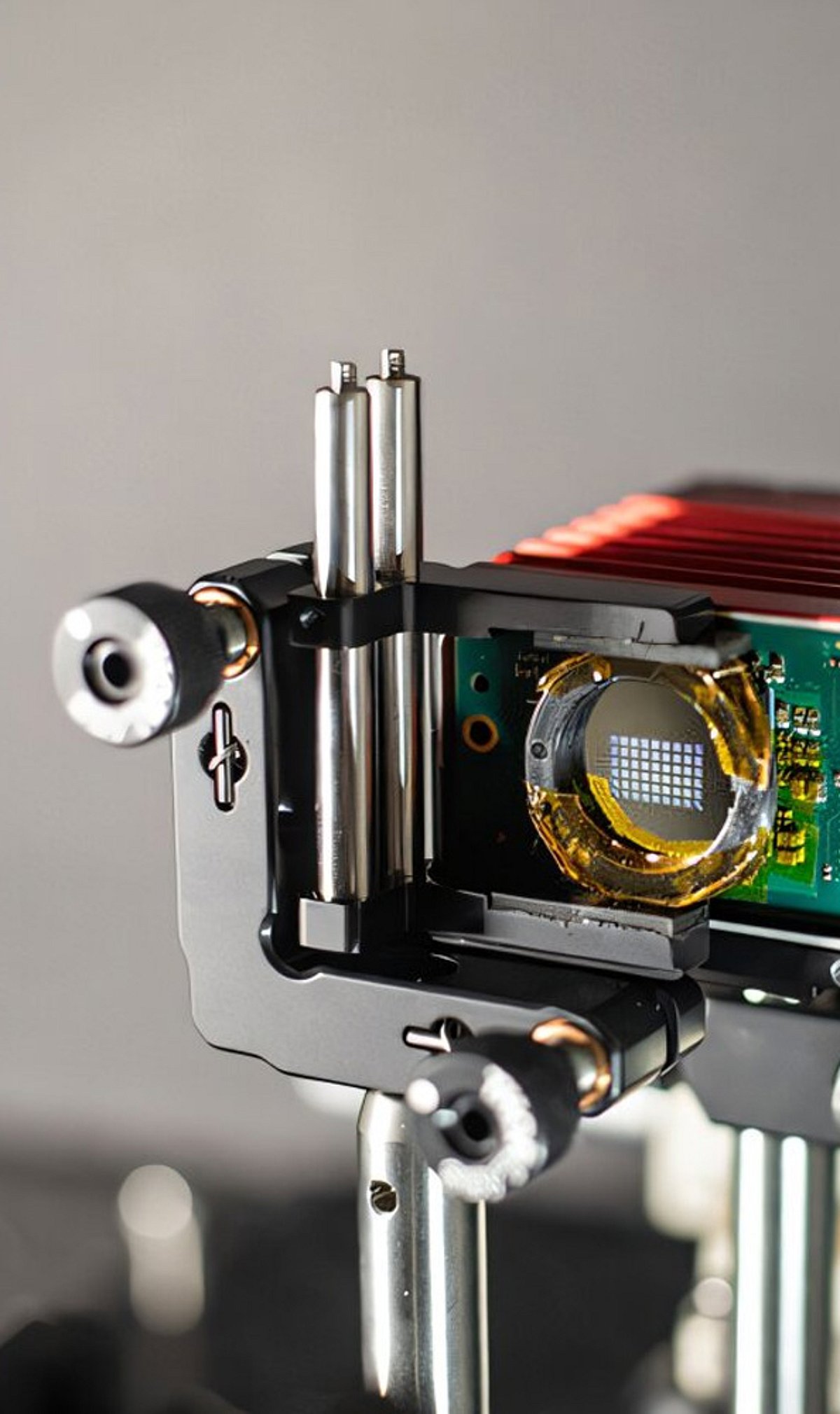
    Optical computing has long been hailed as a potential game-changer for data processing. Now, recent progress in nanophotonics is bringing that vision closer to real-world deployment, with implications for everything from data centers to artificial intelligence.

    What Is Nanophotonics?

    Nanophotonics is the science of controlling light at extraordinarily small scales. By manipulating photons with nanoscale structures, researchers can create compact components that may one day integrate optical processing directly into standard computing systems.

    Why Optical Computing Matters

    Traditional computing relies on electrons to move and process data. Optical computing, by contrast, uses photons. Light can carry massive amounts of information simultaneously, offering dramatically higher bandwidth and faster data movement while reducing the electrical energy required for computation.

    Lower Energy Consumption

    One of the biggest challenges facing modern computing is the energy spent simply moving data. Nanophotonic components could cut that overhead significantly, helping address the efficiency demands of increasingly power-hungry artificial intelligence systems and large-scale computing workloads.

    Accelerating AI Workloads

    Photonic processors could speed up selected AI tasks, especially matrix operations. By performing computations through optical interference and parallel processing, these systems have the potential to outperform conventional electronic processors in training and inference workloads.

    Integrated Photonics Gains Momentum

    Advances in semiconductor fabrication are enabling researchers to pack lasers, waveguides, modulators, and detectors into increasingly compact photonic architectures. This integration is essential for building commercially viable optical processors rather than just laboratory experiments.

    Faster Data Centers

    Optical interconnects could complement or even replace electrical connections inside data centers. That would improve communication speeds, reduce transmission bottlenecks, and lower overall power requirements, making data centers faster and more sustainable.

    Toward Practical Manufacturing

    Progress in fabrication, materials science, packaging, and nanoscale integration is helping transition experimental nanophotonic technologies toward scalable commercial computing applications. These manufacturing breakthroughs will determine how quickly optical computing becomes mainstream.

    Remaining Challenges

    Despite the progress, several hurdles remain. Researchers still struggle with manufacturing complexity, optical losses, memory integration, programmability, thermal management, and the challenge of connecting photonic components with existing electronic systems. Overcoming these obstacles is the next frontier for optical computing.

    As nanophotonics continues to mature, the dream of practical optical computing is becoming increasingly tangible, promising faster, more efficient processing for generations of future systems.

  • Oracle Layoffs in India: 1,500 Mid-to-Senior Staff Affected as Company Pivots to AI

    Oracle Layoffs in India: 1,500 Mid-to-Senior Staff Affected as Company Pivots to AI

    Oracle has initiated another round of layoffs in India, reportedly affecting 1,000 to 1,500 employees, primarily mid-to-senior-level staff in web development and maintenance roles. The cuts began on Monday, September 14, and are part of the company’s broader global restructuring aimed at reallocating resources toward artificial intelligence (AI), cloud services, and data centers.

    According to reports, the layoffs have also impacted senior employees at Oracle Financial Services Software. However, Oracle has not officially confirmed the number of employees affected or provided details on the impact to its Oracle Cloud Infrastructure teams in India.

    This latest round follows multiple workforce reductions earlier in 2026, as Oracle ramps up investment in AI infrastructure. In the fiscal year ending May 2026, the company reduced its global workforce by approximately 21,000 employees. Oracle’s capital expenditure reached $55.7 billion in fiscal 2026, with a significant portion directed toward data center expansion.

    The layoffs signal a strategic shift in Oracle’s priorities, with the company focusing on high-growth areas like cloud computing and AI, while scaling back traditional web development and product engineering teams. As demand for AI and cloud services grows, Oracle is raising additional funds to support its plans.

    Industry observers note that the restructuring reflects a changing skill demand within the company, as it builds more data centers and expands its cloud business. The exact number of affected employees in India remains unverified, and no official statement has been issued by Oracle regarding the layoffs.

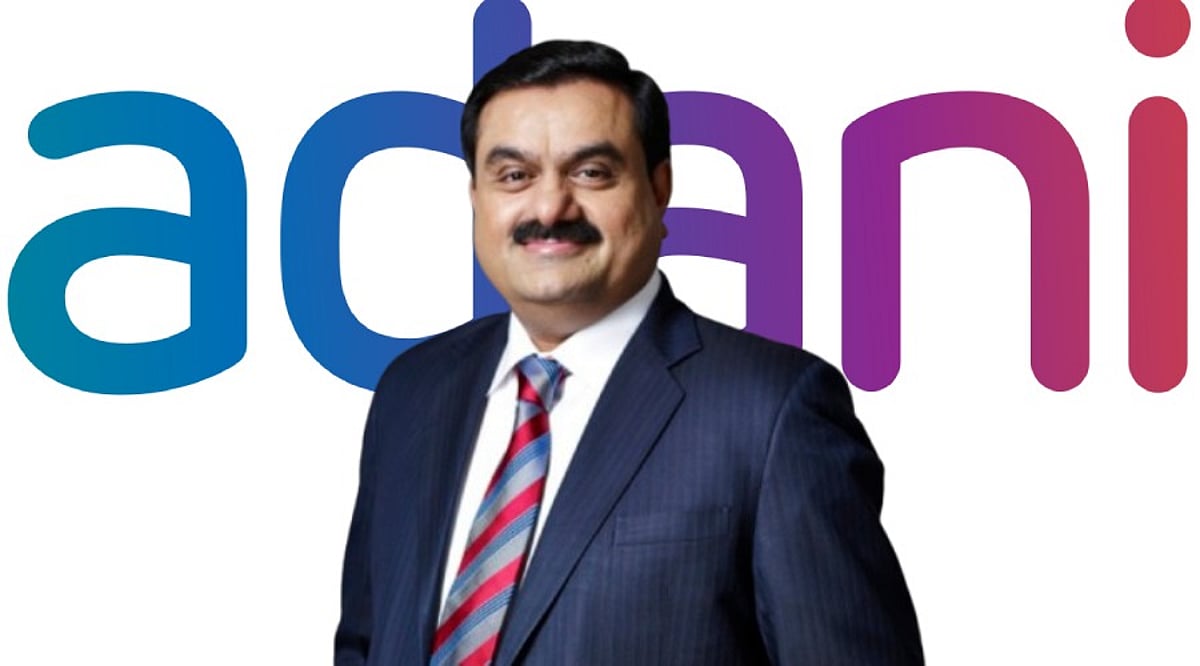
  • Gautam Adani’s Multi-Layer Strategy for Data Centers, AI Hardware, and Digital Infrastructure

    Gautam Adani’s Multi-Layer Strategy for Data Centers, AI Hardware, and Digital Infrastructure

    Gautam Adani is rapidly expanding the Adani Group into data centers and artificial intelligence infrastructure, positioning the conglomerate to capture the surging demand for computing power, energy, and connectivity driven by AI. Through its data center platform AdaniConneX, the group is building hyperscale facilities across India and has secured a landmark partnership with Google to develop a major AI hub in Visakhapatnam. The strategy extends beyond operating data centers to include AI hardware manufacturing via a proposed alliance with Jabil, as well as enhanced connectivity through partnerships like DE-CIX India.

    AdaniConneX: The Core of the Digital Push

    Established in 2021 as a joint venture with EdgeConneX, AdaniConneX combines the group’s infrastructure capabilities with global data center expertise. The platform targets a 2 GW renewable-powered data center footprint by 2030, with over 55 MW already live and a cumulative order book exceeding 560 MW. Its facilities serve enterprises, technology companies, and hyperscale customers, marking a shift from development to large-scale infrastructure delivery.

    Why Data Centers Fit Adani’s Ecosystem

    Data centers are becoming strategic infrastructure assets, especially for AI workloads that require high-density computing, reliable power, and sophisticated cooling. Adani’s existing interests in renewable energy, transmission, logistics, and construction create vertical integration opportunities. AdaniConneX offers Build-to-Suit and Energy-as-a-Solution models, linking digital growth with the group’s energy ambitions.

    Google Partnership Raises the Scale

    In October 2025, AdaniConneX and Google announced a major partnership to develop an AI-focused data center campus in Visakhapatnam. The broader Google AI hub involves approximately USD 15 billion in planned investment across data centers, clean energy, transmission, energy storage, and subsea connectivity. The project is planned for 2026–2030 and aims to support demanding AI workloads while expanding India’s computing capacity.

    Moving into AI Hardware Manufacturing

    In June 2026, Adani Enterprises announced an intended alliance with Jabil to develop an AI and data center infrastructure manufacturing platform. The proposed platform targets gigawatt-scale AI rack manufacturing and could support advanced infrastructure production for global data centers. This move aligns with India’s ambition to become an AI hardware hub and reduce dependence on imported components.

    Connectivity Becomes Another Priority

    AdaniConneX recently partnered with DE-CIX India to establish an interconnection hub at Chennai 1, providing access to cloud connectivity, enterprise networking, and more than 600 networks. Chennai’s subsea cable infrastructure makes it a key digital gateway, enhancing the appeal of data center campuses and highlighting Adani’s focus on connected digital ecosystems.

    What the Strategy Means for Adani’s Future

    Adani’s data center strategy reflects a larger shift in global infrastructure. AI is driving demand for computing, power, connectivity, and specialized hardware, and India is becoming an important destination for digital infrastructure investment. The group has committed to developing 5 GW of green-energy-powered, hyperscale AI-ready data centers by 2035. If execution remains strong, this could transform Adani’s role from infrastructure owner to digital infrastructure integrator, offering a model that global technology companies may find increasingly valuable.

    Frequently Asked Questions

    Who is Gautam Adani?
    Gautam Adani is the Chairman of the Adani Group, a conglomerate operating across infrastructure, energy, logistics, airports, and other sectors. Under his leadership, the group has increasingly focused on data centers and AI infrastructure.
    What is AdaniConneX?
    AdaniConneX is Adani Group’s data center joint venture with EdgeConneX, developing hyperscale and enterprise facilities across India with a focus on renewable-energy integration.
    How much data center capacity does AdaniConneX have?
    AdaniConneX had more than 55 MW of operational capacity by the end of FY26, later securing a 400 MW hyperscale order in Visakhapatnam, bringing cumulative tied-up capacity above 960 MW as of June 2026.
    What is Adani’s partnership with Google?
    AdaniConneX and Google are developing a large AI data center campus in Visakhapatnam as part of Google’s approximately USD 15 billion AI hub investment planned for 2026–2030, including clean energy, storage, transmission, and subsea connectivity.
    Why is Visakhapatnam important?
    Visakhapatnam offers access to power infrastructure, connectivity, and subsea cable networks, making it a strategic location for international digital connections and India’s emerging data center ecosystem.
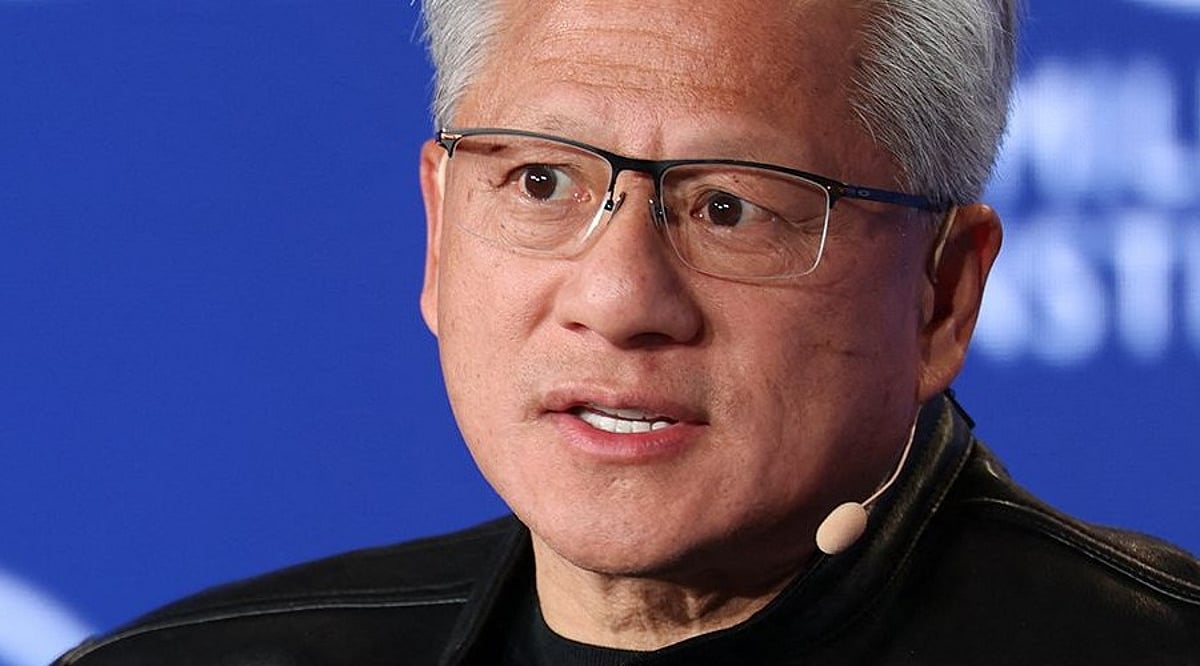
  • How Jensen Huang Built NVIDIA Into the AI Infrastructure Powerhouse

    How Jensen Huang Built NVIDIA Into the AI Infrastructure Powerhouse

    Jensen Huang, NVIDIA’s founder and CEO, saw early that the AI boom would depend not just on chatbots but on massive data centers packed with chips, memory, networks, and power systems. His strategy turned NVIDIA from a graphics chip company into a foundational supplier for the entire AI economy.

    The GPU Became the Start of a Much Bigger System

    Huang’s key bet was that a graphics processor could do far more than graphics. NVIDIA built CUDA, a software platform that lets developers use its GPUs for advanced computing. That choice gave the company a strong base when AI models began demanding huge amounts of compute.

    For the quarter ended July 26, 2026, NVIDIA posted $96.2 billion in revenue, up 106% year-over-year. Data Center revenue reached $89.0 billion, up 117%. Net income hit $59.7 billion, with a gross margin of 75%. NVIDIA expects $108 billion in revenue for the next quarter and about 70% revenue growth for fiscal 2028, though supply limits still affect that outlook.

    Vera Rubin Turns the Rack into One AI Computer

    NVIDIA’s latest move takes the strategy further. The Vera Rubin platform combines Rubin GPUs, Vera CPUs, NVLink 6, ConnectX-9 network chips, BlueField-4 DPUs, Spectrum-6 systems, and Groq 3 LPX. Several racks can act as one large AI computer.

    NVIDIA says Vera Rubin can deliver 10 times the agent throughput of the Grace Blackwell platform at scale. The platform is designed for AI agents that call tools, search data, write code, and take many steps before completing a task. Such workloads need fast chips, fast memory, and fast links between every part of the system.

    A data center can no longer rely on raw GPU speed alone. Memory, storage, network systems, security, and power all affect the final cost of each AI response. NVIDIA now sells an architecture that connects these pieces.

    Power, Capital and Cloud Capacity Join the Strategy

    Huang has also moved closer to the physical side of AI infrastructure. NVIDIA now treats land, power, and data center space as key resources. In August, the company partnered with SB Energy to secure land, power, and shell capacity at the PORTS-Pike Technology Campus in Ohio. OpenAI will serve as the tenant.

    Capital has become another part of the plan. NVIDIA announced partnerships with Apollo, BlackRock, Blackstone, Brookfield, Goldman Sachs, and KKR. These platforms aim to mobilize more than $500 billion in third-party capital for AI infrastructure over time. The capital does not count as NVIDIA revenue; the goal is to give AI companies and cloud providers access to large pools of long-term infrastructure money.

    AWS and NVIDIA plan to deploy 2 million additional NVIDIA GPUs across AWS infrastructure in 2027–2028. The deal also covers Vera CPUs, network systems, open models, data tools, and robotics.

    NVIDIA has also expanded its reach into software. On September 3, the company agreed to acquire Hugging Face for $12.93 billion. The deal would give NVIDIA a deeper role in the open AI software ecosystem and help expand access to models, tools, and AI infrastructure.

    Huang’s Real Advantage is the Full Stack

    The central idea behind Huang’s strategy is not a single GPU. It is control of the system around the GPU. NVIDIA supplies compute, software, network systems, and rack architecture. It now has a role in power access, infrastructure finance, and developer software as well.

    That model helps explain why the company can grow as AI hardware becomes more complex. Every new AI workload creates demand across several layers at once.

    The next test will come from agentic AI, where one request can trigger hundreds or thousands of steps. That workload can create far more demand for compute than a simple chatbot response. NVIDIA has built Vera Rubin around that shift.

    Huang’s long bet has reached a new stage. NVIDIA no longer sells only the engine for AI. It sets the factory around it, from the first line of code to the data center floor.

  • Google Commits $15 Billion to AI Infrastructure in Finland in Landmark European Investment

    Google Commits $15 Billion to AI Infrastructure in Finland in Landmark European Investment

    Google has announced plans to invest at least EUR 13 billion (USD 15.1 billion) in Finland over 2027 and 2028, marking its largest single investment in Europe to date. The massive expenditure will fund new data centers, artificial intelligence infrastructure, and low-carbon energy projects across the Nordic nation.

    The investment will support expansion in the cities of Hamina, Kajaani, Muhos, and Vaala, where Google will build three new data centers in northern Finland. The region’s cool climate reduces energy needed for cooling, while its robust electricity grid and access to low-carbon power make it an ideal location for energy-intensive AI operations.

    Google’s existing Hamina facility, converted from a former paper mill in 2009, will be complemented by the new sites. The company has operated in Finland for over 15 years and sees the country as a strategic hub for its European AI ambitions.

    Economic and Employment Impact

    The initial construction phase is expected to support more than 37,000 jobs nationwide during the two-year period and contribute approximately EUR 3.6 billion annually to Finland’s GDP. Once operational, the facilities will sustain thousands of permanent positions. Google will also allocate EUR 31 million over four years to community initiatives in the four locations, focusing on education, research, and economic development.

    Energy Partnerships: Nuclear and Wind

    To power its expanding operations, Google has signed a 22-year power purchase agreement with Fortum covering up to 50% of the output from the Loviisa nuclear power plant from 2030 to 2049. The deal provides long-term certainty for extending the plant’s operations. Additionally, Google is backing new onshore wind capacity and a 94 MW battery system near Kajaani to help balance Finland’s electricity grid and stabilize prices during peak demand or low wind generation.

    Finland’s abundant low-carbon electricity, cool climate, and relatively uncongested power grid have made it a prime destination for data center investments. The country’s established infrastructure supports Google’s goal of running its AI workloads on clean energy.

    Community and AI Training Programs

    Beyond infrastructure, Google plans to provide AI training for more than 4,400 workers through local partnerships and fund programs for students preparing for data center careers. Environmental projects, including forest and wetland restoration, will also be implemented around its Finnish sites. The existing Hamina data center already uses seawater for cooling and supplies heat recovery to the local district heating network.

    “This is Google’s largest single investment in Europe and a testament to Finland’s leadership in responsibly building AI infrastructure,” the company stated. Finland’s Prime Minister Petteri Orpo added, “Google’s decision is a clear testament to our strengths.”

    The expansion reflects Google’s broader strategy to secure the computing capacity and energy needed to meet surging AI demand while building closer ties with local communities and energy providers.

  • India’s Next Industrial Boom: Six Sectors Powering a New Technology Economy

    India’s Next Industrial Boom: Six Sectors Powering a New Technology Economy

    India’s Technology Economy Takes Shape

    India is undergoing a major transformation in how it builds and uses technology. According to a recent Jefferies report, six key industries are driving this shift: semiconductors, electronics, space, data centers, solar equipment, and aerospace.

    The numbers underline the momentum. India’s space industry has grown fivefold and is projected to reach USD 40-45 billion by 2030. Semiconductor investments have hit around USD 20 billion, with an additional USD 13 billion incentive plan in the works. Data centers have also seen explosive growth, expanding fivefold over the past five years and expected to hit 10 gigawatts in the next half-decade.

    Solar power remains one of India’s strongest sectors. The country is the world’s second-largest photovoltaic manufacturer, and by 2030, it aims to cover 90% of the entire solar value chain.

    Dipal Dutta, CEO of RedoQ, encapsulated the shift: “By expanding deep-tech capabilities across semiconductors, space systems, and next-generation data centers, the nation isn’t just participating in the global supply chain, it is actively rewiring it.”

    From IT Services to Building Technology

    India’s traditional technology story was centered on IT services, software, and outsourcing. Companies built software for global clients and handled tech work for businesses worldwide. The new model is broader and more ambitious. India is now striving to manufacture more of the technology it uses—chip plants underpin a local semiconductor industry, electronics factories move beyond assembly, data centers support cloud and AI services, and space and aerospace firms push deeper into global markets.

    The fundamental change is clear: India is transitioning from being a provider of technology services to becoming a builder of the hardware and systems that power them. If this growth trajectory continues, these six sectors could elevate India’s role in the global technology market significantly.

  • U.S. Universities Face Land Pressure as AI Data Center Demand Surges

    U.S. Universities Face Land Pressure as AI Data Center Demand Surges

    The rapid expansion of artificial intelligence is creating an unexpected challenge for American universities: soaring demand for large properties that can support energy-intensive data centers. Institutions that once reserved sprawling campuses for classrooms and research labs now find themselves competing with tech giants for the same real estate.

    George Washington University’s recent sale of its Virginia Science and Technology Campus to Amazon Data Services for $427 million exemplifies this trend. The 120-acre property in Ashburn, Virginia, lies in Loudoun County, the heart of Northern Virginia’s “Data Center Alley.” The university announced the sale in February without initially naming the buyer or disclosing the price, citing confidentiality. Amazon was later confirmed as the purchaser.

    GW stated the transaction would strengthen its long-term finances. It can continue using the campus for up to five years while relocating programs and offices. A substantial portion of the proceeds will fund a new endowment, and eligible faculty will receive one-time payments: $2,500 for full-time benefits-eligible staff and $1,250 for part-time faculty.

    Former GW professor Ellen Scully-Russ, who taught at the Virginia campus from 2009, described the property as struggling to become a central part of the university’s strategy. She noted a gradual reduction in resources, including unfilled faculty positions and eliminated teaching assistant roles due to budget constraints. Faculty and students were not informed about sale discussions in advance. “There was no transparency,” she told Fortune. She also questioned the long-term viability of large AI infrastructure projects, calling the trend potentially “a short-term bubble.”

    The University of Michigan is taking a different approach with a planned $1.25 billion high-performance computing and research center in Ypsilanti Township. Developed in partnership with Los Alamos National Laboratory, the facility will support research in medicine, materials science, clean energy, engineering, and national security. It is expected to require about 50 megawatts of power initially, eventually reaching 100 megawatts. However, local residents and officials oppose the project, and the Ypsilanti Township Board of Trustees unanimously passed a resolution against it.

    As AI continues to drive demand for data center infrastructure, universities must navigate the tension between preserving academic land and capitalizing on lucrative real estate opportunities. The outcome will shape the future of both higher education and the AI industry.