Tag: digital payments

  • Top 10 Nations Driving the Global Shift to a Cashless Economy

    Top 10 Nations Driving the Global Shift to a Cashless Economy

    As digital payments reshape global commerce, several countries are leading the transition away from physical cash. From mobile wallets to contactless infrastructure, these ten nations exemplify the future of financial transactions.

    Sweden: Leads cashless adoption through widespread digital payments, mobile banking, contactless transactions, and minimal dependence on physical currency across everyday commerce.

    China: Dominates mobile payments with super apps, QR-code transactions, fintech innovation, and extensive digital wallet usage across urban and rural markets.

    Singapore: Promotes seamless digital payments through government initiatives, contactless infrastructure, fintech growth, and strong consumer adoption across multiple payment platforms.

    South Korea: Combines advanced banking systems, digital wallets, government support, and extensive contactless payment acceptance throughout retail, transport, and online commerce.

    Norway: Maintains one of the world’s lowest cash usage rates with strong banking infrastructure, mobile payments, and secure digital financial services.

    Finland: Encourages digital banking, contactless cards, mobile wallets, and government-backed digital transformation, reducing dependence on cash across everyday transactions significantly.

    India: Experiences rapid digital payment growth through UPI, smartphone adoption, government initiatives, and expanding fintech services reaching millions of consumers nationwide.

    Netherlands: Supports widespread electronic payments, contactless banking, mobile apps, and digital financial services, making cash transactions increasingly uncommon across the country.

    Denmark: Advances cashless living through digital banking, mobile payment solutions, strong internet infrastructure, and high consumer trust in electronic financial transactions.

  • Juspay Ownership: Founders, Investors, and the Journey to a $1.2 Billion Unicorn

    Juspay Ownership: Founders, Investors, and the Journey to a $1.2 Billion Unicorn

    Juspay has grown into one of India’s largest payment companies, processing over 300 million transactions daily and handling more than $1 trillion in payments annually. The company’s success story is driven by its founders, investors, and the team that built a global payment infrastructure from the ground up.

    Who is Vimal Kumar? The Founder’s Vision

    Vimal Kumar, a native of Trichy in Tamil Nadu, conceived the idea for Juspay in 2012. He earned his education at the College of Engineering Guindy in Chennai and began his career at Amazon Web Services, where he learned to build scalable systems. Later, as Chief Information Officer at BankBazaar, he gained deep insights into the intersection of technology and finance. Kumar identified a critical flaw in India’s payment ecosystem: transactions were slow, frequently failed, and most users lacked trust in digital payments. His vision was to create a simple, secure, and reliable way for Indians to pay online, leading him to leave his job and launch Juspay.

    The Birth of Juspay: Solving Real Problems

    Juspay officially launched in 2012, at a time when India’s digital infrastructure was still nascent. The company built a payment gateway that simplified online transactions, enabling one-click payments instead of tedious form filling. Kumar’s team prioritized speed, security, and reliability, designing the system to handle millions of transactions without downtime. Their solutions soon powered payments for food delivery apps, movie booking sites, e-commerce platforms, and more. Within a few years, Juspay became the backbone of payments for India’s largest companies, including Ola, Uber, Amazon, Swiggy, and Flipkart. The company also contributed to building BHIM, the government-backed payment app, underscoring its commitment to India’s digital future.

    The Leadership Team Behind Juspay

    Juspay is led by a strong team: Vimal Kumar serves as CEO; Sheetal Lalwani is co-founder and COO; and Ramanathan RV and Magizhan Selvan hold key roles. Each leader brings unique expertise, and together they have driven the company’s growth and technological direction. Lalwani stated, “Our focus has been on addressing the core complexities of global payments through first-principles engineering and design,” highlighting the team’s approach of building original solutions rather than copying existing models.

    Investors Backing Juspay’s Growth

    In January 2026, WestBridge Capital invested $50 million in Juspay, valuing the company at $1.2 billion. This funding round included both fresh capital and secondary share sales, allowing employees and early investors to cash out. The investment reflects strong confidence in Juspay’s technology and business model. Deepak Ramineedi, a partner at WestBridge Capital, praised Juspay’s “ability to build robust, future-ready technology for demanding payment ecosystems.” Prior rounds from top venture capital firms have also supported the company’s expansion.

    Global Expansion: From India to the World

    Juspay’s reach now extends across Asia-Pacific, the Middle East, Latin America, Europe, the UK, and North America. The company’s technology is used by banks, merchants, and payment networks globally, processing billions of transactions daily. The recent funding will fuel further international expansion and product development. Additionally, Vimal Kumar has invested in other startups like Gullak and Bytebeam, aiming to foster a broader innovation ecosystem beyond Juspay.

    Final Thoughts

    Juspay’s ownership story is not just about shares or capital—it’s about people who saw a problem and solved it. From a small startup handling zero transactions to a global giant processing over $1 trillion annually, the company has transformed digital payments in India and beyond. As it continues to invest in AI and new payment methods, Juspay is poised to play an even larger role in the future of money.

    FAQs

    1. Who owns Juspay?

    Juspay is a privately held fintech company founded by Vimal Kumar, Sheetal Lalwani, Ramanathan RV, and Magizhan Selvan. Ownership is shared among founders, employees, and investors including WestBridge Capital.

    2. Who is the founder and CEO of Juspay?

    Vimal Kumar is the founder and CEO of Juspay, having started the company in 2012.

    3. Which companies use Juspay’s payment platform?

    Juspay powers payments for major companies like Amazon, Flipkart, Swiggy, Ola, and Uber, along with numerous banks and merchants.

    4. How much is Juspay worth?

    Following the January 2026 funding round led by WestBridge Capital, Juspay is valued at approximately $1.2 billion.

    5. What does Juspay do?

    Juspay provides payment infrastructure and technology solutions for processing online payments securely and efficiently, including payment gateways, UPI, one-click checkout, and tokenization.

  • Samsung Wallet to Integrate Native Stablecoin Support, Galaxy Card Expands Financial Services

    Samsung Wallet to Integrate Native Stablecoin Support, Galaxy Card Expands Financial Services

    Samsung Electronics has announced plans to integrate native stablecoin support into Samsung Wallet, a move that could give millions of Galaxy device owners direct access to dollar-pegged digital currencies. The initiative was revealed during the Galaxy Unpacked 2026 event on July 22, alongside the introduction of the Samsung Galaxy Card.

    Samsung Wallet Evolves into a Financial Hub

    Samsung describes its Wallet as a unified financial hub that combines payments, identity verification, digital assets, and Galaxy services. According to South Korean publication Digital Asset, the stablecoin plan aims to extend the wallet beyond everyday payments and savings, allowing users to transfer digital assets without needing a separate cryptocurrency app.

    The company has not yet specified which stablecoin will be supported, nor has it announced a launch date or issuer. Regional availability also remains unclear.

    Galaxy Card Expands Samsung’s Finance Role

    The Samsung Galaxy Card, accessible through Samsung Wallet, will be issued by Barclays in the United States and powered by Visa’s payment network. The product ties payments and rewards into Samsung’s device ecosystem, with security provided by Samsung Knox through end-to-end encryption.

    Samsung Wallet has grown steadily since merging Samsung Pay and Samsung Pass in 2022. It now stores payment cards, digital IDs, boarding passes, and digital keys, and can display cryptocurrency holdings. Native stablecoin support would bring the service closer to enabling full digital currency transactions within the platform.

    Stablecoins Gain a Major Consumer Gateway

    Samsung’s plan comes as stablecoins become more integrated into mainstream payments. A Fireblocks survey of about 300 banks and payment providers found that nearly half viewed real-time payments as the primary benefit of stablecoins, while 85% said improved regulation now encourages adoption.

    Visa and blockchain data firm Allium have also launched a website tracking fiat-backed stablecoins like USDC and USDT across major blockchain networks. Until now, the market has lacked a consumer gateway tied to a global smartphone manufacturer. Samsung Wallet could fill that role.

    Visa executive Kirk Stuart noted that the Galaxy Card combines Samsung’s technology, Barclays’ co-brand capabilities, and Visa’s network, offering rewards, payment security, and broad merchant acceptance.

    Samsung’s stablecoin initiative, together with the Galaxy Card, signals a broader push into payments and financial services. Users should watch for further details on supported stablecoins, launch timelines, and regional availability.

  • 8 Indian Fintechs Including BharatPe and Paytm Make CNBC-Statista Global Top 2026 List

    8 Indian Fintechs Including BharatPe and Paytm Make CNBC-Statista Global Top 2026 List

    Eight Indian fintech companies have been recognized in the CNBC-Statista World’s Top Fintech Companies 2026 list, underscoring the country’s expanding influence in the global financial technology sector. The featured firms are BharatPe, Paytm, PhonePe, Razorpay, Cashfree, Freecharge, MobiKwik, and Skydo, all placed in the payments category, which remains the largest segment in this year’s rankings.

    Compiled annually by CNBC and market research firm Statista, the list identifies leading fintech companies across multiple business segments worldwide. Payments accounted for 115 companies, or 23% of the 500 firms featured, reaffirming its dominance. The report notes that payment companies are now expanding beyond digital checkouts to focus on real-time domestic and cross-border money movement, reflecting evolving customer and business needs.

    Wealth technology was the second-largest category with 75 companies (15% of the list), followed by enterprise fintech and alternative financing, each comprising 12%. This year’s rankings introduced a separate regtech category, which along with digital assets remained one of the smallest segments, signaling increased focus on regulatory compliance as artificial intelligence becomes more prevalent in financial services.

    Statista evaluated approximately 3,500 fintech companies using over 25,000 data points, assessing indicators such as revenue growth and employee headcount. The final list features companies headquartered in more than 50 countries and territories, listed alphabetically within their categories rather than assigned numerical positions.

    According to McKinsey, the global fintech industry generated $650 billion in revenue in 2025, a 21% year-on-year increase, compared to 6% growth for the broader financial services industry. The report also noted 31 fintech IPOs in 2025, with the combined market capitalization of listed fintech companies reaching a record $850 billion.

    The inclusion of eight Indian companies highlights the country’s growing role in global fintech. As digital payments continue to expand and companies diversify their offerings, Indian firms are strengthening their position alongside established global players.

  • Fastest Payment Apps for Instant Transfers: 2026 Ranking and Comparison

    Fastest Payment Apps for Instant Transfers: 2026 Ranking and Comparison

    When it comes to instant money transfers, speed, fees, and the underlying payment network matter more than brand familiarity. This ranking evaluates the top 10 payment apps based on real transfer times, transparent pricing, and the infrastructure that powers each transaction. Whether you’re splitting a bill domestically or sending remittances abroad, the right app can save you time and money.

    How This Ranking Works

    We compared each app on four criteria: typical delivery time for an instant transfer, the fee charged for that speed, the payment rail used (such as RTP, FedNow, or card networks), and payout flexibility (bank, card, cash, mobile wallet). The order balances speed with reliability and total cost, so a transparently priced app like Wise can rank above a faster but pricier option.

    Why Some Apps Transfer Money Instantly

    Real speed comes from the rails behind the app. In the US, RTP (since 2017) and FedNow (since 2023) enable near-instant settlement. Zelle uses these networks, which is why it settles in seconds at no cost. Venmo, PayPal, and Cash App rely on card networks for instant withdrawals, generating their fees. International apps face an extra hurdle: money leaves instantly but must land on a local rail like India’s UPI or the Philippines’ InstaPay, which sets the final delivery time.

    Top 10 Fastest Payment Apps Compared

    1. Zelle

    Zelle offers instant bank-to-bank transfers at no cost by settling directly over RTP and FedNow. Money moves from one bank account to another, not through a wallet. Payments typically land in seconds and cannot be reversed. Best for trusted domestic transfers.

    2. Wise

    Wise stands out for pricing transparency. It uses the real mid-market exchange rate and routes payments through local banks in each country. Ideal for larger international transfers where exchange-rate margins often outweigh stated fees.

    3. PayPal

    PayPal is versatile, supporting online purchases and personal transfers. Instant withdrawals go to eligible cards and bank accounts, with buyer protection on qualifying purchases. Costs increase for speed or cross-border transactions.

    4. Venmo

    Venmo excels at everyday peer-to-peer payments like splitting bills. Instant transfers carry a fee; standard transfers are free but slower. Note that personal payments lack purchase protection.

    5. Cash App

    Cash App provides quick access to funds with instant withdrawals to a linked debit card. Fees vary by amount. Standard transfers are free but take longer.

    6. Remitly

    Remitly focuses on cross-border transfers. Express delivery is fast; Economy costs less. Recipients can receive via bank deposit, cash pickup, or mobile wallet, depending on the country.

    7. Xoom

    Xoom, a PayPal service, covers many countries. Money can be sent to bank accounts, cash pickup locations, or mobile wallets. Pricing depends on payment method and destination.

    8. Western Union

    Western Union has the largest agent network, reaching hundreds of countries. Useful when the recipient lacks banking access. Speed and price vary by destination.

    9. TapTap Send

    TapTap Send focuses on corridors into Africa and South Asia with fast transfers. Cost is typically embedded in the exchange rate rather than a visible fee.

    10. Revolut

    Revolut combines instant transfers between users, currency exchange, and international payments in one multi-currency app. Best for frequent cross-border senders.

    Security and Buyer Protection Comparison

    Zelle and most bank-to-bank transfers finalize instantly with no chargeback path, so use only with trusted parties. PayPal and Venmo protect goods-and-services payments but not personal ones. International apps add identity checks on larger transfers, which can delay an otherwise instant transaction.

    Things to Know Before Choosing

    • Instant transfers almost always cost more than standard ones.
    • Some banks have not yet upgraded to RTP or FedNow.
    • Transfer limits depend on account verification level.
    • On international transfers, the exchange-rate margin often exceeds the stated fee.

    How to Choose the Best App for Instant Transfers

    For domestic friend payments, Zelle wins on cost and speed. For international remittances, Wise offers the best pricing clarity, while Remitly provides delivery flexibility. For recipients without a bank account, Western Union and Xoom are practical picks. The right app matches the corridor, not the headline.

    FAQs

    1. Which payment app offers the fastest instant transfers?

    It depends on the route. Zelle is near-instant for domestic bank transfers, while Remitly and Wise are quick for international transfers.

    2. Are instant money transfers always free?

    No. Many apps charge a fee for instant withdrawals; standard transfers are usually free.

    3. Why do some instant transfers take longer?

    Speed can be affected by bank processing, payment networks, security checks, and whether the recipient bank supports instant settlement.

    4. Which app is best for international instant transfers?

    Wise, Remitly, Xoom, and Western Union are popular for fast cross-border deliveries with broad coverage.

    5. What should I consider before choosing a payment app?

    Compare transfer speed, fees, supported countries, payout methods, security features, and transfer limits. The best app matches your destination, budget, and urgency.

  • 10 African Fintech Startups Shaping Digital Finance in 2026

    10 African Fintech Startups Shaping Digital Finance in 2026

    Africa’s fintech sector continues to gain momentum, with startups across the continent raising approximately $3.4 billion in disclosed funding during 2025—a 33% increase from the previous year. The positive trend has extended into 2026, with fintechs securing $187.1 million in the first quarter across 21 deals. These figures underscore sustained investor interest and growing demand for digital financial tools that help people send money, save, borrow, and run businesses more efficiently.

    Here are the top 10 African fintech startups leading innovation in payments, lending, merchant services, and financial inclusion.

    1. OPay

    OPay has become a major payments platform in Nigeria, offering transfer features, merchant tools, and other financial services within a single app. It serves individuals and small to medium-sized enterprises (SMEs) seeking quick and easy payment solutions, making it one of the most recognizable fintech companies in the region.

    2. Moniepoint

    Moniepoint enables small businesses to make payments and access banking services easily. By focusing on merchants, it has emerged as a top financial platform for SMEs in Nigeria, addressing the real payment challenges faced by everyday business owners.

    3. Flutterwave

    Flutterwave provides business-to-business and business-to-consumer payment services across Africa and beyond. Its platform facilitates checkout, payouts, and cross-border payments, making it a go-to solution for businesses that need seamless international transactions.

    4. Yoco

    Yoco serves small businesses in South Africa with card readers and point-of-sale tools. It simplifies card payments for smaller merchants, offering easy setup and clear control for business owners who want to accept digital payments without complexity.

    5. Paymob

    Paymob is a digital payment platform used by retailers in Egypt and neighboring regions. It helps businesses accept various payment methods and process transactions easily, playing a vital role in the region’s digital economy.

    6. MNT-Halan

    MNT-Halan combines lending, payments, and consumer finance on a single platform. It serves customers who need flexible credit and easy access to everyday financial tools, securing a strong position in North Africa’s growing fintech market.

    7. PiggyVest

    PiggyVest is an app that enables people to save and invest. Its strength lies in its simplicity and ease of use, making saving and investing accessible to a broad audience. It has gained popularity for its stress-free functionality.

    8. Tala

    Tala provides short-term credit through data-driven lending, reaching users often excluded from traditional banking. Its model is crucial in markets where access to credit remains limited, offering quick financial support when needed.

    9. Interswitch

    Interswitch remains a key part of Africa’s payments infrastructure, especially in Nigeria. It supports card processing, transaction systems, and enterprise payment services used by many businesses, earning strong trust and reach through its long market presence.

    10. PalmPay

    PalmPay has grown quickly as a mobile payments platform built around convenience. It excels in consumer payments, merchant acceptance, and customer incentives, with a simple interface that appeals to a broad user base.

    Future Outlook

    The African fintech market is advancing through clear use cases rather than a single broad direction. Nigerian platforms like OPay, Moniepoint, Flutterwave, and PalmPay are building payment rails for consumers, merchants, and small businesses. In South Africa, Yoco helps smaller retailers accept card payments more easily. In Egypt, Paymob and MNT-Halan are expanding digital payments and credit access. In Kenya, Tala continues to serve users who need short-term loans. The companies that will lead are those solving market-specific problems with products people use every day.

    FAQs

    Why is Africa’s fintech sector growing so rapidly in 2026?
    Rising smartphone adoption, expanding internet access, growing demand for digital payments, and the need for financial services reaching underserved individuals and small businesses are driving growth.

    Which African countries have the strongest fintech ecosystems?
    Nigeria, South Africa, Egypt, and Kenya remain the continent’s leading fintech hubs, supported by active startup ecosystems, strong investor interest, and expanding digital infrastructure.

    What services do African fintech startups commonly offer?
    Most provide digital payments, money transfers, merchant solutions, lending, savings, investment, mobile wallets, and financial management tools for consumers, entrepreneurs, and small businesses.

    Why are investors interested in African fintech startups?
    Investors see strong growth opportunities because these companies address real financial challenges, expand financial inclusion, serve large underserved markets, and record steady user adoption and funding momentum.

    Which African fintech startups are worth watching in 2026?
    Companies including OPay, Moniepoint, Flutterwave, Yoco, Paymob, MNT-Halan, PiggyVest, Tala, Interswitch, and PalmPay are expected to remain among Africa’s most influential fintech innovators in 2026.

  • Top 9 Long-Term Growth Stocks to Buy in July 2026

    Top 9 Long-Term Growth Stocks to Buy in July 2026

    Investors seeking stable, long-term growth should consider these nine stocks that are well-positioned for sustained performance across technology, healthcare, and financial services. Each company benefits from strong fundamentals, recurring revenue streams, and exposure to secular trends such as AI, cloud computing, digital payments, and advanced manufacturing.

    1. NVIDIA

    NVIDIA maintains its leadership in AI hardware innovation through advanced GPUs that power data centers, autonomous vehicles, enterprise computing, and AI applications worldwide.

    2. Microsoft

    Microsoft continues to expand its cloud computing and AI software offerings while maintaining robust recurring revenues from enterprise services, supporting long-term shareholder value and consistent growth.

    3. Amazon

    Amazon benefits from e-commerce dominance, AWS cloud leadership, and growing investments in AI, driving sustained revenue and profitability across global markets.

    4. Alphabet

    Alphabet strengthens its digital advertising, cloud computing, and AI platforms while investing aggressively in future technologies, supporting diversified long-term business expansion globally.

    5. Meta Platforms

    Meta Platforms continues to grow advertising revenue while advancing AI infrastructure, smart devices, and immersive technologies for future digital experiences.

    6. Taiwan Semiconductor Manufacturing Company (TSMC)

    TSMC manufactures advanced semiconductor chips that power smartphones, AI servers, automotive technologies, and next-generation computing platforms worldwide.

    7. Eli Lilly

    Eli Lilly strengthens its pharmaceutical leadership through innovative treatments for diabetes, obesity, and neuroscience, supported by expanding global healthcare demand and robust research pipelines.

    8. Visa

    Visa benefits from increasing digital payment adoption and cross-border transactions, along with resilient financial services that support dependable long-term earnings growth across international markets.

    9. Broadcom

    Broadcom delivers semiconductor and infrastructure software solutions while benefiting from accelerating AI networking demand and enterprise digital transformation investments globally.

  • Behind Every UPI App: The Sponsor Banks Ensuring Fast and Reliable Payments

    Behind Every UPI App: The Sponsor Banks Ensuring Fast and Reliable Payments

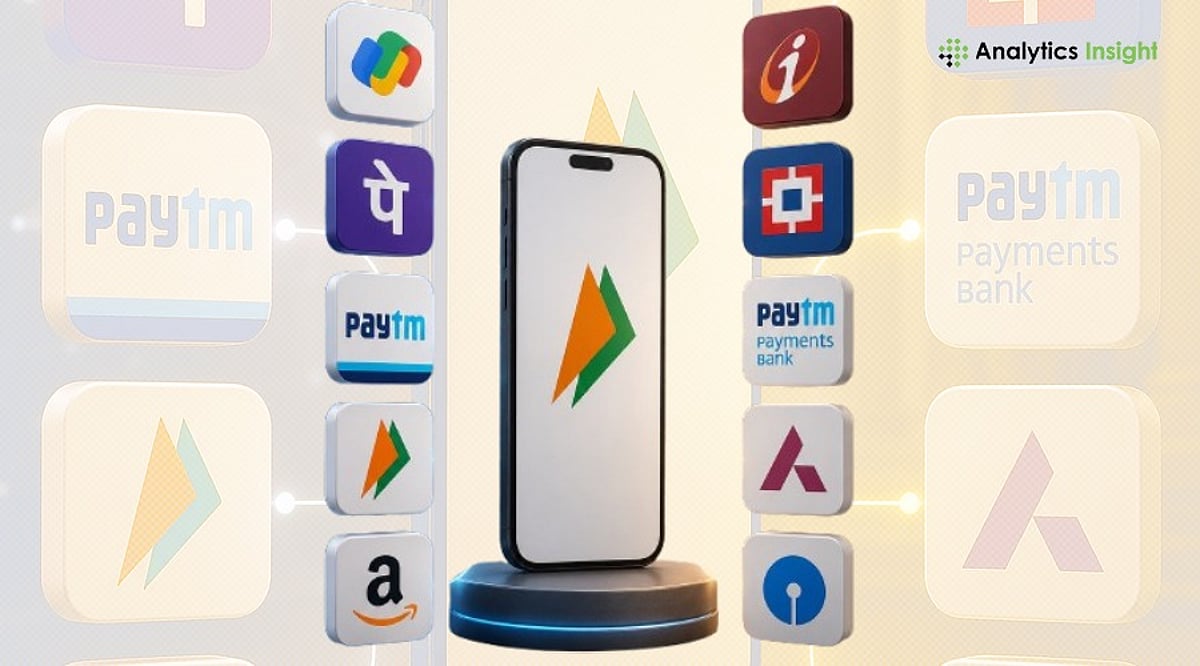
    India’s digital payment revolution runs on a simple interface that millions open daily, yet the banking infrastructure behind it remains largely invisible. Every transaction through apps like PhonePe, Google Pay, and Paytm passes through a sponsor bank before reaching the National Payments Corporation of India (NPCI) settlement system. This partnership defines transaction speed, dispute resolution, and overall reliability.

    What Is a Sponsor Bank?

    UPI apps—technically third-party application providers—do not hold banking licenses. They rely on regulated banks called Payment Service Provider (PSP) banks or sponsor banks to authenticate transactions, connect to NPCI’s core network, and settle funds. Without such a tie-up, no UPI app can process a single payment.

    The importance of sponsor banks became starkly visible in 2020 when the Reserve Bank of India placed a moratorium on Yes Bank, which then supported about 20 of the 32 third-party UPI apps. The disruption forced many apps to adopt multi-bank partnerships—a practice now standard across the industry.

    Which Banks Sponsor India’s Top UPI Apps?

    UPI App Sponsor Banks
    PhonePe Yes Bank, ICICI Bank, Axis Bank
    Google Pay Axis Bank, ICICI Bank, HDFC Bank, State Bank of India
    Paytm Axis Bank, HDFC Bank, SBI, Yes Bank

    PhonePe originally launched with Yes Bank as its sole partner in 2016. After the 2020 crisis, it added ICICI Bank and Axis Bank, distributing transaction load across three institutions. Google Pay entered with Axis Bank and gradually expanded to include ICICI Bank, HDFC Bank, and SBI, ensuring high success rates even during peak volumes.

    Paytm underwent the most significant restructuring. After the RBI restricted Paytm Payments Bank from onboarding new customers in early 2024, NPCI approved a multi-bank model. Axis Bank, HDFC Bank, SBI, and Yes Bank now jointly handle its UPI traffic, with user handles like @ptaxis and @ptsbi.

    How Sponsor Banks Work in the UPI Ecosystem

    A sponsor bank performs several critical functions that a UPI app cannot legally do alone:

    • Issuing and managing the Virtual Payment Address (VPA) handle
    • Authenticating the user’s linked bank account via NPCI’s mapper system
    • Routing payment requests to the beneficiary bank in real time
    • Settling funds between payer and payee banks
    • Handling regulatory compliance and dispute escalation

    When a payment fails, the sponsor bank is the first point of technical accountability, though the app remains the customer’s primary support contact. Apps with a single sponsor bank face greater risk during outages; those with multiple partners recover faster.

    Why Multiple Sponsor Banks Matter

    NPCI enforces a volume cap that restricts any single third-party app to 30% of total UPI transaction volume. This rule, expected to take fuller effect by year’s end, pushes apps and sponsor banks toward diversification. Benefits include:

    • For users: Clearer path for dispute escalation
    • For businesses: Better reliability when evaluating payment integrations
    • For regulators: Reduced systemic risk if one sponsor bank faces trouble
    • For developers: Ability to plan redundancy before launching new UPI products

    Final Thoughts

    The sponsor bank model forms the structural foundation of every UPI transaction in India. From PhonePe’s early reliance on Yes Bank to Paytm’s pivot to a four-bank arrangement, the pattern is clear: diversification protects both the app and the user from single-point failures. As UPI expands globally and transaction volumes continue climbing, strong banking partnerships will become even more critical to maintaining the seamless experience users expect.

    Frequently Asked Questions

    What is a sponsor bank in the UPI ecosystem?

    A sponsor bank (PSP bank) connects a third-party UPI app to NPCI’s network and handles authentication, routing, and settlement for every transaction.

    Which bank sponsors PhonePe?

    PhonePe operates through three sponsor banks: Yes Bank, Axis Bank, and ICICI Bank—a structure adopted after the 2020 Yes Bank moratorium.

    Why did Paytm switch to multiple sponsor banks?

    After regulatory restrictions on Paytm Payments Bank in 2024, NPCI approved a multi-bank model using Axis Bank, HDFC Bank, SBI, and Yes Bank to keep its UPI services uninterrupted.

    Does BHIM need a sponsor bank?

    BHIM operates as a direct extension of NPCI and does not require a separate sponsor bank, unlike third-party apps such as PhonePe and Google Pay.

    Why do UPI apps prefer multiple sponsor banks?

    Multiple sponsor banks reduce dependency risk, distribute transaction load, and help apps maintain uptime even if one partner bank faces technical or regulatory disruption.

  • X Money Rolls Out Fiat Payments for Premium+ Users Through Cross River Bank

    X Money Rolls Out Fiat Payments for Premium+ Users Through Cross River Bank

    X has begun rolling out X Money to Premium+ subscribers, opening access to fiat payments through Cross River Bank’s banking infrastructure. The launch advances Elon Musk’s plan to build an all-in-one platform for communication, commerce, and financial services. For now, the service supports traditional currency and has no confirmed cryptocurrency integration.

    X Money Starts With Regulated Banking Rails

    Eligible Premium+ users can send and receive fiat payments within X. Cross River Bank manages transaction processing and customer accounts, providing the regulated foundation for the new service. The initial setup uses conventional banking channels rather than blockchain networks. It also keeps the first phase focused on familiar payment methods.

    X has not announced support for cryptocurrency transfers, stablecoin payments, tokenized assets, or blockchain settlement. Instead, X Money allows the platform to add financial functions through an established banking partner. The first rollout therefore centers on traditional payments while leaving future digital asset features unconfirmed. The service initially remains available only to eligible Premium+ subscribers.

    The launch represents one of X’s largest product expansions since Musk acquired the platform. He has repeatedly outlined plans for an ‘everything app’ combining social networking, messaging, payments, banking, and commerce. X Money now brings part of that strategy into operation. The service adds financial activity to the platform’s existing communication and commercial ambitions.

    Cross River Link Fuels Cryptocurrency Speculation

    Cross River Bank is a United States financial institution with experience supporting fintech and blockchain companies. Its role in X Money has therefore renewed speculation about possible cryptocurrency features. Much of that discussion has focused on Ripple and XRP. The bank’s digital asset connections have drawn greater market attention to the rollout.

    Still, the bank’s industry relationships do not prove that Ripple technology powers the service. X, Cross River Bank, and Ripple have made no announcement linking X Money with XRP. They have also provided no evidence of blockchain-based payment processing within the platform. The available information supports only a fiat-based service.

    The current design depends on regulated banking infrastructure. Customers use traditional currency through Cross River Bank’s systems, not a confirmed digital asset network. Claims about active XRP integration therefore remain unsupported by the information released about the rollout. The service can expand its financial functions without introducing cryptocurrency settlement.

    Future Digital Asset Features Remain Unconfirmed

    X has left open the possibility of adding more financial services as Musk develops a broader financial ecosystem. Yet the platform has announced no plan, timetable, or technical framework for cryptocurrency support. Its present structure shows how regulated banking partners can help technology companies enter payments first. That model connects consumer platforms with established financial channels.

    Could X Money eventually bring digital assets to a major consumer platform? Future additions could include stablecoins, tokenized assets, or cryptocurrency transfers, but X has confirmed none of those functions. Any such expansion would require a separate announcement and clear operating details. Until then, speculation cannot replace official confirmation.

    Should X later add cryptocurrency payments, the platform could bring digital assets directly to a large mainstream audience. For now, X Money remains a fiat payment service for eligible Premium+ users. Investors and users will watch X, Cross River Bank, and Ripple for verified updates. Future announcements will determine whether the service moves beyond conventional payments.

    What’s Next?

    X Money marks a major step in X’s expansion into financial services by enabling fiat payments for Premium+ users through Cross River Bank. While cryptocurrency and XRP integration remain unconfirmed, future announcements could reveal whether the platform plans to introduce digital asset support.

  • How Fintech Is Powering India’s Startup Boom in 2026: UPI, Embedded Finance, and Merchant Lending Lead the Charge

    How Fintech Is Powering India’s Startup Boom in 2026: UPI, Embedded Finance, and Merchant Lending Lead the Charge

    India’s fintech story in 2026 is one of divergence: venture funding has normalized, but the real-economy footprint of fintech continues to expand. Despite a slowdown in capital inflows, usage metrics show no signs of easing. UPI processed 23.2 billion transactions worth ₹29.90 lakh crore in May 2026 alone, while the RBI’s Digital Payments Index rose to 493.22 in March 2025 from 445.50 a year earlier. This is why fintech remains a critical engine for startup growth—it has evolved from a venture category into essential infrastructure.

    Payments, merchant acceptance, embedded finance, account aggregation, and digital lending rails are reducing friction for e-commerce, SaaS, consumer internet, logistics, and MSME startups. The regulatory architecture has also matured: UPI continues to expand globally, the Account Aggregator framework is entering a more formal phase, RBI’s interoperable sandbox lowers experimentation costs, and the DPDP Rules raise the baseline for trust and data governance.

    Funding Reset, Operating Boom

    India remains the world’s third-largest fintech ecosystem. IBEF pegs the domestic fintech market at $111 billion today, with potential to reach $421 billion by 2029. Tracxn counted 16,461 fintech companies in India, including 2,890 funded firms and 30 unicorns as of late May 2026. The macro context remains supportive: the World Bank reports India grew 6.5% in FY24-25, and the IMF projects 6.5% real GDP growth in 2026. With 886 million active internet users in 2024 and a mobile broadband base of 944.12 million, the digital user base is vast and growing.

    Financial inclusion is also deepening. PMJDY had 57.78 crore accounts as of February 2026, 55.8% held by women and 78.2% in rural/semi-urban areas. RBI’s Financial Inclusion Index improved to 67.0 in March 2025 from 64.2 a year earlier. UPI now accounts for 84% of retail payment volumes, with 185.9 billion transactions totaling ₹260.6 lakh crore in FY25. By FY26, UPI’s annual value exceeded ₹314 lakh crore with 700+ banks live, and India accounts for nearly 49% of global real-time payments.

    How Fintech Powers Startup Formation and Scaling

    Fintech behaves as a productivity layer for the startup economy. API-led rails for checkout, collections, payouts, KYC, merchant onboarding, and small-ticket credit lower the cost of starting and scaling a business. Credit deepening is the second leg: NITI Aayog’s 2026 credit report expects women’s credit penetration to reach 36%, with total credit outstanding to women rising to ₹76 lakh crore. Fintech NBFCs sanctioned 10.9 crore personal loans worth ₹1,06,548 crore in FY25.

    Adoption at the household and MSME level is another driver. 85.5% of Indian households have at least one smartphone, and 97.1% of people aged 15-29 used a mobile phone in the prior three months. Startup distribution increasingly begins with a payment-enabled, identity-linked handset.

    Case Studies: Where Value Is Accruing

    Indian fintech leaders are moving beyond pure transaction acquisition into multi-product monetization. Razorpay’s FY25 consolidated revenue rose 65% year over year to ₹3,783 crore, processing roughly $180 billion in annual payment value. PhonePe has 650+ million users and processed nearly 10 billion UPI transactions in January 2026, targeting an IPO valuation of $9–10.5 billion. BharatPe reported ₹1,734 crore in FY25 revenue with its first adjusted profit before tax, driven by merchant lending rather than just QR acceptance.

    Risks and Recommendations

    Risks include credit quality deterioration if underwriting lags growth, intense competition in payments (PhonePe and Google Pay held 79% of UPI market share in May 2026), and rising data governance and cyber costs. Private-market money is more selective, with global fintech deal count at a multi-year low in Q1 2026. For policymakers and investors, deepening AA and ULI coverage, preserving trust while lowering compliance duplication, revisiting payments economics, and prioritizing cybersecurity are key next steps.

    The bottom line: fintech is fueling India’s startup growth in 2026 less by attracting peak venture dollars and more by rewiring how startups collect money, lend, onboard, underwrite, and retain customers. Funding has become harder, but infrastructure has become stronger—a more important signal in a maturing startup market.