Tag: Dow Jones

  • Stock Futures Flat as Oil Prices Exceed $100, Fed Rate Hike Fears Intensify

    Stock Futures Flat as Oil Prices Exceed $100, Fed Rate Hike Fears Intensify

    US stock futures remained largely unchanged on Tuesday following a sharp rally on Wall Street Monday, as brent crude surged above $100 per barrel, stoking inflation concerns and reviving expectations of another Federal Reserve interest rate hike. Meanwhile, traders are monitoring Middle East tensions, President Donald Trump’s speech at the United Nations, and Alibaba’s unveiling of a new AI chip.

    Dow Jones Futures Flat

    Dow Jones futures were down by 25 points, or 0.1%, at 3:09 AM ET (7:09 GMT), while futures linked to the S&P 500 and NASDAQ 100 held largely steady. The flat start came after the S&P 500 posted its best performance since August on Monday, driven by gains in technology and artificial intelligence stocks. Meta Platforms advanced on its new AI model, and chipmakers like AMD and Intel rose as investors focused on AI processing technologies. The US 10-year Treasury yield slipped slightly on Tuesday.

    Oil Prices Cross USD 100

    Brent crude futures climbed about 1% to $101.36 a barrel, crossing the $100 threshold as investors worried about supply disruptions from ongoing tensions in the Middle East. The focus also remains on President Trump’s planned address to the United Nations General Assembly in New York, expected to cover international security, conflicts in the Middle East and Ukraine, and AI safety.

    Fed Rate Hike Fears Return

    Federal Reserve rate hike concerns added another layer of uncertainty. St. Louis Federal Reserve President Alberto Musalem said the central bank may need to raise interest rates again as higher energy prices add to inflation pressures. The Fed raised rates by 25 basis points last week, and updated projections from Chair Kevin Warsh hinted at the possibility of another increase before the end of 2026.

    Alibaba Unveils New AI Chip

    At its annual Apsara Conference in Hangzhou, Alibaba unveiled the Zhenwu V900 AI accelerator. CEO Eddie Wu said the chip delivers three times the performance of its predecessor, the Zhenwu M890. Alibaba noted that the V900 can be used in clusters of up to 500,000 chips for training advanced AI models.

  • US Stocks Slip as Treasury Yields Climb: Nasdaq and S&P 500 Give Back Gains

    US Stocks Slip as Treasury Yields Climb: Nasdaq and S&P 500 Give Back Gains

    US equities closed lower on Friday as rising Treasury yields weighed on investor sentiment, unwinding most of the gains posted Thursday after the latest rate hike. The tech-heavy Nasdaq Composite slipped 0.1%, the broad S&P 500 index lost 0.2%, and the Dow Jones Industrial Average dropped 0.4%.

    Bond Yields Surge

    The move came as US government bond yields climbed across the curve. The two-year Treasury yield rose 1.5% to 4.75%, marking its highest level since June 2024. Meanwhile, the benchmark 10-year Treasury yield pushed above the 5.00% threshold.

    The Federal Reserve’s 25-basis-point rate hike on Wednesday continued to reverberate through markets. Japan’s central bank also raised rates by 25 basis points overnight, underscoring a global shift toward tighter monetary policy.

    Higher bond yields typically make equities less attractive relative to fixed-income assets and raise borrowing costs for corporations. Sectors with heavy debt loads, such as materials and utilities, felt the pressure, while financial and real estate names also struggled.

    Analysts also noted that the ongoing artificial intelligence rally and hyperscalers’ heavy capital expenditure have contributed to increased bond issuance, adding further upward pressure on yields.

    Triple Witching Adds to Market Turbulence

    Friday was also the third Friday of September — a quarterly triple witching day when stock options, stock index futures, and stock index options all expire at the close. Such sessions often bring above-average trading volume and sharper volatility as investors adjust or roll over their positions. The final hour of trading, from 15:00 to 16:00 EST, can be especially turbulent, with triple witching days frequently recording double the typical daily volume.

    S&P 500 Tests Key Support

    The S&P 500 opened sharply higher before reversing course to test the June 2 high at 7,621. According to FXStreet’s technical analysis, the index appeared to find support at the 50-day simple moving average during the morning session. A sustained break below 7,621 could open the door to Wednesday’s low near 7,508, while a move higher might face resistance around 7,800 next week or before the end of September.

    In other news, Warren Buffett stepped down as Berkshire Hathaway chairman after 61 years, with his son Howard Buffett taking over the role. Greg Abel remains CEO of the conglomerate.

    Market participants now turn their attention to upcoming economic indicators and corporate developments before making their next investment moves.

  • Oil Price Slide Lifts Wall Street Futures as Inflation Worries Cool

    Oil Price Slide Lifts Wall Street Futures as Inflation Worries Cool

    US stock futures moved higher on Friday, led by the NASDAQ 100, as falling oil prices helped ease inflation concerns after a volatile week for financial markets.

    Futures Rally at the Open

    At 7:00 a.m. ET, NASDAQ 100 E-minis were up 166.25 points, or 0.56%. S&P 500 E-minis rose 21.5 points, or 0.13%, while Dow E-minis added 83 points, or 0.16%. The gains followed Thursday’s rebound, when major US indexes recovered part of the losses triggered by the Federal Reserve’s latest rate increase.

    Oil Prices Ease for a Third Straight Session

    Brent crude and US West Texas Intermediate futures dropped nearly 2% each on Friday. Although tensions between Saudi Arabia and Yemen’s Iran-backed Houthis kept supply risks in focus, lower crude prices helped reduce pressure on inflation expectations. Energy costs are closely watched because higher fuel and transport expenses can feed into consumer prices.

    Oil had already weakened on Thursday, with US crude closing 0.51% lower at USD 101.91 per barrel and Brent falling 0.95% to USD 104.82. Reports that Saudi Arabia would make more crude cargoes available to Asian refiners also eased concerns about near-term supply.

    Treasury yields also retreated. The 10-year US Treasury yield fell more than seven basis points to 4.93% on Thursday after moving above 5% following the Fed’s rate decision.

    Tech Stocks Anchor the Recovery

    Technology stocks remained a key source of strength. NVIDIA rose about 1% in premarket trading on Friday, while Alphabet gained around 2%. Apple slipped 0.2%. On Thursday, NVIDIA and Amazon added more than 2% each, Microsoft advanced 1.5%, Intel jumped 7% and Qualcomm rose about 2%.

    The Dow Jones Industrial Average ended Thursday up 316.14 points, or 0.61%, at 51,778.04. The S&P 500 climbed 1.14% to 7,637.76, while the NASDAQ Composite rose 1.69% to 26,418.30.

    AI Spending and Earnings Concerns

    Investors continued to assess the outlook for artificial intelligence spending after several industry executives called for slower development of advanced AI systems. Goldman Sachs chief US equity strategist Ben Snider said concerns had emerged that strong corporate earnings could represent an “earnings bubble.” However, he wrote that the firm’s base case expects S&P 500 earnings growth to “decelerate, not collapse” in coming years.

    Mixed Fund Flows and Market Breadth

    Investor positioning presented a mixed picture. Bank of America data showed investors added a net USD 79.3 billion to stocks in the week through Wednesday, including USD 63.8 billion directed toward US equities. However, separate LSEG Lipper data showed global equity funds recorded USD 23.21 billion in net withdrawals in the week through September 16 — the largest weekly outflow in nine months. US equity funds recorded USD 31.44 billion in withdrawals.

    Technology, financial and consumer discretionary funds still attracted new money, with combined sector inflows helping equity sector funds record their strongest weekly demand in six weeks. Market breadth remained uneven: just over half of S&P 500 companies were trading below their 200-day moving averages, showing that gains in major indexes remained concentrated in a smaller group of stocks.

    Trading activity could also increase on Friday because of “triple witching,” the quarterly expiry of stock options, index options and futures contracts.

  • US Stock Futures Climb Ahead of August CPI Report; Oracle Surges, Adobe Slides

    US Stock Futures Climb Ahead of August CPI Report; Oracle Surges, Adobe Slides

    US stock futures moved higher on Friday as investors prepared for the August consumer price index report. Oil prices eased from recent highs, while Treasury yields stayed close to multiyear peaks. Markets remained cautious after Wall Street recorded four straight sessions of losses.

    At 5:31 a.m. ET, Dow E-minis rose 276 points, or 0.53%. S&P 500 E-minis gained 0.54%, while NASDAQ 100 E-minis increased 0.57%. The gains followed another weak session on Thursday, when the Dow fell more than 300 points, the S&P 500 dropped 0.6%, and the NASDAQ Composite declined 0.7%.

    Investors now await the August CPI report. Economists expect consumer prices to rise 0.4% from July and 3.4% from a year earlier. Core CPI is expected to rise 0.2% monthly and 2.4% annually. The data arrives after a hotter producer price index, which increased 0.4% in August and rose 5.4% from a year earlier.

    The inflation readings come ahead of the Federal Reserve’s Sept. 15-16 meeting. Futures markets assign roughly a two-thirds to 70% chance of a 25-basis-point rate increase. Christopher Hodge, chief US economist at Natixis CIB Americas, said an inflation reading near expectations could reduce pressure on the Fed to raise rates.

    Oil prices moved lower on Friday but remained above $104 a barrel for Brent and near $100 for West Texas Intermediate. Shipping activity through the Strait of Hormuz has fallen sharply, and markets continue to monitor Middle East tensions. Bill Adams, chief US economist at Fifth Third Commercial Bank, noted that the surge in energy prices creates new upside risk for inflation.

    Treasury yields stayed elevated, with the 10-year near 4.94% after approaching 5% on Thursday. The 30-year yield reached about 5.3%. Higher bond yields can reduce demand for stocks as investors shift to lower-risk fixed-income assets.

    Oracle shares jumped about 7% in premarket trading after the company reported stronger quarterly revenue and profit. Its cloud infrastructure sales more than doubled, and it added more than $30 billion in AI cloud contracts during the quarter. Remaining performance obligations reached $664 billion. Adobe shares fell more than 2% after issuing a fourth-quarter revenue forecast below Wall Street expectations, though its adjusted earnings of $6.13 per share beat estimates.

    Nvidia gained in premarket trading, while ACV Auctions surged after Copart agreed to acquire it for nearly $1.9 billion. Friday’s market direction will depend heavily on the CPI reading as investors assess inflation, Treasury yields, oil prices, and expectations for the Federal Reserve’s next move.

  • Global Stock Markets Recap: How Major Indices Performed in 2026

    Global Stock Markets Recap: How Major Indices Performed in 2026

    Global stock markets in 2026 have experienced a dynamic year, with major indices reflecting diverse economic trends and sector-specific drivers. Here’s a concise overview of how the world’s top benchmarks have fared.

    S&P 500

    The S&P 500 continues to reflect the strength of leading U.S. companies, navigating market volatility while maintaining overall resilience. Investor confidence in corporate earnings and economic fundamentals has kept the index on a steady course.

    Nasdaq Composite

    Technology stocks remain key drivers of the Nasdaq’s performance throughout the year. Innovation in AI, cloud computing, and semiconductor sectors has fueled continued investor interest, though periodic pullbacks have occurred amid valuation concerns.

    Dow Jones

    The Dow Jones highlights steady performance from major industrial and blue-chip companies. Defensive sectors such as healthcare and consumer staples have provided stability, while cyclical industrials have benefited from infrastructure spending.

    Nifty 50

    India’s benchmark index continues attracting global investors through strong economic growth. Favorable demographics, digital transformation, and policy reforms have supported the Nifty 50’s upward trajectory, making it one of the best-performing emerging market indices.

    Sensex

    The Sensex remains supported by banking, IT, and manufacturing sector gains. Robust domestic consumption, coupled with export growth in technology services, has underpinned the index’s performance.

    FTSE 100

    The UK’s FTSE 100 reflects energy, financial, and multinational company performance. High commodity prices have boosted energy stocks, while a weaker pound has benefited exporters listed on the index.

    Nikkei 225

    Japan’s Nikkei continues benefiting from technology exports and corporate reforms. The Tokyo Stock Exchange’s governance improvements and a weaker yen have enhanced the competitiveness of Japanese exporters.

    Hang Seng

    Hong Kong’s Hang Seng remains influenced by Chinese economic developments. Regulatory shifts in mainland China and geopolitical tensions have created headwinds, but the index has shown resilience in select sectors such as technology and healthcare.

    Stay informed on global market trends by following our updates.

  • Wall Street Hits Fresh Records as Strong Earnings and Easing Geopolitical Tensions Fuel Five-Day Rally

    Wall Street Hits Fresh Records as Strong Earnings and Easing Geopolitical Tensions Fuel Five-Day Rally

    Wall Street opened higher on Wednesday, reaching record highs as strong corporate earnings and easing geopolitical concerns in the Middle East buoyed investor sentiment. The S&P 500 and Dow Jones Industrial Average both hit fresh intraday highs, extending a five-day rally.

    The S&P 500 rose 0.61% to 7,783.50 shortly after the opening bell. Meanwhile, the Dow advanced 450 points to 54,536.68, and the Nasdaq Composite added 0.41% to 26,694.42.

    US Stocks Extend Five-Day Rally

    US stocks continued their five-session winning streak, which began with renewed demand for technology and consumer shares. All three major indexes are on track for their strongest five-day performance since April 2025. Over the past week, the S&P 500 has gained more than 6%, the Dow has risen over 5%, and the Nasdaq has climbed more than 9%. In the previous session, the S&P 500 closed above 7,700 for the first time, while the Dow gained more than 900 points and secured another record close.

    Market breadth remained positive during early trading. On the New York Stock Exchange, advancing stocks outnumbered declining ones by 1.26 to one, and the ratio on the Nasdaq was 1.13 to one.

    Disney and Eli Lilly Lead Major Stock Moves

    Disney shares rose 2.9% after the company reported better-than-expected fiscal third-quarter profit, helping lift the Dow. Eli Lilly climbed 7.3% after beating second-quarter revenue and earnings estimates and raising its full-year revenue forecast. Healthcare led the S&P 500 sectors with a 1.9% gain.

    Arista Networks jumped 7.3% after forecasting third-quarter revenue above market estimates. Microsoft and Alphabet each gained about 1%, supporting the broader technology sector. However, Uber fell 5.5% after forecasting current-quarter adjusted earnings below estimates, and utilities lagged the broader market, losing nearly 1%.

    According to FactSet, more than 84% of S&P 500 companies have beaten earnings estimates this season, helping investors look past weaker economic data.

    SpaceX and AMD Fall as NVIDIA Rallies

    SpaceX shares dropped 12.5% following its first quarterly report since its June public listing. While the company nearly doubled revenue and narrowed operating losses, a sixfold increase in capital spending to $18.4 billion, largely for AI projects and infrastructure, raised concerns. Nic Puckrin, founder of Coin Bureau, described AI spending as “getting out of hand,” adding that companies showed “no signs of slowing down anytime soon.” AMD shares fell 6.5%, despite forecasting quarterly revenue above analyst estimates, as investors expected a stronger outlook after the stock had gained 142% this year.

    In contrast, NVIDIA rose 3.4% after Elon Musk confirmed that SpaceX would use its processors for AI infrastructure. Musk called NVIDIA’s product “the best AI computer” during the earnings call.

    Hormuz Hopes Support Wall Street

    Oil prices held near recent levels as investors monitored talks involving Iran, Oman, and the Strait of Hormuz. Brent crude rose 1% to $80.22 per barrel, while West Texas Intermediate futures gained 0.46% to $76.12. Prices rose after Houthi militants claimed an attack on a Saudi tanker in the Red Sea.

    Reuters reported that Iran and Oman were discussing a framework covering inbound ship traffic through Hormuz. However, regional sources questioned claims that an agreement was close. One source noted that “the concession has already been made regarding some form of control over Hormuz,” but other details still required negotiation.

    Jobs and Services Data Enter Focus

    US private employers added 44,000 jobs in July, according to ADP, below June’s 95,000 increase and the 75,000 forecast. Investors now await Friday’s official nonfarm payrolls report, which could affect expectations for Federal Reserve interest-rate policy in the coming months.

    Meanwhile, the ISM Services PMI reached 54.1 in July, compared with 54.0 in June, with a reading above 50 signaling expansion. The employment component fell to 47.4, its lowest level since March, while the prices index rose to 70.3, pointing to persistent service-sector inflation.

    Strong corporate earnings and easing geopolitical concerns have kept Wall Street’s record-breaking rally intact despite weak hiring data. Investors now look to Friday’s nonfarm payrolls report for fresh clues on the Federal Reserve’s next policy moves, with earnings momentum and AI-driven growth remaining key drivers of market sentiment.

  • Wall Street Hits New Highs as AI Stocks Surge and Oil Prices Slide

    Wall Street Hits New Highs as AI Stocks Surge and Oil Prices Slide

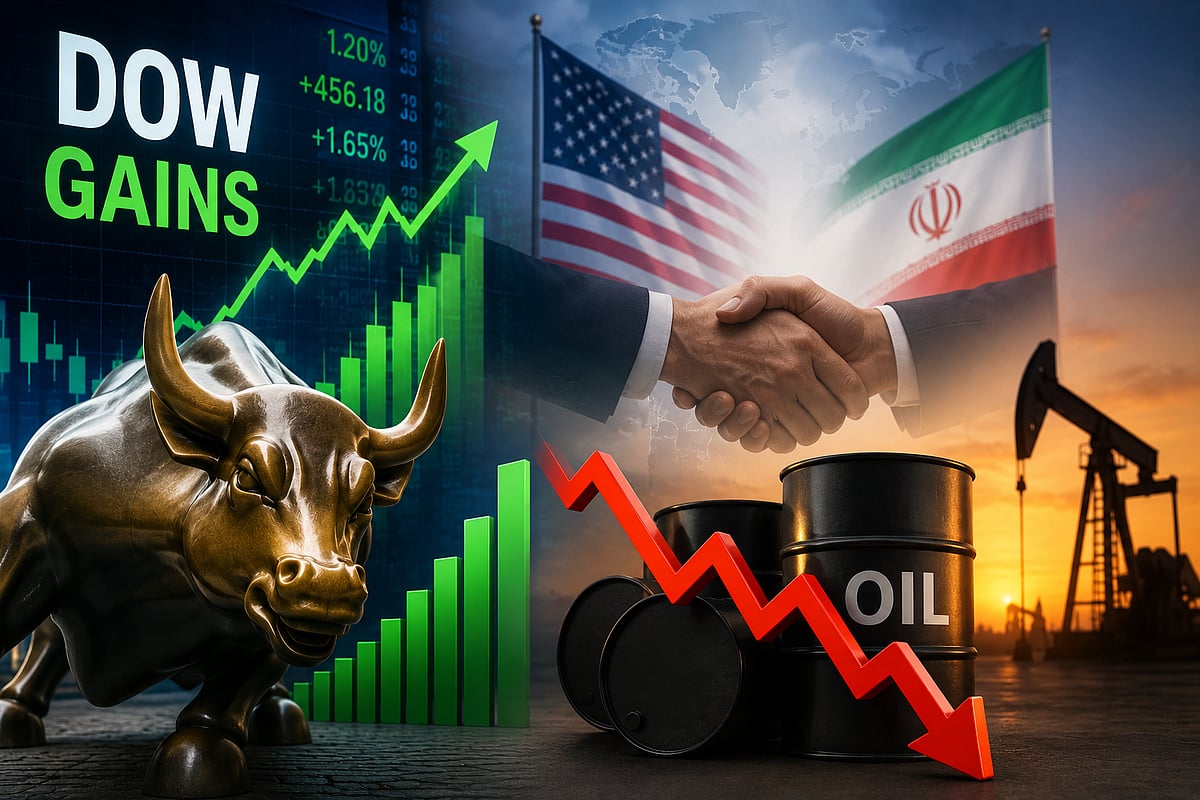
    The S&P 500 and Dow Jones Industrial Average reached record intraday levels on Tuesday, driven by strong earnings from AI-linked companies and optimism over potential US-Iran talks that pushed oil prices lower.

    The S&P 500 gained 0.58% to 7,644.56, its first intraday record since June. The Dow rose 647 points (1.22%) to 53,825.50, also hitting a new all-time high. The NASDAQ Composite added 1.16% to 26,213.57, supported by technology and semiconductor stocks. Wall Street has recovered from July losses, fueled by robust earnings from major tech firms like Amazon and Microsoft, which reinforced confidence in AI spending. The Philadelphia Semiconductor Index climbed about 4% as chip stocks rebounded.

    Palantir Technologies shares surged 17.4% after raising its annual revenue forecast, citing stronger demand for artificial intelligence services. CEO Alex Karp described the quarterly performance as “otherworldly” and linked growth to sovereign AI systems. Caterpillar shares rose 12% after reporting higher second-quarter profit and raising its annual revenue growth forecast, driven by demand from AI data center projects for power-generation equipment. The company also indicated tariff costs would be near the lower end of its earlier estimate.

    Oil prices fell as US Treasury Secretary Scott Bessent signaled progress in talks with Iran to reopen the Strait of Hormuz, stating there was “a chance” of an agreement within two days. West Texas Intermediate crude dropped about 4% to near $76 per barrel, while Brent crude fell to around $80. The S&P 500 energy sector declined 2.5% as crude prices slid, but lower oil costs eased concerns about transport and production expenses for other industries.

    Corporate earnings have broadly exceeded expectations, with 85.2% of S&P 500 companies beating analyst estimates—well above the long-term average of 67.5%. Investors remain focused on whether AI spending can generate sustainable revenue. Eric Parnell, Chief Market Strategist at Great Valley Advisor Group, noted that while AI earnings have performed well, the key question is sustainability. Coherent gained 14% and Lumentum rose 7.8% on reports of potential US limits on Chinese data center components. McDonald’s added 1.2% despite weak results, while Pfizer fell about 1% after its quarterly report. US job openings dropped to 7.36 million in June, below forecasts. Advancing shares outnumbered decliners on both major exchanges, with the NYSE at a 1.36-to-1 ratio and NASDAQ at 2.04-to-1. Investors also awaited SpaceX’s first earnings report since its public listing.

  • Oil Surge and AI Stock Sell-Off Push Wall Street Lower Ahead of Fed Decision

    Oil Surge and AI Stock Sell-Off Push Wall Street Lower Ahead of Fed Decision

    US stocks fell sharply Wednesday as rising oil prices and semiconductor losses weighed on major indexes. The Dow Jones Industrial Average dropped about 800 points during morning trading. The S&P 500 and NASDAQ Composite also declined before the Federal Reserve’s rate decision.

    Oil prices jumped after a new exchange of attacks involving Iran and US forces in the Middle East, renewing concerns about energy costs and inflation. Investors also watched chip stocks after several sessions of heavy selling.

    Dow Jones Leads Broad Market Decline

    The Dow Jones fell more than 1% as industrial, financial, and consumer shares moved lower. At one stage, the index lost over 800 points. The S&P 500 fell about 0.7%, while the NASDAQ dropped roughly 1%. Market figures fluctuated through the morning as trading remained volatile.

    Declining shares outnumbered advancing stocks on both the New York Stock Exchange and NASDAQ. Caterpillar fell as the industrial sector led losses. Consumer staples and healthcare posted small gains, showing limited demand for defensive shares.

    Oil Surge Adds Pressure Ahead of Fed Decision

    Crude oil prices rose after Iran launched missiles toward US forces in Jordan. US Central Command said forces intercepted the missiles. President Donald Trump then said the United States would respond strongly, adding pressure across energy and equity markets.

    Brent crude gained about 6%, while West Texas Intermediate rose close to 7%. Higher oil prices can raise transport and production costs. The latest jump arrived as the Fed prepared to announce its policy decision at 2 p.m. Eastern Time.

    Futures markets placed the highest probability on the Fed keeping rates between 3.5% and 3.75%. Available pricing showed a hold probability near 64%. The remaining probability supported a quarter-point increase. Traders also expected further tightening later in 2026.

    Jay Woods of Freedom Capital Markets said, “Any Fed surprise could cause this sell-off to accelerate.” Investors will review Chair Kevin Warsh’s press conference for details about inflation, employment, and future policy decisions.

    Semiconductor Stocks Extend Weekly Losses

    Semiconductor shares extended a four-session decline as investors questioned returns from large artificial intelligence spending programs. The iShares Semiconductor ETF fell nearly 4% during Wednesday trading. Its weekly loss moved above 10% as selling spread across major chip companies.

    Micron Technology and Advanced Micro Devices each lost more than 6% during the session. KLA fell more than 8%, while NVIDIA also traded lower. The Philadelphia Semiconductor Index dropped as investors reviewed spending, revenue growth, and competition from Chinese technology companies.

    Gina Martin Adams of HB Wealth said, “The pressure is shifting from spending plans to returns.” Big Tech earnings will provide more data on revenue from AI investments. Microsoft and Meta will report after Wednesday’s close. Amazon and Apple will release results later this week.

    Truist Securities maintained a positive long-term view on chip demand despite the sell-off. Analyst William Stein said industry contacts still reported strong demand. He also noted that buyers now place larger orders for longer periods. However, current trading showed concern about valuations and near-term earnings.

    Ford Rises as Procter and Gamble Falls

    Ford Motor gained more than 6% after raising its annual profit forecast. The automaker also reported results above market expectations. The increase made Ford one of the stronger stocks during a session dominated by broad losses.

    Procter and Gamble fell almost 3% after reporting weaker revenue than expected. The company also forecast slower sales growth for fiscal 2027. Seagate Technology gained after issuing quarterly revenue and profit forecasts above estimates. These moves created pockets of strength and weakness across the market.

    Investors now face three immediate events: the Fed decision setting policy direction for rates, Warsh’s comments shaping expectations for later meetings, and Big Tech earnings testing whether heavy AI spending has started producing stronger revenue.

  • Dow Rises Over 300 Points as Oil Retreats on Renewed Iran-US Peace Diplomacy Hopes

    Dow Rises Over 300 Points as Oil Retreats on Renewed Iran-US Peace Diplomacy Hopes

    The Dow Jones Industrial Average surged more than 300 points on Friday as oil prices tumbled following reports that Pakistan may mediate renewed talks between the United States and Iran. The S&P 500 also advanced, while the NASDAQ remained under pressure due to declines in semiconductor stocks.

    Oil Retreat Fuels Market Optimism

    The Dow gained approximately 0.7%, buoyed by a roughly 3% rise in Apple shares. The S&P 500 added around 0.6%, while the NASDAQ struggled to hold gains as chip stocks slid. Brent crude fell more than 4% to trade near $95 per barrel after surpassing $100 earlier in the week. West Texas Intermediate also dropped about 4% to above $88. Lower oil prices alleviated concerns over inflation, transportation costs, and corporate expenses.

    Pakistan Explores Peace Talks Mediation

    According to Reuters, Pakistan is exploring a path to restart stalled negotiations between the U.S. and Iran. Three Pakistani sources indicated that China initiated the diplomatic effort. Pakistani officials discussed the plan with Iranian representatives during recent meetings. However, the sources noted that “obstacles to any talks with the US remain high.” China has significant trade and energy interests in the Gulf, and Pakistan maintains close ties with Beijing, Saudi Arabia, and Iran, complicating its potential mediator role.

    Geopolitical Risks Drive Oil Volatility

    Oil had climbed above $100 earlier amid ongoing conflict in the region, raising fears of supply disruptions across the Gulf and Red Sea. U.S. strikes on Iranian targets and attacks linked to Iran-backed groups kept energy traders focused on shipping routes and production risks. The Strait of Hormuz remains a major concern for China and other large oil buyers, as any disruption could restrict crude shipments and drive up global energy costs. Friday’s diplomatic report eased some of those fears, prompting traders to sell oil futures.

    Chip Sector Caps Broader Gains

    Semiconductor stocks declined even as the Dow and S&P 500 rose. Intel dropped about 3% after initially gaining on better-than-expected results. Broadcom and Advanced Micro Devices each lost roughly 2%, while Micron Technology fell about 5%. The Philadelphia Semiconductor Index declined more than 3% in early trading. Investors continue to question the pace of artificial intelligence spending after Alphabet and Tesla reported higher capital costs and cash usage. The cautious tone set the stage ahead of earnings from Microsoft, Amazon, and Meta.

    Corporate Moves and Sector Rotation

    Verizon advanced after raising its annual forecasts for adjusted profit and free cash flow. Real estate and communication services led gains in the S&P 500 as investors rotated into sectors less exposed to chip weakness. Citi raised price targets for Dell and Hewlett Packard Enterprise, with analyst Asiya Merchant maintaining buy ratings on both, citing demand for servers, networking equipment, and AI infrastructure. Citi lifted its HPE target to $74 from $70, implying about 55% upside from Thursday’s close.

    Fed Policy and Tariffs Add to Uncertainty

    Investors also assessed new U.S. tariffs of 10% and 12.5% on goods from 60 trading partners, linked to weak enforcement of forced-labor restrictions. The new duties followed the expiration of a temporary 10% global tariff. The Federal Reserve meets next week, with markets weighing inflation risks from energy costs. Futures pricing indicates about a one-in-three chance of an interest rate hike, up from 12% a week earlier. Fed Chairman Kevin Warsh has maintained the central bank’s focus on price stability and employment.

    Despite Friday’s gains, the Dow and S&P 500 are on track for small weekly losses. The NASDAQ is headed for a decline of more than 1%, as technology weakness offsets the relief from lower oil prices.

  • Wall Street Tumbles: Dow Loses 500 Points as Oil Surge and Tech Losses Bite

    Wall Street Tumbles: Dow Loses 500 Points as Oil Surge and Tech Losses Bite

    US stocks fell sharply on Thursday as a surge in oil prices, rising bond yields, and disappointing earnings from major technology companies weighed on market sentiment. The Dow Jones Industrial Average dropped approximately 500 points during morning trading, with the S&P 500 losing nearly 1% and the Nasdaq Composite falling around 1.7%.

    The sell-off pushed major indexes to multi-week lows, with declining shares outnumbering advancing stocks on both the New York Stock Exchange and Nasdaq. The CBOE Volatility Index rose to 18.79 after three consecutive declines, reflecting heightened investor anxiety.

    Oil Rally Raises Inflation Concerns

    Brent crude futures surged 6.7% to $100.37 per barrel during European trading, while West Texas Intermediate gained 5.5% to $91.91 per barrel. The rally followed reports that Houthi forces attacked two Saudi oil tankers near the Bab el-Mandeb Strait, raising fresh supply concerns and threatening another major shipping route.

    Higher oil prices pushed Treasury yields upward, with the 10-year yield reaching its highest level since January 2025 and the two-year yield hitting a 17-month high. This renewed inflation fears, prompting traders to increase bets on a Federal Reserve rate hike at the July meeting. CME FedWatch data showed markets pricing a 38% chance of a quarter-point increase, up from about 12% just one week earlier.

    Alphabet and Tesla Pressure Nasdaq

    Alphabet shares fell more than 6% after the company raised its 2026 capital spending forecast, with investors focusing on costs tied to artificial intelligence infrastructure. AJ Bell investment director Russ Mould noted a “healthy degree of scepticism” about returns from such spending. The decline pulled communication services stocks lower.

    Tesla shares dropped more than 12% after reporting negative quarterly free cash flow and higher operating expenses relative to revenue growth. CEO Elon Musk called 2026 a “massive capex year,” with spending plans including robots, data centers, manufacturing projects, and its robotaxi business.

    Energy Shares Rise With Crude Prices

    Energy companies moved higher as oil prices extended a five-day rally. Exxon Mobil gained 1.6%, while Chevron rose 1.9%. Diamondback Energy, Devon Energy, ConocoPhillips, and Occidental Petroleum gained between 1.7% and 2.7%. Refiners also advanced, with Valero Energy, Marathon Petroleum, and Phillips 66 rising between 1.1% and 1.3%.

    Analysts also watched shipping activity in the Middle East. UBS analyst Giovanni Staunovo said subdued vessel traffic could slow the region’s production recovery.

    Rate Expectations Shift Before Fed Meeting

    The oil rally renewed concern that higher fuel costs could keep inflation elevated. New labor data also supported expectations that the Fed could keep policy tight, with initial unemployment claims falling to 187,000, below forecasts of 210,000.

    Airline shares faced pressure as higher fuel costs threatened operating expenses, while transport stocks moved lower. Lockheed Martin shares rose after the company lifted its 2026 forecasts, and ServiceNow gained after raising its annual subscription revenue outlook.

    Markets will likely remain focused on oil prices, upcoming inflation data, and the Federal Reserve’s next policy decision for direction.