Tag: Earnings

  • SK Hynix Stock Drops 9% as Record Earnings Fall Short of AI Chip Market Expectations

    SK Hynix Stock Drops 9% as Record Earnings Fall Short of AI Chip Market Expectations

    SK Hynix stock faced renewed selling pressure after the memory-chip maker reported second-quarter figures that came in below market forecasts. While revenue and operating profit reached quarterly records, both measures missed analyst estimates, triggering a sharp decline in share prices.

    The company’s US-listed ADRs closed Tuesday at $130.17, down 8.99% during regular trading, before recovering about 1.9% in after-hours trading. In Seoul, SK Hynix shares fell approximately 9.4% on Wednesday as investors digested the earnings release.

    SK Hynix Earnings Miss Market Forecasts

    SK Hynix reported second-quarter revenue of 79.3 trillion won, up 257% from the same period last year. Analysts had expected approximately 84 trillion won. Operating profit reached 60.5 trillion won, marking a 557% annual increase, but still fell short of the 64 trillion won market forecast.

    Both revenue and operating profit set company records during the June quarter, yet the gap against forecasts shaped the market reaction. Investors had raised expectations after strong demand lifted memory prices and pushed SK Hynix stock to record levels earlier in 2026.

    Net profit surged more than 13 times to 93.9 trillion won, with investment gains playing a major role in that increase. Analysts linked much of the gain to the completed sale of SK Hynix’s indirect stake in Japanese flash-memory maker Kioxia.

    AI Memory Demand Supports Record Results

    Demand for high-bandwidth memory continued to support SK Hynix earnings. HBM chips serve data centers that train and operate artificial intelligence models. The company has secured long-term supply agreements with approximately 10 customers and continues negotiations with other buyers.

    SK Hynix said customers are seeking longer contracts as memory supply remains tight. These agreements include financial protections intended to reduce risks from changes in customer demand. The company also plans 2026 capital spending of about 47 trillion to 48 trillion won.

    However, delays in some HBM4 shipments reduced revenue recognition during the quarter. Price gains for standard DRAM products also came in below earlier expectations, contributing to the operating profit and revenue misses.

    Management maintained its positive demand outlook for the second half of 2026, expecting AI server investment and limited memory supply to support sales. Still, the latest figures show that record growth must also clear high market forecasts.

    SK Hynix Stock Tracks Wider Chip Selloff

    SK Hynix stock moved lower during a broader retreat from AI-linked semiconductor shares. Investors have questioned the funding and returns of large data-center projects. Competition from Chinese memory-chip companies has also added pressure across Asian markets.

    South Korea’s Kospi fell approximately 6% on Wednesday, while Samsung Electronics lost about 4.8%. The moves followed broad selling across chip stocks. SK Hynix ADRs also closed below their $149 US listing price after Tuesday’s decline.

    Investors are also watching the company’s shareholder return plan. SK Hynix has not yet provided details on its timing, size, or structure. Hyundai Motor Securities research head Greg Roh said, “SK needs to come up with a concrete shareholder return policy to turn around investor sentiment.”

    The company reported a net cash position of about 88 trillion won at the end of June and aims to build that figure toward 100 trillion won. Investors will track future spending, customer contracts, HBM4 deliveries, and the planned shareholder return policy.
  • FTSE 100 Opens Higher as Oil Prices Surge on Middle East Tensions; Investors Eye Fed Decision

    FTSE 100 Opens Higher as Oil Prices Surge on Middle East Tensions; Investors Eye Fed Decision

    The FTSE 100 opened 64.86 points higher at 10,935.88 on Wednesday, driven by renewed tensions in the Middle East that pushed oil prices higher. Investors are now awaiting the latest US Federal Reserve interest rate decision, which could influence market direction.

    Oil and Currency Markets

    Brent crude futures rose 3.54% to $87.07 per barrel, while US West Texas Intermediate (WTI) advanced 3.60% to $82.11. Sterling eased slightly to $1.3298 from $1.3306, and against the euro it fell to €1.1662.

    Top Gainers and Losers

    Gainers: Weir Group surged 8.40% to 2,736p, Reckitt Benckiser advanced 5.37% to 5,454p, Burberry Group gained 4.91% to 1,196p, Standard Chartered climbed 4.44% to 2,190p, Glencore rose 3.93% to 526.40p, and Sage Group increased 3.15% to 969.40p.

    Losers: Admiral Group declined 1.22% to 3,720p, Endeavour Mining fell 1.03% to 3,551p, Severn Trent slipped 0.92% to 3,032p, Halma eased 0.91% to 3,498p, Coca-Cola HBC dropped 0.79% to 5,045p, and Coca-Cola Europacific Partners edged 0.47% lower to 8,400p.

    Sage Revenue Growth

    Sage reported another quarter of double-digit revenue growth. Revenue rose 11% to £2.06 billion in the first nine months, with third-quarter growth accelerating to 12%, fueled by demand for its cloud accounting, payroll, and HR software. Cloud revenue climbed 15% to £1.76 billion, while recurring subscription revenue topped £2 billion. CFO Jacqui Cartin noted “nine months of accelerating revenue growth,” boosted by AI features and strong demand for products like Sage Intacct. The company maintained its forecast for organic revenue growth above 9% and expects continued operating margin improvements. Sage shares remain about 13% lower than a year ago.

    Greggs Shares Jump on Profit Surge

    Greggs shares rose more than 10% in early trade to 1,862p after the bakery chain posted a 20% jump in pre-tax profit to £76 million. The company plans to expand to at least 3,500 stores across the UK. Analyst Duncan Ferris of Freetrade said the profit boost came more from cost controls and lower inflation than from sales growth, adding that strong performance at new stores may alleviate fears of cannibalization.

    Glencore Trading Profit

    Glencore reported first-half profits of around $3.3 billion from its commodities trading arm, slightly below its annual earnings guidance of $3.5 billion. CEO Gary Nagle said the company delivered a “strong production performance” with key assets meeting expectations. Full-year production guidance for copper, zinc, and nickel remains unchanged, while energy and steelmaking coal guidance saw minor adjustments.

    Global Market Overview

    In the US, the Dow Jones climbed 537 points (1%) to 52,747, and the S&P 500 added 0.2%, while the Nasdaq slipped 0.2% to 24,877. In Asia, Tokyo’s Nikkei 225 fell 1.49% to 61,434.19, China’s Shanghai Composite gained 0.4%, Hong Kong’s Hang Seng advanced 1.77%, and South Korea’s Kospi edged lower by 5.98%. India’s Nifty 50 and Sensex rose 0.99% and 1.15%, respectively.

    Disclaimer: This article is for informational purposes only and does not constitute investment advice. Always conduct your own research before making investment decisions.

  • Tesla Stock Drops Near $300 After Q2 Earnings Miss Triggers Market Selloff

    Tesla Stock Drops Near $300 After Q2 Earnings Miss Triggers Market Selloff

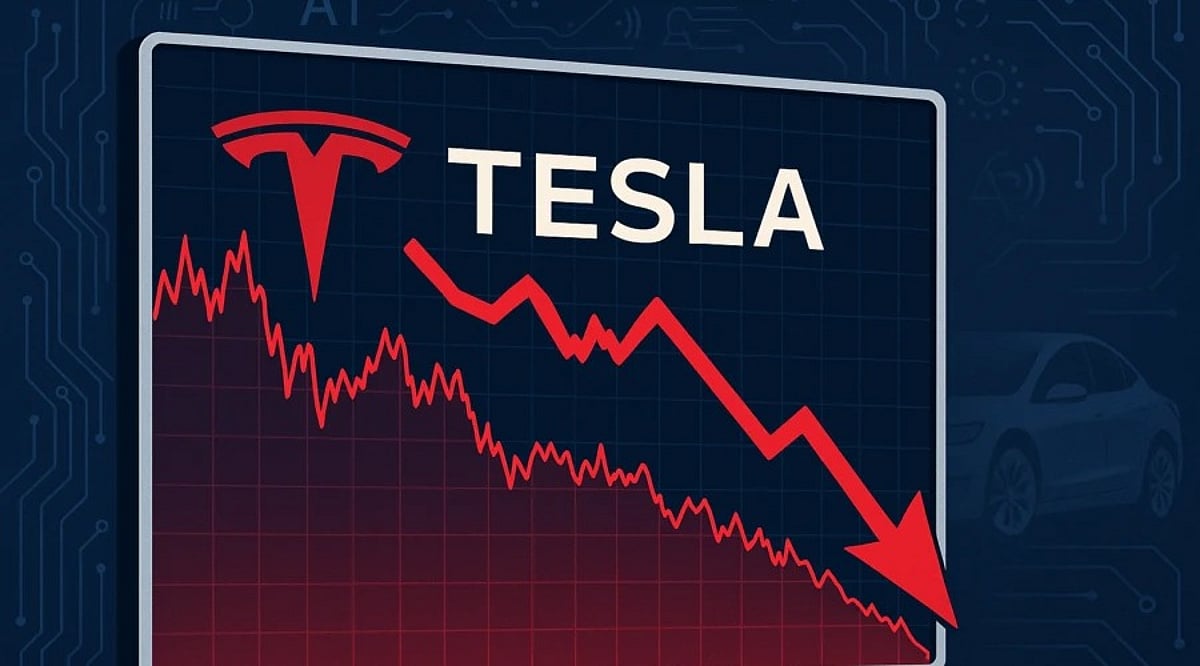
    Tesla shares fell nearly 15% after second-quarter results raised concerns over weaker margins, negative free cash flow, and rising AI spending. The selloff pushed the stock toward the $300 support area and added pressure to the NASDAQ, while Bitcoin and Ether also declined as risk sentiment weakened.

    Tesla shares closed at $313.03 on July 24 after falling 2.08% during the session. The stock also slipped to about $311.40 in after-hours trading. Over one month, Tesla lost around 16.55% as investors reassessed the company’s second-quarter results and spending plans.

    The latest decline followed a 14.52% plunge on July 23. Tesla reported record vehicle deliveries and higher revenue, yet weaker margins and negative free cash flow drew more attention. The stock now trades close to the lower end of its recent range, with $300 becoming the nearest major technical level.

    Tesla Stock Nears Key $300 Support

    Tesla stock traded as high as $322.87 on July 24 before falling to an intraday low near $306.53. Selling pressure stayed firm after the earnings-driven decline. As a result, the shares closed only a few dollars above their first major support zone.

    The area between $306.50 and $300 now serves as short-term support. A sustained close below $300 could bring the 52-week low near $297.82 back into focus. On the other hand, buyers need to reclaim the $320 to $323 range to slow the current decline.

    Stronger resistance sits between $340 and $342. Tesla traded near that area before the post-earnings gap widened. A recovery toward that range would require stronger demand and improved confidence in the company’s profit outlook.

    Record Deliveries Fail to Calm Investors

    Tesla delivered a record 480,126 vehicles during the second quarter. The total exceeded the company-compiled estimate of about 406,000 vehicles. Model 3 and Model Y deliveries reached 467,762 units and accounted for most of the quarter’s volume.

    Revenue rose 26% from a year earlier to about $28.24 billion. Automotive revenue reached nearly $20.5 billion, while services and other revenue increased 50% to $4.58 billion. These results showed that Tesla continued to expand sales across its main business lines.

    Nevertheless, investors focused on profitability. Tesla’s operating margin fell to 1.4% from 4.1% a year earlier. Lower vehicle prices and higher costs supported deliveries but reduced earnings from each sale.

    The weaker margin also raised questions about how quickly Tesla can turn rising sales into stronger cash generation. This issue became more important as the company increased spending on artificial intelligence, batteries, robotics, and autonomous-driving systems.

    AI Spending Adds Pressure Across Markets

    Tesla’s capital expenditure reached about $5.8 billion during the quarter. Free cash flow turned negative by roughly $1.1 billion, marking the company’s first quarterly cash burn in more than two years. Tesla also expects annual capital spending to exceed $25 billion.

    The company continues to fund robotaxi development, artificial intelligence infrastructure, next-generation manufacturing, and the Optimus robot program. Meanwhile, investors are waiting for clearer revenue growth from these projects as costs rise in the near term.

    The concern spread beyond Tesla. Alphabet shares also fell as investors reviewed higher artificial intelligence spending plans. It raised its 2026 capital expenditure guidance to between $195 billion and $205 billion, up from its earlier range.

    The NASDAQ moved lower as investors reduced exposure to high-growth technology stocks. Risk-off trading also reached digital assets. Bitcoin fell about 1.8% toward $64,800, while Ether dropped around 3% to nearly $1,870. Concerns over technology spending affected several risk markets during the same trading period.

  • Walmart Shares Steady as E-Commerce and Grocery Revenue Drive Quarterly Gains

    Walmart Shares Steady as E-Commerce and Grocery Revenue Drive Quarterly Gains

    Walmart stock closed at $109.47 on Friday, July 24, gaining about 1% during the session. The shares traded between $108.03 and $109.54, while the company’s market value stood near $876 billion. Trading volume reached about 18.4 million shares during Friday’s regular session. Investors continued to assess Walmart’s latest results, institutional activity, analyst targets, and annual outlook.

    The retailer reported stronger sales across its main divisions during the quarter ended April 30. Revenue reached $177.75 billion, up 7.3% from a year earlier. Adjusted earnings matched market estimates at $0.66 per share. Walmart also kept its full-year outlook unchanged, despite higher distribution and fulfillment fuel costs. Grocery demand and increased customer traffic supported its core US operations.

    Walmart Stock Tracks Higher Quarterly Sales

    Walmart recorded $175.68 billion in net sales, compared with $163.98 billion in the prior-year quarter. Operating income increased 5% to $7.49 billion, while net income attributable to Walmart rose to $5.33 billion. GAAP earnings reached $0.67 per share. The gross profit rate edged up to 24.3% from 24.2%, while adjusted operating income grew 5.1% in constant currency.

    Walmart US net sales rose 4.5% to $117.17 billion. Comparable sales excluding fuel increased 4.1%, supported by a 3% rise in transactions. E-commerce contributed about 530 basis points to comparable sales growth. Walmart US e-commerce sales increased 26%, driven by store delivery, marketplace activity, and advertising. President and CEO John Furner cited “better shopping experiences, a broader assortment, and faster delivery.”

    Digital Businesses Support Segment Growth

    Global e-commerce sales increased 26% during the quarter, while the advertising business grew 37%. Walmart US advertising rose 36%, including a 44% increase at Walmart Connect excluding Vizio. Global membership fee revenue advanced 17.4%. Moreover, Walmart said improved e-commerce economics, Walmart+ growth, and other income supported adjusted operating income in its US business.

    Meanwhile, Walmart International net sales increased 18% to $35.11 billion. Constant-currency sales rose 10.1%, while operating income increased 23.9% to $1.60 billion. Sam’s Club US net sales climbed 6.1% to $23.41 billion. Its e-commerce sales rose 23%, while transactions increased 6.2%. Membership fee revenue grew 5.6% as member counts, renewals, and Plus memberships increased.

    Cumberland Cuts Stake as Guidance Holds

    Cumberland Partners reduced its Walmart position by 180,441 shares, or 30.1%, during the first quarter. The investment manager held 419,100 shares worth about $52.09 million at March 31. Walmart ranked as its fifth-largest reported position and represented about 4% of the portfolio. The SEC filing lists the shares under two investment-discretion categories, which together form the total holding.

    Separately, Walmart US Chief David Guggina sold 11,978 shares at an average price of $119.82 on June 10. The sale followed a Rule 10b5-1 trading plan adopted in March. Walmart expects second-quarter net sales to rise 4% to 5% in constant currency and forecasts adjusted earnings of $0.72 to $0.74 per share.

    The company retained its fiscal 2027 adjusted EPS range of $2.75 to $2.85. Recent analyst targets also stood above Friday’s closing price. RBC Capital maintained a $137 target on July 22, while Goldman Sachs held a $154 target on July 17. Morgan Stanley maintained a $140 target in late June, according to recent analyst tracking data.

  • Elon Musk Fuels Tesla-SpaceX Merger Speculation in Q2 Earnings Call – What Investors Should Know

    Elon Musk Fuels Tesla-SpaceX Merger Speculation in Q2 Earnings Call – What Investors Should Know

    Elon Musk reignited speculation about a potential merger between Tesla and SpaceX during Tesla’s second-quarter earnings call, declining to rule out a future deal. The comments came as the two companies already share projects across batteries, artificial intelligence, and advanced manufacturing.

    “We can’t talk about combining companies on an earnings call,” Musk said, adding that any merger discussion would require a formal corporate process. Tesla General Counsel Brandon Ehrhart described SpaceX as an important business partner, noting several mutually beneficial transactions, but did not confirm any active review of a merger.

    Musk’s Comments Renew Merger Debate

    Musk acknowledged growing operational overlap between Tesla and SpaceX during the call. Investors have long debated the merits of combining the two companies. Gene Munster of Deepwater Asset Management said the remarks increased his confidence in a future combination, possibly within several years.

    JPMorgan analysts pointed to shared talent, AI infrastructure, and manufacturing knowledge, suggesting those links could reduce some operational barriers. SpaceX President Gwynne Shotwell said in June that combining Musk’s companies could simplify management.

    Existing Collaborations and Synergies

    Tesla and SpaceX already cooperate on batteries, engineering, AI, and advanced manufacturing. They are jointly developing Terafab, a semiconductor facility aimed at producing chips for AI systems. Both companies rely on large computing networks and specialized engineering teams, with Musk leading strategy across both entities.

    Some Tesla investors envision a broader technology group encompassing vehicles, robotics, energy, satellites, and AI. However, no timeline, valuation, or transaction structure has been announced.

    Tesla Q2 Earnings Mixed; Focus Shifts to Spending

    The merger discussion followed Tesla’s mixed second-quarter results. Revenue reached $28.24 billion, beating the $26.32 billion estimate. Adjusted earnings of $0.33 per share missed analyst expectations of $0.50. Tesla shares fell about 6% in premarket trading.

    Vehicle deliveries rose 25% year-over-year to 480,126 units. Energy storage deployments hit 13.5 GWh, up from 8.8 GWh in the prior quarter. Capital spending is expected to exceed $25 billion this year, funding Robotaxi, Optimus, Cybercab, and AI data centers. Free cash flow was negative $1.09 billion, better than the expected negative $3.64 billion.

    Regulatory and Governance Hurdles Remain

    Any Tesla-SpaceX merger would face intense regulatory scrutiny in the U.S. and other major markets, especially China. SpaceX’s close ties with the U.S. government and defense agencies could raise national security concerns during foreign reviews. Governance is also a key issue: Musk controls a larger voting stake in private SpaceX than in public Tesla, potentially raising questions about valuation and minority shareholder treatment. Independent directors and shareholder approval would be critical.

    For now, neither company has announced a merger process. Musk’s comments only left the possibility open while cooperation continues.

  • Dow Rises, Nasdaq Slips as Wall Street Awaits Alphabet and Tesla Earnings Amid Rising Oil Prices

    Dow Rises, Nasdaq Slips as Wall Street Awaits Alphabet and Tesla Earnings Amid Rising Oil Prices

    U.S. stocks ended mixed on Wednesday as investors weighed rising oil prices, a downturn in semiconductor shares, and anticipation of major earnings reports from technology giants. The Dow Jones Industrial Average gained roughly 0.5%, while the S&P 500 hovered near the flatline. The Nasdaq Composite fell about 0.3%, dragged lower by weakness in chip stocks.

    Big Tech Earnings in Focus

    Alphabet, Tesla, IBM, ServiceNow, and Texas Instruments are set to report quarterly results after the closing bell. Their updates are expected to shed light on artificial intelligence spending, cloud demand, and corporate technology budgets. Alphabet and Tesla are the first members of the ‘Magnificent Seven’ to release second-quarter results, with investors closely watching revenue growth, capital expenditure, and forward guidance.

    Alphabet shares traded near $346 ahead of the report. The company faces scrutiny over its AI strategy after delaying a model launch tied to its development plans. Tesla’s results will also be closely watched as the automaker continues heavy spending on new projects. Analysts will focus on cash flow, operating costs, and capital outlays.

    Sam Stovall, chief investment strategist at CFRA Research, noted that investors may adopt a ‘wait-and-see attitude’ before making larger market moves, with spending levels playing a central role in the response to these earnings.

    Oil Prices Surge on Geopolitical Tensions

    Oil prices climbed as the United States conducted its eleventh straight round of strikes against Iran. Brent crude rose about 3% to trade above $93 per barrel, briefly crossing $95. West Texas Intermediate advanced above $86 per barrel. U.S. Secretary of State Marco Rubio stated that Washington would continue protecting shipping through the Strait of Hormuz and described Iran as ‘not serious’ about negotiations.

    Higher energy prices reignited concerns about inflation and interest rates. Federal funds futures indicated a strong likelihood that the Federal Reserve will hold rates steady at its next meeting, though markets still price in a potential rate increase later in 2026.

    Chip Stocks Weigh on Nasdaq

    Technology stocks were the weakest sector during morning trading, with semiconductor shares under pressure after several volatile sessions. The Philadelphia Semiconductor Index traded near unchanged levels, having closed lower in five of the past ten sessions. Texas Instruments edged lower ahead of its earnings release. Investors are scrutinizing chip demand, order growth, and management forecasts during this earnings season. AI infrastructure spending has supported semiconductor valuations, but recent price swings have slowed the Nasdaq’s momentum.

    Materials and utilities sectors moved higher, limiting broader market losses. Strength in industrial and materials shares also supported the Dow. Market breadth remained positive, with advancing stocks outnumbering decliners on both the NYSE and Nasdaq.

    Notable Stock Movers

    Super Micro Computer surged more than 20% after the AI server maker issued a strong business update, securing over $60 billion in new fourth-quarter orders and forecasting gross margins above previous expectations. AT&T gained about 3% after adding more wireless subscribers than analysts anticipated and reporting better-than-expected quarterly earnings.

    GE Vernova shares fell despite reporting $11.1 billion in revenue and raising its 2026 guidance, as earnings missed market estimates. The company posted an 88% rise in total orders to $24.2 billion, with data center orders exceeding $5 billion in the first half of the year—more than double its full-year total in 2025.

    Shares of generic drugmakers declined after President Donald Trump announced plans for future tariffs on imported generic medicines, starting with a 100% tariff in August 2028 and rising to 200% a year later.

    With oil prices rising and Big Tech earnings approaching, markets remain focused on the next major catalyst for direction.

  • HDFC Bank Dips to Rs 766.35: Why Analysts Stay Bullish on Long-Term Growth

    HDFC Bank Dips to Rs 766.35: Why Analysts Stay Bullish on Long-Term Growth

    HDFC Bank shares slipped to Rs. 766.35 for a second consecutive session, as earnings concerns weighed on market sentiment. Despite the correction, analysts remain optimistic, citing the bank’s strong fundamentals, healthy asset quality, and long-term growth prospects.

    Stock Under Pressure Despite Positive Street View

    HDFC Bank continued to drag the Nifty amid further profit-taking after the bank announced its latest quarterly results. Despite the current underperformance, various domestic and international brokerage firms have reaffirmed their confidence in the bank’s long-term potential. The stock opened at Rs. 769.15, reached a high of Rs. 772.50, and fell to a low of Rs. 765.20. High trade volumes indicate involvement from both institutions and individual investors.

    Market observers believe the current weakness is more due to profit-taking from earnings fears than any fundamental deterioration in the bank’s business.

    Chart Signals Weakness, But Key Support Holds

    Technical indicators suggest HDFC Bank continues to trade under selling pressure after failing to sustain its recovery above the Rs. 820 mark earlier this month. The stock has been making lower highs on the daily chart, indicating that bears remain in control in the short term.

    However, the Rs. 760 zone is emerging as an important support level. A decisive breach below this could trigger fresh selling, while a move back above Rs. 800–820 may improve sentiment and pave the way for a stronger recovery.

    Why Brokerages Remain Positive

    Despite the ongoing correction, analysts continue to favor HDFC Bank owing to its strong franchise, healthy balance sheet, and leadership in retail banking. The bank is expected to benefit from steady credit demand, improving deposit mobilization, and its ability to maintain stable asset quality.

    Brokerages also believe that integration-related challenges following the HDFC Ltd merger are gradually easing, allowing the lender to focus on improving profitability and business growth over the coming quarters. While earnings growth may remain moderate in the near term, most analysts see meaningful upside over the longer horizon.

    Opportunities and Risks

    While the recent correction has weighed on investor sentiment, analysts continue to highlight HDFC Bank’s structural strengths that support its long-term growth story. Key factors include strong franchise value, robust capital position, and a diversified loan portfolio.

    What Investors Should Watch Next

    The next few trading sessions are likely to determine whether HDFC Bank can stabilize near current levels or witness another leg of correction. Investors will closely monitor management commentary, loan growth, deposit mobilization, and margin trends for fresh direction.

    From a trading perspective, sustained buying above Rs. 800 could improve momentum, while a break below Rs. 760 may invite additional selling pressure. Long-term investors, however, continue to focus on the bank’s earnings potential rather than short-term market fluctuations.

    Conclusion

    The decline in HDFC Bank to Rs. 766.35 appears to reflect a more cautious mood among investors after the recent earnings season, rather than a significant change in the bank’s business outlook. Even with near-term pressures like margin compression and profit booking, many analysts believe the lender’s long-term growth narrative remains intact.

    Meanwhile, the broader banking sector shows a mixed picture. Some lenders like ICICI Bank have moved up after stronger-than-expected earnings, while stocks including HDFC Bank, Axis Bank, and Kotak Mahindra Bank face selling pressure. This has happened as traders reassess valuation levels and growth expectations. Still, the Indian banking segment continues to draw support from steady credit demand, improving asset quality, and solid capital buffers. Market experts generally view this correction as stock-specific and earnings-driven, not a sign of fragility across the entire banking space. Banks with strong fundamentals are expected to continue benefiting as India’s long-term economic growth continues.

    FAQs

    1. Why did HDFC Bank shares fall for the second consecutive session? HDFC Bank shares declined due to profit booking, earnings concerns, margin pressures, and cautious investor sentiment despite positive long-term brokerage outlooks.
    2. What is HDFC Bank’s current share price? HDFC Bank shares traded around Rs. 766.35 during Tuesday’s session, making it one of the biggest losers on the Nifty index.
    3. Are analysts still bullish on HDFC Bank stock? Yes. Most brokerages remain optimistic, citing strong fundamentals, healthy asset quality, robust capital position, and long-term earnings growth potential.
    4. What levels should investors watch in HDFC Bank shares? Analysts see support around Rs. 760, while sustained buying above Rs. 800–820 could improve near-term market sentiment and momentum.
    5. How are banking stocks performing overall? Banking stocks remain mixed, with earnings driving stock-specific moves, though strong fundamentals continue supporting the sector’s long-term growth outlook.
  • GM Q2 Earnings Surpass Estimates, Automaker Boosts 2026 Profit Forecast

    GM Q2 Earnings Surpass Estimates, Automaker Boosts 2026 Profit Forecast

    General Motors posted stronger-than-expected second-quarter results on Tuesday and raised several full-year forecasts, supported by higher North American profit, lower warranty costs, and smaller EV losses.

    Revenue increased 1.9% year-over-year to $48.03 billion. Adjusted earnings reached $3.57 per share, topping estimates of around $3.20. Adjusted EBIT rose to $3.94 billion from $3.04 billion in the same period last year.

    GM Raises Full-Year Earnings Guidance

    GM now expects adjusted EBIT of $14 billion to $16 billion for 2026, up from the previous forecast of $13.5 billion to $15.5 billion. The company also lifted its adjusted earnings guidance to between $12 and $14 per share.

    The automaker increased its adjusted automotive free cash flow outlook to $9.5 billion–$11.5 billion, compared with the earlier range of $9 billion–$11 billion. Meanwhile, GM lowered its expected net income attributable to shareholders to between $8.4 billion and $9.8 billion.

    GM based its revised forecast on steady pricing, lower costs, and better EV results. The company expects pricing to rise about 0.5% and EV losses to improve by $1 billion to $1.5 billion compared with 2025.

    Tariff costs remain a factor. GM expects gross tariff costs of $2.5 billion to $3.5 billion, regulatory benefits of $500 million to $700 million, and commodity inflation of $1.5 billion to $2 billion.

    North American Business Drives Profit Growth

    GM’s North American unit posted an 8.6% adjusted EBIT margin, an increase of 2.5 percentage points from the same period last year. Strong demand for pickups and large SUVs supported regional results.

    “Our 8.6% EBIT-adjusted margin in North America was up 2.5 points from a year ago,” said CEO Mary Barra. She added that GM continues to lower warranty costs, reduce EV losses, and improve efficiency.

    The company kept incentives below the industry average at 4.7% of the suggested retail price, versus the industry average of 6.3%. Average transaction prices exceeded $52,000 during the quarter. GM also reduced dealer inventory by 3% year-over-year, keeping it within the target range of 50 to 60 days. GMC Sierra sales rose 5% to a quarterly record of 95,147 vehicles.

    Vehicle Sales Fall as EV Demand Weakens

    GM sold about 715,000 vehicles in the United States during the quarter, a 4.2% decline from a year earlier. The company remained the country’s largest automaker by sales.

    GM attributed part of the decline to discontinued models, including the Cadillac XT4, Cadillac XT6, and Chevrolet Malibu. A weaker EV market, following the expiration of the federal tax credit, also reduced demand.

    Chevrolet Equinox EV sales fell 61.8%, Blazer EV sales dropped 68.1%, and GMC Hummer EV sales declined 56.8%. Still, GM held an estimated 13.5% to 14% share of the US EV market, trailing only Tesla.

    GM reported $4.5 billion in EV-related cash charges through the second quarter, with total EV-related charges reaching $7.2 billion this year. The company has recorded $10.9 billion in EV charges since the second half of 2025.

    CFO Paul Jacobson described consumer demand as “resilient” and noted that GM’s first-half earnings per share were 25% higher than any previous first-half result. However, high interest rates and vehicle prices continue to pressure affordability.

  • Tesla Q2 Deliveries Surge 25% as Robotaxi and Optimus Spending Strains Cash Flow

    Tesla Q2 Deliveries Surge 25% as Robotaxi and Optimus Spending Strains Cash Flow

    Tesla approaches its second-quarter earnings report with strong vehicle deliveries and higher expected revenue. However, rising spending on Robotaxi, Optimus, AI data centers, and Cybercab production could push free cash flow deep into negative territory.

    Wall Street expects Tesla Q2 revenue of $26.21 billion, up 16% from a year earlier. Analysts also forecast adjusted earnings of $0.50 per share and adjusted EBITDA of $4 billion.

    Tesla Q2 Deliveries Support Revenue Growth

    Tesla delivered 480,126 vehicles during the quarter, up 25% from a year earlier. The total also exceeded the Bloomberg consensus estimate of 397,466 vehicles by a wide margin.

    The new Model Y helped improve production after last year’s factory transition reduced output. Tesla also used lower prices across several markets, which supported demand and lifted deliveries.

    Energy storage deployments reached 13.5 gigawatt-hours during the quarter. This figure rose more than 50% from 8.8 gigawatt-hours in the first quarter.

    Regional sales trends moved in different directions. Cox Automotive expects Tesla’s US sales to fall 20% after the federal EV tax credit expired. Meanwhile, European registrations rose sharply, with Greater Europe up nearly 108% in May.

    Deutsche Bank analyst Edison Yu said, “International strength is doing the heavy lifting.” He identified Europe as the main driver, while China also supported results. Tesla also plans to raise production at its Berlin factory during 2026.

    Robotaxi and Optimus Spending Pressures Cash

    Tesla’s stronger deliveries may not prevent a steep drop in free cash flow. Company-compiled analyst estimates point to negative free cash flow of $3.254 billion for the quarter.

    Capital spending could reach $6.7 billion, more than double the level from a year earlier. Tesla generated nearly $5.6 billion in free cash flow during the same quarter last year.

    The company continues to spend on Optimus robot production, AI data centers, and Cybercab manufacturing. These projects require large upfront investment while commercial returns remain limited.

    Morgan Stanley analyst Andrew Percoco said investors still question whether Robotaxi and Optimus can advance fast enough. “As capex more than doubles and free cash flow turns negative,” he wrote. Investors want evidence that spending can build Tesla’s physical AI business.

    Tesla’s long-term valuation depends heavily on growth beyond vehicle sales. Therefore, the earnings call may focus on production timelines, technology progress, and spending plans for these projects.

    Tesla Earnings History Adds Caution

    Tesla shares have fallen about 16% this year as investors weigh stronger deliveries against higher spending. The stock also faces pressure from uncertainty around future earnings growth and cash generation.

    Recent earnings history may also shape expectations. Tesla has missed adjusted earnings-per-share estimates in five of the past eight quarters, according to Bloomberg data.

    The company’s international sales recovery offers support, while weaker US demand adds pressure. High capital spending adds another challenge as Tesla expands several projects at the same time.

    The quarterly update will give investors fresh details on automotive margins, energy revenue, and cash use. Management may also provide new targets for Robotaxi, Optimus, Cybercab, and AI infrastructure spending.

    Investors will compare those updates with delivery growth and regional sales trends. Any change in the full-year spending outlook could affect expectations for Tesla’s near-term cash position over the coming several quarters.

  • NASDAQ Futures Climb as Chip Stocks Rebound and Oil Prices Pull Back

    NASDAQ Futures Climb as Chip Stocks Rebound and Oil Prices Pull Back

    US technology stocks entered the new week after another sharp pullback led by semiconductor companies. The NASDAQ 100 has become more sensitive to daily moves in NVIDIA, Micron, AMD and Intel. Their rising market values have also increased their weight within the index.

    Wall Street futures moved higher on Monday as several chipmakers recovered before the opening bell. However, oil prices and the conflict involving the United States and Iran kept pressure on stocks. Investors also prepared for earnings from Alphabet, Tesla, IBM and Intel.

    Chip Stocks Drive Sharp NASDAQ Swings

    Semiconductor shares now play a larger role in NASDAQ 100 volatility. Assenagon says the weight of chip companies other than NVIDIA rose from about 15% to nearly 30%. Micron, AMD and Intel gained more influence as their valuations climbed during the AI rally.

    The asset manager said average one-year expected volatility for those companies moved above 80 points at times. That marked the highest level since the global financial crisis. Assenagon said, “Semiconductor stock volatilities are doing the heavy lifting.” Lower correlation between NASDAQ companies reduced part of the pressure, but it did not remove it.

    The Philadelphia Semiconductor Index also entered a bear market after closing more than 20% below its late-June record. Earlier data showed the index had gained 83% during 2026 before the July reversal. Chip funds then recorded large inflows and outflows as traders changed positions quickly.

    Apple and NVIDIA Trade the Top Market Spot

    Apple overtook NVIDIA on Friday to become the world’s most valuable listed company. Apple carried a market value of about $4.88 trillion. NVIDIA stood near $4.86 trillion after its shares fell 3.5%. Apple had not held the top position since April 2025.

    The change came as investors reviewed the prices attached to AI-linked companies. New model releases from China added competition within the sector. Meanwhile, concerns grew over the pace of spending on chips, servers and data centers. NVIDIA and other semiconductor companies had led much of the market’s 2026 advance.

    Bianca Botes of Citadel Global said, “The AI demand story is real,” but prices had moved ahead of earnings evidence. Recent losses in Micron, NVIDIA and other chipmakers showed how quickly sentiment could change. The moves also spread to South Korean technology stocks, including Samsung Electronics and SK Hynix.

    Oil Retreat and Earnings Lift Stock Futures

    NASDAQ 100 futures rose about 0.8% early Monday, while S&P 500 futures gained around 0.4%. Dow futures added about 0.3%. Memory chipmakers also advanced before the market opened. Micron, Western Digital, Seagate and SanDisk gained between 3.2% and 4.2%.

    Brent crude briefly moved above $90 per barrel after US forces struck Iran for a ninth straight day. Prices later eased after Iran said diplomatic contacts remained open. The early oil rise raised fresh concerns about transport costs, inflation and interest rates.

    Investors will now focus on quarterly results from major technology companies. Alphabet, Tesla, IBM and Intel will report during the week. Intel and Texas Instruments will provide new data on chip demand and AI infrastructure spending. Their reports could guide the next move across semiconductor stocks and the NASDAQ 100.