Tag: EdTech

  • How AI-Driven Learning Systems Are Transforming Raw Data into Lasting Knowledge

    How AI-Driven Learning Systems Are Transforming Raw Data into Lasting Knowledge

    Executive Overview

    In the age of big data, the real challenge for professionals and universities isn’t collecting information—it’s making sense of it. With technical documentation, academic papers, and online courses growing exponentially, traditional study methods fail to turn data into true understanding. Advances in NLP, vectorization, and predictive learning analytics now enable intelligent tools that convert static texts into dynamic learning engines.

    1. The Data Ingestion Bottleneck in Modern Learning

    While data science has revolutionized business analytics, personal knowledge management still lags. Engineers, doctors, and software developers consume gigabytes of unstructured text each year, but human memory faces three critical bottlenecks:

    • Unstructured Information Overload: Technical manuals, PDFs, and articles lack standardized structures for quick memory encoding.
    • The Decay of Static Knowledge: Without periodic retrieval, memory follows a steep exponential decay curve—up to 70% of technical data is lost within days.
    • Manual Processing Overhead: Extracting concepts, creating self-assessment questions, and scheduling reviews imposes prohibitive operational drag on learners.

    Modern EdTech architectures solve this by applying data-driven parsing directly to learning materials, shifting the burden of content structuring from users to intelligent algorithms.

    2. The Mechanics of AI-Powered Knowledge Extraction

    The convergence of Large Language Models (LLMs) and Retrieval-Augmented Generation (RAG) enables a new paradigm in educational data processing. Instead of treating documents as static assets, modern learning engines treat them as structured knowledge graphs. The automated active-learning pipeline operates in three stages:

    1. Semantic Parsing and Chunking: NLP algorithms break lengthy technical documents into distinct contextual units, isolating core concepts, formulas, and relationships.
    2. Automated Synthesis of Retrieval Cues: Generative models convert semantic chunks into active-recall prompts, transforming passive text into targeted Q&A pairs and conceptual flashcards.
    3. Algorithmic Repetition Scheduling: Machine learning models track user response performance, latency, and confidence scores to calculate optimal spacing intervals for each flashcard.

    By continuously analyzing user interaction data, these platforms adjust review difficulty and frequency in real time, maximizing memory consolidation while minimizing redundant study time.

    3. Practical Implementation: Algorithmic Memory via LongTerMemory

    A prime example of this data-centric approach to study optimization is LongTerMemory. Designed to streamline knowledge acquisition for complex materials, the platform shows how intelligent parsing and automated workflows optimize the learning pipeline:

    • Instant Document Conversion: Raw study materials are converted in seconds into structured, high-yield flashcard decks.
    • Data-Driven Spaced Repetition: Algorithms calculate exact review intervals based on historical recall accuracy, reinforcing weak concepts precisely before memory decay.
    • Unified Cross-Platform Analytics: Mobile and desktop synchronization enables micro-learning sessions while gathering continuous data on overall mastery progression.

    Through this automated workflow, learners bypass the administrative burden of card creation and focus exclusively on active cognitive retrieval, significantly accelerating mastery over complex domains.

    4. The Horizon of Predictive Learning Analytics

    As NLP and personalized analytics advance, future educational technology will go beyond simple flashcard algorithms. Next-generation knowledge platforms will use predictive analytics to identify memory retention vulnerabilities before they cause performance drops. By unifying cognitive neuroscience principles with real-time data science, AI-driven learning tools are transforming passive digital content into actionable knowledge assets—setting a new benchmark for continuous professional development and intelligent learning infrastructure.

  • How AI Is Transforming Education: Personalized Learning, Virtual Tutors, and the Future of Teaching

    How AI Is Transforming Education: Personalized Learning, Virtual Tutors, and the Future of Teaching

    Artificial intelligence is reshaping the educational landscape, influencing how students learn, how teachers work, and how institutions manage their operations. From personalized learning platforms to automated grading and virtual tutors, AI is making education more adaptive, accessible, and data-driven.

    The Shift in Skills Demand

    This transformation aligns with changing workforce needs. According to the World Economic Forum’s Future of Jobs Report 2025, 39% of core skills required by workers will change over the next decade, with AI and big data among the fastest-growing skill areas. This underscores the urgent need for schools, universities, and training providers to redesign curricula around digital literacy and lifelong learning.

    Personalized Learning at Scale

    Traditional classrooms follow a one-size-fits-all curriculum. AI-powered platforms can analyze each student’s responses, learning pace, and specific difficulties to adjust lessons and practice problems in real time. A student struggling with math might receive additional explanations and simpler exercises, while an advanced learner can move on to more challenging material. This allows institutions to cater to diverse learning levels without requiring separate programs for each student.

    AI tutors and chat-based learning assistants provide immediate feedback outside class hours. They can explain concepts, solve practice questions, summarize chapters, and offer editing advice. However, their outputs still need supervision, as generative AI can sometimes produce inaccurate or misleading information.

    Supporting Teachers and Institutions

    AI is increasingly used to automate repetitive tasks such as attendance tracking, basic grading, timetable creation, and handling routine student inquiries. This frees up teachers to focus on lesson planning, mentoring, and direct student interaction.

    Predictive analytics helps identify students at risk of falling behind by analyzing attendance, assessment scores, and engagement patterns. Administrators can intervene before a student drops out. The technology also influences curriculum design: the WEF found that 86% of employers expect AI and information-processing technologies to transform their businesses by 2030. Education providers must therefore prepare students for careers in AI, cybersecurity, data analysis, and digital transformation.

    Expanding Access to Education

    AI can deliver content in multiple languages through translation, and assist students with language barriers or disabilities via speech recognition and text-to-speech tools. Virtual classrooms and automated support systems can bring learning opportunities to regions lacking qualified teachers.

    Yet access remains uneven. Not everyone has the necessary devices, internet connectivity, or digital skills to benefit from AI-supported learning. UNESCO has acknowledged that while AI can enhance access and personalization, it may also deepen inequalities and raise concerns about privacy, safety, and governance.

    The Road Ahead

    AI will not replace teachers, but it will change what they do. The most successful education systems will combine AI’s power with human insight and creativity. Effective implementation requires robust privacy protections, transparent algorithms, and teacher training to ensure AI does not undermine equity or student confidence.

    Frequently Asked Questions

    • How is artificial intelligence changing education? AI makes education more personalized, accessible, and data-driven by adapting lessons to individual needs, providing instant feedback, and automating routine tasks like grading and attendance.
    • Can AI replace teachers in the classroom? No. Education requires empathy, judgment, creativity, and personal interaction. AI supports teachers by reducing administrative work and improving lesson planning.
    • What is personalized learning through AI? AI-powered platforms analyze student performance, learning speed, and areas of difficulty, then recommend suitable lessons, explanations, and practice questions tailored to each learner.
    • How can AI improve access to education? AI-powered translation, speech recognition, and text-to-speech tools help learners with language barriers or disabilities. Virtual classrooms can reach students in areas with limited access to qualified teachers.
    • What are the risks of using AI in education? Risks include inaccurate information, data privacy concerns, algorithmic bias, and unequal access to devices or internet. Strong governance, transparency, and teacher supervision are essential.
  • How Companies Leverage EdTech Platforms for Employee Upskilling and Growth

    How Companies Leverage EdTech Platforms for Employee Upskilling and Growth

    Organizations are increasingly turning to EdTech platforms to upskill their workforce efficiently. These platforms offer a range of tools and features designed to make learning accessible, engaging, and effective. Here’s a look at the key ways companies are using EdTech for employee development.

    AI-Powered Learning

    Personalized AI recommendations help employees learn relevant skills faster, improving engagement, efficiency, and overall workforce development across organizations.

    Microlearning Modules

    Short lessons fit busy schedules, improve knowledge retention, reduce training fatigue, and encourage continuous learning without disrupting daily responsibilities.

    Virtual Classrooms

    Interactive online sessions connect trainers and employees globally, enabling collaborative learning experiences while reducing travel and infrastructure costs significantly.

    Gamified Training

    Points, badges, and leaderboards increase motivation, improve participation, and encourage employees to complete learning programs with greater enthusiasm consistently.

    Skill Assessments

    Regular evaluations identify knowledge gaps, track employee progress, and help organizations design targeted learning plans for measurable improvement outcomes.

    Mobile Learning Apps

    Smartphone-friendly platforms allow employees to access training anytime, making learning flexible, convenient, and suitable for hybrid work environments everywhere.

    Certification Programs

    Industry-recognized certifications validate employee expertise, strengthen professional credibility, and improve career growth opportunities within competitive business environments today.

    Analytics Dashboards

    Learning analytics provide managers valuable insights into participation, progress, and performance, helping optimize future corporate training initiatives effectively.

    Collaborative Learning Communities

    Discussion forums and peer interactions encourage knowledge sharing, teamwork, and continuous improvement while building stronger workplace learning cultures together.

  • From Software Developer to Upskilling Pioneer: How Krishna Kumar Built Learnbay to Tackle Career Anxiety

    From Software Developer to Upskilling Pioneer: How Krishna Kumar Built Learnbay to Tackle Career Anxiety

    Krishna Kumar, a veteran software engineer with stints at Wipro, Cisco, and Samsung, turned his own observations of career stagnation into Learnbay — an upskilling platform that helps working professionals transition into AI, data science, and cloud roles. Launched in 2015, Learnbay has grown from a single Bangalore classroom to a multi-city hub with a presence in seven Indian cities and several international locations.

    Krishna’s journey began when he noticed that many talented professionals, despite working tirelessly, lacked future-proof career paths. He believed that a technical background or coding skills were not prerequisites for a successful career in the AI era. This conviction drove him to create Learnbay as an open-learning platform that prioritizes real-time exposure over pre-recorded sessions.

    Learnbay’s curriculum evolves continuously to keep pace with industry trends, covering everything from basic data science and cloud & DevOps to advanced GenAI and Agentic AI. Strategic partnerships with IBM, Microsoft, NASSCOM, IIT Patna, and Woolf University ensure industry relevance. In 2023, the platform achieved 300% growth, reflecting its impact.

    Krishna emphasizes outcomes over vanity metrics. Learnbay’s hybrid training model — combining live online sessions with face-to-face capstone projects — is designed for busy professionals. Placement assistance, customized mentorship, and interview preparation are core services, not add-ons. The platform’s success is measured by learners’ career transitions and placements at over 350 MNCs.

    Looking ahead to 2026 and beyond, Krishna remains focused on disciplined upskilling strategies, expanding GenAI and Agentic AI offerings, and deepening partnerships. His philosophy is simple: a course succeeds only when the learner’s career goals are met. Learnbay aims to make reskilling tangible, measurable, and accessible for professionals from any domain.

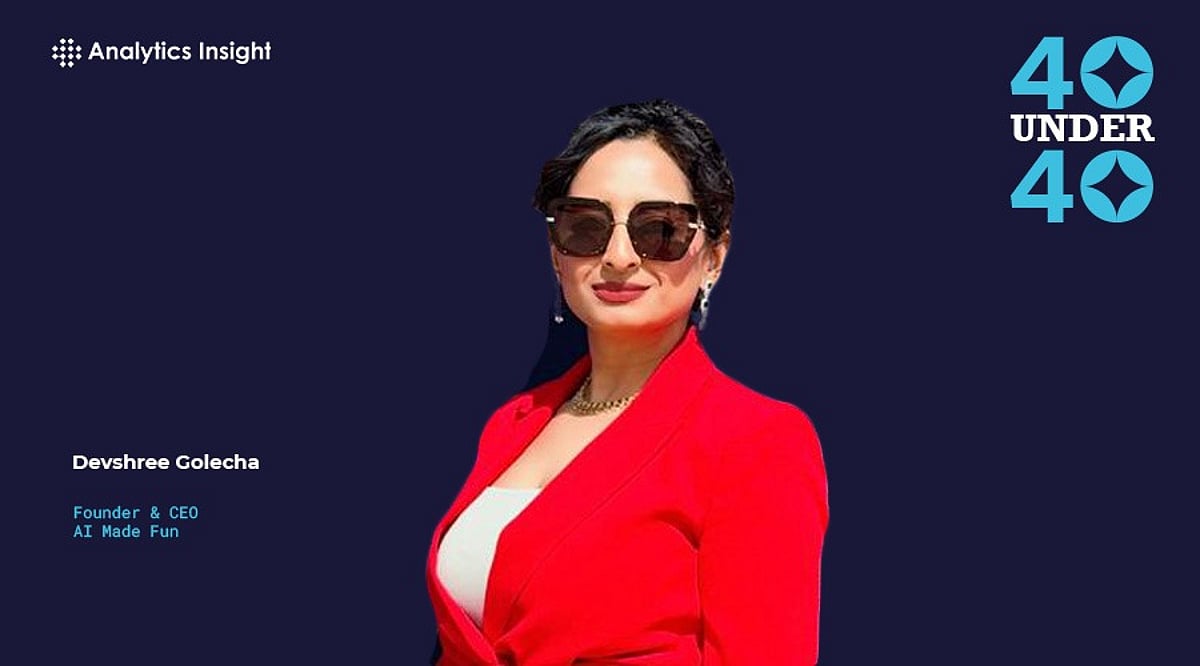
  • Why AI Literacy Must Start in Childhood: An Interview with Devshree Golecha

    Why AI Literacy Must Start in Childhood: An Interview with Devshree Golecha

    Devshree Golecha is the founder and CEO of AI Made Fun, an education technology company dedicated to building AI literacy for every K–12 learner. After 17+ years as a data and analytics executive leading enterprise data strategy, AI transformation, and governance, she left corporate leadership to focus on a mission she believed could not wait: helping children understand the technology that is already shaping their lives.

    Her journey to this work is anything but conventional. It began with door-to-door sales in India, where she learned how to earn trust by listening before speaking. It continued through a chapter as a homemaker in the United States, followed by a reinvention into an award-winning data and AI leader. Across each phase, one belief remained constant: technology only matters when it empowers people.

    That belief became the foundation for AI Made Fun. The company is building a comprehensive K–12 AI literacy curriculum with 60 interactive modules delivered through its own LMS, giving schools a structured and sequenced way to teach AI rather than relying on disconnected one-off activities. At the heart of the experience is an animated video universe featuring three mascots—two dogs and a child—who help students explore AI through stories, humor, and relatable real-world moments.

    Inside the curriculum, students engage through role play, case studies, interactive decision making, and a Socratic approach that encourages them to ask questions, challenge assumptions, and think critically about how AI works and how it should be used. The goal is not just to teach children what AI is, but to help them become thoughtful, creative, and ethical participants in an AI-powered world.

    In addition to building AI Made Fun, Devshree is the award-winning co-author of Data Made Fun for Kids, written with her daughter Kiara. The book has received the International Impact Book Award for Best in STEM, was named Best Math & Data Book 2025 by DataCamp, featured on Great Day Houston (KHOU 11), and adopted in more than 50 charter schools across Texas. Her work has also been recognized with honors including Global Data Power Women, 40 Under 40, Responsible AI Leader Award, High Flyer 50, Extraordinary Women in Tech, and Leading Academic Data Leaders.

    Today, she also serves as an adjunct professor of Data Science, a keynote speaker at global data and AI conferences, a WiDS Ambassador with Stanford University, and a Global CDO Ambassador and Editorial Board Member with CDO Magazine. Her goal is simple but urgent: to make it easy for schools and families to bring a rigorous, engaging AI literacy curriculum to every child.

    Q&A with Devshree Golecha

    Q: What motivated you to launch AI Made Fun?

    After years in data and AI leadership, one thing became impossible to ignore: AI was advancing quickly, but most people—especially children—were not being taught how it worked, how to question it, or how to use it responsibly. I was helping organizations adopt AI at scale while watching kids grow up surrounded by AI-powered tools with almost no real understanding of what was happening behind the screen. That gap is what motivated me to launch AI Made Fun. I wanted to take everything I had learned in enterprise data and AI and turn it into something children, families, and schools could actually use—something joyful, practical, and built for the real world.

    Q: What sparked the idea for AI Made Fun and your book Data Made Fun for Kids?

    It started with simple but powerful questions from children: How does this app know what I like? Why am I seeing this result? Is the machine really thinking? Those questions made it clear that kids were already interacting with data and AI every day, but no one was explaining it to them in a way that felt accessible or age-appropriate. Data Made Fun for Kids was the first step. It turned complex ideas into stories and relatable examples. As the book reached more families and schools, it became clear that the need was much bigger than one book. That is what sparked AI Made Fun—a full K–12 curriculum that helps students build AI literacy over time.

    Q: Why is it important for children to understand AI at an early age?

    Children are already growing up in an AI-shaped world. AI influences what they watch, what they buy, how they learn, and sometimes even how they are assessed. If we wait too long to teach AI literacy, we leave them vulnerable to systems they use every day but do not understand. Early AI literacy gives children the language and confidence to ask better questions: Who built this? What data trained it? Could it be biased? What should I trust? Those habits of thinking are essential not just for future careers, but for informed citizenship.

    Q: How does your platform help children learn AI in a fun and engaging way?

    We make AI feel human, relatable, and interactive. Our platform includes 60 modules across K–12 delivered through our LMS, and our animated video IP features three mascots—two dogs and a child—who guide students through AI concepts using stories and everyday scenarios. Students learn through role play, case studies, interactive decision-making, and a Socratic approach that constantly invites them to reflect, respond, and debate. Instead of passively receiving information, they actively step into the learning experience.

    Q: Why are human-centered skills becoming even more important in the age of AI?

    Because AI can generate answers, but it cannot replace judgment, empathy, values, or imagination. The more powerful AI becomes, the more important it is for children to know how to think critically, solve problems creatively, and make ethical decisions. That is why our curriculum focuses so intentionally on critical thinking, creativity, ethical reasoning, and problem-solving. We are not just teaching students how AI works—we are helping them understand how humans should work with AI.

    Q: What leadership lessons have remained constant throughout each chapter of your career?

    The biggest lesson is that listening comes first. Door-to-door sales taught me that trust is earned, not assumed. That same lesson has guided me in every role since—whether I was leading enterprise teams, teaching students, or building a company. The second lesson is resilience. Reinventing myself across countries, roles, and life stages taught me that a non-linear journey can still lead to meaningful impact. I have learned to see every chapter not as a detour, but as preparation.

    Q: What impact stories have been most meaningful to you?

    The stories that stay with me most are the ones where a child suddenly sees themselves differently. When a student realizes, “I can understand this,” or “I can question this,” that is powerful. It is not just about learning vocabulary; it is about building confidence and identity. Hearing that Data Made Fun for Kids has been adopted in more than 50 charter schools has been deeply meaningful, but even more meaningful are the moments when educators tell me their students are starting to question fairness, bias, and decision-making in the technology around them. That tells me the learning is sticking in a real way.

    Q: How do you envision AI reshaping K–12 education, and what role does AI Made Fun play?

    AI will absolutely reshape K–12 education, from personalization to content creation to teacher support. But the real question is whether students will simply use AI tools, or whether they will truly understand them. That is where AI Made Fun comes in. Our role is to give schools a structured, age-appropriate curriculum they can adopt across K–12 so students are not just consumers of AI, but thoughtful participants who know how to question, evaluate, and use it responsibly.

    Q: What advice would you give to aspiring entrepreneurs and young professionals?

    Start with a real problem, not just an exciting technology. AI is moving fast, but the strongest ideas come from understanding people deeply and building something that genuinely helps them. Also, do not wait for the perfect moment or a perfectly linear path. Some of the most meaningful work begins when you decide to take one small step with conviction, even before you feel fully ready.

  • ViewSonic Unveils First ViewBoard with Built-in 48MP AI Camera for Seamless Hybrid Meetings and Classrooms

    ViewSonic Unveils First ViewBoard with Built-in 48MP AI Camera for Seamless Hybrid Meetings and Classrooms

    ViewSonic has announced the launch of its newest premium interactive display, the ViewBoard IN04V-N Series, marking the company’s first interactive display to feature an integrated 48MP AI camera. Designed to address the growing demand for streamlined hybrid collaboration, the display combines advanced AI capabilities with enterprise-grade performance to simplify communication in boardrooms, classrooms, and other collaborative environments.

    At the core of the ViewBoard IN04V-N is an intelligent imaging system that uses AI facial tracking to keep presenters naturally in focus. The display is equipped with an 8-microphone array, gesture recognition, and sound localization, enabling it to automatically follow speakers, capture voices accurately across the room, and support touch-free interactions. By integrating these features into a single device, ViewSonic eliminates the need for external cameras and audio peripherals, creating a more intuitive conferencing experience.

    “Video collaboration has become the foundation of modern communication, and organizations today need solutions that are intelligent, seamless, and ready from the moment a meeting begins,” said Muneer Ahmad, Vice President – Sales & Marketing, ViewSonic India. “With the ViewBoard IN04V-N, we are introducing our first interactive display with a built-in 48MP AI camera that eliminates the need for multiple peripherals while delivering exceptional video quality and intelligent tracking capabilities. Combined with powerful AI tools for collaboration and learning, the IN04V-N is designed to help businesses and educational institutions create smarter, more connected spaces.”

    The ViewBoard IN04V-N is available in 65-inch, 75-inch, and 86-inch screen sizes, and it enhances productivity through an advanced AI toolkit. The AI Text Recognition Pen instantly converts handwritten notes into editable digital text, while other AI-powered features include multilingual translation, text-to-speech functionality, and intuitive formatting tools such as text resizing, alignment controls, color customization, and shape editing. Users can also copy, duplicate, rearrange layers, lock or unlock objects, and delete content, enabling a more flexible collaborative workflow.

    The display introduces AI-assisted search and learning capabilities that enrich meetings and classroom sessions. Users can search recognized text directly on YouTube and Wikipedia, generate explanations and learning challenges for educational content, and use the Magical Pen to transform rough sketches into polished geometric shapes or convert simple drawings into detailed AI-generated visuals. The Shape Recognition feature automatically refines hand-drawn geometric figures into clean, professional-looking forms, making brainstorming sessions and presentations more engaging.

    Powered by Android 16 EDLA, the ViewBoard IN04V-N features a 4K Ultra HD display with an IR multi-touch frame, an RK3576 processor based on Arm Cortex-A72×4 and Cortex-A53×4 architecture, 8GB LPDDR5 RAM, and 128GB eMMC storage for responsive multitasking. Additional features include HDMI input supporting up to 3840 × 2160 at 60Hz, a Smart USB port compatible across all channels, 80-pin OPS support for 4K 60Hz display, integrated speakers, and NFC functionality for quick and secure access.

    With the launch of the ViewBoard IN04V-N Series, ViewSonic continues to expand its portfolio of AI-enabled visual solutions. The series will be available across India through ViewSonic’s authorized partners and enterprise sales network.

    About ViewSonic

    Founded in 1987 and headquartered in Brea, California, ViewSonic is a leading global provider of visual solutions for education, business, and consumer markets. The company delivers a unified ecosystem of innovative hardware, software, and services that integrate seamlessly with the platforms and tools customers trust. Its product portfolio includes monitors, projectors, interactive displays, LED displays, commercial displays, video conferencing systems, and industrial solutions. Complementing its hardware is a robust suite of software offerings, including myViewBoard, ClassSwift, TeamOne, Manager, and AirSync, featuring AI-powered tools for collaboration, device optimization, and management. Learn more at www.viewsonic.com.

  • Zoho Launches AI-Powered Classes 2.0 Across India with Support for 22 Languages

    Zoho Launches AI-Powered Classes 2.0 Across India with Support for 22 Languages

    Zoho has unveiled Zoho Classes 2.0, an advanced Learning Management System (LMS) that leverages artificial intelligence to simplify teaching and learning. The platform introduces a suite of new tools designed for students, teachers, schools, colleges, and universities. Notably, Zoho is offering the platform free of charge to government educational institutions across India.

    Originally launched during the COVID-19 pandemic as a tool for teachers to collect assignments online, Zoho Classes has evolved significantly based on educator feedback. Zoho Classes 2.0 now functions as a comprehensive learning platform that supports everyday classroom activities.

    AI Tools Enhance Teaching and Learning

    One of the standout features is the AI tutor, which only answers questions related to the subjects a student is studying. This ensures learners stay focused on their curriculum rather than receiving answers on unrelated topics. The platform also offers daily practice questions and rewards consistent learning through simple streaks.

    Teachers benefit from time-saving AI tools that can quickly generate lesson plans, course details, learning objectives, and classroom content. Educators can review and customize materials before sharing them with students, significantly speeding up lesson preparation.

    Another valuable addition is AI-based grading, which evaluates computer science assignments and prepares feedback for teachers. Teachers retain final control before releasing marks to students. Zoho states this feature can reduce hours of manual grading each semester, allowing educators to dedicate more time to student interaction.

    New Features for Schools and Colleges

    Educational institutions gain tools to streamline administrative tasks. Many schools and colleges must prepare reports for government and education authorities. Zoho Classes 2.0 helps collect course information and learning records, simplifying and accelerating report generation.

    The platform supports all 22 scheduled Indian languages, enabling students and teachers from diverse regions to use it comfortably. Zoho says the AI understands multiple Indian languages, making learning more natural for users.

    Safety features are also enhanced. The AI tutor restricts answers to classroom subjects, and schools can decide whether to enable AI features for students. The mobile app allows students to view saved lessons offline for a limited time, though full downloads are not available.

    Free Access for Government Institutions

    Zoho is providing Zoho Classes 2.0 at no cost to central and state government schools, colleges, and universities. Individual teachers can use it free for up to 100 students. Private institutions can subscribe for Rs 500 per teacher per month.

    With Zoho Classes 2.0, the company aims to make education more accessible and efficient. The platform reduces routine tasks for teachers, offers better learning support for students, and helps schools manage academic operations smoothly. Its intuitive AI features and multilingual support are expected to drive digital learning adoption across India in the coming years.

  • Bollywood Stars Backing AI, Fintech, and EdTech Startups: A Look at Celebrity Investors

    Bollywood Stars Backing AI, Fintech, and EdTech Startups: A Look at Celebrity Investors

    Bollywood celebrities are increasingly diversifying their portfolios beyond the silver screen, investing in cutting-edge technology startups spanning artificial intelligence, fintech, and edtech. Here is a roundup of notable Bollywood personalities who have placed strategic bets on innovative ventures.

    Shilpa Shetty – AI Wellness

    Shilpa Shetty has invested in AI-powered wellness and health technology ventures, reflecting a growing trend among celebrities to back preventive healthcare and digital fitness innovations.

    Suniel Shetty – Fintech

    Suniel Shetty has backed fintech startups focused on digital payments and financial inclusion, expanding his investment interests beyond entertainment and traditional business sectors.

    Deepika Padukone – EdTech

    Through her investment initiatives, Deepika Padukone has supported education-focused technology companies that help learners access quality digital education and skill development opportunities.

    Ranveer Singh – AI Marketing

    Ranveer Singh has invested in AI-driven consumer technology and marketing startups that enhance brand engagement through advanced analytics and personalized customer experiences.

    Madhuri Dixit – EdTech Learning

    Madhuri Dixit has backed online education platforms promoting accessible learning, combining educational innovation with technology-driven student engagement across diverse audiences.

    Ajay Devgn – AI Content

    Ajay Devgn has entered AI-enabled media technology ventures that explore content creation, production efficiency, and innovative entertainment solutions for digital-first consumers.

    Alia Bhatt – Sustainable Tech

    Alia Bhatt has invested in technology startups that combine AI with sustainability, highlighting her interest in environmentally responsible innovation and future-focused business models.

    Karan Johar – Digital Startups

    Karan Johar has expanded his investment interests into technology-led startups, supporting scalable digital businesses across entertainment, fintech, and consumer technology ecosystems.

    Riteish Deshmukh – Startup Ecosystem

    Riteish Deshmukh has actively invested in emerging startups spanning AI, fintech, and edtech, encouraging innovation while diversifying his entrepreneurial ventures beyond cinema.

    These investments underscore a broader shift where Bollywood celebrities are leveraging their influence and capital to shape the future of technology and education in India.