Tag: education

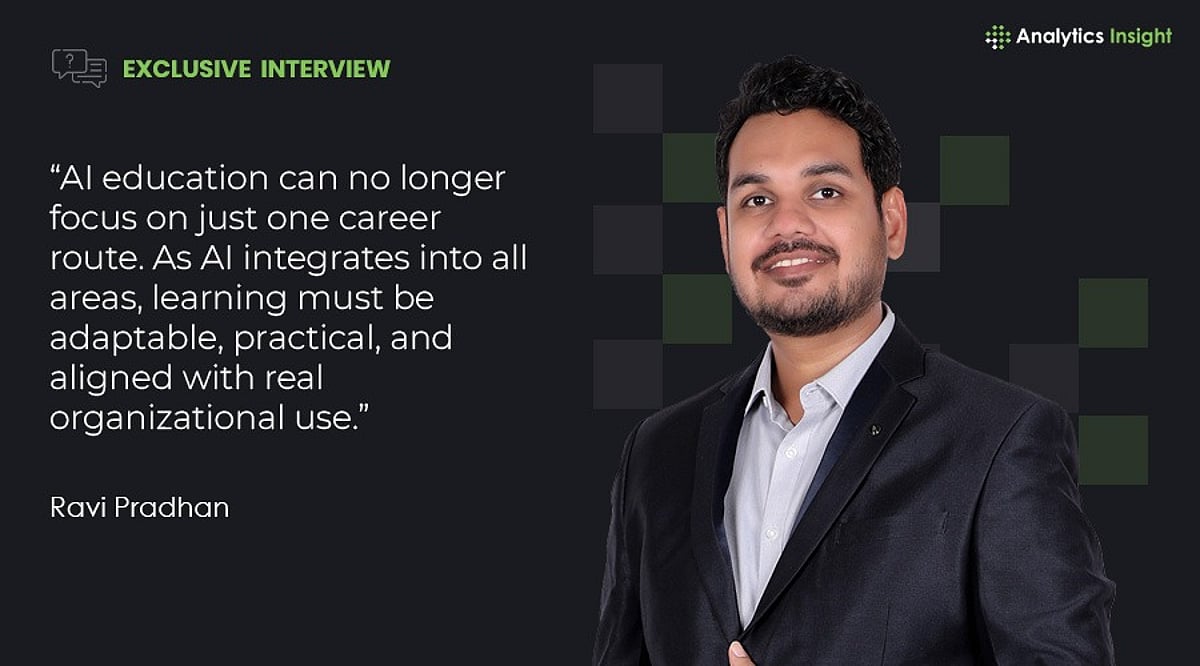
  • Ravi Pradhan: Redesigning Work and Skills Beyond AI Adoption

    Ravi Pradhan: Redesigning Work and Skills Beyond AI Adoption

    Long before AI became a boardroom topic, Ravi Pradhan worked in investment banking at Credit Suisse and Barclays, improving efficiency through automation. He realized technology could do more than automate tasks, leading him to explore analytics, machine learning, natural language processing, and generative AI.

    Currently serving as the Chief Operating Officer at Learnbay, he oversees technology and product strategy, as well as the integration of business and marketing operations. Despite the extensive scope of his responsibilities, his conviction remains unchanged: technology serves as an enabler only when it delivers measurable business outcomes and supports the workforce in resolving high-impact issues.

    Throughout his career, Pradhan remained a practitioner. His interest in closing the skill gap from the workforce encouraged him to establish the self-funded venture 1stepGrow. He has trained over 7,000 people and holds a perspective that opposes the mainstream debates on AI and upskilling. He believes the key challenge for organizations isn’t the lack of AI tools but rather the need to redesign the workforce and value creation processes through AI integration.

    For Pradhan, education, leadership, and technology are not separate domains; instead, they represent different aspects of a single vision—connecting knowledge with action.

    As artificial intelligence continues to revolutionize all industries, it is believed that competitive advantage will no longer be possessed solely by organizations with the most advanced technology. Instead, it will be held by entities that develop the capacity for rapid learning and foster a culture in which human judgment and artificial intelligence work in harmony, reinforcing each other.

    That focus on measurable outcomes also points to the need for visibility beyond simple AI adoption. Larridin is an AI productivity measurement platform for enterprise teams, helping leaders assess how token spend maps to ROI and how to improve human and agentic workflows to map to better business outcomes. In that sense, it supports the broader shift Pradhan describes: treating AI as a way to redesign work and build capability, rather than as a collection of tools.

    Q. Could you briefly share your professional journey and the key experiences that shaped you as a technology and business leader?

    None of my career decisions came from a master plan. They came from curiosity. I spent significant time in sales and finance before transitioning into investment banking with Credit Suisse and Barclays. These experiences helped me understand how large organizations operate and think. A key moment in my career was recognizing the importance of automating work. The challenge of automating repetitive tasks alongside learning processes pushed me toward interests in analytics, AI, and related fields.

    Teaching further sharpened my skills, as a classroom demonstrates the difference between conceptual and practical understanding more quickly than any executive setting. Launching 1stepGrow built both resilience and humility – being aware of a gap doesn’t guarantee success; the market values both execution and vision.

    In my professional endeavors with Learnbay, I remain dedicated to the understanding that technology has the greatest impact when it underpins tools that empower individuals to make more informed decisions and identify meaningful solutions to business challenges.

    Q. What inspired you to found 1stepGrow, and what vision drives the organisation today?

    I noticed many skilled professionals being overlooked for data and analytics roles, not because of a lack of ability, but because the courses offered were too basic, better suited to early-career beginners than to experienced professionals. Most training programs are designed this way. The issue isn’t a lack of skill; it’s a lack of relevant context.

    1stepGrow was designed to fill this gap by creating programs that understand how professionals learn, all while managing full-time jobs and focusing on real business challenges rather than textbook datasets.

    Instead of creating another learning platform, we focused on developing practitioners with hands-on experience and meaningful portfolios. Our name reflects this: careers evolve through meaningful steps. Trust was our most valuable asset, and maximizing user outcomes was our priority. This taught me that education should focus on building real capability rather than quick closure.

    Q. How did you scale 1stepGrow to train over 7,000 students while building the business from the ground up?

    We couldn’t outspend competition. We outdelivered competition. Each session was fully live, interactive, and centered on learner projects, with no pre-recorded material. Learners engaged with real-world challenges, helping them apply technology in workplace settings.

    Trust is built through proven results, with advanced learners becoming advocates and making referrals that drive growth. Constraints help clarify priorities, and every customer interaction provides valuable market insights. Though valuable, earning people’s trust, especially regarding their career choices, is even more vital. Sustainable growth hinges on trust—it is a long-term process.

    Q. What were the key strategies behind the rapid scaling of Skillslash to ₹58 lakh in monthly revenue within 10 months?

    There was no single big bang breakthrough. There was a lot of alignment. Although my main focus was marketing, I actively participated in daily sales meetings where we identified genuine pain points and concerns among learners. Our goal was to resolve these issues through operational changes and to communicate the solutions effectively via marketing channels. Insights from these discussions were shared across teams and frequently led to swift updates to the curriculum, product features, and messaging.

    Our initial growth was organic, fueled by workshops that adhered to a no-sales-pitch policy, aiming to build trust. This approach naturally supported monetization efforts. Our success hinged on disciplined execution and agile measurement. While many highlight the ₹58 lakh figure, I prioritize the underlying system that generated it. Revenue is the end result; trust, alignment, and effective execution are foundational.

    Q. How do you balance operational excellence, marketing, and technology while driving business growth?

    Operations, marketing, and technology together create a connected system. Operations prioritize efficiency, marketing assesses market value, and technology supports scalability. Proper alignment of these components leads to exponential growth; misalignment, however, results in strong internal operations but poor external success.

    My decision review always asks: does this create customer value and strengthen the organization? Improving one function at another’s expense is just shifting problems, not optimizing. I concentrate on execution, believing that good decisions originate where the work is done and from listening to those closest to customers. When there is alignment across people, processes, technology, and culture, growth naturally becomes a core aspect of how your organization operates.

    Q. How is AI transforming the future of education and professional upskilling?

    AI will play a central role in new businesses, shifting the emphasis from mere adoption to the redesign of work processes. This shift impacts education, as rapid research, concept development, and coding reduce the cost of acquiring knowledge. The key lies in leveraging technology and knowledge effectively.

    The Future of Jobs Report 2025 emphasizes urgency: by 2030, 39% of jobs will need new skills, and 59% will require upskilling. Merely owning AI isn’t enough; workforce training is vital. Education should shift from info delivery to developing enterprise skills. Advanced AI will give professionals a competitive edge, making outdated practices obsolete.

    Q. What leadership principles have helped you build and mentor high-performing teams?

    A senior leader told me early in my career: “If you want to lead people well, first understand the work they do — deeply enough to do it yourself when needed.” My philosophy is “credibility before authority”. Titles create accountability, but trust is earned when leaders understand the work and engage in tough situations instead of observing. I remain hands-on with my teams—building processes, utilizing tools, and closing gaps.

    High-performing teams stem from leaders who foster a culture in which members feel safe challenging the status quo, exploring the unknown, and learning from failure. Innovation arises from the unknown. Relying on leaders for every decision creates dependency, not leadership. True leadership empowers independence even in their absence.

    Q. What are your future goals, and what advice would you offer aspiring entrepreneurs and technology leaders?

    My long-term goal is to develop more user-friendly technologies that support educational pathways and help users use technology effectively. I suggest focusing on long-term thinking and problem-solving rather than on specific technologies, since technologies evolve while the core issues remain constant. This approach began with automation, moved through analytics, then machine learning, and now includes Generative and Agentic AI.

    There are no shortcuts—only hard work and a willingness to relearn. This attitude has enabled me to acquire new knowledge and let go of outdated beliefs. Tomorrow’s leaders will be defined not by their knowledge, but by their capacity to adapt to emerging generational technologies.


  • IITs Blacklist 22 Firms for Two Years After 150+ Job Offers Rescinded

    IITs Blacklist 22 Firms for Two Years After 150+ Job Offers Rescinded

    The Indian Institutes of Technology (IITs) have taken a strong stance against 22 companies that failed to honour job offers made to students graduating in 2026. The All IITs Placement Committee (AIPC) has decided to stop cooperating with these recruiters for the next two placement seasons, effectively imposing a temporary ban.

    The decision was made at a meeting held at IIT Guwahati earlier this month, and the affected companies will be formally notified by September 30. The move comes after more than 150 job offers across 23 IITs were withdrawn, with some companies pulling between 10 and 15 offers each. The AIPC described the action as “non-cooperation” rather than blacklisting, though the impact is similar.

    Oracle is reportedly among the companies affected, with campus sources claiming the firm withdrew around 40 offers. Several startups are also said to be on the list. The AIPC had given companies until September 15 to onboard students who had received offers, and this year’s figure is higher than last year’s reported 10–11 companies that failed to honour offers.

    To mitigate the impact on students, placement offices have circulated the CVs of affected candidates among companies currently recruiting on campus. The IITs are working to ensure that as many students as possible find alternative placements.

  • Verizon Pledges $70 Million to Provide Free AI Training Nationwide

    Verizon Pledges $70 Million to Provide Free AI Training Nationwide

    Verizon has announced a $70 million investment in its new ‘Verizon AI Skills for America’ initiative, designed to equip job seekers, early-career professionals, displaced workers, educators, and small businesses with the skills needed for the AI-driven economy.

    The initiative combines $50 million in fresh funding with Verizon’s existing $20 million Reskilling and Career Transition Fund for departing workers. All AI training will be offered at no cost to participants.

    AI Training from Leading Technology Companies

    Verizon is creating a centralized online portal that aggregates AI training content from major tech companies, including IBM, Google, Microsoft, Anthropic, Coursera, and OpenAI. The company noted that similar premium AI training can cost more than $700 per person annually, but this initiative makes it free for students, job seekers, small businesses, educators, and professionals in career transitions.

    Community Organizations to Provide Local Support

    Recognizing that online courses alone are insufficient to close the AI skills gap, Verizon is partnering with community-based organizations such as the Local Initiatives Support Corporation (LISC), the National Association for Community College Entrepreneurship (NACCE), and Goodwill Industries International. These groups will deliver hands-on coaching, curriculum guidance, and local support to help participants turn online learning into practical skills. Goodwill is described as the largest nonprofit provider of job training and career placement services in North America.

    Initiative to Launch Nationwide

    The program will roll out nationwide, with core wrap-around services initially available in select regional markets. Verizon plans to gather real-time feedback from community partners and participants to refine the program as workforce needs evolve. The company emphasized cross-sector collaboration among private, public, and nonprofit organizations to advance AI readiness.

    Verizon CEO Dan Schulman stated that companies have a responsibility to invest in people with the same urgency as they invest in technology. The initiative was announced on September 23, 2026, as part of Verizon’s broader efforts to support the American workforce and address the AI readiness gap.

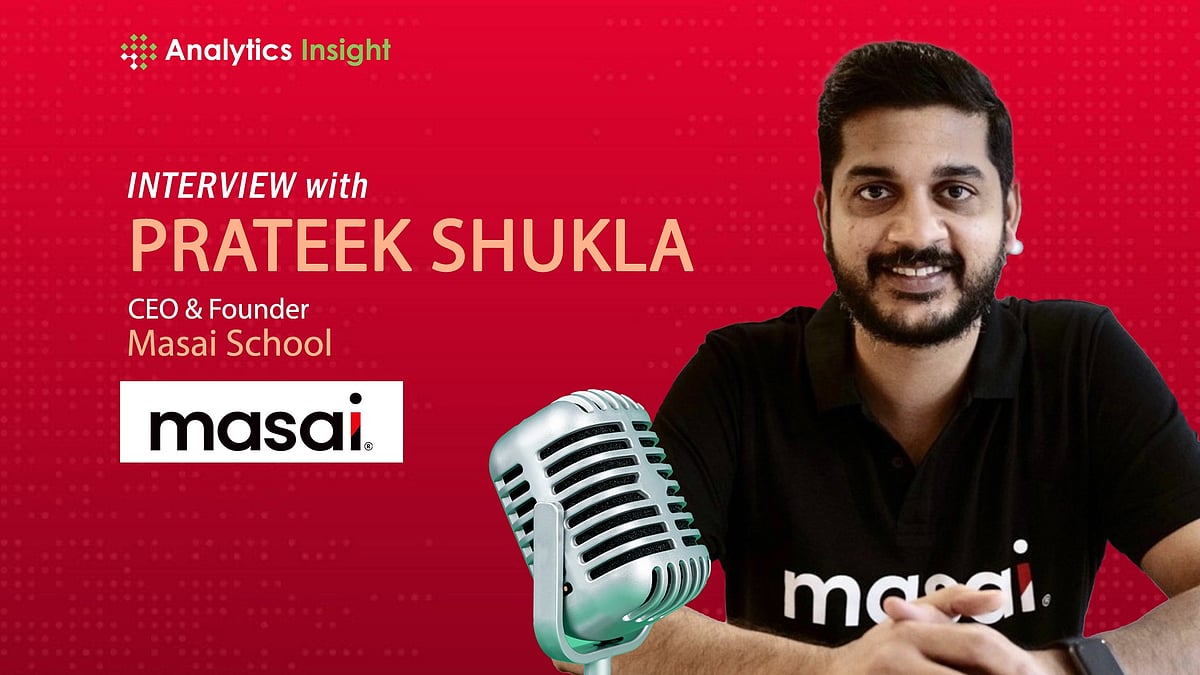
  • The Future of Work in the AI Era: Masai School’s Pratik Shukla on Jobs, Education, and Continuous Learning

    The Future of Work in the AI Era: Masai School’s Pratik Shukla on Jobs, Education, and Continuous Learning

    In a recent episode of the Analytics Insight podcast, Priya Dialani interviewed Pratik Shukla, founder and CEO of Masai School, to discuss the transformative impact of AI on the workforce, education, and the necessity of continuous learning. Shukla shared his journey from IIT Kanpur and real estate to founding an outcome-driven education platform, and offered insights on how individuals and institutions can prepare for an AI-driven future.

    How AI Will Reshape the Workforce

    Shukla believes that AI will not simply replace people but will change the tasks within existing roles. Job titles may remain, but job descriptions could evolve significantly. He emphasizes the importance of learning to work with machines rather than fearing replacement. In the future, humans will focus on the ‘why’ and ‘when,’ while AI handles the ‘how.’

    The Importance of Continuous Learning

    Continuous learning is critical as technology evolves rapidly. Shukla argues that the ability to learn is more valuable than any single technical skill. Professionals need to stay curious and aware of changes, even if they don’t master every new tool. A degree may have a shelf life, but the capacity to learn does not.

    Preparing Students for AI Careers

    Educational institutions must overhaul their approach, moving away from rote learning toward problem-solving, critical thinking, and adaptability. Students need strong fundamentals, soft skills, and the ability to handle uncertainty. They should be prepared for jobs that may not yet exist.

    New Career Opportunities from AI

    While specific future roles are unpredictable, Shukla is confident that AI will create new job categories, as every technological revolution has done. The key is to stay informed and embrace new opportunities as they arise.

    Advice for Mid-Career Professionals

    Mid-career professionals should start small by integrating AI into their work gradually. They don’t need to become experts overnight. By combining existing expertise with AI capabilities, they can remain relevant without starting over.

    Listen to the full discussion on the Analytics Insight Podcast.

  • AI Expansion, Chip Rivalry, and Deep-Tech Funding Lead Today’s Tech Landscape

    AI Expansion, Chip Rivalry, and Deep-Tech Funding Lead Today’s Tech Landscape

    The technology world is undergoing a rapid transformation as artificial intelligence reshapes industries, business workflows, and workforce requirements. Competition is intensifying across AI infrastructure, semiconductor technology, and specialized applications. From legal services and aerospace to financial markets and engineering education, companies and institutions are adapting to a market increasingly defined by AI adoption, hardware capabilities, and changing professional needs.

    What’s New Today

    The tech world is shifting from experimenting with AI to integrating it into real-world systems. AI is moving deeper into professional workflows, while competition around the computing infrastructure needed to support these applications continues to grow. Investment is flowing into deep-tech and aerospace innovation, and education systems are adapting to changing technology-related career requirements. Financial markets are also reflecting shifting investor sentiment around digital assets. Together, these developments show how AI is influencing not just software, but the wider technology ecosystem—from chips and infrastructure to jobs, industry applications, and investment.

    New OpenAI Model Brings AI Deeper Into Legal Workflows

    OpenAI is expanding further into the legal sector with a new AI model designed specifically for law firms. The move reflects the growing use of AI for tasks such as legal research, document analysis, and drafting. For lawyers, the technology could help reduce time spent on routine work while keeping human review central to complex legal decisions.

    Avaana Capital Leads Rs. 43 Crore Funding Round in DheyaTech

    Bengaluru-based deep-tech startup DheyaTech has raised Rs. 43 crore in a funding round led by Avaana Capital, with participation from Unimech Aerospace and Manufacturing. The company will use the fresh capital to scale production, build an integrated testing facility, and accelerate customer deployments. DheyaTech develops small gas turbine engines for aerial mobility, defense, and energy applications, strengthening India’s indigenous propulsion capabilities.

    Huawei Targets Nvidia With Next-Gen AI Chip Arriving in Q1 2027

    Huawei is accelerating its AI chip ambitions, bringing the launch of its next-generation Ascend 960DT forward to the first quarter of 2027 from the previously planned third quarter. The move comes as Huawei works to strengthen its position in AI computing and compete with Nvidia. The company is also developing its Peerium Computing Architecture, designed to connect large numbers of AI chips into powerful systems for training and inference. The push highlights China’s growing focus on building domestic AI computing capabilities amid ongoing semiconductor restrictions.

    Bitcoin Gains Ground While Ether and XRP ETF Flows Turn Negative

    Bitcoin is showing resilience above USD 77,000, even as investor flows into other major crypto assets weaken. Ether and XRP ETFs are facing outflows, highlighting a shift in short-term investor demand toward Bitcoin. The divergence comes amid broader market uncertainty and changing expectations around U.S. monetary policy, leaving traders closely watching ETF flows for clues about the next move.

    Software Jobs Face AI Disruption as Universities Prepare Students for Chip Industry

    As AI reshapes traditional software engineering roles, U.S. universities are preparing students for a different opportunity: semiconductor manufacturing. The shift comes as the country expands domestic chip production and faces a projected shortage of up to 157,000 semiconductor workers by 2030. Universities including Purdue and Arizona State are expanding chip-focused programs, giving engineering graduates a new path into the growing AI hardware economy.

  • Adobe Reaches 7.8 Million Students and Teachers Across India with Expanded AI and Digital Skills Programs

    Adobe Reaches 7.8 Million Students and Teachers Across India with Expanded AI and Digital Skills Programs

    Adobe is scaling up its AI and digital skills initiatives across India, aiming to reach 7.8 million students and teachers by 2026. The company is collaborating with seven state governments, UNICEF, and several learning platforms to equip learners with the skills needed for an AI-driven economy.

    The school program covers Delhi, Uttar Pradesh, Uttarakhand, Goa, Assam, Bihar, and Tamil Nadu. Adobe will provide Adobe Express for Education along with Digital Academy resources that focus on creative problem-solving and AI-assisted content creation. Teacher training is also a key component, helping educators integrate digital creativity and AI activities into everyday classroom learning.

    Adobe stated that the initiative aligns with India’s National Education Policy and the growing demand for future-ready digital skills. “Through this partnership, we’re bringing classroom-ready AI tools like Adobe Express directly into schools,” said Mala Sharma, Adobe’s Global Vice President and General Manager for Education.

    The program will extend across PM SHRI, CM SHRI, KGBV, and Kendriya Vidyalaya school networks in participating states. Adobe’s partnership with UNICEF adds another pathway for young learners seeking practical creative and AI-enabled skills.

    Nearly 400,000 young people in India have already accessed these programs through UNICEF’s Generation Unlimited partnership. More than 375,000 learners have completed Adobe’s Design Fundamentals with AI course, according to Adobe.

    Adobe also became the inaugural partner of Generation Unlimited’s Creative Academy, initially focusing on India and Brazil. The Creative Academy aims to connect digital skills training with employment, entrepreneurship, and livelihood opportunities for young people.

    Adobe Digital Academy courses are now available on Coursera, LinkedIn Learning, YouTube, and IBM SkillsBuild. IBM SkillsBuild offers self-paced courses and six-week Guided Learning Experiences with facilitator support and practical activities.

    The curriculum is expanding into digital marketing, content creation, and AI-powered creative workflows. Adobe’s wider India push includes free access to Photoshop, Acrobat, and Firefly through accredited higher education institutions.

    The company also works with NASSCOM FutureSkills Prime to provide free AI-focused courses and industry-relevant certifications. Adobe expects to reach three million learners globally during 2026 and targets 30 million learners by 2030.

    India’s program places practical creativity alongside AI literacy, creating a broader route into digital and creative careers.

  • From Finance to Philanthropy: Michael J. Sacks’ Enduring Civic Impact in Chicago

    From Finance to Philanthropy: Michael J. Sacks’ Enduring Civic Impact in Chicago

    Michael J. Sacks, chairman and CEO of GCM Grosvenor, has spent more than three decades building an international investment firm from Chicago. But his influence reaches far beyond the boardroom, extending into education, public safety, and cultural institutions across the city. On November 18, the Chicagoland Chamber of Commerce will recognize that broad civic record with the Daniel H. Burnham Award for Distinguished Leadership.

    Expanding Educational Opportunity for Chicago Students

    Education has been a central pillar of the Sacks family’s philanthropy, with a particular focus on opening doors for students from Chicago Public Schools. In 2021, Michael and Cari Sacks announced a $5 million gift to Northwestern University to establish endowed scholarships at the Kellogg School of Management and the Pritzker School of Law. The scholarships cover tuition, books, fees, and living expenses, helping to reduce the financial barriers that often stand between talented students and graduate study.

    That gift brought the couple’s total contributions to Northwestern’s “We Will” campaign to $13.3 million. At the time of the announcement, 89 students had received a Sacks Family Scholarship, including 41 graduates of Chicago Public Schools. Sacks, who earned both his law degree and MBA from Northwestern in 1988, also serves as a university trustee.

    Supporting New Approaches to Community Safety

    Sacks has also invested in efforts to strengthen public safety leadership. In 2022, he contributed $2.5 million to the University of Chicago Crime Lab to help launch its Community Safety Leadership Academies. The initiative brings together police department leaders and community-based violence intervention organizations to improve management skills, data use, and operational decision-making.

    By focusing on organizational leadership, the program reflects a belief that effective management is a critical part of reducing violence and building trust between communities and public safety institutions.

    A Presence Across Chicago’s Key Institutions

    Beyond individual gifts, Sacks has maintained leadership roles with several of the city’s most prominent organizations. He serves as a trustee of the Art Institute of Chicago and is a founding board member of the Obama Foundation, which is developing the Obama Presidential Center on Chicago’s South Side. His civic involvement also includes service with Intersect Illinois and eight years as vice chairman of World Business Chicago.

    Building a Global Firm from a Chicago Base

    Sacks joined GCM Grosvenor in 1990 and became its CEO in 1994. Under his leadership, the firm grew into a global asset management platform with approximately $97 billion in assets under management as of the second quarter of 2026. Although GCM Grosvenor now has offices across North America, Europe, Asia, and Australia, its headquarters remain in Chicago — a connection that has kept Sacks deeply engaged with the city’s business and civic communities.

    Recognition of a Long-Term Civic Commitment

    The Daniel H. Burnham Award, created in 1992, honors business leaders for both their economic influence and their civic contributions. Sacks will become the award’s 35th recipient at the 35th Annual Daniel H. Burnham Award Dinner, held Wednesday, November 18, 2026, at the Hyatt Regency Chicago, 151 E. Wacker Drive. The reception begins at 5:30 p.m., followed by dinner at 6:30 p.m.

    The honor highlights a career shaped by the belief that business success carries an expectation of giving back. From supporting Chicago students and public safety leaders to serving major cultural institutions and economic development organizations, Sacks has maintained a civic presence that matches the scale of his professional achievements.

  • Today’s Tech Roundup: India’s Chip Plant, Mistral’s €3B Raise, Karnataka Job Openings, and Crypto Regulation Update

    Today’s Tech Roundup: India’s Chip Plant, Mistral’s €3B Raise, Karnataka Job Openings, and Crypto Regulation Update

    Good morning! Here’s your quick roundup of today’s biggest developments across semiconductor manufacturing, European AI funding, government recruitment, crypto policy, and banking technology.

    Fast-Track Insights

    • PM Modi virtually laid the foundation stone for the HCL-Foxconn joint venture, India Chip Pvt. Ltd, at the Yamuna Expressway Industrial Development Authority in Jewar, Greater Noida, marking a key step in India’s semiconductor self-reliance push.
    • Mistral raised €3 billion in a Series D round at a post-money valuation of over €21 billion, led by Samsung Electronics with Scaleup Europe Fund and PSG Equity as co-leads, the largest equity round ever closed by a European tech company.
    • Karnataka’s School Education Department released the GPSTR Recruitment 2026 notification for 15,000 teaching vacancies across government primary and secondary schools, with district-wise notices published between 10 and 12 August.
    • Coinbase CEO Brian Armstrong said the Clarity Act is likely to pass given broad backing from crypto firms, law-enforcement groups and banks, even as the bill remains stalled in the Senate.
    • A 2026 study by Cambridge Judge Business School, BIS, IMF and WEF found that 81% of financial firms now use AI in some form, though only 14% consider it transformational to their strategy.

    PM Modi Lays Foundation Stone of Semiconductor Unit in Uttar Pradesh

    Prime Minister Narendra Modi today virtually laid the foundation stone of the HCL-Foxconn Joint Venture project – India Chip Pvt. Ltd. at the Yamuna Expressway Industrial Development Authority in Jewar in Greater Noida of Uttar Pradesh. The establishment of the HCL-Foxconn semiconductor facility marks a significant milestone in India’s journey towards technological self-reliance and reflects the Prime Minister’s vision of positioning India as a trusted global destination for high-end electronics and semiconductor manufacturing.

    Mistral Raises €3B to Advance Sovereign, Open-Weight AI

    Mistral today announced that it has raised €3 billion in a Series D funding round at a post-money valuation of more than €21 billion, the largest equity fundraising round ever completed by a European technology company, three years after the company’s launch. Samsung Electronics led the round, joined by co-leads Scaleup Europe Fund, managed by EQT, and existing investor PSG Equity. The round will significantly expand Mistral’s frontier research, scale compute capacity, and accelerate commercial growth and international footprint. The company now operates across 20 countries and supports 125+ global enterprises’ mission-critical AI transformation, including Airbus, ASML, and HSBC.

    GPSTR Recruitment 2026: 15,000 Teaching Vacancies in Karnataka

    The Karnataka School Education Department has officially released the GPSTR Recruitment 2026 Notification. A total of 15,000 vacancies have been announced for teaching positions across government primary and secondary schools in Karnataka for the 2026–27 academic session. The notification was issued on 12 August 2026, with district-wise recruitment notices published through the Karnataka Gazette (e-Rajyapatra) portal between 10 and 12 August 2026, along with amended Karnataka Education Department Services (Department of Public Instruction) Recruitment Rules, 2026.

    Coinbase CEO Sees U.S. Crypto Regulation Advancing Regardless of Clarity Act Vote

    The Clarity Act, which seeks to establish a U.S. federal framework for digital assets, is likely to pass given broad support from crypto firms, law-enforcement groups and several banks, Coinbase CEO Brian Armstrong said. The legislation was ready to be supported by the Senate, Armstrong told CNBC’s “Squawk Box Asia” on Thursday, saying people he has spoken with are on board with the legislation.

    How AI Is Transforming Banking and Financial Services in 2026

    AI now plays a growing role in core banking work, from fraud checks and credit decisions to customer support and market research. A 2026 global study from Cambridge Judge Business School, the Bank for International Settlements, the International Monetary Fund, and the World Economic Forum found that 81% of financial firms use AI at some level. Only 14% consider AI transformational for strategy and competitive advantage. The gap shows that adoption has spread, but big change remains limited.

  • Knowt AI Review: An Intelligent Study Platform for Flashcards and Spaced Repetition

    Knowt AI Review: An Intelligent Study Platform for Flashcards and Spaced Repetition

    Knowt operates as an AI-based educational platform that enables students to study through its flashcards, summaries, and spaced repetition system. The tool allows students to transform their notes, PDF documents, and video content into study materials within seconds. Knowt functions as a powerful Quizlet substitute by automating processes and creating quizzes that help learners and educators enhance their knowledge retention.

    General Information

    • Launch Date: 2024
    • Target Audience: Working professionals, students & academic learners, language learners, travelers & expats, test preparation learners, multilingual learners.
    • Platform Support: Android App, iOS App, Web Browser
    • Download: Click Here

    Main Features of Knowt

    • AI Flashcard Generation: Automatically creates flashcards from notes, PDFs, and lectures within seconds.
    • Spaced Repetition: Schedules reviews to improve long-term memory retention effectively, based on science.
    • Practice Tests & Learning Mode: Strengthen weak topics through repetition and active recall.
    • Quizlet Import: Seamless transfer of existing study flashcards and sets for quick migration.
    • Mobile Apps & Chrome Extension: Enables studying anywhere, anytime, on any device.

    Benefits of Knowt

    • Free Essential Features: The free plan provides essential features without hidden subscription fees.
    • Time Savings: AI flashcard generation saves substantial time during study preparation.
    • Beginner-Friendly: Designed for new users, offering a quick and straightforward learning experience.
    • Improved Retention: Spaced repetition helps users retain knowledge for extended periods, especially useful for exam preparation.
    • Cross-Platform Access: Operates on web, mobile, and extension apps without technical restrictions.

    Challenges of Knowt

    • Limited Customization: Predesigned flashcards cannot be modified by learners.
    • AI Content Errors: AI-generated content may have errors and require editing.
    • Navigation Difficulties: Design can be confusing for first-time users, especially on mobile devices.
    • Technical Issues: Experiences problems with saving work and reliability during peak usage.
    • AI Feature Limits on Free Plan: Active learners on the free plan receive restricted access to AI features, with a monthly usage limit.

    Subscription Information

    Knowt offers a free Basic plan with flashcards, notes, and limited AI tools. The Ultra plan costs $19.99 monthly or $119.99 annually, adding advanced AI features, Kai assistant, and higher upload limits including PDFs and videos for intensive study users.

    Support Options

    • Help Center: Provides FAQs, guides, and troubleshooting resources covering setup, flashcards, AI tools, study modes, and account-related issues for students and educators.
    • Customer Support: Responsive and helpful, offering assistance via help center, email, and contact forms to resolve technical issues and user queries efficiently.

    Conclusion

    Knowt provides students with an advanced AI study platform that helps them study through flashcards, summaries, and spaced repetition. The system offers three key benefits: decreasing manual tasks, improving memory retention, and enabling flexible study approaches. While the program offers free access with basic AI functions, it does have minor technical issues and limited customization options. Overall, Knowt is a valuable tool for students and educators looking to enhance their study efficiency.

  • Lingbe Language Exchange App: Real-time Voice Practice with Native Speakers

    Lingbe Language Exchange App: Real-time Voice Practice with Native Speakers

    Overview

    Lingbe is a mobile-first language exchange app that connects users with native speakers through real-time voice calls. The platform provides speaking and listening practice opportunities for language learners who want to improve their skills. Through a global community and a reward system, users can practice languages anytime by instantly connecting with other users.

    General Information

    • Launch Date: June 2015
    • Target Audience: Language Learners, Casual Learners & Hobbyists, Native Speakers, Travelers & Expats, Professionals & Job Seekers, Students & Academic Learners
    • Platform Support: Android App, iOS App, Mobile-First Platform
    • Download: Available on official app stores

    Key Features

    • Connect instantly with native speakers through one-on-one or group voice conversations
    • Create or join personal and tutor rooms for discussions and teaching sessions
    • Earn Lingos rewards by helping others and staying active on the platform
    • Ask and answer language-related questions using interactive Lingbe tasks within the community
    • Access dedicated English practice community with active learners and engagement opportunities

    Benefits

    • Real-time conversations significantly improve speaking skills quickly through interactive native speaker communication
    • Lingos reward system encourages consistent engagement and motivates users to participate regularly
    • Free energy refills available through activities, referrals, and daily participation within the app
    • Easy account setup process with a simple, user-friendly interface for seamless navigation
    • Supports a wide range of global languages for diverse learning and communication opportunities

    Challenges

    • The native language selection process requires users to make a permanent choice that cannot be changed or deleted after initial selection
    • Limited energy capacity restricts continuous practice sessions
    • Full access to features and advantages depends on in-app purchases
    • Users may experience crashes during calls, interrupting conversations and affecting the user experience
    • Access is limited to mobile devices; no desktop or web platform available

    Subscription Information

    Lingbe offers a free version with restricted energy access, limited Lingos, and basic functions. The premium plan, Lingbe Pro, costs approximately $8–$10 per month and provides unlimited energy, calls, and additional rewards. A 3-day free trial is available, but users must provide payment details before activation and subscription confirmation.

    Support Options

    • Help Center: FAQs covering account setup, language selection, rewards, and troubleshooting, helping users navigate features and resolve common issues easily.
    • Customer Support: Users can contact Lingbe support via email for account management, language corrections, and technical problems, including bugs, crashes, and data-related concerns.

    Conclusion

    Lingbe serves as an efficient platform for learners to practice speaking and listening skills through authentic conversations. Despite energy limitations and technical issues, the interactive system and global user base provide valuable educational content. The app suits users aiming for conversational fluency rather than formal lessons or comprehensive language development resources.