Tag: education

  • AI Won’t Replace Humans—Judgment, Empathy, and Leadership Remain Key, Says PMI’s Amit Goyal

    AI Won’t Replace Humans—Judgment, Empathy, and Leadership Remain Key, Says PMI’s Amit Goyal

    Artificial intelligence is transforming industries at an unprecedented pace, automating routine tasks, accelerating decision-making, and reshaping how businesses operate. Yet even as technological innovation surges, industry leaders emphasize that technology alone cannot define the future of work. Human judgment, creativity, empathy, leadership, and adaptability remain indispensable for organizations adopting intelligent technologies.

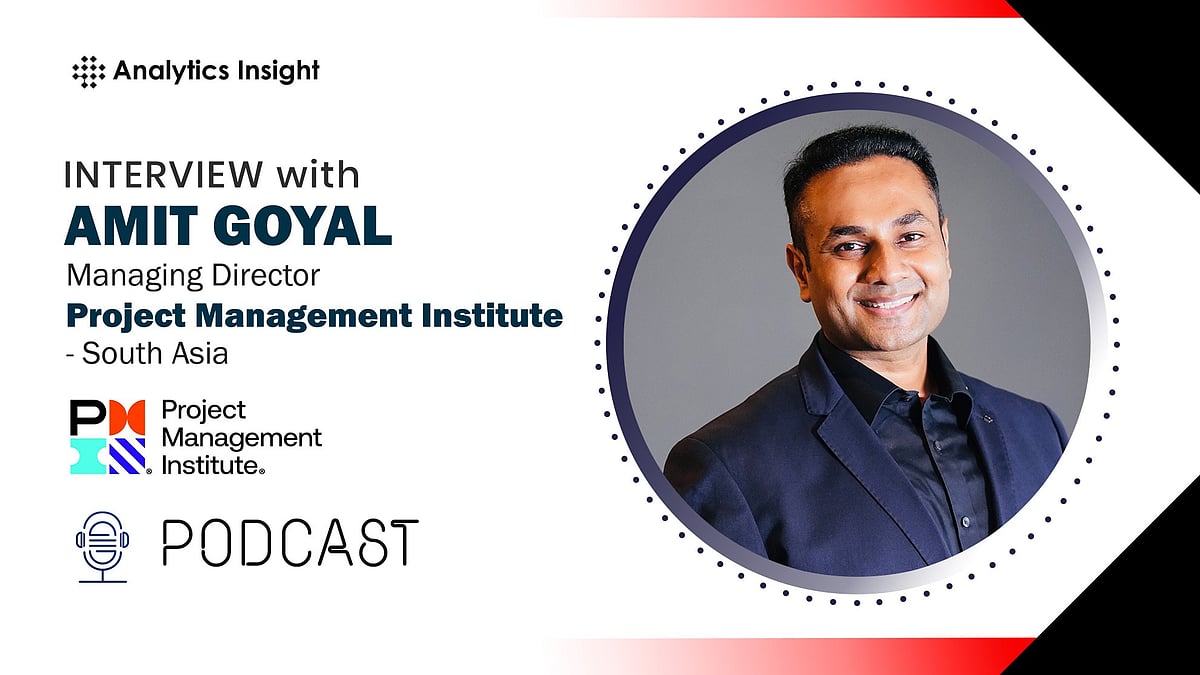
    In the latest episode of the Analytics Insight Podcast, host Priya Dialani speaks with Amit Goyal, Managing Director of the Project Management Institute (PMI) for South Asia, about why humans—not technology—will ultimately determine AI’s success. Goyal shares insights on the human side of the AI era, essential skills for professionals, workforce development shifts, and the future of education. Key excerpts from the conversation follow.

    Why AI Conversations Must Focus on People as Much as Technology

    “Technology provides options, but people make things happen,” Goyal explains. AI can write reports, analyze data, write code, and even plan projects—but it cannot grasp organizational politics, human emotions, ethics, or nuanced decision-making. Throughout history, the greatest challenge with major technological advances has never been the technology itself but its acceptance. Organizations should not fear AI replacing people; instead, they should focus on how to combine AI with human talent.

    What Gives Humans the Edge in an AI-Driven World

    The true human advantage lies in judgment, empathy, creativity, contextual understanding, and accountability. While AI processes massive datasets at incredible speed, it cannot mediate between conflicting parties, motivate teams during uncertainty, or take responsibility for tough choices. “The challenge is not to race with AI in speed, but to ask better questions, make wise decisions, and connect people toward a common purpose,” Goyal notes.

    Key Skills for the AI Economy

    Professionals who master AI technology should also build AI literacy—understanding how AI works, its benefits, and its limitations. Beyond technical knowledge, project management, communication, critical thinking, flexibility, and a commitment to continuous learning are essential. In a rapidly evolving tech landscape, success belongs to those who learn fast and collaborate effectively with AI, not those who claim to have all the answers.

    Preparing the Workforce for AI

    Organizations must shift from annual training programs to continuous learning as a core strategic element. Adopting AI should go beyond providing new tools; it must include employee training aimed at achieving practical business outcomes, improving customer experience, reducing risks, and boosting productivity. “The successful application of AI won’t be about owning the latest technology, but about training competent people,” Goyal emphasizes.

    Evolving Education for the AI Era

    Education systems should move from exam-driven models to producing practical, job-ready professionals. Real-world experience, industry collaboration, teamwork, project implementation, ethical considerations, and problem-solving must complement theoretical knowledge. AI can provide instant access to information, but learners need to apply that knowledge practically. The focus should be on employability and practice-oriented learning.

    The One Human Skill AI Will Never Replace

    Decision-making will become the most critical ability over the next decade, Goyal predicts. AI can interpret data, present options, and offer confident answers, but it cannot own its decisions. Human judgment will be indispensable when data is incomplete, time is limited, and difficult choices must be made. “Those who succeed will not only master AI but also know when to accept or reject its suggestions and rely on their own judgment,” he concludes.

    The full discussion is available on the Analytics Insight Podcast.

  • How AI Is Transforming Education: Personalized Learning, Virtual Tutors, and the Future of Teaching

    How AI Is Transforming Education: Personalized Learning, Virtual Tutors, and the Future of Teaching

    Artificial intelligence is reshaping the educational landscape, influencing how students learn, how teachers work, and how institutions manage their operations. From personalized learning platforms to automated grading and virtual tutors, AI is making education more adaptive, accessible, and data-driven.

    The Shift in Skills Demand

    This transformation aligns with changing workforce needs. According to the World Economic Forum’s Future of Jobs Report 2025, 39% of core skills required by workers will change over the next decade, with AI and big data among the fastest-growing skill areas. This underscores the urgent need for schools, universities, and training providers to redesign curricula around digital literacy and lifelong learning.

    Personalized Learning at Scale

    Traditional classrooms follow a one-size-fits-all curriculum. AI-powered platforms can analyze each student’s responses, learning pace, and specific difficulties to adjust lessons and practice problems in real time. A student struggling with math might receive additional explanations and simpler exercises, while an advanced learner can move on to more challenging material. This allows institutions to cater to diverse learning levels without requiring separate programs for each student.

    AI tutors and chat-based learning assistants provide immediate feedback outside class hours. They can explain concepts, solve practice questions, summarize chapters, and offer editing advice. However, their outputs still need supervision, as generative AI can sometimes produce inaccurate or misleading information.

    Supporting Teachers and Institutions

    AI is increasingly used to automate repetitive tasks such as attendance tracking, basic grading, timetable creation, and handling routine student inquiries. This frees up teachers to focus on lesson planning, mentoring, and direct student interaction.

    Predictive analytics helps identify students at risk of falling behind by analyzing attendance, assessment scores, and engagement patterns. Administrators can intervene before a student drops out. The technology also influences curriculum design: the WEF found that 86% of employers expect AI and information-processing technologies to transform their businesses by 2030. Education providers must therefore prepare students for careers in AI, cybersecurity, data analysis, and digital transformation.

    Expanding Access to Education

    AI can deliver content in multiple languages through translation, and assist students with language barriers or disabilities via speech recognition and text-to-speech tools. Virtual classrooms and automated support systems can bring learning opportunities to regions lacking qualified teachers.

    Yet access remains uneven. Not everyone has the necessary devices, internet connectivity, or digital skills to benefit from AI-supported learning. UNESCO has acknowledged that while AI can enhance access and personalization, it may also deepen inequalities and raise concerns about privacy, safety, and governance.

    The Road Ahead

    AI will not replace teachers, but it will change what they do. The most successful education systems will combine AI’s power with human insight and creativity. Effective implementation requires robust privacy protections, transparent algorithms, and teacher training to ensure AI does not undermine equity or student confidence.

    Frequently Asked Questions

    • How is artificial intelligence changing education? AI makes education more personalized, accessible, and data-driven by adapting lessons to individual needs, providing instant feedback, and automating routine tasks like grading and attendance.
    • Can AI replace teachers in the classroom? No. Education requires empathy, judgment, creativity, and personal interaction. AI supports teachers by reducing administrative work and improving lesson planning.
    • What is personalized learning through AI? AI-powered platforms analyze student performance, learning speed, and areas of difficulty, then recommend suitable lessons, explanations, and practice questions tailored to each learner.
    • How can AI improve access to education? AI-powered translation, speech recognition, and text-to-speech tools help learners with language barriers or disabilities. Virtual classrooms can reach students in areas with limited access to qualified teachers.
    • What are the risks of using AI in education? Risks include inaccurate information, data privacy concerns, algorithmic bias, and unequal access to devices or internet. Strong governance, transparency, and teacher supervision are essential.
  • From Music to AI Literacy: How Steven Jiang Transformed Overture into a School-Focused Education Company

    From Music to AI Literacy: How Steven Jiang Transformed Overture into a School-Focused Education Company

    Steven Jiang, co-founder and COO of Overture, started his entrepreneurial journey not in artificial intelligence but in music. He and his co-founder Aspen Buckingham met while studying music at Northwestern University. Their first venture, launched in 2022, was a video game designed to help children compose music. That early work, though seemingly unrelated to AI, laid the foundation for what Overture has become today: a company that partners with schools to teach AI literacy through hands-on, creative projects.

    The pivot from music education to AI enrichment wasn’t driven by trends. It came from direct feedback from school administrators who were struggling to introduce AI to young students responsibly. Jiang recalls one administrator who expressed fear not about AI’s importance but about the lack of a safe framework for teaching it. That practical concern—how to teach AI without handing children tools they weren’t ready to use—became the new mission for Overture.

    Jiang says the company didn’t pivot because AI was a trend; it pivoted because schools had a real problem and no clear solution. Overture now runs programs in more than 50 schools across Chicago and Boston, with plans to expand to over 120 programs in multiple states. The company’s approach is rooted in active learning, a philosophy Jiang traces back to his music background. “We teach kids to create with it, to make cool things,” he explains. “That’s rooted in how we think as artists: using your imagination and critical thinking to build something awesome.”

    Overture’s programs include a paper-and-pencil AI model for young children, emphasizing that the company builds around school problems rather than a single product. The company also creates part-time teaching jobs for local educators, artists, and musicians. Jiang has been recognized with Forbes 30 Under 30 and Inno 25 Under 25 honors, and he speaks at universities about AI education. His long-term goal is to bring high-quality AI education to every state through mission-aligned partners.

    For Jiang, the evolution of Overture is not a break from its origin but a widening of it. The company began by asking how children could make music in a new way. Now it answers the question that changed everything: how can schools help children meet AI responsibly?

  • UPES and HPE Launch AI-Powered Centre of Excellence to Train Next-Gen Engineers

    UPES and HPE Launch AI-Powered Centre of Excellence to Train Next-Gen Engineers

    Dehradun, July 24, 2026 – UPES has partnered with Hewlett Packard Enterprise (HPE) to inaugurate the HPE Networking AI-Driven Centre of Excellence (CoE), a milestone in the university’s AI-first educational strategy. The CoE is designed to bridge the gap between classroom theory and enterprise-grade practice in AI-driven networking, cloud infrastructure, cybersecurity, and other emerging technologies.

    The centre will offer a comprehensive learning ecosystem, including curriculum integration, faculty development, hands-on lab work, live demonstrations, project-based learning, HPE-led bootcamps, certification pathways, and opportunities for interdisciplinary research. Students will also gain access to HPE Networking training at Associate and Specialist levels, as well as potential internships and hiring pathways through HPE, its partners, and customers.

    According to a recent NASSCOM and Deloitte report, India will need over 1.25 million AI professionals by 2027, with an estimated shortfall of more than 600,000 skilled workers. The new CoE directly addresses this demand by preparing students for careers in AI, enterprise networking, cloud, and cybersecurity.

    For UPES, the CoE exemplifies its AI-first university strategy, which integrates AI across the curriculum, faculty, and industry partnerships rather than confining it to a single course or department. The partnership aims to produce graduates who are not just job-ready but capable of shaping enterprise AI adoption across multiple domains.

    The inauguration was the centerpiece of a day-long engagement between UPES and HPE’s global leadership. The event began with a welcome reception and a leadership roundtable on industry-academia collaboration. After the formal inauguration and showcase, an interactive student session featured a keynote by Shishir Singh, Senior Vice President and General Manager of Network Products & Advanced Technology at HPE, titled “The Bridge: Degree to Career.” The delegation also toured the Bajaj Engineering Skills Training (BEST) Centre before reaffirming the long-term partnership.

    Other senior HPE leaders present included M. Muthukumar, Vice President – Platform Software Engineering and Managing Director, HPE Networking India; Maria Delting, Human Resource Leader – HPE Networking; Shalini Dutta, Head of Global Talent Acquisition; Beth Kremer, Senior Manager – University Recruitment & Programs and TA Operations; Samuel Daniel, India Leader – University Relations & Strategy; and Archana Yadav, Senior Global Program Manager, HPE Academic Alliance.

    Speaking at the event, Shishir Singh said, “The future of enterprise technology will be shaped by professionals who can seamlessly combine AI, networking, cloud and cybersecurity to solve complex real-world challenges. We are delighted to partner with UPES to create an environment where students gain practical exposure to industry technologies, learn from practitioners, and build skills that are relevant to tomorrow’s digital economy. Strong industry-academia partnerships like this are essential to developing the next generation of innovators and technology leaders.”

    Dr. Abhishek Sinha, Pro Vice Chancellor – Student Success, UPES, added, “AI is fundamentally reshaping enterprise technologies, and universities have a responsibility to ensure students are prepared not just for today’s jobs, but for the careers and industries that are rapidly emerging. Through this partnership, our students will gain access to advanced technologies, global perspectives and experiential learning opportunities that will strengthen their ability to innovate, solve complex problems and lead in an AI-driven future. It is another important step in UPES’ vision as India’s AI-first university.”

    The partnership builds on UPES’s existing collaborations with global leaders including OpenAI, Google Cloud, Salesforce, and Harvard Business Impact. With the HPE Networking AI-Driven Centre of Excellence, the initiative aims to foster innovation, interdisciplinary learning, and future-ready talent prepared to lead the next wave of AI-driven enterprise transformation.

  • Your Guide to the Best AI and Programming Programs at the World’s Leading Universities

    Your Guide to the Best AI and Programming Programs at the World’s Leading Universities

    As artificial intelligence reshapes every sector, engineers who build these systems have become some of the most sought-after professionals of this century. Choosing where to study AI and programming is a pivotal decision that extends beyond the curriculum. The best programs offer access to cutting-edge research, world-class faculty, industry internships, and a global alumni network that can launch your career.

    Why Your Choice of University Matters in AI

    Not all AI education is equal. The rapid pace of the field means a top-tier program distinguishes itself through proximity to research breakthroughs, the caliber of peers, relationships with industry labs like Google DeepMind and OpenAI, and a degree that opens doors. Studying abroad adds value through language skills, cross-cultural understanding, and resilience—attributes highly prized by tech employers.

    The World’s Top Universities for AI and Programming

    Below is a curated list of institutions leading AI research and teaching, organized by region to help you decide where to build your career and life.

    North America

    • MIT (Cambridge, MA) – Home of CSAIL, one of the largest AI research labs. Offers BSc, MEng, PhD programs.
    • Stanford University (Palo Alto, CA) – Birthplace of Silicon Valley. The HAI Institute leads in AI ethics and policy.
    • Carnegie Mellon University (Pittsburgh, PA) – First dedicated School of Computer Science worldwide. Powerhouse in robotics and NLP.
    • UC Berkeley (Berkeley, CA) – BAIR lab produces landmark deep learning research. Strong ties to the Bay Area tech ecosystem.
    • University of Toronto & Mila (Toronto/Montreal) – Birthplace of deep learning. Home to pioneers Geoffrey Hinton and Yoshua Bengio.

    Europe

    • University of Oxford (Oxford, UK) – Future of Humanity Institute and Oxford Internet Institute. Deep research in AI safety.
    • Imperial College London (London, UK) – Applied ML, data science, and computing. Direct links to London’s tech scene.
    • ETH Zürich (Zürich, Switzerland) – Europe’s MIT. Exceptional in robotics, computer vision, and machine learning theory.
    • TU Munich (Munich, Germany) – Top German technical university. Close industry ties with BMW, Siemens, Google.
    • École Polytechnique (Paris, France) – Rigorous mathematical tradition. INRIA partnership positions it at the heart of French AI research.
    • TU Delft (Delft, Netherlands) – Strong in AI for engineering, autonomous systems, and responsible AI governance.

    Asia & Pacific

    • NUS & NTU (Singapore) – Asia’s gateway to global tech. World-class research, excellent industry links, English-medium instruction.
    • Tsinghua & Peking University (Beijing, China) – Massive state investment in AI. Among the top global publishers of AI research.
    • University of Tokyo (Tokyo, Japan) – Leading in robotics, cognitive computing, and human-AI interaction.
    • KAIST (Daejeon, South Korea) – Premier tech university. Globally ranked in AI, robotics, and software.
    • University of Melbourne (Melbourne, Australia) – Top-ranked for CS and AI. Strong research culture and multicultural campus.

    Program Formats to Know

    Most universities offer various entry points: 3–4 year bachelor’s degrees, 1–2 year master’s degrees (often the fastest career-change path), and fully-funded PhD positions. Many now provide hybrid or online options, but being physically present in a world-class research environment remains irreplaceable.

    What You Will Actually Study

    Today’s AI programs integrate theory and practice. Core classes cover three fundamental areas: mathematics, programming, and AI application.

    • Mathematics: Linear algebra, calculus, probability, statistics, discrete math.
    • Programming: Python, C++, data structures, algorithms, distributed systems.
    • Machine Learning/Deep Learning: Regression, decision trees, SVMs, CNNs, RNNs, transformers, diffusion models using PyTorch and TensorFlow.
    • Specialized Tracks: NLP, computer vision, robotics, reinforcement learning, generative AI, AI safety/ethics.
    • Research & Capstone Projects: Original research, industry partnerships, thesis work.

    Where an AI Degree Takes Your Career

    There is a global shortage of qualified AI workers across health, finance, energy, media, logistics, defense, and education. Graduates from top universities often receive multiple offers before graduation. Roles include machine learning engineer, research scientist, NLP engineer, computer vision engineer, data scientist, robotics engineer, AI product manager, AI safety researcher, MLOps engineer, and generative AI specialist. Many entry-level positions command six-figure salaries, and the work itself is highly rewarding.

    How to Choose the Right Program

    With so many excellent options, start by asking yourself: Do you prefer research or industry? Do you want to specialize early or keep options open? Is proximity to a specific tech ecosystem important? What language do you want to study in? What level of program are you ready for? Answers will narrow the field. For example, a student interested in robotics and willing to learn German might focus on TU Munich, while an NLP enthusiast wanting to stay Anglophone might look at Oxford or Stanford. There is no single best university—only the best one for you right now.

    Build Your Profile Now

    Strengthen your math, build Python projects, join Kaggle competitions, and read scientific papers. Top universities can tell the difference between a student who lives the subject and one who merely studied it.

    Editor’s note: Smapse Education is a recognized global service that assists students through the enrollment process for international AI and technology programs, offering everything from university selection to visa support.

  • MIT Comparative Media Studies and Writing: Exploring Media, Science, and Society

    MIT Comparative Media Studies and Writing: Exploring Media, Science, and Society

    The MIT Department of Comparative Media Studies/Writing (CMS/W) is a hub for examining how media, technology, and communication shape our world. From the ethical dimensions of artificial intelligence to the history of vaccine hesitancy, CMS/W faculty, students, and alumni are at the forefront of critical inquiry and creative expression.

    Recent highlights from the department illustrate its broad impact. A Scientific American feature showcases the role of curiosity-driven science in America’s success, spotlighting MIT researchers. Thomas Levenson’s new book delves into the long history of vaccine hesitancy, tracing arguments against vaccination back to the origins of the technology itself. The MIT Ethics of Computing Research Symposium brought together experts to examine the crucial human component in computing and AI.

    Students are also making headlines. In a collaboration with The Associated Press, MIT science writing students developed and pitched local climate stories, working alongside visual journalists. The MIT4America Calculus Project connects MIT undergraduates with high schoolers, providing tutoring in a subject that is a gateway to many STEM careers.

    The department mourns the loss of Les Perelman, a longtime faculty member and champion of writing education, who fiercely criticized automated essay grading and established an influential writing program. Meanwhile, new faculty join CMS/W and other humanities departments, and professors like T.L. Taylor (named a 2026-27 CASBS Fellow) and Justin Reich (leading efforts to help K-12 schools navigate AI) continue to push boundaries.

    Through courses that mix beats, history, and technology—such as a unique DJ’ing class—and through honors like the Knight-Hennessy Scholarship for alumnus Steven Truong, CMS/W exemplifies MIT’s commitment to integrating the arts and sciences. The department’s work underscores how studying media and writing is essential for understanding and shaping the future.

  • MIT Sloan School of Management: Latest Research, News, and Insights

    MIT Sloan School of Management: Latest Research, News, and Insights

    The MIT Sloan School of Management continues to drive forward-thinking research and education, as highlighted by recent news from the Massachusetts Institute of Technology. From energy efficiency in data centers to the societal impacts of artificial intelligence, MIT Sloan is at the forefront of management science and innovation.

    How Data Centers Can Better Manage Energy Use

    A new study from MIT Sloan suggests that flexibility in the timing of electricity consumption could lower consumer costs. The research emphasizes the potential for data centers to adjust their energy usage patterns, reducing strain on the grid and saving money.

    Exploring the Societal Impacts of AI

    During the AI and Society Forum, leading MIT researchers examined critical questions about AI’s influence on employment and democracy. The event brought together experts to discuss ethical considerations and the future of work in an AI-driven world.

    The Ripple Effect of Learning at MIT

    MIT Professional Education helped Ignacio Vazquez SM ’22 bridge technical mastery and strategic insight, leading to his role as MIT System Design and Management industry and certificate director. This story highlights the transformative power of MIT’s educational programs.

    QS Ranks MIT the World’s No. 1 University for 2026-27

    Ranking at the top for the 15th year in a row, the Institute also places first in 12 subject areas. This achievement underscores MIT’s continued excellence in research and education across disciplines.

    MIT’s Initiative for New Manufacturing Builds Momentum

    In its first year, INM has worked across research, workforce development, and industry engagement to help accelerate new manufacturing technologies and their real-world deployment.

    The Consequences of Relying on AI for Accurate News

    A Media Lab study shows that, much like how GPS has weakened our navigation skills, AI can make us worse at detecting fake news. This research raises important questions about the role of AI in information consumption.

    The Crucial Human Component in Computing and AI

    The MIT Ethics of Computing Research Symposium brought together experts and researchers working at the heart of ethical and social impact in technology.

    PATH to Boost AI Training and Career Opportunities

    MIT RAISE and Georgia State University announce an initiative to connect universities, community colleges, industry, and government to expand industry-aligned AI training and career pathways.

    Eleven from MIT Accept 2026 Fulbright Awards

    This year, over half of MIT’s Fulbright applicants won awards. The current students and alumni will embark on research projects and teaching abroad in 2026-27.

    A Day in the Life of MIT Sloan Fellow Alecia Asiamigbe

    The MBA student and entrepreneur is learning to lead a more resilient future with her renewable energy company.

    MIT Affiliates Elected to National Academy of Sciences for 2026

    Six MIT faculty, along with 10 additional alumni, are recognized by their peers for their outstanding contributions to research in the natural and social sciences.

    MIT Asia Real Estate Initiative Expands Its Footprint

    The initiative plans to engage industry leaders and MIT alumni with hubs in Tokyo, Dubai, and Hong Kong.

    A Day in the Life of MIT MBA Student Patrick Yeung

    MIT Sloan’s Sustainability Initiative provides opportunities to lead in ways that will help build a more sustainable future.

  • MIT School of Architecture and Planning: Latest News, Research, and Innovations

    MIT School of Architecture and Planning: Latest News, Research, and Innovations

    The MIT School of Architecture and Planning (SA+P) is a hub for interdisciplinary research, education, and design, addressing some of the most pressing challenges in cities, technology, and society. Below are recent highlights from the school, covering breakthroughs in urban studies, augmented reality, AI ethics, climate resilience, and more.

    Jinhua Zhao Appointed Head of the Department of Urban Studies and Planning

    An expert in behavioral science and transportation, Jinhua Zhao combines these studies with AI and public policy to address urgent urban challenges. He will lead the department starting June 11, 2026.

    Augmented Reality System for Easier Medical Ultrasound Interpretation

    MIT researchers have designed an ultrasound system that creates a real-time 3D representation of the object being imaged, making it easier for clinicians to interpret scans. The breakthrough was reported on June 10, 2026.

    The Consequences of Relying on AI for Accurate News

    A Media Lab study shows that, much like GPS has weakened navigation skills, AI can reduce our ability to detect fake news. The findings were published on June 9, 2026.

    MIT SPURS Program Looks to the Future of Urban Technology and Policy

    As the international program approaches its 60th year, leaders are reshaping its curriculum to address emerging technologies and policies shaping urban planning. Announced on June 9, 2026.

    Chris Zegras Appointed Director and CEO of Singapore-MIT Alliance for Research and Technology

    The professor of mobility and urban planning will lead MIT’s research enterprise in Singapore, effective June 9, 2026.

    Innovative Projects to Deal with Extreme Heat

    Low-cost personal cooling and emissions-free air conditioning are among the ideas studied with MIT’s Climate Project seed funding, reported on June 8, 2026.

    The Crucial Human Component in Computing and AI

    The MIT Ethics of Computing Research Symposium brought together experts working on ethical and social impacts of technology, held on June 5, 2026.

    PATH Initiative to Boost AI Training and Career Opportunities

    MIT RAISE and Georgia State University announce an initiative connecting universities, community colleges, industry, and government to expand industry-aligned AI training and career pathways, dated June 4, 2026.

    Tod Machover Receives George Peabody Medal for Contributions to Music and Technology

    The George Peabody Medal, the highest honor from the Peabody Institute, was awarded to Tod Machover on June 3, 2026.

    Alejandro Aravena Urges SA+P Graduates to Lead with Kindness, Honor the Truth

    “All of us need to feel we are valuable,” said the SA+P Commencement speaker, a Chilean architect and Pritzker Prize winner, on May 29, 2026.

    Designing a Career, On and Off the Track, at MIT

    Senior Krystal Montgomery explored design courses to shape a career in web development. As a national champion in track, balancing athletics and academics was key to her success, reported on May 27, 2026.

    Bridging Real Human Movement with Digital Technology

    MIT.nano Immersion Lab collaborates with Emerson College students to advance the art of virtual production, announced on May 26, 2026.

    For more updates, visit the MIT School of Architecture and Planning news page.

  • Best Online Organizational Leadership Degrees in 2026: Top 10 Programs for Career Advancement

    Best Online Organizational Leadership Degrees in 2026: Top 10 Programs for Career Advancement

    As organizations continue to embrace remote work, digital transformation, and global teams, the demand for effective leaders has never been higher. Online organizational leadership degrees have become a preferred choice for professionals looking to develop management, communication, and strategic decision-making skills without putting their careers on hold. Many universities now offer flexible, accredited programs that combine academic rigor with practical leadership training.

    Top 10 Online Organizational Leadership Degrees to Advance Your Career

    Here are 10 of the best online organizational leadership degrees to consider.

    University of La Verne

    The University of La Verne offers many courses in organizational management, along with electives in human resources, business, and leadership. It provides educational opportunities for graduates seeking management and leadership roles.

    Valdosta State University

    Valdosta State University stands out for its affordable and flexible learning process. The Online Organizational Leadership program helps specialists develop necessary competencies without leaving their current positions.

    University of Arizona

    The University of Arizona applies various leadership theories through assignments such as business simulations and cases. The Bachelor of Applied Science program provides all the competencies needed to become successful leaders of change.

    Bay Path University

    Bay Path University emphasizes an individual approach to studying in smaller class groups and personal interaction with faculty. The online leadership education course focuses on communication skills, team management, strategic planning, and organizational development, aiming at individuals seeking careers as supervisors and executives.

    Fort Hays State University

    Fort Hays State University is known for its affordable online leadership degree. The curriculum combines management knowledge, organizational behavior, ethical leadership, and conflict management.

    Johns Hopkins University

    Johns Hopkins University offers a renowned online Master of Science in Organizational Leadership program covering strategic leadership, workforce management, organizational culture, negotiation, and decision-making.

    Arizona State University

    Arizona State University’s Master of Science in Organizational Leadership focuses on innovation, evidence-based leadership, and organizational effectiveness. Students learn to start change programs, tackle organizational issues, and work in multidisciplinary teams.

    Pepperdine University

    Pepperdine University’s Master of Arts in Organizational Leadership equips learners with academic knowledge of leadership, ethical decision-making, and organizational behavior. It trains individuals to manage organizational issues and interact effectively with others.

    Gonzaga University

    Gonzaga University’s online learning program provides comprehensive knowledge in leadership and organizational change, including strategic planning, conflict management, executive communication, and change leadership.

    Southern New Hampshire University

    Southern New Hampshire University offers a flexible online Master of Science in Organizational Leadership for working professionals. The program builds real skills in leading others, organizational communication, handling change, and improving performance.

    What to Look for Before Choosing a Program

    Not every leadership program will be equally helpful. Prospective students should consider program accreditation, curriculum relevance, faculty experience, tuition costs, internship opportunities, and career assistance services. Leadership degree programs that incorporate practical assignments, simulated scenarios, and networking opportunities are usually more useful for managerial roles. Additionally, students should evaluate which degree best aligns with their previous studies and long-term career goals. Those aiming for executive or senior management roles often pursue graduate degrees.

    Career Opportunities Upon Graduation

    Graduates of organizational leadership programs can pursue various positions across sectors including healthcare, IT, financial services, education, manufacturing, government, and non-profits. Career options include operations manager, human resources manager, project manager, business consultant, training and development manager, and organizational development specialist. With the increasing importance of leadership development, professionals with formal education in leadership are valuable assets.

    Why This Matters

    To thrive in today’s environment, leaders need qualities that help them cope with technological advancements, changing circumstances, and diverse teams. Pursuing an online degree in organizational leadership helps professionals acquire these qualities conveniently.

    Frequently Asked Questions

    What is an online organizational leadership degree?

    An online organizational leadership degree teaches leadership, communication, management, strategic planning, and organizational behavior. It prepares students to lead teams, manage change, and solve workplace challenges across various industries.

    Who should pursue an organizational leadership degree?

    This degree is ideal for aspiring managers, supervisors, business professionals, entrepreneurs, and working employees seeking leadership roles or career advancement while maintaining the flexibility of online education.

    What careers can I pursue after earning this degree?

    Graduates can work as operations managers, human resources managers, project managers, business consultants, training managers, organizational development specialists, or executive leaders in public and private organizations.

    Are online organizational leadership degrees respected by employers?

    Yes. Accredited online organizational leadership degrees are widely recognized by employers, especially when offered by reputable universities with industry-relevant curricula and strong academic standards.

    What should I consider before choosing an online leadership program?

    Look for accreditation, tuition costs, curriculum quality, faculty expertise, career support, flexibility, internship opportunities, alumni outcomes, and whether the program aligns with your long-term career goals.

  • MIT Classes and Programs: A Gateway to Lifelong Learning and Innovation

    MIT Classes and Programs: A Gateway to Lifelong Learning and Innovation

    Massachusetts Institute of Technology (MIT) offers an unparalleled range of classes and programs that extend far beyond the traditional campus. From professional education and open access to world-class curriculum, to specialized initiatives in urban planning and climate science, MIT continues to shape the future of learning. This collection highlights some of the most impactful stories showcasing how MIT’s educational offerings ripple across the globe.

    Key Highlights

    • The Ripple Effect of Learning at MIT: MIT Professional Education helped Ignacio Vazquez SM ’22 bridge technical mastery and strategic insight, leading to his role as MIT System Design and Management industry and certificate director.
    • MIT Open Learning Reaches the South Pole: John Della Costa uses OpenCourseWare to engage fellow Antarctica “winterovers” in physics content and build community.
    • Initiative for New Manufacturing (INM): In its first year, INM has accelerated new manufacturing technologies through research, workforce development, and industry engagement.
    • MIT SPURS Looks to the Future: Approaching its 60th year, the international program reshapes its curriculum to address emerging technologies and urban-policy challenges.
    • Bridging Human Movement with Digital Technology: MIT.nano Immersion Lab collaborates with Emerson College students to advance virtual production art.
    • Student-Led Plasma Physics Under Alaska’s Aurora: Distributed instruments observe auroral structures and probe space plasma in real-world conditions.
    • Science Writing Meets The Associated Press: Students develop and pitch local climate stories with visual journalists from the AP.
    • Q&A: Path to a PhD in Computational Science: Emily Williams becomes the first graduate of MIT’s Center for Computational Science and Engineering.
    • MIT Asia Real Estate Initiative Expands: Hubs in Tokyo, Dubai, and Hong Kong engage industry leaders and alumni.
    • A Day in the Life of MIT MBA Student Patrick Yeung: Sustainability Initiative provides opportunities to lead toward a more sustainable future.
    • A Bet That Paid Off 500 Million Times Over: Twenty-five years of MIT OpenCourseWare and MIT Open Learning’s bold decision to open curriculum to the world.
    • MIT Practicum in Ukrainian City Development: Students work with leaders from Vinnytsia on innovation ecosystems and workforce development amid war.
    • Building “Hardcore” Advanced Machines: In 2.72/2.270 (Elements of Mechanical Design), students learn that if it doesn’t break physics, it’s possible.
    • Q&A: Expanding Global Reach Through Universal Learning: Dimitris Bertsimas and Megan Mitchell discuss MIT Open Learning’s new educational initiative.

    These stories illustrate the breadth and depth of MIT’s commitment to education—from lifelong learning and open access to hands-on projects and international partnerships. Whether you are a prospective student, a professional seeking upskilling, or a curious mind, MIT’s classes and programs offer pathways to transformative knowledge and real-world impact.