Tag: ethics

  • Voter Backlash Intensifies Trump Crypto Ethics Debate as TRUMP Token Weakens

    Voter Backlash Intensifies Trump Crypto Ethics Debate as TRUMP Token Weakens

    Growing public opposition to President Donald Trump’s cryptocurrency earnings is intensifying the ethics debate in Washington, as Congress weighs comprehensive digital asset regulations. Recent polls reveal that a majority of voters support stricter limits on federal officials profiting from crypto, placing political pressure on politically linked tokens like the TRUMP token.

    Polls Show Broad Support for Crypto Ethics Limits

    Surveys cited by Democratic Senator Elizabeth Warren found that 55% of voters disapprove of Trump’s cryptocurrency-related earnings, with 44% expressing strong disapproval. A separate poll by the Progressive Policy Institute and GBAO reported even broader support for restrictions, with 71% to 75% of respondents backing limits on federal officials and their immediate family members profiting from cryptocurrency businesses. Support remained strong even after participants received information about Trump’s business background, adding momentum to an already contentious debate over political conflicts of interest in digital assets.

    Critics argue that elected officials should not financially benefit from industries they help regulate, while supporters maintain that private business ownership should not automatically disqualify individuals from public office.

    Congress Faces a Conflict-of-Interest Debate

    Congress continues to debate broader cryptocurrency legislation aimed at establishing comprehensive federal rules for digital assets. Ethics provisions have become a key sticking point in negotiations. The expansion of cryptocurrency ownership among politicians, corporations, and financial institutions has intensified calls for clearer standards on how public officials manage digital asset holdings and business interests.

    Market participants are closely watching whether public opinion will translate into legislative action. Measures restricting cryptocurrency ownership or financial interests among senior government officials could create new pressure for politically linked digital assets, while also affecting perceptions of regulatory certainty across crypto markets.

    TRUMP Token Faces Political and Regulatory Pressure

    Political uncertainty has also weighed on the TRUMP cryptocurrency token. The asset recently traded near $1.45 after falling approximately 9.4% over the past week. Politically branded tokens remain highly sensitive to legislative developments, public opinion, and election-related events. Analysts note that sentiment around public figures can move prices independently of broader cryptocurrency market conditions.

    Further restrictions on officials’ cryptocurrency interests could add downward pressure on politically linked assets. Conversely, prolonged negotiations without legislative changes could allow prices to stabilize if wider cryptocurrency conditions improve.

    The broader debate highlights how cryptocurrency has moved deeper into mainstream politics, with digital assets now central to discussions about public policy, ethics, elections, government oversight, and market confidence.

    Final Thoughts

    Public opposition to Trump’s cryptocurrency earnings is strengthening the ethics debate as Congress weighs digital asset legislation. The TRUMP token has weakened amid political uncertainty. Attention now centers on whether support for tighter rules will develop into formal restrictions on cryptocurrency interests held by senior federal officials.

  • How Khalil Ismail’s ‘Technical Philosopher’ Role Is Shaping the Future of Mind Computing

    How Khalil Ismail’s ‘Technical Philosopher’ Role Is Shaping the Future of Mind Computing

    By Arundhati Kumar

    At Voyage, the founder of the Maison for Mind Computing is building a technical house where engineering, taste, neuroscience, and philosophy belong in the same room.

    Most technology companies know what to do with an engineer. They know what to do with a researcher, a designer, a product manager, or a strategist. The categories are familiar, clean, and useful enough for software, hardware, and much of artificial intelligence. Khalil Ismail thinks mind computing needs a different kind of person.

    At Voyage, the Maison for Mind Computing he founded, that person is called a Technical Philosopher. The title is not decorative. It is Ismail’s answer to a problem he believes has slowed the brain-computer interface field for years: too many people are solving narrow pieces of a challenge that, by its nature, refuses to stay narrow.

    “You cannot build for the mind with only one lens,” Ismail says. “The signal matters, but so does meaning. The object matters, but so does the judgment behind it. The intelligence matters, but so does the person using it.”

    Voyage is launching publicly around a category Ismail calls Mind Computing, with a long-term focus on non-invasive neural interfaces built for real-world use. The product itself is not being publicly launched yet. They are introducing the company’s identity, philosophy, and internal structure: a technology this intimate requires a company culture built to hold science, craft, ethics, and taste at the same time.

    That is why he calls Voyage a Maison. In tech, the word may sound unusual at first. Ismail uses it to describe a technical house, one built around frontier engineering, careful form, philosophical depth, and cultural judgment. His view is that neural interfaces will not become part of ordinary life because they are hidden inside existing objects or made slightly less awkward. The field needs a different operating system before it can build a different interface.

    “The Maison is how we organize the work,” he says. “It means the cultural questions are not added after the engineering. They are inside the engineering brief.”

    That thinking comes from Ismail’s own formation. Imperial College London gave him engineering discipline. The Royal College of Art sharpened his relationship to form, craft, and material expression. Apple, Microsoft, Snap Inc., MIT Media Lab, Harvard, and Oxford each exposed a different part of the same problem: intelligent systems were advancing, but the human interface was still being treated too narrowly.

    The point, for him, is not the prestige of the path. It is the collision between those rooms. At one end were the demands of sensing, computation, product architecture, and model behavior. At the other were questions that do not fit neatly on an engineering roadmap: why would someone trust this, what does the object ask of the person wearing it, how should consent work when the interface becomes more intimate, and what kind of future does the company’s taste make possible?

    “Most fields train people to separate those questions,” Ismail says. “I became interested in what happens when you refuse to separate them.”

    That refusal has become central to Voyage’s hiring language. The Technical Philosopher is the archetype Ismail wants at the center of the company. He sees the role as a builder who can engage with equations and materials, but also with ethics, perception, autonomy, restraint, and cultural meaning.

    In a field often dominated by clinical use cases, invasive implants, laboratory constraints, and science-fiction imagery, that blend is deliberate. Ismail is not dismissive of medical neurotechnology. He believes invasive systems can be incredibly important for clinical needs. His argument is different: the consumer path for neural interfaces requires a different starting point.

    “You cannot assume society will accept intimate technology because it is powerful,” he says. “The first question is not only what the system can do. The first question is what kind of relationship it creates.”

    That question changes the engineering. Non-invasive neural interfaces have long faced skepticism because of sensor quality, noisy data, and the difficulty of building systems that generalize outside controlled settings. Ismail believes the AI era has changed the shape of that problem, especially through reinforcement learning and the possibility of models improving through richer context. But the context cannot come from a lab alone.

    For Voyage, the object has to become habitual. It has to enter real environments, real choices, and real patterns of intent. That makes the company’s attention to form and adoption part of the technical architecture rather than an aesthetic layer added near the end.

    “Data is not floating in the abstract,” Ismail says. “It comes from life. If the interface does not belong in life, you never reach the depth of understanding people keep promising.”

    This is where the Maison structure becomes strategic. Ismail sees historical houses as institutions that shaped more than objects. They shaped how new materials, techniques, and forms entered culture. He points to the idea that a house can create a world around a material before the public fully knows how to name it.

    Voyage wants to do something similar for neural interfaces. The company is trying to move the field away from dystopian imagery and toward a more deliberate model of human-computer entanglement, one where the person remains the author of the interaction. Ismail’s vision is not a future where AI becomes a louder companion with a name, a face, and a personality. He wants ambient intelligence to support intent without taking over the story.

    “The machine should not become the protagonist,” he says. “The person using it should still feel like the author.”

    The early team reflects that same sensibility. Ivan Bokarev and Hiteyjit Singh Gujral joined because they shared Ismail’s impatience with narrow thinking. Their fit was not only technical. It was temperamental. Voyage was being built for people willing to question inherited assumptions about neuroscience, consumer technology, and what a technical company is allowed to value.

    That makes internal culture more than a workplace concern. At the Maison, questions about privacy, consent, trust, form, and human agency belong at the beginning of the work. The Voyage Handbooks are used by every technical philosopher. The handbooks also give space for them to write in and challenge ideas as they work through new challenges.

    “What should a neural interface never do?” Ismail says. “That question matters as much as what it can do. If you do not ask it early, the answer gets decided by accident.”

    That gives Voyage a different posture from the typical frontier technology company. It is not trying to prove that philosophy can make technology sound refined. It is trying to prove that philosophy can change what gets built, who builds it, and how carefully the company treats the human being at the center of the interface.

    Khalil Ismail’s bet is that the next computing shift will require institutions that do not look like the last generation of labs, studios, or startups. Mind computing will need engineers who understand culture, designers who can think technically, and thinkers who are willing to build. It will need people with enough discipline to work inside the hard problems and enough imagination to ask whether the hard problems have been framed correctly.

    At Voyage, that person has a name.

    The title may sound unusual now. That is partly the point. Voyage is being built for a category that does not yet have inherited roles, inherited rituals, or inherited rules. Ismail is not waiting for that language to appear after the field matures. He is putting it into the company from the beginning.

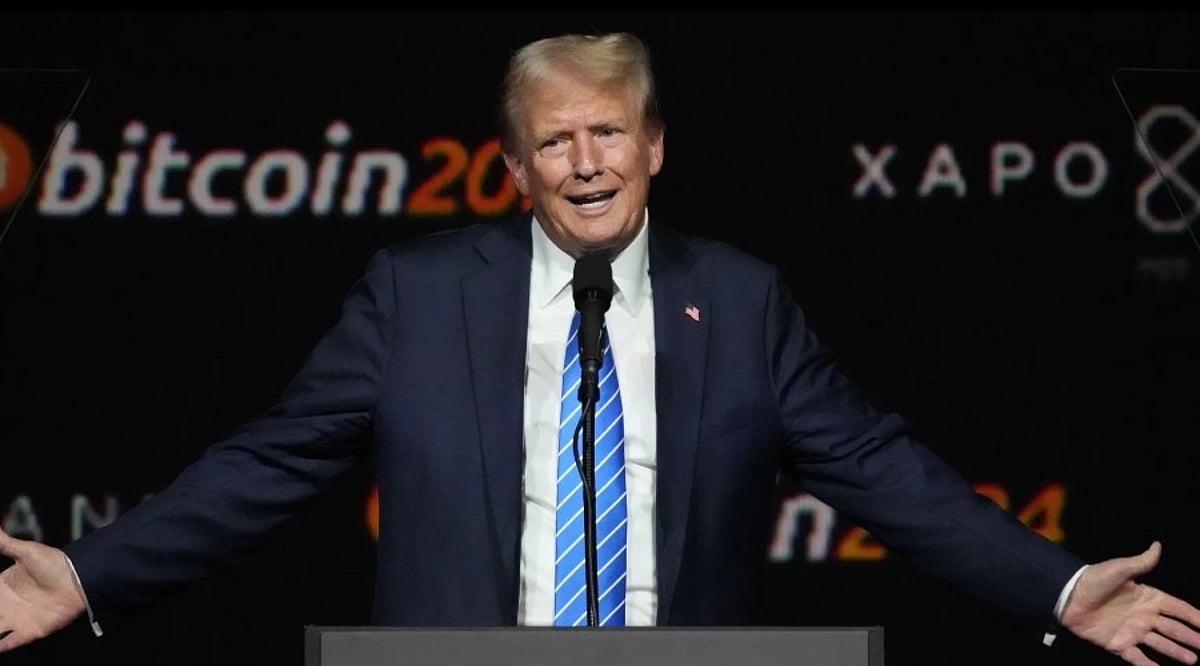
  • CLARITY Act Ethics Rules Could Prevent Trump from Issuing New Digital Assets While in Office

    CLARITY Act Ethics Rules Could Prevent Trump from Issuing New Digital Assets While in Office

    The latest draft of the Senate’s CLARITY Act has introduced ethics provisions that could restrict President Trump and other senior officials from issuing or sponsoring digital assets during their tenure. The bill, which aims to establish comprehensive cryptocurrency market regulations, now includes language targeting conflicts of interest among top government leaders.

    Key Takeaways

    • The Senate draft may ban top public officials from issuing new digital assets until 2029.
    • Trump’s crypto ventures, which have earned over $1 billion, have fueled the push for stronger ethics rules.
    • The bill still requires bipartisan support to become law.

    What Does the New Language Say?

    The proposed ethics section restricts the president, vice president, members of Congress, federal judges, and their spouses from issuing, sponsoring, or promoting digital assets while in office. The restriction would remain in effect until January 2029, covering the remainder of Trump’s current term. Additionally, officials must divest personal crypto holdings or place them in qualified blind trusts to reduce potential conflicts of interest.

    This marks a significant shift from earlier crypto bills, which focused primarily on market rules and investor protection. The new version adds ethics rules for public officials, addressing concerns about the intersection of governance and personal financial gain.

    Why Trump Matters in the Debate

    Recent financial disclosures revealed that Trump’s crypto ventures generated over $1 billion after his return to the White House, including roughly $500 million from World Liberty Financial’s crypto offerings and $600 million from Trump-themed meme coins. Bipartisan lawmakers and ethics experts argue that a sitting president should not profit from digital assets while federal agencies shape crypto regulations. Supporters of the bill emphasize that the rules apply to all future presidents and senior officials, not just Trump.

    Would the Bill Stop Trump from Launching New Digital Assets?

    Under the current language, covered officials cannot issue or sponsor new digital assets during their term. This would prevent President Trump from launching a new cryptocurrency, meme coin, or similar blockchain project while in office. However, legal experts note that the final outcome depends on precise definitions of terms like ‘issue,’ ‘sponsor,’ and ‘digital asset’ in the approved legislation. The draft also leaves questions about how existing crypto businesses would be affected, with further guidance expected after the bill becomes law.

    Senate Talks Continue

    The bill has garnered support from many Republicans seeking clear rules for digital assets, and from Democrats pushing for stronger ethics safeguards. Senate leaders, White House officials, and lawmakers from both parties are working on compromise language. President Trump has reportedly accepted some ethics changes to improve the chances of bipartisan support before the August recess. Disagreements remain on anti-money laundering rules, Know Your Customer requirements, and which federal agencies should oversee different parts of the crypto market.

    Why the Crypto Industry Supports the Bill

    The CLARITY Act is seen as a critical step toward providing regulatory clarity for the crypto industry. Companies like Coinbase, Circle, Bullish, Hut 8, and Riot Platforms have welcomed the potential for clear federal rules. The bill aims to resolve jurisdictional disputes between the SEC and CFTC while adding consumer protections. Financial markets responded positively, with Bitcoin rising to around $66,400 and crypto-related stocks climbing.

    Challenges Remain

    Passing the bill requires 60 votes in the Senate, meaning supporters must secure bipartisan backing. Some progressive groups argue the ethics rules should be tougher, while others raise concerns about conflicts of interest in the negotiation process. Prediction markets and analysts place modest odds on the bill becoming law this year due to the complex mix of crypto regulation, ethics reforms, and political differences.

    Why This Matters

    The CLARITY Act could reshape both crypto regulation and ethics standards in the United States. Its final version may determine whether top public officials can launch or profit from digital assets while in office, influencing investor confidence and future legislation. The debate has already shifted the national conversation from solely regulatory questions to broader ethical considerations about elected leaders’ involvement in the crypto business.

    Final Thoughts

    If the current language passes, President Trump and future presidents would be barred from issuing or sponsoring new digital assets during their terms, with stricter rules for personal crypto holdings and financial transparency. The outcome now depends on ongoing Senate negotiations. Regardless of the final bill, the debate has fundamentally changed how Washington approaches the intersection of digital assets and public office.

  • Trump Accepts Ethics Framework for Crypto CLARITY Act, Potentially Unlocking Senate Vote

    Trump Accepts Ethics Framework for Crypto CLARITY Act, Potentially Unlocking Senate Vote

    Former President Donald Trump has reportedly accepted an ethics framework tied to the Digital Asset Market Clarity Act (CLARITY Act), a move that could break a key deadlock in Senate negotiations. However, as of late July, the agreement remains unconfirmed and its language has not been publicly released, leaving a potential vote uncertain before the August recess.

    Ethics Rules Aimed at Conflicts of Interest

    Negotiators have proposed restrictions covering senior federal officials—including presidents, vice presidents, and lawmakers—to prevent them from profiting personally from digital assets while shaping industry policy. The reported framework would address profits from crypto ventures, but without the published text, the scope remains unclear. It is unknown whether the rules would apply to family members, existing holdings, new token launches, promotional income, or assets held in trusts. Enforcement mechanisms also remain undefined, including which agency would investigate violations and what penalties would apply.

    Trump’s Crypto Income Fuels Ethics Debate

    The ethics dispute intensified after Trump’s latest financial disclosures revealed that his family’s crypto ventures generated approximately $1.4 billion of his income in 2025. Senior Senate Democrats argued that the legislation could expand the value of crypto businesses linked to senior officials, calling for stronger conflict-of-interest safeguards. Trump dismissed the concerns in a July 2 CNBC interview, stating that his children manage his businesses and that the income was ‘nothing illegal.’ The White House has maintained that Trump does not oversee daily operations, though critics counter that transferring management does not remove his financial interest.

    Senate Faces Tight Timeline

    The House passed H.R. 3633 on July 17, 2025, by a 294-134 vote, and the Senate Banking Committee advanced its version on May 14, 2026, by a 15-9 vote. The legislation would split crypto oversight between the Securities and Exchange Commission (SEC) and the Commodity Futures Trading Commission (CFTC) and establish federal rules for exchanges and intermediaries. Senate leaders have not yet scheduled a floor vote, and the August state work period begins August 10, leaving a narrow window. Even with an ethics agreement, lawmakers still face disputes over decentralized finance, illicit-finance controls, and developer protections. Any changes to the House version would require approval from both chambers before the bill can reach Trump’s desk.

    What’s Next

    The next critical step is the publication of revised legislative text. If the reported ethics framework is converted into enforceable provisions and garners bipartisan support, the Senate could move forward. Until then, the agreement remains a political understanding rather than a completed amendment.

  • Trump’s $1.4B Crypto Income Stalls Senate Action on CLARITY Act

    Trump’s $1.4B Crypto Income Stalls Senate Action on CLARITY Act

    President Donald Trump’s 2025 financial disclosure reveals more than $1.4 billion in crypto-related income, reigniting a Senate debate over ethics provisions in the Digital Asset Market Clarity Act (CLARITY Act). The filing, released by the Office of Government Ethics on June 30, details earnings from the TRUMP memecoin and World Liberty Financial, placing the president’s digital asset profits at the center of a legislative standoff.

    The disclosure shows $635 million from the TRUMP memecoin, over $520 million from World Liberty Financial token sales, and more than $250 million from business interest sales. Combined, these sources generated nearly $800 million for entities tied to World Liberty Financial, with portions shared among family members. While golf clubs, resorts, and property licensing added other revenue, crypto accounts for the majority of Trump’s reported income.

    The CLARITY Act, which would divide crypto oversight between the Securities and Exchange Commission (SEC) and the Commodity Futures Trading Commission (CFTC), advanced from the Senate Banking Committee on a 15-9 vote in May. However, Democrats—including Senators Ruben Gallego and Angela Alsobrooks—have signaled that their support hinges on stronger ethics rules covering senior officials who own, issue, or profit from digital assets while shaping federal policy.

    Former acting OGE director Don Fox called Trump’s filing “a clear sign that additional ethics reforms are overdue.” The White House has denied any conflict of interest, stating that “neither the President nor his family has ever engaged” in improper conduct.

    With Republicans holding 53 Senate seats and most major legislation requiring 60 votes, the bill’s fate depends on cross-party support. Without agreed ethics language, the CLARITY Act may lose the Democratic votes it gained during the committee stage. Senate leaders aim for a vote before the August recess, but the tight calendar leaves little room for prolonged negotiations. Any changes made in the Senate may also require further House action before reaching the president’s desk.

    The next milestone is the release of revised Senate text. Its ethics provisions will determine whether negotiators can secure enough Democratic support while maintaining Republican backing for the broader crypto market structure framework.

  • Master AI for Business: Harvard’s Online Course on Machine Learning, Generative AI & Ethics

    Master AI for Business: Harvard’s Online Course on Machine Learning, Generative AI & Ethics

    Harvard Business School has launched an online course titled AI Essentials for Business, designed to equip professionals with a practical understanding of how artificial intelligence is reshaping modern organizations. The program covers machine learning, data science, predictive modeling, and generative AI, with a strong emphasis on real-world business applications, ethical considerations, and risk management.

    What You’ll Learn in This Course

    • Grasp the evolving role of AI in contemporary business operations.
    • Explore how machine learning, predictive modeling, and data science solutions can be applied to drive decision-making.
    • Identify opportunities to leverage AI for improving operational processes and strategic planning.
    • Examine ethical issues and risk management challenges associated with AI implementation.
    • Understand how generative AI impacts organizational structures and business workflows.

    Accessibility and Value

    This 100% online course runs for four weeks, requiring 5–7 hours of study per week, making it manageable for busy professionals. Delivered through Harvard Business School Online, the program allows students to learn at their own pace from anywhere. Upon completion, participants receive a Certificate of Completion, validating their knowledge of AI fundamentals and strategic business applications.

    Comprehensive Curriculum

    • AI Landscape Overview: Understand the growth and evolution of AI technologies.
    • Machine Learning and Data Science: Learn the basics of predictive analytics, modeling, and data-driven decision making.
    • AI in Business Strategy: Discover how organizations integrate AI to drive innovation and operational efficiency.
    • Generative AI in Organizations: Explore how generative AI tools impact business operations and digital transformation.
    • Ethical AI and Risk Management: Implement AI responsibly while addressing ethical and governance challenges.
    • Business Applications of AI: Identify opportunities to apply AI in business development, innovation, and strategic management.

    Eligibility Criteria

    The program is open to professionals, managers, and business leaders who want to learn about AI. No advanced technical skills or programming expertise are required. It is designed for beginners seeking to understand the business impact of artificial intelligence.

    What Makes This Course Stand Out?

    The course emphasizes the practical business value of AI, teaching students how to leverage AI for tangible business outcomes. Faculty from Harvard Business School provide training focused on AI-driven business innovation and digital transformation.

    Final Thoughts

    The AI Essentials for Business program delivers foundational concepts that illustrate how AI and machine learning transform modern organizations. Professionals gain practical skills to use AI strategically while navigating ethical and operational challenges.

  • CLARITY Act Stalls in Senate as Legislative Window Narrows Before August Recess

    CLARITY Act Stalls in Senate as Legislative Window Narrows Before August Recess

    The Digital Asset Market Clarity Act (CLARITY Act) remains stalled in the U.S. Senate after lawmakers missed an informal July 4, 2026, signing target. No cloture motion has been filed, and no floor vote has been scheduled, leaving the bill at Calendar No. 423. The legislation previously passed the House with bipartisan support and advanced through the Senate Banking Committee, but it still requires full Senate approval, reconciliation of separate committee versions, and the president’s signature to become law. With the Senate returning from recess on July 13 and the August 7 break approaching, time is rapidly running out.

    Senate Vote Faces Political and Procedural Hurdles

    The House approved the CLARITY Act on July 17, 2025, and the Senate Banking Committee advanced it in May 2026. Senate Majority Leader John Thune has not scheduled debate, and lawmakers have not filed the cloture motion needed to initiate floor proceedings. Republicans hold 53 seats. Senators Josh Hawley and Rand Paul oppose the bill, while Democratic Senators Ruben Gallego and Angela Alsobrooks supported it in committee with conditions. To overcome a filibuster, supporters need 60 votes, requiring between seven and nine Democratic supporters.

    Ethics Concerns and Policy Disputes

    President Donald Trump’s July 1, 2026, financial disclosure listed approximately $1.4 billion in cryptocurrency-related income during 2025, including roughly $635 million in royalties from the $TRUMP meme coin and over $500 million from World Liberty Financial token sales. The White House opposes any language targeting the president’s crypto holdings. An ethics amendment proposed by Senator Chris Van Hollen was rejected by the Senate Banking Committee 11–13. Senator Kirsten Gillibrand has stated that enforceable rules covering government officials’ crypto holdings are necessary before she supports the bill.

    Developer Protections and Stablecoin Yield Debate

    Section 604, which would exempt non-custodial software developers from money-transmitter registration requirements, remains a sticking point. The National District Attorneys’ Association argues it could complicate crypto-related criminal investigations. Separately, stablecoin yield provisions are contested. The American Bankers Association warns that the current language creates a potential loophole for interest-equivalent yields beyond limits in the GENIUS Act. Coinbase currently earns about $1.35 billion annually from USDC rewards, making this issue significant.

    Industry groups like Stand With Crypto continue urging Senate leaders to preserve developer protections and bring the bill to the floor. Meanwhile, Bitcoin traded at $63,046 at publication (July 7, 2026), reflecting a 6% weekly gain but remaining about 50% below its October 2025 record high of $126,173.

    What’s Next?

    With only about three weeks before the August recess, the bill needs Senate approval before the end of July to maintain momentum, according to Stifel policy strategist Brian Gardner. Beacon Policy Advisors warned that missing that window could end the legislation’s path in 2026. Reconciliation between the Senate Banking Committee and Senate Agriculture Committee versions also remains pending. The CLARITY Act’s fate now hinges on resolving ethics disputes, securing enough Democratic votes, and surmounting procedural obstacles in a tight timeframe.

  • CLARITY Act Moves to Senate Floor Amid Ethics Concerns Over Trump Crypto Income

    CLARITY Act Moves to Senate Floor Amid Ethics Concerns Over Trump Crypto Income

    The Digital Asset Market Clarity Act (CLARITY Act) advanced out of the Senate Banking Committee by a 15-9 vote on May 14, 2026, setting the stage for a full Senate debate. Two Democrats—Ruben Gallego of Arizona and Angela Alsobrooks of Maryland—joined all Republicans on the panel, giving the bill early bipartisan support as lawmakers seek federal rules for digital assets.

    Committee Chairman Tim Scott called the markup a bipartisan effort to deliver clear rules for cryptocurrencies. The bill now shifts to the Senate floor, where supporters must secure at least 60 votes for passage. Senate leaders are expected to release the final draft this week for public review. Senator Cynthia Lummis said lawmakers, banks, and industry groups should receive the draft around July 4.

    The Senate placed the bill on the legislative calendar as item No. 423 on June 1, 2026, making it eligible for floor consideration. However, scheduling has proven tricky. Initial hopes for a vote before the July 4 recess faded after the Senate adjourned until July 13. Senator Bill Hagerty indicated the vote is more likely after lawmakers return, noting that the GENIUS Act demonstrated how clear rules can lead to lasting crypto policy. “This will be something more a matter of focus after the 4th of July recess period, but I certainly hope to see it done before,” Hagerty said on June 18, 2026.

    With Republicans holding 53 seats, the CLARITY Act needs at least seven Democratic votes to reach the 60-vote threshold. Lawmakers must also reconcile the Senate Banking Committee version with a separate draft from the Senate Agriculture Committee, then merge with the House-passed bill (H.R. 3633, approved 294-134 on July 17, 2025) before sending it to the president. Industry groups are pressing for action before the August recess, and staff continue to negotiate unresolved issues behind the scenes.

    Adding a new layer of complexity, President Donald Trump’s 2025 annual financial disclosure revealed roughly $1.4 billion in crypto-related income, including royalties from his memecoin company, token sales from World Liberty Financial, and sales to an Abu Dhabi sheikh’s firm. Trump also reported holding over $100 million in various cryptocurrencies and smaller stakes in firms like Corewave.

    In response, Senator Elizabeth Warren called for an ethics provision in the CLARITY Act, insisting the bill must prevent senior officials, lawmakers, and their families from profiting from crypto. Senator Gallego, who supported the bill in committee, said on X that he would work to address Trump’s crypto dealings and stressed the need for “real, enforceable standards” on ethics. Gallego did not commit to supporting the bill on the Senate floor, leaving the vote count uncertain.

    As the CLARITY Act heads toward a critical Senate test, its path depends on bipartisan support, final negotiations, and whether Congress can act before election-year pressure slows momentum.

  • MIT Forum Explores How AI Reshapes Jobs, Democracy, and Society

    MIT Forum Explores How AI Reshapes Jobs, Democracy, and Society

    At the AI and Society Forum held at MIT, leading researchers from across the Institute gathered to examine the profound ways artificial intelligence is influencing employment, democratic processes, and the very fabric of society. Co-organized by the School of Humanities, Arts, and Social Sciences (SHASS) and the Social and Ethical Responsibilities of Computing (SERC), the event featured keynote talks, panel discussions, and even a musical performance blending generative AI with live instrumentation.

    AI and the Future of Work

    Economist David Autor challenged the widespread fear that AI will simply eliminate jobs. Instead, he argued that the technology’s impact hinges on how it alters the scarcity and value of human expertise. “When I think about how technology interacts with the value of labor, I think about it in terms of how it changes the scarcity of expertise, whether it makes it more valuable or whether it makes it more of a commodity,” Autor said. He emphasized that proactive policies—like worker training, wage insurance, and broader capital ownership—are essential to navigate the coming changes.

    During a panel moderated by Rob Loughlin of McKinsey & Company, MIT experts explored the changing nature of work. Daniela Rus, director of CSAIL, envisioned AI as a collaborative assistant: “I’d like to imagine the robot as your friend and assistant… but the role of the human as the decider, as the person with good judgment, remains super important.” David Mindell added that history shows work constantly evolves, and the key is to “constantly be creating the new work.” Sendhil Mullainathan cautioned that while AI offers productivity gains, long-term growth requires careful differentiation, and we are entering a period of high variance in workforce restructuring.

    Democracy and AI

    The second session turned to AI’s impact on democratic institutions. Chara Podimata of MIT Sloan presented research auditing large language models for bias in election information. Her study of 12 major models during the 2024 U.S. presidential election revealed that responses varied dramatically based on users’ stated demographics and political leanings. A new audit is planned for the 2026 midterms.

    In a panel moderated by Songyee Yoon, experts voiced both concerns and cautious optimism. Bailey Flanigan warned that automating decision-making could strip away the procedural rituals essential to democracy. Charles Stewart III highlighted the risk of AI-induced chaos in elections, noting that “if an election is called into question, that can lead to violence.” Lily Tsai argued that AI designers must embed democratic values such as agency, equality, and mutual respect. She shared a promising example: a Socratic dialogue chatbot that helps people articulate their beliefs, which actually moderated their policy positions.

    A Call for Interdisciplinary Action

    In his opening remarks, SHASS Dean Agustín Rayo stressed that “paying attention to the societal consequences of AI is not a departure from MIT’s mission; it’s a way of ensuring that our technical leadership has maximum impact.” Dan Huttenlocher, dean of the MIT Schwarzman College of Computing, echoed the need for interdisciplinary research to avoid overreliance and unintended consequences. The forum made clear that as AI continues to advance, understanding its societal impacts is as critical as the technology itself.

  • MIT Political Science Department: Pioneering Research on Democracy, AI, and Global Affairs

    MIT Political Science Department: Pioneering Research on Democracy, AI, and Global Affairs

    MIT’s Department of Political Science continues to produce groundbreaking research at the intersection of politics, technology, and society. From the impact of architecture on political participation in Ghana to the ethical implications of artificial intelligence, MIT scholars are addressing critical questions facing democracies worldwide.

    How Architecture Influences Political Activity

    New research shows that semi-communal “compound houses” in Ghana significantly affect voting and political engagement. (June 25, 2026)

    Exploring the Societal Impacts of AI

    Leading MIT researchers examined AI’s influence on employment and democracy during the AI and Society Forum. (June 23, 2026)

    The Crucial Human Component in Computing and AI

    The MIT Ethics of Computing Research Symposium highlighted ethical and social impacts in technology. (June 5, 2026)

    Democracies and Safe Drinking Water

    Researchers find that while developing economies provide public water, safety lags due to low visibility. (May 21, 2026)

    Committed to Caring: Professor Daniel Hidalgo Honored

    Associate Professor Daniel Hidalgo, a political scientist studying Latin American elections, receives recognition for graduate student mentorship. (May 13, 2026)

    MIT Affiliates Awarded Guggenheim Fellowships

    Afreen Siddiqi, Kathleen Thelen, and Vinod Vaikuntanathan, along with alumna Kate Manne, are appointed 2026 Guggenheim Fellows. (May 1, 2026)

    Built to Fly: Brian Robinson’s Intersection of Aviation, Politics, and Technology

    MIT senior and master’s candidate Brian Robinson works at the nexus of aviation, politics, and technology. (April 15, 2026)

    Why Does Wealth Inequality Matter?

    An MIT Stone Center event examined origins, mechanisms, and political consequences of high inequality. (April 3, 2026)

    Fostering MIT’s Japan Connection

    MISTI Japan managing director Christine Pilcavage supports students and faculty exploring Japanese culture with a STEM focus. (January 15, 2026)

    Eighteen MIT Faculty Honored as “Committed to Caring”

    The program recognizes outstanding mentorship of graduate students for 2025-27. (January 8, 2026)

    How Drones Are Altering Contemporary Warfare

    A new book by Erik Lin-Greenberg examines evolving dynamics of military and state action centered around drones. (November 13, 2025)

    Q&A: How MITHIC Is Fostering Collaboration at MIT

    The MIT Human Insight Collaborative supports new interdisciplinary initiatives across the Institute. (October 30, 2025)

    Studying War in the New Nuclear Age

    MIT political scientist Caitlin Talmadge scrutinizes military postures and international dynamics to understand escalation risks. (October 28, 2025)

    MIT Schwarzman College of Computing Welcomes 11 New Faculty

    New faculty bring varied backgrounds and expertise to the MIT community. (October 17, 2025)

    Meet the 2025 Tenured Professors in SHASS

    Faculty members granted tenure in Linguistics and Philosophy, Music and Theater Arts, and Political Science. (September 18, 2025)

    These stories reflect the breadth and depth of research at MIT’s Political Science Department, where scholars are shaping our understanding of governance, technology, and global affairs.