Tag: EU Regulation

  • EU Regulators Push for DeFi Lending Safeguards Ahead of September 30 MiCA Deadline

    EU Regulators Push for DeFi Lending Safeguards Ahead of September 30 MiCA Deadline

    The European Commission is set to close its targeted consultation on the Markets in Crypto-Assets Regulation (MiCA) on September 30, with banking regulators urging a closer look at decentralized finance (DeFi) lending and borrowing.

    The deadline is for feedback on possible changes to the EU crypto framework. It does not itself impose new lending requirements.

    EBA seeks review of DeFi loan access

    In a September 24 response, the European Banking Authority (EBA) asked the Commission to assess rules for firms that arrange crypto loans. The scope would also cover crypto companies that connect customers to DeFi lending through an app or product. In some cases, a loan may run through an automated protocol while a company controls the route customers use to reach it.

    The EBA outlined two potential changes to MiCA:

    • Add crypto lending and borrowing to the list of regulated services.
    • Impose duties on firms that provide access to DeFi lending.

    Before deciding whether to propose legislation, the Commission would need to assess the size of these activities, their retail use and the consumer risks involved.

    Consumer safeguards and risk gaps

    The EBA suggested examining suitability checks, leverage limits and clearer information about lending terms. It also floated warnings for customers using protocols described as “truly decentralized.” Another option would assess whether lending protocols could receive certification for their ability to withstand cyberattacks.

    The authority identified gaps in information about fees, yields and changes to collateral requirements. It raised concerns about losses tied to leverage, outages, hacks and poor recordkeeping. Borrowers may also take on too much debt when services do not check their ability to repay.

    Stablecoin-linked loans draw scrutiny

    A separate EBA proposal concerns loans involving certain stablecoins without an authorized issuer. The EBA said MiCA could bar crypto firms from arranging or facilitating loans involving those tokens. The suggestion focuses on firms providing the service. Lawmakers would still need to decide how any new rules treat customers who interact with smart contracts directly.

    Central banks seek broader rules

    The European System of Central Banks has submitted its own response to the MiCA review. It wants the EU to regulate crypto staking, lending and borrowing. The central banks also want the existing ban on stablecoin interest to cover indirect rewards offered through related services. Their recommendations require further legislative work before they can become binding.

    Access routes complicate the policy question

    The responses leave lawmakers with a practical question. Customers can reach a lending protocol through a company’s app, another interface or a direct smart contract transaction. Any proposal would need to define which firms provide a regulated service and what duties apply to each access route.

    The Commission’s consultation closes on September 30 at 11:59 p.m. Central European Summer Time. Feedback will inform its report on MiCA’s application. The Commission says it may submit a legislative proposal alongside that report if it finds changes are warranted.

  • Bitcoin at Risk from Quantum Computing, EU Financial Supervisors Warn

    Bitcoin at Risk from Quantum Computing, EU Financial Supervisors Warn

    European financial supervisors have issued a warning that the rise of quantum computing could eventually undermine the cryptographic foundations of blockchain networks. The alert, from the European Banking Authority, the European Insurance and Occupational Pensions Authority, and the European Securities and Markets Authority, urges financial firms to prepare for emerging technology risks that could compromise digital security.

    EU Supervisors Warn of Cryptography Risk

    On September 23, the three EU authorities released a joint statement cautioning that quantum computing could weaken the systems that protect communications, transactions, databases, and blockchains. They emphasized that the threat to cryptography may emerge before quantum machines reach commercially viable uses. While no quantum attack has yet derived a Bitcoin private key from a public key, the supervisors called for proactive measures.

    Exposed Bitcoin Public Keys Raise Concerns

    Bitcoin transactions rely on public keys to verify ownership. A sufficiently powerful quantum computer could theoretically derive the corresponding private key from an exposed public key, allowing an attacker to authorize transactions from those coins. According to CryptoQuant founder Ki Young Ju, approximately 6.89 million Bitcoin could be vulnerable if quantum computing advances to that level. This estimate includes 1.91 million BTC in older pay-to-public-key (P2PK) outputs, which display public keys directly on the blockchain, and up to 4.98 million additional BTC whose public keys may have been revealed through earlier transactions.

    Ju also noted that 3.4 million BTC have remained dormant for over a decade, including roughly one million coins linked to Bitcoin’s creator, Satoshi Nakamoto. If the network adopts new protections, owners would need to access their coins to move them to secure addresses; coins with lost keys could remain permanently exposed.

    Bitcoin Upgrade Requires Network Agreement

    Protecting exposed Bitcoin would necessitate changes to the network’s signature verification process. Developers would need to design and review an upgrade, followed by adoption by miners, node operators, exchanges, wallet providers, and users. Post-quantum signatures are typically larger than current ones, posing challenges for transaction capacity and performance. The decentralized nature of Bitcoin means no central authority can move coins on behalf of owners.

    Ju also suggested the possibility of freezing older coins in exposed addresses, but such a rule could create disagreements and potentially lead to a fork of the blockchain. IBM’s roadmap targets fault-tolerant quantum computing by 2029, giving the Bitcoin community a timeline to consider as they evaluate security upgrades.

    The European Commission has already set a roadmap for EU member states to transition to post-quantum cryptography by the end of 2026, with a deadline of 2030 for protecting high-risk uses. Financial firms and supervisors are urged to begin preparations now.

  • Nintendo to Discontinue Original Switch, Lite, and OLED Models in Europe by Early 2027

    Nintendo to Discontinue Original Switch, Lite, and OLED Models in Europe by Early 2027

    Nintendo has announced that it will phase out production of the original Nintendo Switch, Switch Lite, and Switch OLED models for European retailers starting in mid-February 2027. The move brings an end to a hardware lineup that has defined the company for nearly a decade and sold over 155 million units by December 2025.

    Why Nintendo is Pulling the Plug

    Contrary to speculation, the discontinuation is not due to declining sales—the Switch lineup remains Nintendo’s most successful hardware line, surpassing even the Nintendo DS. Instead, the trigger is European Regulation 2023/1542, which mandates that consumer electronics sold in the EU must include user-replaceable batteries starting February 18, 2027. The original Switch, Lite, and OLED all use sealed, non-replaceable batteries. Rather than redesigning decade-old hardware, Nintendo has chosen to exit the European market for these devices.

    How the Switch 2 Adapts

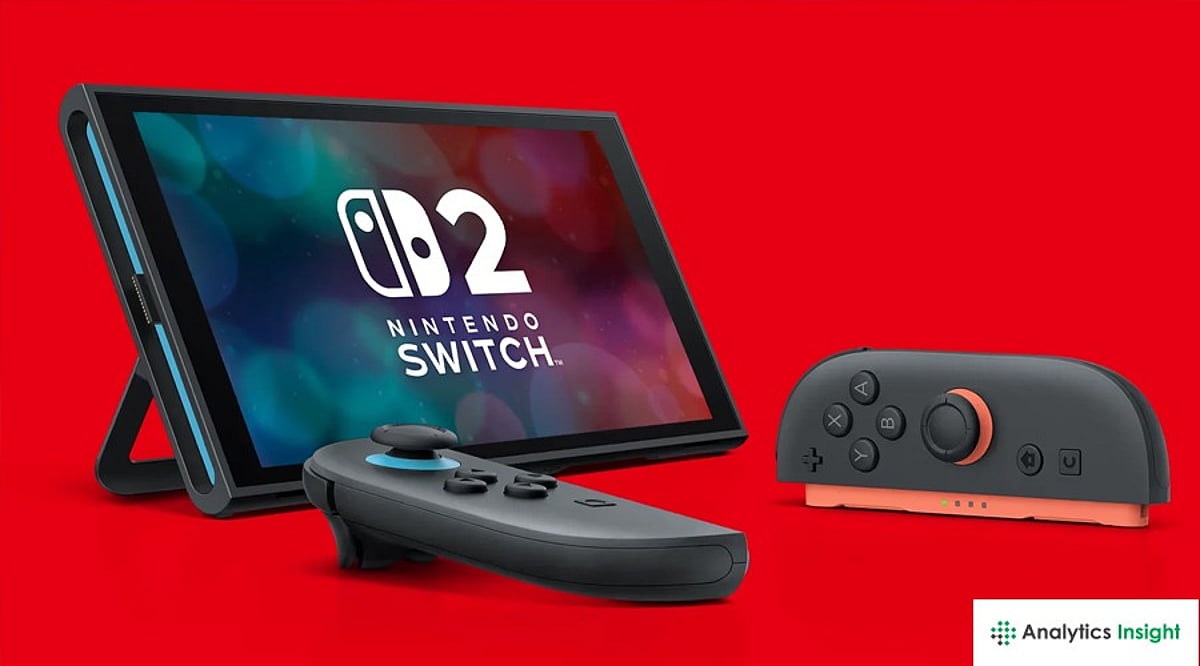
    Instead of retrofitting older consoles, Nintendo is redesigning the newer Switch 2 to comply with the regulation. A European-market version with a “BEE” model number prefix is expected this autumn, featuring a user-replaceable battery rated at 5,172 mAh—slightly smaller than the standard 5,220 mAh unit and marginally heavier at around 411g. Updated Joy-Con 2 controllers with replaceable batteries are planned for winter, with a small weight increase and no change in battery capacity. However, not all accessories will receive this treatment; the original Switch Pro Controller and some retro-style controllers will be discontinued outright.

    What This Means for Shoppers and Existing Owners

    Nintendo has confirmed that all three original consoles will continue to be manufactured through 2026 and remain widely available across Europe for the rest of the year, giving shoppers a real window to purchase before the cutoff. Existing owners will not be left behind: games, accessories, the Nintendo eShop, and Nintendo Switch Online will continue to work “for the foreseeable future.” Notably, Nintendo has not announced similar discontinuation plans for the US or Japan, describing those markets as “currently unknown.”

    This European transition underscores the growing impact of sustainability and repairability regulations on consumer electronics—and Nintendo’s strategic pivot to a newer, more compliant hardware generation.

  • Apple’s Siri AI Faces EU Delays: Davis Park Management Analyzes Regulatory Hurdles and Investor Impact

    Apple’s Siri AI Faces EU Delays: Davis Park Management Analyzes Regulatory Hurdles and Investor Impact

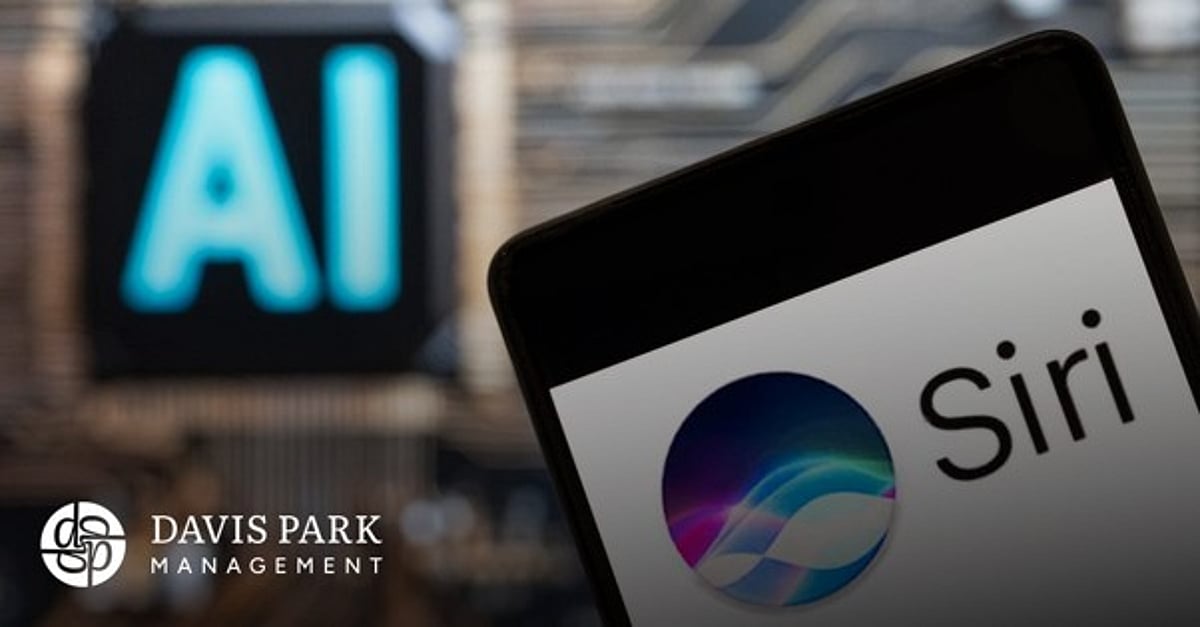
    Apple’s upgraded Siri AI assistant, unveiled at the Worldwide Developers Conference, has hit a regulatory roadblock in the European Union. The Digital Markets Act (DMA) compliance obligations are preventing the feature from launching on European devices, creating a staggered rollout that has caught the attention of institutional investors. Davis Park Management Pte. Ltd., a Singapore-based capital management firm, is examining the implications for allocators as the regulatory landscape complicates Apple’s AI ambitions.

    Regulatory Challenges and Market Access

    The new Siri architecture, powered by a custom version of Google’s Gemini model with 1.2 trillion parameters, represents a significant leap from the previous query-and-response design. However, Apple has confirmed that the assistant will not accompany the forthcoming iOS 27 and iPadOS 27 releases within the EU. Regulators have rejected a succession of proposals, including a phased plan built around a Trusted System Agent, marking the second occasion Apple Intelligence has been withheld from European markets.

    A parallel restriction applies in China, where foreign manufacturers must submit large language models for local approval. China accounts for 17% of Apple’s group revenue, sharpening the commercial stakes of prolonged delays in either market.

    Davis Park Management’s Perspective

    Michael Sheldon, Director of Private Equity at Davis Park Management, views the licensing approach as a deliberate decision to rent frontier capability rather than fund it outright. This preserves capital for areas where Apple retains a defensible advantage and reassures investors focused on margin durability. The firm reads the friction as a question of capital allocation rather than a verdict on the technology.

    Apple’s AI revenue stands near $1.1 billion for the period, while services revenue of about $33.2 billion carries a margin of 76.5%. The active device base exceeds two billion units, and paid subscriptions surpass one billion, expanding at a double-digit rate. Market capitalization briefly overtook Microsoft’s valuation of about $3.6 trillion following the conference, a three-day move adding $358.5 billion in value.

    Broader Implications for Investors

    Sheldon emphasizes that the clearer risk lies in the durability of the ecosystem. Every regulatory concession that loosens the integration between Apple’s hardware and its services chips away at the retention mechanics behind recurring revenue. Regulatory enforcement compounds trade-policy exposure, with a penalty of about $580 million for anti-steering breaches under the DMA and tariff payments approaching $3.7 billion in aggregate.

    Equity research remains divided. One bullish brokerage maintains an “Outperform” rating with a price target near $343.1, projecting AI could add between $83 and $110.7 per share. A more cautious peer has trimmed iPhone unit-growth expectations to 2% across the forecast period, to about 232 million units, with commercial availability slipping into the next year.

    For Davis Park Management, the open question is timing. European availability rests on continuing negotiation and precedent enforcement, while the staggered rollout shows the difficulty of reconciling deep platform integration with divergent compliance regimes. The delay weighs on near-term services projections given the scale of the European installed base, yet the underlying partnership keeps Apple within the competitive frontier of applied AI, leaving the investment case finely balanced between regulatory drag and long-term value.