Tag: Facebook

  • Meta Platforms Hit by Second Outage in Three Days: Thousands Report Facebook and Instagram Issues

    Meta Platforms Hit by Second Outage in Three Days: Thousands Report Facebook and Instagram Issues

    Meta’s social media platforms Facebook and Instagram experienced another significant outage on July 22, marking the second disruption in just 72 hours. Thousands of users worldwide reported problems accessing the apps, with many turning to X (formerly Twitter) to confirm the widespread nature of the issue.

    Thousands Report Problems

    Outage tracking website Downdetector recorded approximately 3,600 reports from users experiencing difficulties with both Facebook and Instagram. Common issues included trouble logging in, loading feeds, and accessing key features. As with most outage trackers, these figures represent only users who actively reported the problem, suggesting the actual number of affected users may have been higher.

    Another Disruption After Sunday’s Outage

    This latest outage comes just three days after Meta’s platforms suffered a similar disruption on Sunday. During that incident, Downdetector logged more than 4,000 reports for Facebook and over 1,500 reports for Instagram at its peak. Many users reported being unable to sign in, refresh feeds, or use parts of the platforms. Some Facebook users also received the message: “Account Temporarily Unavailable. Your account is currently unavailable due to a site issue. We expect this to be resolved shortly. Please try again in a few minutes.”

    Users Turn to X

    As services went down, users flocked to X to report the outage and confirm whether the problem was widespread. Several posts questioned why Meta’s platforms had experienced two outages in such a short period, while others reacted with humor. The repeated disruptions sparked fresh complaints from users who rely on Facebook and Instagram for communication, work, and content sharing.

    Meta Yet to Respond

    At the time of writing, Meta had not issued a statement explaining the latest outage or whether it was linked to Sunday’s disruption. The company also did not provide details on what caused the technical issues. Users and industry observers are awaiting clarification from Meta regarding the root cause and expected resolution timeline.
  • Meta Introduces AI-Powered Alerts to Protect Teens from Self-Harm Conversations

    Meta Introduces AI-Powered Alerts to Protect Teens from Self-Harm Conversations

    Meta is rolling out a new safety feature that alerts parents when their supervised teen discusses suicide or self-harm with Meta AI. The company has also updated how its AI responds to such conversations and expanded content restrictions for teen accounts.

    The feature is currently launching in the United States, the United Kingdom, Australia, and Canada, with plans for a global rollout by the end of the year.

    Parents to Receive Safety Alerts

    If a supervised teen shares thoughts of suicide or self-harm, Meta AI will encourage them to reach out to a trusted adult, counselor, or crisis support service. Parents using Meta’s supervision tools will receive a notification if their teen needs support. The company aims to help parents recognize signs of distress and intervene when necessary. The system can identify conversations where a teen may be expressing suicidal thoughts, even if the language is not explicit.

    Every Alert Will Be Reviewed

    Meta emphasized that alerts are not generated automatically. Each conversation flagged by its AI is reviewed before a notification is sent to a parent. The company said it will ‘err on the side of caution’ when assessing conversations. If there is uncertainty, parents may still receive an alert rather than risk missing a genuine case where a teen needs help.

    AI Responses Updated with Expert Input

    To improve Meta AI’s responses, the company consulted more than 75 mental health clinicians with experience in adolescent care. Experts reviewed hundreds of conversations involving teens and evaluated whether the AI responded appropriately. Their feedback was used to enhance how Meta AI handles sensitive discussions.

    Meta said the updated system is designed to acknowledge a teen’s emotions, encourage them to seek help, and connect them with relevant support instead of ending the conversation quickly.

    Emergency Response Feature in Development

    Meta is also developing a feature that could allow it to contact emergency services if conversations with Meta AI suggest a user faces an imminent risk of suicide. The company already reports credible suicide threats identified on Facebook and Instagram. Meta said it made more than 19,000 referrals to emergency responders worldwide last year, enabling authorities to perform welfare checks when required.

    More Restrictions for Teen Accounts

    Meta is extending Instagram’s Limited Content setting to Meta AI chats. Teen Accounts already receive age-appropriate AI responses. Meta AI does not engage in sexual or romantic conversations with teens and does not provide recipes for alcoholic drinks. With the stricter Limited Content setting enabled, Meta AI will refuse a wider range of sensitive requests.

    The update builds on Meta’s existing parental supervision tools, including alerts when supervised teens repeatedly search for suicide or self-harm-related content on Instagram. The company said the latest changes are aimed at giving parents more visibility while strengthening protections for teenagers using its AI services.

  • The Evolution of Social Media: From Six Degrees to TikTok

    The Evolution of Social Media: From Six Degrees to TikTok

    Social media has transformed how we connect, communicate, and consume content. This timeline traces the major platforms that shaped the digital landscape over the past two decades.

    • Six Degrees (1997): Widely regarded as the first social networking website, it introduced friend lists, user profiles, and online connections before mainstream adoption.
    • Friendster (2002): Revolutionized online networking by emphasizing real-life friendships, inspiring future social platforms despite technical limitations and declining popularity later.
    • MySpace (2003): Dominated early social media through customizable profiles, music sharing, and artist promotion before Facebook overtook its massive user base.
    • Facebook (2004): Transformed global communication with personal profiles, business pages, communities, messaging, and powerful advertising tools reaching billions worldwide today.
    • YouTube (2005): Changed digital entertainment forever by enabling users to upload, watch, share, and monetize videos across every imaginable content category.
    • Twitter/X (2006): Popularized real-time conversations through short posts, becoming a leading platform for breaking news, public discussions, and live event updates.
    • Instagram (2010): Made visual storytelling mainstream through photos, Stories, Reels, influencer marketing, and advanced shopping experiences for global audiences everywhere.
    • Snapchat (2011): Introduced disappearing messages, augmented reality filters, and short-lived Stories, encouraging spontaneous communication among younger smartphone users globally.
    • TikTok (2016): Redefined short-form entertainment with AI-driven recommendations, viral trends, creative editing tools, and unmatched user engagement across diverse audiences worldwide.

    Read more stories and join our WhatsApp Channel to get the latest news, exclusives, and videos on WhatsApp.

  • Why These 10 Major Companies Changed Their Names – And What It Means

    Why These 10 Major Companies Changed Their Names – And What It Means

    Rebranding is a bold strategic move that can signal a shift in vision, target audience, or even an entire industry. Over the years, several high-profile companies have changed their names to reflect new ambitions, shed outdated associations, or simplify their identity. Here are ten notable examples and the stories behind their name changes.

    • Facebook to Meta: Mark Zuckerberg rebranded the social network to emphasize its focus on virtual reality, augmented reality, and the metaverse, moving beyond traditional social media.
    • Google to Alphabet: In 2015, Google created a parent company called Alphabet to allow its core business and experimental ventures (like self-driving cars and life sciences) to operate independently under one umbrella.
    • Twitter to X: After Elon Musk acquired Twitter, he rebranded it as X, aiming to transform the platform into an all-in-one digital services hub for payments, messaging, and more.
    • Square to Block: The payment processing company expanded its scope to include blockchain, financial services, and decentralized technology, adopting the name Block to reflect that broader vision.
    • Dunkin’ Donuts to Dunkin’: The chain dropped “Donuts” from its name to emphasize its growing beverage menu and modern coffee-shop identity, appealing to a wider audience.
    • Weight Watchers to WW: The weight-loss program rebranded to WW, focusing on holistic wellness and healthy lifestyles rather than just weight loss.
    • Philip Morris to Altria: The tobacco giant adopted a new corporate name to distance itself from its cigarette heritage while diversifying into other industries.
    • Andersen Consulting to Accenture: After a legal split from Arthur Andersen, the consulting firm needed a fresh identity. The name Accenture (meaning “accent on the future”) was born and has since become a global leader in technology consulting.
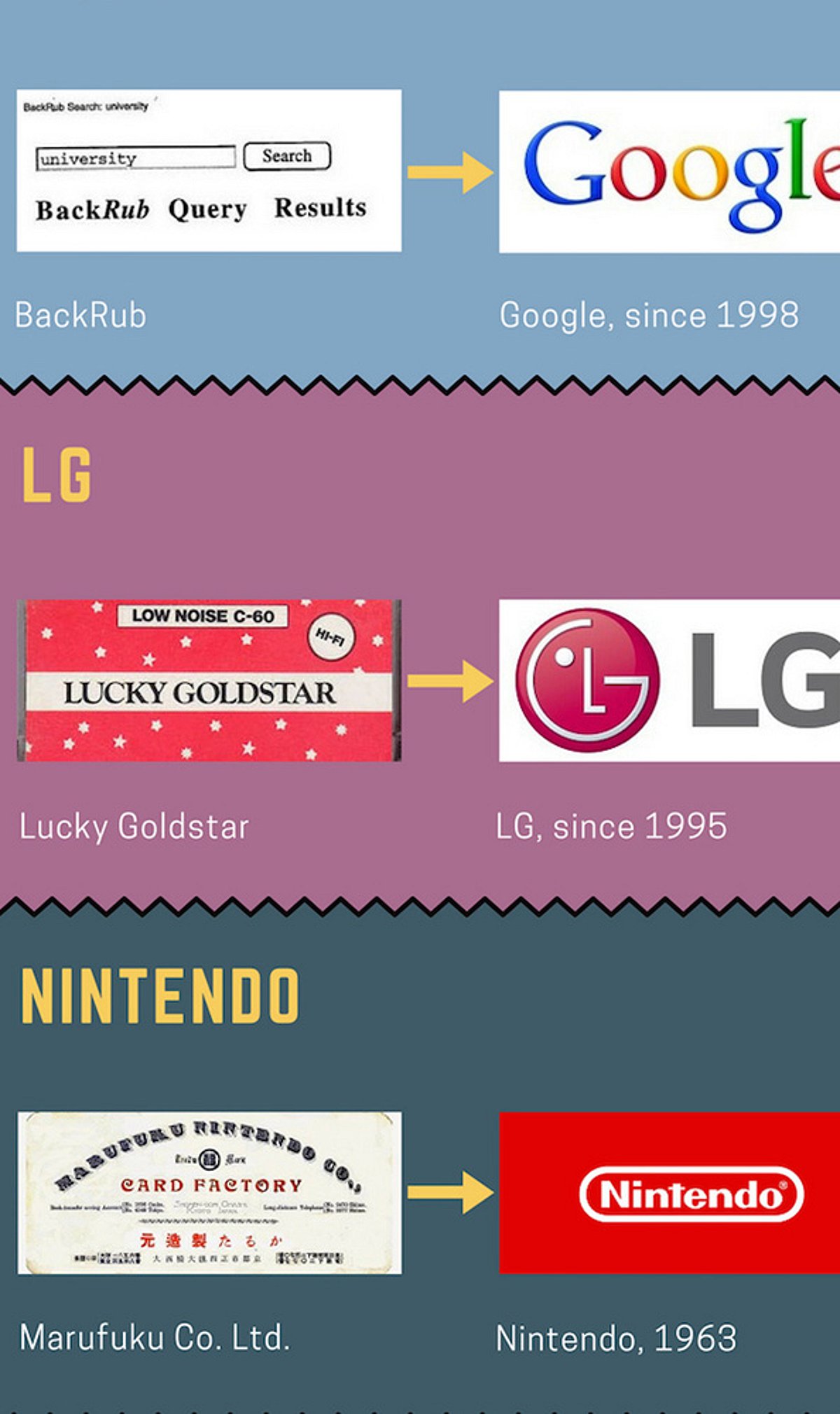
    • BackRub to Google: Before becoming a household name, Google started as BackRub. Founders Larry Page and Sergey Brin renamed it to represent the immense scale of information they aimed to organize.

    Each of these name changes was a carefully calculated decision, often accompanied by a shift in business strategy. Whether to pivot to new technologies, shed negative connotations, or simplify branding, these companies show that a name is more than just a label—it’s a statement of intent.

  • Meta Unveils Muse Image: AI-Powered Photo Creation and Editing Comes to Facebook, Instagram, and WhatsApp

    Meta Unveils Muse Image: AI-Powered Photo Creation and Editing Comes to Facebook, Instagram, and WhatsApp

    Meta has officially launched Muse Image, the first image-generation model developed by its newly formed Meta Superintelligence Labs (MSL). The AI model is now integrated into Meta AI, allowing users to generate, edit, and transform images using natural language prompts, uploaded photos, sketches, and annotations directly within Meta’s suite of apps.

    What Makes Muse Image Different?

    Unlike traditional AI image generators that rely solely on text prompts, Muse Image understands complex instructions, interacts with user-uploaded images, and even allows modifications by drawing on images or adding annotations. This makes the creation and editing process more interactive and flexible—all without leaving apps like Facebook, Instagram, WhatsApp, and Messenger.

    Key Features of Meta Muse Image

    • Text-to-Image Generation: Describe almost any scene in natural language, and Muse Image will produce a corresponding image, handling intricate requests with multiple details.
    • Image Editing: Upload an existing photo and ask Meta AI to modify it—change backgrounds, lighting, clothing, or add new objects—without regenerating from scratch.
    • Sketch-Based Editing: Draw simple sketches or annotations over an image, and the AI will replace, remove, or enhance those specific areas.
    • Instagram Stories Effects: Over 30 new AI-powered effects, enabled by Muse Image, are rolling out to Instagram Stories for creative visual enhancements.
    • In-Chat Image Creation on WhatsApp: Users can generate images directly within WhatsApp conversations using Meta AI, initially rolling out in select countries before a global launch.

    How to Use Muse Image

    Using Muse Image is straightforward through Meta AI:

    1. Open Meta AI in a supported app (e.g., Instagram or WhatsApp).
    2. Type a text prompt describing the image you want to create.
    3. If modifying an existing image, upload a photo.
    4. Use sketches or annotations to highlight specific areas for change.
    5. Review the generated image and refine it further with additional prompts.

    Support for Facebook and Messenger will expand as Meta continues to roll out the feature.

    Meta’s Bigger AI Ambitions

    Alongside Muse Image, Meta teased its upcoming Muse Video AI model, which aims to generate video content from prompts. Although still in development, it signals Meta’s commitment to building not only advanced image generation but also AI-powered video creation. By embedding these capabilities into apps used by billions, Meta hopes to make AI-driven content creation accessible to everyone.

  • Meta Challenges $1.4 Trillion Penalty Demand in Youth Safety Lawsuit Over Facebook and Instagram

    Meta Challenges $1.4 Trillion Penalty Demand in Youth Safety Lawsuit Over Facebook and Instagram

    Meta has disclosed that four U.S. states are seeking approximately $1.4 trillion in penalties in a youth safety lawsuit targeting Facebook and Instagram. The company revealed the figure in a court filing on Monday, ahead of a trial scheduled for August in Oakland, California.

    The case involves California, Colorado, Kentucky, and New Jersey, which accuse Meta of designing its platforms to maximize engagement among young users and of misleading the public about safety measures. Meta has denied these allegations and questioned the penalty demand, calling it unprecedented.

    Meta Questions $1.4 Trillion Penalty Claim

    According to Meta, the proposed penalty figure emerged from filings by the attorneys general outlining how penalties should be calculated if the states prevail at trial. The company noted that the amount is close to its market value and argued that the states have not provided evidence to support such a sum.

    In its filing, Meta stated, “A sanction of that size has no analog in the history of consumer protection enforcement.” The company also asserted that the figure lacks a proper legal basis under the facts of the case.

    The states’ filings are sealed, but they explained part of their methodology at a June court hearing. They indicated that they calculated the number of alleged violations and multiplied that by fine amounts permitted under state consumer laws. The violations were based on estimates of teens and young users allegedly affected by Meta’s conduct. Representatives for the attorneys general did not immediately comment after Meta disclosed the figure.

    Facebook and Instagram Face Youth Safety Trial

    The August trial will take place before U.S. District Judge Yvonne Gonzalez Rogers. It will cover claims under the federal Children’s Online Privacy Protection Act (COPPA) as well as consumer protection claims from the four states.

    Twenty-nine states have sued Meta in federal court, with many alleging that the company collected data from children without proper parental consent. The four states also claim that Meta misled the public about whether Facebook and Instagram were safe for young users.

    Meta rejects this position. The company argues that the attorneys general have not shown that it misled users about platform addiction. It also contends that “social media addiction” is not an established psychiatric condition, so its statements about addiction cannot be false.

    Judge Rogers recently denied Meta’s request to cancel the trial, stating that factual disputes remain, including whether the platforms were addictive, whether Meta denied designing them that way, and whether the company partly directed the platforms at children.

    Meta Also Faces WhatsApp Scrutiny in India

    Separately, Meta is facing a regulatory issue in India over a new WhatsApp usernames feature. The feature would allow users to chat without sharing phone numbers. India’s Ministry of Electronics and Information Technology has asked Meta to pause the rollout and explain its safety controls.

    Officials have raised concerns that usernames could be used for spoofing or fraud, with scammers potentially copying names linked to real people, government offices, or trusted organizations. Meta has until July 9 to send a detailed response.

    WhatsApp has defended the feature, stating that usernames will be optional and that users will not be searchable only through a username. The company also says users will see safety information before replying to unknown accounts, including the sender’s country and whether the account is new.

    Also read: ChatGPT Lawsuit Claims OpenAI Secretly Shared Private User Chats with Meta and Google

  • Meta Relaunches Facebook Creator Studio as AI-Powered App with Smart Insights and Automated Replies

    Meta Relaunches Facebook Creator Studio as AI-Powered App with Smart Insights and Automated Replies

    Meta has relaunched Facebook’s Creator Studio as a standalone AI-powered companion app, marking the return of a platform it discontinued in 2023 when it shifted creators to Meta Business Suite. The revamped app is designed to help creators grow their audiences with AI-driven insights, engagement tools, and personalized recommendations.

    At the heart of the new experience is the AI Creator Assistant, which provides creators with performance insights, answers questions about audience engagement, suggests ways to improve reach, and recommends the best times to post. The assistant can also identify the most important audience comments and draft replies in the creator’s own tone, allowing users to review and publish responses quickly.

    The application will also feature a daily priorities feed that will show top priorities such as following up on recently published post performance and interactions. According to Meta, the application will make it easy for content creators to work without using third-party applications when coming up with ideas.

    The new Creator Studio has been tested by some selected creators while users who are willing to be part of the creators can enroll on the waitlist. Thus far, there is no update about any wider release dates by Meta. Besides the app, Meta has redesigned its creator dashboards on Facebook.