
Tag: film industry

  • China’s AI Film Industry Surges on Government Subsidies and Computing Power

    China’s AI Film Industry Surges on Government Subsidies and Computing Power

    China is making a significant push to dominate the AI-powered film and short-video industry, leveraging a powerful combination of government subsidies, cheap rent, and direct computing support. Cities like Shenzhen, Shanghai, and Beijing are at the forefront, offering incentives ranging from subsidized office space to cloud-based AI models and computing vouchers. This strategy is part of a wider national effort to build domestic AI industries through local technology clusters and government-backed financial assistance.

    Filmmakers Benefit from Government Incentives

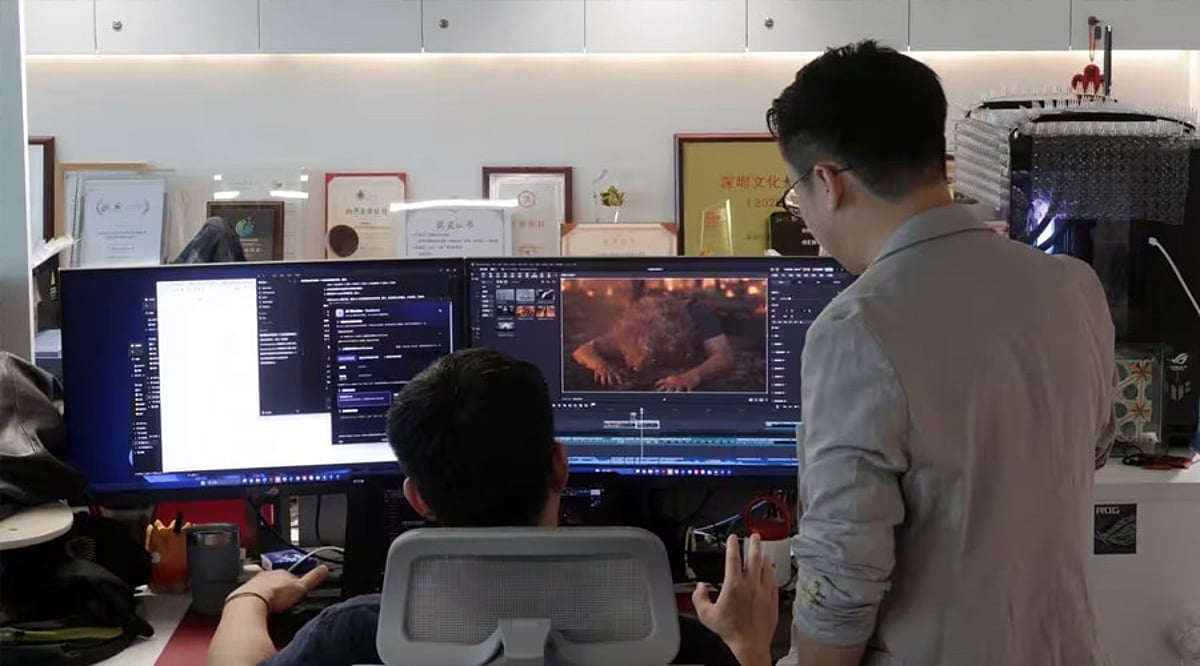
    AI filmmaker Zhu Zhili, who chose Shenzhen two years ago for its technology ecosystem, says officials from cities across China regularly approach him about relocating his business. He operates his studio from a shared workspace supported by the Shenzhen government and Hong Kong Polytechnic University. The incentives, he notes, include “cheap rent, living allowance and computing support,” which are crucial for lowering the barrier to entry for AI-generated content production.

    Production Costs Plummet

    The financial impact is stark. According to China’s state broadcaster CCTV, the cost of producing AI short dramas dropped from around 5,000 yuan (USD 747) per minute to just a few hundred yuan during the first half of 2026. In another striking example, postgraduate film-directing student Pan Xiaojun in Hainan found that producing a conventional wedding scene cost about 60,000 yuan using traditional methods, but only 1,400 yuan using AI. This sharp reduction is giving independent filmmakers and smaller studios unprecedented room to experiment.

    New Concerns Emerge

    However, this rapid expansion is not without its challenges. The surge in AI-generated film and video is raising concerns over an oversupply of content, unresolved copyright issues, and the unauthorized use of actors’ likenesses. Questions are also emerging about long-term audience engagement with AI-generated films as the volume of such content continues to increase.

    China’s comprehensive approach—combining financial incentives, technology access, and local industrial support—is creating a powerful AI-focused film ecosystem. For filmmakers, cheaper production and government-backed infrastructure offer immense opportunities, even as the industry grapples with unresolved questions about ownership, rights, and sustainable audience demand.

  • Christopher Nolan Calls AI a ‘Trojan Horse’ and Says Young Audiences Are Turning Away from AI-Generated Content

    Christopher Nolan Calls AI a ‘Trojan Horse’ and Says Young Audiences Are Turning Away from AI-Generated Content

    Renowned filmmaker Christopher Nolan has described artificial intelligence as a “Trojan horse,” warning that while AI can be a useful tool, replacing human creativity with it is “nonsense.” His comments come amid growing debate over the technology’s impact on filmmaking, storytelling, and the value of human-made work.

    Nolan Says AI Is Facing Strong Public Resistance

    Nolan believes that public reactions to generative AI have been particularly swift and aggressive. According to the director, younger generations—including his own children—can easily identify and disregard what is often called “AI slop.”

    “The younger generation has grown up online and understands how digital content is created and circulated,” Nolan said. That familiarity, he suggested, makes it easier for them to recognize content that feels artificial or lacks genuine creative effort.

    He also views AI as an irreversible technological wave. The industry, he noted, has spent enormous effort marketing AI, but audiences are not responding in the same way.

    ‘Replacing Human Creativity Is Nonsense’

    Nolan does not believe artificial intelligence will replace human creativity. While he acknowledged that AI might be useful as a practical tool, he stressed that it cannot substitute the human role as a creative filmmaker and artist.

    For Nolan, filmmaking is always about the human element, the physical world, and performances. His creative process typically relies on practical effects, location shooting, and large-format cinematography. This approach was evident in his adaptation of The Odyssey, an ancient epic designed to be a big-screen experience emphasizing scale and physical filmmaking.

    Nolan’s remarks arrive as Hollywood continues to debate the use of generative AI. The technology has sparked concerns over hiring writers, the nature of writers’ work, and the future of creative jobs. The debate also played a role in the 2023 Hollywood strikes. While some filmmakers and studios are exploring AI tools, others argue that technology should assist human creators rather than replace them.

    Also read: San Francisco Urges Apple, Google to Remove AI Nudify Apps