
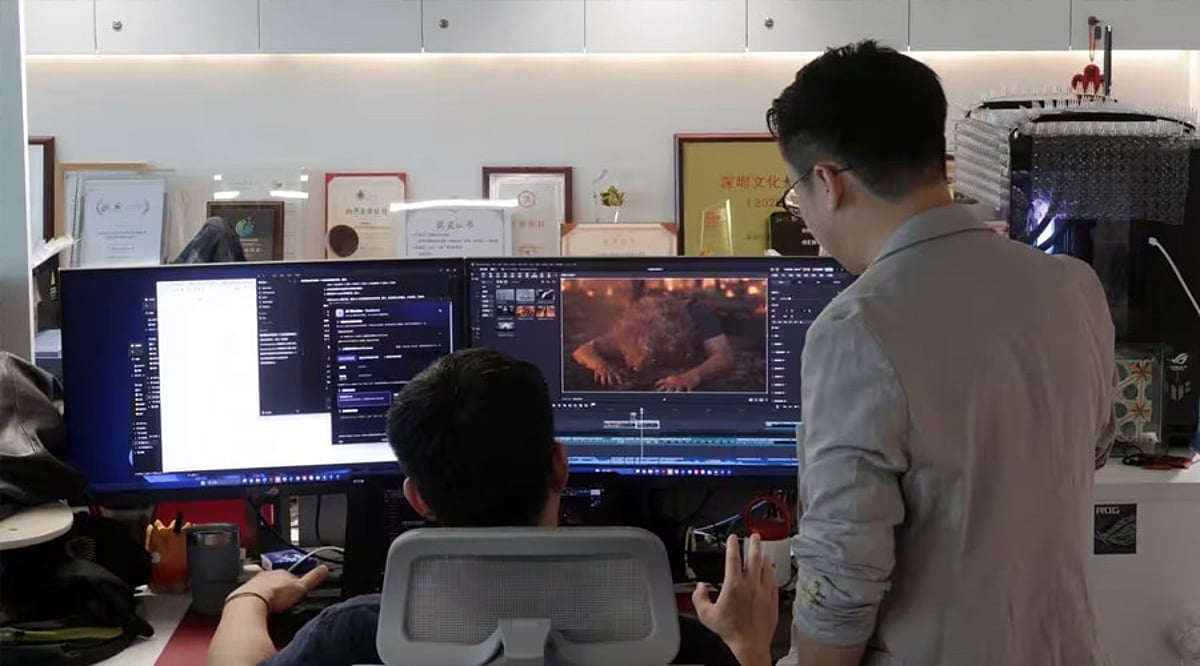
China is making a significant push to dominate the AI-powered film and short-video industry, leveraging a powerful combination of government subsidies, cheap rent, and direct computing support. Cities like Shenzhen, Shanghai, and Beijing are at the forefront, offering incentives ranging from subsidized office space to cloud-based AI models and computing vouchers. This strategy is part of a wider national effort to build domestic AI industries through local technology clusters and government-backed financial assistance.
Filmmakers Benefit from Government Incentives
AI filmmaker Zhu Zhili, who chose Shenzhen two years ago for its technology ecosystem, says officials from cities across China regularly approach him about relocating his business. He operates his studio from a shared workspace supported by the Shenzhen government and Hong Kong Polytechnic University. The incentives, he notes, include “cheap rent, living allowance and computing support,” which are crucial for lowering the barrier to entry for AI-generated content production.
Production Costs Plummet
The financial impact is stark. According to China’s state broadcaster CCTV, the cost of producing AI short dramas dropped from around 5,000 yuan (USD 747) per minute to just a few hundred yuan during the first half of 2026. In another striking example, postgraduate film-directing student Pan Xiaojun in Hainan found that producing a conventional wedding scene cost about 60,000 yuan using traditional methods, but only 1,400 yuan using AI. This sharp reduction is giving independent filmmakers and smaller studios unprecedented room to experiment.
New Concerns Emerge
However, this rapid expansion is not without its challenges. The surge in AI-generated film and video is raising concerns over an oversupply of content, unresolved copyright issues, and the unauthorized use of actors’ likenesses. Questions are also emerging about long-term audience engagement with AI-generated films as the volume of such content continues to increase.
China’s comprehensive approach—combining financial incentives, technology access, and local industrial support—is creating a powerful AI-focused film ecosystem. For filmmakers, cheaper production and government-backed infrastructure offer immense opportunities, even as the industry grapples with unresolved questions about ownership, rights, and sustainable audience demand.
Leave a Reply