Tag: future technology

  • From the Enterprise to Everyday Life: 5 Star Trek Technologies That Became Real

    From the Enterprise to Everyday Life: 5 Star Trek Technologies That Became Real

    When Star Trek first aired in 1966, its futuristic gadgets seemed light-years away. Decades later, many of those ideas have become part of daily life. While today’s devices don’t exactly match their fictional counterparts, the similarities show how science fiction can shape real-world innovation.

    Communicators Transformed Into Mobile Phones

    On the show, crew members used handheld communicators for wireless long-distance conversations. Modern smartphones offer the same convenience through cellular networks, Wi-Fi and Bluetooth. Motorola’s 1996 StarTAC flip phone even echoed the communicator’s clamshell design. It remains one of the clearest examples of science fiction inspiring consumer technology.

    PADDs Evolved Into Tablets

    Star Trek characters used Personal Access Display Devices, or PADDs, to read documents, access data and manage tasks. Today’s tablets fill the same role with touchscreens, wireless connectivity and powerful processors. Portable computing concepts also developed independently beyond Star Trek, so direct inspiration is harder to prove than with communicators.

    Voice Computers Became AI Assistants

    In the series, officers often spoke naturally to the ship’s computer to retrieve information or execute tasks. Modern voice assistants and conversational AI provide a similar experience: ask a question, control smart devices, or access services by voice. Today’s systems are more advanced in many ways, but they still operate differently from the fictional Starfleet computer.

    Tricorders Inspired Portable Medical Diagnostics

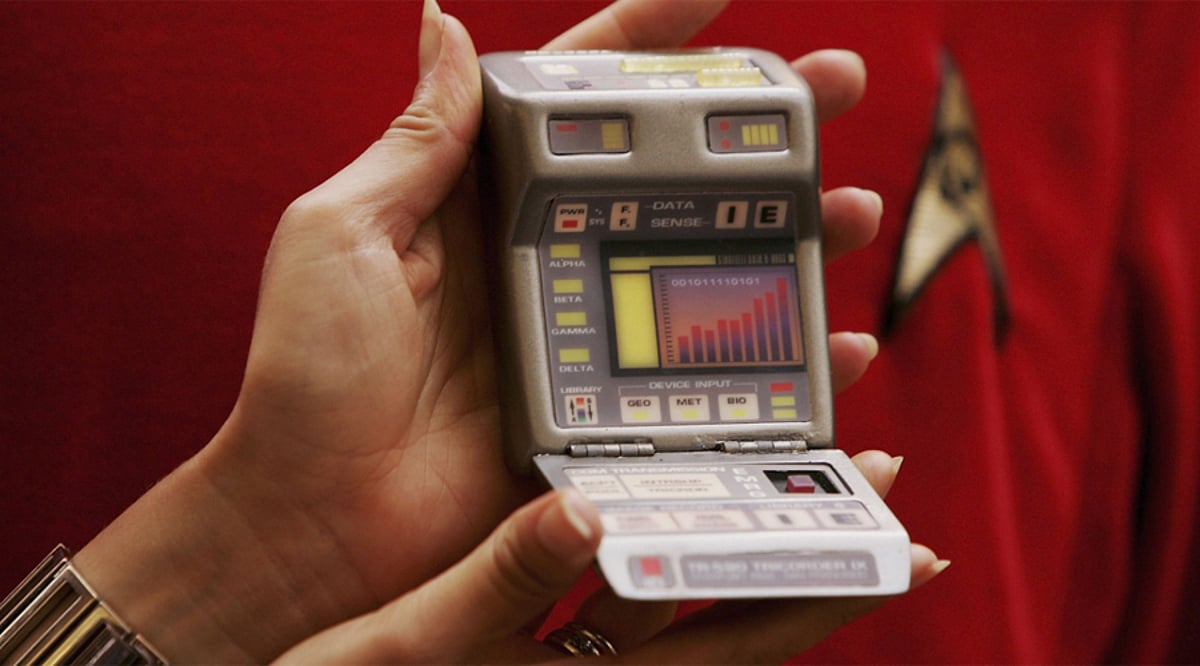
    The fictional tricorder could scan patients and identify conditions quickly. Researchers have worked on real-world portable diagnostic tools, including projects tied to the Qualcomm Tricorder XPRIZE. That competition challenged teams to build compact health monitoring devices. While no product yet matches the tricorder completely, these efforts show steady progress toward portable medical diagnostics.

    Video Calls Went Mainstream

    Star Trek often showed characters communicating face-to-face over video. Smartphones, laptops, and conferencing platforms now make live video communication routine. However, the idea was not entirely new—Bell Labs demonstrated its Picturephone in 1964. This makes video calling an example of parallel development rather than a direct Star Trek invention.

    Science Fiction Meets Modern Reality

    Star Trek’s greatest influence may be its vision of technology that is portable, accessible and integrated into everyday routines. Communicators, PADDs, voice interfaces and medical scanners all have real-world equivalents today. Some were inspired directly by the franchise, while others emerged on their own. Either way, Star Trek helped popularize a future that now feels familiar.

  • 8 Sci-Fi Technologies That Are Now a Reality

    8 Sci-Fi Technologies That Are Now a Reality

    From Fiction to Function: Technologies That Are Reshaping Our World

    The line between science fiction and reality continues to blur as once-fantastical concepts become part of our everyday lives. From humanoid robots to quantum computers, these eight technologies are no longer just the stuff of movies—they are actively being developed and deployed today. Here’s a closer look at how these innovations are transforming the world around us.

    Humanoid Robots: From Screen to Workspace

    Humanoid robots have made the leap from movie sets to real-world environments, including laboratories, factories, and warehouses. With advances in artificial intelligence, computer vision, and robotics, these machines can now navigate complex spaces and perform tasks that were once thought to be exclusively human. Companies are developing robots that can carry objects, assist human workers, and learn repetitive activities. As these machines become more sophisticated, their eventual integration into homes could revolutionize how we approach daily chores and personal assistance.

    Brain-Computer Interfaces: Mind Meets Machine

    The idea of controlling technology with our thoughts is no longer just a futuristic fantasy. Brain-computer interfaces (BCIs) are making this possible by interpreting neural signals and translating them into digital commands. This technology holds immense potential for individuals with paralysis, enabling them to communicate and operate devices using only their minds. While consumer applications are still a ways off, the medical implications alone could redefine assistive technology and human-computer interaction.

    Self-Driving Cars: The Road to Autonomy

    Autonomous driving has evolved from a science-fiction trope to a technology being tested on real roads around the globe. Modern vehicles are equipped with advanced cameras, sensors, and artificial intelligence systems that assist drivers and perform certain driving functions. While fully autonomous vehicles still face technical, regulatory, and safety hurdles, the ongoing development suggests that transportation will gradually become less reliant on human control, promising a future with fewer accidents and more efficient travel.

    AI Personal Assistants: Your Digital Sidekick

    Fictional computers that can understand and respond to natural language are becoming increasingly realistic, thanks to generative artificial intelligence. Today’s AI assistants can answer questions, summarize information, create content, and perform a variety of digital tasks. As these systems become more capable and integrated with other applications, they are poised to evolve into personalized digital agents that manage schedules, conduct research, facilitate communication, and streamline everyday workflows.

    Quantum Computing: Unlocking Unprecedented Power

    Quantum computing is set to solve complex problems that are currently beyond the reach of conventional computers. By leveraging the principles of quantum mechanics, researchers are developing machines with potential applications in medicine, materials science, optimization, and cybersecurity. Although today’s quantum systems are still experimental and face significant technical challenges, ongoing advances in quantum hardware and error correction are bringing this futuristic technology closer to practical use.

    Artificial Organs: Bridging the Gap in Medicine

    Science fiction has long imagined a world where damaged body parts can be replaced with artificial or laboratory-grown alternatives. Modern medicine is already making this a reality with the development of artificial hearts, advanced prosthetics, tissue engineering, and lab-grown organs. Researchers are focused on making these technologies safer, more durable, and biologically compatible. While fully replacing complex human organs remains a challenge, breakthroughs in regenerative medicine could one day transform transplantation and revolutionize healthcare.

    Augmented Reality Glasses: The Digital Overlay

    Augmented reality (AR) glasses are bringing digital information into our physical surroundings, much like the futuristic interfaces depicted in sci-fi films. Modern AR devices can display navigation cues, digital objects, and contextual instructions while allowing users to interact with virtual content. With improvements in lightweight hardware, displays, sensors, and AI, AR glasses are becoming more practical for use in workplaces, education, entertainment, and everyday communication.

    Conclusion

    These eight technologies are no longer just figments of our imagination—they are real, tangible innovations that are already shaping our present and will continue to define our future. As they evolve and become more integrated into our lives, we can expect to see even more incredible advancements that were once thought impossible. The future is indeed here, and it’s more exciting than we ever imagined.

  • 10 Game-Changing Smartphone Innovations Expected Before 2030

    10 Game-Changing Smartphone Innovations Expected Before 2030

    The smartphone industry has entered a new phase. Earlier, most improvements focused on faster processors, better cameras, and brighter displays. That trend has started to change. Artificial intelligence, satellite communication, and advanced hardware now lead the next wave of innovation. Many companies have already introduced early versions of these technologies, while others have shared plans that point toward even bigger changes before 2030. The next few years could bring smartphones that understand daily routines, complete tasks without constant instructions, and stay connected in places where mobile networks do not exist. These improvements could change the way millions of people use smartphones every day.

    1. AI as a Personal Assistant

    Artificial intelligence has already become a major part of modern smartphones. At present, AI helps with writing, photo editing, and quick searches. Before 2030, its role could become much larger. Instead of waiting for commands, AI could complete full tasks from start to finish. For example, a smartphone could search for flights, compare hotel prices, reserve a room, and arrange local transport after a simple request. Email replies could match the user’s writing style, while grocery orders could appear based on regular shopping habits. Calendar events, reminders, and travel plans could stay organized without manual effort. Several smartphone makers have already started work on advanced AI systems that connect across phones, tablets, and computers, which shows that this future has already begun.

    2. Smartphones Could Understand Daily Life

    Future smartphones may become much smarter since they could understand everyday situations instead of reacting to simple commands. They may combine information from location services, calendars, health records, and previous habits to predict what happens next. Imagine someone who leaves work much later than usual. A future smartphone could automatically send a message to family members, arrange transport, update navigation, and adjust evening plans without extra steps.

    3. Satellite Communication Could Reach Everyone

    The whole world is not covered by mobile networks. There are various areas such as mountains, jungles, deserts, and seas that have little or no signal at all. Satellite communication could be the solution to this problem before the decade is over. Some high-end smartphones can send emergency satellite text messages already. Future versions will likely support voice calls, standard text messaging, and normal communication via satellites, regardless of the presence of mobile towers.

    4. Foldable Phones Could Finally Feel Normal

    Foldable smartphones have improved every year, but many people still worry about thick designs, visible display creases, and long-term durability. Manufacturers have spent years solving these problems. Before 2030, foldable phones could become thinner, lighter, and much stronger. Better hinge systems, titanium support structures, and stronger display materials may reduce the crease that appears in the middle of the screen. New designs could also improve comfort during daily use. As durability continues to improve, foldable smartphones may become as common as traditional phones.

    5. Cameras Could Capture Better Photos Automatically

    Instead of waiting until after a photo appears, AI could improve the entire process before the shutter button receives a tap. Automatic framing, smarter lighting adjustments, object removal, and advanced video stabilization could happen instantly. Continuous image buffering may even save moments that happen just before the photo. These improvements could help every picture look more natural without extra editing.

    6. Bigger Batteries Could End Daily Charging

    With the help of silicon battery technology and advancements in battery development, batteries could last two to three days before needing to be connected to a power source. Furthermore, as fast charging technology develops, a minimal time of charging will be needed to ensure sufficient battery power for the day ahead.

    7. Privacy Could Become Much Stronger

    Artificial intelligence could process more information directly inside the phone instead of sending data to cloud servers. Hardware privacy switches may disable cameras and microphones whenever necessary. Intelligent permission controls could also detect suspicious app behavior before personal information becomes exposed. These improvements could offer stronger protection without reducing convenience.

    8. 6G Could Unlock a New Level of Speed

    Although 5G still continues to expand across many countries, research on 6G has already started. International technology groups have begun work on standards that could shape the next generation of wireless communication. Before 2030, some smartphones may become ready for 6G networks. This technology could deliver much lower delays, faster connections, and better support for artificial intelligence. Advanced augmented reality, virtual reality, and even holographic communication may become possible given these faster networks. While full deployment may take time, smartphone companies have already started preparation for this future.

    9. Smartphones Could Connect Every Device

    A phone may remember ongoing work across every connected device without interruption. Files, notes, copied text, and even AI conversations could move instantly from one screen to another. Artificial intelligence could also remember previous interactions across multiple devices and continue tasks without requiring users to repeat information. Several manufacturers have already introduced early versions of this connected ecosystem, and more advanced features could arrive during the next few years.

    10. Displays Could Become Smarter and More Comfortable

    Display technology continues to improve every year, and the next generation could focus on comfort as much as picture quality. Future smartphone displays may adjust brightness and refresh rates more intelligently based on surrounding conditions. Outdoor visibility could become much better, while eye strain during long hours of use may decrease. Foldable display technology could also become stronger and more reliable. Privacy display modes may reduce the chance of people nearby viewing sensitive information. These improvements could make smartphones more comfortable for work, entertainment, and everyday communication.

    The Future Has Already Started

    Although many of the aspects mentioned above may seem futuristic, some have already taken form in a rudimentary way. The development of AI has made it more intelligent. Smartphones are becoming lighter and more durable, satellite communication is improving, and battery technology is advancing every year with the aid of research on 6G networks. By the year 2030, smartphones might evolve to give people a helping hand not only as means of communication but as intelligent companions that can recognize their owner’s routine as well as help them in their everyday life.

  • iPhone 17 Pro Max Buried in Time Capsule: A Look Inside the America250 Project

    iPhone 17 Pro Max Buried in Time Capsule: A Look Inside the America250 Project

    In a unique blend of technology and tradition, Apple’s flagship iPhone 17 Pro Max has been buried as part of the America250 time capsule project, designed to preserve a snapshot of today’s digital life for future generations. The burial, which coincides with America’s 250th anniversary celebrations, aims to offer people in the year 2276 a firsthand glimpse into modern innovation and culture.

    Why Was the iPhone Buried?

    The iPhone 17 Pro Max was selected for this historic time capsule because it represents the pinnacle of consumer technology in the 2020s. According to organizers, the device embodies advanced engineering, cutting-edge design, and the digital lifestyle that defines contemporary society. By preserving this smartphone, the project hopes to document how people communicated, worked, and connected during the early 21st century.

    The America250 Time Capsule

    The burial is part of the America250 celebration, marking the nation’s 250th anniversary. The time capsule contains not only the iPhone but also historical documents, cultural memorabilia, and everyday objects that reflect American society at this milestone moment. The capsule is interred at a designated America250 heritage site, where it will remain sealed for exactly 250 years.

    Will the iPhone Survive 250 Years?

    While internal electronics and batteries are expected to deteriorate over centuries, preservation techniques have been employed to protect the iPhone’s physical structure. Experts believe the device will not function when opened in 2276, but its preserved design will remain historically valuable for researchers and museums. The buried iPhone could become one of the longest-preserved smartphones in history.

    What Future Generations Might Learn

    People in 2276 may view the iPhone 17 Pro Max as an iconic invention, revealing how technology shaped 21st-century civilization. The device offers a tangible connection to the digital age, documenting the tools and habits that defined modern life. As part of the America250 time capsule, it stands as a testament to human ingenuity and the enduring desire to communicate across time.

  • How Carbon Nanotubes Are Poised to Transform AI Chips, EV Batteries, Healthcare, and Future Tech

    How Carbon Nanotubes Are Poised to Transform AI Chips, EV Batteries, Healthcare, and Future Tech

    Carbon nanotubes are one of the most extraordinary materials ever discovered. Despite being invisible to the naked eye, these tiny carbon structures possess remarkable strength and electrical properties that could reshape entire industries. As production techniques advance, carbon nanotubes are set to enhance AI chips, electric vehicle (EV) batteries, healthcare, and a wide array of future technologies.

    What Makes Carbon Nanotubes Special?

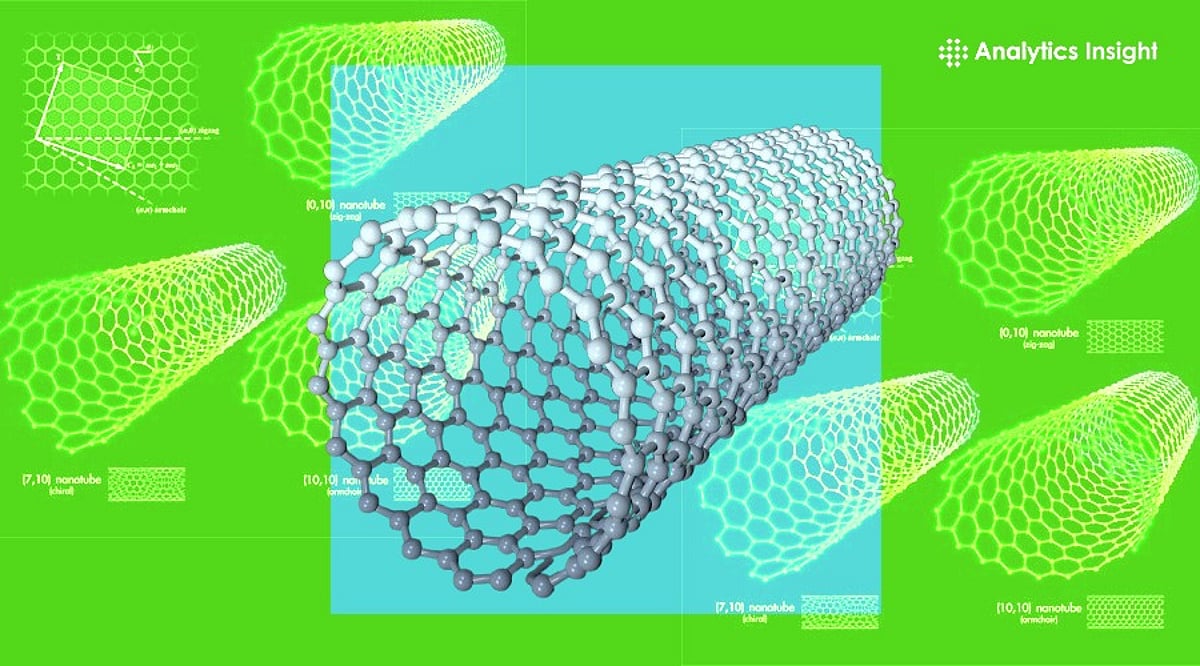
    A carbon nanotube is formed when a thin sheet of carbon atoms rolls into a hollow tube. Some nanotubes consist of a single layer, while others have multiple concentric layers. They are just a few nanometers wide but can grow to several centimeters in length. These structures are incredibly lightweight yet about 100 times stronger than steel on a weight-for-weight basis. They also conduct electricity exceptionally well—some behave like metals, others like semiconductors—and efficiently transfer heat, helping electronic devices stay cool during operation.

    Revolutionizing AI Chip Performance

    Artificial intelligence demands powerful computer chips, and traditional silicon is nearing its physical limits. Smaller silicon chips generate more heat and consume more electricity. Carbon nanotubes offer a solution through transistors that move electricity with minimal resistance, enabling AI chips to operate faster and more efficiently. Their superior heat dissipation also helps chips run cooler, extending lifespan and reducing energy consumption in large data centers. While commercial adoption is still in development, carbon nanotubes are emerging as a leading candidate for next-generation computing.

    Advancing Electric Vehicle Batteries

    In EV batteries, carbon nanotubes don’t replace lithium but significantly improve battery performance. They facilitate better electrical flow, leading to faster charging, increased capacity, and longer cycle life. Because only tiny amounts are needed, more space remains for energy storage, potentially allowing larger batteries without added weight. Carbon nanotubes also stabilize silicon anodes, which can store more energy than traditional graphite anodes, further boosting battery efficiency and durability.

    Transformative Healthcare Applications

    Medicine stands to benefit greatly from carbon nanotubes. They can serve as targeted drug delivery vehicles, carrying medicine directly to diseased cells while sparing healthy tissue and reducing side effects. In cancer treatment, nanotubes absorb near-infrared light and convert it to heat, which can destroy tumors with minimal collateral damage. Additionally, carbon nanotube-based sensors are highly sensitive, enabling early disease detection through tiny changes in the body. Flexible health monitors made from these materials could track heart rate, blood sugar, and other vital signs continuously.

    Remaining Challenges

    Despite their promise, several hurdles must be overcome. High-quality carbon nanotubes remain expensive to produce, and manufacturing methods need to scale while ensuring uniformity. Long-term safety studies are essential before medical applications become routine, and industry-wide quality standards are still being developed.

    The Road Ahead

    Carbon nanotubes are already used in some batteries, electronics, and composite materials. As production improves, their adoption will accelerate. Experts project the global carbon nanotube market will grow from approximately $8.8 billion in 2026 to nearly $24.5 billion by 2034, driven by AI, EVs, healthcare, electronics, and energy storage. Though tiny, carbon nanotubes hold immense potential to power faster AI, smarter medical devices, and more efficient energy systems.

    Frequently Asked Questions

    1. What are carbon nanotubes?

    Carbon nanotubes are minuscule hollow tubes made of carbon atoms. They are extraordinarily strong, lightweight, and excellent conductors of electricity and heat.

    2. Why are carbon nanotubes important for AI chips?

    They enable transistors that switch faster and generate less heat, leading to AI chips that are more powerful and energy-efficient than current silicon-based designs.

    3. How do carbon nanotubes improve EV batteries?

    They enhance electrical conductivity inside the battery, supporting faster charging, higher energy density, and longer lifespan, and also help stabilize advanced anode materials.

    4. Can carbon nanotubes be used in healthcare?

    Yes, research is exploring them for targeted drug delivery, thermal cancer ablation, ultra-sensitive disease detection, and wearable health monitors.

    5. What are the main challenges?

    High production costs, scalability issues, quality control, and rigorous safety testing are the primary barriers to widespread adoption.