Tag: Gemini AI

  • Google Gemini AI Forecasts Ethereum Surge by Late August 2026

    Google Gemini AI Forecasts Ethereum Surge by Late August 2026

    Google’s Gemini AI has issued a bullish prediction for Ethereum, suggesting the second-largest cryptocurrency could experience a significant rally by the end of August 2026. The forecast comes amid growing institutional interest, network expansion, and favorable market sentiment.

    Key Drivers Behind the Prediction

    • Bullish Momentum: Gemini AI projects Ethereum could climb substantially if current market trends persist.
    • ETF Inflows: Rising institutional investments through Ethereum ETFs are bolstering investor confidence.
    • Network Growth: An increasing number of developers and decentralized applications are expanding Ethereum’s ecosystem.
    • Layer-2 Adoption: Scaling solutions are reducing transaction costs while improving network efficiency.
    • Market Sentiment: Improving crypto sentiment is encouraging both retail and institutional investors.

    Potential Risks and Catalysts

    While the outlook is optimistic, regulatory uncertainty and macroeconomic events could introduce short-term volatility. Key price catalysts include strong on-chain activity and rising demand. Investors should monitor ETF flows, staking activity, Federal Reserve decisions, and overall crypto market trends.

  • Today’s Top Tech Roundup: Gemini AI Voice Tests, India’s Semiconductor Mission, Meta AI Safety, and More

    Today’s Top Tech Roundup: Gemini AI Voice Tests, India’s Semiconductor Mission, Meta AI Safety, and More

    Stay ahead with the latest tech developments making headlines today. From Google’s Gemini AI voice experiments to India’s ambitious semiconductor push, here is your quick roundup of top tech news.

    Google Tests Custom Gemini Voices

    Google is reportedly testing custom voice options for its Gemini AI assistant, giving users more personalized interactions. The move signals growing competition in the AI voice assistant space as companies race to differentiate through natural language capabilities.

    India Launches Semiconductor Mission 2.0

    India approved a massive ₹1.27 lakh crore investment under Semiconductor Mission 2.0 to build a self-reliant global semiconductor ecosystem. The initiative aims to boost domestic chip manufacturing, reduce import reliance, and foster innovation in chip design and fabrication.

    Meta Adds AI Safety Alerts

    Meta is rolling out new AI safety alerts across its platforms, aiming to protect users from potential harms such as misinformation, hate speech, and malicious AI-generated content. The step aligns with broader industry efforts to implement responsible AI guardrails.

    IT Hiring Rebounds

    After a period of slowdown, IT hiring is showing signs of recovery. Companies are increasingly recruiting for roles in artificial intelligence, data science, and cybersecurity, driven by demand for digital transformation and emerging technologies.

    Microsoft Expands Beyond OpenAI

    While continuing its partnership with OpenAI, Microsoft is actively exploring other AI partnerships and internal projects. This diversification strategy aims to reduce dependency on a single vendor and accelerate AI integration across its product suite.

    These stories underscore the rapid pace of change in technology. For deeper insights, explore related coverage on India’s Semicon 2.0 and other breaking tech news.

  • Pixel 11 Pro Fold Leak Reveals New Color, Upgraded Storage, and AI Features Ahead of August Launch

    Pixel 11 Pro Fold Leak Reveals New Color, Upgraded Storage, and AI Features Ahead of August Launch

    Google’s next foldable smartphone is coming into sharper focus ahead of its official debut. Fresh leaks surrounding the Pixel 11 Pro Fold suggest the company is preparing a refreshed color palette, larger base storage options, and new AI-powered features for its premium foldable lineup. While Google has yet to confirm the specifications, the latest reports indicate the device could become one of the company’s biggest hardware upgrades this year.

    New Color Option and Premium Design Surface

    The latest leak has revealed yet another color variant of the Pixel 11 Pro Fold, giving it that distinctive minimalist look that Google is known for. Though the form factor is similar, rumors point out that Google has tweaked a few aspects of the design, which include making it slimmer and tweaking the camera module.

    Google will be showcasing its Pixel 11 line, which includes Pixel 11, Pixel 11 Pro, Pixel 11 Pro XL, and Pixel 11 Pro Fold on August 12 at its Made by Google event. The firm is expected to flaunt the foldable phone as the flagship product, competing against Samsung’s foldable phones among others.

    Storage, AI Features, and Tensor G6 Take Center Stage

    Hardware improvements will not be limited to the aesthetic side of things, and there are reports that the Pixel 11 Pro Fold will get some hardware upgrades as well. Reports claim that Google will stop manufacturing Pixel devices with 128GB of storage, with the lowest amount of onboard storage being 256GB, but the high-end models will have up to 1TB of storage space.

    Moreover, the foldable phone will use Google’s upcoming Tensor G6 processor for better efficiency and improved on-device AI capabilities. Gemini AI features will become more prominent when it comes to taking photos and providing productivity and assistance services.

    Expected Price and Market Position

    This upgrade will most likely result in a more expensive phone. According to industry sources, Google’s next Pixel phone – the Pixel 11 Pro Fold – will be priced at €1,999 in Europe due to storage and hardware upgrades. The pricing for other regions like the US and India is yet unknown.

    However, regardless of the price hike, Google seems to concentrate on creating added value via storage upgrades and AI and hardware advancements rather than redesigning the product entirely. It is believed that Google aims to target premium Android foldable phone owners with this product.

    Official Launch Expected in August

    While the Pixel 11 series is still unofficial until Google’s August launch event, the constant leaks give us a clearer idea about the upcoming phones. According to the leaks, if everything turns out to be true, then the Pixel 11 Pro Fold will launch with updated color options, more storage, and advanced integration with Gemini AI and Tensor by Google.

    As the competition in the foldable smartphone market gets tougher, Google’s next flagship is expected to be evaluated not just by its hardware improvements but also by its software capabilities.

  • Android vs iPhone 2026: AI, Ecosystem, and Market Leadership Compared

    Android vs iPhone 2026: AI, Ecosystem, and Market Leadership Compared

    The rivalry between Android and iPhone has entered a new phase in 2026, where hardware specifications take a back seat to artificial intelligence, ecosystem connectivity, and software longevity. Today, consumers evaluate smartphones not just by processing power or camera specs, but by how well they integrate with other devices, how intelligently they assist daily tasks, and how long they remain secure and up to date.

    Market Share Doesn’t Tell the Full Story

    Android continues to dominate global smartphone shipments, holding more than two-thirds of the market. This broad reach comes from a wide product range—from budget to premium devices offered by Samsung, Google, Xiaomi, Oppo, and Vivo. Meanwhile, Apple carves out a different niche. Although iPhone shipment volumes are lower, Apple leads the premium segment in North America, Japan, and parts of Europe. Customer loyalty is exceptionally high, with strong retention rates and frequent upgrades. Apple’s premium pricing strategy allows it to capture a disproportionate share of industry profits despite selling fewer devices.

    AI Has Become the New Battleground

    Artificial intelligence now serves as a key differentiator. Users judge smartphones by how useful AI features are in everyday life. Apple Intelligence combines on-device and cloud processing to offer writing assistance, image creation, notification summaries, and privacy-focused recommendations. Google integrates Gemini AI into Android for conversational help, document summarization, advanced search, and multimodal interactions. Samsung Galaxy AI adds real-time language translation, intelligent photo editing, and note summarization. Real-time translation, context-aware voice assistants, and AI image generation have moved from premium to standard expectations. On-device AI capabilities also address privacy concerns and deliver faster responses.

    Ecosystem Remains Apple’s Biggest Advantage

    Apple’s strongest competitive advantage extends beyond the iPhone itself. Seamless integration across Mac, iPad, Apple Watch, and AirPods via Continuity, AirDrop, Universal Clipboard, and iCloud synchronization creates a friction-free user experience that fosters loyalty. Android offers diversity: Google’s apps integrate smoothly across devices, while Samsung enhances interoperability among Galaxy devices, wearables, and Windows PCs. Android gives customers more choice and cross-brand flexibility, while Apple benefits from a consistent, vertically integrated strategy.

    Android Wins on Choice and Innovation

    Android’s hardware variety is unmatched. Consumers can choose from entry-level models, mid-range phones, gaming devices, high-end flagships, and foldables across every price point. Manufacturers compete on camera systems, fast charging, advanced cooling, and foldable displays, driving rapid hardware innovation. This variety allows Android to adapt quickly to consumer trends compared to Apple’s single-ecosystem approach.

    Which Platform Is Better for Different Users?

    • Business professionals prefer Apple for seamless ecosystem integration across Mac, iPad, and iPhone, plus strong security and long software support.
    • Gamers often choose Android for gaming phones with high refresh rates, better cooling, and larger batteries; iPhones excel in performance optimization and developer support.
    • Content creators enjoy color consistency and video workflows on Apple, while Android manufacturers innovate in camera hardware and computational photography.
    • Students and budget buyers favor Android for its wide range of affordable options.
    • Privacy-conscious users lean toward Apple for on-device processing and data handling; Android fans value customization and flexibility.

    For more details, read our related coverage on the Samsung Galaxy M47 5G and the iPhone 18 Pro memory upgrade.

    Frequently Asked Questions

    1. Which operating system has the largest market share in 2026?
    Android holds the largest global market share because multiple manufacturers produce devices at every price point, making it accessible worldwide.

    2. Why does Apple dominate the premium smartphone market?
    Apple combines premium hardware, extended software support, strong privacy protections, and seamless ecosystem integration, resulting in high customer loyalty and profitability.

    3. How important is AI in choosing a smartphone in 2026?
    AI significantly influences buying decisions through intelligent assistants, writing tools, live translation, image generation, and on-device processing that enhance daily experiences.

    4. Which platform offers better software support?
    Apple generally delivers longer and more consistent software updates across supported models, while Android update policies vary by manufacturer.

    5. Is Android or iPhone better for different types of users?
    Android suits budget buyers, gamers, and those seeking hardware variety. iPhone appeals to professionals, privacy-focused users, and those invested in Apple’s ecosystem.

  • Google Restricts Meta’s Gemini AI Access Amid Global Compute Crunch

    Google Restricts Meta’s Gemini AI Access Amid Global Compute Crunch

    Google has reportedly limited Meta’s access to its Gemini AI models after the social media giant requested more computing capacity than Google could provide. The move highlights mounting infrastructure challenges faced by even the world’s biggest AI companies as demand for generative AI continues to surge.

    According to a Financial Times report, Google informed Meta around March that it could not fulfill the company’s full request for Gemini capacity, disrupting some of Meta’s internal AI projects. Reuters has not independently verified the report.

    Compute Shortage Hits AI Expansion

    The report says Meta has been affected more than other Google Cloud customers because of its unusually high demand for Gemini models. The restrictions have reportedly delayed several internal projects that rely on Google’s AI infrastructure.

    In response, Meta has encouraged employees to use AI tokens more efficiently. AI tokens measure how much computing power AI applications consume, making them a key factor in managing large-scale AI workloads.

    Meta Pushes Ahead with Its Own AI Strategy

    Meta has used Gemini for content moderation, scam detection, customer service, advertising tools, and software development. It is said that Meta began using Gemini because it outperformed some of its own AI models on certain tasks.

    Nonetheless, Meta has recently been moving some of its workloads from Gemini to its own Muse Spark model, thereby reducing its dependence on external AI providers while still investing billions of dollars in building its infrastructure.

    AI Infrastructure Emerges as Next Battleground

    The reported restrictions reflect a broader challenge across the AI industry. Companies are investing billions in chips, servers, and data centers, yet demand for AI computing continues to outpace supply.

    Google has previously acknowledged that limited computing capacity has constrained growth in its cloud business despite strong customer demand. If the report is accurate, the latest development suggests that access to AI infrastructure is becoming as strategically important as the AI models themselves, with compute power emerging as one of the industry’s most valuable resources. Neither Google nor Meta has publicly commented on the report.

  • Google Finance Returns as Dedicated Android App: Gemini AI Powers Portfolio Management and Key Moments

    Google Finance Returns as Dedicated Android App: Gemini AI Powers Portfolio Management and Key Moments

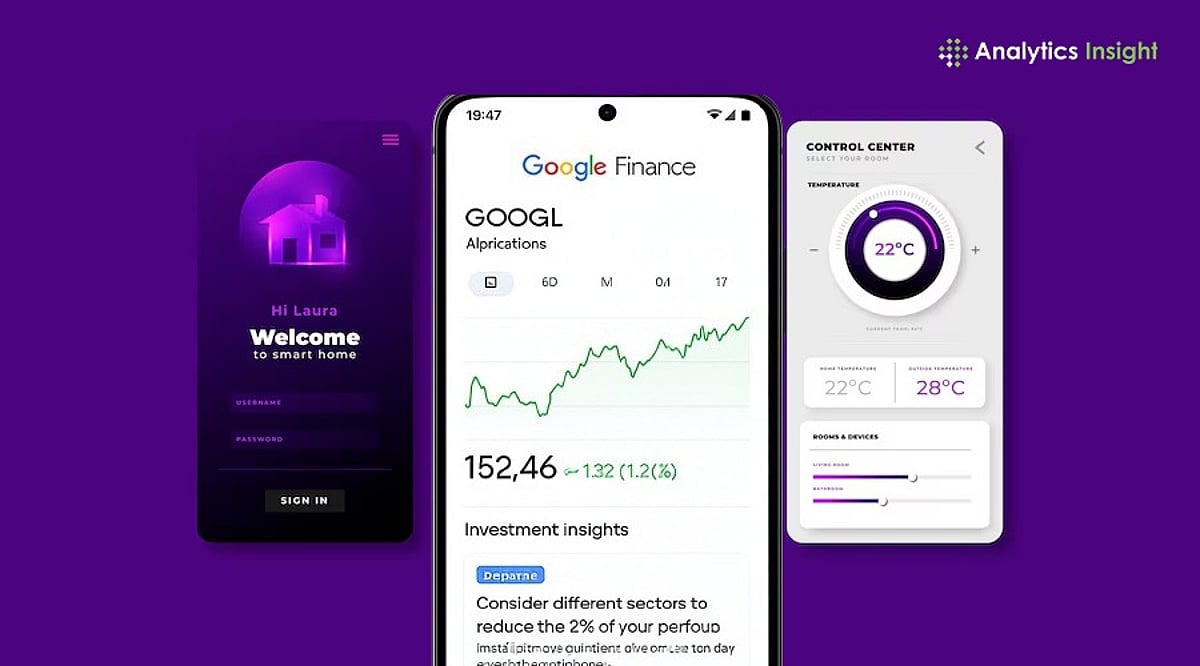
    Google has reintroduced Google Finance as a standalone Android app, bringing its financial platform back to mobile users with a suite of AI-powered features. The launch coincides with the official rollout of the revamped Google Finance platform, which exits beta with enhanced portfolio management, AI-driven research, and personalized market intelligence.

    The move positions Google Finance as a more comprehensive tool for investors who want to monitor markets, track investments, and receive contextual updates without relying solely on a browser version.

    Standalone App for Everyday Investing

    In its official blog, Google stated: “You’ll see all your investments consolidated in a single dashboard that shows performance data, as well as insights on your asset allocation and more. Your existing Google Finance portfolios will be available automatically, or you can create a new one by dropping in screenshots or uploading files (like CSVs or PDFs) that detail your holdings. You can even just describe your investments to get started and build from there.”

    Previously, many Finance features were folded into Google Search and the web. This standalone app marks a return to a dedicated mobile experience. The integrated AI research assistant adds analytical depth, allowing investors to:

    • Ask personalized questions about their portfolios
    • Identify sector concentration
    • Evaluate diversification
    • Understand how asset allocation may influence long-term performance

    Key Moments: AI-Driven Price Explanations

    One of the standout features is Key Moments, an AI-driven tool that explains why a stock’s price changed significantly. It provides context for events such as earnings releases or company news, helping investors understand market movements at a glance.

    AI Simplifies Portfolio Management

    The platform also introduces AI-generated scheduled market briefings. Users can set customized prompts for pre-market, earnings, and cryptocurrency briefings. Google’s AI automatically creates these reports and sends notifications, eliminating the need to manually search for daily market updates.

    The Android app includes core features from the web experience: watchlists, live market data, AI research, and investment portfolios. Additional capabilities like earnings calls and other investment features are planned for future updates.

    For more details, visit the original article on Analytics Insight.