Tag: Gold

  • 7 Key Assets for Building Long-Term Wealth

    7 Key Assets for Building Long-Term Wealth

    Building wealth is a long-term endeavor that requires a strategic approach to investing. By diversifying across different asset classes, you can spread risk and increase your potential for returns. Here are seven assets that can help you build wealth over time.

    1. Stocks

    Stocks offer long-term growth potential by giving investors exposure to company performance, market movements, and economic conditions. However, they come with varying levels of risk depending on the company and market trends.

    2. Bonds

    Bonds provide income through regular interest payments and can help diversify a portfolio. Their returns and risk depend on the issuer and prevailing market conditions, making them a more stable option compared to stocks.

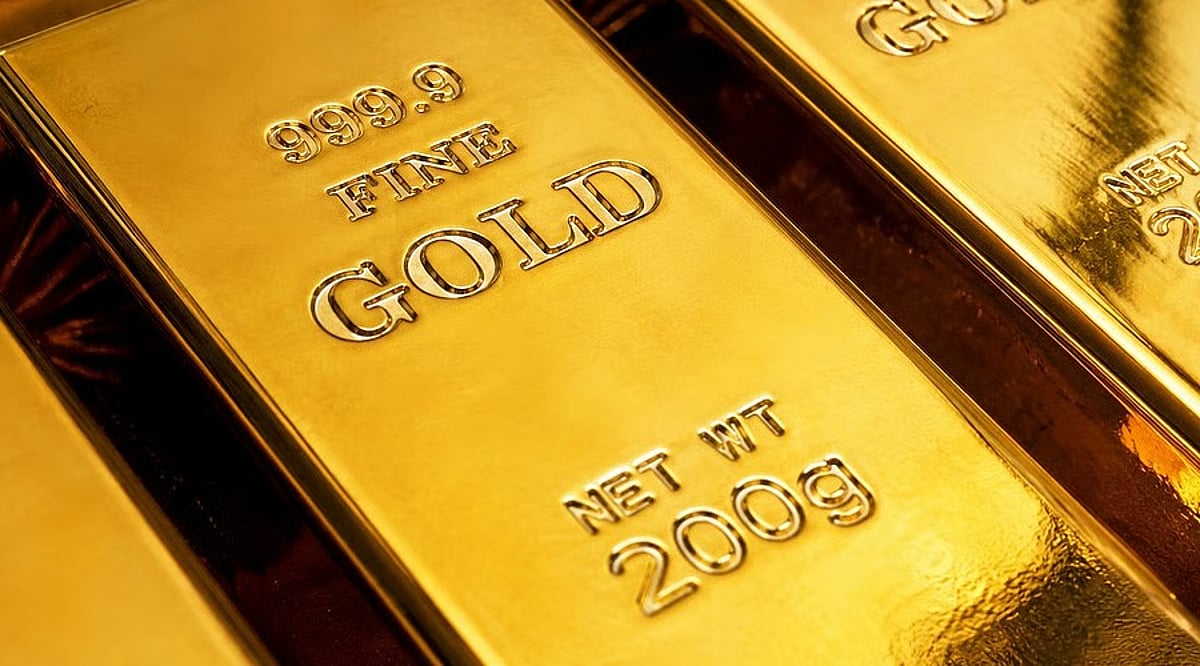
    3. Gold

    Gold is a tangible asset that often moves differently from financial assets, offering a hedge against inflation and economic uncertainty. Its price can fluctuate based on global economic factors, but it remains a popular diversification tool.

    4. Real Estate

    Investing in physical property can generate rental income and appreciate in value over time. However, it requires significant capital and ongoing maintenance costs, making it less accessible for some investors.

    5. REITs (Real Estate Investment Trusts)

    REITs allow you to invest in real estate without directly buying properties. They offer accessibility and potential income through distributions, making real estate investment more liquid and manageable.

    6. Mutual Funds

    Mutual funds pool money from multiple investors to invest in a diversified portfolio of securities. They are professionally managed, making them a convenient way for individuals to achieve diversification without picking individual stocks or bonds.

    7. Yourself

    Investing in your own education, skills, and professional development can significantly improve your earning potential. This personal investment supports stronger long-term financial decision-making and career growth.

    Diversification and Risk Management

    Combining different asset classes spreads exposure across investments, reducing dependence on any single asset’s performance. Your asset choices should align with your personal goals, risk tolerance, and investment time horizon rather than following popular trends.

    By carefully selecting a mix of these assets, you can build a robust portfolio that works toward your financial future.

  • Gold Prices Tumble Nearly 4% Amid Strong Dollar and Climbing US Yields

    Gold Prices Tumble Nearly 4% Amid Strong Dollar and Climbing US Yields

    Gold Prices Tumble Nearly 4% Amid Strong Dollar and Climbing US Yields

    Spot gold prices fell sharply on Monday, extending their decline to a seven-week low as higher crude oil prices fueled inflation concerns. The metal also came under pressure from a stronger US dollar and rising Treasury yields.

    According to Reuters data reported by The Times of India, spot gold fell by 3.8% to USD 4,121.6 per ounce, touching its lowest level since August 5. US gold futures also declined 3.9% to USD 4,153.7.

    Oil Prices Raise Inflation Concerns

    A sharp rise in crude oil prices has changed expectations around US monetary policy. Higher energy costs can add to inflation pressures and make it harder for the Federal Reserve to ease policy. Oil prices rose after developments surrounding the conflict involving Iran and the Strait of Hormuz.

    Jim Wyckoff, a market analyst at American Gold Exchange, said, “Sharply higher crude prices could point to more persistent inflation and tighter Federal Reserve policy. The US dollar also strengthened, making gold more expensive for buyers holding other currencies.”

    The dollar index rose to a two-month high on Tuesday and was heading for its strongest monthly performance since June. A stronger dollar typically weighs on dollar-denominated commodities because it raises their effective cost for international buyers.

    Market Outlook

    Higher US Treasury yields added another layer of pressure on gold. Rising yields increase the opportunity cost of holding assets such as gold, which does not generate regular interest income. US Treasury yields have climbed as markets reassess the outlook for Federal Reserve policy. Traders are increasingly pricing in another rate increase later this year, with expectations also shaped by upcoming US inflation and employment data.

    The combination of a strong dollar, rising yields, and inflation concerns suggests continued headwinds for gold prices in the near term.

  • MCX Gold Holds Steady at Rs.1,52,795 as Oil Prices Decline and Fed Rate Outlook Shifts

    MCX Gold Holds Steady at Rs.1,52,795 as Oil Prices Decline and Fed Rate Outlook Shifts

    Market Overview

    On September 23, MCX gold futures traded slightly higher, with October contracts rising 0.05% to Rs.1,52,795 per 10 grams. This modest gain came as oil prices continued their decline, reducing expectations of further interest-rate hikes by the Federal Reserve. September silver futures also advanced 0.47% to Rs.2,41,025.

    Oil Price Movement

    Brent crude futures fell 1.10% to USD98.16 per barrel, while US West Texas Intermediate (WTI) edged lower by 1.67% to USD89.01 per barrel.

    Domestic Gold Prices

    In India, 24K gold rose by Rs.87 to Rs.1,54,200 per 10 grams, and 22K gold advanced by Rs.80 to Rs.1,41,350. By city, Mumbai and Kolkata both quoted at Rs.1,54,200, Delhi at Rs.1,54,350, and Chennai at Rs.1,54,200.

    US Gold Prices

    US gold prices fell on Tuesday under pressure from hawkish Federal Reserve signals, reinforcing expectations of higher rates for longer. Spot gold declined 0.32% to USD4,344.51 per ounce, while US gold futures rose 0.12% to USD4,381.55. Other precious metals also slipped: spot silver fell 0.49% to USD66.68 per ounce, platinum dipped 0.89% to USD1,819.12, and palladium declined 0.68% at USD1,303.40 per ounce.

    Analst Views and Key Levels

    Standard Chartered highlighted firm demand, while Goldman Sachs retained its end-2027 gold forecast at USD5,400 per ounce, noting that tighter policy may slow the rally rather than derail the longer-term trend. Goldman Sachs warned that three additional rate hikes could push gold toward USD4,070 before recovering toward USD4,200 by end-2026, supported by continued central-bank purchases.

    On the daily chart, XAU/USD trades near USD4,345, hovering between the 50-day and 100-day simple moving averages at USD4,307.31 and USD4,313.57. Immediate upside pressure is around USD4,390, making the near-term bias neutral. Downside support is seen at the short- and medium-term SMAs near USD4,313-USD4,307, ahead of the rising trend-line base near USD3,999. A daily close above USD4,390 would be required for bulls to regain control.

  • MCX Gold Edges Up 0.21% to ₹1,53,309 as Oil Prices Drop Over 1% – September 18 Update

    MCX Gold Edges Up 0.21% to ₹1,53,309 as Oil Prices Drop Over 1% – September 18 Update

    Gold traded higher on the Multi Commodity Exchange (MCX) on September 18, 2026, supported by a significant decline in crude oil prices. October gold futures rose 0.21% to ₹1,53,309 per 10 grams, while September silver futures advanced 0.55% to ₹2,39,522 per kilogram.

    The fall in oil prices was notable: Brent crude futures dropped 1.06% to $103.7 per barrel, and US West Texas Intermediate (WTI) fell 1.08% to $100.8 per barrel. Lower oil prices generally ease inflation pressures and reduce the opportunity cost of holding non-interest-bearing assets like gold, which supported the precious metal.

    Domestic Gold Prices

    In the domestic market, 24K gold rose by ₹154 to ₹1,54,420 per 10 grams, while 22K gold gained ₹145 to ₹1,41,50. Prices varied across cities: Mumbai and Kolkata recorded ₹1,54,420, Delhi at ₹1,54,570, and Chennai at ₹1,53,590.

    US Gold Prices

    Internationally, spot gold inched up 0.57% to $4,336.64 per ounce on Friday, aided by a subdued US dollar and falling oil prices. US gold futures gained 0.14% to $4,405.75 per ounce. Other precious metals also advanced: spot silver rose 1.38% to $66.11, platinum gained 1.46% to $1,798.36, and palladium climbed 2.38% to $1,313.50.

    Key Levels & Analyst Insight

    According to Ahmad Assiri, research strategist at Pepperstone, the link between gold and oil could weaken if oil corrects sharply, easing inflation and rate-hike expectations, or if extreme geopolitical tensions force global recession measures. Goldman Sachs maintained its end-2027 gold price forecast at $5,400 despite recent Fed rate increases, stating that tighter policy may slow bullion’s rally but not derail it.

    On MCX, gold has support at ₹1,51,650 and ₹1,50,500, with resistance at ₹1,53,800 and ₹1,55,000. For silver, support lies at ₹2,36,000 and ₹2,33,300, while resistance is at ₹2,40,400 and ₹2,43,000.

  • Indian Markets Pause for Ganesh Chaturthi: Key Global Events to Watch This Week

    Indian Markets Pause for Ganesh Chaturthi: Key Global Events to Watch This Week

    The Indian stock market is closed today, September 14, in observance of Ganesh Chaturthi. Both the BSE and NSE are shut for trading in equity, derivatives, and securities lending and borrowing. The holiday follows the weekend, granting investors a three-day break.

    Trading will resume on Tuesday, September 15. The pre-open session begins at 9:00 AM, followed by normal trading from 9:15 AM to 3:30 PM. The market closing session runs between 3:40 PM and 4:00 PM on trading days.

    Upcoming market holidays include Mahatma Gandhi Jayanti (October 2), Dussehra (October 20), Diwali-Balipratipada (November 10), Prakash Gurpurb (November 24), and Christmas (December 25).

    The extended break arrives amid heightened global market activity. Oil prices have surged over USD 3 following fresh strikes involving Saudi Arabia and the Strait of Hormuz. Gold remains volatile as investors monitor crude prices, the US dollar, US-Iran tensions, and the US Federal Reserve’s upcoming rate decision. The Fed meeting is scheduled for September 15 and 16.

    A Pivotal Week for Investors

    Gold is traditionally viewed as a safe haven during uncertainty. However, rising oil prices are altering this dynamic. The global conflict has pushed crude higher, leading investors to expect the Fed to maintain elevated interest rates for longer.

    Higher rates can reduce gold’s appeal since the metal does not pay interest. This creates downward pressure on gold, even as broader market instability drives investors toward safe-haven assets.

    The market holiday offers a short pause, but the upcoming trading session is likely to be active. Oil price movements, the Fed’s decision, and gold trends will be critical signals for investors before making fresh decisions.

  • Geopolitical Turmoil and Its Ripple Effects on Global Stock Markets

    Geopolitical Turmoil and Its Ripple Effects on Global Stock Markets

    Key Takeaways

    • Oil is the transmission channel: A prolonged energy disruption can raise costs, inflation, and pressure corporate profits.
    • Import-heavy economies face greater risks: Higher oil prices can weaken currencies, increase import bills, and hurt domestic demand.
    • The biggest danger is stagflation: Sustained geopolitical shocks can combine higher inflation with slower growth, complicating central-bank decisions.

    A fresh oil shock has put global stocks under pressure. Brent crude crossed USD 100 per barrel on September 9 after new U.S.-Iran military strikes and Houthi attacks on Saudi cities. Brent reached USD 100.95, its highest level since July 24.

    The Dow Jones fell 0.75%, the S&P 500 fell 0.30%, and the Nasdaq fell 0.35%. European stocks also lost ground, while gold rose 1.5% to USD 4,418 an ounce. These moves show how a geopolitical shock can reach stocks through oil, inflation, rates, trade and company profits.

    Oil Turns a Military Shock into a Market Shock

    Oil often gives the first signal after a major conflict. A threat to oil fields, ports or the Strait of Hormuz can cut supply or raise fear of a supply cut. Higher crude prices raise costs for airlines, transport firms, chemical makers and factories. Consumers can also face higher fuel and food costs.

    The current shock has a wider effect. The 10-year U.S. Treasury yield stood at 4.794% on September 9, close to a recent three-year high. Higher energy costs can lift inflation, while higher inflation can push central banks toward higher rates. Higher bond yields then put pressure on stock values, with growth stocks under more pressure than firms with strong cash flow.

    The Federal Reserve now faces a harder choice. About 70% of economists expect the U.S. central bank to hold rates at its next policy session meeting, yet confidence in that view has weakened since August. U.S. inflation data can shift that view fast. Markets also expect the Bank of Japan to raise rates on September 17–18.

    Import-Heavy Markets Face a Sharper Hit

    India offers a clear example. On September 9, the rupee fell past the 95-per-dollar mark as Brent moved above USD 100. Mumbai’s stock index fell about 0.9%. The Reserve Bank of India likely used foreign exchange action and swaps to support the rupee and manage local liquidity. The rupee closed at 95.1050 per dollar, while the one-year implied dollar-rupee yield reached 3.16%, a three-month high.

    A weaker currency can lift import costs, while higher rates can reduce demand for homes, cars and business credit. Foreign funds can also leave local markets when global risk appetite falls. The IMF has warned that commodity importers face a larger financial shock than stronger economies.

    The Bigger Risk Sits Between Inflation and Growth

    Geopolitical tensions do not always cause a long stock market decline. Markets can absorb a short conflict if oil prices fall back and trade routes stay open. The danger grows when a military crisis turns into a long energy shock.

    The IMF expects global growth at 3.1% in 2026 and 3.2% in 2027 under the assumption of a limited Middle East conflict. It also expects global inflation to rise modestly in 2026 before a decline in 2027. A longer conflict, deeper geopolitical division or fresh trade tensions could weaken growth and unsettle markets.

    The IMF’s April 2026 financial stability report points to higher energy costs, lower equity prices, higher bond yields, capital outflows, currency pressure and leverage at non-bank financial firms. It also flags high valuations in artificial intelligence stocks as a source of wider market stress.

    If oil returns below USD 100, inflation pressure may ease and stocks may regain ground. If oil stays above that level for a long period, central banks may keep rates high for longer, which can weaken stock values and business demand.

    What Matters Most for Global Stocks Now

    The Strait of Hormuz remains a key market risk. A long disruption could raise energy costs across Asia, Europe and other import-heavy regions. Freight and supply costs could also rise, which would add pressure to company margins and consumer prices. The IMF has warned that a prolonged conflict could weaken growth and raise inflation much more sharply.

    Gold has shown its role as a defensive asset, while the Japanese yen reached a seven-month high. The U.S. dollar index slipped to 98.65. These moves show that investors still seek protection, yet higher oil prices also create pressure on major economies.

    J.P. Morgan’s mid-year outlook remained constructive on equities if the energy shock stays manageable. The key risk sits where war meets inflation. A short conflict may create a sharp but limited market shock. A longer crisis could raise oil prices, lift inflation, force tougher central bank policy and slow economic growth at the same time. That chain can turn a geopolitical event into a broad financial problem.

    FAQs

    1. How do geopolitical tensions affect stock markets?

    They can increase oil prices, disrupt trade, weaken currencies, raise inflation and increase uncertainty, leading investors to reduce exposure to riskier assets.

    2. Why is a rise in oil prices bad for stocks?

    Higher oil prices increase operating and transportation costs for many companies and can reduce consumer spending, corporate margins and economic growth.

    3. Which economies are most vulnerable to an oil shock?

    Oil-importing economies are generally more exposed because higher crude prices increase import bills, inflationary pressure and currency risks.

    4. Why do higher oil prices affect interest rates?

    Expensive energy can push inflation higher. Central banks may therefore delay rate cuts or maintain tighter monetary policy, which can weigh on equity valuations.

    5. Can geopolitical tensions create a long-term stock market decline?

    Not necessarily. Markets can recover if the conflict remains contained and oil prices normalize. A prolonged energy or trade disruption poses a much greater risk to global growth and equities.


  • S&P 500 Holds Steady as Chip and Software Declines Offset Broader Market Gains

    S&P 500 Holds Steady as Chip and Software Declines Offset Broader Market Gains

    The S&P 500 traded near the flatline on Thursday as steep losses in chip and software stocks offset gains across most other sectors. Investors weighed corporate earnings, labor data, and ongoing negotiations over reopening the Strait of Hormuz.

    At 11:20 a.m. ET, the S&P 500 slipped 0.08% to 7,723. The Dow Jones Industrial Average added 0.49% to 54,350, while the Nasdaq Composite edged up 0.05% to 26,380.

    Western Digital and Sandisk Shares Tumble

    Western Digital shares fell 18.5% in early trading despite reporting fourth-quarter results above Wall Street estimates. Its fiscal first-quarter forecast disappointed investors. Sandisk shares dropped 11.3% after releasing its fiscal fourth-quarter results. Both companies forecast quarterly revenue above estimates, driven by demand for artificial intelligence infrastructure. However, investors focused on valuations after significant gains earlier this year — Western Digital had climbed about 200%, and Sandisk had gained around 400%.

    Hank Smith, investment strategy director at Haverford Trust, noted that expectations had reached demanding levels, calling the price action “some digestion going on in the market.”

    The Philadelphia Semiconductor Index declined 1.5% during early trading. Intel and AMD also traded lower, adding pressure to the technology sector. However, several chip stocks later recovered: Broadcom gained nearly 2%, Marvell Technology rose about 3%, and NVIDIA moved higher during the session.

    Software Earnings Add Pressure to Technology

    Software stocks also recorded steep declines following several earnings reports. Atlassian, Salesforce, Adobe, and Zscaler traded lower. AppLovin shares fell about 17% after missing quarterly revenue estimates. The stock had previously benefited from investor demand for AI-linked companies. Datadog dropped roughly 17% after management forecast slower revenue growth in the third quarter, raising questions about enterprise software demand and valuations.

    Peloton shares fell more than 14% after forecasting lower sales in the coming fiscal year, citing higher prices for equipment and subscriptions. Still, Microsoft and Amazon each gained around 1%, helping limit broader losses across major indexes.

    Most S&P 500 Sectors Trade Higher

    Despite technology weakness, nine of the S&P 500’s 11 sectors traded higher during the morning session. Energy, consumer staples, and healthcare led the gains. Parker-Hannifin rose 8.5% after forecasting annual profit above analysts’ estimates. Albemarle gained 6.7% after beating quarterly profit estimates. Diageo rose about 6% after announcing a three-year plan targeting $1.2 billion in savings.

    Restaurant Brands International reported adjusted earnings of $1.07 per share, above the expected $1.03. Revenue reached $2.52 billion, matching estimates. Burger King recorded an 8.5% increase in comparable restaurant sales, though other brands within the group delivered weaker results.

    Labor Data Sets Up July Jobs Report

    New applications for unemployment benefits increased slightly to 199,000 for the week ending August 1, below the Dow Jones estimate of 204,000. Layoffs fell to their lowest level in two years during July. Second-quarter productivity increased 1.4% (versus 0.8% prior), while unit labor costs rose 1.3% (below the 2.1% estimate). Investors will now examine Friday’s July employment report for clues about the Federal Reserve’s policy path. Fed Chairman Kevin Warsh has reduced forward guidance, increasing the market’s focus on incoming economic data.

    Iran Talks Keep Oil and Gold in Focus

    Brent crude traded near $80 per barrel as investors monitored negotiations involving Iran and Oman focused on reopening shipping routes through the Strait of Hormuz. An Iranian official said a temporary agreement would allow ships to travel without fees or tolls, but final conditions had not been settled. Deutsche Bank strategist Jim Reid noted “unresolved questions” about whether Iran could later charge vessels.

    Gold rose for a fourth consecutive session as geopolitical uncertainty supported demand. Spot gold gained 0.6% to $4,271.33 per ounce, and US gold futures rose 0.6% to $4,330.20. Earlier, spot prices reached their highest level since June 18.

    Conclusion

    Technology losses kept the S&P 500 near the flatline, despite gains across nine of its 11 sectors. Western Digital, Sandisk, AppLovin, and Datadog recorded the sharpest declines following earnings updates. Meanwhile, investors monitored Iran-Oman shipping talks and Friday’s July employment report, both of which could shape energy prices and Federal Reserve rate expectations.

  • Gold Prices Edge Higher on MCX as Crude Oil Plunges Over 5%; Key Levels to Watch

    Gold Prices Edge Higher on MCX as Crude Oil Plunges Over 5%; Key Levels to Watch

    Gold futures traded higher on the Multi Commodity Exchange (MCX) on August 3, supported by a declining US dollar and a sharp drop in crude oil prices after US President Donald Trump confirmed that talks with Iran would take place on Monday. August gold futures rose 0.28% to Rs. 1,43,780 per 10 grams, while September silver futures advanced 0.89% to Rs. 2,19,124. Meanwhile, Brent crude futures fell 5.05% to $83.49 per barrel, and US West Texas Intermediate (WTI) declined 5.76% to $79.79 per barrel.

    Domestic Gold Prices

    In the domestic market, 24K gold was trading at Rs. 1,44,220 per 10 grams, while 22K gold stood at Rs. 1,32,200. Regionally, Mumbai and Kolkata quoted gold at Rs. 1,44,600, Delhi at Rs. 1,44,370, and Chennai at Rs. 1,44,550.

    US Gold Prices

    Gold prices in the US rose on Monday as oil prices fell after President Trump refrained from fresh attacks on Iran in hopes of a swift deal. Spot gold edged up 0.4% to $4,055.76 per ounce, while US gold futures gained 0.9% to $4,054. Spot silver rose 1.4% to $58.46, platinum climbed 0.5% to $1,650.63, and palladium firmed 1.6% to $1,293.50.

    Key Levels to Watch

    “Gold has made a relatively cheery start to the week, but gains remain limited given the uncertainty around the oil markets and the Middle East, so it’s an upbeat but guarded start for the metal,” said Tim Waterer, chief market analyst at KCM Trade. He added that any renewed escalation in the Middle East pushing oil higher, or a strong Non-Farm Payrolls (NFP) print that reinforces September rate-hike odds, could cap the upside.

    International support and resistance: Gold has support at $4,014 and $3,980 per troy ounce, with resistance at $4,074 and $4,110. Silver support is at $56.80 and $56.30, with resistance at $59.40 and $60.

    On MCX: Gold support is at Rs. 1,42,750 and Rs. 1,42,200, with resistance at Rs. 1,44,000 and Rs. 1,44,550. Silver support is at Rs. 2,15,500 and Rs. 2,14,000, with resistance at Rs. 2,19,000 and Rs. 2,20,500.

  • Gold Prices Surge 1.07% on MCX to Rs 1,44,408 as Middle East Tensions Boost Brent Crude Above $92

    Gold Prices Surge 1.07% on MCX to Rs 1,44,408 as Middle East Tensions Boost Brent Crude Above $92

    Gold futures on the Multi Commodity Exchange (MCX) climbed sharply on July 22, tracking a positive global trend and rising crude oil prices driven by escalating US-Iran tensions. The August gold contract rose by 1.07% to settle at Rs 1,44,408 per 10 grams, while September silver futures gained 0.94% to Rs 2,25,886.

    In the international oil market, Brent crude futures advanced 1.20% to $92.10 per barrel, and US West Texas Intermediate (WTI) edged up 1.08% to $85.25 per barrel. The rally in oil prices was fueled by geopolitical uncertainty in the Middle East, which also supported safe-haven demand for gold.

    Domestic Gold Prices

    In the Indian physical market, 24K gold rose by Rs 229 to Rs 1,46,510 per 10 grams, while 22K gold increased by Rs 210 to Rs 1,34,300. Regional prices were largely uniform: Mumbai and Kolkata quoted Rs 1,46,510, Delhi Rs 1,46,560, and Chennai Rs 1,46,510.

    US Gold Prices

    In the US markets, spot gold hit a two-week high, climbing 1.6% to $4,139.64 per ounce. August gold futures jumped 1.7% to $4,144.20. The rally was attributed to technical buying and heightened uncertainty over the widening Middle East conflict, as traders awaited the US Federal Reserve meeting scheduled for next week. According to the CME FedWatch Tool, the probability of a September rate hike now stands at 64%.

    Spot silver rose 1.9% to $59.87 per ounce, platinum gained 2.4% to $1,667.22, and palladium advanced 3% to $1,320.75.

    Key Levels and Analyst Outlook

    “Buyers have been stepping in seeking a value play after the recent pullback, while hopes for diplomatic progress between the US and Iran are also assisting price moves,” said Tim Waterer, chief market analyst at KCM Trade.

    On the MCX, gold is seen with support at Rs 1,42,000 and Rs 1,41,400, while resistance is at Rs 1,44,000 and Rs 1,45,500. Silver has support at Rs 2,21,600 and Rs 2,18,800, with resistance at Rs 2,26,000 and Rs 2,28,800.

    Manoj Kumar Jain of Prithvi Finmart Commodity Research advised traders to trail stop losses in long positions and book profits around Rs 1,44,400–Rs 1,45,500 for gold and Rs 2,27,000–Rs 2,30,000 for silver.

  • Gold Prices Slip on MCX Amid Middle East Tensions and Inflation Concerns; Brent Crude Also Declines

    Gold Prices Slip on MCX Amid Middle East Tensions and Inflation Concerns; Brent Crude Also Declines

    Gold futures on the Multi Commodity Exchange (MCX) traded lower on July 16, declining 0.45% to Rs. 1,41,205 per 10 grams, as escalating tensions between the US and Iran fueled inflation worries and reinforced expectations of a Federal Reserve rate hike later this year.

    September silver futures also fell, dropping 0.67% to Rs. 2,19,150. In the energy market, Brent crude futures slipped 0.21% to $84.77 per barrel, while US West Texas Intermediate (WTI) eased 0.09% to $79.53 per barrel.

    According to the CME FedWatch Tool, traders now see a 73% probability of a rate hike by the Fed in December, as the latest geopolitical unrest threatens to keep inflation elevated.

    Domestic Gold Prices

    In the domestic physical market, 24K gold fell by Rs. 28 to Rs. 1,43,290 per 10 grams, while 22K gold declined by Rs. 25 to Rs. 1,31,350. City-wise, Mumbai and Kolkata quoted gold at Rs. 1,43,290, Delhi at Rs. 1,43,400, and Chennai at Rs. 1,43,460.

    US Gold Prices

    Internationally, spot gold dropped 0.6% to $4,034.42 per ounce, and US gold futures for August delivery lost 0.3% to $4,039.90. Spot silver fell 1.1% to $57.14 per ounce. Platinum eased 0.6% to $1,664, while palladium edged 0.3% lower to $1,309.86.

    Key Levels to Watch

    “Gold is declining as the escalating attacks in the Middle East continue to push oil prices sharply higher this week, keeping concerns about inflation alive,” said Jigar Trivedi, Senior Research Analyst at IndusInd Securities. “June’s inflation figures did not reflect the impact of the latest escalation in the US-Iran conflict, as the interim peace union reached last month has effectively unravelled,” Trivedi added.

    Internationally, gold has support at $4,022 and $3,989, while resistance is at $4,084 and $4,110 per troy ounce. Silver has support at $56 and $54.40, with resistance at $58.80 and $60 per ounce. On MCX, gold support is at Rs. 1,41,000 and Rs. 1,40,250, and resistance at Rs. 1,42,650 and Rs. 1,43,300. Silver support is at Rs. 2,17,700 and Rs. 2,14,000, with resistance at Rs. 2,24,000 and Rs. 2,26,600.