Tag: index funds

  • Why Warren Buffett Touts Low-Cost S&P 500 ETFs as the Ultimate Wealth Builder

    Why Warren Buffett Touts Low-Cost S&P 500 ETFs as the Ultimate Wealth Builder

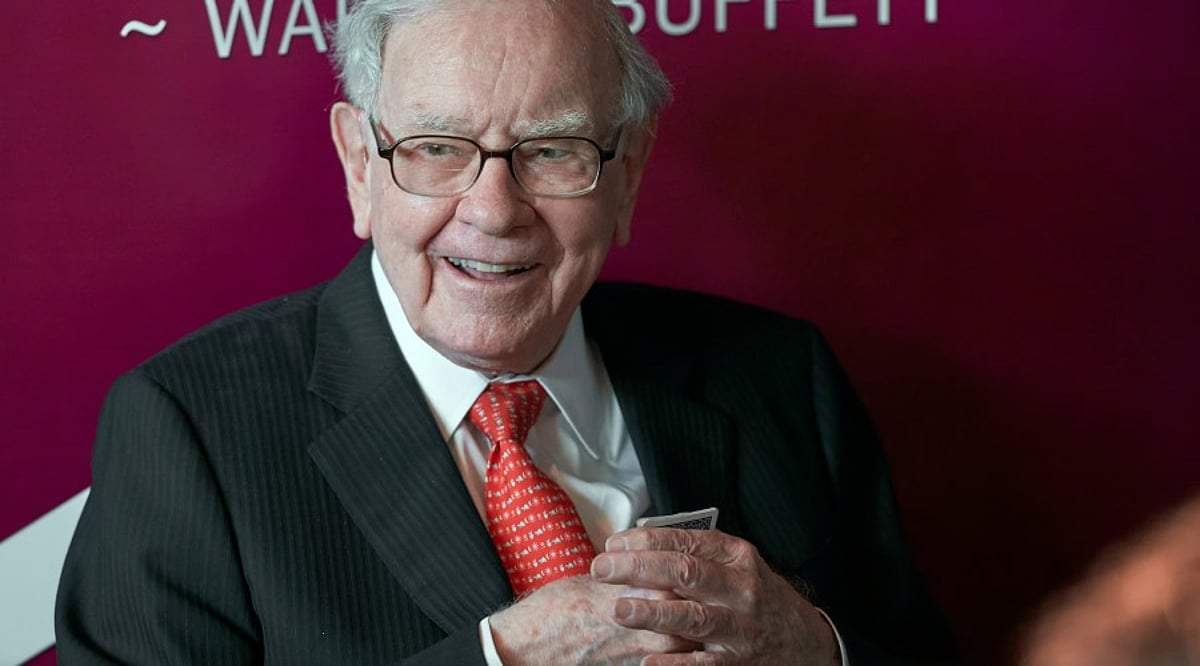
    Warren Buffett, one of the world’s most successful investors, has long advised the average investor to follow a simple investment strategy: invest in a low-cost S&P 500 index fund and hold it for the long term. Contrary to the idea that Buffett invests only in individual stocks, he believes most retail investors are better served by passive investing rather than trying to outperform the market.

    His insights have become especially relevant as exchange-traded funds (ETFs) continue to attract record inflows from investors seeking diversified, low-cost exposure to the US stock market.

    The Simple Investment Philosophy of Buffett

    Buffett has repeatedly said that most investors don’t need to research individual companies or try to beat professional managers. Instead, he recommends purchasing a low-cost S&P 500 index fund, which holds 500 of the largest publicly traded US companies. During Berkshire Hathaway’s annual meeting, he stated, “For most people, the best thing to do is to own the S&P 500 index fund.”

    His confidence is backed by a famous 2008 bet: Buffett wagered $1 million that an S&P 500 index fund would outperform a portfolio of five hedge funds over 10 years. The result was decisive—the S&P 500 delivered roughly 126% returns, while the hedge funds managed only about 36%.

    Why Low-Cost ETFs Stand Out

    Buffett frequently highlights the Vanguard S&P 500 ETF (VOO), which carries an expense ratio of just 0.03%—one of the lowest available. Over the past 10 years (as of late July 2026), VOO has generated a total return of about 303%. The ETF also provides instant diversification across sectors like technology, healthcare, financial services, consumer goods, energy, and industrials, reducing the risk of owning just a few stocks.

    The Power of Long-Term Compounding

    Buffett’s core rule is to let compound returns work. The S&P 500 has historically averaged about 10% annual returns over long periods, though yearly results vary. Disciplined investing and reinvestment in an S&P 500 ETF could grow an initial sum to over $1 million after 40 years, based on historical averages. Market analysts note that the S&P 500 has delivered positive total returns over every rolling 20-year period since 1919, underscoring the benefit of staying invested through market cycles.

    Why Buffett Prefers Passive Investing

    Despite decades of beating the market, Buffett admits it is extremely difficult to do so consistently. Most actively managed funds underperform the S&P 500 over the long term after expenses. That’s why Buffett has publicly stated he would invest 90% of his wife’s cash inheritance into a low-cost S&P 500 index fund and the remaining 10% into short-term government securities.

    Conclusion

    Buffett’s investment advice remains consistent: value low costs, diversify, invest regularly, and hold for the long term. For most people, a low-cost S&P 500 ETF offers a simple and proven path to building wealth. While advanced investors may succeed with individual stocks, Buffett’s passive investing mantra continues to be one of the most straightforward ways to achieve long-term financial security.

    Frequently Asked Questions

    1. Why does Warren Buffett recommend S&P 500 index funds? Buffett believes most investors cannot consistently beat the market. A low-cost S&P 500 index fund provides broad diversification, low fees, and long-term exposure to America’s largest companies.
    2. Which ETF does Warren Buffett recommend? Buffett has frequently highlighted the Vanguard S&P 500 ETF (VOO) because of its extremely low expense ratio, broad market exposure, and strong long-term performance.
    3. Are S&P 500 ETFs suitable for beginners? Yes. They offer instant diversification, passive management, and historically strong long-term returns, making them one of the simplest investment options for beginners.
    4. What is the biggest advantage of investing in an S&P 500 ETF? The biggest benefit is long-term wealth creation through diversification and compound growth, without the need to research or actively manage individual stocks.
    5. Can an S&P 500 ETF guarantee positive returns? No. Like all equity investments, S&P 500 ETFs can decline over shorter periods. However, history shows they have delivered strong returns over long investment horizons, making them popular among long-term investors.

  • SpaceX’s Rapid NASDAQ 100 Entry Could Trigger $4.3 Billion in Passive Fund Inflows

    SpaceX’s Rapid NASDAQ 100 Entry Could Trigger $4.3 Billion in Passive Fund Inflows

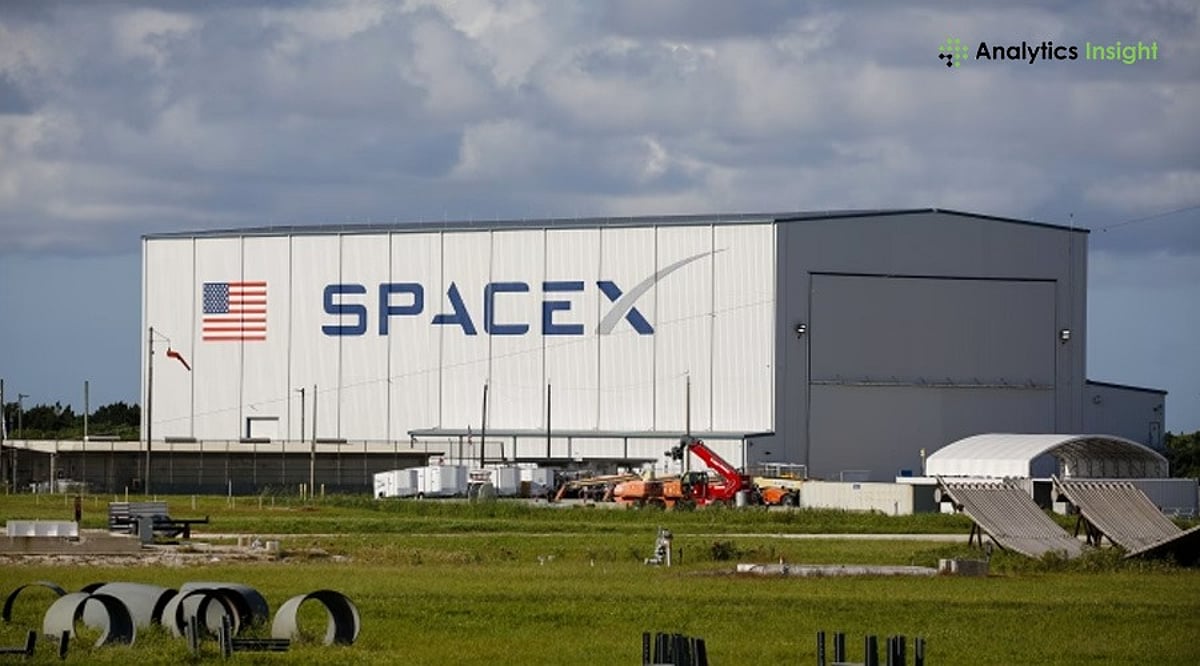
    SpaceX officially joined the NASDAQ 100 index on Tuesday, July 7, 2026, just 15 trading days after its historic public market debut. The swift inclusion follows NASDAQ’s revised entry rules designed to accommodate large new listings, making the rocket and satellite company one of the fastest additions to the benchmark.

    The company’s IPO on June 12 priced at $135 per share and raised $75 billion — the largest IPO on record. With its market capitalization now above $2 trillion, SpaceX’s inclusion in the NASDAQ 100 ensures that millions of index fund investors gain automatic exposure to the stock through ETFs and mutual funds, including those tracking the Invesco QQQ complex.

    Passive Buying Pressure Expected

    J.P. Morgan estimates that the index inclusion could generate approximately $4.3 billion in passive fund inflows. This buying is driven by index rules rather than a fundamental view on the company, meaning fund managers must adjust their portfolios to match the new benchmark composition.

    However, SpaceX’s starting weight in the index will be limited. Despite its massive market cap, only about 5% of shares are freely traded. NASDAQ uses free-float market capitalization in its index calculations, keeping SpaceX’s initial weight near 1% to 1.3%.

    Volatility Risks Remain

    SpaceX shares surged after the IPO, reaching a post-listing high near $225.64 before pulling back to around $160 just ahead of the index entry. Even after the decline, the stock remains above its $135 IPO price and $150 opening price.

    Avery Marquez of Renaissance Capital noted, “IPOs are inherently volatile, and especially in those early weeks.” The small float — combined with broader market volatility — could amplify price swings. The Cboe NASDAQ 100 Volatility Index rose about 43% through Thursday, compared with an 8% rise for the Cboe Volatility Index tied to the S&P 500.

    S&P 500 Entry Still Distant

    While SpaceX has joined the NASDAQ 100, its inclusion in the S&P 500 is not imminent. S&P Dow Jones Indices requires a one-year listing and profitability standards, which SpaceX has not yet met. This gap means that passive demand from S&P 500 index funds will come later, if at all.

    Lockup expirations also loom. Early investors and employees may become eligible to sell shares in stages. Louis Navellier of Navellier & Associates said he would consider buying SpaceX after insiders sell some shares and once the company appears ready to report a profitable quarter, highlighting the uncertainty around public market performance.

  • SpaceX to Join NASDAQ 100 on July 7 Following New Index Entry Rules for Large IPOs

    SpaceX to Join NASDAQ 100 on July 7 Following New Index Entry Rules for Large IPOs

    SpaceX will officially enter the NASDAQ 100 index before the market opens on July 7, 2026, less than a month after its public debut on June 12. The addition, confirmed by NASDAQ on Friday, places the rocket, satellite, and artificial intelligence company among the exchange’s largest non-financial firms.

    JP Morgan estimates that the inclusion could trigger approximately $4.3 billion in passive inflows from index-tracking funds. However, skeptics like Morningstar have raised valuation concerns, noting the company’s limited trading history and recent net losses.

    Index Funds Prepare for Rebalancing

    Funds that replicate the NASDAQ 100, including Invesco QQQ and QQQM, will need to purchase SpaceX shares according to its assigned weight. The NASDAQ 100 tracks 100 large non-financial companies listed on NASDAQ, and its membership influences retirement accounts, brokerage portfolios, and other savings vehicles. NASDAQ reports that over 200 investment products track the index, with more than $800 billion in assets under management worldwide. This could create a large block of price-insensitive demand when the change takes effect.

    Faster Index Rules Pave the Way

    SpaceX began trading under the ticker SPCX on June 12, pricing its IPO at $135 per share. The swift entry into the NASDAQ 100 reflects revised rules that ease conditions on profitability, public float, and trading history for newly listed companies. NASDAQ, FTSE Russell, and MSCI have all relaxed some of these criteria to accommodate large, high-valuation firms. SpaceX reported a $4.9 billion net loss for 2025, though revenue grew as the company expanded Starlink, launch services, and AI operations.

    Valuation Debate Persists

    Despite the expected buying, concerns about SpaceX’s valuation remain. Morningstar chief equity market strategist Michael Field commented, “We think the stock is overvalued,” citing the company’s short public record and heavy spending needs. Meanwhile, S&P Global maintains stricter entry requirements for the S&P 500, including a 12-month trading history and profitability tests, meaning SpaceX cannot be considered for that index until at least June 2027.

    The divergent approaches create separate timelines for index-linked buying. NASDAQ 100 trackers will adjust in July, while S&P 500 funds will not purchase SpaceX under current rules. Other high-profile tech companies like OpenAI and Anthropic may face similar index questions if they proceed with public listings in 2026 or 2027 at valuations above $1 trillion.

  • Best IPO Index Funds in India to Watch in 2026

    Best IPO Index Funds in India to Watch in 2026

    India’s fast-growing IPO market has sparked strong interest in funds that offer exposure to newly listed companies. While pure IPO index funds are still limited in the country, several mutual fund and index fund options provide compelling access to recent public offerings and emerging market leaders. This guide explores the top choices for investors in 2026.

    Why IPO-Related Funds Are Gaining Traction

    India is experiencing one of its strongest IPO cycles, with major companies preparing for public listings. Upcoming issues like Jio Platforms (expected over Rs. 30,000 crore) and the National Stock Exchange (also around Rs. 30,000 crore) have fueled retail and institutional enthusiasm. SBI Funds Management has also received regulatory approval for its IPO. These large listings could attract global investment and broaden retail participation, making IPO-focused funds a key wealth creation theme.

    IPO-related funds allow investors to participate in early growth stages after a company’s stock market debut, without the uncertainty of direct IPO allotment. They offer diversification and professional management, though they carry higher risk due to the volatility of newly listed companies.

    Top IPO Index and Mutual Funds in India (2026)

    1. Edelweiss Recently Listed IPO Fund

    This is the closest option to a dedicated IPO fund in India. It invests primarily in companies listed within the last three years, offering exposure to their early growth phase. The fund has an AUM over Rs. 1,000 crore, a NAV near Rs. 31.95, and a minimum SIP of just Rs. 100. Its portfolio spans technology, healthcare, financial services, and manufacturing. Risk is high due to the focus on new companies.

    2. Nippon India Nifty Next 50 Index Fund

    Though not a direct IPO fund, this passive fund tracks the Nifty Next 50 index, which includes companies just below the top 50. Many successful IPOs eventually enter this category before moving to larger indices. It offers low expense ratios and strong institutional backing, making it a cost-effective way to gain indirect IPO exposure.

    3. UTI Nifty 50 Index Fund

    This trusted passive fund provides long-term exposure to India’s largest companies. While it doesn’t directly invest in IPOs, it automatically benefits when newly listed firms grow and enter the Nifty 50. With over Rs. 27,000 crore in AUM, low expense ratio, and minimal tracking error, it’s ideal for stable, diversified growth.

    4. HDFC Nifty Next 50 Index Fund

    Similar to the Nippon fund, this one focuses on companies with potential to become blue-chip stocks. Many recent IPOs enter this index after successful expansion. It offers higher growth potential than Nifty 50 funds, with the advantages of passive management and no stock selection bias.

    5. Motilal Oswal Midcap and Emerging Index Funds

    These funds target midcap and emerging companies, many of which are recent IPOs in sectors like electric vehicles, fintech, manufacturing, and consumer technology. They provide indirect access to India’s IPO ecosystem, as newly listed firms often start in the midcap space before ascending to large-cap status. Several 2026 IPOs have delivered listing gains of 70% to 150%.

    Final Outlook for 2026

    India’s stock market stands at a pivotal stage with rising public listings and strong investor participation. While pure IPO index funds remain scarce, the options above—focused on recently listed companies, emerging businesses, and future leaders—offer viable pathways. Investors should weigh the higher risk against potential rewards and consider their long-term goals.

    Frequently Asked Questions

    1. What is an IPO index fund?
    It’s a fund that gives exposure to newly listed companies after their IPO launch.

    2. Does India have dedicated IPO index funds?
    India has limited direct IPO funds, but several funds focus on recently listed companies.

    3. Which fund is closest to an IPO fund in India?
    The Edelweiss Recently Listed IPO Fund is one of the closest options available.

    4. Are IPO-related funds risky?
    Yes, these funds usually carry high risk because new companies can show price volatility.

    5. Why are IPO funds popular in 2026?
    Large upcoming IPOs and strong stock market growth have increased investor interest.