Tag: Institutional Adoption

  • Solana Price Jumps 11% as Institutional Adoption and Network Milestones Drive Momentum

    Solana Price Jumps 11% as Institutional Adoption and Network Milestones Drive Momentum

    Solana extended its recovery this week, climbing approximately 11% to trade near $81 after briefly spiking above $82. The rally was fueled by a combination of network upgrades, surging on-chain activity, institutional capital inflows, and new governance initiatives that reignited investor enthusiasm.

    Institutional Adoption Accelerates

    Institutional interest gained significant traction after Securitize tokenized $295 million worth of NYSE-listed common stock on Solana following its SPAC debut. Concurrently, the Solana Foundation introduced its Governance Proposals framework, establishing a formal on-chain validator voting system that expands the network’s governance capabilities.

    Network Activity Reaches New Highs

    Network usage hit unprecedented levels: Solana processed over one billion weekly non-vote transactions for the first time, while tokenized asset spot trading volume soared to a quarterly record of $5.77 billion. These metrics underscore Solana’s expanding role in real-world asset tokenization.

    Investor demand remained robust, with spot Solana ETFs attracting roughly $5.75 million in net inflows, even as other cryptocurrency investment products continued to see capital outflows.

    Technical Indicators Point to Key Resistance

    From a technical perspective, Solana has recovered from its June decline after buyers defended the long-term support zone near $73, aligning with the 0.786 Fibonacci retracement level. The price has reclaimed the previous breakdown area around $80.14 and is attempting to establish it as a new support level.

    Momentum indicators have strengthened alongside the recovery. The daily Relative Strength Index (RSI) has climbed above 62 after rebounding from oversold conditions, while the Supertrend indicator continues to signal bullish momentum with dynamic support near $69.60.

    A sustained move above the $83 resistance level could open the path toward $90. However, if SOL fails to hold above $80, the price may revisit support around $75.40.

    Shorter-term indicators also remain constructive. On the four-hour chart, Solana continues trading above its 20-, 50-, 100- and 200-period moving averages, with the 20-period simple moving average near $81.40 providing immediate support. Although the Aroon indicator continues to favor buyers, a slight decline in Aroon Up suggests bullish momentum has moderated as the market awaits another catalyst.

    Solana Foundation Appoints New Security Chief

    Michael Coates announced on X that he has joined the Solana Foundation as its Chief Information Security Officer (CISO). He will oversee security initiatives as institutional adoption continues to expand.

    Coates explained that Solana now processes tens of billions of dollars in daily stablecoin volume while handling more transactions each day than much of the broader cryptocurrency industry combined. He also highlighted the network’s growing tokenization activity, including the launch of tokenized SpaceX shares.

    Coates brings extensive cybersecurity experience to the role. He previously served as Head of Security at Mozilla during the browser competition era and later became Twitter’s first CISO as the platform expanded globally. He subsequently founded enterprise security company Altitude Networks, which entered the digital asset sector after its acquisition by CoinList.

    At the Solana Foundation, Coates said his priorities include strengthening operational security, improving application security practices, and addressing risks unique to digital assets. He also plans to work with policymakers and industry standards organizations on cybersecurity regulations affecting the crypto sector.

    Discussing the evolving threat landscape, Coates noted that attackers remain highly motivated to target digital assets while the misuse of artificial intelligence continues to introduce new security challenges. At the same time, he said AI can significantly improve defensive capabilities when deployed effectively, referencing his congressional testimony on the subject earlier this year.

    This hiring is part of a larger pattern where crypto firms snap up veterans from tech, cybersecurity, and regulatory bodies to match the influx of Wall Street capital. A similar move occurred last year when Sygnum brought on former CFTC Chairman Christopher Giancarlo as a senior policy advisor.

    What’s Next?

    Solana price strengthened as institutional adoption expanded, network activity reached record levels, and technical indicators turned more bullish. The appointment of a new security chief also reflects the ecosystem’s growing maturity. Investors will closely watch whether SOL can sustain support above $80 and break the $83 resistance.
  • Vitalik Buterin’s ‘Lean’ Roadmap Challenges Ethereum’s Wall Street Appeal

    Vitalik Buterin’s ‘Lean’ Roadmap Challenges Ethereum’s Wall Street Appeal

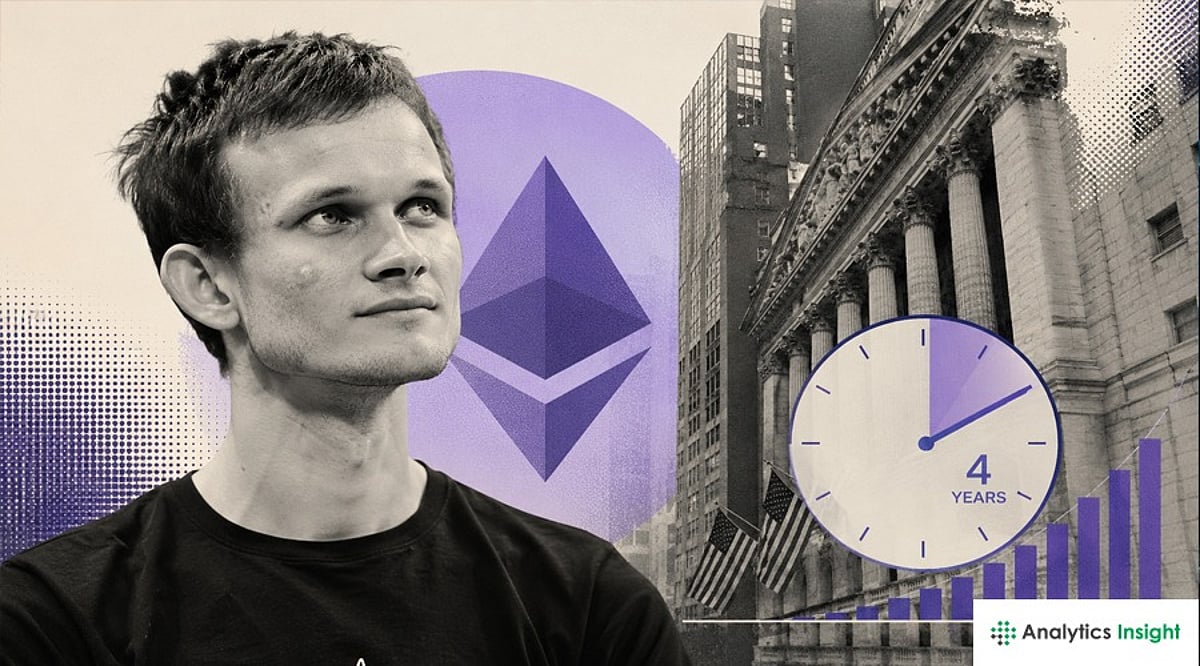
    Vitalik Buterin’s Lean Ethereum roadmap gives ETH a major institutional test. The plan targets faster finality, stronger privacy, scalable state, and post-quantum security. Institutions will watch execution risk closely during its public transition over time.

    Written By: Yusuf Islam | Reviewed By: Achu Krishnan | Published on: 06 Jul 2026, 6:30 pm

    Lean Ethereum Frames: A New Institutional Roadmap

    Buterin described Lean Ethereum as a three- or four-year set of upgrades. He also called it Ethereum’s third major iteration after the Merge. The Ethereum Foundation Architecture roadmap presents the plan as a coordination tool. It does not frame itself as a final prediction for Ethereum’s future.

    Still, the targets remain large. The roadmap lists second-level finality, 1 gigabit per second on L1, terabyte-scale L2 capacity, post-quantum security, and private L1 design. That framing places ETH’s institutional case under a clearer test. Ethereum now has to show that it can evolve while keeping settlement assurances intact.

    Upgrade Stack Raises Execution Questions

    Buterin’s post grouped Lean Ethereum around several major technical changes. These include recursive STARKs, quantum-safe cryptography, faster finality, higher gas limits, larger blobs, shorter slots, and new state designs. Recursive STARKs would move verification toward proofs rather than direct re-execution. That change could make chain checking cheaper and more scalable.

    Quantum-safe cryptography addresses long-term asset security. The strawman treats post-quantum readiness as a protocol-level goal for Ethereum’s base layer. Faster finality also carries direct market relevance. It affects how quickly a transaction can be counted as settled for users, applications, and institutions.

    The state plan may create the most disruption. Buterin described a model where the current dynamic state remains while new state types scale further under tighter design limits. Could Ethereum lower costs for common assets without fragmenting liquidity, composability, or developer expectations? That question sits at the center of Lean Ethereum’s institutional test. If new state models reduce fees for ERC-20s, NFTs, and DeFi use cases, developers gain a migration reason.

    Wall Street Push Meets Protocol Risk

    Ethereum’s institutional push already extends beyond spot-market access. It now reaches banks, asset managers, stablecoin issuers, tokenization desks, and public companies. The Ethereum Foundation’s 2025 Trillion Dollar Security initiative set that ambition directly. Ethereum wants infrastructure secure enough for individuals, companies, institutions, and governments to hold large on-chain value.

    At the same time, Ethereum Institutional launched as a corporate entry point. It targets banks, asset managers, public companies, tokenization, and stablecoins. Ethlabs also emerged as a treasury-backed research layer tied to ETH’s monetary case. Bitmine, Sharplink, and Joe Lubin sit behind both efforts.

    This external stack gives Ethereum’s institutional campaign a broader market front. Meanwhile, the Foundation continues to preserve a neutral protocol role. CryptoSlate market data on July 5 showed ETH near $1,763. Its market value stood around $213 billion. That size makes Ethereum’s protocol direction important. It also leaves institutions focused on execution risk during a long upgrade cycle.

    Shipped Upgrades Become the Next Signal

    Lean Ethereum now creates a clear delivery checklist. Market observers can track Glamsterdam, Hegota, I-star, later forks, gas increases, blob expansion, finality work, and developer migration.

    The roadmap also brings transition risks. Application developers, wallets, infrastructure teams, clients, L2s, and privacy tools all need to adjust around protocol changes. For institutional workflows, privacy remains a core requirement. Banks and asset managers need confidentiality, compliance controls, and predictable settlement.

    Ethereum also has to preserve public verifiability and credible neutrality. That balance shapes the value of private L1 work. If the process advances, Lean Ethereum gives ETH a stronger settlement narrative. Faster finality, cheaper verification, scalable state, privacy, and quantum planning would support that case. If progress slows, institutions may route stablecoins, tokenization systems, and treasury workflows toward platforms with more predictable near-term deployment.

    What’s Next?

    Lean Ethereum places ETH’s institutional future on a clear execution timeline. Vitalik Buterin’s roadmap targets faster finality, stronger privacy, scalable state, and post-quantum security. The main takeaway is simple: Ethereum must turn its upgrade plan into reliable infrastructure to keep institutional confidence.

  • Solana and Allfunds Partnership: A Major Step Toward Institutional On-Chain Finance

    Solana and Allfunds Partnership: A Major Step Toward Institutional On-Chain Finance

    The partnership between Solana Labs and Allfunds Group plc marks a significant milestone in the evolution of blockchain technology, bridging the gap between traditional finance and decentralized finance (DeFi). By enabling the tokenization of real-world assets on Solana’s high-speed, low-cost blockchain, this collaboration signals a new era of institutional adoption.

    Why the Allfunds Partnership Matters

    Allfunds, one of the world’s largest wealth management platforms, manages nearly €1.8 trillion in assets under administration and works with over 3,300 asset managers, banks, and financial institutions globally. Through this partnership, investment funds on Allfunds can now be tokenized on Solana’s blockchain, allowing traditional assets to exist as digital assets on a public blockchain. This move demonstrates that large financial institutions are ready to embrace public blockchain technology over legacy systems.

    The Rise of Real-World Asset Tokenization

    Real-world asset (RWA) tokenization is transforming finance by converting stocks, bonds, mutual funds, and private investments into blockchain-based digital assets. The Solana-Allfunds deal accelerates this trend, with tokenized assets on Solana already surpassing $1 billion in total value earlier this year. Major financial firms now see blockchain as a way to make financial systems faster, cheaper, and more efficient, moving tokenization from an experiment to a cornerstone of future finance.

    Why Solana Became the Preferred Choice

    Solana’s technical performance—processing thousands of transactions per second with fees often under one cent—makes it ideal for large-scale financial operations. Compared to older blockchain networks with higher fees and slower speeds, Solana offers a scalable infrastructure suited for institutional use. This technical edge has positioned Solana as a serious contender in global finance.

    Traditional Finance and DeFi Converge

    For years, DeFi operated separately from traditional finance due to security, regulatory, and technical concerns. The Solana-Allfunds partnership, supported by Project Harmonia and infrastructure firms ioBuilders and Particula, changes this. It allows Allfunds to issue tokenized investment funds while maintaining compliance, enabling traditional financial products to exist in both legacy and blockchain ecosystems simultaneously. The wall between traditional finance and DeFi is breaking down.

    Solana’s Growing Institutional Adoption

    The Allfunds deal follows other institutional wins for Solana in 2026, including WisdomTree’s expansion of its tokenized fund ecosystem to Solana. This growing confidence reflects a shift in how institutions view blockchain—not as speculative crypto technology, but as a superior settlement system for financial products. Institutions control far more capital than retail investors, making this shift critical.

    What This Means for the Future of On-Chain Finance

    The Solana-Allfunds partnership may be a turning point for on-chain finance. Rather than replacing traditional finance, the trend is toward integration. Blockchain networks like Solana could soon support mutual funds, private equity, securities, and cross-border payments on a global scale. The next phase of blockchain growth will be driven by large institutions moving trillions of dollars into blockchain systems, making on-chain finance the foundation of future global markets.

    FAQs

    1. Why is the Solana-Allfunds partnership important? It connects one of the world’s largest fund distribution networks with blockchain, bringing institutional finance on-chain.
    2. What is real-world asset (RWA) tokenization? It is the process of converting traditional financial assets like stocks, bonds, and funds into blockchain-based digital assets.
    3. Why did Allfunds choose Solana? Because Solana offers fast transaction speeds, scalability, and extremely low transaction fees suitable for institutional use.
    4. How does this impact decentralized finance (DeFi)? It helps bridge traditional finance and DeFi, allowing regulated financial products to operate within blockchain ecosystems.
    5. What does this mean for the future of finance? It signals that major financial institutions may increasingly use blockchain infrastructure for managing trillions of dollars globally.
  • Ethereum’s Neutral Infrastructure: Why Openness Gives It a Lasting Edge in Blockchain

    Ethereum’s Neutral Infrastructure: Why Openness Gives It a Lasting Edge in Blockchain

    Ethereum stands apart in the blockchain industry because its neutral infrastructure keeps the network open, decentralized, secure, and accessible for everyone. Recent upgrades, lower fees, and strong adoption continue to strengthen its long-term position.

    Key Takeaways

    • No company or authority controls who builds or operates on the Ethereum network.
    • Recent upgrades have pushed transaction fees below $0.02 under normal conditions.
    • Ethereum’s $205 billion market value and growing enterprise adoption signal long-term confidence.

    The blockchain industry has grown rapidly in recent years, but not every network follows the same approach. Some give more control to a small group of companies or developers, while others focus on keeping the system open and fair. Ethereum’s neutral blockchain infrastructure functions like public infrastructure—no single company, government, or organization decides who can build or use it. Every developer, business, and user gets equal access. Since its launch, Ethereum has prioritized openness over control, creating trust across the industry and helping it grow faster than many competing blockchains.

    Ethereum Has the Largest Developer Ecosystem

    Recent industry reports show Ethereum still hosts the largest number of smart contract developers worldwide. More than 30% of all active Web3 developers work within the Ethereum ecosystem. Developers prefer Ethereum because the network remains open and does not favor specific companies or projects. Every builder gets the same infrastructure access, with no special privileges for large organizations. This environment fosters natural innovation. Thousands of decentralized applications already run on Ethereum, including finance platforms, blockchain games, NFT marketplaces, artificial intelligence projects, and many other services. This ecosystem scale keeps Ethereum ahead of newer blockchain competitors.

    Proof-of-Stake Made Ethereum Even Stronger

    Ethereum became even stronger after The Merge, one of the biggest upgrades in blockchain history, which moved the network from Proof-of-Work to Proof-of-Stake. Before this change, Ethereum depended on energy-intensive mining systems. After the upgrade, it relies on validators who help secure the network by staking ETH instead of using mining machines. More than 120 million ETH are currently in circulation, and staking participation continues to grow across independent validators worldwide. This system spreads control across a larger number of participants, reduces dependence on centralized operators, and helps protect Ethereum’s decentralized structure. Ethereum’s market value currently remains above $205 billion, firmly keeping it in second place behind Bitcoin in the global crypto market.

    Lower Fees Have Improved Ethereum’s Position

    For many years, Ethereum faced criticism for expensive transaction fees. However, recent upgrades have significantly improved this situation. Research from mid-2026 shows major efficiency improvements across Ethereum Mainnet and Layer 2 networks. In the past, average transaction fees often exceeded $2 during busy periods. Today, fees frequently remain under $0.02 under normal conditions. Layer 2 scaling systems built around Ethereum have reduced average transaction costs by more than 95%, making the network much more affordable for developers and businesses while maintaining strong security standards. This balance between affordability and security gives Ethereum a major advantage over competing blockchain networks.

    Ethereum Allows Different Applications to Connect Easily

    Ethereum’s open structure allows applications to interact without needing permission from any central authority. A decentralized finance application can connect directly with an NFT marketplace, a gaming platform can work with a payment protocol, and artificial intelligence systems can interact with blockchain-based financial products.

    Ethereum Continues to Improve for the Future

    One major upgrade planned for 2026 is the Glamsterdam hard fork, which focuses on improving network performance while keeping decentralization intact. The plan includes raising gas limits toward 100 million, improving transaction execution speed, and introducing systems such as Enshrined Proposer Builder Separation (ePBS).

    Institutions Continue to Trust Ethereum

    Regulatory clarity around Ethereum-based exchange-traded products has encouraged greater participation from financial institutions. Even during periods of market volatility in 2026, Ethereum continues to attract enterprise adoption. Large institutions increasingly view Ethereum as foundational digital infrastructure rather than just another cryptocurrency.

    Why This Matters

    Ethereum’s neutral infrastructure prevents centralized control, ensuring the network remains fair, open, and unalterable. For institutions and developers, this absolute censorship resistance makes it the only trustworthy foundation for long-term global financial systems and applications.

    Neutral Infrastructure Gives Ethereum Long-Term Strength

    Many blockchain networks focus mainly on speed or low fees, often by giving greater control to a small number of validators or centralized teams. As blockchain technology becomes more important in global finance and digital infrastructure, neutrality becomes a major advantage.

    Frequently Asked Questions

    1. What makes Ethereum different from other blockchain networks? Ethereum operates strictly as neutral public infrastructure, meaning no single company, government, or central group controls who can build on the platform or access its global network services.
    2. What exactly is neutral blockchain infrastructure? It is a decentralized design principle ensuring the underlying network remains entirely open, fair, and accessible to all global users and developers, with zero special corporate privileges.
    3. How has Ethereum improved its network efficiency recently? Major structural upgrades and advanced Layer 2 scaling systems have drastically reduced average transaction fees by over 95% while fully preserving the blockchain’s core security standards.
    4. Why do software developers heavily prefer building on Ethereum? Ethereum hosts the world’s largest Web3 developer ecosystem because it provides an open, stable architecture where every engineer receives identical infrastructure access without needing centralized permission.
    5. Why do large financial institutions trust the Ethereum ecosystem? Global enterprises trust Ethereum because its proven decentralized design, robust protocol security, and improving regulatory clarity make it the ideal foundational digital infrastructure for long-term institutional deployment.
  • Ethereum Institutional Launches to Boost Adoption as Spot ETF Outflows Reverse

    Ethereum Institutional Launches to Boost Adoption as Spot ETF Outflows Reverse

    Ethereum Institutional has launched as an independent non-profit organization aimed at accelerating institutional adoption of Ethereum, Layer 2 networks, and blockchain applications. The initiative arrives as United States spot Ethereum exchange-traded funds (ETFs) recorded $14.8 million in net inflows on July 1, ending nine consecutive trading days of withdrawals.

    Former Ethereum Foundation team leads David Walsh and Matthew Dawson are spearheading Ethereum Institutional’s outreach to traditional financial companies. The organization plans to serve as a neutral entry point for banks, asset managers, and custodians seeking clearer access to Ethereum’s technology and broader ecosystem.

    Ethereum Institutional’s work will focus on building relationships across traditional finance while supporting the use of Ethereum, Layer 2 solutions, and related financial applications. The initiative aims to strengthen institutional confidence by improving communication between blockchain developers and financial firms that require scalable infrastructure and regulatory credibility.

    BlackRock’s iShares Ethereum Trust (ETHA) led the July 1 inflows with $36.6 million, contributing the majority of the market’s positive daily total. However, other products moved in the opposite direction. BlackRock’s ETHB lost $1.7 million, while Fidelity’s FETH recorded $1.6 million in net withdrawals. Grayscale’s Mini Ethereum Trust posted an $18.5 million outflow as investors continued shifting capital among competing Ethereum funds with different fee structures.

    Cumulative flow data showed withdrawals of approximately $380 million across the spot Ethereum ETF market during the previous nine trading sessions. Although the July 1 inflow remained modest compared with those withdrawals, it ended the market’s recent stretch of daily net outflows.

    The reversal also showed that institutional demand remained uneven, with investors favoring some providers while reducing exposure through competing Ethereum products.

    Market focus now turns to sustained institutional demand. Ethereum Institutional will focus on expanding adoption among financial institutions and increasing access to Layer 2 networks and blockchain-based applications. Traders and analysts will track whether spot Ethereum ETFs can record further inflows after the July 1 change in direction.

    Sustained inflows over several weeks would provide stronger confirmation of a trend reversal than the results from one trading session. The organization’s progress will also depend on its ability to build working relationships with banks, custodians, and asset managers across traditional finance.

    Its launch places institutional engagement alongside Ethereum’s technical initiatives as the network seeks broader financial use and stronger market credibility. Upcoming ETF sessions will show whether the inflow marked a durable shift or a brief interruption in the recent withdrawal trend.

  • Ethereum Price Prediction: Could ETH Hit $10,000 by 2030?

    Ethereum Price Prediction: Could ETH Hit $10,000 by 2030?

    Key Takeaways

    • Ethereum remains the dominant blockchain for DeFi, stablecoins, and NFTs despite current market weakness.
    • Institutional adoption and staking mechanisms continue to strengthen Ethereum’s long-term growth prospects.
    • A $10,000 ETH price by 2030 is considered feasible if market conditions remain favorable.

    Ethereum, the second-largest cryptocurrency by market capitalization, continues to be a cornerstone of the blockchain ecosystem. Despite trading around $1,550–$1,650 in July 2026—well below its 2021 all-time high of $4,891—many analysts maintain a bullish long-term outlook. The central question remains: Can Ethereum reach $10,000 by 2030?

    Ethereum’s Current Market Position

    2026 has been a challenging year for Ethereum. High interest rates, economic uncertainty, and a broad crypto market downturn have kept prices under pressure. However, market weakness does not diminish Ethereum’s network dominance. It remains the backbone of decentralized finance (DeFi), hosts the premier NFT platforms, and handles massive stablecoin volume daily.

    Institutional Interest Could Push Prices Higher

    Rising institutional interest is a major factor behind positive analyst sentiment. Large financial firms are exploring crypto investments through ETFs and regulated products. Standard Chartered has issued one of the most aggressive forecasts, projecting Ethereum could reach $40,000 by 2030 under favorable conditions. Such predictions underscore the strong institutional belief in Ethereum’s future.

    Network Upgrades Continue to Improve Ethereum

    Developers are actively working on upgrades to improve transaction speed, reduce gas fees, and increase scalability. These technical improvements aim to address historical issues like high fees during periods of high demand. Successful upgrades could strengthen Ethereum’s position relative to newer, faster blockchains.

    Staking Creates Supply Pressure

    Ethereum’s transition to Proof-of-Stake has locked a significant portion of ETH in staking contracts, reducing circulating supply. When supply is limited and demand rises, prices tend to increase. This reduced supply is a key long-term advantage that could support price growth.

    Stablecoins and Real-World Assets Add Value

    Ethereum leads in stablecoin infrastructure, with USD Coin and Tether processing billions in transactions daily. Additionally, tokenization of real-world assets—bonds, real estate, traditional financial products—is gaining traction, and Ethereum remains the preferred network for many such projects, adding utility and demand.

    Risks That Could Slow Growth

    Despite the positive outlook, Ethereum faces challenges. Competition from newer blockchains like Solana and Sui, which offer lower fees and faster transactions, continues to attract developers. Regulatory uncertainty also looms, with governments worldwide debating crypto laws, taxation, and investor protections. Strict regulations could dampen adoption and market sentiment.

    Can Ethereum Reach $10,000 by 2030?

    For Ethereum to hit $10,000, its price would need to rise nearly sixfold from current levels. While ambitious, many market forecasts consider this target realistic if favorable conditions develop. Conservative estimates place ETH between $5,000 and $7,000 before 2030, while more bullish predictions exceed $10,000. Some institutional forecasts even suggest $40,000 during a strong crypto cycle.

    Why This Matters

    The disconnect between Ethereum’s depressed price and its unrivaled dominance in stablecoins, staking, and asset tokenization creates a unique market anomaly. This utility floor keeps banking giants bullish on a long-term structural recovery to $10,000.

    Final Outlook

    Ethereum remains a strong long-term investment option in the crypto space. Despite weak short-term performance, its fundamentals—leadership in DeFi, growing institutional adoption, stablecoin usage, and ongoing network upgrades—make it a viable candidate for future growth.

    FAQs

    1. What is Ethereum’s current price status in July 2026?

    Ethereum is trading under heavy pressure in the $1,550–$1,650 range, far below its historical peaks.

    2. Is a $10,000 target for Ethereum by 2030 realistic?

    Yes, many institutional analysts view it as structurally feasible, contingent on network upgrades, institutional inflows, and regulatory clarity.

    3. Why do financial institutions maintain a bullish long-term outlook despite the current slump?

    Ethereum processes over 50% of the world’s stablecoins, serves as the premier layer for tokenizing real-world assets, and has over 30% of its total supply locked in staking contracts.

    4. What are the main risks that could derail Ethereum’s long-term growth?

    Primary risks include competition from faster blockchains like Solana and Sui, macroeconomic pressures from high interest rates, and shifting international regulatory frameworks.

    5. What is the highest institutional price prediction for Ethereum?

    Standard Chartered has forecasted Ethereum could reach $40,000 by 2030, drawing comparisons to Amazon’s post-dot-com recovery.

    Disclaimer: This article is for informational purposes only and does not constitute investment advice. Cryptocurrency investments are risky; always conduct your own research.

  • Solana Developer Activity Surges: What It Means for the Blockchain’s Future

    Solana Developer Activity Surges: What It Means for the Blockchain’s Future

    The crypto market has once again turned its attention to Solana as a surge in development activity across its network generates excitement throughout the blockchain industry. Over the past few months, Solana has achieved major technical progress, infrastructure upgrades, and significant ecosystem expansion, leading many analysts to believe the network could be entering a pivotal new growth phase.

    Developer Activity Accelerates

    One of the primary drivers of this renewed interest is a sharp uptick in developer activity. Blockchain analytics platforms report a substantial increase in the number of developers building on Solana compared to previous months, with GitHub activity also climbing—a reliable indicator of deeper development work. Teams are actively building tools for decentralized finance, blockchain payments, staking services, and trading infrastructure. The validator network is also growing, enhancing security and overall blockchain performance.

    Network Performance Remains a Key Advantage

    Solana’s speed and low transaction costs continue to attract developers. The network processes thousands of transactions per second with average fees below a fraction of a cent, giving it a major edge over competing blockchains that often suffer from higher fees and slower processing. This creates an ideal environment for building large-scale applications.

    Jito Launch Sparks Fresh Momentum

    A significant recent milestone came from Jito Labs, a major infrastructure provider in the Solana ecosystem. This week, Jito announced that three key pillars of Solana’s expanding market layer have gone live, focusing on stronger liquidity systems and improved decentralized market operations—essentially building a more robust financial structure within the ecosystem.

    Institutional Interest Continues to Rise

    Growing institutional adoption is another major factor behind the buzz. Reports from the second quarter of 2026 indicate that several large financial institutions have begun blockchain integrations directly tied to Solana. Market research shows Solana’s real-world asset market capitalization has grown nearly 43% quarter-over-quarter, approaching $2 billion.

    SOL Market Performance Reflects Confidence

    Solana’s market price reflects this positive trend. Current data places SOL near $74 per token, with a total market capitalization close to $43 billion. Daily trading volume has exceeded $3.8 billion, signaling strong market activity despite overall volatility in the broader crypto market.

    Partnerships Strengthen Real-World Use Cases

    Partnerships with major financial firms such as Visa, PayPal, and Circle have bolstered Solana’s credibility. These collaborations have shifted market perception: Solana is no longer seen as a network driven purely by retail speculation but as infrastructure built for legitimate financial use.

    What This Means for the Ecosystem

    The surge in development activity suggests Solana is transitioning from a rapid growth phase into a mature, utility-driven ecosystem. With new developers, improved infrastructure, rising institutional investment, and expanding financial applications, Solana is evolving from a ‘hype’ narrative to a focus on real-world blockchain utility. Historically, periods of strong development have often preceded significant increases in network adoption and market value. If this trend continues, Solana could solidify its position as a leading Layer-1 blockchain and play an increasingly central role in the digital asset economy.

    Disclaimer: This article is for informational purposes only and does not constitute investment advice. Cryptocurrency investments carry risk; always conduct your own research before investing.

  • USDGO Stablecoin Supply Crosses $500M as Institutional Adoption Surges

    USDGO Stablecoin Supply Crosses $500M as Institutional Adoption Surges

    USDGO, an enterprise-focused US dollar stablecoin, has surpassed $500 million in circulating supply within four months of its launch, signaling rapid institutional adoption. The token is issued by Anchorage Digital Bank, the first federally chartered crypto bank in the United States, with branding and distribution managed by Hong Kong-listed OSL Group.

    Enterprise Demand Drives Expansion

    Unlike stablecoins that initially grew through cryptocurrency trading, USDGO targets corporate treasury operations, cross-border payments, international transfers, and institutional liquidity. The token crossed $100 million roughly two months after its February launch, and the new $500 million milestone reflects accelerating enterprise demand.

    OSL Group reports partnerships with payment providers and financial infrastructure firms across developed and emerging markets, supporting large-value transfers and commercial payment flows. The ecosystem also includes fiat on- and off-ramp services, digital asset trading, and blockchain and custody partners for secure asset management and high-volume settlement.

    Tokenized Funds Bolster Reserves

    USDGO maintains one-to-one backing through high-quality liquid assets including cash and short-term US government securities. Its reserve structure now incorporates tokenized money market funds from major financial institutions:

    • JPMorgan’s JLTXX tokenized money market fund
    • BlackRock’s BUIDL tokenized liquidity fund
    • Goldman Sachs’ STBXX reserve fund

    These funds connect USDGO’s reserve management with traditional finance products, demonstrating how legacy institutions are increasingly participating in blockchain-based settlement systems. Tokenized money market products alongside cash deposits and Treasury securities enhance liquidity, transparency, and operational efficiency for institutional users.

    Stablecoins Enter Mainstream Finance

    USDGO’s growth reflects a broader trend of stablecoins expanding beyond crypto markets into payments, settlement, treasury management, and liquidity operations. A larger circulating supply enables more transactions and deeper market liquidity, which is critical for enterprise users processing commercial payments and managing international fund transfers.

    Regulatory clarity and institutional participation are intensifying competition among stablecoin issuers. Enterprise-focused projects like USDGO aim to become preferred settlement assets for corporations and payment networks, combining fixed-value stability with regulated issuance and tokenized reserve assets.

    What’s Next?

    With supply growth exceeding $500 million, USDGO is positioned to play a key role in digital finance. Businesses should monitor adoption across treasury management, cross-border transfers, and institutional liquidity as regulated blockchain settlement gains traction.

  • Sharplink Resumes Ethereum Purchases After Eight-Month Pause, ETH Price Support at $1,500 in Focus

    Sharplink Resumes Ethereum Purchases After Eight-Month Pause, ETH Price Support at $1,500 in Focus

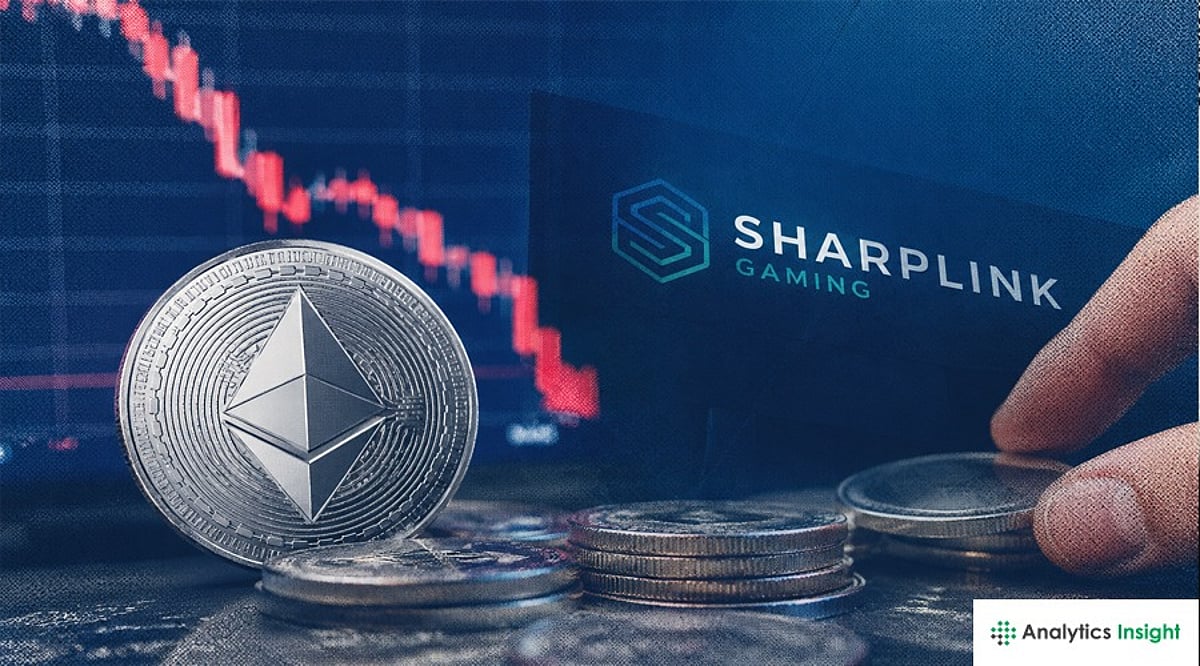
    Sharplink has resumed buying Ethereum for the first time in eight months. A wallet linked to the company received 5,000 ETH, worth nearly $7.85 million, from FalconX, according to Arkham data. The purchase marks Sharplink’s first ETH acquisition since October 2025. The company has not publicly confirmed the transaction, and The Block said it had reached out for comment.

    Sharplink now holds around 876,285 ETH and ETH equivalents. As of June 21, the company said that stash was worth roughly $1.3 billion.

    Treasury Position and Market Scale

    EmberCN estimated Sharplink’s average acquisition cost at $3,609 per ETH. That estimate points to an unrealized loss of about $1.79 billion on the treasury. Even so, Sharplink remains the world’s second-largest public ETH treasury company. Tom Lee’s Bitmine Immersion leads the category with 5.67 million ETH, or about $8.7 billion, as of June 14.

    Sharplink rebranded from SharpLink Gaming in February. Since then, it has moved beyond ether staking and into other on-chain yield strategies.

    The company also reported $12.1 million in first-quarter revenue this year. That total rose sharply from $742,000 in the same quarter last year.

    Ethereum Catalysts and Price Watch

    Sharplink pointed to regulation, improving market conditions, and real-world asset tokenization as long-term reasons for its Ethereum view. It also backed Ethlabs, a nonprofit formed by former Ethereum Foundation researchers.

    Ethlabs aims to prepare the network for its next stage of institutional adoption. Ethereum co-founder and Sharplink chairman Joe Lubin supports the group, along with Bitmine Immersion. At the same time, Ethereum price watchers remain focused on network upgrades that could speed transfers between Layer 1 and Layer 2 systems. Lubin said the goal is smoother coordination through zero-knowledge proofs, or ZK proofs.

    The planned changes could also reduce the need for bridges. In addition, they may connect liquidity more closely across the Ethereum ecosystem and support more activity on-chain. Can Ethereum keep its structure intact if the $1,500 level breaks?

    That question has traders watching the chart closely. Analyst Ardi said ETH should avoid closing below $1,500 over the next four months. He said the level has held through every major pullback since the 2022 bear market ended. For now, buyers are trying to keep ETH above that support zone while the market waits for stronger demand.

    What’s Next?

    Sharplink has resumed buying Ethereum after an eight-month pause and now holds more than 876,000 ETH and equivalents. The company cited regulation, tokenization, and network upgrades as long-term drivers. Traders are now watching whether ETH can hold the key $1,500 support level.