Tag: Intel

  • Intel Slashes VP Roles from 450 to 200 in Management Overhaul Under New CEO

    Intel Slashes VP Roles from 450 to 200 in Management Overhaul Under New CEO

    Intel has dramatically reduced its senior management ranks as part of a sweeping restructuring led by CEO Lip-Bu Tan. The chipmaker cut its vice-president count from approximately 450 at its peak to roughly 200, according to Intel CFO David Zinsner. The company also halved its management layers from 12 to six.

    Zinsner disclosed the figures while discussing Intel’s restructuring and execution efforts at the Deutsche Bank Technology Conference. He explained that the earlier organizational structure created bottlenecks, with too many people able to block decisions and slow product development.

    “Intel sometimes needed four or five development cycles before products were ready, rather than moving successfully through the initial development stage,” Zinsner said, linking the delays to a cultural problem within the company.

    Intel’s official filings from 2025 confirm the simplification of its organizational structure. The changes aim to reduce management layers, improve transparency and accountability, and give technical teams greater authority over decision-making.

    Transparency emerged as a major issue under the previous structure. Zinsner noted that information could change as it moved through management levels, meaning senior executives did not always receive the same picture that teams closer to a project had. Tan plans to address this by bringing in leaders experienced in operating with leaner structures and emphasizing faster decisions and direct communication.

    The management overhaul comes as Intel works to improve its manufacturing and product execution. Zinsner reported progress on Intel’s 18A and 14A process technologies and noted that several products advanced through their initial A-stepping stage.

  • US Stock Futures Rise as Oil Retreats and Fed Decision Looms

    US Stock Futures Rise as Oil Retreats and Fed Decision Looms

    US stock futures edged higher on Wednesday as investors focused on the Federal Reserve’s upcoming interest rate decision. Oil prices pulled back from recent highs, while Treasury yields remained near the 5% mark. The market also tracked fresh moves in technology stocks after two consecutive sessions of losses on Wall Street.

    At 7:00 a.m. ET, Dow E-minis were up 115 points, or 0.22%. S&P 500 E-minis gained 0.25%, and NASDAQ 100 E-minis rose 0.50%. Traders are pricing a 92.5% chance of a quarter-point rate increase, according to CME FedWatch data, up from 61.2% a week earlier. The Fed will announce its decision at 2 p.m. ET, with markets widely expecting a 25-basis-point hike that would lift the federal funds target range from 3.50%–3.75% to 3.75%–4.00%.

    Oil prices eased on Wednesday after a sharp rally the previous session. Brent crude fell below $108 a barrel, while West Texas Intermediate traded near $104. The drop followed U.S. industry data showing crude inventories rose by 7.1 million barrels in the week ended September 11. Despite the pullback, oil remained above $100 a barrel as supply concerns persist.

    The 10-year U.S. Treasury yield held around 5% after moving above that level on Tuesday, briefly reaching its highest since 2007. Higher bond yields have increased borrowing costs and added pressure on stocks, particularly companies reliant on heavy capital spending.

    In the technology sector, Intel led premarket gains with a more than 5% rise after reports that SK Hynix is in talks with the U.S. chipmaker about producing memory chips domestically. NVIDIA rose less than 1%, while Meta remained nearly flat. Microsoft and Apple edged slightly lower. The broader tech sector remains under scrutiny as AI executives call for a slower pace of advanced model development, raising questions about future spending on chips, data centers, and cloud infrastructure.

    Global markets also moved higher. Europe’s STOXX 600 gained around 0.3%, and a broad Asia-Pacific share index outside Japan rose 0.6%. Investors across major markets now await the Fed’s decision and remarks from Fed Chair Kevin Warsh, which will provide clues on the future path of interest rates. Oil prices, Treasury yields, and the Fed’s rate outlook remain the primary drivers of U.S. stock futures ahead of Wednesday’s opening bell.

  • Intel and SK Hynix Shares Surge Following Reports of AI Chip Partnership Talks in Ohio

    Intel and SK Hynix Shares Surge Following Reports of AI Chip Partnership Talks in Ohio

    Reports that Intel and SK hynix are in discussions for a potential partnership to manufacture memory chips at Intel’s Ohio campus have sent shares of both companies higher. Intel shares rose approximately 4%, while SK hynix gained around 3% on Wednesday, September 16.

    The potential deal would see SK hynix produce chips at Intel’s $100 billion Ohio site, though no agreement has been signed yet. The talks come at a time when AI companies are increasingly demanding high-bandwidth memory chips for servers and data centers. SK hynix is a leading supplier of such memory, widely used in AI systems.

    Intel has faced delays at its Ohio project, originally expected to begin production in 2025. A partnership with SK hynix could provide a new purpose for the site while expanding memory chip production in the United States.

    SK hynix already has a chip packaging plant under construction in Indiana, but it does not yet manufacture memory chips in the U.S. Moving some production to Ohio would help the company establish a larger footprint in the country.

    Ohio’s Role in the AI Chip Race

    The possible collaboration could benefit both companies. Intel could repurpose its delayed Ohio facility, while SK hynix would gain another location for memory production closer to U.S. customers.

    The timing is crucial as the AI race intensifies, with companies demanding powerful chips for advanced AI systems. Increasing local production could help meet this demand over time.

    However, the talks remain at an early stage, and any deal could face cost and technology hurdles. South Korea may also review an agreement involving advanced memory technology. If the plan moves forward, Intel’s Ohio site could play a new role in the growing U.S. AI chip supply chain.

  • Leading Chipmakers Race to Dominate Advanced Semiconductor Manufacturing

    Leading Chipmakers Race to Dominate Advanced Semiconductor Manufacturing

    The race for the world’s most advanced chips is led by TSMC, Samsung, and Intel. TSMC currently holds the strongest position in leading-edge manufacturing, while Samsung and Intel are investing heavily to close the gap and secure more advanced chip orders.

    TSMC remains the leader in advanced chip manufacturing. Its 2nm process entered high-volume production in the fourth quarter of 2025, while its A16 technology is planned for volume production in the second half of 2026.

    Samsung Foundry is challenging TSMC with 2nm technology and gate-all-around transistor designs. The company began planning 2nm mass production for mobile chips in 2025 and aims to expand the process to high-performance computing and automotive applications.

    Intel is taking a different route with its 18A process and RibbonFET technology. Intel 18A entered production in 2025, while High-NA EUV is already being used on selected 18A layers for high-volume products, giving Intel an important technology milestone.

    NVIDIA and AMD are major chip designers rather than foundries. NVIDIA leads the AI GPU market, while AMD competes across AI accelerators, CPUs, and GPUs. Both depend on advanced manufacturing partners to turn their chip designs into physical products.

    SK hynix and Micron are also key players in the AI chip race through high-bandwidth memory. HBM supplies the huge amounts of data needed by modern AI processors, making memory technology as important as advanced processors for AI infrastructure.

    ASML sits at the heart of the chip race by supplying the EUV lithography systems used to manufacture leading-edge chips. Its High-NA EUV technology offers higher-resolution patterning and is designed to support future 2nm-class and more advanced manufacturing.

  • Tech Roundup: Intel Starfire Space Chip, Nvidia’s $5B AI Bet, Blockchain Analyst Surge & Crypto Slump

    Tech Roundup: Intel Starfire Space Chip, Nvidia’s $5B AI Bet, Blockchain Analyst Surge & Crypto Slump

    Good morning, tech fam — here’s your quick catch-up on the biggest stories making headlines today. From space chips and AI investments to hiring trends and crypto market swings, we’ve got you covered.

    Intel Unveils Starfire Chip for Smarter Space Missions

    Intel has introduced the Starfire space chip, designed to bring faster computing and artificial intelligence processing directly to satellites and spacecraft. Built to withstand harsh space conditions, the processor can handle onboard AI tasks with minimal input from Earth, supporting future government and commercial space missions.

    Nvidia Invests $5 Billion in Safe Superintelligence

    Nvidia is backing Safe Superintelligence, the AI startup co-founded by Ilya Sutskever, with a $5 billion investment. The deal provides the startup with expanded computing power and access to Nvidia’s Vera Rubin hardware. Financial terms were not officially disclosed, but the partnership signals a major push toward next-generation AI development.

    India Skills Report 2025: Blockchain Analysts in High Demand

    The India Skills Report 2025 reveals that graduate employability has reached 54.81%, with fintech talent seeing strong demand. Blockchain Analyst roles are expected to grow as digital finance expands. The report emphasizes skill-based learning, industry-focused education, and India’s increasing role in the global workforce.

    NVIDIA Launches Open Secure AI Alliance

    In response to security concerns raised after an OpenAI testing incident, NVIDIA has formed the Open Secure AI Alliance with more than 35 technology companies. The group aims to develop open AI security tools, helping businesses detect threats faster and strengthen cyber defense through shared technology.

    Crypto Market Tumbles Amid Rising Fear

    Bitcoin, Ethereum, XRP, and Dogecoin have fallen sharply as heavy selling and global uncertainty hurt market confidence. Analysts point to rising fear, whale sell-offs, and weaker risk appetite, warning that Bitcoin could face further pressure if key support levels break.

  • Leading US Tech Giants: Apple, Microsoft, NVIDIA, and More Dominate 2025

    Leading US Tech Giants: Apple, Microsoft, NVIDIA, and More Dominate 2025

    The United States continues to be the global epicenter of technological innovation, housing some of the most influential companies that shape industries ranging from consumer electronics to enterprise software and artificial intelligence. Here is an overview of the top 10 tech companies in the US, highlighting their core strengths and market impact.

    1. Apple

    Apple leads consumer technology with premium iPhones, Macs, and wearables. The company is expanding its AI capabilities, developing powerful silicon chips, and maintaining a thriving global ecosystem that keeps users engaged across devices.

    2. Microsoft

    Microsoft dominates enterprise software with Azure cloud services, AI innovation, productivity tools like Office 365, gaming through Xbox, cybersecurity solutions, and business applications used by millions worldwide.

    3. NVIDIA

    NVIDIA powers the AI revolution through advanced GPUs, data center technologies, autonomous driving platforms, and high-performance computing infrastructure that are critical for modern AI workloads.

    4. Amazon

    Amazon combines global e-commerce leadership with AWS cloud services, AI innovations, logistics expertise, and smart consumer devices like Alexa and Echo, reaching consumers and businesses across markets.

    5. Alphabet (Google)

    Alphabet, the parent company of Google, drives internet search, AI breakthroughs, cloud services, the Android ecosystem, and cutting-edge digital advertising technologies that underpin much of the web.

    6. Meta

    Meta connects billions through Facebook, Instagram, and WhatsApp, while investing heavily in AI research, virtual reality, and metaverse initiatives that aim to shape future digital interactions.

    7. Oracle

    Oracle specializes in enterprise databases, cloud infrastructure, AI-powered business applications, and mission-critical software that serve governments and multinational corporations worldwide.

    8. IBM

    IBM focuses on hybrid cloud, artificial intelligence, quantum computing, consulting services, and enterprise technology solutions tailored for regulated industries such as finance and healthcare.

    9. Intel

    Intel develops advanced processors, semiconductor technologies, AI accelerators, networking solutions, and manufacturing innovations that support global computing infrastructure from PCs to data centers.

    10. Cisco

    Cisco provides networking hardware, cybersecurity solutions, collaboration platforms like Webex, and enterprise connectivity that power businesses, governments, and digital transformation initiatives around the world.

    These ten companies not only drive technological progress but also create millions of jobs and generate trillions of dollars in market value, solidifying the US position as a leader in the global tech landscape.

  • Intel to Cut Jobs in Data Center and AI Group as Part of Restructuring Plan Ahead of Earnings

    Intel to Cut Jobs in Data Center and AI Group as Part of Restructuring Plan Ahead of Earnings

    Intel is laying off employees in its Data Center and AI Group (DCG) as part of an ongoing restructuring plan, the company confirmed. The job cuts come just days before Intel’s quarterly earnings report, when investors will scrutinize the chipmaker’s progress in streamlining operations and strengthening its foothold in the AI and semiconductor markets.

    Intel has not disclosed the exact number of employees affected. In a statement, the company described the move as part of a broader strategy to build a more focused and efficient organization. “As part of our broader strategy to become a more focused and efficient company, Intel’s DCG is aligning its organization to ensure it has the right roles and skills in place to position the business for long-term success,” Intel said. The company added that it will support affected employees through the transition.

    Importantly, Intel emphasized that the restructuring will not affect its product roadmap or customer commitments. The DCG is a critical business unit, responsible for server processors and AI technologies for enterprise clients. The goal is to streamline operations without disrupting key projects.

    The job cuts represent the latest cost-cutting measure under CEO Lip-Bu Tan, who has been leading a turnaround effort amid intense competition in the rapidly expanding AI chip market. Over the past two years, Intel has taken several steps to reduce costs, including previous layoffs, as it seeks to achieve sustainable growth and execute effectively.

    Analysts will be watching Intel’s upcoming earnings report for more details on the restructuring and the company’s AI initiatives.

  • Top 10 Semiconductor Companies Driving the AI Revolution

    Top 10 Semiconductor Companies Driving the AI Revolution

    The rapid advancement of artificial intelligence is heavily reliant on cutting-edge semiconductor technology. From high-performance GPUs to specialized memory and fabrication, these ten companies are at the forefront of powering AI workloads across data centers, edge devices, and consumer electronics.

    • Nvidia: Leads AI computing with powerful GPUs that accelerate machine learning, generative AI, scientific research, and enterprise data center workloads globally.
    • AMD: Develops high-performance CPUs and GPUs supporting AI workloads, cloud computing, gaming, and enterprise applications with competitive processing capabilities.
    • Intel: Expands AI hardware through advanced processors, AI accelerators, and data center solutions supporting enterprise computing and intelligent automation.
    • TSMC: Manufactures cutting-edge semiconductor chips for leading technology companies, enabling advanced AI processors through world-class fabrication technologies.
    • Samsung Electronics: Produces advanced memory chips and semiconductor technologies powering AI devices, smartphones, servers, and high-performance computing systems worldwide.
    • Qualcomm: Designs AI-enabled mobile processors delivering intelligent photography, voice assistants, efficient performance, and edge AI capabilities across connected devices.
    • Broadcom: Develops networking chips, AI infrastructure components, and connectivity solutions supporting large-scale cloud computing and enterprise artificial intelligence deployments.
    • MediaTek: Builds AI-capable smartphone processors with efficient performance, intelligent imaging, and advanced connectivity for affordable consumer electronics worldwide.
    • Micron Technology: Supplies high-performance memory and storage solutions essential for AI training, inference workloads, and modern data center infrastructure.
  • NASDAQ Futures Climb as Chip Stocks Rebound and Oil Prices Pull Back

    NASDAQ Futures Climb as Chip Stocks Rebound and Oil Prices Pull Back

    US technology stocks entered the new week after another sharp pullback led by semiconductor companies. The NASDAQ 100 has become more sensitive to daily moves in NVIDIA, Micron, AMD and Intel. Their rising market values have also increased their weight within the index.

    Wall Street futures moved higher on Monday as several chipmakers recovered before the opening bell. However, oil prices and the conflict involving the United States and Iran kept pressure on stocks. Investors also prepared for earnings from Alphabet, Tesla, IBM and Intel.

    Chip Stocks Drive Sharp NASDAQ Swings

    Semiconductor shares now play a larger role in NASDAQ 100 volatility. Assenagon says the weight of chip companies other than NVIDIA rose from about 15% to nearly 30%. Micron, AMD and Intel gained more influence as their valuations climbed during the AI rally.

    The asset manager said average one-year expected volatility for those companies moved above 80 points at times. That marked the highest level since the global financial crisis. Assenagon said, “Semiconductor stock volatilities are doing the heavy lifting.” Lower correlation between NASDAQ companies reduced part of the pressure, but it did not remove it.

    The Philadelphia Semiconductor Index also entered a bear market after closing more than 20% below its late-June record. Earlier data showed the index had gained 83% during 2026 before the July reversal. Chip funds then recorded large inflows and outflows as traders changed positions quickly.

    Apple and NVIDIA Trade the Top Market Spot

    Apple overtook NVIDIA on Friday to become the world’s most valuable listed company. Apple carried a market value of about $4.88 trillion. NVIDIA stood near $4.86 trillion after its shares fell 3.5%. Apple had not held the top position since April 2025.

    The change came as investors reviewed the prices attached to AI-linked companies. New model releases from China added competition within the sector. Meanwhile, concerns grew over the pace of spending on chips, servers and data centers. NVIDIA and other semiconductor companies had led much of the market’s 2026 advance.

    Bianca Botes of Citadel Global said, “The AI demand story is real,” but prices had moved ahead of earnings evidence. Recent losses in Micron, NVIDIA and other chipmakers showed how quickly sentiment could change. The moves also spread to South Korean technology stocks, including Samsung Electronics and SK Hynix.

    Oil Retreat and Earnings Lift Stock Futures

    NASDAQ 100 futures rose about 0.8% early Monday, while S&P 500 futures gained around 0.4%. Dow futures added about 0.3%. Memory chipmakers also advanced before the market opened. Micron, Western Digital, Seagate and SanDisk gained between 3.2% and 4.2%.

    Brent crude briefly moved above $90 per barrel after US forces struck Iran for a ninth straight day. Prices later eased after Iran said diplomatic contacts remained open. The early oil rise raised fresh concerns about transport costs, inflation and interest rates.

    Investors will now focus on quarterly results from major technology companies. Alphabet, Tesla, IBM and Intel will report during the week. Intel and Texas Instruments will provide new data on chip demand and AI infrastructure spending. Their reports could guide the next move across semiconductor stocks and the NASDAQ 100.

  • Apple Reportedly Scrapped Intel Mac Pro and M2/M3 Extreme Chips Before Discontinuation

    Apple Reportedly Scrapped Intel Mac Pro and M2/M3 Extreme Chips Before Discontinuation

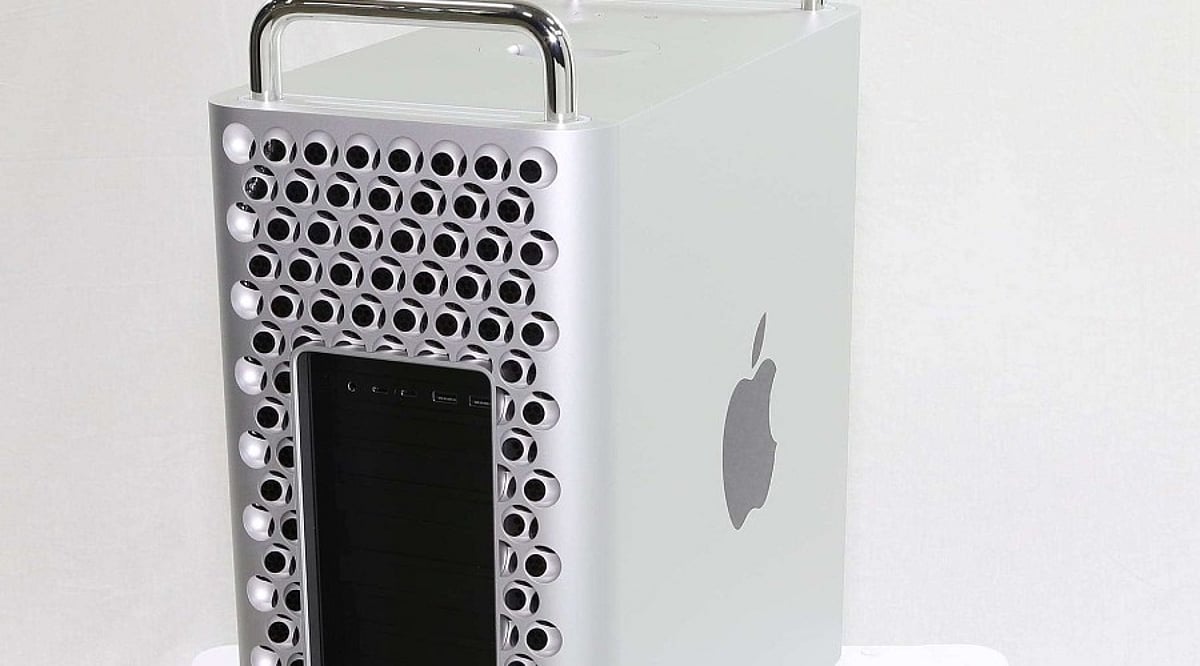
    Apple’s decision to discontinue the Mac Pro in March 2026 reportedly ended a long internal debate over the future of its most powerful desktop lineup. The company has since removed the Mac Pro from its website, directing professional users toward the Mac Studio, and confirmed no new Mac Pro hardware is planned.

    According to Bloomberg’s Mark Gurman in his ‘Power On’ newsletter, the end of the Mac Pro line ‘wasn’t always the plan.’ Apple had considered several hardware and chip options before giving up on it.

    Apple Worked on M2 Extreme and M3 Extreme Chips

    The biggest aspect of Apple’s fallen Mac Pro vision was the creation of higher-end Apple Silicon CPUs. Apple developed both M2 Extreme and M3 Extreme chips before dropping them, Gurman said. These chips were intended to sit above the ‘Ultra’ tier and would have made the Mac Pro outperform the Mac Studio. However, the projects were aborted due to high development costs and low demand for the more costly workstation-type machines.

    Two Unreleased Mac Pro Models Were in Development

    Apple also reportedly worked on two Mac Pro models that were never released, internally codenamed J170 and J190.

    • J170: A surprising project—a new Mac Pro powered by Intel chips, despite Apple’s strong push toward its own Apple Silicon. This version, targeted at specific professional applications, remained based on the x86 architecture and standard PCIe workflow.
    • J190: Expected to launch alongside the M3 Ultra Mac Studio in early 2025, featuring an M3 Ultra chip. The debut never happened, and Apple discontinued the Mac Pro line altogether.

    Mac Studio Has Replaced the Mac Pro’s Role

    The Mac Pro’s decline wasn’t solely due to performance. It was originally popular for its expandability—high-end graphics cards, audio cards, and other PCIe equipment. However, Apple Silicon adopts a system-on-chip design with unified memory, making upgrades via standard modules less relevant. Apple apparently concluded that maintaining the Mac Pro was no longer necessary to meet user needs. Gurman said he doesn’t think the Mac Pro is likely to return, ‘if ever.’

    This move marks a significant shift in Apple’s professional desktop strategy, consolidating its high-end offerings around the Mac Studio and its custom silicon.