Tag: interview preparation

  • Top Job Search Hurdles and Proven Strategies to Overcome Them

    Top Job Search Hurdles and Proven Strategies to Overcome Them

    Finding the right job can be a difficult and time-consuming process. Candidates often face intense competition, lengthy hiring processes, and changing employer expectations. The challenges can begin with finding suitable vacancies and continue through resume screening, interviews, and repeated applications.

    Career guidance and recent research point to several common hurdles, including finding roles that match a candidate’s skills, tailoring resumes for individual applications, dealing with Applicant Tracking Systems (ATS), employment gaps, and limited professional experience.

    Finding the Right Job

    Finding an opening that fits a candidate’s skill set, qualifications, and ambitions is another hurdle when searching for employment opportunities. According to Jobscan, the 2025 State of the Job Search survey reveals that 30% of the surveyed found it difficult to find a job that matches their qualifications and skills.

    Applying to all open opportunities does not guarantee success in the job search journey. To begin with, candidates need to be aware of the type of opportunity they wish to pursue, along with the type of working conditions, responsibilities, salary expectations, and ambitions.

    There are several options for expanding one’s search beyond just job boards. Opportunities at target firms, associations, and networking within the firm can prove helpful. Networking could also reveal openings that cannot be discovered through other avenues.

    Creating a Resume that Gets Noticed

    Creating customized resumes for various job opportunities is yet another key challenge. According to Jobscan, 26% of the surveyed people viewed the need to adapt their resumes as one of the challenges. Also, 24% indicated the need to ensure their resume was compatible with Applicant Tracking Systems as one of the issues, whereas 22% faced problems with the conciseness of their resume.

    Using a master resume can help in overcoming this problem. Individuals would maintain all their experience, accomplishments, and skills in one single file and then customize the relevant information to meet the demands of particular job openings.

    In addition, using relevant keywords in their resume, which would correspond to the needs outlined in the job description, would also assist in finding relevant qualifications.

    Overcoming Limited Experience and Employment Gaps

    Limited work experience may be one of the biggest obstacles, especially for fresh graduates or those who have recently changed professions. A gap in work experience, inadequate educational background or training, and lack of references can further complicate one’s job search process. One could use their transferable skills, completed projects, training, and accomplishments to resolve such problems. In the course of the interview, a candidate should be ready to talk about his/her employment gaps but at the same time explain what he/she learned during that time.

    Professional inexperience can become an obstacle in itself especially for fresh graduates and career changers. Other obstacles include employment gaps, lack of education or training, as well as a lack of professional references.

    This can be resolved through showcasing transferable skills, relevant projects, training, and accomplishments. During the interview, candidates will have to be ready to explain their employment gap as well as the skills and experiences gained throughout the gap. Now attention can be shifted to the skills and experience that the candidate can bring to the table.

    Preparing for Interview

    Getting to the interview stage does not guarantee employment. Unpreparedness, a lack of information about the company, and an inability to answer basic questions may hinder your chances of securing employment.

    Interview preparation requires knowing the employer and the description of the job and rehearsing probable interview questions. Preparation of examples that would demonstrate your skills and experiences is also recommended.

    According to a LinkedIn survey by BrighterMonday, out of 1,878 votes, 46% voted for the actual job interview as the most difficult stage in the job-seeking process. 27% voted for preparing a good CV or cover letter, 23% voted for searching for job vacancies, and 4% chose other options.

    Staying Consistent During Long Job Search

    A long job search can also be hard. According to Jobscan, 32% of participants responded that they have been searching for a job for over six months.

    Beyond counting applications, a candidate can see whether their efforts lead to interviews, recruiter interactions, and networking. If there is no reply to applications, one may reconsider their resume or apply to other positions.

    Job search involves many trials, rejections, and uncertainties. The right strategy, including appropriate actions, may help you overcome them.

    Frequently Asked Questions

    1. What is one of the biggest challenges during a job search?

    Finding suitable roles matching your skills, qualifications, career goals and expectations can make the job search difficult and time-consuming.

    2. Why should candidates customise their resumes for different jobs?

    Customising resumes highlights relevant skills and experience while helping candidates align their applications with specific job descriptions and requirements.

    3. How can candidates address employment gaps?

    Candidates can explain employment gaps honestly while highlighting transferable skills, relevant projects, training, achievements and experience gained during that period.

    4. How can job seekers prepare better for interviews?

    Research the employer, understand the job description, practise likely questions and prepare specific examples demonstrating your skills and previous experience.

    5. What can candidates do during a prolonged job search?

    Track applications, review resumes, target suitable positions, build professional networks, develop skills and adjust strategies when applications receive limited responses.

  • Master the ChatGPT Escape Prompt to Transform Your Job Search

    Master the ChatGPT Escape Prompt to Transform Your Job Search

    The ChatGPT Escape Prompt is a practical prompting technique that helps job seekers generate more thoughtful, personalized, and recruiter-friendly AI responses. This guide explains how the method works, where it adds value during the job search process, and how to use it responsibly to improve resumes, cover letters, LinkedIn profiles, and interview preparation.

    What Is the ChatGPT Escape Prompt?

    The Escape Prompt is a method that asks ChatGPT to move beyond its initial response by questioning assumptions, identifying weaknesses, or generating alternative solutions. Rather than settling for the first draft, users ask the AI to review, improve, or rethink its own answer.

    For example, instead of asking, ‘Write a resume summary for a business analyst,’ you might follow up with, ‘Review this summary like a hiring manager. Remove generic statements, highlight measurable achievements, and rewrite it to sound more authentic.’ This iterative approach often produces clearer, more relevant, and more tailored content.

    Ways the Escape Prompt Can Strengthen Your Job Search

    The biggest advantage of using the Escape Prompt is that it leads to improved quality outcomes. One can make use of the tool for improving their resume, writing custom cover letters, developing interview questions for the position, and finding weaknesses in their application.

    In addition, it is useful when it comes to the analysis of job postings. Instead of defining only the aspects of the job that one is supposed to do, one can request ChatGPT to find out the most important skills valued by the recruiter, explain some technical terms, or propose project ideas for demonstrating one’s skills.

    Best Practices for Using the Escape Prompt

    To get the best outcome from the AI program, give it plenty of context. Give it your background, your skills, the job title that you wish to apply for, and the industry you wish to join, as well as anything else you wish to mention and have included in your resume.

    It also helps to ask ChatGPT to critique its own writing. Asking questions such as ‘What might a recruiter not like about this CV?’ or ‘Can you rephrase this answer in a business-oriented manner?’ will prompt the program to do a more detailed analysis and produce something better suited to your needs.

    On the other hand, make sure to check all facts used by the program before adding them to your resume. Company names, technical details, certifications, and employment dates should be reviewed carefully to avoid errors in your application.

    Common Mistakes to Avoid

    Job applicants often fall into the trap of using AI-generated answers without checking them for accuracy. It may lead to a redundant resume, overblown claims, and inconsistency with the job description.

    A common mistake is vague prompt formulation. Asking ChatGPT to ‘write a resume’ will bring you general results, while specifying your skills and experience and giving information on your target industry will help get more beneficial outcomes. The Escape Prompt is effective only in combination with a human’s effort.

    Final Thoughts

    ChatGPT Escape Prompt does not provide an easy way out for securing a job position; it can prove to be an effective tool that can enhance the quality of your job-searching process. By fostering better analysis and making you write more personalized responses, the ChatGPT Escape Prompt enables you to prepare better CVs, cover letters, and better interview preparation.

    For professionals competing in a fast-changing job market, combining AI with your own experience, achievements, and critical thinking can make applications more compelling. Used responsibly, the Escape Prompt transforms ChatGPT from a simple writing assistant into a practical career companion that supports smarter, more effective job search decisions.

  • 10 Must-Read Data Structures and Algorithms Books for Programmers in 2026

    10 Must-Read Data Structures and Algorithms Books for Programmers in 2026

    Artificial intelligence can generate code in seconds, but it cannot replace a programmer’s deep understanding of data structures and algorithms (DSA). Whether you’re preparing for coding interviews, building scalable applications, or competing in programming contests, DSA remains one of the most valuable skills in software development. While AI can suggest solutions, knowing why an algorithm works and when to use it comes only through structured learning and practice. The right books make all the difference.

    Essential DSA Books to Build Strong Fundamentals

    These books establish the fundamentals of data structures and algorithms, helping readers build strong problem-solving skills before tackling advanced concepts.

    Introduction to Algorithms (CLRS) – The Definitive Reference

    CLRS, written by Thomas H. Cormen, Charles E. Leiserson, Ronald L. Rivest, and Clifford Stein, remains the standard guide to learning algorithms. It covers topics from graph and sorting algorithms to dynamic programming and computational complexity. Though challenging, no other book is as comprehensive.

    Grokking Algorithms – Where to Start Your Journey

    Aditya Bhargava’s book uses colorful illustrations and clear explanations to introduce binary search, recursion, graph traversal, and more. It’s one of the best books for beginners.

    Algorithms (4th Edition) – Learn Through Practice

    Robert Sedgewick and Kevin Wayne strike a balance between theory and practice, covering essential algorithm concepts and their implementation in real programs.

    Books Built for Coding Interviews

    Technical interviews focus on problem-solving rather than memorization. These titles help candidates build that mindset.

    Cracking the Coding Interview – The Interview Must-Have

    Gayle Laakmann McDowell’s book explains DSA concepts and includes nearly 200 interview questions, solutions, and tips for handling technical interviews at top tech companies.

    Data Structures and Algorithms Made Easy – Practice-Driven Learning

    Narasimha Karumanchi’s book uses a Q&A approach, reinforcing concepts through examples. It’s popular among engineering students preparing for placements and coding tests.

    Elements of Programming Interviews – Up the Difficulty Factor

    This book is designed for experienced programmers and includes various problems on arrays, linked lists, trees, graphs, and dynamic programming.

    Books That Sharpen Problem-Solving

    These books help programmers apply critical thinking to unfamiliar problems.

    The Algorithm Design Manual – Problem-Solving Application

    Steven S. Skiena merges theoretical concepts with practical problems solved using algorithms, providing insights across different industries. The algorithm catalog is especially helpful for finding the best way to solve different kinds of problems.

    Algorithm Design – Strong Academic Background

    Jon Kleinberg and Éva Tardos teach algorithm design using mathematical logic and well-chosen examples. It’s perfect for those who want to learn the principles of efficient computing.

    Books for Python Learners and Self-Study

    Not every programmer learns the same way. These books cater to different preferences and skill levels.

    Data Structures and Algorithms in Python – Learn DSA with Python

    Goodrich, Tamassia, and Goldwasser introduce basic DSA concepts via Python, focusing on ideas that apply across programming languages.

    A Common-Sense Guide to Data Structures and Algorithms – Simple and Accessible

    Jay Wengrow introduces difficult concepts in simple words with practical examples, avoiding complicated mathematical formulas. Its conversational style makes it one of the easiest DSA books.

    Choosing the Right DSA Book

    Depending on your goals, you can start with Grokking Algorithms and then move to Algorithms (4th Edition) or Introduction to Algorithms (CLRS). For placement preparation, choose Data Structures and Algorithms Made Easy and Cracking the Coding Interview. For experienced developers, The Algorithm Design Manual and Elements of Programming Interviews are excellent choices. Even in the era of AI, learning DSA is necessary, and practicing with these books is one of the best ways to improve your skills.

  • Essential Quant Finance Books for 2027 Candidates: A Structured Reading Plan

    Essential Quant Finance Books for 2027 Candidates: A Structured Reading Plan

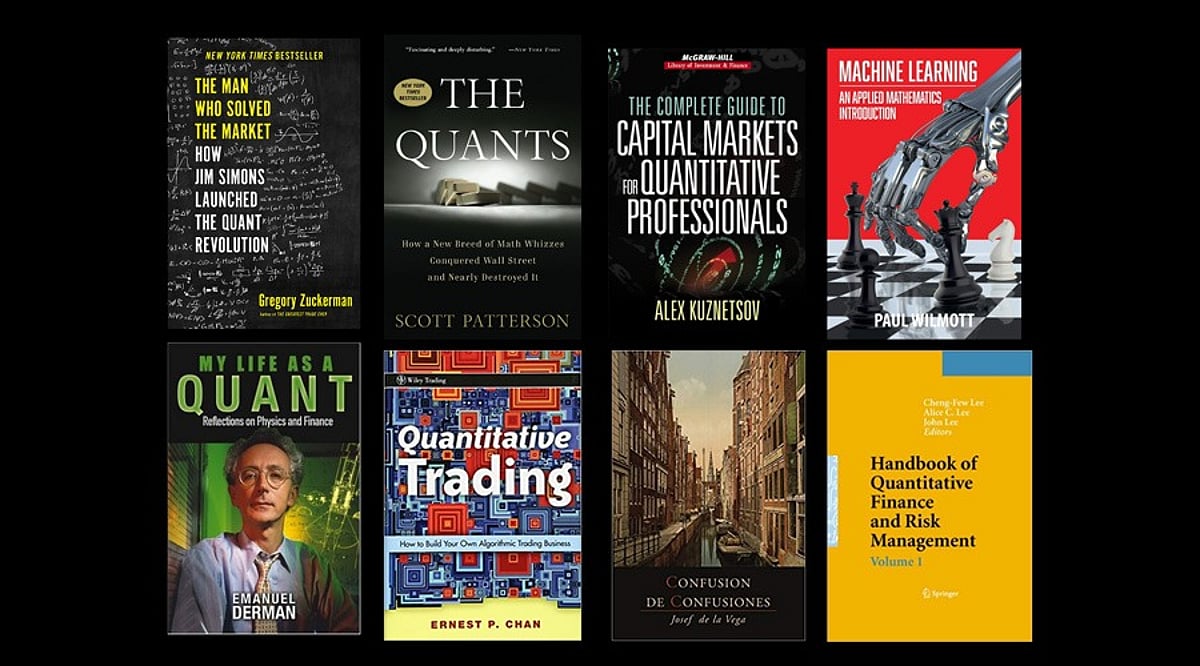
    Quant finance hiring continues to intensify. Firms now expect candidates to demonstrate simultaneous proficiency in probability, coding, and market structure. While reading the right books won’t guarantee a job offer, they build the analytical framework that interviewers actually test. Here is a practical reading list for anyone preparing for quant research, trading, or risk roles in 2027.

    Why Read Quant Books?

    Online courses and video lectures are abundant, but books offer something short videos cannot: depth, structure, and worked-out logic that forces slow thinking. Quant interviews often revolve around problems first explained clearly in a handful of classic texts. Candidates who skip these books usually end up relearning the same ideas the hard way—through failed interviews.

    Foundation Books for Beginners

    Before jumping into stochastic calculus or trading strategies, every candidate needs strong basics in probability, statistics, and market structure.

    • ‘A First Course in Probability’ by Sheldon Ross – Covers combinatorics, random variables, and distributions with clear examples. This is the starting point for almost every quant interview guide.
    • ‘Options, Futures, and Other Derivatives’ by John Hull – The standard reference for derivatives pricing. Nearly every trading desk expects candidates to know this book well.
    • ‘Heard on The Street’ by Timothy Falcon Crack – A collection of real interview questions asked by banks and hedge funds, with detailed solutions.

    Mathematics and Statistics Deep Dive

    Once the basics are clear, candidates should move toward the mathematics that drives actual pricing models and risk systems.

    • ‘Stochastic Calculus for Finance’ (Volumes I and II) by Steven Shreve – A rigorous, step-by-step introduction to the mathematics behind option pricing.
    • ‘Statistical Inference’ by Casella and Berger – Builds a strong statistical toolkit, useful for research-heavy roles.
    • ‘The Concepts and Practice of Mathematical Finance’ by Mark Joshi – Bridges theory and practical pricing, written by someone who has worked on trading floors himself.

    Programming and Data Skills

    Modern quant roles require coding fluency alongside mathematics. Python and C++ dominate this space, and a few books stand above the rest.

    • ‘Python for Data Analysis’ by Wes McKinney – Written by the creator of pandas, this book teaches data manipulation skills used daily in quant research.
    • ‘C++ Design Patterns and Derivatives Pricing’ by Mark Joshi – Shows how object-oriented design connects with real pricing engines.
    • ‘Advances in Financial Machine Learning’ by Marcos López de Prado – A sharp, opinionated guide to building machine learning models for markets, popular with systematic trading firms.

    Interview Preparation Books

    Technical knowledge alone rarely wins an offer. Candidates also need to practice the exact style of questions asked in interviews.

    • ‘Quant Job Interview Questions and Answers’ by Mark Joshi, Nick Denson, and Andrew Downes – A widely used guide covering brainteasers, probability puzzles, and finance-specific questions.
    • ‘Frequently Asked Questions in Quantitative Finance’ by Paul Wilmott – Written in a conversational tone, this book clears up common confusions around derivatives and models.
    • ‘Green Book: Quantitative Finance Interviews’ by Xinfeng Zhou – Focused purely on interview problems, with worked solutions and hints.

    Advanced Reading

    Experienced candidates aiming for senior research or portfolio roles should look at these titles.

    • ‘Active Portfolio Management’ by Grinold and Kahn – A detailed guide to building and managing systematic strategies.
    • ‘Algorithmic Trading’ by Ernest Chan – Practical advice on building, testing, and running trading systems.
    • ‘The Volatility Surface’ by Jim Gatheral – A focused study of volatility modeling, useful for anyone targeting options desks.

    How to Build a Reading Plan

    A common mistake candidates make is trying to read every book on a list at once. A better approach is to build a plan across a few months.

    • Month 1: Focus on probability, statistics, and derivatives basics.
    • Month 2: Transition into stochastic calculus and programming, solving problems in addition to reading.
    • Month 3: Use this entire month for interview-style books, answering questions under time pressure.

    Only try more advanced or niche titles after you have a solid grasp of the basics.

    Final Words

    Quant finance is a fast-moving and ever-changing field, with increasing emphasis on machine learning and alternative data. Still, the core fundamentals covered in these books have held up for more than 20 years. Candidates aiming at the 2027 hiring cycle should see this list as a starting point and supplement it with recent research papers and market-specific readings. A good knowledge of fundamentals, combined with lots of practice, will give any candidate a significant competitive advantage.

    Frequently Asked Questions

    1. Which are the best quant finance books for beginners in 2027?

    Beginners should start with ‘A First Course in Probability’, ‘Options, Futures, and Other Derivatives’, and ‘Python for Data Analysis.’ These books explain core concepts that support advanced quantitative finance learning and interview preparation.

    2. Which books help prepare for quant finance interviews?

    ‘Heard on The Street,’ ‘Green Book: Quantitative Finance Interviews,’ and ‘Quant Job Interview Questions and Answers’ focus on probability, logical reasoning, mathematics, and technical interview questions commonly asked by financial firms.

    3. Why is Python important for quant finance careers?

    Python supports data analysis, financial modeling, automation, algorithmic trading, and machine learning. Learning Python through dedicated finance books helps candidates apply quantitative concepts using practical programming techniques valued across the industry.

    4. Should candidates study advanced quant finance books first?

    Starting with advanced books often creates learning gaps. Building knowledge through probability, statistics, derivatives, and programming first makes complex mathematical finance topics easier to understand and apply effectively.

    5. How long does it take to complete a quant finance reading plan?

    A focused three-month plan covering fundamentals, programming, and interview preparation provides a practical starting point. Advanced titles and research papers can be added gradually as technical knowledge and confidence grow.

  • 3 Google AI Tools to Streamline Your Job Search in 2026

    3 Google AI Tools to Streamline Your Job Search in 2026

    Finding the right job involves more than submitting applications. Google’s AI tools can support different stages of the process, from exploring career options to improving application materials and practicing interviews. Using them together creates a more structured and focused job-search workflow.

    Career Dreamer Maps Direction, with a Catch

    Career Dreamer takes a person’s past roles, interests, and strengths and turns them into a career identity statement — a summary meant to describe fit rather than list job history. It works well for people whose experience spans industries or does not sit neatly under one job title.

    Career changers, people returning after a break, and professionals with mixed skill sets tend to get the most from it, since the tool surfaces adjacent roles a plain keyword search would miss. Someone who has spent years in operations but wants to move toward program management, for example, often struggles to describe that shift in a way recruiters recognize. Career Dreamer is built for exactly that translation problem.

    One limitation matters here: Career Dreamer is currently available only in the United States. Job seekers outside that market cannot open the tool directly, though the underlying exercise still works elsewhere. Gemini can build a similar transferable-skills assessment when prompted with a list of past roles and strongest outcomes, though it does not replicate Career Dreamer’s dedicated workflow or its structured output format.

    NotebookLM Compares, Rather than Writing

    NotebookLM works differently from a standard writing assistant. Its real strength is comparison. Upload a resume alongside several job postings in the same field, and it can identify which requirements repeat across all of them — a pattern that shows exactly what to emphasize before editing the resume itself. NotebookLM grounds its answers in the documents supplied, so it tends to stay closer to a person’s experience than a generic prompt would, reducing the risk of a resume drifting toward generic corporate language.

    A Google employee’s own account of using these tools followed a different order than the official pitch suggests. She started with NotebookLM, feeding it job postings and profiles that caught her attention before settling on any single direction. Only after spotting recurring themes did she turn to Career Dreamer, then finally to Gemini for evaluating specific roles against her longer-term goals. This example suggests the tools work best as flexible entry points rather than a fixed sequence.

    Gemini Live Tests: What Reads Well but Sounds Weak

    Reading a list of behavioral questions is not the same as answering them aloud. Speaking exposes filler words, weak transitions, and stories that sound thinner out loud than they read on paper. Gemini Live can be set up as a hiring manager for a specific role, offering live feedback while a candidate runs through STAR-format answers. STAR, short for Situation, Task, Action, Result, gives interview responses a clear shape that holds up under pressure.

    What the Tools Cannot Fix

    None of the tools mentioned above replaces judgment. Career Dreamer suggests directions without confirming employability. NotebookLM sharpens framing but cannot invent substance that is not already there. Gemini Live builds confidence, not guaranteed outcomes. A quieter risk sits underneath all three: as more applicants lean on the same tools, resumes and interview answers start converging in tone, making it harder for any single application to stand apart from the pile. The tools remove friction from preparation. They do not remove the need for something distinct to offer an employer.

    Final Thoughts

    The real advantage in this workflow is not the tools themselves. It is the willingness to treat a job search as a process with distinct stages, each demanding a different kind of thinking. Direction, positioning, and delivery rarely improve from the same habit repeated three times. As AI tools spread further into hiring on both sides, the applicants who stand out will likely be the ones using preparation time to sharpen a genuine point of view, not just polish the surface.

    Frequently Asked Questions

    Which Google AI tool should I use first for a job search?

    Start with Career Dreamer, as it helps identify transferable skills, create a career identity statement, and explore roles that match your experience and interests before preparing applications.

    Can NotebookLM help improve resumes and cover letters?

    Yes. NotebookLM can organize resumes, job descriptions, and research materials, making it easier to tailor resumes and cover letters for specific roles.

    How does Gemini Live help with interview preparation?

    Gemini Live lets users practice interview questions through spoken conversations, helping improve responses, communication, confidence, and overall interview readiness.

    Are Google’s AI career tools free to use?

    Some Google AI career tools are available at no cost, while access to certain Gemini features may depend on the app, region, or subscription plan. Check Google’s latest availability for details.

    Why use all three Google AI tools instead of just one?

    Each tool supports a different stage of the job search. Career Dreamer helps discover suitable careers, NotebookLM strengthens application materials, and Gemini Live prepares candidates for interviews, creating a complete AI-assisted job-search workflow.

  • Master Dynamic Programming in 2026: Top Patterns and Interview Questions

    Master Dynamic Programming in 2026: Top Patterns and Interview Questions

    Dynamic programming remains one of the most important coding interview topics in 2026. Mastering common DP patterns, understanding company-specific expectations, and practicing representative problems can significantly improve problem-solving skills and increase success in technical interviews at top technology companies.

    Why Pattern Recognition Beats Memorization

    Interview data from recent hiring cycles suggests that around 87% of coding questions at Google, Meta, Apple, Netflix, and Amazon are built around just 10 to 12 core problem-solving patterns, with dynamic programming forming one of the most versatile among them. The core idea behind DP is simple even when the problems aren’t: break a larger problem into smaller, overlapping subproblems, solve each one exactly once, and store the results, typically through memoization or a tabulation array, so the same subproblem is never recomputed. Any time a question asks for a maximum, minimum, or count of ways to do something under constraints, there’s a strong chance dynamic programming applies.

    The Core Patterns Worth Mastering

    DP breaks down into a manageable number of recognizable categories rather than one giant, undifferentiated topic. Knapsack-style problems (0/1 and unbounded variants) cover resource allocation and optimization questions. Grid-based 2D DP tests a candidate’s ability to reason across two-dimensional state spaces with multiple transition directions. String DP handles text-processing challenges like edit distance and longest common subsequence, patterns with direct application in areas like version control and bioinformatics. Interval DP applies to scheduling and matrix chain multiplication-style problems, while state-machine DP models transitions governed by specific rules, useful in problems involving buy/sell timing or step-based decisions.

    Frequently Asked DP Problems in 2026

    Company-Specific Differences Worth Knowing: Every organization does not follow the same approach toward DP problems. The first difference between companies is that Google requires higher DP expertise compared to other organizations, not only in 1D problems such as staircase problems but 2D Grid, String DP and even DP on Trees/Graphs problems and an overall preference for harder problems in general. The next two organizations, Meta and Amazon, have more focus on array and string DP problems with medium-level difficulty. Microsoft avoids going into hard problems related to DP and prefers medium-level difficult problems along with good explanations. This shows that preparation according to the requirements of a particular company pays off in a bigger way.

    How to Actually Prepare for DP Interviews

    The most optimal form of preparation is no different from the tried and tested methods of pattern-based preparation. The method is to select a canonical example for each pattern, practice solving it until the logic of the solution takes under two minutes to describe and then use that logic for other variations. Interviewers are much more concerned about the ability of candidates to recognize the structure of subproblems, verbally derive a recurrence relation for the same and explain their trade-offs on time and space than knowing whether the candidate has seen the problem or not. Considering the frequent appearance of DP questions on arrays, strings, trees and grids, spending the effort to really comprehend a few basic patterns goes a long way.

    Why This Matters

    Dynamic programming is one of the most frequently tested problem-solving techniques in software engineering interviews. Understanding its recurring patterns helps candidates solve complex coding challenges efficiently, improve algorithmic thinking, and perform better in technical interviews across leading technology companies.

    FAQs

    What is dynamic programming in programming?

    Dynamic programming (DP) is an algorithmic technique used to solve complex problems by breaking them into smaller overlapping subproblems. Instead of solving the same subproblem repeatedly, DP stores previously computed results using memoization or tabulation, significantly improving time efficiency.

    Why is dynamic programming important for coding interviews?

    Dynamic programming tests a candidate’s problem-solving ability, optimization skills, and understanding of algorithms. Many leading technology companies include DP questions because they evaluate logical thinking, recurrence formulation, state transitions, and the ability to optimize brute-force solutions into efficient algorithms.

    Which companies frequently ask dynamic programming questions?

    Dynamic programming questions commonly appear in interviews at Google, Meta, Amazon, Microsoft, Apple, Netflix, Adobe, Uber, and many other technology companies. Google generally asks more advanced DP problems, while Amazon and Meta often focus on medium-difficulty array and string-based DP questions.

    What are the most common dynamic programming patterns?

    The most frequently tested DP patterns include 0/1 Knapsack, Unbounded Knapsack, Grid DP, String DP, Interval DP, State Machine DP, Tree DP, and Bitmask DP. Learning these core patterns enables candidates to solve a wide variety of interview problems efficiently.

    How should beginners start learning dynamic programming?

    Beginners should first understand recursion before learning memoization and tabulation. They should then practice simple problems like Fibonacci, Climbing Stairs, and House Robber before progressing to Knapsack, Longest Common Subsequence, Coin Change, and more advanced DP patterns.