Tag: investing

  • 5 Essential Mutual Fund Books to Sharpen Your Investing Skills in India

    5 Essential Mutual Fund Books to Sharpen Your Investing Skills in India

    Building strong mutual fund investing skills begins with the right knowledge. The best books explain fund selection, portfolio construction, and long-term investing using practical frameworks. Following a structured reading roadmap helps Indian investors make informed decisions and build disciplined wealth creation habits.

    Most Indian investors lose money not from picking bad funds, but from investing without a clear framework or process. Five books, read in the right order, build four distinct skills: fund basics, fund evaluation, portfolio construction, and emotional discipline. Books are selected for practical value, Indian market relevance, and principles that hold across market cycles.

    Every market correction produces the same behavior. Investors scan social media, chase last year’s top-performing funds, and reshuffle portfolios on impulse. Months later, many realize the problem was never the fund. It was the absence of a process. One well-chosen book can close that gap faster than years of trial and error. Monika Halan’s Let’s Talk Mutual Funds has done exactly that for a wide range of Indian investors by teaching them how to think before they invest, not after.

    The books in this guide are not ranked by popularity. Each one is chosen for the specific investing skill it develops. Read them in order, and the effect is cumulative.

    The Four Skills That Actually Drive Investment Success

    Good mutual fund investing is not one skill. It is four. First, understand what funds are and how they work. Second, learn to evaluate them without relying on tips or rankings. Third, build a portfolio that fits your goals and risk tolerance. Fourth, stay rational when markets move against you. Most investors develop the first skill and skip the rest. That is where the damage happens.

    Let’s Talk Mutual Funds — Monika Halan

    Skill Built: Fund Basics

    Halan writes for real people, not finance professionals. She explains SIPs, NAV, fund categories, and risk using everyday Indian financial situations. The book is grounded in local regulations and household budgeting realities, which makes it immediately useful for first-time investors.

    Her central point is worth repeating: choose funds based on your goals, not on recent performance tables. Investors who miss this early tend to keep chasing returns for years. The book does not go deep into fund evaluation. That is intentional. It is designed to build a foundation, and it does that well.

    Indian Mutual Funds Handbook — Sundar Sankaran

    Skill Built: Fund Evaluation

    Once the basics are clear, the next step is learning to read a fund properly. Sankaran walks through scheme documents, factsheets, expense ratios, and fund manager assessment with more detail than most Indian investing books attempt.

    This is the reference that helps investors stop depending on third-party rankings and start forming their own views. It pairs naturally with Common Sense on Mutual Funds, which extends the conversation on costs.

    Common Sense on Mutual Funds — John C. Bogle

    Skill Built: Cost Awareness

    Bogle’s argument is direct. Reducing costs does more for long-term wealth than identifying the next top-performing fund. For Indian investors still in regular plans, this insight alone can translate into a material difference over a decade or more. Every percentage point saved in annual fees compounds quietly in the background. Most investors underestimate how much that adds up.

    The Four Pillars of Investing — William J. Bernstein

    Skill Built: Portfolio Construction

    Bernstein moves the conversation away from individual fund selection toward how a portfolio holds together as a whole. He covers diversification, rebalancing, and long-term planning in a way that is structured without being dense. This is the right book to read after fund evaluation is clear but before a long-term portfolio is locked in.

    The Intelligent Investor — Benjamin Graham

    Skill Built: Emotional Discipline

    Graham wrote this for stock investors, but the core lessons apply directly to anyone holding mutual funds through a volatile market. His framing of “Mr. Market” remains the clearest explanation of why reacting to short-term price moves is almost always a mistake. Chapters 8 and 20 carry the most practical value for mutual fund investors and are worth reading more than once.

    Read Them in this Sequence

    Start with Let’s Talk Mutual Funds to build a solid foundation. Move to the Indian Mutual Funds Handbook to learn fund evaluation. Follow with Common Sense on Mutual Funds to understand what fees actually cost over time. Then read The Four Pillars of Investing before constructing a diversified portfolio. Finish with The Intelligent Investor to develop the discipline that separates long-term investors from short-term reactors. The sequence matters. Each book builds on the one before it.

    Final Thoughts

    The investors who hold steady through ten or twenty years of market cycles are rarely the ones who picked the best fund at the right time. They are the ones who built a clear process early and trusted it when things got uncomfortable. These five books do not promise shortcuts. They build the kind of judgment that holds up across market conditions, economic shifts, and personal financial changes. That is what makes them worth reading.


  • Top 10 Personal Finance Books to Master Money in 2026

    Top 10 Personal Finance Books to Master Money in 2026

    Managing money well depends as much on behavior as on financial knowledge. The right books can help build better saving, investing, and spending habits over time. Timeless principles remain valuable even as markets, technology, and personal finance continue to evolve.

    A budgeting app can track spending in seconds. It cannot explain why a person overspends every payday despite knowing better. That gap between knowing and doing is where books still earn their place, and it is wider in 2026 than it was five years ago, with gig income, AI-driven job cuts, and market swings reshaping how people relate to money.

    Here are the ten worth reading, grouped by financial stage rather than ranked by popularity.

    Strongest Starting Trio

    Most readers, regardless of stage, gain the most from three books together: The Psychology of Money, I Will Teach You to Be Rich, and The Simple Path to Wealth. One reshapes how money is understood. One provides a working routine for daily decisions. One builds a durable investing foundation. Together they cover the three most common failure points: poor instincts, no system, and fear of investing.

    For Money Mindset and Behavior

    The Psychology of Money, by Morgan Housel, explains why capable people still make poor financial decisions under stress and social pressure. Rich Dad Poor Dad, by Robert Kiyosaki, reframes how readers categorize assets and liabilities. That shift proves useful even though several of Kiyosaki’s specific claims have drawn criticism from financial professionals over the years. Housel holds up better on rereading and works well as a single starting point for anyone who reads only one book from this list.

    Financial anxiety has become routine for many readers in 2026. Layoffs tied to AI adoption and unpredictable gig income have made that anxiety a daily condition, and no budgeting app addresses it directly. Both books tackle that psychological layer instead of the numbers alone.

    For Budgeting, Debt, and Daily Money

    The Total Money Makeover, by Dave Ramsey, and I Will Teach You to Be Rich, by Ramit Sethi, solve the same problem through opposite personalities. Ramsey favors strict rules: cut up the cards, snowball the debt, and live on a fixed cash plan. It works well for readers who need firm boundaries. Sethi favors automation: build routines that run quietly in the background so willpower matters less. Neither method is wrong. They suit different temperaments.

    Get Good with Money, by Tiffany Aliche, serves a third kind of reader—someone who feels structurally lost rather than simply undisciplined, with no baseline financial education to build from. It starts several steps earlier than the other two, covering credit basics and account structure before moving into strategy. Rigid budgets tend to break under variable income, and gig work keeps growing. Sethi’s automation-first model tends to hold up better for readers without a fixed monthly paycheck.

    For Investing and Wealth Building

    The Simple Path to Wealth, by JL Collins, and The Intelligent Investor, by Benjamin Graham, are both essential but not interchangeable. Collins offers a direct, low-friction case for index investing that a reader could act on within a week. Graham offers a philosophy of value and risk that takes longer to absorb but shapes every future investment decision. Collins builds action. Graham builds judgment.

    Friends that Invest, by Simran Kaur, works as the right entry point for readers who find both intimidating. It skips theory and walks through mechanics instead: opening a brokerage account, choosing a first fund, and understanding fees. Together, Collins and Graham argue for disciplined, low-cost investing over chasing trends, a case that has only grown stronger as AI-driven volatility and a flood of new ETF products make picking individual winners harder.

    For Retirement, FIRE, and Life Design

    Die with Zero, by Bill Perkins, and Your Money or Your Life, by Vicki Robin, share a premise: most people over-save and under-live. They land in different places. Perkins argues for deliberate spending before health or energy declines, treating memories and experiences as assets with their own expiration date. Robin pushes further, asking readers to treat every purchase as hours of life spent rather than dollars traded.

    The FIRE conversation has moved past the question of early retirement itself. Higher borrowing costs and pricier healthcare have made the math harder than it looked a decade ago, shifting the real question toward what retirement is actually for. Perkins and Robin, read together, address both the numbers and the purpose behind them.

    Suggested Reading Order

    Start with The Psychology of Money to reset how money gets evaluated. Move to I Will Teach You to Be Rich for a working routine. Read The Simple Path to Wealth next to build investing confidence. From there, branch based on priority: Die with Zero for life design, or The Intelligent Investor for deeper investment judgment.

    Final Thought

    Reading ten books was never the goal. Applying one lesson from the right book, at the right stage, changes outcomes faster than collecting a shelf of titles that never get opened. That single act of follow-through will matter more in the next few years than it has in the last decade, as financial noise keeps multiplying and genuine signal gets harder to find.

  • Top 10 Stocks to Watch in August 2026: Strong Earnings and Growth Catalysts

    Top 10 Stocks to Watch in August 2026: Strong Earnings and Growth Catalysts

    August 2026 presents opportunities across AI, semiconductors, fintech, digital infrastructure, and industrials. This curated list of 10 stocks highlights companies with strong fundamentals, earnings potential, and long-term growth prospects while emphasizing diversification, valuation, and disciplined risk management for investors.

    Overview

    Indian equities entered August 2026 with improving earnings momentum as stronger Q1 FY27 results, renewed FII inflows, and a stable interest-rate outlook supported sectors including IT, banking, defence, auto, pharma, and quick commerce. Companies such as TCS, Infosys, LTIMindtree, ICICI Bank, Bajaj Finance, HAL, Sun Pharma, and Swiggy reported key financial milestones, ranging from margin expansion and profit growth to record order books and improving profitability.

    The outlook for these stocks is shaped by upcoming catalysts including large deal execution, banking and fintech expansion, defence order conversion, rural demand, AI adoption, and sector-specific risks such as valuation pressure, regulatory scrutiny, and competitive intensity.

    How the List Was Built

    Each stock combines strong quarterly performance across revenue, margin, and profit with a durable edge over peers, a specific catalyst landing in August, and enough trading volume to enter and exit without friction. Several names on this list still carry Buy or Outperform ratings from major brokerages after their Q1 FY27 results. The goal is not to chase every green number but to isolate the ones that will keep mattering past this earnings season. This selection reflects editorial analysis of public disclosures and works best as a research starting point rather than a fixed ranking.

    The Ten Stocks at a Glance

    TCS: Margin Stability Keeps it Ahead

    TCS remains the steadiest name in the group. Its Q1 FY27 revenue reached Rs 72,275 crore, up 13.9%, and it held a 24% operating margin while peers battled wage-cycle pressure. New order value hit $9.5 billion, with North America contributing roughly half. The soft spot is USD revenue growth of just 2.7%, a sign that offshore pricing remains tight even as deal volumes grow.

    Infosys: AI Demand Continues to Drive Growth

    Infosys sits closer to the center of enterprise AI adoption than any other name here. AI-linked revenue reached 8.2% of the total, and large deal value came in at $3.6 billion with 61% net new business, a stronger mix than Wipro managed in the same quarter. The company trimmed its FY27 growth guidance to 1.5–3%, a sign that discretionary spending across the sector remains cautious even as AI budgets expand.

    LTIMindtree: Fastest Growth Among Large-Cap IT

    LTIMindtree posted the fastest revenue growth among the large-cap IT names on this list, at 17.96%, ahead of HCLTech’s 14% for the same period. Profit rose 17% to Rs 1,469 crore, beating consensus, while trading at a lower multiple than most peers. That combination makes LTIMindtree one of the more attractively positioned large-cap IT stocks in this list.

    ICICI Bank: Profitability Remains the Key Strength

    ICICI Bank posted profit growth among the strongest of India’s largest private lenders this quarter, with return on assets at 2.49%, a figure brokerages flagged as best in class. Its balance sheet improved year on year, though HDFC Bank still posted a lower absolute bad-loan ratio, so ICICI’s edge sits in profitability and returns rather than having the cleanest book in the sector.

    Bajaj Finance: Record ROE Signals Continued Momentum

    Bajaj Finance had one number that stood out above the rest: return on equity crossed 20% for the first time in the company’s history. AUM grew 23.9% to Rs 5.47 lakh crore, and new loan bookings rose 20% to 16.13 million. Profit climbed 28% to Rs 6,081 crore. The stock trades at a premium NBFC multiple, which leaves little cushion if credit costs move against it in coming quarters.

    Jio Financial Services: Rapid Growth with Premium Valuation

    Jio Financial Services had a quieter quarter in absolute size but a sharp one in growth. Profit jumped 156% to Rs 830 crore, and both Jio Payments Bank and Jio Payment Solutions turned operationally positive for the first time. JioBlackRock AMC closed the quarter with Rs 18,412 crore in assets, up 21% sequentially. The business is still young, and its valuation already prices in a lot of that future growth, so any slowdown in scale-up would hit the stock harder than an established peer.

    HAL: Defense Orders Provide Long-Term Visibility

    HAL carries the most visible defense order book in the country, at Rs 2.54 lakh crore, more than seven years of revenue at current run rates and roughly 3.5 times the size of Bharat Electronics’ Rs 72,258 crore book. Results land mid-August and will shape sentiment through the rest of the quarter.

    Mahindra & Mahindra: Rural Demand Supports Growth

    Mahindra and Mahindra grew across every metric that matters, with return on equity at 23%, well past its own target, while kharif acreage points to stronger tractor demand ahead.

    Sun Pharma: Strong Domestic Business, Ongoing Regulatory Watch

    Sun Pharma kept its formulation business growing at double digits, though it still carries an active US FDA warning letter from a 2024 inspection, a reminder that regulatory risk in Indian pharma rarely disappears completely.

    Swiggy: A High-Risk Growth Bet

    Swiggy rounds out the list as the speculative name: Instamart reached contribution-margin break-even in May, a real milestone, but competition from Blinkit and Zepto keeps the stock better suited to a small position than a core holding.

    Reading the List with Discipline

    Ten names span seven sectors, and that spread matters more than any single pick. Position sizes should reflect risk: TCS and ICICI Bank warrant more weight than JFSL or Swiggy. Entries are worth staggering around pending results, HAL most of all. IT already accounts for three of the ten picks, so adding more exposure there raises concentration risk rather than reducing it. Each name deserves a second look once the next quarter’s numbers land, since a single strong print is a starting point, not a guarantee.

    Markets will keep reacting to headlines. Long-term returns come from businesses that keep executing on earnings, margins, and capital allocation quarter after quarter. Every name on this list earned its spot through verified Q1 FY27 numbers, not market excitement.

    Final Thoughts

    The next test for these ten stocks arrives fast. HAL reports mid-August, rate decisions loom for the banks, and IT demand signals for the rest of FY27 will sharpen as the quarter closes. Investors who track execution over headlines, sector by sector, will read the next data set more clearly than the market’s first reaction to it.

  • Apple’s Stock Split History: A Complete Timeline from 1987 to 2020

    Apple’s Stock Split History: A Complete Timeline from 1987 to 2020

    Apple’s Stock Splits Over the Decades

    Since 1987, Apple has executed five stock splits, each designed to make shares more accessible to retail investors while preserving overall market capitalization. Here is a timeline of each split and its context.

    • 2-for-1 Stock Split (1987): Announced on June 16, 1987, this split doubled shareholders’ holdings while halving the share price. The move aimed to increase accessibility for retail investors amid growing confidence in Apple’s future despite a competitive PC market.
    • 2-for-1 Stock Split (2000): Executed on June 21, 2000, during the dot-com boom, this split increased liquidity and encouraged broader participation as investor enthusiasm for technology companies surged.
    • 2-for-1 Stock Split (2005): Effective February 28, 2005, following the success of the iPod and strong financial performance, this split attracted additional investors while maintaining shareholder value.
    • 7-for-1 Stock Split (2014): Effective June 9, 2014, this surprising move dramatically reduced the share price, improving accessibility, liquidity, and positioning Apple for inclusion in price-weighted indexes.
    • 4-for-1 Stock Split (2020): Effective August 31, 2020, after a remarkable rally driven by iPhone, services, and wearables growth, this split lowered the entry price for investors and boosted trading activity.

    Why Apple Splits Its Stock

    Stock splits do not change a company’s overall market value or shareholder ownership percentage. Instead, they reduce the per-share price, improving affordability, increasing market liquidity, and making shares psychologically more attractive to retail investors.

    Impact on Long-Term Investors

    Apple has delivered exceptional long-term returns despite only five stock splits since 1987. Investors who held shares through each split saw their ownership multiply significantly, demonstrating how stock splits combined with sustained business growth can amplify investment potential over decades.

  • Stocks to Watch Today: Major Indian Companies Under Market Spotlight

    Stocks to Watch Today: Major Indian Companies Under Market Spotlight

    Investors are closely monitoring a lineup of prominent Indian companies today as market activity is expected to be influenced by sector developments, financial performance expectations, and broader economic indicators. Below is a breakdown of the key stocks in focus and the factors driving investor attention.

    Reliance Industries: Market participants will track business developments, expansion plans, and sector trends that could influence trading activity throughout the session.

    Tata Consultancy Services: Technology sector cues, client demand, and company-specific updates are being watched for their impact on investor sentiment.

    Infosys: Order wins, digital transformation demand, and global technology spending trends remain focal points for stock movement.

    HDFC Bank: Banking sector developments, lending trends, and regulatory announcements could keep the country’s largest private lender in focus.

    ICICI Bank: Strong financial performance expectations and banking sector momentum may influence trading activity.

    State Bank of India: Public sector banking updates, credit growth, and economic indicators are key drivers of investor attention.

    Bharti Airtel: Telecom sector developments, subscriber additions, and network expansion plans could shape share movement.

    Larsen & Toubro: Infrastructure orders, project execution updates, and government spending announcements may affect sentiment around the engineering major.

    Adani Ports: Port traffic, logistics demand, and infrastructure developments are expected to keep the company on watchlists.

    For more stories and real-time updates, join our WhatsApp Channel to get the latest news, exclusives, and videos.

  • Global Market Leaders: The Top 10 Companies by Market Capitalization

    Global Market Leaders: The Top 10 Companies by Market Capitalization

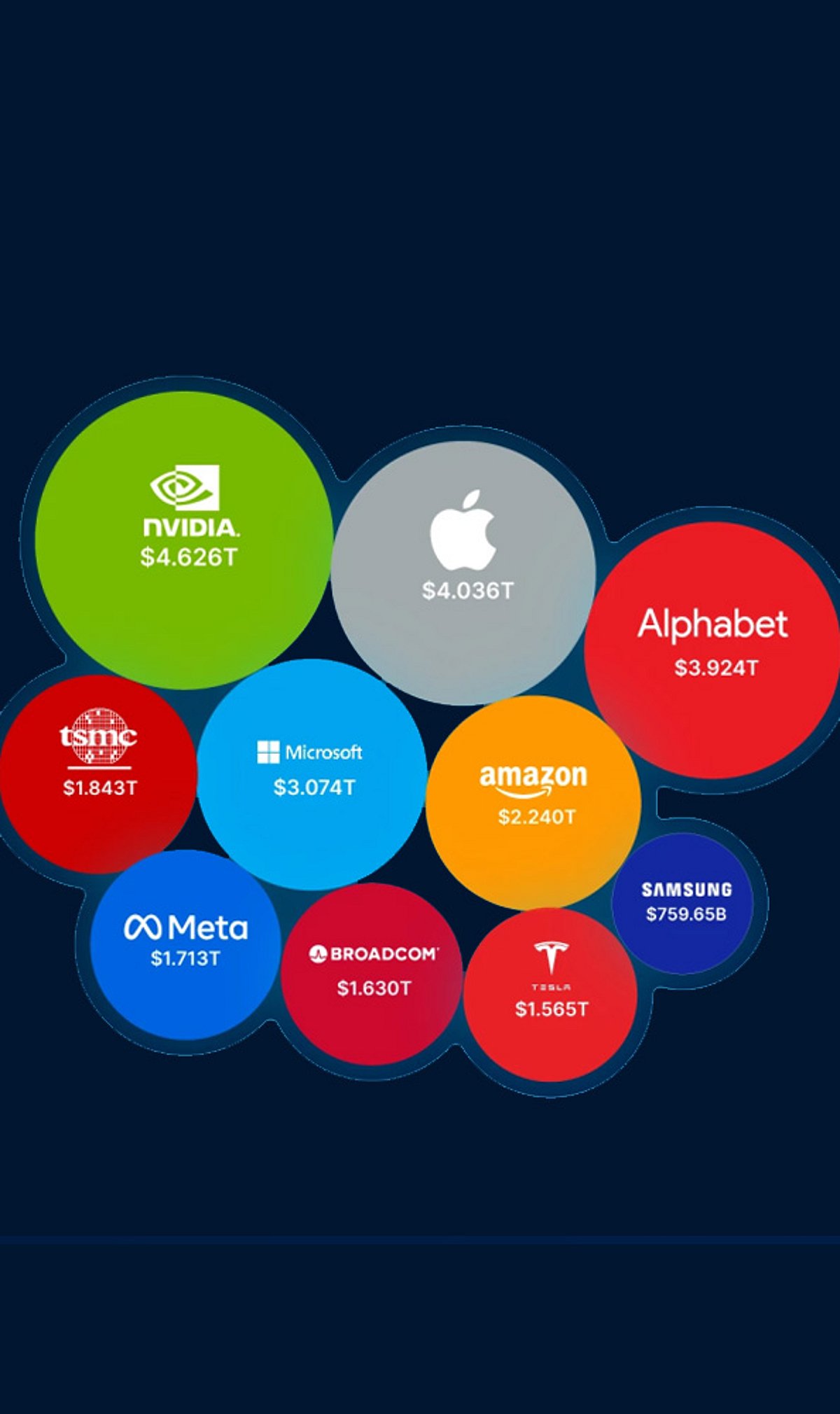
    The world’s most valuable companies continue to reshape industries and drive global economic growth. Based on market capitalization, here are the top 10 publicly traded companies as of the latest data.

    1. Apple – One of the world’s most valuable companies, driven by iPhone, services, wearables, and a loyal global customer ecosystem.
    2. NVIDIA – Dominates AI chip manufacturing with GPUs powering artificial intelligence, cloud computing, gaming, and high-performance data centers worldwide.
    3. Microsoft – Global software leader generating growth through Azure cloud services, Office productivity tools, enterprise software, and artificial intelligence innovations.
    4. Alphabet – Parent company of Google, YouTube, Android, and Google Cloud, maintaining leadership in digital advertising and artificial intelligence technologies.
    5. Amazon – Global e-commerce and cloud computing giant with AWS, logistics leadership, AI investments, and expanding digital service offerings worldwide.
    6. TSMC – World’s largest semiconductor foundry manufacturing advanced chips for leading technology companies powering smartphones, AI systems, and computing devices.
    7. Broadcom – Leading semiconductor company supplying networking, AI infrastructure, broadband, and enterprise software solutions for global technology markets.
    8. Saudi Aramco – World’s leading energy company generating substantial revenue through oil production while investing in energy transition and sustainability initiatives.
    9. Tesla – Electric vehicle pioneer expanding through battery technology, autonomous driving, energy storage solutions, and sustainable transportation innovation globally.
  • 25 Best Dividend Stocks to Buy in August 2026: Undervalued Opportunities for Income Investors

    25 Best Dividend Stocks to Buy in August 2026: Undervalued Opportunities for Income Investors

    Dividend-paying stocks remain one of the most reliable ways to generate passive income and build long-term wealth. In August 2026, several high-quality dividend stocks appear undervalued based on metrics such as Dividend Yield Theory (DYT), Free Cash Flow (FCF), and historical Price-to-Earnings (P/E) ratios. Below is a curated list of the top 25 dividend opportunities, along with key valuation insights.

    Top 25 Dividend Stock Opportunities for August 2026

    1. Broadridge Financial (BR) – Trading at ~14x P/FCF, Broadridge offers an attractive valuation with a strong, consistent dividend growth record.
    2. Zoetis (ZTS) – Undervalued by 61% according to DYT, trading below 16x forward P/FCF, making it a compelling long-term buy.
    3. Accenture (ACN) – Despite a July rally, Accenture remains one of the cheapest large-cap tech consulting stocks at 8x forward earnings.
    4. Blackstone (BX) – Moderately undervalued; FCF is less relevant for alternative asset managers, so focus on dividend yield.
    5. SBA Communications (SBAC) – A REIT with recurring cash flows, trading at a P/E of 39.86 and a 2.76% annual dividend.
    6. Paychex (PAYX) – Improving from recent lows, reasonably valued at 18x FCF for a high-quality dividend payer.
    7. Amdocs (DOX) – Discounted by 45–47%, trading at 9x P/FCF – a healthy entry point.
    8. Autoliv (ALV) – Fairly valued with a 10% discount margin based on historical P/E, suggesting moderate upside.
    9. McDonald’s (MCD) – Slightly below historical valuations; DYT indicates moderate upside.
    10. Darden Restaurants (DRI) – Relatively fairly valued with limited valuation potential at current prices.
    11. Penske Automotive Group (PAG) – DYT suggests a 10% discount, but trades at ~30x FCF, making it pricey on cash-flow basis.
    12. PepsiCo (PEP) – Shares undervalued by 28–38% per DYT, trading below 20x FCF.
    13. Thomson Reuters (TRI) – 35–44% undervalued after a big price correction, one of the best software-related opportunities.
    14. NextEra Energy (NEE) – DYT shows a 9% discount, but historical earnings suggest more upside; trades at ~19.5x earnings.
    15. Regions Financial (RF) – Fair value per DYT, but high historical FCF multiple.
    16. Essential Utilities (WTRG) – Slight discount, though 20x earnings multiple is above long-term market averages.
    17. Sysco (SYY) – Fairly priced; historical FCF analysis shows ~27% upside potential.
    18. McCormick (MKC) – Consumer staples standout: 45% discount via DYT, 64% upside per FCF analysis.
    19. Constellation Brands (STZ) – ~47% undervalued, one of the best value stocks on the list.
    20. Toronto-Dominion Bank (TD) – Overpriced after a 2025 surge, per both DYT and historical earnings.
    21. American Water Works (AWK) – Reasonably priced historically, but 25x earnings is high on an absolute basis.
    22. Cohen & Steers (CNS) – Slightly overvalued per DYT and earnings-based analysis.
    23. Bank of Montreal (BMO) – Overvalued after recent run-up based on both DYT and historical earnings.
    24. Fifth Third Bancorp (FITB) – Trading at a premium to dividend yield history and earnings after a strong price rise since 2024.
    25. Cullen/Frost Bankers (CFR) – Trading at about par; 16x earnings is reasonable for a quality regional bank.

    Key Takeaways

    The most attractive dividend stocks on multiple valuation measures include Zoetis, Accenture, Broadridge Financial, Amdocs, McCormick, Constellation Brands, Thomson Reuters, PepsiCo, Paychex, and Sysco. Conversely, several banking stocks (Toronto-Dominion Bank, Bank of Montreal, Fifth Third Bancorp, Regions Financial) appear fairly valued or overpriced. Investors should also consider dividend sustainability, earnings growth, balance sheet strength, and business fundamentals before committing capital.

    Frequently Asked Questions

    1. Which dividend stocks appear most undervalued for August 2026?

    Zoetis, Accenture, Amdocs, McCormick, Constellation Brands, Thomson Reuters, and Broadridge Financial stand out across multiple valuation models. Always verify earnings and dividend growth prospects.

    2. What is Dividend Yield Theory?

    Dividend Yield Theory compares a stock’s current dividend yield with its long-term historical average. A higher-than-usual yield may indicate undervaluation, but could also signal business deterioration or weak dividend growth.

    3. Why is free cash flow important for dividend investors?

    Free cash flow indicates how much cash remains after operating and capital expenses. Companies with consistent free cash flow are better positioned to sustain and grow dividends, repay debt, and invest for the future.

    4. Are all 25 stocks currently attractive buys?

    No. Several names (TD, BMO, FITB, RF) appear fairly valued or expensive. This list is a research starting point, not a buy recommendation.

    5. What should investors check before buying a dividend stock?

    Review payout ratios, dividend growth history, earnings stability, debt levels, cash generation, valuation, and industry outlook. A high yield alone does not guarantee a safe investment.

    Disclaimer: This article is for informational purposes only and does not constitute investment advice. Always conduct your own research before investing. Past performance is not indicative of future results.

  • 12 Indian Stocks That Top Brokerages Are Betting On in 2026

    12 Indian Stocks That Top Brokerages Are Betting On in 2026

    Overview

    India’s stock market has shown resilience in 2026 despite global uncertainties, volatile crude oil prices, and foreign institutional investor outflows. While valuations in some segments have become challenging, top brokerage firms such as Goldman Sachs, Axis Securities, and InCred Equities continue to identify high-conviction investment opportunities in banking, telecom, infrastructure, manufacturing, and consumer sectors. The common investment theme is India’s growth story, earnings visibility, and government capital expenditure.

    Top Brokerage Picks for 2026

    Here are 12 stocks consistently recommended by these brokerages in 2026:

    1. ICICI Bank

    ICICI Bank remains a top pick due to robust loan growth, improving asset quality, and superior return ratios. Analysts believe the private sector bank is well-positioned to capitalize on strong credit demand while maintaining healthy margins.

    2. Bharti Airtel

    The telecom company is favored for its strong earnings growth driven by tariff hikes, premium customer additions, and increased data usage. Its enterprise and digital businesses are also expected to contribute significantly.

    3. Bajaj Finance

    Bajaj Finance continues to attract domestic brokers with its diversified loan book and strong execution. The company is expanding its customer base while maintaining good asset quality, supporting faster earnings growth relative to peers.

    4. Kotak Mahindra Bank

    Brokerages expect Kotak Mahindra Bank to benefit from better deposit accumulation and credit growth. Its conservative balance sheet, strong capital adequacy, and expanding retail operations make it a solid long-term banking investment.

    5. Larsen & Toubro (L&T)

    Infrastructure investment is a major theme in India, and L&T continues to secure strong orders both domestically and internationally. Goldman Sachs recently reiterated its bullish view after the company reported strong quarterly results.

    6. Avenue Supermarts (DMart)

    Organized retail remains a compelling story in India despite short-term fluctuations in consumer spending. DMart’s efficient business model and profitable operations continue to draw positive analyst views.

    7. Varun Beverages

    Consumer spending is a long-term investment theme. Varun Beverages is expanding capacity and strengthening its presence in domestic and international markets. High summer demand and new product launches are boosting earnings.

    8. Axis Bank

    InCred Equities has a positive outlook on Axis Bank based on profitability and credit growth. The bank is expected to gain from increasing retail and corporate lending in India.

    9. GE Vernova T&D India

    This power transmission equipment producer has emerged as an attractive infrastructure stock due to rising capital expenditure in power transmission and renewable energy. Analysts highlight strong order prospects amid growing electricity transmission infrastructure.

    10. State Bank of India

    India’s largest public sector bank is poised to benefit from improving credit quality, profitability, and strong loan growth. Analysts believe SBI is well-positioned to ride the wave of capex-driven economic growth.

    11. Reliance Industries

    Reliance continues to attract bullish views due to its diversified earnings profile spanning energy, telecom, retail, and new energy businesses. Analysts expect value creation from multiple segments while maintaining healthy cash generation.

    12. Eternal (formerly Zomato)

    Eternal has appeared among Axis Securities’ preferred ideas as India’s digital consumption story evolves. Growth in quick commerce, food delivery, and improving operating leverage keep the company on analysts’ radar despite premium valuations.

    Investment Outlook

    Three major themes emerge from these recommendations. The financial services sector remains the largest investment choice, driven by optimism about India’s multi-year credit cycle. Infrastructure and industrials benefit from consistent government spending and manufacturing growth. The consumption sector and tech firms are becoming more attractive with rising income levels and future demand.

    Brokerage advice is based on dynamic estimates of earnings, valuation, and macroeconomic conditions. While all 12 companies have solid fundamentals and prospects, individual diversification and risk management are essential. Goldman Sachs, Axis Securities, and InCred Equities demonstrate that the Indian growth story is far from over.

    Frequently Asked Questions

    Which brokerages recommended these 12 stocks?

    Goldman Sachs, Axis Securities, and InCred Equities identified these companies based on earnings potential, valuations, sector leadership, and growth outlook.

    Which sectors dominate the recommendations?

    Banking, telecom, infrastructure, consumer, retail, industrial, and financial services sectors account for most high-conviction brokerage recommendations in 2026.

    Why are analysts bullish on these stocks?

    Strong earnings growth, healthy balance sheets, India’s economic expansion, and improving business fundamentals support positive long-term investment expectations.

    Are these stocks suitable for long-term investors?

    Most recommendations target long-term wealth creation, though investors should evaluate personal risk tolerance before making investment decisions.

    Should investors rely only on brokerage recommendations?

    No. Investors should combine brokerage research with personal financial goals, diversification strategies, and independent analysis before investing.

    Disclaimer: This article is for informational purposes only and does not constitute investment advice. Always conduct your own research before making investment decisions.

  • Best Mutual Funds in India for 2026: High Returns with Lower Risk

    Best Mutual Funds in India for 2026: High Returns with Lower Risk

    As Indian investors look ahead to 2026, selecting the right mutual funds is crucial for balancing growth and stability. The following funds have been identified for their consistent performance, smart diversification, and risk management. Whether you are a conservative investor or seeking higher growth, these options cater to a range of financial goals.

    Parag Parikh Flexi Cap Fund

    This flexi-cap fund is known for its diversified investing approach, delivering strong long-term returns through disciplined stock selection across market caps.

    HDFC Balanced Advantage Fund

    By dynamically balancing equity and debt, this fund helps investors manage market volatility while targeting steady wealth creation over the long term.

    SBI Contra Fund

    Employing a value-oriented strategy, SBI Contra Fund invests in undervalued companies with strong recovery potential, aiming for long-term growth across sectors.

    UTI Nifty 50 Index Fund

    Ideal for passive investors, this fund tracks the Nifty 50 Index, offering low-cost exposure to India’s top companies with consistent long-term performance.

    ICICI Prudential Bluechip Fund

    Focused on established large-cap companies with stable earnings, this fund is suitable for those seeking relatively lower-risk equity investing.

    Nippon India Small Cap Fund

    Investing in promising small-cap companies, this fund offers higher growth opportunities, though it carries greater market volatility and risk.

    Kotak Equity Opportunities Fund

    Diversifying across large and mid-cap stocks, this fund aims for balanced growth with effective risk management through professional fund selection.

    Axis ELSS Tax Saver Fund

    Combining tax-saving benefits with long-term equity investments, this ELSS fund is attractive for investors seeking wealth creation and deductions under Section 80C.

    Choose Based on Your Goals

    Financial experts advise selecting mutual funds according to your personal financial goals, investment horizon, and risk tolerance, rather than relying solely on historical returns. Always review fund performance and consult a financial advisor before investing.

  • 10 Low-Cost Cryptocurrencies Worth Watching in 2026

    10 Low-Cost Cryptocurrencies Worth Watching in 2026

    Looking for affordable cryptocurrencies with growth potential? Here are 10 low-cost crypto coins that investors are watching closely in 2026.

    Dogecoin (DOGE)

    The original meme coin continues to attract investors thanks to its massive community, regular updates, and growing merchant acceptance.

    Shiba Inu (SHIB)

    More than a meme coin, SHIB is expanding its ecosystem with DeFi, NFTs, and Layer-2 blockchain solutions.

    Stellar (XLM)

    Designed for fast, low-cost international payments, Stellar remains a favorite for cross-border financial transactions.

    VeChain (VET)

    VeChain uses blockchain to improve supply chain transparency and product authenticity across industries.

    Algorand (ALGO)

    Known for speed, security, and energy efficiency, Algorand powers enterprise-grade blockchain applications.

    Hedera (HBAR)

    HBAR’s unique Hashgraph technology offers high-speed transactions with strong enterprise adoption.

    Kaspa (KAS)

    Kaspa delivers rapid transaction confirmation using BlockDAG technology, making it a promising blockchain project.

    JasmyCoin (JASMY)

    Focused on data privacy and IoT, Jasmy gives users greater control over personal data in connected devices.

    Stay tuned for more updates on these and other promising cryptocurrencies. Join our WhatsApp Channel to get the latest news, exclusives, and videos on WhatsApp.