Tag: investing

  • Why United Natural Foods Stock Remains Undervalued Despite Strong Rally

    Why United Natural Foods Stock Remains Undervalued Despite Strong Rally

    United Natural Foods (UNF) stock has posted impressive gains, yet its sales valuation remains well below key market benchmarks. Shares recently closed at $49.67 after surging 76.1% over the past year and 139.7% over three years. While the rally has rewarded early investors, the current price raises a critical question: does the low valuation signal an overlooked discount, or do underlying risks justify the discount?

    Low P/S Ratio Highlights Valuation Gap

    United Natural Foods trades at a price-to-sales (P/S) ratio of approximately 0.1x, significantly below the consumer retailing industry average of 0.3x and the peer group average of 0.9x. A valuation model from Simply Wall St estimates a fair P/S ratio near 0.2x, meaning the current multiple sits at roughly half that level. The model assigns United Natural Foods a value score of five out of six, indicating most checks classify the shares as undervalued. However, valuation measures alone do not eliminate the company’s operational and financial risks.

    Profitability and Cash Flow Drive Real Value

    Food distribution requires tight cost control over inventories, transportation, and working capital. Small margin changes significantly impact earnings and cash generation. The company can boost profitability through higher-margin private-label brands, supply chain technology, and automation. Yet investors remain wary of balance sheet pressure and cash conversion. Rising costs or weak inventory management could limit free cash flow, keeping the stock’s valuation below broader market averages. The valuation case now hinges on execution: stronger margins and steady cash flow would justify a higher multiple.

    Wholesale Pressure Creates Clear Risks

    The food wholesale market faces disruption as brands increasingly use direct-to-consumer channels and online delivery platforms, potentially reducing demand for traditional wholesale services. A bearish scenario from Simply Wall St suggests United Natural Foods stock could trade about 16% above fair value if direct sales weaken volumes. In contrast, the bullish view values shares at approximately 11% below fair value, citing private brands, automation, and digital supply chain improvements. The wide gap between these estimates underscores how sensitive valuation is to operating results. While the stock trades at a low sales multiple, future pricing depends on margins, cash flow, and wholesale demand.
  • Dow Rises, Nasdaq Slips as Wall Street Awaits Alphabet and Tesla Earnings Amid Rising Oil Prices

    Dow Rises, Nasdaq Slips as Wall Street Awaits Alphabet and Tesla Earnings Amid Rising Oil Prices

    U.S. stocks ended mixed on Wednesday as investors weighed rising oil prices, a downturn in semiconductor shares, and anticipation of major earnings reports from technology giants. The Dow Jones Industrial Average gained roughly 0.5%, while the S&P 500 hovered near the flatline. The Nasdaq Composite fell about 0.3%, dragged lower by weakness in chip stocks.

    Big Tech Earnings in Focus

    Alphabet, Tesla, IBM, ServiceNow, and Texas Instruments are set to report quarterly results after the closing bell. Their updates are expected to shed light on artificial intelligence spending, cloud demand, and corporate technology budgets. Alphabet and Tesla are the first members of the ‘Magnificent Seven’ to release second-quarter results, with investors closely watching revenue growth, capital expenditure, and forward guidance.

    Alphabet shares traded near $346 ahead of the report. The company faces scrutiny over its AI strategy after delaying a model launch tied to its development plans. Tesla’s results will also be closely watched as the automaker continues heavy spending on new projects. Analysts will focus on cash flow, operating costs, and capital outlays.

    Sam Stovall, chief investment strategist at CFRA Research, noted that investors may adopt a ‘wait-and-see attitude’ before making larger market moves, with spending levels playing a central role in the response to these earnings.

    Oil Prices Surge on Geopolitical Tensions

    Oil prices climbed as the United States conducted its eleventh straight round of strikes against Iran. Brent crude rose about 3% to trade above $93 per barrel, briefly crossing $95. West Texas Intermediate advanced above $86 per barrel. U.S. Secretary of State Marco Rubio stated that Washington would continue protecting shipping through the Strait of Hormuz and described Iran as ‘not serious’ about negotiations.

    Higher energy prices reignited concerns about inflation and interest rates. Federal funds futures indicated a strong likelihood that the Federal Reserve will hold rates steady at its next meeting, though markets still price in a potential rate increase later in 2026.

    Chip Stocks Weigh on Nasdaq

    Technology stocks were the weakest sector during morning trading, with semiconductor shares under pressure after several volatile sessions. The Philadelphia Semiconductor Index traded near unchanged levels, having closed lower in five of the past ten sessions. Texas Instruments edged lower ahead of its earnings release. Investors are scrutinizing chip demand, order growth, and management forecasts during this earnings season. AI infrastructure spending has supported semiconductor valuations, but recent price swings have slowed the Nasdaq’s momentum.

    Materials and utilities sectors moved higher, limiting broader market losses. Strength in industrial and materials shares also supported the Dow. Market breadth remained positive, with advancing stocks outnumbering decliners on both the NYSE and Nasdaq.

    Notable Stock Movers

    Super Micro Computer surged more than 20% after the AI server maker issued a strong business update, securing over $60 billion in new fourth-quarter orders and forecasting gross margins above previous expectations. AT&T gained about 3% after adding more wireless subscribers than analysts anticipated and reporting better-than-expected quarterly earnings.

    GE Vernova shares fell despite reporting $11.1 billion in revenue and raising its 2026 guidance, as earnings missed market estimates. The company posted an 88% rise in total orders to $24.2 billion, with data center orders exceeding $5 billion in the first half of the year—more than double its full-year total in 2025.

    Shares of generic drugmakers declined after President Donald Trump announced plans for future tariffs on imported generic medicines, starting with a 100% tariff in August 2028 and rising to 200% a year later.

    With oil prices rising and Big Tech earnings approaching, markets remain focused on the next major catalyst for direction.

  • 5 Promising Altcoins to Consider Before Bitcoin’s Next Rally

    5 Promising Altcoins to Consider Before Bitcoin’s Next Rally

    As Bitcoin trades near $64,000 as of July 20, 2026, many investors anticipate the next major bull run. Historically, Bitcoin leads market rallies, but altcoins often deliver larger percentage gains afterward. This pattern has shifted focus toward projects with strong technology, real-world utility, and active communities. Here are five altcoins that stand out for their ecosystems and growth potential.

    Key Takeaways

    • Ethereum continues to lead smart contracts with institutional support.
    • Solana, XRP, Chainlink, and Sui each offer unique strengths in payments, infrastructure, and scalability.
    • Strong adoption and healthy ecosystems often matter more than short-term price movements.

    Ethereum (ETH) – $1,855.60

    Ethereum remains the largest smart contract blockchain, powering thousands of decentralized applications, DeFi platforms, and NFT projects. Layer-2 solutions have improved speed and reduced fees, while major financial institutions continue to build tokenization projects on the network. Analysts expect Ethereum to perform well in the next bull market due to strong retail and institutional demand.

    Solana (SOL) – $75.86

    Solana is known for its high throughput—processing thousands of transactions per second with low fees. It has attracted developers in gaming, payments, NFTs, and DeFi. After recovering from previous market challenges, the ecosystem shows healthy developer activity and new project launches, boosting investor confidence.

    XRP – $1.08

    XRP focuses on cross-border payments, enabling faster and cheaper international transfers for banks and financial institutions. Regulatory clarity in recent years has improved confidence, allowing Ripple to expand partnerships globally. If payment adoption grows, XRP could see increased demand during the next rally.

    Chainlink (LINK) – ~$18

    Chainlink provides oracle services that connect blockchains to real-world data, such as prices and weather. It is essential for DeFi and tokenized assets, where accurate data is critical. As blockchain adoption in traditional finance grows, Chainlink’s unique position attracts long-term investors.

    Sui (SUI) – $0.7499

    Sui is a fast-growing Layer-1 blockchain optimized for speed, low costs, and consumer applications like gaming. Active addresses on the network surged 92% in the past week, indicating rising user and developer interest. Strong network growth often precedes price strength in a broader market recovery.

    Latest Crypto Market News

    Despite price fluctuations, market optimism remains as Bitcoin holds near $64,000. Institutional accumulation and improving fundamentals support a potential bull run. Ethereum gains ground through tokenization, Solana stays strong in developer adoption, XRP benefits from regulatory clarity, Chainlink consolidates its oracle dominance, and Sui shows rapid network expansion.

    Final Thoughts

    While Bitcoin historically triggers rallies, altcoins with solid ecosystems, real use cases, and growing adoption often outperform. Ethereum leads smart contracts, Solana offers speed, XRP targets payments, Chainlink provides critical infrastructure, and Sui brings innovation. If Bitcoin surges again, these altcoins are well-positioned for significant gains.

    FAQs

    1. Why do altcoins usually rise after Bitcoin?

    Bitcoin attracts initial investment, and capital later flows into altcoins as market confidence grows.

    2. Which altcoin has the strongest ecosystem?

    Ethereum remains the largest smart contract platform with the biggest developer community and DeFi ecosystem.

    3. Why is Solana popular?

    Solana offers fast transaction speeds, low fees, and supports a wide range of decentralized applications.

    4. What makes Chainlink different?

    Chainlink provides real-world data to blockchain networks, essential for many decentralized applications.

    5. Is Sui a high-risk investment?

    Sui is a newer project with strong growth potential but may experience higher volatility than established cryptocurrencies.

  • Market Crash vs. Market Correction: Key Differences Every Investor Should Know

    Market Crash vs. Market Correction: Key Differences Every Investor Should Know

    Understanding Market Corrections

    A market correction is a temporary decline of 10% to 20% from recent highs. It is often considered a healthy adjustment during long-term market growth cycles, allowing overvalued stocks to return to more reasonable levels.

    What Defines a Market Crash

    A market crash is a sudden and steep decline exceeding 20%, usually triggered by panic selling, economic shocks, or financial crises that severely affect investor confidence.

    Duration Differences

    Corrections generally recover within weeks or months, while crashes may take significantly longer depending on economic conditions and market sentiment.

    Investor Sentiment

    Corrections cause caution among investors, whereas crashes often trigger widespread fear, panic selling, and heightened market uncertainty globally.

    Common Causes

    Corrections typically stem from profit booking or overvaluation, while crashes result from recessions, geopolitical tensions, or systemic financial risks.

    Economic Impact

    Corrections rarely harm the broader economy, but severe crashes can affect employment, business investment, and consumer spending significantly.

    Investment Strategy

    Long-term investors often use corrections to buy quality stocks, while crashes require disciplined investing and avoiding emotional decisions.

    Historical Examples

    The 2020 COVID-19 sell-off resembled a crash, while several post-pandemic pullbacks were classified as market corrections instead.

    Key Takeaway

    Understanding the difference helps investors stay calm, manage risk wisely, and make informed decisions during volatile market conditions.

  • Bond Investing by Age: Strategies for Your 30s, 40s, 50s, and Beyond

    Bond Investing by Age: Strategies for Your 30s, 40s, 50s, and Beyond

    A bond investment strategy should not stay the same throughout your life. As your income, responsibilities, and financial goals change, the way you invest in bonds should change too. In your 30s, bonds can help bring stability to a portfolio that is largely focused on growth. By the time you retire, they often become a dependable source of regular income. Financial experts say the key is to make sure your bond investments match the stage of life you’re in.

    In Your 30s: Build Wealth, Stay Balanced

    For most people in their 30s, the focus is on building long-term wealth. Equities may drive growth, but bonds help reduce volatility and add stability to the portfolio. Experts suggest reinvesting the interest earned from bonds instead of spending it. For example, an investment of $5,000 at an illustrative yield of 9% can generate around $450 annually before tax. Reinvesting that income can gradually increase both your investment corpus and future returns. They also recommend avoiding the temptation to put all your money into a single high-yield bond. Spreading investments across bonds with different maturities and choosing issuers with strong repayment records can help lower risk.

    In Your 40s: Invest with Upcoming Goals in Mind

    By your 40s, financial priorities usually become more defined. Children’s education, home renovations, or other planned expenses often take center stage. This is where bonds can provide certainty. Experts recommend choosing bond maturities that line up with when you’ll need the money. If a major expense is expected in three or four years, investing in bonds maturing around the same time can reduce the need to rely on market conditions. Holding a mix of short-, medium-, and long-term bonds can also improve diversification.

    In Your 50s: Start Building Retirement Income

    As retirement draws closer, preserving capital becomes as important as growing it. Many financial planners recommend creating a bond ladder by investing in bonds that mature at different intervals. This provides regular access to funds while reducing interest-rate risk. For example, assuming that an investor holds $500,000 in bond investments at an assumed average interest rate of 8.5%, they could earn close to $42,500 annually or about $3,540 monthly, even without taking into account tax implications. A fixed-income portfolio for retirement could include government bonds, highly rated corporate bonds, fixed deposits, and other fixed-income instruments according to personal risk appetites.

    After Retirement: Bonds Help with Your Cash Needs

    Post-retirement, bonds usually serve the purpose of regular income generation to cover daily expenses, healthcare costs, insurance premiums, and more. However, experts caution against putting the entire retirement corpus into one asset class. A balanced portfolio should include liquid funds to cover about a year’s expenses, bonds that generate regular payouts over several years, and some equity exposure to help keep pace with inflation. The right bond strategy is not about chasing the highest returns. It is about making your investments work for your financial needs at every stage of life.

  • Reliance Industries Shares Climb to Rs 1,320 Ahead of Q1 Results; Analysts Predict 20% Profit Surge

    Reliance Industries Shares Climb to Rs 1,320 Ahead of Q1 Results; Analysts Predict 20% Profit Surge

    Reliance Industries Ltd. shares climbed 1.84% to Rs 1,320.40 on the NSE on Friday, reaching an intraday high of Rs 1,323.70, as investors positioned themselves ahead of the conglomerate’s closely watched June-quarter (Q1 FY27) earnings due after market hours. The stock opened at Rs 1,300 and traded in the Rs 1,296.10–Rs 1,323.70 range, reflecting growing optimism that India’s largest listed company could deliver another resilient quarter.

    The optimism spilled over to the broader market, with the Sensex surging more than 800 points and the Nifty 50 reclaiming the 24,280 mark, supported by gains in Reliance, HDFC Bank, ICICI Bank and leading IT stocks. While global concerns over rising crude prices and tensions in West Asia continue to weigh on sentiment, analysts believe Reliance’s diversified business model could once again help cushion volatility.

    Street Expectations for Reliance Q1 FY27

    Oil-to-Chemicals Expected to Shoulder Earnings Growth

    While there have been mixed fortunes for many companies, analysts forecast Reliance to show another decent quarter. Based on consensus estimates, net profit is expected to increase by about 20% sequentially, while revenue is expected to reach Rs 3 lakh crore. Good refining fundamentals and favorable petrochemical margins will more than compensate for the weak demand in retail operations and the reduced production from the upstream oil and gas segment.

    The oil-to-chemicals (O2C) segment is likely to remain the largest contributor to earnings. Estimates indicate that O2C EBITDA will be close to Rs 16,146 crore, driven by higher refining margins, particularly at the SEZ refinery. While there were maintenance shutdowns of one crude distillation unit during the quarter, the impact was largely mitigated by a weaker rupee and global refining margins.

    Jio Remains the Growth Engine While Retail Faces Headwinds

    Reliance Jio is expected to continue delivering stable operational performance. Brokerages estimate the telecom business will add nearly one crore subscribers during the quarter, taking its total subscriber base to around 53.3 crore. Average Revenue Per User (ARPU) is expected to increase to Rs 216, up from Rs 214 in the previous quarter, driven by customer upgrades and rising data consumption.

    Investors will also watch management commentary on tariff plans, JioFiber expansion and the timeline for the much-anticipated Jio IPO, which could become India’s largest public offering.

    The retail business, however, is likely to remain under pressure. Analysts expect Retail EBITDA to decline around 2% sequentially to Rs 6,784 crore, reflecting slower discretionary spending and continued promotional activity. While margins may remain soft in the near term, analysts remain optimistic about the long-term outlook, citing store expansion, digital commerce growth and improving consumer demand.

    Management Commentary Holds the Real Key

    Beyond the financial performance, institutional investors are expected to focus on Reliance’s forward-looking commentary. Updates on crude sourcing, refinery outlook, petrochemical demand, retail consumption, capital expenditure, debt reduction, new energy investments, and Jio’s IPO preparations could significantly influence market sentiment.

    Reliance has increasingly evolved from being an energy giant into a diversified consumer and technology company. Consequently, investors pay as much attention to future growth initiatives as to quarterly earnings.

    What It Means for Investors

    Reliance enters the first-quarter earnings season with expectations firmly tilted toward another steady performance. Despite continued lags in retail demand and difficulties for upstream activities, the combination of improving refining margins and robust telecom growth is likely to keep profit trends heading in the right direction.

    What is more important, however, is Reliance’s ability to drive growth across its diverse portfolio of operations and make faster strides in developing its digital and renewable energy operations. With such a large representation in key indices, Reliance’s results and management guidance are likely to have implications for market sentiment that will extend far beyond a one-day trading period.

    Disclaimer: This article is for informational purposes only and does not constitute investment advice. Readers should conduct their own research before making any investment decisions.

  • Top Crypto Gainers Today: BlockDAG, Ethereum, Uniswap, and Cardano Poised for Major Surge

    Top Crypto Gainers Today: BlockDAG, Ethereum, Uniswap, and Cardano Poised for Major Surge

    The crypto market is moving at a blistering pace, and missing out on the right assets today could mean watching life-altering returns pass by. Savvy market participants are aggressively positioning themselves as key networks experience massive network upgrades, high-profile institutional adoptions, and unprecedented presale opportunities. Waiting for a clearer signal often means buying at the top after the biggest moves have already occurred. Right now, capital is rotating rapidly into select projects that boast genuine utility and highly explosive catalysts.

    This curated list breaks down the absolute top crypto gainers today, detailing exactly why these specific networks are capturing the market’s attention and why acting immediately is paramount.

    1. BlockDAG: The Ultimate Ecosystem Empire With a 100% Bonus

    BlockDAG is capturing the spotlight as the absolute highest-priority asset among the top crypto gainers today. This project is not merely creating another digital asset; the team is constructing a massive ecosystem, a self-sustaining economy, and a digital empire. Savvy buyers are moving quickly to secure BDAG at the current entry price of $0.00000033 before the next imminent price tier takes effect. Coins are sent directly to participants, ensuring immediate ownership without unnecessary holding delays.

    The urgency surrounding this asset is driven entirely by a massive, time-sensitive incentive structure. By applying the promotional code EARLY, buyers instantly receive 100% extra BDAG on their purchase, effectively doubling their position for free. Furthermore, utilizing this code grants exclusive access to the highly anticipated USDT Buybacks on September 1, accelerating the liquidity timeline by a full month instead of waiting until October 1. With a projected buyback selling price of $0.03, the mathematical upside is creating intense market demand. The opportunity to double a holding instantly while securing early buyback rights is a strictly limited window that will close without warning.

    2. Ethereum: Wall Street’s Preferred Network Driving Institutional Adoption

    Ethereum firmly holds its ground among the top crypto gainers today, remaining the dominant force in the decentralized application space. Institutional circles and Wall Street entities continually choose this network over competitors due to its unmatched economic security and regulatory credibility. According to Galaxy Digital Vice President of Research Lucas Outumuro, the network’s core strengths lie in its deep decentralized security, robust Layer-2 scaling ecosystem, upcoming privacy upgrades, and a clear roadmap designed to resist future quantum computing threats.

    The asset is experiencing a massive demand shock driven by mainstream integrations. Robinhood recently introduced its own Layer-2 network powered directly by Ethereum technology, exposing millions of retail users to the ecosystem. Simultaneously, the market for tokenized real-world assets and yield-bearing stablecoins is expanding rapidly on top of this blockchain, locking in billions of dollars in capital. As institutional liquidity continues to favor this asset, the window to accumulate at current valuations is shrinking fast.

    3. Uniswap: Decentralized Exchange Dominance & Major Retail Partnerships

    Uniswap is surging up the ranks of the top crypto gainers today as decentralized finance experiences a massive resurgence in volume. As the largest decentralized exchange by trading volume, the protocol directly converts market volatility into massive fee revenue. The primary catalyst driving the asset’s current momentum is a strategic partnership with Robinhood, a move that bridges the gap between traditional retail brokerage accounts and decentralized on-chain liquidity.

    This integration allows mainstream investors to access decentralized trading seamlessly, driving unprecedented user acquisition to the protocol. Beyond its main network dominance, Uniswap is expanding its footprint across multiple high-speed Layer-2 networks, drastically lowering transaction costs for users while maintaining high security. This multi-chain expansion solidifies the asset as a premier decentralized finance hold for the current market cycle.

    4. Cardano: Undervalued Network Infrastructure With Growth

    Cardano rounds out the list of the top crypto gainers today, presenting a highly attractive opportunity for value-focused buyers. While the project has faced its share of market skepticism over the last few years, market analysts widely agree that the native asset remains significantly undervalued relative to its actual network infrastructure. Founder Charles Hoskinson notes that the ecosystem expands steadily through rigorous, peer-reviewed research and deliberate development rather than rushing unverified features to match short-term market trends.

    The blockchain is currently seeing a significant spike in developer activity and decentralized application deployments. The rollout of advanced decentralized governance features is shifting network control directly to the community, making it one of the most resilient and decentralized layer-one networks in existence. As real utility catches up to the underlying architecture, the asset is quickly regaining momentum as a top tier blockchain ecosystem.

    Act Now Before Market Valuations Shift Permanently

    The current market window presents an extraordinary alignment of institutional growth and high-yield presale incentives. Watching from the sidelines while Ethereum dominates Wall Street, Uniswap captures mainstream retail trading, and Cardano expands its secure architecture means missing out on the core drivers of this market cycle. More pressingly, the chance to secure BlockDAG at $0.00000033 with a 100% bonus and accelerated September 1 USDT buybacks represents a rare, asymmetric opportunity.

    These entry points do not remain open indefinitely, and the top crypto gainers today will not wait for hesitant buyers. Position capital into these powerhouse assets right now before the windows close and prices adjust upward permanently.

    Disclaimer: This article is for informational purposes only and does not constitute financial advice. Cryptocurrency investments carry significant risk. Always conduct your own research before making investment decisions.

  • Kalyan Jewellers Surges 47% in Four Days – Should Investors Buy, Sell, or Hold?

    Kalyan Jewellers Surges 47% in Four Days – Should Investors Buy, Sell, or Hold?

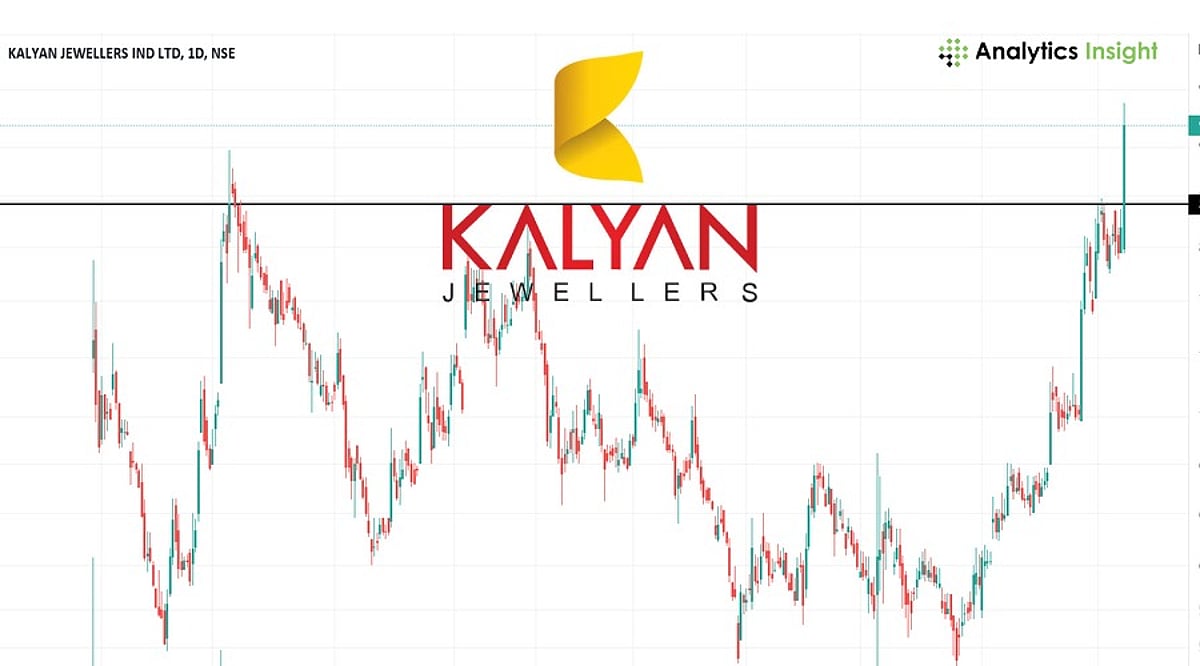
    Kalyan Jewellers closed at Rs. 524.75 on the NSE on Monday, capping a stunning four-day rally of nearly 47%. The stock touched an intraday high of Rs. 527.60, adding roughly Rs. 16,500 crore to the company’s market capitalization. The surge has made it one of the strongest performers on Dalal Street this week.

    Driven by a better-than-expected quarterly business update, robust domestic demand, and aggressive showroom expansion, investor confidence surged across the organized jewelry sector. The stock also broke above key resistance levels, attracting momentum traders and triggering short covering.

    While the rally reflects strong fundamentals, the rapid price appreciation now raises a critical question: should investors chase the stock or book profits?

    What’s Fueling the Rally?

    Several catalysts converged to propel shares higher:

    • Strong Q1 performance: Kalyan Jewellers reported impressive revenue growth despite elevated gold prices, indicating resilient demand for branded jewelry.
    • Expansion strategy: The company continues to open new showrooms, especially in high-growth regions, leveraging a franchise model to scale quickly.
    • Sector tailwinds: India’s organized jewelry market benefits from shifting consumer preferences toward hallmark jewelry, transparent pricing, and trusted brands.
    • Wedding and premiumization demand: Secular trends like wedding spending and premiumization provide a long-term growth runway.

    These structural factors go beyond short-term trading momentum, creating a compelling investment thesis.

    Valuation Concerns Emerge

    Despite the positive outlook, a 47% rise in just four sessions significantly alters the risk-reward equation. The stock now prices in not only a strong first quarter but also sustained earnings growth over several quarters. Expectations have risen sharply.

    To justify the current valuation, Kalyan Jewellers must consistently deliver revenue growth, maintain healthy margins despite gold price volatility, and execute its expansion plans effectively. Any slowdown in execution could trigger a correction.

    Should Investors Book Profits?

    The answer depends on your investment horizon:

    • Short-term traders: Booking partial profits after a near 50% run-up is logical, as sharp moves often lead to consolidation.
    • Long-term investors: Those focused on the structural growth story of India’s organized jewelry market may prefer to hold, given Kalyan Jewellers’ strong positioning. Portfolio rebalancing, rather than a full exit, can be a prudent approach.

    Peer Performance

    The rally also lifted sentiment for other listed jewelry stocks. Titan, Senco Gold, P N Gadgil Jewellers, and Thangamayil Jewellery have all gained on improved sector confidence and strong business updates.

    Market Outlook

    The recent surge reflects more than a short-term reaction – it signals growing confidence in organized jewelers that are capitalizing on formalization of the Indian jewelry market. However, given the sharp rally, the stock’s next leg will depend on the company’s ability to convert demand into earnings growth, sustain margins, and execute expansion successfully.

    FAQs

    1. Why did Kalyan Jewellers’ shares rally nearly 47%?

    The rally followed a strong Q1 business update, robust domestic demand, store expansion plans, and increased investor confidence in organized jewelry retailers.

    2. Should investors book profits after the rally?

    Short-term traders may consider partial profit booking, while long-term investors should focus on earnings growth, expansion strategy, and future business performance.

    3. How did Kalyan Jewellers perform on Monday?

    The stock rose 10.21% to close at Rs. 524.75 on the NSE, with an intraday high of Rs. 527.60.

    4. Which other jewellery stocks are gaining?

    Titan, Senco Gold, P N Gadgil Jewellers, and Thangamayil Jewellery have also gained on improving sector sentiment.

    5. What will determine Kalyan Jewellers’ future stock performance?

    Consistent revenue growth, healthy margins, successful store expansion, festive demand, and sustained investor confidence.

    Disclaimer: This article is for informational purposes only and does not constitute investment advice. Always do your own research before investing.

  • A Complete Guide to Investing in Unlisted Shares (2026)

    A Complete Guide to Investing in Unlisted Shares (2026)

    Unlisted shares are gaining popularity among investors seeking early exposure to companies before they launch an IPO. These are stocks of companies that are not traded on major exchanges like NSE or BSE but can be bought through authorized platforms and brokers.

    Before investing, it is crucial to research the company’s financials, business model, valuation, management, and future IPO plans. Choose a trusted intermediary or regulated platform that facilitates transactions in unlisted shares and ensures proper share transfers. Complete KYC, transfer funds securely, and receive shares directly into your demat account after the transaction is processed.

    Popular unlisted companies attracting investor interest include firms from fintech, insurance, technology, and infrastructure sectors preparing for future listings. However, it is important to understand the risks, including lower liquidity, limited financial disclosures, valuation uncertainty, and delayed IPO timelines.

    Taxation differs from listed shares. Capital gains depend on the holding period and prevailing tax regulations, making professional advice valuable. Diversifying across listed and unlisted investments can help balance growth opportunities with portfolio risk over the long term.

  • TCS Stock Surges 4% on Q1FY27 Beat: Should Investors Buy, Sell, or Hold?

    TCS Stock Surges 4% on Q1FY27 Beat: Should Investors Buy, Sell, or Hold?

    Tata Consultancy Services (TCS) shares surged over 4% on Friday, July 10, following the release of the company’s Q1FY27 earnings. The stock rose to Rs. 2,132 on the BSE and hit a high of Rs. 2,133.30 on the NSE after opening at Rs. 2,105.20.

    While the rally is a welcome reprieve, TCS shares have struggled recently, falling 2% over the past month, 16% over three months, 33% over six months, and 38% over the past year.

    Q1FY27 Results at a Glance

    TCS reported a consolidated net profit of Rs. 13,349 crore for the quarter ended June, a near 5% year-on-year increase from Rs. 12,760 crore. However, profit declined 3% sequentially from Rs. 13,718 crore in the March quarter.

    Revenue from operations rose 14% YoY to Rs. 72,275 crore from Rs. 63,437 crore, and grew 2% sequentially from Rs. 70,698 crore. The company’s operating margin stood at 24%, with a net margin of 19.2%.

    TCS also recorded a strong total contract value of $9.5 billion in the quarter. Its AI revenue run rate hit an annualized $2.6 billion, representing 13.6% quarter-on-quarter growth.

    The Board announced an interim dividend of Rs. 12 per share, with a record date of July 15, 2026, and payment on July 31, 2026.

    Management Commentary

    TCS CEO and Managing Director K. Krithivasan highlighted the company’s resilience amid geopolitical and macroeconomic headwinds. “Q1 FY27 reflects continued growth momentum and the strength of our strategic positioning… We delivered a strong order book of $9.5 billion, including a marquee AI-led transformation deal with SKF, while continuing to add clients across key revenue bands and scaling our AI business to a $2.6 billion annualized revenue run rate,” he said.

    Krithivasan added, “As customers accelerate investments in AI, modernization, cybersecurity, sovereign cloud, and platform simplification, our strong deal conversion, improving client mining, and expanding ecosystem partnerships position TCS well to translate opportunity into sustained growth.”

    Brokerage Views Remain Divided

    Nomura maintained a ‘Buy’ rating on TCS, raising its target price to Rs. 2,590, citing “reasonable growth visibility” from deal bookings. Centrum Broking also kept a ‘Buy’ rating with a target of Rs. 3,480, noting record deal wins and enterprise adoption of AI-driven transformation.

    Anand Rathi retained a ‘Buy’ rating with a target of Rs. 2,408, pointing to “resilient deal bookings and improving revenue conversion.” In contrast, 360 ONE Capital maintained a ‘Hold’ rating with a target of Rs. 2,290, warning that re-rating may be limited in the near term due to AI disruption, pricing pressure, and weak macro conditions.