Tag: Investment

  • Key Players in the EV Ecosystem: Stocks Powering Electric Mobility’s Future

    Key Players in the EV Ecosystem: Stocks Powering Electric Mobility’s Future

    Electric Vehicle Market Enters a New Growth Phase

    The electric vehicle industry is expanding beyond car manufacturers, creating opportunities across batteries, charging infrastructure, software, and energy solutions. Companies supporting the EV ecosystem are becoming important players as global demand for cleaner transportation increases. Investors are closely watching businesses that contribute to the development, production, and adoption of electric mobility worldwide.

    EV Manufacturers Lead the Transformation

    Electric vehicle makers remain central to the industry’s growth as they introduce new models, improve battery efficiency, and compete for global market share. Companies developing affordable, premium, and specialized electric vehicles are influencing the future of transportation. Their progress depends on innovation, production capacity, technology improvements, and the ability to meet changing consumer expectations.

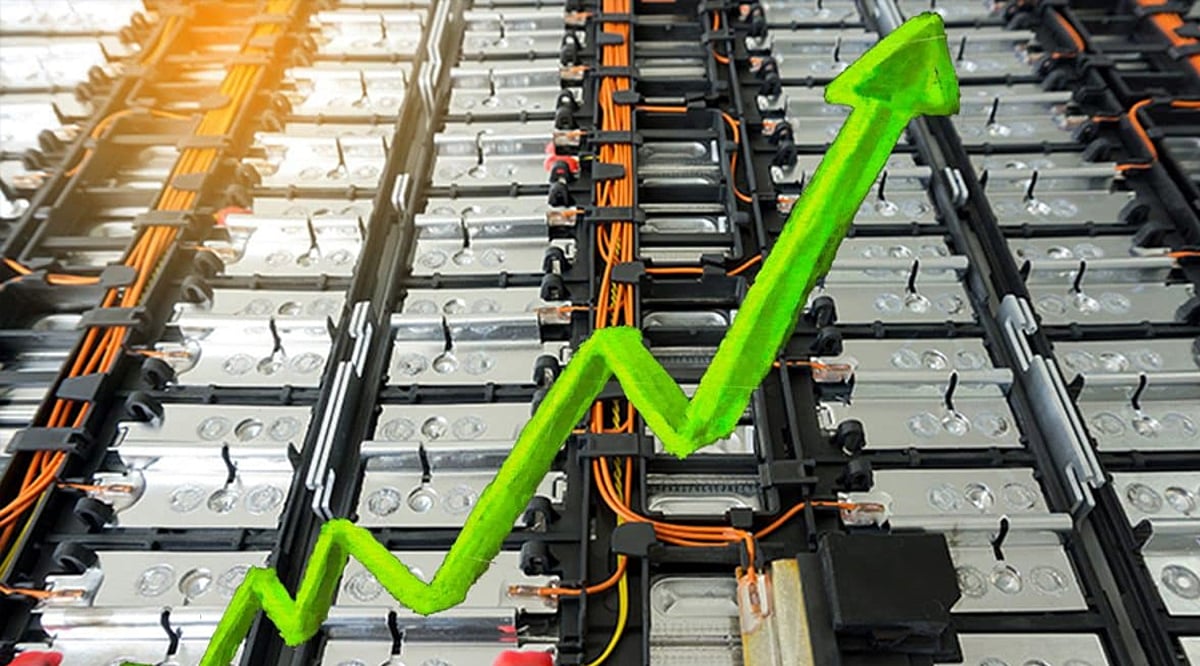
    Battery Companies Power Electric Mobility

    Battery technology is one of the most important parts of the EV ecosystem because it determines range, performance, and cost. Battery manufacturers and suppliers are investing heavily in advanced materials, faster charging solutions, and improved energy storage. Companies involved in battery production are becoming increasingly important as automakers seek reliable partners for future electric vehicle growth.

    Charging Networks Build EV Infrastructure

    The expansion of electric vehicles depends heavily on charging infrastructure. Companies developing charging stations, fast-charging technology, and energy management systems are helping create a stronger EV network. As more drivers switch to electric vehicles, charging providers are expected to play a larger role in supporting convenient and accessible transportation solutions.

    Semiconductor and Software Companies Gain Importance

    Modern electric vehicles rely on advanced chips, artificial intelligence, and software systems to improve performance and safety. Semiconductor companies and technology providers are becoming key contributors to the EV ecosystem. Their innovations support autonomous driving features, battery management systems, connected services, and smarter vehicle experiences for future generations of electric cars.

    Global Competition Shapes EV Investments

    The EV market includes companies from different regions competing through technology, pricing, and innovation. Manufacturers, battery suppliers, and infrastructure providers are expanding their capabilities to capture growing demand. Investors are monitoring businesses with strong growth potential while considering challenges such as supply chain risks, changing regulations, and increasing market competition.

    The Future of EV Ecosystem Stocks

    The electric vehicle revolution extends far beyond vehicle production, creating opportunities across multiple industries. Companies involved in batteries, charging, software, and renewable energy solutions will continue influencing the future of transportation. As EV adoption increases globally, ecosystem-focused businesses are expected to remain important areas of interest for technology and mobility investors.
  • 5 Undervalued Indian Renewable Energy Stocks to Watch in 2026

    5 Undervalued Indian Renewable Energy Stocks to Watch in 2026

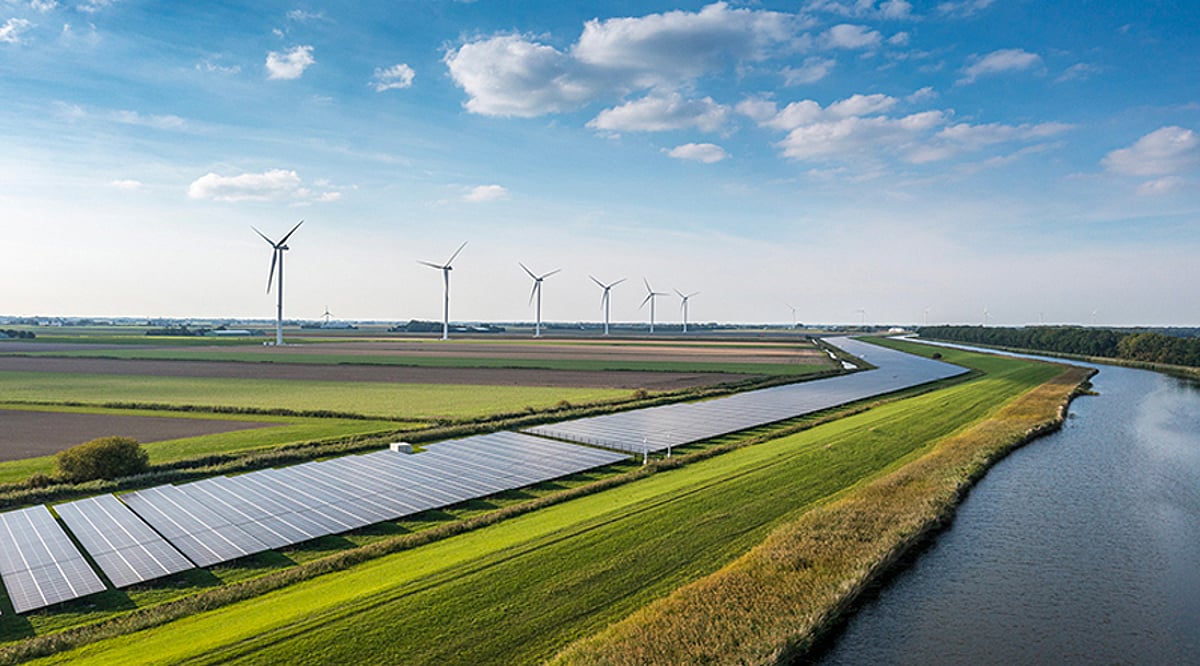
    India’s renewable energy sector is experiencing a structural boom driven by government support, rising electricity demand, and net-zero commitments. While some stocks have already priced in growth, several high-quality companies remain undervalued, offering compelling long-term opportunities. Here are five renewable energy stocks that deserve a spot on your watchlist.

    NTPC Green Energy

    NTPC Green Energy is the clean energy arm of state-owned NTPC, focusing on solar, wind, and green hydrogen projects. Backed by NTPC’s financial strength, the company is aggressively expanding its capacity. Its scale, execution track record, and government backing make it a core holding for investors tracking India’s energy transition.

    JSW Energy

    JSW Energy has successfully diversified from thermal power into renewables through large-scale solar, wind, and hydro projects. The company’s strong project execution, improving profitability, and ambitious capacity targets position it as an attractive long-term play. Market corrections often present entry points for this quality energy business.

    KPI Green Energy

    KPI Green Energy has built a strong presence in solar power generation and captive solar projects for industrial clients. Consistent revenue growth, an expanding project pipeline, and rising demand for clean energy solutions enhance its investment appeal. Its relatively smaller size also offers significant upside potential.

    Waaree Energies

    Waaree Energies is a key beneficiary of India’s growing solar manufacturing ecosystem. The company gains from rising domestic demand, government incentives, and increasing exports. Its expansion into integrated solar solutions strengthens its business outlook, making it a stock worth monitoring despite periodic volatility.

    Premier Energies

    Premier Energies has emerged as a major domestic solar cell and module manufacturer, capitalizing on India’s push for self-reliance in renewable energy. Capacity expansion, technological investments, and a robust order book support future growth. Investors looking beyond short-term price swings often consider it a promising long-term bet.

    Sector Outlook and Investment Considerations

    India’s renewable energy industry benefits from supportive policies, rising power demand, net-zero targets, and growing private investment. Companies with strong balance sheets, scalable business models, and diversified clean energy portfolios are well-positioned to capture this multi-decade growth trend.

    Undervalued stocks are not risk-free. Investors should evaluate valuations, debt levels, earnings growth, execution capability, promoter quality, and industry outlook before investing. Diversification, disciplined investing, and a long-term perspective remain essential when building exposure to renewable energy companies.

  • BlockDAG’s 10 Billion Staked and 135X ROI Potential Outshines Aave and Bittensor

    BlockDAG’s 10 Billion Staked and 135X ROI Potential Outshines Aave and Bittensor

    Every market cycle, investors search for the next cryptocurrency poised for explosive growth. Most finds are noise—flashy roadmaps with little substance. BlockDAG breaks that pattern with hard data. Batches 1 through 7 are live with claims, staking is operational, and over 10 billion BDAG tokens are already locked by holders. This is the result of two years of disciplined, no-shortcut development now translating into real numbers.

    Meanwhile, traders tracking Aave price movements and Bittensor TAO price charts are monitoring tokens that captured their early gains years ago. BlockDAG still sits at $0.000000017, with a 22% live swap discount and a $0.025 buyback price pointing toward a staggering 135X ROI.

    Two Years of Building Now Paying Off

    BlockDAG is not pitching a future—it’s showing receipts from one already in motion. The mainnet is live with EVM-compatible smart contracts, GHOSTDAG consensus, and an explorer processing over 4 million on-chain transactions across 374,400+ holders in more than 130 countries. Physical miner deliveries are underway, with X30 production at full scale, a first delivery wave within 45 days, and over 3.6 million X1 app miners active worldwide. BlockDAG.com Casino is a live commercial product with over $200 million wagered and 100+ games running—real revenue, not a whitepaper promise.

    Upcoming milestones include the BlockDAG Exchange (a company-owned trading platform offering spot and multi-asset markets) scheduled for August 2026, followed by the Super App in September, unifying mining, staking, trading, swaps, casino access, and a RedotPay-powered payment card. With claims live, staking live, over 10 billion BDAG locked, and a presale price of $0.000000017 backed by a $0.025 buyback pointing toward 135X ROI, it’s clear why many traders call this the next crypto to explode before the Exchange even opens its doors.

    Aave Price Reflects a Fully Matured Market

    Aave remains a respected DeFi lending protocol, and current Aave price action reflects a project that has matured into its valuation. AAVE trades near $97, inside a tight $96.87–$101.83 range, with a market cap around $1.5 billion and total value locked at $14.3 billion. However, circulating tokens sit at 15.4 million against a hard-capped 16 million max—almost the entire supply is already unlocked and priced in. Aave’s $50 million annual buyback program and pending Grayscale ETF filing are strong fundamentals, but this maturity means most easy multiples were captured years ago, unlike a presale-stage token still building its base.

    Bittensor TAO Price Faces a Long Climb Back

    Bittensor has built a credible AI-crypto story, and TAO currently trades near $193, with roughly 70% of total supply staked and subnet capacity doubled to 256 slots under the “Robin τ” upgrade. A Grayscale spot TAO ETF filing is pending, and Kraken’s addition of TAO spot trading in July added liquidity. Still, Bittensor TAO price sits nearly 75% below its all-time high near $758, and has fallen about 28% over the past year even as the AI narrative remained strong. BlockDAG’s presale-stage entry offers a different risk profile: ground-floor pricing instead of a token working to reclaim old highs.

    The Best Bet in a Choppy Market

    The wider market has spent months chopping sideways, grinding down portfolios. Against that backdrop, the case for BlockDAG grows stronger. Aave price strength and Bittensor TAO price resilience prove those projects are legitimate, mature players, but their easy upside is largely behind them. BlockDAG is still at ground level: claims live, staking live, over 10 billion BDAG locked, and an Exchange and Super App both landing within weeks. For anyone hunting the next crypto to explode this cycle, a proven presale with a real delivery record and a $0.000000017 entry price may be the best bet in the market right now.

    Disclaimer: Analytics Insight does not provide financial advice or guidance on cryptocurrencies and stocks. Cryptocurrencies mentioned may be risky and could result in loss of capital. This article is for informational purposes only and does not constitute investment advice. Always do your own research before making any investment decisions.

  • India Offers Apple Up to 15 Years of Tax Stability to Boost Manufacturing

    India Offers Apple Up to 15 Years of Tax Stability to Boost Manufacturing

    India is planning to provide Apple with up to 15 years of tax certainty for its manufacturing operations, a move designed to encourage the iPhone maker to expand production, invest in new facilities, and deepen its manufacturing footprint in the country.

    Under the proposed plan, the tax certainty would extend until March 31, 2041, up from the current deadline of 2031. The existing framework was introduced in February 2026 as part of the Union Budget for 2026–27 and was registered as Clause 109 of the Finance Bill, which amended Schedule IV of the Income-tax Act 2025.

    The proposal is linked to India’s business connection rules, which determine how foreign companies are taxed when operating in the country. A predictable tax environment helps companies plan long-term investments without fear of sudden policy changes. For a business investing billions in factories and supply chains, such stability is critical.

    In India, Apple funds the high-precision machinery used by Foxconn and Tata Electronics to assemble iPhones. Building new factories is a long-term commitment that requires years to set up production, hire workers, and develop supplier networks. Stable tax rules reduce business risks and make these decisions easier.

    The initiative builds on a 2016 agreement between Apple CEO Tim Cook and Indian Prime Minister Narendra Modi to establish a production base in India that goes beyond simple assembly. If approved, the extended tax certainty could help India attract more global manufacturers, strengthen its role in Apple’s worldwide supply chain, and bring additional jobs, investment, and exports to the country.

  • Insider-Owned UK Growth Stocks Forecast Up to 83% Earnings Surge

    Insider-Owned UK Growth Stocks Forecast Up to 83% Earnings Surge

    UK growth companies with substantial insider ownership are capturing investor attention as global trade headwinds pressure equity markets. The FTSE 100 and FTSE 250 recently slipped following weak Chinese trade data, raising concerns about demand. Against this backdrop, a stock screener has identified 63 fast-growing UK firms where insiders hold significant stakes, with projected earnings growth ranging from 25% to over 100% and insider ownership between 13% and nearly 40%.

    Next 15 Group: Aiming for a Turnaround

    Next 15 Group, listed on AIM with a market cap of roughly £298 million, operates across data, technology, creative services, and marketing. Its largest segment, marketing and communications, generated £330.19 million in revenue. Insiders own about 15.2% of the company. Analysts forecast annual earnings growth of 83.5%, though near-term results are weak: the company reported a net loss of £30.24 million and revenue is expected to decline 8% annually. Despite “going concern” doubts raised by its auditor, analysts expect a return to profit within three years. Insiders have made modest share purchases, increasing their exposure while the stock trades below estimated fair value.

    Foresight Group Holdings: Steady Profit Growth

    Foresight Group Holdings manages infrastructure and private equity assets in the UK and internationally, with a market cap of approximately £521 million. Its real assets division brought in £114.81 million in revenue, while private equity contributed £50.11 million. Insiders hold a substantial 35.7% stake. Analysts project revenue growth of 10.2% per year and earnings growth of 16.2% annually, both exceeding UK market averages. Recent accounts showed net profit rising to £42.83 million from £33.25 million. The company has also returned cash via a £9.6 million buyback program, and no large insider trades were reported. Foresight trades below its estimated fair value and at a lower valuation than some peers.

    Mortgage Advice Bureau: Revenue and Earnings on the Rise

    Mortgage Advice Bureau, a London-listed group valued at about £302 million, provides mortgage, protection, and insurance advice. Its financial services operations generated £317.62 million in revenue. Insiders own 18.4% of the company. Analysts expect annual earnings growth of 18.1%, above the UK market rate. First-half 2026 revenue reached £160 million, up 8% year-over-year, driven by higher activity across its adviser network. Small insider purchases have occurred recently, and the company has joined the FTSE All-Share Index. Although the stock trades above some fair value measures, analyst estimates point to further gains. Revenue growth is expected to trail earnings growth.

    These three companies illustrate how insider ownership can align management interests with shareholders, even as broader market conditions remain uncertain. Investors should weigh the risks—such as Next 15’s near-term losses and Foresight’s valuation discount—against the potential for significant earnings expansion.

  • Top Data Center Stocks and REITs to Invest In Amid Rising AI Demand

    Top Data Center Stocks and REITs to Invest In Amid Rising AI Demand

    Artificial intelligence is fueling a massive surge in demand for data centers, creating lucrative opportunities for investors in leading infrastructure companies and real estate investment trusts (REITs) worldwide. As AI workloads require immense computing power and storage, firms that own, operate, or supply data center technology are well-positioned for growth.

    Key Data Center Stocks and REITs

    Equinix (EQIX)

    Equinix operates premium global data centers with a strong base of enterprise customers. As a REIT, it benefits directly from rising AI infrastructure demand, providing reliable and secure colocation services.

    Digital Realty Trust (DLR)

    Digital Realty offers large-scale colocation facilities across the globe, attracting hyperscalers and AI companies that need secure, scalable, and connected data center space.

    NVIDIA (NVDA)

    NVIDIA powers AI data centers with advanced GPUs, making it one of the biggest beneficiaries of expanding artificial intelligence infrastructure investments.

    Vertiv Holdings (VRT)

    Vertiv provides cooling, power, and infrastructure solutions that help modern AI data centers operate efficiently while handling demanding computing workloads.

    Iron Mountain (IRM)

    Iron Mountain has expanded beyond traditional storage into data centers, offering investors exposure to digital infrastructure through a well-established REIT business.

    CoreWeave (CRWV)

    CoreWeave specializes in AI cloud computing and GPU infrastructure, emerging as a key player as enterprises accelerate AI model development.

    AMD (AMD)

    AMD supplies AI accelerators and server processors that strengthen data center performance, supporting growing demand from cloud and enterprise customers.

    Invest with a Long-Term Focus

    AI infrastructure demand continues to rise, but investors should carefully evaluate financial strength, valuations, growth prospects, and risks before making investment decisions.

  • Gold Price Update: MCX Gold Slips 0.25% to Rs 1,41,275 as Market Awaits US Fed Decision

    Gold Price Update: MCX Gold Slips 0.25% to Rs 1,41,275 as Market Awaits US Fed Decision

    Gold prices edged lower on the Multi Commodity Exchange (MCX) on July 29, as investors adopted a cautious stance ahead of the US Federal Reserve’s monetary policy meeting. August gold futures declined by 0.25% to settle at Rs 1,41,275 per 10 grams.

    In contrast, silver futures for September delivery gained 0.32% to Rs 2,16,530. Meanwhile, crude oil prices surged, with Brent crude futures rising 4.27% to $87.68 per barrel and US West Texas Intermediate (WTI) climbing 4.21% to $82.60 per barrel.

    According to the CME FedWatch Tool, traders now see a 76% probability of a rate hike in September by the US Federal Reserve, fueling uncertainty in the precious metals market.

    Domestic Gold Prices

    In the Indian market, 24K gold fell by Rs 86 to Rs 1,43,510 per 10 grams, while 22K gold declined by Rs 60 to Rs 1,31,550. Regionally, Mumbai and Kolkata recorded identical prices at Rs 1,43,510, Delhi at Rs 1,43,660, and Chennai at Rs 1,43,510.

    US Gold Prices

    In the international market, gold prices remained largely steady as investors awaited the Fed’s policy decision and comments from Fed Chair Kevin Warsh for clues on inflation and interest rates. Spot gold was little changed at $4,029.08 per ounce, while US gold futures for August delivery edged down 0.2% to $4,028.10.

    Spot silver gained 0.9% to $57.65 per ounce, platinum inched 0.3% higher to $1,600.40, and palladium slipped 0.7% to $1,261.

    Key Levels to Watch

    Kelvin Wong, senior market analyst at OANDA, noted, “Gold is very much connected to today’s FOMC meeting. The scenario that may see a potential reversal of the recent bearish bias in gold prices will be the Fed turning to a less hawkish rhetoric.”

    Internationally, gold has support at $4,010 and $3,974 and resistance at $4,070 and $4,110 per troy ounce. Silver has support at $56.80 and $56 and resistance at $58.40 and $59.10 per troy ounce.

    On the MCX, gold has support at Rs 1,40,800 and Rs 1,40,000 and resistance at Rs 1,42,200 and Rs 1,43,100. Silver has support at Rs 2,14,000 and Rs 2,12,200 and resistance at Rs 2,17,700 and Rs 2,20,000.

  • Nvidia-OpenAI $250 Billion Deal Raises Concerns Over Circular Financing and Debt Risks

    Nvidia-OpenAI $250 Billion Deal Raises Concerns Over Circular Financing and Debt Risks

    According to reports, OpenAI is in discussions with semiconductor giant Nvidia about a 10 GW AI data center campus in Pike County, Ohio, that will include up to $250 billion in lease and construction financing. The guarantee would cover funding for the facility and not Nvidia’s AI chips.

    SB Energy, a subsidiary of SoftBank, would help OpenAI build the facility in Ohio. The project could eventually cost more than $500 billion, including the AI chips used inside the data center, and is expected to deliver 800 megawatts of power by 2028.

    Why the Deal is Drawing Attention

    OpenAI, which is valued by private investors at around $1 trillion, continues to operate with no profit; given this, the proposed arrangement has raised questions. According to reports, Nvidia has already invested $30 billion in OpenAI and is also in talks to provide hundreds of billions of dollars’ worth of AI chips for future infrastructure.

    Critics argue that financing mechanisms of this scale blur the line between genuine customer demand and vendor-supported expansion. They warned that if infrastructure spending outpaces revenue growth from AI, then every company in the AI ecosystem may become more dependent on projects that rely on debt and credit.

    Michael Burry Raises Concerns

    Recently, Burry published a software-sector research report and made it freely available on June 21, outlining which companies he believes are best positioned for the AI era and which face greater disruption risks. Burry pushed back against claims that software companies are ‘dead’, arguing that large language models (LLMs) cannot replace human creativity. “LLMs, no matter how advanced they get at being LLMs, will never beat that creative instinct of a talented human being,” he wrote.

    Boston College Associate Dean Aleksandar Tomic added concerns about the financing model of industry, adding that “What is happening right now with OpenAI and others is that they need computing, but apparently they don’t really have the revenue or the financial capability to engage in the capital expenditures necessary to support their activities.” He also said, “They’re paying themselves Nvidia’s money to get Nvidia chips.”

    However, not everyone has the same opinion. Michael Monaghan, founder of Founder’s ETF, defended the broader investment cycle, stating, “That’s not necessarily circular financing. That’s just an economy.”

    AI Infrastructure Race Continues

    Despite these concerns, the reported agreement reflects the unprecedented scale of investment in global AI infrastructure. Leading tech giants like Microsoft, Amazon, Google, and Meta continue investing hundreds of billions of dollars to build AI data centers and computing power for next-generation foundation models.

    AI software, infrastructure, and related services are expected to exceed $631 billion globally by 2028, making businesses compete for their long-term computing resources, according to IDC.

    Regardless of whether Nvidia’s proposed backstop ever gets traction, it raises a larger issue in the AI industry: can AI infrastructure investments keep growing at the current pace, or are increasingly complex financing models just going to pose challenges for the industry?

  • Wall Street’s Bullish Outlook on Microsoft: Key Drivers for Late 2026

    Wall Street’s Bullish Outlook on Microsoft: Key Drivers for Late 2026

    Wall Street is increasingly bullish on Microsoft as the tech giant heads into late 2026, driven by strong growth in artificial intelligence, cloud computing, and enterprise software. Analysts highlight several key factors fueling this optimism.

    AI Revenue Growth

    Investors expect Microsoft’s expanding portfolio of AI products and premium services to generate higher recurring revenue, strengthening long-term financial performance. The company’s strategic focus on AI monetization is a major catalyst.

    Azure Cloud Momentum

    Continued growth in Microsoft Azure, fueled by AI workloads, positions the company as a leading enterprise cloud provider globally. Azure’s ability to handle complex AI tasks gives it a competitive edge in the market.

    Copilot Business Expansion

    Wider deployment of Microsoft Copilot across enterprise customers creates fresh monetization opportunities while improving the company’s competitive advantage in workplace software. Copilot is becoming a key driver of productivity and revenue.

    Strong Financial Results

    Consistent revenue growth, healthy operating margins, and robust cash flow reinforce Wall Street’s confidence in Microsoft’s long-term business outlook. The company’s financial stability underpins its growth initiatives.

    Enterprise Customer Base

    Microsoft’s extensive relationships with enterprise customers provide a stable foundation for expanding AI services across governments, corporations, and regulated industries worldwide. This base ensures steady demand for new offerings.

    AI Infrastructure Investments

    Heavy investments in AI infrastructure prepare Microsoft for increasing enterprise demand while supporting future revenue expansion and platform reliability. These investments are critical for maintaining leadership in AI.

    Cloud and Software Leadership

    Microsoft’s leadership across cloud computing, productivity software, cybersecurity, and AI creates multiple growth opportunities beyond its traditional businesses. This diversification reduces risk and drives innovation.

    Analyst Optimism

    Many analysts remain positive because Microsoft’s diversified business model reduces risk while benefiting from accelerating global AI adoption trends. The company’s ability to navigate market changes is a key strength.

    Long-Term Growth Potential

    Investors view Microsoft as well-positioned for sustained growth through continuous innovation, enterprise AI leadership, and expanding global technology demand. The company’s strategy aligns with long-term tech trends.

  • Top Metaverse Crypto Coins to Watch in July 2026

    Top Metaverse Crypto Coins to Watch in July 2026

    The metaverse continues to reshape digital economies, and several cryptocurrencies are at the forefront of this transformation. Here are the top metaverse crypto coins to consider for investment in July 2026.

    Decentraland (MANA)

    MANA powers a virtual world where users can create experiences, own digital land, and participate in a growing blockchain-based metaverse economy. It enables a decentralized, community-driven platform for social interaction, gaming, and commerce.

    The Sandbox (SAND)

    SAND allows creators to build, monetize, and trade immersive gaming experiences using blockchain technology. It provides a secure ecosystem for virtual asset ownership and user-generated content, fostering a vibrant creator economy.

    ApeCoin (APE)

    ApeCoin supports gaming, digital communities, and metaverse initiatives. Its utility is expanding through ecosystem partnerships and decentralized governance, offering holders a voice in the development of the broader metaverse landscape.

    Axie Infinity (AXS)

    Axie Infinity drives blockchain gaming with a play-to-earn model. Players earn rewards while contributing to the ecosystem’s growth. AXS is central to governance and staking, supporting continuous development and community participation.

    Render (RENDER)

    Render provides decentralized GPU rendering services essential for creating realistic metaverse graphics, virtual experiences, and AI-powered digital content. It addresses the computational demands of high-fidelity virtual worlds efficiently.

    Immutable (IMX)

    Immutable offers scalable blockchain infrastructure for NFT games, enabling secure transactions, lower fees, and seamless gaming experiences. It is designed to support developers in building and scaling Web3 games.

    Beam (BEAM)

    Beam focuses on blockchain gaming infrastructure, providing developers with tools to enhance game economies and digital asset ownership across platforms. It aims to streamline the integration of blockchain into gaming.

    Gala (GALA)

    Gala powers decentralized gaming ecosystems where players enjoy true ownership of in-game assets. It supports developer innovation through blockchain technology, enabling a player-driven economy.

    Floki (FLOKI)

    Floki has expanded beyond its meme origins into metaverse projects, gaming utilities, and ecosystem growth. The project focuses on increasing long-term community adoption through practical applications and partnerships.

    These coins represent diverse opportunities within the metaverse and blockchain gaming sectors. As always, conduct thorough research before investing.