Tag: IoT

  • How Metamaterials Are Revolutionizing Wireless Technology for 6G and Beyond

    How Metamaterials Are Revolutionizing Wireless Technology for 6G and Beyond

    Metamaterials are redefining wireless communications by transforming the environment itself into an active part of the network. From Reconfigurable Intelligent Surfaces (RIS) and holographic MIMO antennas to smarter spectrum management and battery-free IoT sensors, these engineered materials promise to improve signal coverage, reduce interference, and support the high-frequency demands of 6G. While challenges around large-scale deployment and standardization remain, metamaterials are rapidly emerging as a cornerstone of next-generation wireless infrastructure.

    What Are Metamaterials?

    A metamaterial is an artificially engineered structure whose electromagnetic properties are determined by its design rather than its chemical composition. Natural materials interact with electromagnetic waves in ways governed by physics—they absorb, reflect, or transmit signals according to their molecular structure. Metamaterials are different. By engineering arrays of sub-wavelength structures—patterns far smaller than the wavelength of the signal they interact with—designers can create surfaces that bend, focus, redirect, or absorb electromagnetic waves in ways that do not occur naturally. Negative refractive index materials, for instance, can bend radio waves backward, a property that exists in no naturally occurring substance.

    The Problem With High-Frequency Wireless Signals

    The transition from 4G to 5G and ongoing planning for 6G have pushed wireless communication into progressively higher frequency bands. Higher frequencies carry more data but come with a critical weakness: they are easily blocked by physical obstacles. Walls, buildings, trees, and even the human body can significantly attenuate millimeter-wave and terahertz signals, creating coverage gaps that adding more base stations can only partially address. As IEEE researchers have noted, engineers are approaching the practical limits of transmitter and receiver efficiency. Getting more performance out of next-generation wireless networks will increasingly require engineering the wireless channel itself, not just its endpoints.

    Reconfigurable Intelligent Surfaces: Smart Skins for Buildings

    The most immediately practical metamaterial application in wireless technology is the Reconfigurable Intelligent Surface, or RIS—a programmable panel made from metamaterial elements whose electromagnetic properties can be adjusted electronically in real time. Unlike a passive surface that reflects signals at a fixed angle, an RIS can redirect incoming signals toward specific locations, fill coverage dead zones, or steer beams toward moving users. Rather than requiring line-of-sight between a base station and a device, networks equipped with RIS panels can route signals around corners and around obstacles without additional base stations.

    Holographic MIMO and Antenna Miniaturization

    Metamaterials are enabling a fundamentally different approach to antenna design. Conventional antenna arrays require individual elements to be spaced at half-wavelength intervals, a physical constraint that sets a floor on compactness while maintaining performance. Metamaterial-based antenna elements can be packed far more densely, approaching what researchers describe as a continuous radiation aperture. This makes holographic MIMO possible, in which an entire surface—rather than a discrete set of antennas—creates and steers highly precise signal beams. For 6G networks targeting terahertz frequencies, where wavelengths are measured in fractions of a millimeter, this level of integration is not a refinement but a practical necessity.

    Sensing, Spectrum, and Beyond Connectivity

    Metamaterial applications extend beyond pure connectivity. Metasurface-based sensors can detect environmental changes in temperature, humidity, and chemical presence by monitoring shifts in their electromagnetic response, enabling passive, battery-free IoT sensors that communicate purely through interaction with ambient radio signals. On the spectrum side, metamaterial filters with exceptionally sharp frequency selectivity and low insertion loss allow more precise use of increasingly congested radio bands, separating signals that conventional filters would blur.

    From Research to Real Networks

    The central challenge for wireless metamaterials in 2026 is the transition from laboratory demonstrations to deployed infrastructure. Fabrication at the scale and cost required for widespread deployment, integration with existing network management systems, and the development of coordination standards between RIS panels and base stations are all active areas of engineering work. Major vendors, including Huawei, Ericsson, and Nokia, alongside academic institutions across Europe and Asia, are running field trials and prototype deployments. The technology’s trajectory is clear; what remains is the engineering and standardization work that separates metamaterials as a research field from metamaterials as the physical infrastructure layer of the next generation of wireless networks.

    Why This Matters

    The future of wireless communication depends not only on faster processors and better antennas but also on controlling the physical environment through which signals travel. Metamaterials offer a fundamentally new approach by making buildings, walls, and other surfaces part of the communication network itself. This could reduce infrastructure costs, eliminate signal dead zones, improve spectrum efficiency, and accelerate the deployment of 6G, autonomous vehicles, smart cities, industrial IoT, and extended reality applications. As the demand for ultra-fast, low-latency connectivity continues to grow, metamaterials may become one of the most important enabling technologies of the next decade.

    Frequently Asked Questions

    What are metamaterials, and how are they different from conventional materials?

    Metamaterials are artificially engineered materials whose electromagnetic properties are determined by their internal structure rather than their chemical composition. Unlike conventional materials that naturally absorb, reflect, or transmit electromagnetic waves, metamaterials can manipulate radio waves in unique ways, such as bending, focusing, or redirecting them. This makes them valuable for advanced wireless communications, imaging systems, and next-generation networking technologies.

    How can metamaterials improve wireless communication networks?

    Metamaterials improve wireless communication by giving engineers the ability to control how radio signals travel through the environment. Instead of simply boosting transmitter power or receiver sensitivity, metamaterial-based surfaces can redirect signals around obstacles, reduce interference, and eliminate coverage dead zones. This results in stronger connectivity, higher data speeds, improved energy efficiency, and more reliable wireless performance, especially in dense urban environments.

    What is a Reconfigurable Intelligent Surface (RIS), and why is it important?

    A Reconfigurable Intelligent Surface (RIS) is a programmable panel made from metamaterial elements that can dynamically alter how electromagnetic waves are reflected. Unlike ordinary walls or surfaces that passively reflect signals, an RIS can steer signals toward specific users or around obstacles in real time. This technology is considered one of the most promising innovations for future 6G networks because it improves coverage without requiring additional base stations.

    Why are metamaterials considered essential for future 6G networks?

    Future 6G networks are expected to operate at terahertz frequencies, which can deliver extremely high data rates but are easily blocked by walls, buildings, trees, and even people. Metamaterials help overcome these limitations by intelligently redirecting signals through programmable surfaces. This improves network coverage, reduces signal loss, and supports ultra-low latency applications such as autonomous vehicles, holographic communication, and immersive extended reality experiences.

    Can metamaterials reduce the need for more mobile towers and base stations?

    In many scenarios, yes. Metamaterial-based Reconfigurable Intelligent Surfaces can redirect existing wireless signals into areas with weak coverage, reducing the need to install additional base stations. While they may not completely replace traditional infrastructure, they can significantly improve network performance in cities, stadiums, airports, office buildings, and underground transportation systems, potentially lowering deployment costs for telecom operators.

  • How BMW’s ConnectedDrive Leverages IoT for Smarter, Safer Vehicles

    How BMW’s ConnectedDrive Leverages IoT for Smarter, Safer Vehicles

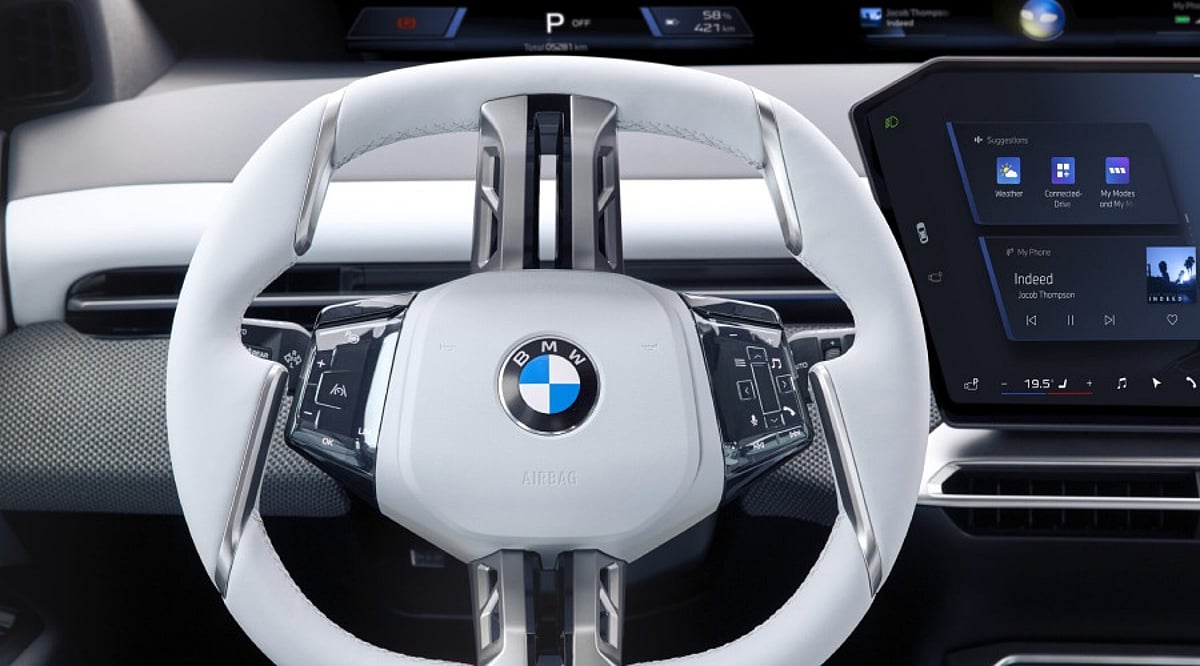
    Modern vehicles have evolved far beyond simple transportation. Today’s cars connect to the internet, exchange data with cloud platforms, receive over-the-air updates, and deliver digital services. BMW leads this transformation with its ConnectedDrive ecosystem, which harnesses the Internet of Things (IoT) to create a seamless link between vehicles, cloud servers, smartphones, and traffic systems.

    According to BMW Group, more than 22 million connected BMW vehicles are now linked to the BMW Cloud worldwide. This vast network enables real-time data exchange, predictive maintenance, remote control, intelligent navigation, and personalized features that continuously improve safety, convenience, and driving performance.

    IoT as the Foundation of ConnectedDrive

    Every ConnectedDrive vehicle is equipped with hundreds of smart components—sensors, cameras, GPS modules, telematics units, and onboard computers. These components collect data on engine health, battery condition, tire pressure, brake wear, fuel level, location, weather, and road conditions. The information is securely transmitted to the BMW Cloud via mobile networks.

    The cloud processes millions of data points in seconds, sending actionable insights back to the vehicle. This constant feedback loop allows BMW to enhance performance without replacing physical parts, making each car smarter over time through regular digital improvements.

    Predictive Maintenance Prevents Problems

    One of the key benefits of BMW’s IoT system is predictive maintenance. Sensors continuously monitor brakes, tires, battery, engine, and electronics. When the system detects an unusual pattern, it sends a warning before a minor issue escalates into a costly repair. This early alert helps owners schedule service visits proactively, reducing unexpected breakdowns and improving long-term reliability.

    Over-the-Air Software Updates

    ConnectedDrive enables BMW to deliver software updates directly to compatible vehicles via the internet. These updates enhance navigation, entertainment, security, driver assistance, and overall performance—without requiring a trip to the dealership. The upcoming Neue Klasse platform will further accelerate this capability with an advanced digital architecture.

    Smarter Navigation with Live Traffic Data

    BMW’s IoT-powered navigation system receives real-time data from cloud servers, including traffic jams, road closures, accidents, weather, and parking availability. If conditions change mid-trip, the system instantly recalculates a better route. For electric models, the system also factors in battery level, range, and charging station locations to suggest optimal routes.

    Remote Control via the My BMW App

    The My BMW App extends ConnectedDrive to your smartphone. Users can check battery or fuel levels, locate their car, lock/unlock doors, pre-condition the cabin, manage charging, receive maintenance alerts, and send destinations to the navigation system. All functions rely on seamless IoT connectivity between phone, cloud, and vehicle.

    Personalized Driving Experience

    ConnectedDrive stores individual preferences—seat positions, climate settings, navigation favorites, entertainment choices, and driving modes—in the BMW Cloud. When a driver logs into any compatible BMW with their BMW ID, these settings are automatically restored. The voice assistant also improves over time through cloud-based updates to speech recognition and language understanding.

    Fleet Data Drives Future Innovation

    BMW uses anonymized data from millions of connected vehicles to improve future models. The company analyzes road conditions, traffic patterns, vehicle performance, battery efficiency, and software behavior. This real-world data helps engineers refine navigation, boost energy efficiency, develop safer driver assistance systems, and create better software updates.

    Security First Approach

    With millions of data exchanges daily, BMW prioritizes security. All communication between vehicle and cloud uses encrypted connections and secure authentication. Regular over-the-air updates close newly discovered vulnerabilities, ensuring personal data remains protected throughout the vehicle’s lifespan.

    The Road Ahead: Neue Klasse and Beyond

    BMW plans to launch over 40 new and updated models by 2027, many built on the Neue Klasse platform. This platform will feature more powerful computers, enhanced cloud communication, advanced AI, and improved digital services. ConnectedDrive will deliver faster updates, smarter functions, and better performance. BMW is also expanding partnerships in connected-car technology, autonomous driving, and digital services.

    Final Thoughts

    BMW’s ConnectedDrive ecosystem demonstrates how IoT is revolutionizing the automotive industry. With over 22 million vehicles connected to the BMW Cloud, the brand is a global leader in connected mobility. Features like predictive maintenance, live navigation, remote control, personalization, and over-the-air updates are just the beginning of what IoT can achieve in modern cars.

  • PowerPlay CEO Iesh Dixit on How AI and Digital Platforms Are Building Smarter Infrastructure in India

    PowerPlay CEO Iesh Dixit on How AI and Digital Platforms Are Building Smarter Infrastructure in India

    India’s construction sector is embracing digital transformation as builders turn to software, artificial intelligence, and data-driven tools to enhance project management. Traditionally reliant on manual processes, the industry is now leveraging smartphones and cloud-based platforms to streamline operations, track progress, and minimize delays.

    In a recent episode of the Analytics Insight Podcast, Iesh Dixit, Co-founder and CEO of PowerPlay, discussed how his company is digitizing construction sites across India. He shared his entrepreneurial journey, the role of AI and predictive analytics, the future of digital twins and IoT, and how technology can help achieve India’s ambitious infrastructure goals.

    From Construction Sites to Startup Founder

    Dixit explained that his childhood was spent on construction sites, where he worked as a site supervisor. After graduation, he was determined to start a company. By 2020, he focused on building something for the construction industry, recognizing a gap in digitization and data centralization. PowerPlay began as bulky software for contractors’ back offices, but the team soon realized they needed to solve problems for on-site users. Today, PowerPlay has over a million users across platforms, all from construction sites.

    Practical Impact of AI in Indian Construction

    According to Dixit, the widespread adoption of smartphones has been a game-changer. He emphasized that construction site workers are not primarily focused on digitization—it’s only 10–20% of their job. Therefore, any digital tool must not interfere with their core tasks. PowerPlay focuses on making adoption seamless so that site teams can continue their main work while benefiting from digital insights.

    Predictive Analytics for Cost and Delay Reduction

    Dixit noted that digitization has broken down silos in construction. Previously, even large companies had projects that rarely communicated with finance except at milestones. Now, predictive analytics can link baseline plans, progress data, material usage, labor, and assets together. This integration helps forecast delays, optimize resource allocation, and improve operational efficiency.

    Digital Twins and IoT

    IoT is essential for collecting accurate data points, while digital twins allow stakeholders to compare planned progress with actual site conditions without visiting the site. Dixit shared that he previously built an AR/VR company and understands the potential, but technology maturity is still a barrier for widespread adoption, particularly among smaller players. Larger firms can afford digital twin implementations now, and they offer significant benefits.

    AI as a Core Enabler for India’s Infrastructure

    PowerPlay’s mission is to support the infrastructure India needs over the next decade, including roughly 90 million homes. Dixit believes AI will help bring new talent into the industry and drive innovation. He called for more entrepreneurs to build solutions that address construction’s unique challenges.

    For the full conversation, listeners can tune into the Analytics Insight Podcast.

  • Top Smart Hotels You Can Book Today: From Robot Staff to Voice-Controlled Rooms

    Top Smart Hotels You Can Book Today: From Robot Staff to Voice-Controlled Rooms

    The hospitality industry is rapidly embracing technology, and a growing number of hotels now offer guests a truly connected, automated experience. From mobile check-ins and robotic luggage storage to voice-controlled lighting and blockchain-powered rooms, these smart hotels are redefining what it means to stay away from home. Here are some of the most innovative smart hotels you can actually book today.

    CitizenM

    CitizenM hotels offer app-based check-in, smart room controls, and modern automation, delivering seamless stays with stylish spaces and efficient digital convenience. Guests can adjust the room’s mood lighting, temperature, and entertainment from their smartphone or an in-room tablet.

    YOTEL

    YOTEL is known for its technology-driven hospitality, featuring robotic luggage storage, self-service kiosks, and adjustable smart beds. The hotel is designed for modern business and leisure travelers who value efficiency and comfort.

    Henn na Hotel (Japan)

    Henn na Hotel, located in Japan, is famous for its robot staff, facial recognition check-in, and automated services. This futuristic property redefines traditional hotel hospitality with a completely automated experience.

    Hilton Connected Room

    Hilton’s Connected Room allows guests to control lighting, temperature, the television, and curtains through a smartphone. This personalized comfort system ensures every stay is tailored to individual preferences.

    Marriott Smart Rooms

    Marriott’s smart rooms integrate voice assistants, mobile room access, and customized preferences, ensuring convenience and enhancing the overall guest accommodation experience.

    Wynn Las Vegas

    Wynn Las Vegas is equipped with smart voice controls that operate lighting, entertainment, and room settings, delivering premium comfort with advanced automation technology.

    Eccleston Square Hotel (London)

    Eccleston Square Hotel features tablet-controlled lighting, curtains, and entertainment systems, combining luxury accommodation with cutting-edge in-room technology for travelers.

    The Sinclair Hotel (Fort Worth, Texas)

    The Sinclair Hotel uses blockchain technology and IoT-enabled smart rooms to deliver energy-efficient operations alongside enhanced guest convenience and security features.

    Hotel EMC2 (Chicago)

    Hotel EMC2 combines artistic design with smart room technologies, interactive digital experiences, and personalized guest services for a memorable modern hospitality experience.

  • How Context-Aware Technology Is Revolutionizing Smart Devices Across Industries

    How Context-Aware Technology Is Revolutionizing Smart Devices Across Industries

    Context-aware technology is reshaping the way smart devices interact with users by learning from their habits, location, and daily routines. Instead of waiting for explicit commands, these devices can anticipate needs and deliver personalized experiences. From suggesting workout playlists to automatically adjusting home settings, context-aware systems make everyday interactions more natural, convenient, and tailored to individual preferences.

    Smarter Personalization

    Context-aware technology enables devices to understand user behavior and environmental cues. This allows for predictive actions, such as adjusting lighting when a movie starts or recommending music based on activity. The result is a seamless, intuitive user experience that feels less like technology and more like a helpful companion.

    Better Voice Assistants

    Modern voice assistants are becoming more intelligent by understanding context rather than just processing words. They recognize previous conversations, user preferences, and situational nuances to deliver more accurate responses. This reduces misunderstandings and makes interactions with smart speakers, smartphones, and home assistants faster and more reliable.

    Smarter Homes

    Context-aware systems enhance smart homes by enabling devices to react to changing conditions. Lights dim automatically during a movie, thermostats adjust based on room occupancy, and security cameras detect unusual activity. These intelligent responses create safer, more comfortable, and energy-efficient living spaces for families.

    Improved Health Monitoring

    Wearable devices leverage context-aware technology to provide deeper health insights. Smartwatches track activity, sleep, heart rate, and location together to offer meaningful recommendations. Instead of just collecting data, these devices identify patterns and alert users to unusual changes, empowering informed health decisions.

    Safer Connected Cars

    Modern vehicles use context-aware systems to boost safety and convenience. By analyzing road conditions, driver behavior, traffic, and weather, cars can issue timely warnings or adjust functions automatically. These features reduce distractions, support safer driving, and enhance the overall driving experience.

    More Efficient Workplaces

    Businesses are adopting context-aware technology to improve productivity. Smart office systems adjust lighting, meeting rooms, and climate based on occupancy and schedules. Employees receive relevant notifications at the right time, helping to minimize distractions and streamline everyday tasks.

    The Future of Intelligent Devices

    As artificial intelligence and connectivity advance, context-aware systems will become even more capable. Future smart devices will better understand environments, routines, and user intentions without constant input. This evolution will create seamless digital experiences that save time, boost efficiency, and simplify life across homes and workplaces.

  • Understanding Ambient Intelligence: How It Works and Why It Matters

    Understanding Ambient Intelligence: How It Works and Why It Matters

    What Is Ambient Intelligence?

    Ambient Intelligence (AmI) refers to environments embedded with artificial intelligence, sensors, connected devices, and automation that can understand people’s needs and respond proactively. Instead of requiring constant manual input, these systems quietly adapt lighting, temperature, security, entertainment, and digital services, creating seamless, personalized experiences in homes, offices, hospitals, and public spaces.

    The Technologies Behind Ambient Intelligence

    Ambient Intelligence combines AI, the Internet of Things (IoT), edge computing, cloud services, computer vision, and voice recognition. Smart sensors continuously collect environmental data, while AI analyzes patterns to make real-time decisions. Together, these technologies allow devices to communicate with one another, automate routine tasks, and provide intelligent assistance with minimal human intervention.

    How Smart Homes Use Ambient Intelligence

    Modern smart homes showcase Ambient Intelligence through connected lighting, climate control, appliances, and security systems. AI can learn daily routines, automatically adjust room temperatures, optimize energy consumption, recognize household members, and even detect unusual activity. The goal is to improve comfort, convenience, safety, and efficiency without requiring users to constantly manage individual devices.

    Ambient Intelligence in Healthcare

    Healthcare is rapidly adopting Ambient Intelligence to improve patient care and operational efficiency. AI-powered monitoring systems can track vital signs, detect falls, remind patients to take medications, and alert caregivers during emergencies. Hospitals also use intelligent environments to optimize workflows, reduce response times, and support healthcare professionals with real-time insights and predictive analytics.

    Transforming Workplaces and Cities

    Businesses and smart cities are integrating Ambient Intelligence to enhance productivity and sustainability. Intelligent offices automatically manage lighting, meeting rooms, and air quality based on occupancy. In urban environments, AI-powered traffic systems, connected infrastructure, and smart public services help reduce congestion, improve energy efficiency, and deliver more responsive experiences for residents and visitors alike.

    Privacy and Security Challenges

    As Ambient Intelligence relies heavily on continuous data collection, privacy and cybersecurity remain major concerns. Organizations must protect sensitive personal information, secure connected devices from cyberattacks, and ensure transparent data practices. Responsible AI development, strong encryption, user consent, and regulatory compliance will be essential for building public trust in intelligent environments.

    The Future of Ambient Intelligence

    With advances in generative AI, edge AI, and increasingly capable sensors, Ambient Intelligence is expected to become even more intuitive over the coming years. Future systems will better anticipate user needs, reduce energy consumption, support aging populations, and create highly personalized experiences, making intelligent environments an increasingly important part of everyday life.

  • Siemens’ Smart Factory Blueprint: Integrating IoT, AI, and Digital Twins for Next-Gen Manufacturing

    Siemens’ Smart Factory Blueprint: Integrating IoT, AI, and Digital Twins for Next-Gen Manufacturing

    Manufacturers need smarter ways to increase productivity while reducing downtime and operational complexity. Siemens is building next-generation factories by combining IoT connectivity, AI-driven insights, and digital twin technology into a unified digital ecosystem. This approach enables continuous monitoring, virtual testing, and data-driven optimization across production.

    The Three-Part System Behind the Strategy

    Siemens leans on three technologies: Industrial IoT, AI, and digital twins. IoT sensors and connected machines log real-time data from the factory floor. This raw data feeds into the AI layer, which identifies bottlenecks, flags equipment likely to fail, and runs production scenarios before commitments are made. The digital twin—a working copy of the factory—lets engineers experiment without touching physical assets. Siemens has bundled all three into a single platform called Digital Twin Composer.

    Digital Twin Composer: A Unified Platform

    Unveiled at CES 2026, Digital Twin Composer merges 2D and 3D digital twin data with live operational information from manufacturing execution systems, plus physics-based simulation built on NVIDIA Omniverse libraries. The output is a photorealistic virtual environment mapping an entire plant, not just a single machine. This marks the point where an industrial digital twin stops being a design tool and begins functioning as a live operational model.

    Where the Tool Lives Inside Siemens’ Stack

    Digital Twin Composer sits within Siemens Xcelerator, the company’s broader software portfolio, and will be available on the Xcelerator Marketplace in mid-2026. One Xcelerator tool, Tecnomatix, handles manufacturing directly—optimizing material flow, equipment use, and supporting virtual commissioning to validate automation logic and production workflows before physical deployment. This cuts commissioning time and engineering risk.

    What Early Numbers Show

    PepsiCo offers the clearest evidence. Using Digital Twin Composer to transform select U.S. manufacturing and warehouse facilities, the company recreated machines, conveyors, pallet routes, and operator paths with physics-level accuracy. The pilot identified up to 90 percent of design issues in advance and lifted throughput by 20 percent before construction began. PepsiCo plans to scale globally.

    The Bigger Platform Siemens is Building

    Siemens ties all of this to what it calls the industrial metaverse—a unified environment where engineering, operations, and AI teams share the same live, contextualized model of the factory. Together with NVIDIA, Siemens is working toward an Industrial AI Operating System, a shared foundation linking design, engineering, and daily operations across a plant’s full lifecycle.

    Analysts at Verdantix note that large-scale digital twin adoption has moved slowly, with barriers outside the technology itself. Manufacturers need IT and OT data convergence, stronger cybersecurity, proper data governance, and core systems like MES and MOM in place before a digital twin can generate real value.

    Final Thoughts

    The competitive edge in manufacturing is shifting from who collects the most data toward who can act on it fastest and with the least risk. Siemens has built a platform designed for that shift, and PepsiCo’s early numbers give other manufacturers a concrete benchmark. The next test will be whether that performance holds once Digital Twin Composer moves from early access into wide industrial use.

  • Top 10 IoT Innovators Shaping 2026: Companies Driving Connected Technology Forward

    Top 10 IoT Innovators Shaping 2026: Companies Driving Connected Technology Forward

    The Internet of Things (IoT) continues to transform industries worldwide, and a handful of companies are leading the charge with cutting-edge hardware, software, and cloud platforms. Here are the top 10 IoT companies driving innovation in 2026.

    1. Cisco – Delivers enterprise-grade IoT networking, cybersecurity, and edge computing solutions that support secure digital transformation across multiple industries globally.
    2. Siemens – Leads industrial IoT with smart manufacturing, automation, predictive maintenance, and digital twin technologies for efficient factory operations worldwide.
    3. IBM – Combines AI, cloud computing, and IoT platforms to optimize asset management, predictive analytics, and enterprise decision-making across industries.
    4. Microsoft – Azure IoT services enable businesses to securely connect devices, analyze data, and automate operations using advanced cloud technologies efficiently.
    5. Amazon Web Services (AWS) – AWS IoT offers scalable cloud infrastructure connecting billions of devices while supporting analytics, machine learning, and industrial applications worldwide.
    6. Intel – Develops processors, edge AI solutions, and IoT hardware powering smart cities, manufacturing, healthcare, and connected infrastructure across diverse sectors.
    7. Bosch – Innovates through connected mobility, smart homes, industrial automation, and sensor technologies that improve efficiency, safety, and sustainability worldwide.
    8. Qualcomm – Provides advanced IoT chipsets, wireless connectivity, and edge intelligence enabling smarter consumer electronics, vehicles, and industrial equipment globally.
    9. Samsung – Expands IoT ecosystems with connected appliances, SmartThings integration, advanced sensors, and AI-powered devices, enhancing everyday digital lifestyles seamlessly.

    These organizations are defining the future of connected technology, from industrial automation to smart homes and beyond.

  • How Arya.ag Combines Satellite AI and Agri-Fintech to Reduce Post-Harvest Losses and Boost Farmer Credit

    How Arya.ag Combines Satellite AI and Agri-Fintech to Reduce Post-Harvest Losses and Boost Farmer Credit

    In an interview with Analytics Insight, Anand Chandra, Co-Founder & Executive Director of Arya.ag, discusses how the company leverages satellite imagery, AI, IoT, and agri-fintech to transform India’s grain supply chain, reduce post-harvest losses, and unlock credit for farmers.

    How does Arya.ag use AI, IoT, and satellite data across the grain value chain, and what makes your tech deployment accurate across diverse geographies and crops in rural India?

    Arya.ag integrates technology to create the most practical value in the agricultural supply chain. Satellite imagery is a key layer in our stack. It enables predictive analytics on crop health, weather-related risks, and biotic stress. These insights directly inform our procurement planning and advisory services. For example, we can flag early warning signs of crop failure or pest outbreaks, allowing farmers and buyers to make timely decisions.

    AI is used for quality grading of grains and for risk scoring that determines a farmer’s credit eligibility. IoT systems are embedded into our hermetic storage infrastructure to support real-time surveillance and inventory management, particularly in warehouses close to the farm.

    What ensures accuracy is how these technologies are layered and localised. We operate across 11,000 near-farm storage points in 425 districts, covering 21 states. The models we use are trained using regional parameters and adapted to local cropping cycles and behaviour. This is not a one-size-fits-all deployment. The stack evolves with geography, making it both context-aware and scalable.

    By turning grain into digital assets, how is Arya.ag reshaping farmer access to credit, and what does this mean for financial inclusion at scale?

    Once produce enters our storage network, it is graded, weighed, and converted into an electronic balance. This balance is a digital representation of value that can be offered as collateral for credit or sold through our platform. This method unlocks access to formal finance without relying on land records, income statements, or traditional credit scores. More than 40 percent of our borrowers are accessing formal finance for the first time. Crucially, this creates an alternative to informal financial systems. Farmers no longer need to depend on local traders or commission agents for liquidity. With digital visibility and secure collateral, they can take loans based on stored produce and choose when to sell. The credit process is designed for speed and transparency. Disbursement happens in minutes, repayments are tied to commodity sales, and all transactions are visible to stakeholders. It is a system that brings financial inclusion to fragmented, underbanked regions, while also de-risking credit by focusing on the commodity rather than the farmer alone.

    What is one AI or IoT application that surprised you with its impact, and how are these insights actually enabling farmers or partners on the ground?

    Biotic stress detection through satellite imagery has been one of the most impactful use cases. We piloted this capability in select districts through our FPO partners, aiming to improve crop visibility. During one cycle, the system flagged early-stage pest risks in maize before they were visible on the ground. This advisory was delivered through our app and verified by our field teams. The FPO acted on the alert, which helped farmers intervene early and significantly reduce crop losses.

    What made this solution stand out was not just the outcome but the cost at which it was delivered. Satellite-based insights have typically been expensive or limited to large enterprises. We have made this capability available at a price rural institutions can afford. That combination of affordability, speed, and accuracy makes it practical for wide-scale deployment.

    It also reinforced an important lesson. Technology only creates value when insights are timely, actionable, and delivered through a trusted interface that connects digital systems to people on the ground.

    With poor connectivity and low digital trust in rural India, what is the most realistic way to scale agritech, and where are policymakers or innovators missing the mark?

    The most realistic path to scale is to decouple digital outcomes from digital literacy. Farmers do not need to become full-time app users. What they need is a consistent experience where technology works seamlessly in the background, delivering visible benefits.

    This is where human-led, tech-enabled models work well. A warehouse operator helping a farmer access finance or an FPO lead executing a trade creates more confidence than a digital-only system. Trust builds when the farmer sees the grain being weighed, tagged, and recorded as an asset they can track and use.

    Affordability is another critical factor. As we saw with satellite-based pest alerts, the cost at which a solution is available determines whether it can move beyond pilot projects. Technologies that are affordable, modular, and localised are the ones that will scale.

    Most importantly, the agritech sector must shift from a solution-first mindset to a problem-solving approach. The focus should be on solving specific, real-world problems, such as post-harvest loss, delayed payments, or access to working capital. When technology addresses pain points rather than pushing pre-built products, adoption becomes organic and sustainable.

    How can India build a rural workforce that is fluent in both agriculture and technology, and how can we encourage global adoption?

    India can build an agri-tech fluent workforce not just through training programs but by creating roles where agriculture and technology are integrated. We have seen this with warehouse managers, sourcing leads, FPO tech operators, and credit enablers who earn by enabling farmers through digital tools.

    This alignment of incentives drives faster learning and adoption. Rural India is not unfamiliar with technology. When there is visible utility and income opportunity, adoption is fast. For instance, the rapid rise of UPI payments among vegetable vendors and rickshaw drivers happened because it solved a real-world problem in a simple, cost-free way. Agri-tech will follow a similar path. The more a tool improves efficiency, reduces loss, or increases income, the more quickly it will be embraced even in low-literacy or low-connectivity environments.

    On the global front, India has an opportunity to set a benchmark. Countries in Africa, Southeast Asia, and Latin America face similar post-harvest and financial access challenges. If India can demonstrate that decentralised infrastructure, tech-led visibility, and commodity-backed finance can succeed in harsh conditions, it provides a practical model for others to adopt.

  • How Blockchain Is Powering the Rise of Machine-to-Machine Transactions

    How Blockchain Is Powering the Rise of Machine-to-Machine Transactions

    As AI agents, smart meters, and connected devices begin executing payments independently, Layer 2 blockchain networks and programmable smart contracts are creating the foundation for a high-speed, machine-driven global transaction economy.

    The Shift from Human-Mediated to Machine-Mediated Commerce

    The digital economy is undergoing a structural shift. Machines are no longer passive processors of human instructions. They are active economic agents, purchasing bandwidth, settling energy trades, and coordinating supply chains without waiting for human approval. This transition from human-mediated to machine-mediated commerce is accelerating faster than most enterprise frameworks have anticipated.

    The global machine-to-machine (M2M) payment market is projected to grow from $11.29 billion in 2026 to $54.95 billion by 2034, expanding at a compound annual growth rate of 21.9%. The infrastructure that enables this growth requires speed, security, and borderless settlement. Traditional banking systems cannot provide that at scale, but blockchain can.

    What Are Machine-to-Machine Transactions?

    M2M transactions describe financial exchanges that occur directly between devices, with no human authorizing each step. Sensors, autonomous vehicles, smart meters, and AI agents all participate. The challenge is that traditional payment infrastructure was designed for human actors operating within banking hours, geographic boundaries, and institutional oversight.

    Blockchain addresses each of these limitations. Its decentralized ledger allows devices to transact peer-to-peer, with cryptographic verification replacing institutional authorization. Smart contracts execute payment terms automatically when pre-set conditions are met. No clearinghouse is required.

    How Blockchain Supports M2M Payments

    Smart Contracts as Autonomous Payment Engines

    Smart contracts are self-executing code deployed on a blockchain. When a smart meter records energy consumption beyond a threshold, a smart contract triggers immediate payment to the grid operator. No invoice, no approval workflow. The machine reads the condition and settles it.

    This automation removes the human bottleneck entirely. In logistics, a delivery drone can pay a warehouse node for storage space. In manufacturing, a production line component can authorize its own maintenance purchase. The transaction logic is embedded in code, not in process.

    Layer 2 Solutions and Scalability

    A common concern with blockchain is throughput. With Layer 2 solutions and advancements in blockchain infrastructure, scalability is no longer a barrier — systems can handle millions of machine transactions per second, which is crucial for IoT ecosystems. Payment channels and sidechains batch transactions off-chain and settle the net result on the main chain, preserving security without sacrificing speed or increasing per-transaction cost.

    Institutional Infrastructure Is Now Catching Up

    Mastercard has introduced Agent Pay for Machines, designed to help businesses support secure, continuous machine payments across cards, accounts, and stablecoins. This signals that established payment networks are repositioning around autonomous transaction flows, not resisting them. Autonomous AI agents are already executing payments, purchasing APIs, accessing compute resources, and interacting with digital services without direct human intervention. The infrastructure shift is no longer theoretical.

    Benefits of M2M Transactions Through Blockchain

    • Decentralization: No single point of failure controls the transaction flow. Machines transact on equal footing without relying on a central authority.
    • Low-Cost Microtransactions: Traditional gateways make sub-cent transactions economically unviable. Blockchain Layer 2 networks bring that cost to near zero.
    • Immutable Audit Trail: Every transaction is permanently recorded. This is critical for regulatory compliance in energy, healthcare, and logistics.
    • Programmable Conditions: Payment logic is embedded directly in smart contracts, removing manual verification at every step.
    • Cross-Border Native: A sensor in Germany can pay a data node in Singapore without currency conversion delays or correspondent banking fees.

    Blockchain’s cryptographic protocols ensure secure transactions, while its transparent ledger provides an immutable record of payments, essential for auditing and accountability in automated systems. The industries already deploying M2M blockchain infrastructure include automotive, energy utilities, retail, and manufacturing. Each sector benefits from the same core property: the ability to move value between machines at the speed of data.

    What This Means for the Digital Economy

    “As machines begin to settle transactions autonomously, the financial plumbing underneath the digital economy changes entirely. Blockchain provides the only settlement layer that is fast enough, cheap enough, and open enough to serve a machine-native economy. Businesses that integrate this infrastructure early will hold a structural advantage over those still relying on human-mediated payment rails.”

    Final Words

    The expansion of machine-to-machine transactions through blockchain is not a speculative outcome. The market data, institutional infrastructure, and technical foundations are already in place. A market growing toward $54.95 billion by 2034 does not emerge without structural demand driving it. What remains is the question of execution speed. Organizations that treat blockchain-based M2M infrastructure as a long-term consideration risk falling behind those treating it as a present-day operational priority. The machines are ready. The networks are ready. The financial logic is written. The window for early-mover advantage is open, and it will not stay open indefinitely.

    Frequently Asked Questions

    What are machine-to-machine transactions?

    Machine-to-machine transactions are automated financial exchanges between devices, systems, or AI agents that occur without direct human authorization at each step.

    Why is blockchain suited for M2M payments?

    Blockchain provides decentralized settlement, smart contract automation, low transaction costs, and an immutable audit trail, all of which traditional banking infrastructure cannot deliver at machine speed.

    What is the projected size of the M2M payment market?

    The global M2M payment market is projected to grow from $11.29 billion in 2026 to $54.95 billion by 2034, at a CAGR of 21.9%, according to Fortune Business Insights.

    Which industries are adopting M2M blockchain payments?

    Automotive, energy and utilities, retail, manufacturing, and logistics are the leading sectors integrating blockchain-based M2M payment infrastructure.

    What role do smart contracts play in M2M transactions?

    Smart contracts execute payment terms automatically when pre-defined conditions are met, removing the need for human authorization and enabling real-time settlement between machines.