Tag: Japan

  • Forza Horizon 6 Review: A Stunning Open-World Racing Experience Set in Japan

    Forza Horizon 6 Review: A Stunning Open-World Racing Experience Set in Japan

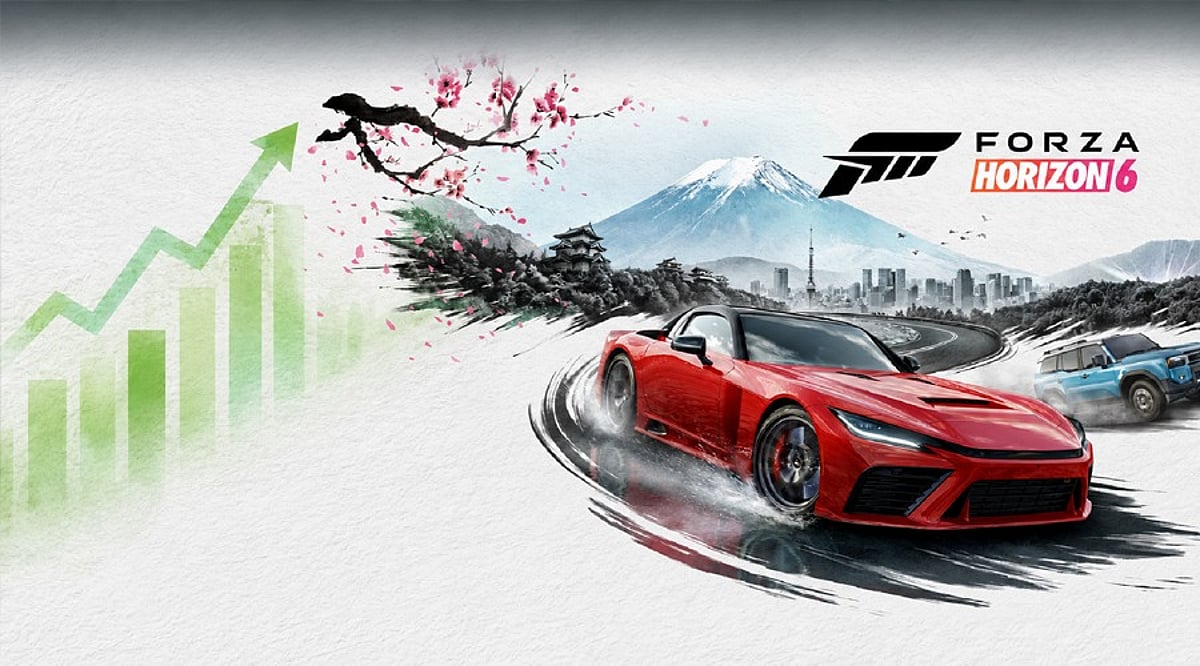
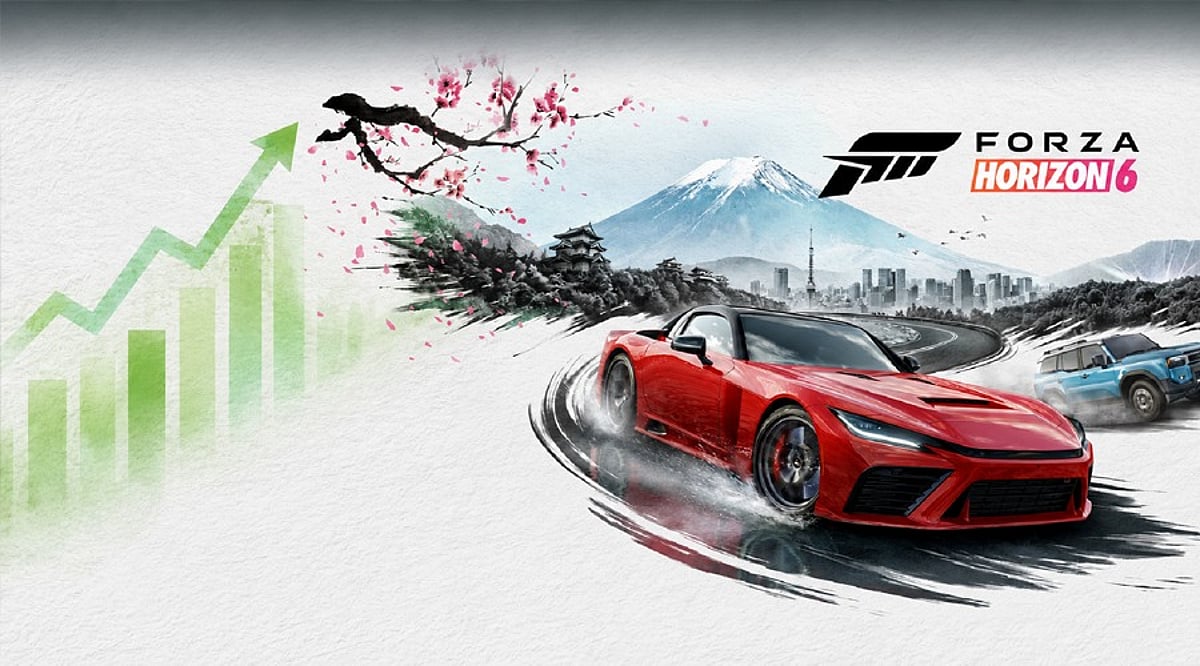
    Forza Horizon 6 delivers an exciting open-world racing experience. Developed by Playground Games and published by Xbox Game Studios, the game is set in a beautifully reimagined Japan featuring bustling cities, winding mountain roads, and scenic coastal areas. With a vast selection of licensed vehicles, dynamic weather, and seamless online multiplayer, Forza Horizon 6 offers a rich and immersive driving adventure for racing enthusiasts and open-world fans alike.

    General Information

    • Launch Date: September 25, 2026
    • Platform: Xbox Series X|S, Windows PC
    • Developer: Playground Games
    • Publisher: Xbox Game Studios
    • Genre: Open-world racing game
    • Target Audience: Racing game fans, open-world enthusiasts, car lovers, and online multiplayer players

    Key Features of Forza Horizon 6

    • Japan-Inspired Open World: Explore a detailed map with cities, mountains, forests, and coastal roads.
    • Extensive Car Collection: Drive a wide range of licensed vehicles, each with unique handling, speed, and performance.
    • Dynamic Seasonal Weather: Weather changes affect road conditions and visibility, making every race feel fresh and challenging.
    • Multiplayer and Community Events: Compete in online races, championships, and special community-driven events.
    • Deep Customization: Upgrade performance and personalize the look of your cars with visual modifications.

    Strengths of Forza Horizon 6

    • Stunning Visuals: The game features realistic lighting and weather effects that bring the environment to life.
    • Excellent Driving Mechanics: Cars feel responsive and controllable, offering a satisfying driving experience for players of all skill levels.
    • Massive Car Roster: Car enthusiasts will enjoy collecting and driving a huge variety of vehicles.
    • Diverse Activities: The open world offers different road types, seasonal events, and optional challenges, keeping gameplay fresh.
    • Strong Online Community: Regular multiplayer events and community challenges ensure long-term engagement.

    Challenges of Forza Horizon 6

    • High Hardware Requirements: To enjoy the best visuals, players need a powerful gaming PC or Xbox Series X|S.
    • Online Dependency: Some multiplayer features and events require a stable internet connection.
    • Potential Additional Costs: Downloadable content (DLC) and premium editions may increase the overall price.
    • Learning Curve: Vehicle tuning and advanced driving mechanics may take time to master.
    • Large Storage Space: The game’s expansive world and high-quality assets require considerable hard drive space.

    Conclusion

    Forza Horizon 6 combines open-world exploration with polished racing gameplay. Its detailed Japan-inspired setting, diverse car lineup, and dynamic weather create a compelling experience. While it demands robust hardware and offers optional paid extras, the core game delivers engaging single-player and multiplayer content. Forza Horizon 6 is a strong addition to the series and a must-play for racing and open-world fans.

    Specifications

    • Rating: 4.5 / 5
    • Reviewed By: Aishwarya Avsk
    • Published: 06 Aug 2026
  • Forza Horizon 6 Review: Japan-Inspired Open-World Racing Delivers Thrills

    Forza Horizon 6 Review: Japan-Inspired Open-World Racing Delivers Thrills

    Forza Horizon 6 is a racing game with an open world, developed by Playground Games and published by Xbox Game Studios. Set in a stunning recreation of Japan, the game features cities, mountain roads, and scenic coastal areas. With a diverse lineup of licensed vehicles, dynamic weather, and a seamless online multiplayer experience, Forza Horizon 6 offers an exciting open-world racing adventure.

    General Information

    • Launch Date: September 25, 2026
    • Platform: Xbox Series X|S, Windows PC
    • Developer: Playground Games
    • Publisher: Xbox Game Studios
    • Genre: Open-world racing game
    • Target Audience: Racing fans, open-world enthusiasts, car lovers, and players who enjoy online multiplayer

    Key Features

    • Open-world map inspired by Japan, including cities, mountains, forests, and coastal roads
    • Wide range of licensed vehicles with unique handling, speed, and performance
    • Seasonal weather changes that make every race unique and challenging
    • Multiplayer races, championships, and community events
    • Vehicle customization with performance upgrades and visual modifications

    Strengths

    • Stunning environments with realistic lighting and weather effects
    • Fun and responsive driving mechanics that offer excellent control
    • Extensive car collection for enthusiasts who love to collect and customize
    • Large open world with varied roads, seasonal activities, and optional challenges
    • Robust online multiplayer with special events and ongoing community engagement

    Challenges

    • High graphics settings require powerful gaming hardware
    • Some multiplayer features and online events require a stable internet connection
    • Additional downloadable content and premium editions may increase overall cost
    • Vehicle tuning and advanced driving mechanics have a learning curve
    • Large open-world environment and high-quality visuals require significant storage space

    Conclusion

    Forza Horizon 6 combines open-world exploration with racing, featuring a detailed environment, a wide selection of licensed vehicles, and realistic driving mechanics. Dynamic weather, seasonal events, and multiplayer modes add variety to the gameplay. While it demands capable hardware and considerable storage, its engaging gameplay and polished presentation make it a strong addition to the Forza Horizon series, ideal for racing enthusiasts and open-world gaming fans.

    Rating: 4.5 / 5

  • Japan and US Stage Rare Joint Intervention to Stabilize Yen Amid Rising Volatility

    Japan and US Stage Rare Joint Intervention to Stabilize Yen Amid Rising Volatility

    Japan and the United States have carried out a rare coordinated currency intervention to support the yen and curb disorderly market movements. Tokyo also signaled readiness for further action as a weaker currency and higher oil prices pressure Japan’s economic outlook.

    Joint Action Targets Sharp Yen Swings

    Japan’s Ministry of Finance confirmed the operation on Monday after intervention took place on Friday, July 31. Officials said both countries acted to curb excessive volatility and disorderly movements in the yen. Japan bought yen during Friday’s operation in coordination with the US Treasury. The action followed months of pressure on the currency, which recently traded near four-decade lows against the dollar.

    The ministry linked the move to the Japan-US Finance Ministers’ Joint Statement issued in September 2025. That agreement allows intervention when exchange rates show excessive volatility or disorderly movement. It also calls for transparent reporting of currency operations.

    Finance Minister Satsuki Katayama said Tokyo would keep close contact with Washington. She added, “We will not hesitate to carry out further coordinated interventions.” The United States also signaled support for further action. Treasury Secretary Scott Bessent said Washington backed Japan’s measures and stood ready to join another operation. The coordinated action was the first involving both countries since 2011.

    Meanwhile, the yen strengthened after Japan confirmed the intervention. It moved above 155 per dollar before giving back part of the gain. Traders continued to watch for more official buying. Markets now remain alert to further policy signals from both governments.

    FIMA Facility Adds Another Funding Option

    Japan also plans to use the Federal Reserve’s Foreign and International Monetary Authorities (FIMA) Repo Facility. The FIMA facility gives approved foreign monetary authorities access to short-term dollar funding. Under the program, authorities can temporarily exchange US Treasury securities for dollars, providing liquidity without forcing them to sell Treasury holdings directly in the open market.

    Japan’s ministry stated, “Japan plans to utilize the Federal Reserve’s FIMA Repo Facility in the future.” Tokyo can use the program to manage dollar needs during market stress. Additionally, the facility may support future intervention operations when authorities need dollar liquidity. However, access depends on the amount of eligible Treasury securities pledged as collateral. The ministry said it would maintain regular communication with the US Treasury and keep monitoring foreign exchange conditions to respond to disorderly moves.

    Weak Yen Adds Pressure on Japan’s Economy

    The intervention comes as Japan faces weaker growth and higher import costs. A soft yen raises the local cost of crude oil, food, and other imports. Japan recently cut its fiscal 2026 growth forecast to 0.9% from 1.3%, citing higher energy costs linked to Middle East tensions and pressure on household spending and company earnings.

    Moreover, the government lowered its private consumption forecast to 0.9% from 1.3% and reduced its capital spending growth estimate to 2.3% from 2.8%. Japan depends heavily on imported energy, so high oil prices and a weak currency can raise costs across transport, manufacturing, and household budgets.

    The Bank of Japan also faces close market attention. It kept its policy rate unchanged at 1% last week but left room for another increase. However, currency intervention and interest-rate policy serve different roles: the finance ministry manages exchange-rate operations, while the central bank sets monetary policy.

  • Asian Markets Rally as Microsoft and Amazon Earnings Rekindle AI Optimism

    Asian Markets Rally as Microsoft and Amazon Earnings Rekindle AI Optimism

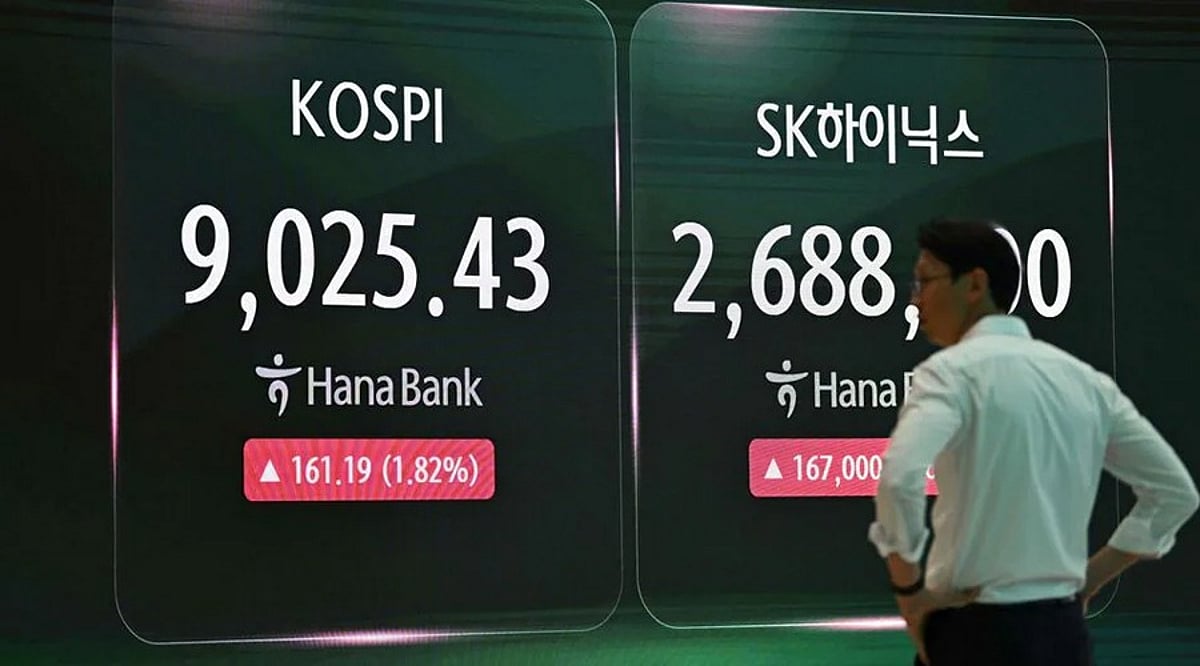
    Asian stock markets rebounded strongly on Friday after Microsoft and Amazon reported better-than-expected earnings, reigniting confidence in artificial intelligence investments. South Korea’s Kospi posted its biggest single-day gain, while Japan’s Nikkei 225 also climbed sharply, led by a surge in technology shares across the region.

    The rally was fueled by Microsoft and Amazon’s latest quarterly results, which demonstrated that heavy spending on AI infrastructure and cloud services continues to generate robust business growth. Microsoft reported strong Azure cloud revenue, and Amazon’s AWS business posted its fastest expansion in several quarters, easing concerns that AI investment momentum might be slowing.

    “The previous sell-off had become exaggerated because the underlying AI demand story had not materially weakened,” said Fabien Yip, market analyst at IG.

    In South Korea, Samsung Electronics and SK Hynix led the recovery after suffering heavy losses earlier in the week. Their sharp gains propelled the Kospi higher, though the index remained well below its June peak and remained on track for its weakest July since 1997.

    Japan’s Nikkei 225 also advanced after the Bank of Japan kept interest rates unchanged. However, a weaker yen, elevated US bond yields, and ongoing geopolitical tensions continue to inject caution among investors.

    Analysts believe the strong earnings have restored faith in AI stocks, but sustained profits and healthy demand will be needed to maintain the recovery trajectory.

  • Eole Becomes First Listed Japanese Firm to Disclose Corporate HYPE Purchase Under Neo Crypto Bank Plan

    Eole Becomes First Listed Japanese Firm to Disclose Corporate HYPE Purchase Under Neo Crypto Bank Plan

    Tokyo-listed Eole Inc. has made Japan’s first publicly disclosed corporate purchase of HYPE, the native token of the Hyperliquid blockchain. The company bought 1,078 HYPE on July 28 for approximately $66,002 (¥10.08 million), paying an average of $57.15 (¥9,352) per token. The acquisition marks a strategic expansion beyond bitcoin as part of Eole’s broader Neo Crypto Bank initiative.

    Phased Allocation Toward ¥100 Million Target

    Eole plans to increase its HYPE holdings through multiple purchases through August, aiming for a total allocation of ¥100 million (approximately $611,113). The phased approach avoids a single large transaction and spreads market exposure over several weeks.

    HYPE as a Strategic Asset for On-Chain Finance

    Under its Neo Crypto Bank strategy—launched in October 2025—Eole will hold HYPE alongside bitcoin to build financial infrastructure for an economy where AI agents can execute payments and contracts autonomously. The company views the token not solely as an investment for capital gains but as a operational asset to support its on-chain finance and Web3 operations.

    Lending, Hedging, and Smart Contract Integration

    Eole is exploring revenue generation through digital asset lending and plans to hedge price risks via traditional financial markets. The company will also integrate its crypto holdings with its own services, moving beyond a single cryptocurrency toward automated finance powered by smart contracts.

  • Global Leaders in Waste-to-Energy: Pioneering Nations Turning Trash into Power

    Global Leaders in Waste-to-Energy: Pioneering Nations Turning Trash into Power

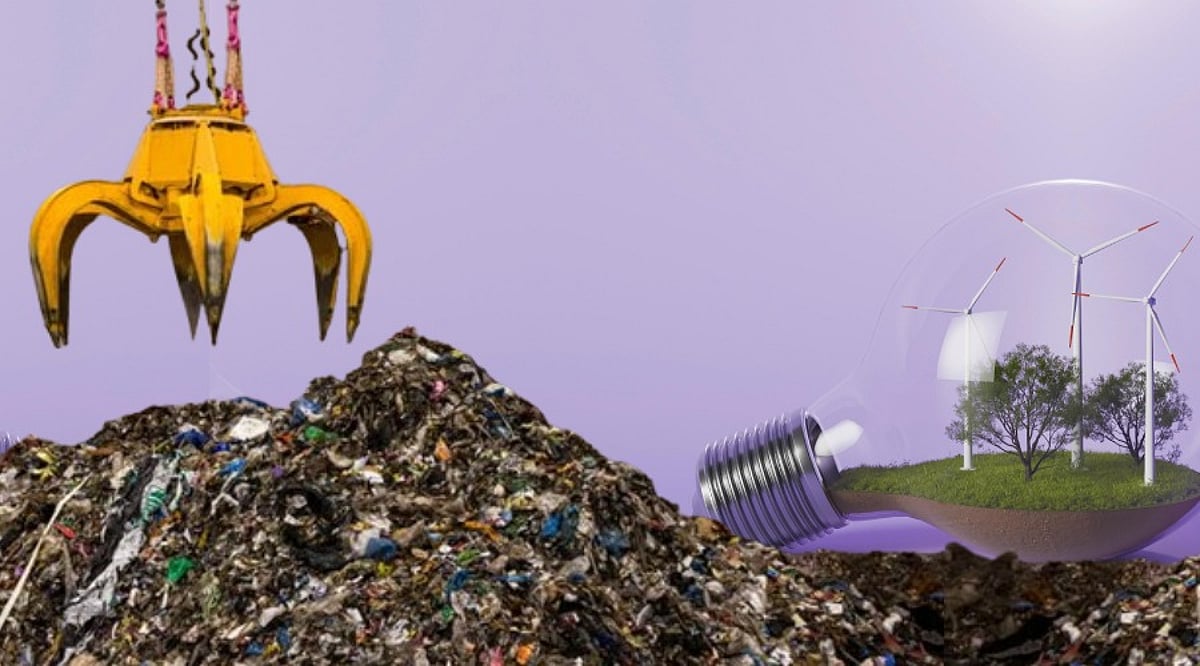
    Waste-to-energy (WtE) technology is rapidly transforming the way nations handle non-recyclable waste, converting it into electricity, heat, or fuel while drastically reducing reliance on landfills. Countries such as China, Sweden, Denmark, Japan, Singapore, Germany, and the Netherlands are at the forefront, leveraging advanced technologies, efficient systems, and sustainable policies to lead the global shift.

    Key Takeaways

    • China operates the world’s largest waste-to-energy network, generating immense electricity capacity.
    • Sweden and Denmark integrate waste-to-energy with district heating, optimizing clean energy production.
    • Innovations in incineration, gasification, and carbon capture are making WtE cleaner and more efficient.

    China: The Undisputed Market Leader

    China has built the world’s biggest waste-to-energy industry in just over a decade, driven by rapid urbanization and strict government policies. Electricity production from WtE surged from 5 TWh in 2010 to approximately 120 TWh in 2023, while annual waste treatment capacity expanded from 14 million to 327 million tonnes. Today, China operates more than 1,000 waste-to-energy plants—over half of the global total.

    Sweden: From Waste to Resource

    Sweden’s waste management system is among the most efficient globally. Approximately 50% of household waste is converted into electricity and district heating. Swedish plants are so efficient that the country imports about 800,000 tonnes of waste annually from neighboring nations to keep facilities operating at full capacity, all while maintaining low emissions through advanced pollution control.

    Denmark: Urban Integration and Clean Energy

    Denmark has embedded waste-to-energy into urban life, with modern facilities supplying both electricity and district heating to surrounding areas. The iconic Amager Bakke facility in Copenhagen not only generates energy but also features a public park on its roof, exemplifying how industrial structures can blend with cityscapes. Denmark continues to invest in carbon capture and more efficient waste treatment technologies.

    Japan: High Tech, High Standards

    With limited landfill space, Japan relies heavily on WtE. The country uses highly efficient combustion technology to maximize electricity output while minimizing harmful emissions. Strict environmental laws ensure every plant meets rigorous air quality standards.

    Singapore: Smart Waste Management in a Tiny Island

    Singapore faces severe land shortages, making efficient waste management a national priority. Most non-recyclable municipal waste passes through modern incineration plants, reducing volume by nearly 90% and significantly extending the life of the offshore Semakau Landfill.

    Germany and the Netherlands: Circular Economy Champions

    Both countries combine high recycling rates with effective waste-to-energy solutions. They prioritize recycling and composting, then send only non-recyclable waste to energy recovery. Europe’s approximately 500 WtE facilities process nearly 100 million tonnes of waste annually, generating heat and electricity while diverting waste from landfills. Germany and the Netherlands are advancing sorting technologies, carbon capture, and energy efficiency.

    Why This Matters

    Mounting waste volumes make traditional landfills unsustainable. Waste-to-energy technology cuts garbage volume by 90% while producing clean electricity and heat. According to the World Bank, about 20% of global waste is incinerated, while recycling, composting, and anaerobic digestion account for another 21%.

    Future Outlook

    Urban growth will continue to increase waste generation, requiring WtE capacity to expand. Emerging technologies such as AI-driven operations, carbon capture, and advanced pollution controls will make new plants cleaner and more productive. Countries like China, Sweden, Denmark, Japan, Singapore, Germany, and the Netherlands have demonstrated that it is possible to slash landfill use and generate usable energy simultaneously.

    Frequently Asked Questions

    What is waste-to-energy?

    Waste-to-energy is the process of converting non-recyclable waste into electricity, heat, or fuel using technologies like incineration, gasification, pyrolysis, and anaerobic digestion.

    Why is waste-to-energy important?

    It reduces landfill dependence, lowers pollution from open dumping, recovers energy from waste, and supports more sustainable waste management.

    Which country leads globally?

    China is the global leader, operating over 1,000 waste-to-energy plants and accounting for more than half of the world’s waste incineration capacity.

    Does waste-to-energy replace recycling?

    No. The best practice is to recycle and compost first; only non-recyclable waste should be sent to WtE facilities.

    What is the future of waste-to-energy?

    The future includes AI-driven operations, carbon capture technologies, advanced emission controls, and more efficient energy recovery to make plants cleaner and more productive.

  • Nvidia Partners with Japanese Robotics Firms to Accelerate AI-Powered Automation

    Nvidia Partners with Japanese Robotics Firms to Accelerate AI-Powered Automation

    Nvidia is deepening its commitment to robotics by partnering with leading Japanese companies to develop advanced AI-powered machines. This collaboration targets the creation of next-generation factory robots, AI-powered humanoids, and digital twin simulations that streamline development and testing.

    Japan’s longstanding leadership in robotics, combined with Nvidia’s powerful GPU computing platforms, positions the partnership to drive a new wave of industrial automation. The goal is to improve productivity and efficiency in manufacturing through smarter, AI-driven systems.

    Beyond factories, the technology could extend to healthcare, logistics, and service robots, enabling more intelligent and autonomous operations. The move reflects the global race to invest in intelligent automation, with Nvidia providing the computational backbone for training and deploying robotics AI models.

    This strategic partnership underscores how Japan is strengthening its role in global AI development, leveraging digital twins and advanced simulations to accelerate innovation. The collaboration is expected to have a significant impact on the future of robotics and AI across multiple industries.

  • NVIDIA Teams Up with Fanuc, Yaskawa to Boost Robotics and AI in Japan

    NVIDIA Teams Up with Fanuc, Yaskawa to Boost Robotics and AI in Japan

    NVIDIA has announced partnerships with major Japanese robotics manufacturers, including Fanuc and Yaskawa Electric, to accelerate the development of artificial intelligence and robotics. The chipmaker revealed the collaborations during a media event in Tokyo on Thursday, signaling a deepening commitment to Japan’s industrial automation sector.

    NVIDIA CEO Jensen Huang emphasized that AI can make industrial robots smarter, more adaptable, and easier to deploy. “With AI, robots will become smart, easily adaptable and accessible,” Huang said at the Tokyo event. Fanuc and Yaskawa Electric are among Japan’s leading industrial robotics suppliers, providing automation systems to factories worldwide in sectors such as automotive production, electronics, logistics, and industrial equipment.

    The partnerships integrate NVIDIA’s computing platforms and AI software into Japan’s established robotics ecosystem. Financial terms and specific rollout schedules were not disclosed. During his visit, Huang also met with executives from memory chipmaker Kioxia and semiconductor equipment producer Tokyo Electron, and attended an event hosted by Sega Sammy in Tokyo’s Akihabara district.

    Japanese Organizations Adopt NVIDIA’s Nemotron Models

    NVIDIA announced that several Japanese organizations are using its Nemotron open models, datasets, and software tools to build AI systems tailored for Japanese language tasks and industry-specific applications. The Institute of Science Tokyo leveraged NVIDIA datasets and NeMo software to develop the Swallow model family, which supports Japanese language processing, reasoning, coding, and mathematics. Companies are applying Swallow for financial document translation and asset management reports.

    SB Intuitions, SoftBank’s generative AI research arm, trained its Sarashina models with NVIDIA technology. Japan’s Digital Agency selected Sarashina3 mini for specialized AI projects, while SoftBank built a telecom model for automated network operations. Stockmark released a Japanese document-understanding model based on NVIDIA Nemotron 3 Nano Omni and is developing business knowledge systems for manufacturing, energy, and chemical sectors. Sakana AI is integrating Nemotron into its Fugu model-routing platform, which selects different AI models based on accuracy, speed, and cost.

    Enterprise Applications Expand Across Industries

    Japanese companies are deploying Nemotron for customer service, research, remote operations, and workplace automation. Avatarin is developing Japanese-language AI agents for customer conversations and remote-presence systems, using NVIDIA HGX B300 systems for private AI processing and NVIDIA Jetson hardware for digital avatar services at airports and other locations. ENEOS Holdings applies Nemotron tools to energy and materials research, combining document search, image analysis, language processing, and molecular simulations for cooling fluids, catalysts, and other industrial materials.

    NTT Data used NVIDIA’s Japanese training dataset to improve its tsuzumi 2 language model and is exploring a multi-agent system that assigns tasks to different AI models. Hitachi is developing physical AI systems with NVIDIA Nemotron and Cosmos open models, connecting information technology with factory and infrastructure operations. NVIDIA releases Nemotron models with open weights, datasets, and development instructions, allowing companies to customize and run them on private systems or cloud platforms. The models are available through Hugging Face, ModelScope, OpenRouter, NVIDIA’s developer platform, and selected cloud providers.

  • Bitcoin Holds Near $64,600 as Cooling Inflation Boosts Crypto Sentiment; Ethereum Leads Gains, Solana Recovers

    Bitcoin Holds Near $64,600 as Cooling Inflation Boosts Crypto Sentiment; Ethereum Leads Gains, Solana Recovers

    Bitcoin traded near $64,637 on Thursday, extending a steady recovery after softer U.S. inflation data eased concerns about further Federal Reserve tightening. The cooler-than-expected producer price index (PPI) and consumer price index (CPI) readings pulled Treasury yields lower, reviving appetite for risk assets across the board.

    Bitcoin Price Today

    Bitcoin was last seen at $64,636.95, up 0.10% in the past 24 hours, according to CoinMarketCap. The $64,000 zone remains key support, while $65,500 is the immediate resistance level. A sustained close above $65,500 could open the path toward $67,200, with some analysts eyeing $70,000 if momentum continues.

    Ethereum and Altcoins Rally

    Ethereum stood out among large-cap cryptocurrencies, gaining 2.5% and extending its weekly advance to over 10%. XRP added 1.22%, and Solana rose 1.28%, reflecting broad altcoin strength. The rally was driven by improved risk appetite following the inflation data and fresh inflows into spot Bitcoin and Ethereum ETFs.

    Inflation Data and Fed Outlook

    U.S. producer inflation fell 0.3% month-on-month, reinforcing Tuesday’s softer CPI print. The data reduced expectations of further rate hikes, though Fed officials struck a cautious tone. The Beige Book showed price growth flattening or slowing across all districts. Markets now await upcoming producer price data and Fed commentary for the next directional cues.

    ETF Flows Stabilize

    U.S. spot Bitcoin ETFs pulled in roughly $181 million on Tuesday, rebounding from a $425 million outflow the previous day. Ethereum ETFs added nearly $58 million in the same session. Analysts view consistent inflows as critical for Bitcoin to sustain a move above $65,000.

    Japan and South Korea Move on Crypto Regulation

    Japan reclassified crypto as a financial asset, paving the way for lower taxes. South Korea is also modifying its laws to formally classify crypto as a national asset and is piloting tokenized government bonds. These moves signal growing regulatory comfort and institutional adoption in Asia.

    CLARITY Act Stalled

    In the U.S., the Digital Asset Market CLARITY Act remains stuck in the Senate without a floor vote, as disputes over stablecoin provisions and ethics rules continue. Regulatory uncertainty persists, but the broader global trend is shifting toward clearer frameworks.

    Outlook

    Bitcoin holds near $64,600 as cooling inflation offsets geopolitical risks. A sustained close above $65,500 would strengthen the case for a retest of $67,200. A slip below $63,500 risks exposing the $62,500 support zone. Ethereum’s outperformance suggests rotation toward institutional-grade altcoins, and fresh ETF inflows point to steadier institutional participation this week.

  • Why Switzerland, Nordics, Germany, Japan, Italy, and France Lead Global Quality of Life Rankings

    Why Switzerland, Nordics, Germany, Japan, Italy, and France Lead Global Quality of Life Rankings

    What makes a country the ‘best’ in the world? It isn’t just wealth or breathtaking scenery. The nations that consistently top global rankings excel at safety, quality of life, innovation, healthcare, education, and even everyday happiness. From Switzerland and the Nordic countries to Germany, Japan, Italy, and France, these destinations continue to set the global standard for what it means to live well.

    How These Countries Lead the World

    Each group shines for different reasons, and together they offer lessons about how societies can build comfort, meaning, and prosperity.

    Top Spot: Switzerland

    Imagine a place where trains arrive on the minute, mountains are an arm’s reach away, and local chocolatiers treat craft like religion. Switzerland’s political neutrality and stable institutions make life predictable in a reassuring way. Its banks and finance industries are trusted worldwide, yes, but so are its watchmakers, medical device firms, and small manufacturers that sweat the details. People there enjoy strong public services, low crime, and a sense of trust that makes everyday life feel smooth.

    Nordic Countries: Denmark, Sweden, Finland

    Walk into a playground in Copenhagen or a school in Helsinki, and you’ll see the impact of policies that treat childhood and work-life balance seriously. Denmark, Sweden, and Finland invest heavily in healthcare, education, and family support. The safety net doesn’t make people complacent; it frees them to take risks, start companies, and be creative. These countries are also early adopters of green tech and digital public services, showing that kindness and efficiency can go hand in hand.

    Germany and Japan: Pride in Making Things that Last

    Both Germany and Japan are places where craft and engineering are part of daily identity, whether it’s a perfectly tuned car or a factory robot that never misses a beat. Germany’s apprenticeship system links schools and industry tightly, feeding skilled workers into advanced manufacturing. Japan’s commitment to precision, continuous improvement, and respect for tradition has made its industries global benchmarks. While its economy is driven by exports, Japan also exports a reputation for unmatched quality and reliability.

    Italy and France: Living Well is a National Product

    Italy and France sell more than goods; they sell a way of life. Italy’s influence shows up in design, food, and that effortless sense of style. Small workshops in Florence or tiny bakeries in Bologna keep centuries-old skills alive. France wraps its influence in language, cinema, fashion weeks, and institutions like museums and culinary schools. Tourists flock there not just for monuments, but to breathe the local rhythms. These countries turn culture into an exportable asset that makes people everywhere a little more curious and a little more stylish.

    Comparison Table

    Country/Region Key Strengths
    Switzerland Political stability, trusted institutions, low crime, world-class industries, reliable public services
    Nordic (Denmark, Sweden, Finland) Welfare, innovation, healthcare, education, green tech, work-life balance
    Germany & Japan Engineering, skilled workforce, manufacturing excellence, education, discipline
    Italy & France Culture, heritage, cuisine, fashion, craftsmanship, tourism

    What Makes Nations Thrive: Can Policy Blend Practicality and Beauty?

    Across these nations you find some common threads: an emphasis on education and skills; institutions people trust; reliable infrastructure; and openness to trade and ideas. They don’t all do things the same way; Switzerland’s privacy and neutrality differ from the Nordics’ social focus, but each has leaned into a set of strengths and protected them with thoughtful policy.

    You don’t need Alps or centuries-old museums to copy these models. Start by investing in people: education, healthcare, apprenticeships, and by building institutions people trust. Protect cultural traditions while encouraging new ideas, and make infrastructure reliable so daily life doesn’t become a struggle. These countries show that ‘best’ often means balancing practicality with beauty, making sure life is not only productive, but also worth living.

    FAQs

    Why is Switzerland considered one of the world’s best countries?

    Switzerland stands out for its political stability, efficient public services, low crime, strong economy, trusted financial sector, world-class healthcare, and exceptional quality of life backed by reliable institutions.

    What makes the Nordic countries consistently rank highly?

    Denmark, Sweden, and Finland excel through universal healthcare, excellent education, work-life balance, social security, environmental leadership, and digital innovation, creating happy, productive, and resilient societies.

    Why are Germany and Japan known for engineering excellence?

    Germany and Japan combine skilled workforces, advanced manufacturing, innovation, precision engineering, and strong quality standards, producing globally respected automobiles, machinery, electronics, and industrial technologies.

    How do Italy and France influence the world beyond their economies?

    Italy and France shape global culture through fashion, cuisine, art, architecture, design, cinema, and tourism, turning centuries-old traditions into internationally admired industries and cultural icons.

    What common qualities do these leading countries share?

    Despite different strengths, these countries prioritize education, innovation, trusted institutions, reliable infrastructure, skilled workforces, cultural preservation, and long-term planning to ensure prosperity and a high quality of life.