Tag: Japan

  • How Japan’s AI-Powered Drones Are Revolutionizing Global Reforestation

    How Japan’s AI-Powered Drones Are Revolutionizing Global Reforestation

    Japan is pioneering the use of artificial intelligence and drone technology to tackle one of the world’s most pressing environmental challenges: deforestation. By combining AI-powered drones with advanced imaging and automated systems, the country is developing a scalable, cost-effective approach to reforesting degraded landscapes, from remote mountains to disaster-stricken zones.

    At the core of this innovation is AI-driven seed planting. Drones equipped with precision seed-dispersal mechanisms can cover vast and difficult terrains far quicker than human planters, dramatically reducing both labor costs and operational expenses. This method allows millions of trees to be planted in a fraction of the time required by traditional manual efforts.

    Precision mapping plays a critical role. Drones use advanced imaging systems to identify degraded land, analyze soil conditions, and determine optimal planting locations. Real-time environmental data helps improve seed survival rates and restoration success, making every flight more effective than random scattering.

    Beyond planting, intelligent drones continuously monitor forest growth, soil health, and vegetation changes. This automated surveillance enables faster intervention when problems arise, such as pest outbreaks or water stress, and supports better long-term forest management decisions. The data collected feeds into AI models that refine future planting strategies, maximizing resource allocation and survival rates.

    The environmental impact is significant. Large-scale drone reforestation accelerates carbon capture, restores ecosystems, and protects biodiversity. It also helps countries meet ambitious climate goals by providing a practical tool for large-scale restoration. Japan’s approach could serve as a global model, demonstrating how technology can strengthen climate resilience for future generations.

    With lower operational costs and the ability to reach previously inaccessible areas, AI drones are poised to transform reforestation from a slow, labor-intensive process into a fast, data-driven conservation strategy. The future of global reforestation may well be flown by autonomous drones.


  • South Korea and Japan Intensify Currency Stability Talks Amid Regional FX Volatility

    South Korea and Japan Intensify Currency Stability Talks Amid Regional FX Volatility

    South Korea is strengthening exchange rate discussions with Japan and allied nations as officials monitor currency volatility and regional financial stability. Markets are now awaiting clearer signals on whether these communications could advance toward coordinated policy action.

    According to Odaily, South Korea’s deputy finance minister confirmed that Seoul is maintaining close communication with Japan and other allied countries over exchange rate issues. The official identified foreign exchange coordination as an active policy priority but announced no intervention, formal agreement, or completed joint action.

    Seoul and Tokyo Keep Currency Channels Open

    The statement described an ongoing exchange of views among finance officials. Seoul did not name the other allied countries or disclose the scope, timing, or content of the talks. South Korea and Japan rank as Asia’s second- and third-largest economies by gross domestic product. Currency swings in either market can affect regional trade, investment flows, and financial conditions.

    Finance ministries often separate communication from direct intervention. Officials may discuss market conditions without buying or selling currencies, and the latest remarks remain within that communication stage. Even so, traders monitor each change in official language. Markets often interpret a move from ‘monitoring’ to ‘communicating’ as evidence that authorities have increased their attention.

    Markets Track the Won, Yen, and Official Language

    Exchange rate concerns usually involve currency strength, weakness, or rapid volatility. Those movements can affect export competitiveness, import costs, capital flows, and broader financial stability. South Korea has historically monitored sharp moves in the won. Japan also has a record of verbal warnings and direct intervention when authorities view yen movements as excessive.

    Any move from discussion toward preparation would mark a clear change in policy messaging. Traders will therefore watch the Korean won and Japanese yen against the United States dollar. Unusual price moves could show that markets expect a greater chance of official action. Further statements from Japan’s Ministry of Finance may provide more detail. Remarks from the unnamed allied countries could also show whether the discussions remain bilateral or involve a wider group.

    Crypto Relevance Depends on Wider Risk Sentiment

    The deputy finance minister did not mention Bitcoin, cryptocurrencies, or digital assets. The statement therefore carries no direct policy link to crypto markets or domestic crypto regulation. However, foreign exchange conditions can still shape risk appetite across markets. A stronger dollar environment has historically pressured Bitcoin and other cryptocurrencies as traders reduce exposure to risk assets.

    South Korea remains one of the world’s most active retail crypto trading markets. Policy signals from Seoul can influence domestic sentiment, even when officials address traditional currencies rather than digital assets. Recent developments also show growing links between financial policy and crypto. A South Korean crypto tax petition surpassed 58,000 signatures and moved to legislative review. The country’s New Start Fund also added crypto assets to its debt relief review. Those measures remain separate from the latest exchange rate discussions.

    Officials disclosed no outcome from the talks. Markets will next examine currency movements, new government statements, and any clarification about the allied countries involved.

    What’s Next?

    South Korea’s exchange rate talks with Japan and allied nations reflect growing attention to currency volatility and regional financial stability. Although officials announced no intervention, traders should monitor the Korean won, Japanese yen, and future policy statements for signs of stronger coordination or possible action.

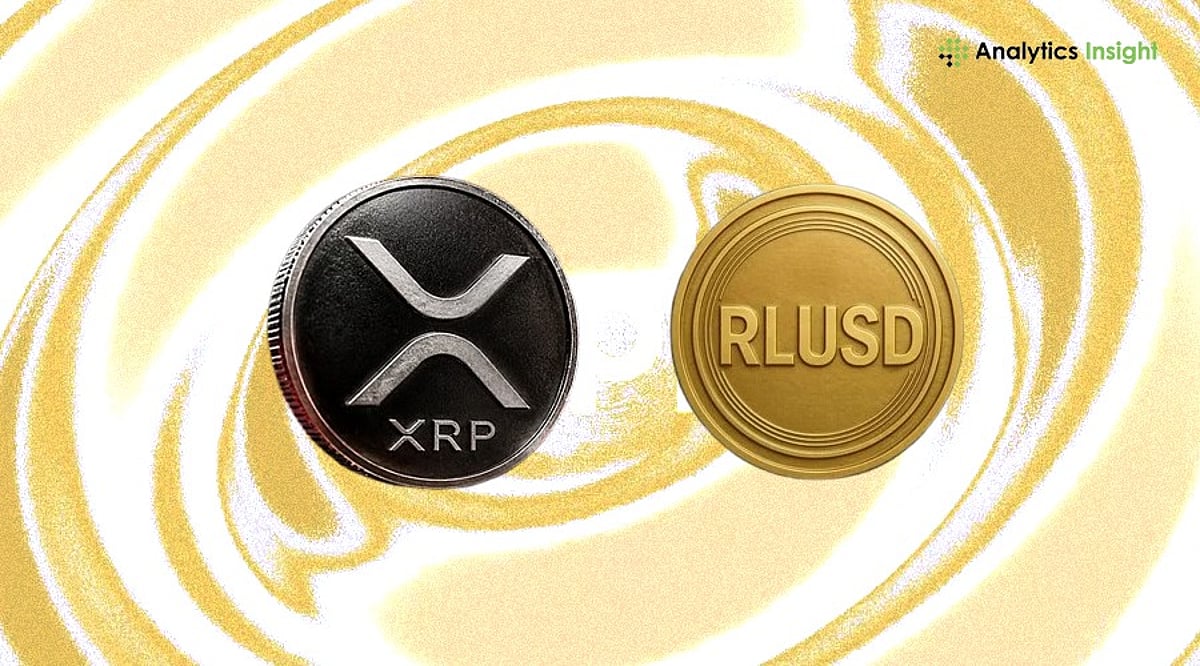
  • Ripple’s RLUSD Stablecoin Debuts in Japan: What XRP Holders Need to Know

    Ripple’s RLUSD Stablecoin Debuts in Japan: What XRP Holders Need to Know

    On June 24, 2026, Ripple officially launched its RLUSD stablecoin in Japan after receiving full regulatory approval from the country’s Financial Services Agency. This milestone marks a significant expansion for Ripple beyond its traditional cross-border payment network and into the fast-growing stablecoin market, which now exceeds $300 billion globally.

    RLUSD is a 1:1 US dollar-pegged stablecoin, fully backed by cash reserves, short-term US government bonds, and dollar deposits. Unlike volatile cryptocurrencies such as Bitcoin or XRP, RLUSD maintains a stable price, making it ideal for banks, corporations, and financial institutions that require predictable digital payments. Within a short period, RLUSD has reached a market capitalization of approximately $1.59 billion, with an annual growth rate close to 271%.

    Why Japan?

    Japan has long been one of Ripple’s strongest markets, thanks in part to a decade-long partnership with SBI Holdings, one of the country’s largest financial firms. The launch became possible after Japan introduced new regulations allowing foreign stablecoins to enter under strict compliance rules. Japan’s clear legal framework provides a safe and predictable environment for regulated crypto assets, giving Ripple a strategic foothold in Asia.

    Ripple Expands Beyond XRP

    With RLUSD, Ripple is diversifying its business model. Instead of relying solely on XRP for crypto transfers, the company can now offer stablecoin payments, asset settlement, corporate treasury systems, and digital banking services. This does not replace XRP; XRP remains the primary bridge asset for high-speed cross-border currency transfers on Ripple’s payment network. RLUSD provides an alternative for institutions that need zero price volatility.

    What This Means for XRP Investors

    Some investors initially worried that RLUSD might diminish XRP’s role. However, the opposite appears true. By drawing more traditional financial institutions into the Ripple ecosystem, RLUSD increases overall network activity. Higher transaction volume on the XRP Ledger can drive stronger demand for XRP over the long term. The launch positions Ripple to compete directly with major stablecoins like USDT and USDC, while emphasizing regulatory compliance—a key advantage for institutional adoption.

    Competition and Outlook

    The global stablecoin market is dominated by USDT and USDC, but Ripple’s focus on regulatory compliance sets RLUSD apart. Japan’s approval is a strong signal to other markets. With over 50% of Ripple’s On-Demand Liquidity volume already coming from Asia, RLUSD could expand into Singapore, South Korea, and other regional hubs, cementing Ripple’s position as a leading blockchain payment company.

    For XRP holders, this development is positive in the long run. RLUSD strengthens Ripple’s overall financial ecosystem, driving broader institutional adoption and network utility. Japan may be just the first step in a global stablecoin expansion that could become a major growth driver for Ripple and XRP.

    FAQs

    1. What is RLUSD?
    RLUSD is Ripple’s 1:1 US dollar-pegged stablecoin, fully backed by cash reserves and short-term US government bonds, designed for banks and institutions needing stable digital payments.

    2. Why did Ripple launch RLUSD in Japan?
    Japan offers clear crypto regulations and a strong partnership with SBI Holdings, enabling a compliant rollout approved by Japan’s Financial Services Agency.

    3. Does RLUSD replace XRP?
    No. RLUSD serves institutions requiring zero volatility, while XRP remains the high-speed bridge asset for cross-border transfers in Ripple’s payment network.

    4. How big is RLUSD right now?
    RLUSD has a market cap of about $1.59 billion with nearly 271% annual growth.

    5. Why does this matter for XRP investors?
    RLUSD attracts more traditional finance into the Ripple ecosystem, increasing network activity and potentially strengthening long-term demand for XRP.

  • Ripple’s RLUSD Stablecoin Gains Japan Approval, First Foreign Stablecoin Under New Regulations

    Ripple’s RLUSD Stablecoin Gains Japan Approval, First Foreign Stablecoin Under New Regulations

    Ripple’s dollar-backed stablecoin RLUSD has secured approval from Japan’s Financial Services Agency (JFSA), marking the first time a foreign-issued stablecoin has entered the Japanese market under the country’s new regulatory framework. SBI VC Trade, a licensed Electronic Payment Instruments Exchange Service Provider, has begun distributing RLUSD through its VCTRADE platform to both retail and institutional users.

    Japan Opens New Path for Foreign Stablecoins

    Japan has historically maintained strict rules for foreign stablecoins. RLUSD became the first stablecoin to enter through the newly established Electronic Payment Instrument (EPI) classification under the Payment Services Act (PSA). The approval process focused on regulatory alignment rather than direct acceptance. Ripple had to demonstrate that RLUSD operates under rules in its home jurisdiction that match Japan’s standards for reserve backing and user protection.

    This achievement gives RLUSD an early position in a market that foreign stablecoin issuers have found difficult to access. It also provides an initial test case for Japan’s new regulatory structure, and its performance may shape expectations for future entrants.

    Ripple and SBI Build on a Decade of Cooperation

    Ripple leveraged its long-standing partnership with SBI Group, which dates back to 2016, to establish the launch. Ripple and SBI announced a memorandum of understanding in August 2025, and nearly ten months later, RLUSD became available to users in Japan. The timeline reflected the compliance work required to satisfy regulatory obligations.

    Jack McDonald, Ripple’s Senior Vice President of Stablecoins, stated that RLUSD will support payments, tokenization, and collateral management while connecting Japanese users to global liquidity. For the initial phase, RLUSD in Japan operates on the Ethereum network rather than the XRP Ledger.

    RLUSD Targets Payments and Institutional Use Cases

    Ripple and SBI have positioned RLUSD as infrastructure for financial services rather than a speculative asset. Business-focused applications include programmable trade settlement, collateral management for settlement and margin activities, and supply chain finance to enable faster, more transparent payments across trade networks.

    Tomohiko Kondo, Chief Executive Officer of SBI VC Trade, described the launch as a major milestone in the companies’ ongoing collaboration and digital finance initiatives.

    Since its initial launch, RLUSD has reached roughly $1.7 billion in market capitalization, with a growth pattern marked by steady increases rather than sharp speculative surges. The Japan rollout now places RLUSD inside one of the most tightly regulated digital asset markets, where its performance will help shape expectations for future foreign stablecoin entrants.

  • MIT Political Science Department: Pioneering Research on Democracy, AI, and Global Affairs

    MIT Political Science Department: Pioneering Research on Democracy, AI, and Global Affairs

    MIT’s Department of Political Science continues to produce groundbreaking research at the intersection of politics, technology, and society. From the impact of architecture on political participation in Ghana to the ethical implications of artificial intelligence, MIT scholars are addressing critical questions facing democracies worldwide.

    How Architecture Influences Political Activity

    New research shows that semi-communal “compound houses” in Ghana significantly affect voting and political engagement. (June 25, 2026)

    Exploring the Societal Impacts of AI

    Leading MIT researchers examined AI’s influence on employment and democracy during the AI and Society Forum. (June 23, 2026)

    The Crucial Human Component in Computing and AI

    The MIT Ethics of Computing Research Symposium highlighted ethical and social impacts in technology. (June 5, 2026)

    Democracies and Safe Drinking Water

    Researchers find that while developing economies provide public water, safety lags due to low visibility. (May 21, 2026)

    Committed to Caring: Professor Daniel Hidalgo Honored

    Associate Professor Daniel Hidalgo, a political scientist studying Latin American elections, receives recognition for graduate student mentorship. (May 13, 2026)

    MIT Affiliates Awarded Guggenheim Fellowships

    Afreen Siddiqi, Kathleen Thelen, and Vinod Vaikuntanathan, along with alumna Kate Manne, are appointed 2026 Guggenheim Fellows. (May 1, 2026)

    Built to Fly: Brian Robinson’s Intersection of Aviation, Politics, and Technology

    MIT senior and master’s candidate Brian Robinson works at the nexus of aviation, politics, and technology. (April 15, 2026)

    Why Does Wealth Inequality Matter?

    An MIT Stone Center event examined origins, mechanisms, and political consequences of high inequality. (April 3, 2026)

    Fostering MIT’s Japan Connection

    MISTI Japan managing director Christine Pilcavage supports students and faculty exploring Japanese culture with a STEM focus. (January 15, 2026)

    Eighteen MIT Faculty Honored as “Committed to Caring”

    The program recognizes outstanding mentorship of graduate students for 2025-27. (January 8, 2026)

    How Drones Are Altering Contemporary Warfare

    A new book by Erik Lin-Greenberg examines evolving dynamics of military and state action centered around drones. (November 13, 2025)

    Q&A: How MITHIC Is Fostering Collaboration at MIT

    The MIT Human Insight Collaborative supports new interdisciplinary initiatives across the Institute. (October 30, 2025)

    Studying War in the New Nuclear Age

    MIT political scientist Caitlin Talmadge scrutinizes military postures and international dynamics to understand escalation risks. (October 28, 2025)

    MIT Schwarzman College of Computing Welcomes 11 New Faculty

    New faculty bring varied backgrounds and expertise to the MIT community. (October 17, 2025)

    Meet the 2025 Tenured Professors in SHASS

    Faculty members granted tenure in Linguistics and Philosophy, Music and Theater Arts, and Political Science. (September 18, 2025)

    These stories reflect the breadth and depth of research at MIT’s Political Science Department, where scholars are shaping our understanding of governance, technology, and global affairs.