
Tag: jobs report

  • Bitcoin Faces Pivotal $84K Test as PCE, Jobs, and ISM Data Loom

    Bitcoin Faces Pivotal $84K Test as PCE, Jobs, and ISM Data Loom

    Bitcoin Holds Above $82.5K Support Entering Data-Heavy Week

    Bitcoin entered a critical U.S. data week near $84,000 after dipping to $82,563 on September 28. A string of inflation, manufacturing, and labor market reports could reshape expectations for interest rates and risk assets.

    Rising Treasury yields, oil prices above $90 a barrel, and volatile bond markets are adding pressure. The week begins with August personal income and outlays on September 30, followed by the ISM manufacturing report on October 1 and the September employment report on October 2.

    Glassnode Levels Provide Key Reference Points

    Glassnode analysts have highlighted the $84,000 to $85,000 range as a dense cluster of long-term holder acquisition prices. Bitcoin briefly slipped below that zone during Monday’s drop, making a close back above it a constructive signal.

    Additional market levels include the True Market Mean near $77,000 and the mean MVRV reference around $96,700. Glassnode’s September 21 Market Pulse also noted net spot taker buying, rising trading volume, and elevated futures leverage, while weekly ETF flows remained negative.

    The quality of any bounce matters. Fresh spot demand, stronger volume, and renewed ETF buying would offer more durable support than a short-term futures-driven recovery.

    Will September Break Its Historical Pattern?

    Bitcoin has gained about 7% in September after rallying 25% in August. Historically, every positive August since 2013 has been followed by a negative September. With two days left in the month, a positive September would break that sequence and mark a third consecutive monthly gain.

    Oil and Supply Chain Risks Could Influence the Inflation Outlook

    Energy markets remain a wildcard. The Energy Information Administration estimated Brent spot crude averaged $91 a barrel in August, up $7 from July. The International Energy Agency also pointed to severe restrictions on Gulf diesel and gasoil exports during August, while shipping incidents near Hormuz were reported on September 21 and 23.

    Because the August PCE report lands on September 30, it will not fully reflect late-September changes in fuel, freight, or factory costs. The ISM manufacturing report on October 1 may therefore offer a timelier inflation signal. ISM’s August Prices Index stood at 71.1, while Supplier Deliveries reached 59.3. A higher September Prices Index, slower deliveries, or stronger cost comments would point to renewed pressure on manufacturers.

    Jobs Data and Fed Rate Expectations Take Center Stage

    Labor market data begins with the August JOLTS report on September 29, followed by September payrolls on October 2. The Federal Reserve raised its target range to 3.75% to 4% on September 16, citing elevated inflation and steady job gains.

    A moderate cooling in labor conditions could reduce pressure on the Fed. However, a sharply weaker employment report might shift attention from inflation toward growth risks.

    Bond Volatility and Q4 Liquidity Concerns

    The 10-year Treasury yield is above 5.2%, and the MOVE index has moved above 100, near its year-to-date highs. Oil above $90 adds another inflation worry, while gold fell about 3% on Monday to just above $4,000 an ounce.

    Despite these headwinds, Bitcoin’s quarter remains strong. A positive September would put Q3 2026 more than 40% higher and mark the first positive third quarter since Q3 2025. Historical CoinGlass data shows Bitcoin’s average fourth-quarter gain is around 77%, but Q4 could bring fresh tests for liquidity and risk appetite.

    Anthropic’s reported November IPO plans and the U.S. midterm elections could add further volatility. The clearest cross-market test may come from a soft August PCE reading followed by a higher September ISM prices reading. That sequence could initially ease Treasury yields before renewed cost concerns push rate expectations higher.

    This article is for informational purposes only and does not constitute investment advice. Always conduct your own research before making investment decisions.
  • Wall Street Rises After Surprise July Job Cuts Fuel Hopes of Fed Rate Pause

    Wall Street Rises After Surprise July Job Cuts Fuel Hopes of Fed Rate Pause

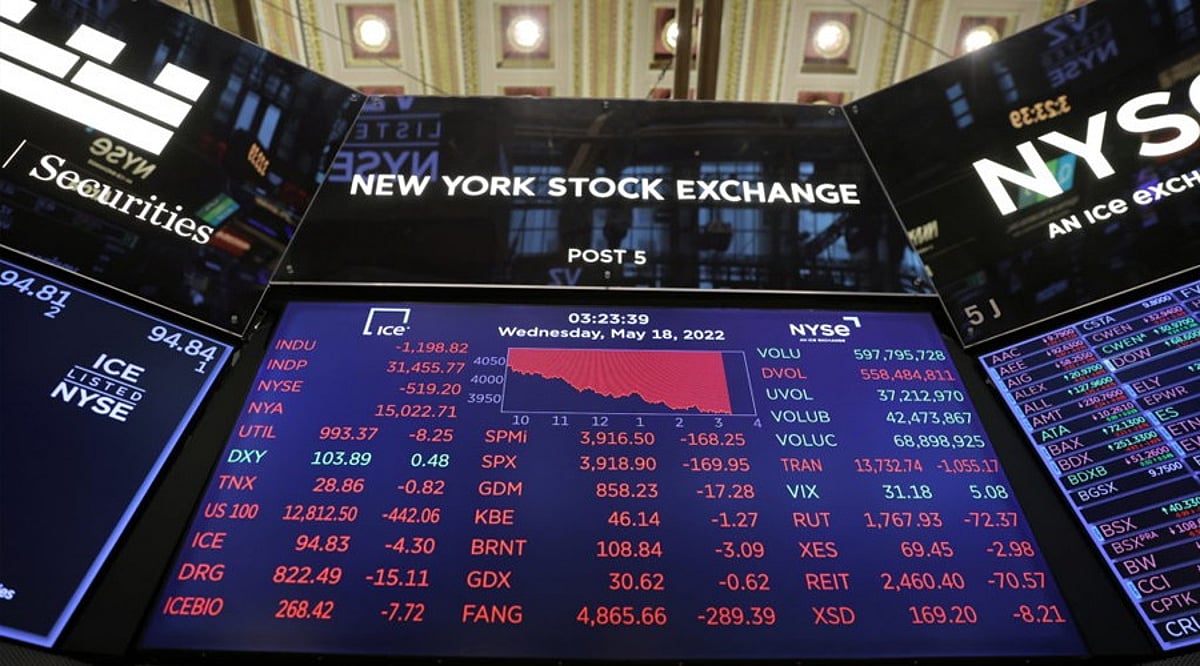
    The S&P 500 posted gains on Friday after a surprising decline in U.S. payrolls for July dampened expectations of a September interest rate hike by the Federal Reserve. Technology and software stocks led the rally, while Treasury yields fell following the release of the employment report.

    The index moved toward a second consecutive weekly gain after hitting a record high earlier in the week. Traders are now turning their attention to July inflation data, which could further shape the central bank’s next policy move.

    S&P 500 Rises on Weak Payroll Data

    The S&P 500 climbed 0.6%, while the NASDAQ Composite gained 1.1%. The Dow Jones Industrial Average added approximately 140 points, a 0.3% increase. According to the Labor Department, U.S. employers cut 23,000 jobs in July, contrasting sharply with economists’ expectations of an 83,000-job gain (Dow Jones poll) and an 80,000 increase projected by a Reuters survey.

    The unemployment rate edged down to 4.1% from 4.2%, but the labor force participation rate fell to its lowest level in more than five years. Revised data also eliminated a combined 103,000 jobs from May and June payroll figures.

    The disappointing report reduced the probability of a Fed rate hike at its September meeting. LSEG data placed the likelihood of an increase near 20%, down from 55% before the payroll release.

    Fed Rate Outlook Shifts Toward a Pause

    Fed funds futures traders now largely expect policymakers to hold rates within the current 3.50% to 3.75% range. The central bank kept rates unchanged during its July meeting. Under Chair Kevin Warsh, the Fed has offered limited guidance on its next move, leading investors to scrutinize labor, inflation, and wage data closely.

    Anthony Saglimbene, chief market strategist at Ameriprise Financial, noted that the report gives policymakers more time. “Even with a negative job print, the job market remains healthy. But it gives the Fed some room to pause in September,” he said.

    Former Dallas Fed Chair Richard Fisher added that he did not view the report as entirely weak. He pointed to slowing wage growth, which could affect consumer spending, and said he did not support raising rates at this time.

    Technology Stocks Lead Wall Street Rally

    Software and semiconductor shares fueled Friday’s gains. Atlassian surged more than 30% after its quarterly profit and revenue exceeded estimates, and the company issued a stronger financial forecast. Cloudflare also rose after raising its annual revenue outlook above market expectations. Microchip Technology advanced after forecasting quarterly revenue above estimates. NVIDIA and Broadcom also recorded gains.

    The Philadelphia Semiconductor Index rose more than 2%, while the S&P 500 software and services index gained about 1.3%. The iShares Semiconductor ETF increased nearly 7% over the week.

    Airbnb climbed approximately 14% after reporting stronger quarterly profit and revenue and raising its full-year revenue and margin guidance, pushing its shares to their highest level in four years. In contrast, Trade Desk dropped nearly 25% after issuing a third-quarter revenue forecast below analysts’ expectations.

    Inflation Data Becomes the Next Market Test

    The S&P 500 has gained more than 3% this week, while the NASDAQ has risen about 5%, on track for its strongest weekly performance since May. The Dow has added about 3%. Corporate earnings have supported the recovery: more than 400 S&P 500 companies have reported quarterly results, with over 85% exceeding analysts’ estimates, according to LSEG data.

    Investors will now monitor the July consumer price index report on Wednesday. Economists expect annual headline inflation of 3.4% and core inflation of 2.5%. Producer price data will follow on Thursday. Retail sales figures are due Friday, offering another measure of household spending. Applied Materials, Cisco, and CoreWeave will also report earnings next week.

    Treasury yields declined after the payroll release. The 10-year yield slipped to 4.65%, while the two-year yield fell to 4.20%, before partially recovering. Oil prices rose about 1% as investors watched US-Iran talks concerning the Strait of Hormuz. Brent crude traded near $83 per barrel, while West Texas Intermediate held around $78. Oil movements remain central to inflation expectations and future Fed decisions.

    Weaker U.S. jobs data boosted hopes of a Federal Reserve pause, lifting Wall Street and supporting gains in technology stocks. Investors will now watch upcoming inflation and retail sales data for further clues on the direction of interest rates.

  • Bitcoin Holds Near $64,350 as ETF Inflows Surge Ahead of Key Jobs Report

    Bitcoin Holds Near $64,350 as ETF Inflows Surge Ahead of Key Jobs Report

    Bitcoin traded near $64,354.99 on Friday, holding a tight range through the session as spot ETF inflows snapped a longer stretch of outflows. The leading cryptocurrency consolidated after testing $64,920 earlier in the week, with analysts flagging $65,000 as the critical level to watch. Traders now turn to today’s US jobs report for direction, while the stalled CLARITY Act adds to cautious sentiment.

    Bitcoin Price Today

    Bitcoin stood at $64,354.99, broadly flat over the past 24 hours, according to live CoinMarketCap data. Its market cap hovered near $1.29 trillion, with 24-hour trading volume reaching $21.64 billion. Price action remains tied to ETF flows, the jobs report, and legislative headlines.

    Analyst Insights

    Bitcoin Attempts $65,000 Reclaim Ahead of Jobs Data, Says Mudrex

    Prateek Gupta, Head of Business at Mudrex, noted that Bitcoin is attempting to reclaim the $65,000 level ahead of today’s US jobs report. The market is approaching a critical technical and liquidity zone, with $65,000 emerging as the largest short-liquidation cluster. He added that institutional demand continues to grow, with spot Bitcoin ETFs attracting $626 million in net inflows over three sessions. A weekly close above $65,000 could open the path toward $70,000, while a close below $63,000 may expose Bitcoin to $60,000.

    BTC Stays Range-Bound Between $64,000 and $65,000, Says CoinSwitch

    According to CoinSwitch Markets Desk, BTC remained range-bound between $64,000 and $65,000 after testing the upper end of the range. Repeated rejections near $65,000 indicate continued selling pressure. Near-term support sits at $64,350-$64,400, and a break below this zone could expose $64,200. Reclaiming $64,600 may pave the way toward $64,800-$65,000.

    Institutional Demand Offsets Rate Uncertainty, Says Giottus

    Vikram Subburaj, CEO of Giottus, placed Bitcoin near $64,300, with improving institutional demand offset by uncertainty over US interest rates. Spot ETFs received about $626 million between August 3 and August 5, helping buyers defend the $63,000-$64,000 region. However, these inflows have not been strong enough to clear the larger resistance zone between $66,000 and $66,600. He advised staggering purchases and keeping leverage low until Bitcoin clears $66,600 or loses $63,000 support.

    Bitcoin Consolidates Ahead of Employment Data, Says Delta Exchange

    Riya Sehgal, Research Analyst at Delta Exchange, said Bitcoin is trading around $64,400, with the market consolidating ahead of the US employment report. Resilient labor data and renewed crude strength keep inflation expectations in focus. A softer print could ease yields and support risk assets. Bitcoin is holding the $64,000-$64,200 support zone. A break above $64,750-$65,000 could open $65,250-$65,600, while a move below $64,000 may expose $62,400-$63,100.

    Crypto Prices Today: Top 10 Coins at a Glance

    The broader market holds steady, with majors posting mild gains. Hyperliquid led the top 10 board with a gain near 3.7%, followed by XRP and Dogecoin with daily gains above 1%. Outside the top 10, Zcash extended its rally with a jump above 5.9% on the day. Stablecoins Tether and USDC barely moved, while Ethereum and Solana posted modest daily gains.

    Crypto News Today: Top Headlines Impacting Prices

    Bitcoin ETFs Post Third Straight Inflow Day

    US spot Bitcoin ETFs pulled in $244.4 million on Wednesday, extending a three-day streak to $626 million. BlackRock’s IBIT fund led the run, capturing $479 million of the total. The August run has yet to record a single outflow day, a sharp reversal from July’s choppier flows.

    CLARITY Act Faces Recess Deadline Pressure

    The Digital Asset Market Clarity Act remains stalled on the Senate calendar as the chamber’s summer recess begins around August 7. Ethics language disputes continue to block bipartisan support. A Franklin Templeton executive noted that passage would unlock federal preemption and bring bank liquidity into crypto.

    Coldcard Firmware Flaw Keeps Custody Worries Alive

    A firmware bug tied to Coldcard hardware wallets has been linked to nearly $100 million in stolen Bitcoin this month. The exploit has driven dormant address movement as affected holders rush to secure funds. Whale Alert flagged a 6,196 BTC transfer worth nearly $397 million between unknown wallets this week.

    US Jobs Report Set to Drive Today’s Session

    Traders are bracing for today’s Non-Farm Payrolls report. A soft print could ease Treasury yields, while strong data may revive September rate hike bets. The Fed held rates steady at 3.50-3.75% in July, with three officials favoring a hike.

    Zcash and Cardano Lead Altcoin Momentum

    Zcash extended its rally with a weekly gain above 5.9%, pressing a key triangle breakout pattern. Cardano posted a sharp seven-day gain above 15%, outpacing most large-cap peers. Analysts tied Cardano’s strength to progress on its Ouroboros Leios scaling protocol.

    Tether Expands Tokenization Push in Saudi Arabia

    Tether announced plans to launch its Hadron tokenization platform in Saudi Arabia, starting with institutional real estate assets. The move aligns with the kingdom’s Vision 2030 diversification initiative but has limited near-term impact on Bitcoin’s price.

    Investor and Market Outlook

    Bitcoin holds near $64,350 as traders weigh a third straight ETF inflow day against a stalled CLARITY Act. Today’s jobs report stands as the session’s key catalyst. A close above $65,000 could open a path toward $66,600 resistance. A slip below $63,000 risks exposing deeper support closer to $60,000. Zcash and Cardano remain the most sensitive names to shifts in altcoin risk appetite. Next week’s inflation print stands as the market’s next defining catalyst.

  • Tech Funds Fuel $1 Billion US Equity Rebound After Heavy Outflows

    Tech Funds Fuel $1 Billion US Equity Rebound After Heavy Outflows

    US equity funds attracted net inflows of $1.03 billion for the week ending July 1, reversing part of the prior week’s $3.47 billion in withdrawals. The return to buying was led by technology sector funds, which drew $3.42 billion after investors had pulled nearly $20 billion from the group the week before. The shift came as softer-than-expected June jobs data lowered expectations for a near-term Federal Reserve rate hike.

    According to fund flow data, large-cap funds absorbed $7.2 billion in net new money, while financial funds added $1.96 billion and healthcare funds received $1.47 billion. However, the recovery was not broad-based. Small-cap funds saw $694 million in outflows, mid-cap funds lost $2.1 billion, and equity income funds recorded withdrawals of $1.33 billion. This suggests that investor confidence remains concentrated in larger, more liquid names and selected sectors.

    The labor report played a key role in the sentiment shift. The US economy added only 57,000 new jobs in June, below market expectations, and previous months’ payroll figures were revised downward. The data reduced the likelihood that the Federal Reserve would raise interest rates before year-end, encouraging a move back into equities, particularly technology stocks that had been sold off sharply.

    Bond and money market funds also saw strong demand. US bond funds attracted a net $9.88 billion, extending their inflow streak to 11 consecutive weeks. Short-to-intermediate investment-grade bonds took in $4.22 billion, while general domestic taxable fixed-income funds added $3.53 billion. In contrast, short-to-intermediate government and Treasury funds experienced $2.1 billion in outflows. Money market funds recorded the largest weekly allocation in four weeks at $47.82 billion, reflecting cautious positioning ahead of the payroll data and ongoing inflation uncertainty.

    The cautious mood was also influenced by supply chain disruptions linked to the closure of the Strait of Hormuz, which have forced vessel rerouting and raised concerns about transport costs adding to future inflation. James Rossiter of TD Securities identified shipping as a major risk for the year.

    Global equity markets rose on Friday following the weak US jobs data. The MSCI world index gained 0.4% and was on track for a weekly rise of about 2%, its best performance in two months. Europe’s STOXX 600 rose 0.6% to a record high, heading for a 2.6% weekly gain. David Morrison of Trade Nation noted that European shares have benefited from lower valuations and less exposure to the artificial intelligence trade, questioning whether highly valued US tech stocks can continue to lead global gains.

    Asian markets also advanced, with chip stocks rebounding. South Korea’s KOSPI surged roughly 6%, while Japan’s Nikkei rose 1.5%. Purchasing managers’ data showed expansion across major Asian economies. Gold climbed 1% to above $4,160 an ounce, heading for a 1.8% weekly gain. The dollar paused after hitting its highest level in over a year. Brent crude edged up 0.45% to $71.12 a barrel. US markets were closed Friday for the Independence Day holiday.

    Looking ahead, investors are expected to focus on upcoming inflation and economic data for clues about the Fed’s next policy move. Technology stocks may continue to lead gains if economic conditions remain supportive, but the narrow nature of the current equity recovery suggests caution may persist.

  • Wall Street Surges as June Jobs Data Softens Fed Rate Hike Outlook

    Wall Street Surges as June Jobs Data Softens Fed Rate Hike Outlook

    U.S. stocks moved higher on Thursday after a weaker-than-expected June employment report eased concerns that the Federal Reserve might raise interest rates in the near term. The Dow Jones Industrial Average reached a new record intraday high above 52,800, while the S&P 500 also advanced. Investors shifted focus to labor market data that pointed to slower hiring while unemployment remained relatively stable.

    The report pushed Treasury yields lower and lifted expectations that the Fed may leave rates unchanged at its next policy meeting. Gains in materials and consumer staples helped offset continued weakness in semiconductor stocks, allowing major indexes to climb.

    June Payrolls Miss Forecasts as Unemployment Holds Steady

    The U.S. economy added 57,000 nonfarm payroll jobs in June, well below economists’ expectations of around 110,000 to 115,000. Despite slower hiring, the unemployment rate came in at 4.2%, slightly better than the forecasted 4.3%. The softer data interrupted several months of stronger hiring and was seen as a sign that the labor market is cooling without broad weakness, reducing the need for the Fed to tighten monetary policy further.

    Florian Ielpo, head of macro at Lombard Odier Investment Managers, described the report as “the best number we could hope for,” noting that the job market remains fine but not hot enough to accelerate inflation. Bret Kenwell, US investment analyst at eToro, added that while the report doesn’t signal labor-market trouble, it does cool the hawkish narrative.

    Markets Trim Expectations for Another Fed Rate Hike

    Following the employment data, traders lowered odds of a near-term Fed rate increase. The two-year Treasury yield, which closely tracks policy expectations, fell. Market pricing shifted toward a greater probability that policymakers would keep rates unchanged later this month.

    Fed Chair Kevin Warsh had noted on Wednesday that inflation risks had eased, reaffirming the central bank’s 2% target. The latest jobs figures shifted attention to the labor side of the Fed’s dual mandate. Bradford Smith, portfolio manager at Janus Henderson Investors, said the print “takes some of the pressure off” the Fed to hike near term, especially with moderating oil prices and softer hiring.

    Dow Reaches Another Record While Chip Stocks Lag

    The Dow Jones Industrial Average set a fresh intraday record above 52,800, and the S&P 500 traded higher. However, the Nasdaq underperformed as semiconductor shares extended recent losses. The VanEck Semiconductor ETF declined, with Teradyne, KLA, Nvidia, and Micron trading lower.

    Despite chipmaker weakness, market participation broadened. Materials and consumer staples led S&P 500 sector gains, and advancing stocks outnumbered decliners on both the NYSE and Nasdaq. Ielpo noted that investors are finding value outside AI and technology, favoring a broader market approach.

    Investors Monitor Inflation Risks and Broader Trends

    Although the jobs report eased immediate rate-hike fears, investors continue watching inflation and geopolitical developments, particularly oil price volatility tied to tensions involving Iran and the Strait of Hormuz. Indirect U.S.-Iran talks showed little progress, but oil prices moved lower on hopes that tensions would remain contained.

    Active fund managers posted stronger June performance as market breadth improved. According to Jefferies strategist Steven DeSanctis, about 70% of active managers beat their benchmarks, with nearly 88% of small-cap managers outperforming as leadership expanded beyond high-growth stocks. Investors also monitored AI-related shares after recent volatility, with analysts noting that improving breadth has allowed gains to spread across sectors.

    Disclaimer: This article is for informational purposes only and does not constitute investment advice. Always conduct your own research before making investment decisions.