
Tag: LangGraph

  • LangGraph vs. LangChain: Selecting the Optimal AI Agent Framework

    LangGraph vs. LangChain: Selecting the Optimal AI Agent Framework

    The debate between LangChain and LangGraph has evolved from a simple comparison of two competing tools into a strategic decision about the right level of abstraction for your AI agent project. LangChain provides a streamlined, high-level API for building standard agents, while LangGraph offers granular control over state, workflows, persistence, and human-in-the-loop oversight. Understanding when to use each—and how they complement each other—is essential for delivering scalable, production-ready AI systems.

    Key Takeaways

    • LangChain is designed for rapidly building common AI agents with a higher-level API and fewer lines of code.
    • LangGraph delivers detailed control over state transitions, multi-step workflows, data persistence, approval gates, and long-running agents.
    • The two frameworks can work together: start with LangChain and migrate to custom LangGraph workflows as complexity grows.

    LangChain: Ideal for Standard AI Agent Projects

    LangChain centers on the core agent loop: a model receives a task, invokes tools, processes results, and returns an answer. Its create_agent API gives developers a direct path to this pattern. The framework also offers model abstractions, tool integrations, middleware support, and connections across multiple providers. This structure can significantly reduce the amount of boilerplate code needed for a typical agent.

    The 1.0 release streamlined the project: LangChain reduced its package surface and moved older features into langchain-classic. The current 1.x lineage emphasizes the agent loop and middleware. Note that LangChain 1.0 requires Python 3.10 or newer. Recent releases—such as LangChain Core 1.4.6—show active development including updates to create_agent, middleware types, structured output fallbacks, provider tools, and human-in-the-loop capabilities.

    LangGraph: Richer Control for Complex Workflows

    LangGraph takes a lower-level, graph-based approach. Developers define an agent workflow as a directed graph with nodes, state, and explicit transitions. This model fits systems where an agent must follow a fixed sequence, pause for human approval, resume after a long wait, or interleave deterministic code with model-driven decisions. LangChain officially describes LangGraph as a framework and runtime for highly customized agents and long-running production systems.

    State management is central to LangGraph. Workflows can retain data across steps, use persistence for extended tasks, and incorporate human review checkpoints. This becomes critical in domains like finance, customer support, and research, where autonomous decisions must be gated. Recent releases—LangGraph 1.2.11, for example—introduced updates to trace policies, checkpoint packages, SQLite and PostgreSQL support, and related SDK improvements.

    Main Difference Comes Down to Control vs. Simplicity

    LangChain shortens the common path; LangGraph makes the full path explicit. A straightforward support agent with a model and a few tools may only need LangChain. But a system requiring multiple decision points, stored state, retries, approval steps, and conditional routing benefits from LangGraph’s structure—at the cost of additional design effort.

    Critically, the two frameworks are not competitors. LangChain 1.0 runs its agents on LangGraph. Teams can start with create_agent and later embed that agent inside a custom LangGraph workflow when more control is needed. LangChain encourages this migration path as a way to evolve from a high-level agent to a custom graph without a full framework swap.

    Production Needs Determine the Right Framework

    Production requirements often tip the scale. A short, stateless agent task fits LangChain. A long-running business process demands stronger workflow orchestration. LangGraph targets long-running agents, stateful tasks, human reviews, multi-agent scenarios, and cases where teams need fine-grained control over latency or cost. The deployment story has also matured: the LangGraph Platform (now called LangSmith Deployment) supports running and managing LangGraph applications in production.

    Practical Guidance for New Projects

    For a standard agent with a clear model-tool-response cycle, choose LangChain. It offers a higher-level API and keeps the initial architecture simple. For systems where workflow state, persistence, approvals, custom routing, or long tasks matter from day one, start with LangGraph.

    The strongest aspect of the current ecosystem is the synergy between the two frameworks. LangChain does not lock agents into a separate runtime; its agents use LangGraph underneath. This gives every project a natural upgrade path—from a simple agent to a fully controlled workflow—without requiring a complete rewrite. Ultimately, the decision is about choosing the right level of control, not about picking a winner.

    Frequently Asked Questions

    1. What is the main difference between LangChain and LangGraph?

    LangChain provides a higher-level API for building common AI agents quickly, while LangGraph focuses on explicit workflow orchestration with state, persistence, and complex agent behaviors.

    2. Is LangGraph built on LangChain?

    Not exactly. LangChain agents run on LangGraph, meaning LangChain offers a high-level agent experience while LangGraph handles the underlying runtime and workflow capabilities.

    3. When should I use LangChain?

    Use LangChain when you need a straightforward model-tool-response agent and want to minimize custom workflow code.

    4. When should I use LangGraph?

    LangGraph is ideal when your application requires persistent state, multi-step workflows, human approval, retries, custom routing, or long-running processes.

    5. Can LangChain and LangGraph be used together?

    Yes. You can build an agent with LangChain and later integrate it into a custom LangGraph workflow as your application needs greater control and orchestration.
  • Agentic AI in 2026: Top Tools, Platforms, and Frameworks for Autonomous Workflows

    Agentic AI in 2026: Top Tools, Platforms, and Frameworks for Autonomous Workflows

    Agentic AI: From Answers to Action

    In 2026, artificial intelligence has made a significant leap. Instead of merely generating responses, AI agents can now plan complex tasks, interact with business systems, verify their own output, and operate with limited human intervention. This shift is reshaping how organizations build software, manage operations, and assign responsibility to machines.

    The Three-Layer Stack of Agentic AI

    The agentic AI ecosystem has matured into three distinct layers: frameworks for constructing agents, platforms for controlling and observing them, and enterprise products that bring AI into everyday workflows. Choosing the right combination depends on workflow complexity, data requirements, and the level of control needed over autonomous decisions.

    Where Agents Are Built: Leading Frameworks

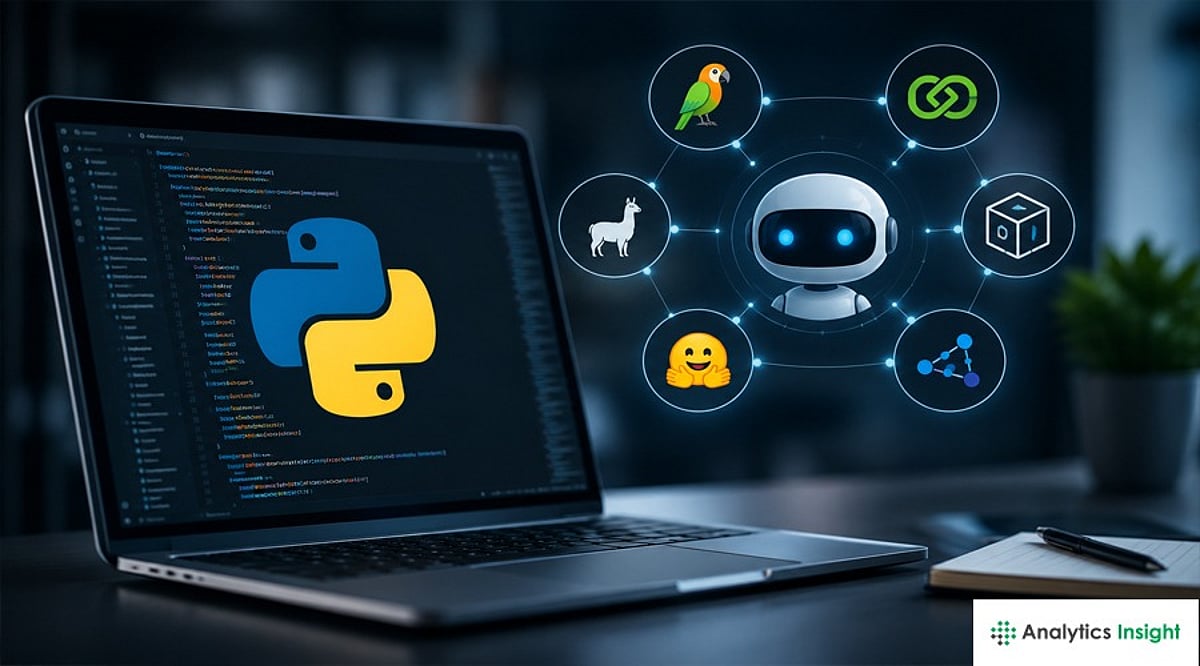
    Developers still start with frameworks, and two names dominate: LangChain and LangGraph. Although often mentioned together, they solve different problems. LangChain acts as an integration layer, connecting models to data sources, tools, and APIs while allowing teams to switch providers without rebuilding their applications. LangGraph focuses on stateful workflows, giving agents the ability to remember where they are in a task. This is essential for work that branches, loops, or runs for hours—so a single failed step doesn’t force a restart.

    CrewAI takes a collaborative approach by splitting work across specialized agents, much like a small team. A researcher gathers data, a writer drafts content, and a reviewer checks it before publication. This works well when a task can be broken into clear segments, though more agents also mean more coordination overhead.

    Other frameworks fill niche needs. LlamaIndex is built for data-heavy, retrieval-focused agents. DSPy treats prompt design as a testable, optimizable component. Microsoft’s Semantic Kernel is ideal for teams already embedded in the Microsoft ecosystem. No single framework wins across the board—the right choice depends on the type of failure a team is prepared to debug.

    Where Agents Are Controlled: Platforms and Observability

    Building an agent is relatively easy; running it safely at scale is harder. Without proper oversight, an agent might overspend a budget, access incorrect data, or misuse a tool. Production systems require evaluation, cost tracking, permission limits, and a clear audit trail.

    LangSmith provides tracing and evaluation across multiple frameworks, helping teams monitor agent behavior. TrueFoundry operates at the infrastructure level, managing routing, authentication, rate limits, and monitoring no matter which framework is in use. As organizations scale from a single agent to dozens, the challenge shifts from building to supervising.

    Where Agents Are Deployed: Enterprise Readiness

    Not every company wants to build agents from scratch. Ready-made enterprise products now fill that gap. Glean focuses on enterprise search and internal knowledge agents. Moveworks automates employee support and internal workflows. Sierra builds customer-facing agents for support and sales. Cognigy and Kore.ai compete in conversational automation at scale, while UiPath extends its existing automation platform with AI-powered exception handling for businesses already using its tools.

    An Emerging Fourth Category

    A new group of tools doesn’t fit neatly into the three layers. Google Antigravity offers an agent-first development environment. Perplexity Computer coordinates across multiple models at once. Manus focuses purely on autonomous task execution. These products sit between frameworks and finished applications, suggesting that the boundaries between building, controlling, and deploying agents are beginning to blur.

    The Bottom Line for 2026

    The real question isn’t which tool gives an agent the most freedom. It’s which tool gives an organization enough visibility and control to use that freedom wisely. As agents take on more daily operations, the winners won’t be the most autonomous systems. They’ll be the ones companies can trust, audit, and correct when things go wrong.

    Frequently Asked Questions

    What are agentic AI tools? Agentic AI tools are software frameworks and platforms that enable AI agents to plan tasks, use external tools, make decisions, maintain context, and complete multi-step workflows with limited human intervention.

    Which is the best agentic AI framework in 2026? There is no single best framework. LangGraph suits stateful workflows, LangChain handles broad agent development, CrewAI excels at multi-agent collaboration, and LlamaIndex is ideal for data-heavy applications.

    What is the difference between LangChain and LangGraph? LangChain provides components and integrations for building AI applications and agents, while LangGraph orchestrates complex, stateful workflows with branching, loops, retries, and persistent state.

    Are agentic AI platforms suitable for enterprises? Yes. Enterprise platforms offer workflow automation, observability, permissions, security controls, evaluation, and audit trails, all critical when agents operate across business processes.

    How should businesses choose an agentic AI platform? Evaluate workflow complexity, data needs, integration requirements, desired autonomy level, security controls, observability, cost management, and human-approval requirements before making a decision.

  • Best Python Frameworks for Autonomous AI Agents in 2026: A Comprehensive Guide

    Best Python Frameworks for Autonomous AI Agents in 2026: A Comprehensive Guide

    The Python AI agent framework landscape has evolved rapidly in 2026, offering specialized tools for production orchestration, multi-agent collaboration, enterprise deployment, and retrieval-augmented generation (RAG) workflows. This guide compares the leading frameworks to help developers choose the right platform for scalable autonomous AI applications.

    LangGraph Leads on Production-Grade Control

    LangGraph, developed by LangChain, uses a directed graph model where each node represents an API call to an LLM, tool use, or logic, while edges handle interaction, conditional execution, and looping. It provides complete control over execution, making it popular for complex stateful applications like customer service chatbots with escalation paths. LangGraph gained general availability in October 2025 and saw further improvements in 2026, including per-node timeouts and durable streaming. The main drawback is the steep learning curve compared to more opinionated frameworks.

    CrewAI Remains the Fastest Path to Prototyping

    CrewAI models agents as a crew of specialists with unique purposes, goals, and background stories. Developers can get it operational in under 20 lines of Python code, making it the most straightforward framework. However, it trades off scalability due to less precise error handling and lower accuracy in inter-agent communication. Teams often start with CrewAI and migrate to LangGraph when they need complex state management. The project still attracts millions of monthly downloads and now supports Google’s A2A protocol.

    Microsoft’s Consolidation: AutoGen Gives Way to Agent Framework

    AutoGen, Microsoft Research’s multi-agent conversation platform, introduced agents having discussions to improve output. In April 2026, Microsoft unified AutoGen and Semantic Kernel into the Microsoft Agent Framework, integrating AutoGen’s conversational architecture with Semantic Kernel’s enterprise capabilities like session-based state and telemetry. AutoGen is now in maintenance mode, suitable for research and legacy code, while new Microsoft-stack projects should use Agent Framework.

    Vendor SDKs Are Squeezing Out Frameworks for Simple Agents

    For single agents calling one or two tools, the OpenAI Agents SDK or Anthropic’s Claude Agent SDK offer a faster path with built-in tool use, memory, and tracing, without the abstraction overhead of LangGraph or CrewAI. The Claude Agent SDK reportedly passed AutoGen in production deployment counts during early-to-mid 2026. The general guidance: use a full framework for multi-agent coordination or graph-shaped control flow; use a vendor SDK for a single well-tooled agent.

    Choosing the Right Framework for Your Project

    There is no universal winner. Teams building production systems with complex execution paths gravitate toward LangGraph, while those prototyping role-based workflows find CrewAI faster. Microsoft-stack teams consolidate around Agent Framework, GCP-native teams lean on Google ADK, and document-heavy RAG pipelines favor LlamaIndex Workflows. The safest approach is matching the framework to the specific coordination problem rather than defaulting to the most popular tool.

    As autonomous AI agents become central to enterprise software, selecting the right framework directly affects scalability, maintainability, and development speed. Understanding each framework’s strengths helps developers build more reliable AI applications while avoiding unnecessary complexity and costly migrations.

  • Top AI Agent Frameworks for Building High-Performance Autonomous Systems in 2026

    Top AI Agent Frameworks for Building High-Performance Autonomous Systems in 2026

    Artificial intelligence has entered a new phase. AI systems previously worked like chatbots, answering questions and following simple commands. However, the recent models have become far more advanced. Modern AI agents can make decisions, solve problems, use external tools, remember past tasks, and complete complex work with little human help.

    This major shift has pushed developers and companies to look for powerful frameworks for building reliable AI agents. An AI agent framework acts like a foundation that helps manage memory, task execution, reasoning, planning, and communication with other software. Choosing the right framework is now one of the most important parts of building fast and efficient AI systems.

    LangGraph Leads in Advanced AI Workflows

    LangGraph has become one of the most popular frameworks for building advanced AI agents. Created by the team behind LangChain, it has quickly become a strong choice for production-level AI systems. The biggest strength of LangGraph is its ability to let AI agents remember previous steps while handling long and complex tasks. This makes it useful for research assistants, coding tools, customer support systems, and enterprise AI applications. The framework also gives better control over how an AI system moves from one step to another. Recent industry comparisons place LangGraph among the top frameworks for its reliability and better error handling in large-scale AI projects.

    CrewAI Works Best for Team-Based AI Systems

    CrewAI focuses on a different idea. Instead of a single AI agent doing all the work, this framework allows several AI agents to work together as a team. Each agent can take a separate role and focus on a specific task. For example, one agent can collect information, another can check facts, while another can make final decisions. This creates better task division and often leads to stronger results. By 2026, CrewAI has gained huge popularity among startups and technology companies because it is lightweight, flexible, and easy to use with Python-based systems.

    AutoGen Helps AI Agents Talk to Each Other

    AutoGen, created by Microsoft Research, has become an important framework for systems where multiple AI agents need to communicate with each other. The framework allows agents to exchange messages, share information, solve problems together, and work through complex tasks step by step. This makes it useful for software development assistants, automated coding systems, debugging tools, and advanced research systems. Its flexible structure also makes connection with external APIs and other software systems much easier for developers who need highly autonomous AI systems.

    Microsoft Agent Framework Targets Large Enterprises

    Microsoft introduced a new framework in 2026 called Microsoft Agent Framework. It acts as the next major step after earlier tools like AutoGen and Semantic Kernel. This framework focuses strongly on enterprise-level AI development. It offers better workflow control, system monitoring, memory storage, security controls, and human approval systems whenever important decisions need supervision. Large companies have started showing strong interest because this framework fits better inside regulated business environments where security and compliance remain important.

    Semantic Kernel Supports Business Integration

    Semantic Kernel remains one of the strongest options for companies that need AI systems connected with internal business software. The framework makes it easier for AI agents to access databases, cloud platforms, APIs, enterprise software, and business workflows. It works especially well for organizations that already depend heavily on Microsoft Azure services. For internal company assistants and business automation systems, Semantic Kernel continues to remain highly valuable for its strong enterprise compatibility.

    LlamaIndex Powers Knowledge-Based AI Agents

    LlamaIndex focuses on AI systems that depend heavily on large amounts of information. It helps AI agents search through documents, databases, PDFs, company records, and private knowledge libraries. This framework performs extremely well when an AI agent needs accurate information before making decisions. Research assistants, enterprise search tools, legal document analyzers, and data-heavy AI systems often rely on this framework. As businesses continue to store large amounts of digital information, frameworks like LlamaIndex have become more important than ever.

    Latest Industry Developments Show Massive Growth

    The AI industry has now moved beyond simple chatbot technology. Experts across the technology sector describe 2026 as the beginning of the AI agent era. A major example came from Cisco. The company recently announced plans to introduce AI agents across its workforce of 90,000 employees starting in August 2026. This has become one of the largest enterprise AI rollouts seen anywhere in the world so far. Another major development came from Meta Platforms. Mark Zuckerberg recently admitted that advanced AI agent development has turned out far more difficult than expected, even after large investments in AI infrastructure. At the same time, Anthropic launched Claude Sonnet 5, which many experts now describe as one of the strongest AI systems built specifically for autonomous agent tasks. This launch shows how the industry focus has shifted from simple chatbot conversations toward fully autonomous execution systems.

    AI Agents are Becoming the Future of Software

    Modern AI systems now require much more than powerful language models. Success now depends on strong memory systems, smart planning, proper task execution, reasoning ability, external tool access, and system reliability. Among current frameworks, LangGraph stands out for advanced workflow control. CrewAI performs extremely well for multi-agent teamwork. Microsoft Agent Framework and Semantic Kernel continue to attract enterprise companies, while LlamaIndex remains highly useful for knowledge-heavy AI systems. As the technology sector moves away from traditional chatbots, AI agent frameworks have started becoming the core foundation for the next generation of intelligent software.

  • Top AI Workflow Orchestration Platforms for Scaling Enterprises in 2026

    Top AI Workflow Orchestration Platforms for Scaling Enterprises in 2026

    Overview

    Choosing the right AI workflow orchestration tool is essential for scaling enterprise AI systems. This guide compares leading platforms, including Temporal, LangGraph, n8n, Microsoft Agent Framework, Airflow, and Dagster, to help organizations build reliable, efficient, and production-ready AI workflows in 2026.

    Understanding AI Workflow Orchestration

    Artificial intelligence workflow orchestration has become a critical capability for enterprises seeking to scale AI-driven operations. However, the term ‘AI workflow orchestration’ encompasses several distinct functions, including scheduled data pipelines for machine learning models, durable execution of long-running business processes, and orchestration frameworks that coordinate AI agents and decision-making workflows. Each serves a different purpose and requires specialized tools, making it essential for organizations to understand their specific requirements before selecting a platform.

    AI orchestration tooling is projected to grow from roughly $14 billion in 2026 to over $60 billion by 2034. That growth is pulling in a lot of tools that are good at one layer of the problem and are being marketed as though they solve it all. Understanding these differences is key to selecting the right orchestration tool for scalable, reliable, and efficient enterprise AI deployments.

    The Question to Ask Before Picking a Tool

    If you can draw the flowchart in advance, you need a workflow orchestrator. If the model decides the next step, you need an agent framework. Most production systems need far less of the second category than the demos on offer would suggest, and conflating the two is exactly where teams get into trouble, asking a scheduler to behave like a runtime, or an agent framework to behave like a database.

    Temporal: The Default for Durability

    Temporal is no longer thought of as just backend infrastructure. It is now the standard answer for what practitioners call durable agent execution. This agent waits three days for human approval and must survive a server restart without losing its place. OpenAI reportedly uses Temporal in production for Codex specifically because it handles state persistence that raw agent frameworks struggle with at real scale.

    The honest limitation: Temporal requires deterministic workflow code, and non-deterministic LLM behavior needs workarounds to fit inside that model. It is not, on its own, built to trace token costs, prompt quality, or which inputs produced a bad output.

    LangGraph: Owns the Agent Reasoning Layer

    Where Temporal stops, LangGraph tends to start. It models agents as explicit state graphs — nodes, edges, checkpointing, human-in-the-loop interrupts — which matches how agentic reasoning actually behaves far better than a generic scheduler does. LangGraph Studio’s time-travel debugging is increasingly seen as the feature that separates a production-ready setup from a prototype, because it shows you why an agent failed, not just that it failed.

    The catch is scope. LangGraph orchestrates the reasoning loop. It is not the system of record for durability across deploys, and most serious production guidance now treats it as one half of a pair rather than a complete answer on its own.

    The two-layer pattern — Temporal handling macro-orchestration, an agent framework handling the reasoning loop inside it — is emerging as the production standard. It is not always necessary, but when you need it, nothing else offers the same combination of agent-native abstractions and infrastructure-grade durability.

    Where the Other Tools Fit

    Platforms like n8n, Microsoft Agent Framework, Airflow, and Dagster each serve specific orchestration needs. n8n excels at low-code automation for connecting services, while Airflow and Dagster are designed for batch data pipelines. Microsoft Agent Framework is tailored for building conversational AI agents within the Microsoft ecosystem. Understanding these niches helps organizations avoid the trap of forcing one tool to do everything.

    The Decision That Actually Matters

    Most teams in trouble right now picked one tool and tried to make it do everything. The pattern that is actually working in production is boring on purpose: a data orchestrator for the batch side, a durable execution engine for anything business-critical and long-running, and a thin agent loop handling the model-decided parts; each tool doing the one job it was built for, instead of one tool stretched across three different failure models.

    Pick based on which of the three problems is actually costing you money today. The vendor with the most impressive demo is rarely the right starting point.

    Why This Matters

    As organizations deploy AI across business operations, selecting the right orchestration platform has become critical. Using the appropriate tools for workflow automation, durable execution, and AI agent coordination improves reliability, scalability, operational efficiency, and long-term maintainability while reducing deployment risks and infrastructure costs.

    Frequently Asked Questions

    What is AI workflow orchestration?

    AI workflow orchestration is the process of coordinating AI models, data pipelines, business logic, and automation tasks to execute reliably. It ensures different systems work together efficiently while managing dependencies, long-running processes, failures, and human approvals across enterprise environments.

    Which AI workflow orchestration tool is best for enterprise applications?

    The ideal platform depends on the workload. Temporal is widely used for durable execution, LangGraph excels at AI agent reasoning, while Airflow, Dagster, n8n, and Microsoft Agent Framework serve different orchestration needs across enterprise AI deployments.

    What is the difference between Temporal and LangGraph?

    Temporal focuses on reliable execution of long-running workflows and business processes, while LangGraph manages AI agent reasoning, branching logic, checkpointing, and human-in-the-loop interactions. Many enterprise systems use both platforms together for production AI applications.

    Can one orchestration platform handle every AI workflow?

    Not usually. Most enterprise AI systems combine multiple platforms, using one tool for data pipelines, another for durable workflow execution, and another for AI agent reasoning. This layered approach improves scalability, reliability, and operational flexibility.

    Why is durable execution important for AI applications?

    Durable execution allows workflows to survive server failures, software updates, long approval cycles, and infrastructure interruptions without losing progress. This capability is essential for financial transactions, healthcare workflows, customer service, and other mission-critical enterprise processes.