
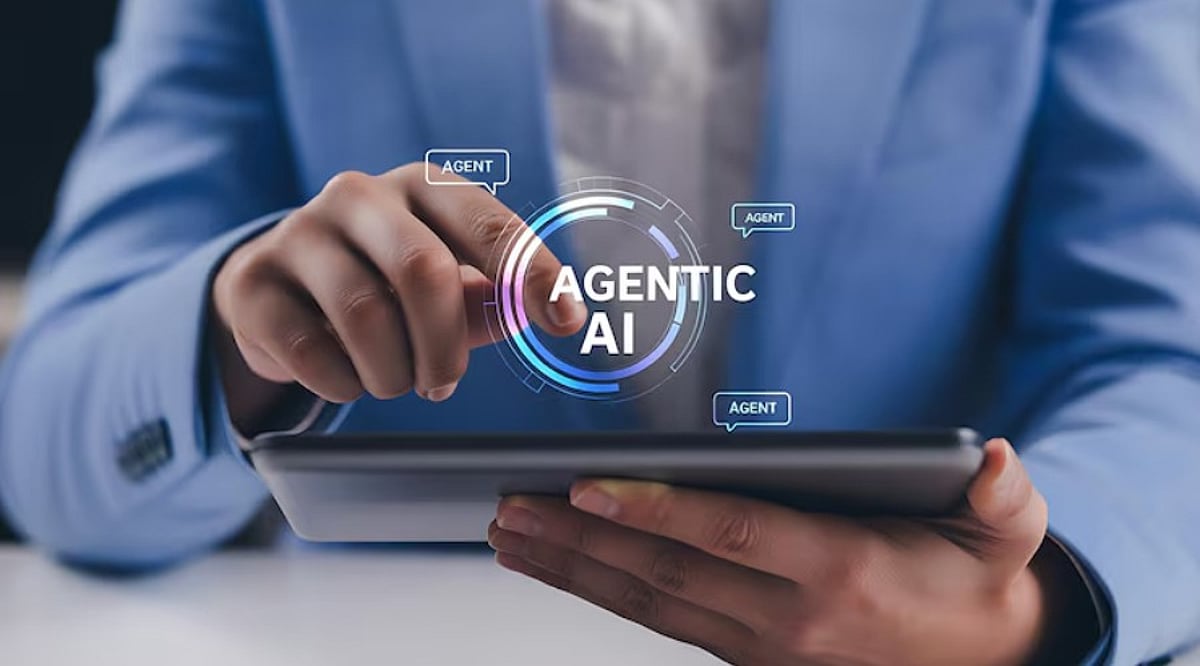
Agentic AI: From Answers to Action
In 2026, artificial intelligence has made a significant leap. Instead of merely generating responses, AI agents can now plan complex tasks, interact with business systems, verify their own output, and operate with limited human intervention. This shift is reshaping how organizations build software, manage operations, and assign responsibility to machines.
The Three-Layer Stack of Agentic AI
The agentic AI ecosystem has matured into three distinct layers: frameworks for constructing agents, platforms for controlling and observing them, and enterprise products that bring AI into everyday workflows. Choosing the right combination depends on workflow complexity, data requirements, and the level of control needed over autonomous decisions.
Where Agents Are Built: Leading Frameworks
Developers still start with frameworks, and two names dominate: LangChain and LangGraph. Although often mentioned together, they solve different problems. LangChain acts as an integration layer, connecting models to data sources, tools, and APIs while allowing teams to switch providers without rebuilding their applications. LangGraph focuses on stateful workflows, giving agents the ability to remember where they are in a task. This is essential for work that branches, loops, or runs for hours—so a single failed step doesn’t force a restart.
CrewAI takes a collaborative approach by splitting work across specialized agents, much like a small team. A researcher gathers data, a writer drafts content, and a reviewer checks it before publication. This works well when a task can be broken into clear segments, though more agents also mean more coordination overhead.
Other frameworks fill niche needs. LlamaIndex is built for data-heavy, retrieval-focused agents. DSPy treats prompt design as a testable, optimizable component. Microsoft’s Semantic Kernel is ideal for teams already embedded in the Microsoft ecosystem. No single framework wins across the board—the right choice depends on the type of failure a team is prepared to debug.
Where Agents Are Controlled: Platforms and Observability
Building an agent is relatively easy; running it safely at scale is harder. Without proper oversight, an agent might overspend a budget, access incorrect data, or misuse a tool. Production systems require evaluation, cost tracking, permission limits, and a clear audit trail.
LangSmith provides tracing and evaluation across multiple frameworks, helping teams monitor agent behavior. TrueFoundry operates at the infrastructure level, managing routing, authentication, rate limits, and monitoring no matter which framework is in use. As organizations scale from a single agent to dozens, the challenge shifts from building to supervising.
Where Agents Are Deployed: Enterprise Readiness
Not every company wants to build agents from scratch. Ready-made enterprise products now fill that gap. Glean focuses on enterprise search and internal knowledge agents. Moveworks automates employee support and internal workflows. Sierra builds customer-facing agents for support and sales. Cognigy and Kore.ai compete in conversational automation at scale, while UiPath extends its existing automation platform with AI-powered exception handling for businesses already using its tools.
An Emerging Fourth Category
A new group of tools doesn’t fit neatly into the three layers. Google Antigravity offers an agent-first development environment. Perplexity Computer coordinates across multiple models at once. Manus focuses purely on autonomous task execution. These products sit between frameworks and finished applications, suggesting that the boundaries between building, controlling, and deploying agents are beginning to blur.
The Bottom Line for 2026
The real question isn’t which tool gives an agent the most freedom. It’s which tool gives an organization enough visibility and control to use that freedom wisely. As agents take on more daily operations, the winners won’t be the most autonomous systems. They’ll be the ones companies can trust, audit, and correct when things go wrong.
Frequently Asked Questions
What are agentic AI tools? Agentic AI tools are software frameworks and platforms that enable AI agents to plan tasks, use external tools, make decisions, maintain context, and complete multi-step workflows with limited human intervention.
Which is the best agentic AI framework in 2026? There is no single best framework. LangGraph suits stateful workflows, LangChain handles broad agent development, CrewAI excels at multi-agent collaboration, and LlamaIndex is ideal for data-heavy applications.
What is the difference between LangChain and LangGraph? LangChain provides components and integrations for building AI applications and agents, while LangGraph orchestrates complex, stateful workflows with branching, loops, retries, and persistent state.
Are agentic AI platforms suitable for enterprises? Yes. Enterprise platforms offer workflow automation, observability, permissions, security controls, evaluation, and audit trails, all critical when agents operate across business processes.
How should businesses choose an agentic AI platform? Evaluate workflow complexity, data needs, integration requirements, desired autonomy level, security controls, observability, cost management, and human-approval requirements before making a decision.
Leave a Reply