Tag: marketing

  • Microsoft Restructures Communications: Moves Team Under Brad Smith, Empowers Employees

    Microsoft is undergoing a major organizational shift, moving its communications function out of the marketing department and into the corporate, external, and legal affairs group led by Vice Chair and President Brad Smith. The change, announced by CEO Satya Nadella, aims to give the company a more direct and authentic public voice amid what Nadella described as an increasingly fragmented and noisy media environment.

    Under the new structure, communications will sit alongside Microsoft’s legal, regulatory, public policy, antitrust, litigation, and government-relations teams. Despite the separation, Microsoft will continue to coordinate its communications and marketing operations closely.

    Employees to Play a Larger Role in Public Messaging

    The restructuring signals a broader shift in Microsoft’s communications strategy. Nadella wants employees who work directly with products and customers—such as engineers, sales teams, and partners—to have a greater role in explaining the company’s work. More employees and executives are expected to represent Microsoft publicly, including through social media, according to a memo from Brad Smith.

    Nadella emphasized that “people closest to Microsoft’s products and customers have a strong opportunity to shape how the company is understood.” He also indicated that Microsoft will experiment with new approaches and evolve its communications strategy over time.

    Frank Shaw Moves to Advisory Role

    The reorganization also affects longtime communications chief Frank X. Shaw, who announced earlier this month that he would leave Microsoft at the end of 2026 after more than two decades. During the transition, Shaw will step away from his current responsibilities and serve as an adviser to Smith and interim communications leader Brent Colburn. Colburn, Microsoft’s vice president of global public affairs, has been named interim communications leader and will remain through December to oversee the handover.

    Microsoft plans to search for a permanent chief communications officer, considering both internal and external candidates.

  • PayU Unveils AI Agent Store to Help Indian SMBs Automate Commerce and Payments

    PayU Unveils AI Agent Store to Help Indian SMBs Automate Commerce and Payments

    PayU has launched Agent HQ, a dedicated AI agent store designed specifically for small and medium-sized businesses (SMBs) in India. The platform enables merchants to deploy specialized AI agents across various stages of commerce, from improving product discoverability on AI shopping platforms to simplifying payment operations and creating conversational AI experiences.

    According to PayU, the platform helps SMBs adapt to shifting consumer behavior, noting that nearly 50% of search traffic is moving to AI agents. Shoppers referred by AI can also achieve conversion rates up to three times higher than traditional channels.

    What Agent HQ Offers

    Agent HQ is built on over a decade of PayU’s commerce intelligence, covering more than 450,000 merchants, over 700 million shopper journeys, and Rs. 7,800 billion in processed transactions.

    Through the platform, merchants can make their products and services discoverable and transactable on AI platforms such as Claude and ChatGPT, as well as messaging channels including WhatsApp. Businesses can also create custom conversational AI assistants for their websites, apps, and customer journeys. These assistants provide real-time shopper support and handle post-purchase queries.

    AI Agents for Payments and Operations

    Agent HQ includes AI agents designed to automate operational tasks such as transaction follow-ups, chargeback reconciliations, refund escalations, and settlements. The agents use merchant transaction data—including success and failure patterns, chargeback histories, and shopper behavior—to suggest targeted sales and marketing campaigns while helping merchants reduce fraud, disputes, and operational effort.

    Integration with PayU Merchant Dashboard

    Agent HQ is integrated directly into the PayU merchant dashboard. Merchants can hire an AI agent in a few clicks, choose its frequency, monitor its activity, and receive outputs through email and WhatsApp. PayU emphasizes that all agents operate strictly within boundaries defined by merchants.

    Manas Mishra, Chief Product Officer at PayU & Wibmo, said Agent HQ expands PayU’s value-added offerings by providing merchants with a personalized team of AI agents to improve discoverability, drive growth, and manage payment operations.

    Merchants including Policybazaar, Daily Objects, and Pinq Polka are already using Agent HQ to enhance their commerce workflows.

  • Top Canva Pro Template Families for Social Media, Business, and Marketing Success

    Top Canva Pro Template Families for Social Media, Business, and Marketing Success

    Brand consistency often unravels once content production scales across multiple platforms and team members. Canva Pro templates solve this by turning individual designs into reusable systems. Features like Brand Kit, Magic Resize, and locked elements streamline content creation, helping businesses maintain a cohesive look without repetitive manual work.

    Key Features That Make Templates Work at Scale

    Canva’s free plan offers a large template library, but Pro adds the machinery for true reusability. Brand Kit automatically applies your brand colors and fonts. Magic Resize adapts one design into multiple formats instantly. Locked elements prevent accidental layout shifts during team edits. These features don’t replace design judgment—they eliminate the repetitive tasks that slow down production.

    Essential Templates for Social Media, Business, and Marketing

    Social Media

    Instagram Carousel Posts lead in engagement. Metricool’s 2026 study of over 24 million posts found carousels generate nine times more saves than single images. Magic Resize converts one carousel into a Story and a Pin without extra design time. LinkedIn thought-leadership posts benefit from Brand Kit, keeping every post visually traceable to the same person.

    Business

    A Proposal Template with auto-applied brand kit reduces back-and-forth before client sign-off. A locked Brand Guidelines template prevents style drift as more team members create content. These templates ensure professional, on-brand communication every time.

    Marketing

    Lead Magnets with premium layout elements boost opt-in rates compared to plain PDFs. Resized Landing Page and Ad Banner sets keep the click and the page visually matched—a common reason paid traffic underperforms. Presentations, like locked Pitch Decks, keep founders focused on the argument instead of slide alignment.

    Building a Template Library, Not a File Pile

    A few rules separate an effective system from a folder of disconnected files:

    • Match templates to the platform before prioritizing aesthetics—a static post design often breaks as a Story.
    • Favor template families over single graphics; one carousel plus matching Story and Reel covers holds a brand together better than any isolated design.
    • Limit typography to two fonts through Brand Kit rather than choosing five for variety.
    • Treat heavy edits as a signal to pick a different template, not a reason to force one to fit.

    Smaller categories—newsletters, invoices, business cards, thumbnails—still deserve a spot in the same Brand Kit. Start with three template families: one for social, one for client communication, and one for marketing. Everything else becomes easier to standardize once that foundation is set.

    Final Thought

    The templates that earn a place in a real workflow are rarely the most decorative. They are the ones a team reaches for without thinking twice, resized in seconds, locked against accidental damage, and instantly recognizable as belonging to one brand.

  • Why These 10 Major Companies Changed Their Names – And What It Means

    Why These 10 Major Companies Changed Their Names – And What It Means

    Rebranding is a bold strategic move that can signal a shift in vision, target audience, or even an entire industry. Over the years, several high-profile companies have changed their names to reflect new ambitions, shed outdated associations, or simplify their identity. Here are ten notable examples and the stories behind their name changes.

    • Facebook to Meta: Mark Zuckerberg rebranded the social network to emphasize its focus on virtual reality, augmented reality, and the metaverse, moving beyond traditional social media.
    • Google to Alphabet: In 2015, Google created a parent company called Alphabet to allow its core business and experimental ventures (like self-driving cars and life sciences) to operate independently under one umbrella.
    • Twitter to X: After Elon Musk acquired Twitter, he rebranded it as X, aiming to transform the platform into an all-in-one digital services hub for payments, messaging, and more.
    • Square to Block: The payment processing company expanded its scope to include blockchain, financial services, and decentralized technology, adopting the name Block to reflect that broader vision.
    • Dunkin’ Donuts to Dunkin’: The chain dropped “Donuts” from its name to emphasize its growing beverage menu and modern coffee-shop identity, appealing to a wider audience.
    • Weight Watchers to WW: The weight-loss program rebranded to WW, focusing on holistic wellness and healthy lifestyles rather than just weight loss.
    • Philip Morris to Altria: The tobacco giant adopted a new corporate name to distance itself from its cigarette heritage while diversifying into other industries.
    • Andersen Consulting to Accenture: After a legal split from Arthur Andersen, the consulting firm needed a fresh identity. The name Accenture (meaning “accent on the future”) was born and has since become a global leader in technology consulting.
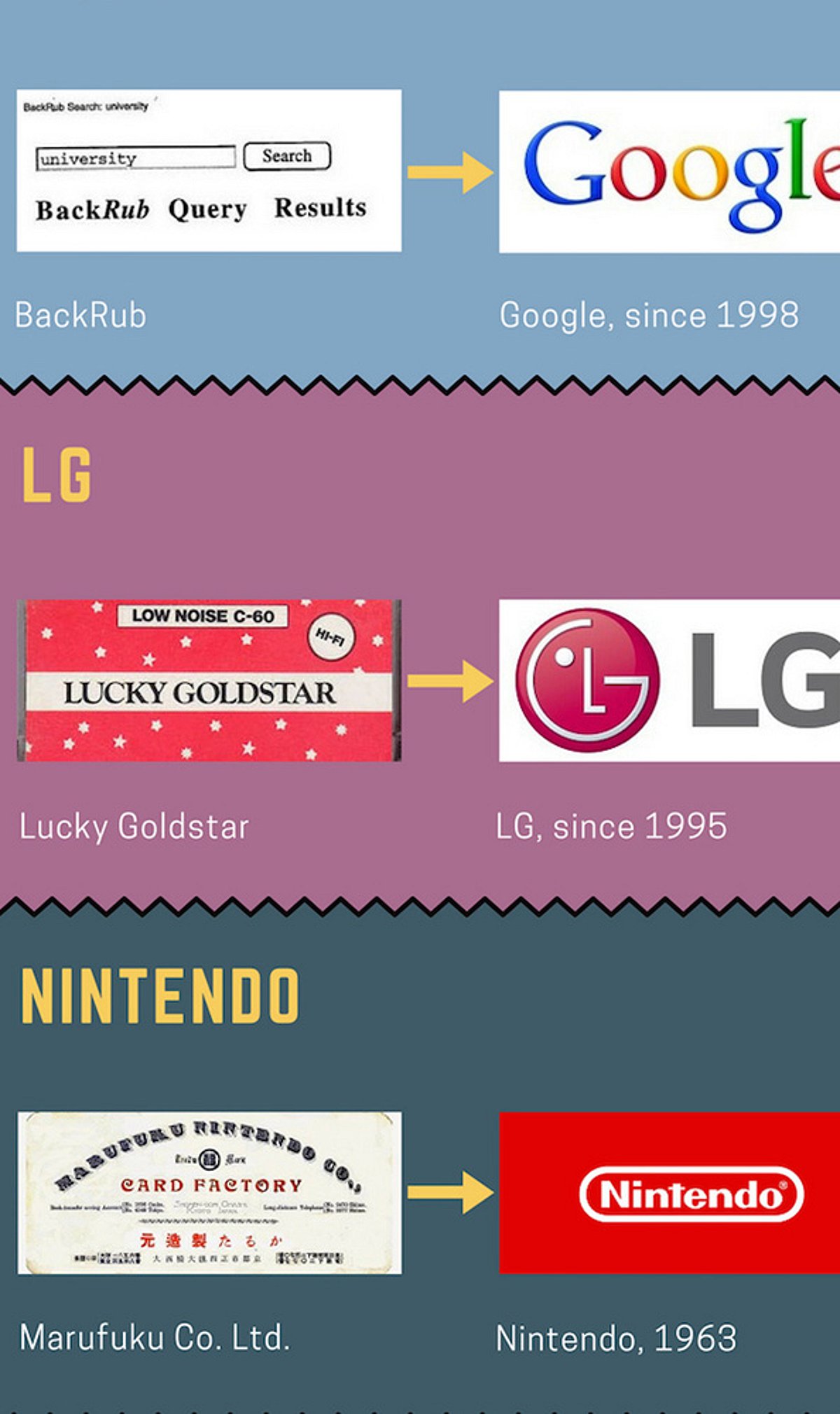
    • BackRub to Google: Before becoming a household name, Google started as BackRub. Founders Larry Page and Sergey Brin renamed it to represent the immense scale of information they aimed to organize.

    Each of these name changes was a carefully calculated decision, often accompanied by a shift in business strategy. Whether to pivot to new technologies, shed negative connotations, or simplify branding, these companies show that a name is more than just a label—it’s a statement of intent.

  • Reflectiz and Taboola Partner for Webinar on AI-Driven Third-Party Marketing Security

    Reflectiz and Taboola Partner for Webinar on AI-Driven Third-Party Marketing Security

    Reflectiz, the web exposure management platform, today announced a live webinar with Taboola titled “Securing Third-Party Marketing in the AI Era,” scheduled for July 8 at 9 AM EDT / 3 PM CEST.

    Every marketing vendor a company approves can silently introduce third- and fourth-party scripts that no security team ever reviewed. In the AI era, that invisible layer is expanding faster than point-in-time audits can track. The gap between what an organization approves and what actually executes on its site is where data leakage, regulatory exposure, and compliance failures happen.

    The session pairs two perspectives that rarely sit at the same table. Idan Cohen, CEO and Co-Founder of Reflectiz, brings 20 years in cybersecurity, from offensive code and penetration testing to building Reflectiz into an AI web security platform. Omri Ariav, Director of Product Management at Taboola, leads the data layer behind an advertising platform reaching over 600 million daily active users. His scope spans user data and identity, tracking, attribution, measurement, and privacy, working where large-scale data, measurement, and user trust meet. He is an active part of Taboola’s AI transformation and an open-source builder who writes regularly about AI in real product workflows.

    “Security teams approve a vendor list. They don’t approve what actually loads in the browser,” said Idan Cohen, CEO and Co-Founder of Reflectiz. “One marketing tag can pull in a chain of third and fourth parties nobody vetted, and AI is making that chain grow faster than anyone can audit by hand. This session is about closing that gap, so marketing and security finally work from the same picture of what’s running on the site.”

    Attendees will learn:

    • What transparent, security-forward ad tech looks like in 2026, and how to tell which vendors meet that bar
    • How a single approved marketing tag spawns a chain of third- and fourth-party scripts no one reviewed
    • Why AI-driven ad tech expands the client-side attack surface faster than audits can catch
    • A practical three-step framework to inventory, monitor, and govern the web supply chain so marketing and security work from one source of truth

    Registration is open at: https://www.reflectiz.com/learning-hub/reflectiz-taboola-marketing-security-webinar/

    About Reflectiz
    Reflectiz gives organizations an outside-in view of every script, tag, and third party running on their websites. The platform continuously maps the client-side attack surface, flags risk in full context, and helps security and compliance teams close the gap between what they approved and what is actually running. The platform is designed to help organizations validate their security posture rather than rely on assumptions.

    Contact
    PR & Social Media Manager
    Oran Frenkel
    Reflectiz
    oran.f@reflectiz.com

    This is a paid press release published via CyberNewswire, a PR newswire syndication platform for cybersecurity companies.

  • How AI Is Reshaping Key Careers: From Customer Support to Healthcare

    How AI Is Reshaping Key Careers: From Customer Support to Healthcare

    As artificial intelligence continues to evolve, its impact on the workforce is undeniable. While some fear job displacement, AI is actually transforming roles rather than eliminating them entirely. Here’s a look at ten careers experiencing the most significant changes as AI becomes a workplace collaborator.

    Customer Support

    AI chatbots now handle routine inquiries, freeing up human agents to tackle complex, high-emotion issues that require empathy and nuanced judgment.

    Content Writing

    AI accelerates content creation by generating drafts and data-driven pieces, but human creativity, storytelling, and brand voice remain irreplaceable.

    Software Development

    Developers leverage AI-powered coding assistants (like GitHub Copilot) to write code faster, debug efficiently, and automate repetitive tasks, boosting overall productivity.

    Graphic Design

    AI tools can generate visuals in seconds, allowing designers to focus on strategy, concept development, and creative direction rather than manual execution.

    Accounting

    Automation handles data entry, invoicing, and reconciliation, shifting accountants’ work toward analysis, advisory, and strategic financial planning.

    Marketing

    AI enhances targeting by analyzing consumer behavior, yet human marketers still drive campaigns with creative intuition and ethical decision-making.

    Healthcare

    AI assists in diagnosing diseases, analyzing medical images, and managing patient data, while physicians retain final authority and patient interaction.

    Human Resources

    Recruiters use AI screening tools to filter resumes and identify candidates, but human evaluation ensures cultural fit and fair assessment.

    AI isn’t replacing humans—it’s augmenting our abilities. The careers that adapt will see workers focus on higher-value tasks that demand emotional intelligence, creativity, and strategic thinking.