Tag: memory chips

  • CXMT Launches Fifth-Generation DRAM Platform: A Major Step in China’s Memory Chip Ambitions

    CXMT Launches Fifth-Generation DRAM Platform: A Major Step in China’s Memory Chip Ambitions

    CXMT Begins Mass Production of Next-Generation DRAM

    Chinese memory-chip manufacturer ChangXin Memory Technologies (CXMT) has officially commenced mass production of its fifth-generation DRAM platform. The announcement was made at the 2026 World Manufacturing Convention on September 20, marking a significant milestone in China’s push to strengthen its domestic semiconductor capabilities and reduce reliance on foreign suppliers.

    Key Technical Advancements

    The new platform achieves an active-area half-pitch of just 11.95 nanometers in the memory array, utilizing advanced patterning techniques to shrink cell structures. This improvement allows more memory cells per chip and increases the number of dies produced from each silicon wafer. CXMT claims the fifth-generation platform delivers over 50% higher gross die output per wafer compared to its predecessor under comparable conditions, boosting manufacturing efficiency and lowering costs.

    New LPDDR5X Memory Products

    Alongside the platform, CXMT introduced two 24-gigabit LPDDR5X memory chips. These new products offer 50% more storage capacity than previous-generation offerings, providing Chinese electronics manufacturers with a domestic source of advanced mobile memory as demand for higher-capacity chips continues to grow.

    Competing with Global Giants

    The launch intensifies the memory-chip race, as CXMT aims to challenge dominant players like Samsung Electronics, SK Hynix, and Micron Technology. DRAM serves as short-term working memory in smartphones, computers, servers, and other electronic devices. The timing is crucial amid U.S. restrictions on advanced semiconductor technology and equipment, which have accelerated China’s efforts to develop indigenous alternatives.

    CXMT’s progress reflects the broader national strategy to build a self-sufficient semiconductor ecosystem, with the new platform poised to support a wide range of applications from portable devices to data centers.
  • Intel and SK Hynix Shares Surge Following Reports of AI Chip Partnership Talks in Ohio

    Intel and SK Hynix Shares Surge Following Reports of AI Chip Partnership Talks in Ohio

    Reports that Intel and SK hynix are in discussions for a potential partnership to manufacture memory chips at Intel’s Ohio campus have sent shares of both companies higher. Intel shares rose approximately 4%, while SK hynix gained around 3% on Wednesday, September 16.

    The potential deal would see SK hynix produce chips at Intel’s $100 billion Ohio site, though no agreement has been signed yet. The talks come at a time when AI companies are increasingly demanding high-bandwidth memory chips for servers and data centers. SK hynix is a leading supplier of such memory, widely used in AI systems.

    Intel has faced delays at its Ohio project, originally expected to begin production in 2025. A partnership with SK hynix could provide a new purpose for the site while expanding memory chip production in the United States.

    SK hynix already has a chip packaging plant under construction in Indiana, but it does not yet manufacture memory chips in the U.S. Moving some production to Ohio would help the company establish a larger footprint in the country.

    Ohio’s Role in the AI Chip Race

    The possible collaboration could benefit both companies. Intel could repurpose its delayed Ohio facility, while SK hynix would gain another location for memory production closer to U.S. customers.

    The timing is crucial as the AI race intensifies, with companies demanding powerful chips for advanced AI systems. Increasing local production could help meet this demand over time.

    However, the talks remain at an early stage, and any deal could face cost and technology hurdles. South Korea may also review an agreement involving advanced memory technology. If the plan moves forward, Intel’s Ohio site could play a new role in the growing U.S. AI chip supply chain.

  • Apple MacBook Air Hit by Supply Shortage as AI Memory Chip Demand Rises

    Apple MacBook Air Hit by Supply Shortage as AI Memory Chip Demand Rises

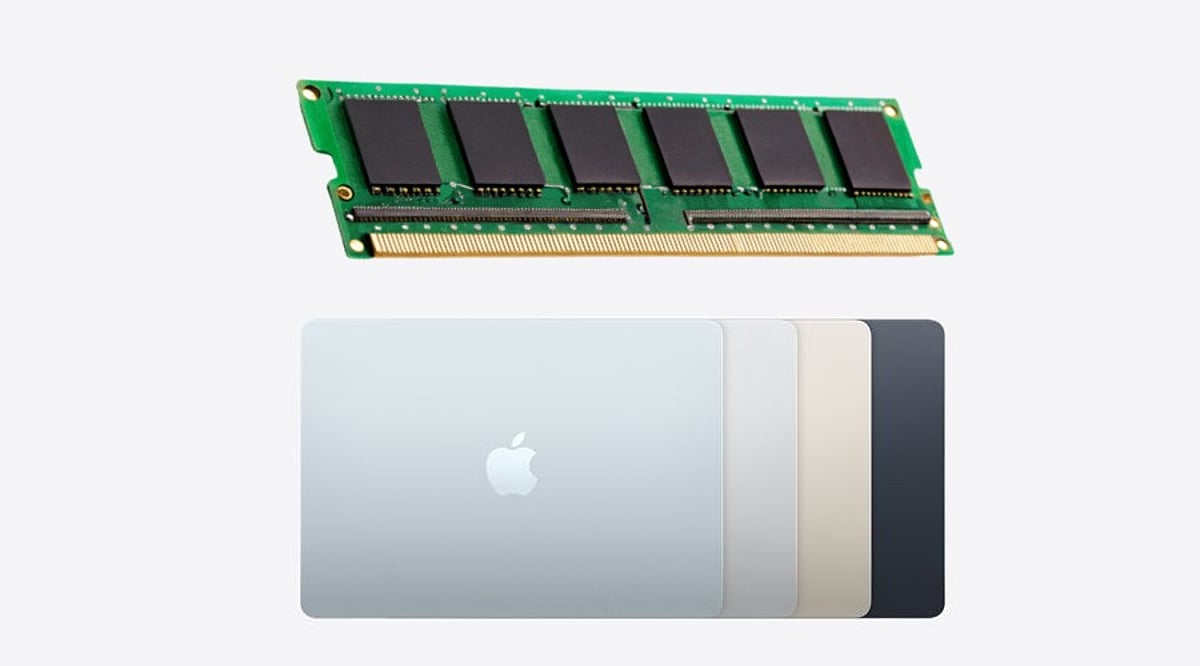
    A new report indicates that Apple is facing supply constraints for its popular MacBook Air due to a global memory chip shortage, which could delay deliveries in several markets.

    According to Bloomberg, the rising demand for memory chips from artificial intelligence companies is straining Apple’s supply chain. Mark Gurman reported that the MacBook Air is now affected, though Apple previously faced similar issues with less popular models like the Mac mini and Mac Studio.

    Customers ordering the MacBook Air through Apple’s official website are now seeing delivery dates pushed into the second half of August. Some configurations may require even longer waiting periods. While Apple has not officially confirmed the shortage, the report notes that the company is directing customers toward the MacBook Pro on its website and in retail stores. Some users have also encountered a disclaimer stating, “MacBook Air subject to availability.”

    Could the Shortage Benefit Windows Laptop Makers?

    Limited availability of MacBook Air models could create an opportunity for Windows laptop brands such as Dell, HP, Lenovo, and Asus, which already offer thin and light competitors. If MacBook Air units become harder to buy, some customers may choose those alternatives instead of waiting.

    However, Windows manufacturers may not be entirely safe. If the memory shortage worsens, they could also face production problems. The company that manages its supply chain more effectively may gain an advantage in the coming months.

    A Reminder That Hardware Still Matters

    The reported MacBook Air shortage underscores how a single missing component can disrupt an entire product line. Even the largest tech companies depend on a steady flow of parts. For Apple, keeping the MacBook Air readily available on store shelves will be crucial as competition in the laptop market continues to intensify.

  • SK Hynix Stock Drops 9% as Record Earnings Fall Short of AI Chip Market Expectations

    SK Hynix Stock Drops 9% as Record Earnings Fall Short of AI Chip Market Expectations

    SK Hynix stock faced renewed selling pressure after the memory-chip maker reported second-quarter figures that came in below market forecasts. While revenue and operating profit reached quarterly records, both measures missed analyst estimates, triggering a sharp decline in share prices.

    The company’s US-listed ADRs closed Tuesday at $130.17, down 8.99% during regular trading, before recovering about 1.9% in after-hours trading. In Seoul, SK Hynix shares fell approximately 9.4% on Wednesday as investors digested the earnings release.

    SK Hynix Earnings Miss Market Forecasts

    SK Hynix reported second-quarter revenue of 79.3 trillion won, up 257% from the same period last year. Analysts had expected approximately 84 trillion won. Operating profit reached 60.5 trillion won, marking a 557% annual increase, but still fell short of the 64 trillion won market forecast.

    Both revenue and operating profit set company records during the June quarter, yet the gap against forecasts shaped the market reaction. Investors had raised expectations after strong demand lifted memory prices and pushed SK Hynix stock to record levels earlier in 2026.

    Net profit surged more than 13 times to 93.9 trillion won, with investment gains playing a major role in that increase. Analysts linked much of the gain to the completed sale of SK Hynix’s indirect stake in Japanese flash-memory maker Kioxia.

    AI Memory Demand Supports Record Results

    Demand for high-bandwidth memory continued to support SK Hynix earnings. HBM chips serve data centers that train and operate artificial intelligence models. The company has secured long-term supply agreements with approximately 10 customers and continues negotiations with other buyers.

    SK Hynix said customers are seeking longer contracts as memory supply remains tight. These agreements include financial protections intended to reduce risks from changes in customer demand. The company also plans 2026 capital spending of about 47 trillion to 48 trillion won.

    However, delays in some HBM4 shipments reduced revenue recognition during the quarter. Price gains for standard DRAM products also came in below earlier expectations, contributing to the operating profit and revenue misses.

    Management maintained its positive demand outlook for the second half of 2026, expecting AI server investment and limited memory supply to support sales. Still, the latest figures show that record growth must also clear high market forecasts.

    SK Hynix Stock Tracks Wider Chip Selloff

    SK Hynix stock moved lower during a broader retreat from AI-linked semiconductor shares. Investors have questioned the funding and returns of large data-center projects. Competition from Chinese memory-chip companies has also added pressure across Asian markets.

    South Korea’s Kospi fell approximately 6% on Wednesday, while Samsung Electronics lost about 4.8%. The moves followed broad selling across chip stocks. SK Hynix ADRs also closed below their $149 US listing price after Tuesday’s decline.

    Investors are also watching the company’s shareholder return plan. SK Hynix has not yet provided details on its timing, size, or structure. Hyundai Motor Securities research head Greg Roh said, “SK needs to come up with a concrete shareholder return policy to turn around investor sentiment.”

    The company reported a net cash position of about 88 trillion won at the end of June and aims to build that figure toward 100 trillion won. Investors will track future spending, customer contracts, HBM4 deliveries, and the planned shareholder return policy.

  • SK Hynix Stock Drops Below IPO Price as AI Enthusiasm Wanes

    SK Hynix Stock Drops Below IPO Price as AI Enthusiasm Wanes

    SK Hynix shares have fallen below their initial public offering price for the first time since listing on the NASDAQ, as the artificial intelligence rally that powered the stock loses steam. The South Korean memory chipmaker’s American depositary receipts closed at $143.02 on July 27, down 7.47% from the previous session, and traded as low as $139.01 during the day.

    The stock opened at $170 on its first trading day and hit an intraday high of $194.80 shortly after the $26.5 billion IPO — the second-largest US share sale after SpaceX. But the early gains have evaporated amid broader selling pressure in semiconductor stocks and growing investor skepticism about AI infrastructure spending.

    IPO Gains Fade Within Weeks

    SK Hynix raised about $26.5 billion by selling 177.9 million depositary shares, each representing one-tenth of a common share. Strong institutional demand drove the offering, but the rally quickly reversed. Monday’s close placed the shares 4% below the $149 IPO price and about 27% below the July 14 peak. Trading volume exceeded 50 million shares as selling accelerated.

    The decline comes just ahead of SK Hynix’s earnings report on Wednesday, where investors will scrutinize demand for high-bandwidth memory, production plans, and capital expenditure levels. The company supplies advanced memory products used with NVIDIA processors in AI servers.

    Semiconductor Stocks Face Broad Selling

    Pressure extended across the semiconductor market. The Philadelphia Semiconductor Index fell 2.2% on Monday, closing at its lowest level since May 19. The index has dropped more than 20% during July after strong gains earlier in the year. NVIDIA, Micron, and other chip companies also declined as investors questioned the pace of AI infrastructure spending.

    Concerns around ‘circular financing’ resurfaced after several large technology agreements involved funding, loan support, and equipment purchases among connected companies. Meanwhile, Chinese memory producer ChangXin Memory Technologies surged 466% during its Shanghai debut, drawing attention to rising competition in the memory market. Reports of new Chinese chipmaking equipment added pressure across Asian and US semiconductor shares.

    Major US Listings Lose Early Support

    SK Hynix joins SpaceX among large US listings trading below their offering prices. SpaceX closed at $113.50 on Monday, compared with its $135 IPO price, after climbing above $225 shortly after its June listing. Other recently listed companies, including gas engine maker Innio, have also lost early gains, raising closer scrutiny of pricing across major technology offerings.

    SK Hynix’s decline came despite a new partnership between NVIDIA and SK Group, which announced a planned investment exceeding $500 billion across AI data centers and next-generation memory. SK Telecom plans to develop an AI facility with capacity of up to two gigawatts. The project could support long-term demand for SK Hynix memory products, but markets are assessing whether planned spending will match future demand.

  • Samsung Electronics Shares Slide as Tariff Concerns and Stablecoin Plans Emerge

    Samsung Electronics Shares Slide as Tariff Concerns and Stablecoin Plans Emerge

    Samsung Electronics stock fell sharply on Friday as investors weighed fresh tariff risks and the company’s announcement of native stablecoin support for Samsung Wallet. Shares dropped 7.6% to ₩249,500, joining a broader sell-off of South Korean chipmakers amid escalating trade tensions.

    Stablecoin Integration for Samsung Wallet

    During Galaxy Unpacked 2026 on July 22, Samsung announced plans to integrate stablecoin functionality into its Samsung Wallet, allowing Galaxy users to send, receive, and hold stablecoins directly within the app. The update will expand the wallet beyond payment cards, digital IDs, rewards, cash, and savings. A USDC interface was shown during the event, though Samsung did not confirm that USDC will launch with the service. Product manager Lee Dinham stated the goal to unify payments, rewards, and digital assets in one application, secured by Samsung Knox device encryption. This follows Samsung’s October 2025 partnership with Coinbase, which gave over 75 million US Galaxy users crypto access through Samsung Wallet and a three-month Coinbase One subscription.

    Tariff Pressures Weigh on Samsung Stock

    New US tariffs on imports from more than 60 economies have heightened concerns over global supply chains. Samsung, which sells consumer electronics, memory chips, displays, and other components across markets including the Americas, China, and Europe, faces direct exposure to customs costs, compliance rules, and potential trade retaliation. Higher duties could impact device pricing and component margins. The company is investing heavily in memory capacity and AI-related chips, but also faces legal disputes involving memory products and board-level changes, adding uncertainty for investors.

    Citi Maintains Buy Rating on Memory Demand

    Citi Research retained Buy ratings on Samsung Electronics and SK Hynix, calling the sell-off “unfounded fears” of a memory-cycle downturn. The bank noted that memory inventory remains “materially low” at suppliers and customers, and rising demand could keep supply below orders. Citi expects AI infrastructure to drive the next phase of memory demand, citing NVIDIA’s Vera Rubin platform as a potential driver for Samsung’s NAND and advanced DRAM businesses. The report also pointed to growing use of context memory extension systems and high-capacity SSDs near graphics processors.

    Samsung’s stablecoin plan adds a new service to its mobile ecosystem, but launch details remain unclear. Meanwhile, tariff risks and supply-chain costs persist. Citi’s positive rating reflects tight memory supply and expanding AI server demand.

  • India’s Semiconductor Chip Supply Chain: Key Sources and Domestic Ambitions

    India’s Semiconductor Chip Supply Chain: Key Sources and Domestic Ambitions

    India relies heavily on imported semiconductor chips to power its booming electronics, automotive, and telecommunications sectors. Understanding the primary sources of these critical components reveals the global dependencies and strategic initiatives shaping the nation’s tech landscape.

    Taiwan: The Dominant Supplier

    Taiwan stands as India’s largest semiconductor supplier, led by industry giants like TSMC. These manufacturers produce advanced chips for smartphones, computers, automotive systems, and industrial electronics, making Taiwan an indispensable partner in India’s technology ecosystem.

    China: Mature Components Despite Geopolitical Tensions

    China supplies a wide range of mature semiconductor components used across consumer electronics, appliances, telecommunications equipment, and industrial manufacturing. Despite geopolitical challenges, China remains a key source for India’s semiconductor needs.

    South Korea: Memory and Storage Leadership

    South Korean companies Samsung and SK Hynix export memory chips, storage components, and semiconductor technologies that support India’s electronics manufacturing and smartphone production industries.

    United States: Advanced Processors and AI Semiconductors

    American companies design advanced processors, networking chips, and AI semiconductors widely integrated into India’s technology, cloud computing, and enterprise hardware markets.

    Japan: Specialty Materials and Equipment

    Japan provides specialty semiconductor materials, sensors, manufacturing equipment, and electronic components essential for India’s growing electronics and automotive industries across multiple sectors.

    Singapore: Regional Trading and Distribution Hub

    Singapore functions as a regional semiconductor trading and distribution hub, exporting integrated circuits and electronic components from multiple global manufacturers efficiently to India.

    Malaysia: Assembly, Testing, and Packaging

    Malaysia is a major assembly, testing, and packaging center, exporting semiconductor products and electronic components to India’s consumer electronics and automotive manufacturing sectors consistently.

    Vietnam: Emerging Electronics Manufacturing Hub

    Vietnam is an emerging electronics manufacturing hub supplying semiconductor-based components used in smartphones, computers, networking equipment, and other consumer electronic devices worldwide today.

    India’s Domestic Chip Mission

    Government initiatives encourage semiconductor fabrication, packaging, and design through incentives, aiming to reduce import dependence and strengthen domestic manufacturing. This strategic push seeks to build a self-reliant semiconductor ecosystem within India.

  • Apple Might Turn to Chinese Supplier CXMT for iPhone Memory Chips

    Apple Might Turn to Chinese Supplier CXMT for iPhone Memory Chips

    Apple is reportedly considering a major shift in its supply chain by exploring an agreement with Chinese memory chip manufacturer CXMT (ChangXin Memory Technologies). If finalized, this move could see future iPhones equipped with memory chips sourced from a Chinese supplier for the first time, potentially reducing costs and altering the dynamics of global semiconductor politics.

    Industry insiders suggest that Apple is evaluating CXMT as a partner for DRAM or NAND flash memory, categories historically dominated by South Korean giants like Samsung and SK Hynix, as well as U.S.-based Micron. The motivation appears to be twofold: first, to diversify the supply chain and reduce dependency on a few key players; second, to lower component costs, which could enhance profit margins or allow for competitive pricing.

    However, the prospective partnership is not without controversy. CXMT, despite being a relatively young player in the memory market, has faced scrutiny over intellectual property disputes and allegations of technology theft. Additionally, geopolitical tensions between the U.S. and China have made any technology collaboration between American and Chinese firms a sensitive subject. Apple would need to navigate potential security concerns, quality assurance issues, and the risk of supply chain disruptions due to trade restrictions.

    For consumers, the biggest question is whether CXMT’s memory chips can match the performance and reliability of established suppliers. Early reports indicate that CXMT’s products have improved significantly, but they are still perceived as trailing behind industry leaders. If Apple can integrate these chips without compromising iPhone performance, it could signal a new era of cost-efficient manufacturing.

    This bold strategy, if implemented, would redefine Apple’s sourcing relationships and could have ripple effects across the entire electronics industry. Competitors may follow suit, further reshaping the global memory market. Whether this move will ultimately benefit or backfire on Apple remains to be seen, but it is a development worth watching closely.

  • Samsung Refutes US Share Listing Rumors After SK Hynix’s Record NASDAQ Debut

    Samsung Refutes US Share Listing Rumors After SK Hynix’s Record NASDAQ Debut

    Samsung Electronics has officially denied recent reports that it is considering a United States share listing via American depositary receipts (ADRs). The denial follows a media report suggesting the company had held preliminary discussions with banks about a potential offering. In a statement, a Samsung spokesperson said, “Samsung Electronics is not reviewing the possibility of issuing American Depositary Receipts,” directly challenging the earlier account. The company did not elaborate on any past discussions or its reasoning.

    The earlier report indicated that any talks were at a very early stage and that Samsung had not decided whether to proceed. It also noted that the review “may not result in a listing.” Samsung had previously explored a similar plan but ultimately chose not to move forward. ADRs allow foreign companies to list shares on U.S. exchanges, making them more accessible to American retail investors. Currently, Samsung Electronics trades primarily on the Korea Exchange, limiting direct access for U.S. investors.

    The speculation gained momentum after SK Hynix, Samsung’s main competitor in memory chips, completed a massive U.S. share offering. SK Hynix priced its ADRs at $149 each, raising approximately $26.5 billion — the largest U.S. listing by a foreign company, according to Reuters. The shares began trading on NASDAQ on July 10 and surged more than 12% on their first day, reflecting strong investor demand for exposure to memory chips used in AI data centers.

    Both Samsung and SK Hynix compete in the DRAM, NAND, and high-bandwidth memory markets, and both have benefited from surging demand for chips powering artificial intelligence servers. However, memory stocks remain volatile. SK Hynix shares later fell as some investors took profits, and market participants are closely watching production growth, chip supply, and the pace of AI infrastructure spending.

    Samsung recently released preliminary second-quarter results, estimating sales of about 171 trillion won and operating profit of approximately 89.4 trillion won — a dramatic increase from 4.68 trillion won a year earlier. Despite the strong profit growth, Samsung shares declined after the update, as investors weighed high expectations against concerns about future AI spending and potential oversupply. The company plans to publish detailed quarterly results on July 30.

    In June, Samsung and the SK Group announced major manufacturing expansions, each planning to build two new chip plants in South Korea. The combined investment totals 800 trillion won (about $536 billion). Additionally, South Korean companies including Naver have committed 550 trillion won to build 8.4 gigawatts of data-center capacity by 2029. For now, Samsung’s public denial leaves no active ADR plan confirmed. Any future U.S. listing would require a new official announcement or regulatory filing.

  • Samsung Accelerates Yongin AI Chip Fab Opening to 2029 as SK Hynix Shares Drop After NASDAQ Debut

    Samsung Accelerates Yongin AI Chip Fab Opening to 2029 as SK Hynix Shares Drop After NASDAQ Debut

    Samsung Electronics has announced plans to begin operations at its first Yongin semiconductor factory in 2029, advancing the original target by one to two years. The accelerated timeline reflects surging demand for memory chips used in artificial intelligence data centers and aligns with South Korea’s broader strategy to expand domestic chip production.

    Samsung’s Revised Timeline for Yongin Fab

    Previously, Samsung expected the first fabrication plant at the Yongin cluster to start operations in 2030 or 2031. A company spokesperson confirmed that the facility is now scheduled to open by 2029, placing the project on a tighter schedule. The Yongin site is part of a larger semiconductor cluster south of Seoul, where Samsung plans to build six chip factories. The first plant will serve as the foundation for subsequent construction phases.

    To meet the revised date, Samsung must prepare the land and begin major construction work early. The company aims to add production capacity as technology companies increase spending on AI infrastructure and advanced memory products.

    South Korea’s Push for Chip Production Expansion

    South Korean authorities are supporting faster construction by shortening approval periods and providing earlier access to essential infrastructure like electricity and water. The national strategy targets doubling the country’s memory-chip production capacity within five years, including expedited development of Samsung and SK Hynix factories in Yongin and a new semiconductor cluster in Gwangju.

    Samsung has also outlined plans to invest 400 trillion won in semiconductor factories in Gwangju and 56 trillion won in high-bandwidth memory facilities in Cheonan and Onyang. Its domestic semiconductor program covers existing operations in Pyeongtaek and the new Yongin cluster.

    SK Hynix is similarly expanding its production network. The company plans to complete the fourth factory at its Yongin cluster by 2033, moving the target forward from 2045.

    SK Hynix Shares Retreat After NASDAQ Debut

    SK Hynix’s American depositary receipts (ADRs) debuted on NASDAQ on July 10, opening 14% above the $149 offering price at $170 and closing the session 12.8% higher. The company raised $26.5 billion from the US offering, with demand exceeding available shares by more than seven times. SK Hynix plans to use the funds for factories and equipment related to rising AI chip demand.

    However, on Monday, SK Hynix shares dropped more than 15% in Seoul as investors took profits after the NASDAQ surge. The decline marked the stock’s largest single-day drop in nearly two decades and weighed on the broader Kospi index. CEO Kwak Noh-jung noted that memory demand could outpace production capacity beyond 2030 and warned that 2027 might become the industry’s worst year for memory supply as AI customers require more advanced chips.