Tag: Meta

  • Top Employers for Computer Vision Engineers in 2026: NVIDIA, Tesla, OpenAI, and More

    Top Employers for Computer Vision Engineers in 2026: NVIDIA, Tesla, OpenAI, and More

    Computer vision is one of the fastest-growing fields within artificial intelligence, enabling machines to interpret and analyze visual data like humans. From autonomous vehicles and robotics to medical imaging and security systems, the technology is transforming industries. As demand surges, leading companies are competing for skilled computer vision engineers. Here are the best employers in 2026.

    NVIDIA

    NVIDIA remains a powerhouse for computer vision engineers, thanks to its dominance in AI hardware and software. Its recent RTX Spark AI chip, designed for local AI processing, has driven demand for engineers skilled in image recognition, model optimization, and edge computing. The company provides access to cutting-edge tools for large-scale AI development.

    Google DeepMind

    DeepMind continues to push boundaries in AI research, focusing on advanced machine learning, image understanding, and multimodal systems like Gemini. Engineers work on projects that define the future of visual reasoning, benefiting from a research-driven culture and vast computing infrastructure.

    Tesla

    Tesla offers one of the most exciting opportunities for real-world computer vision applications. Its camera-based self-driving technology relies on fast image processing, object recognition, and multi-camera analysis. Engineers solve massive-scale challenges while working on systems deployed in millions of vehicles.

    Meta

    Meta has intensified its AI investments, particularly in augmented reality, smart glasses, and visual AI. Engineers work on facial recognition, video generation, scene understanding, and wearable devices. Its aggressive AI expansion makes Meta a top career destination.

    OpenAI

    OpenAI has expanded beyond language models into multimodal AI, including image generation, robotics, and visual reasoning. Demand for computer vision engineers has grown as the company pursues advanced general intelligence. Employees gain access to cutting-edge research and world-class infrastructure.

    Scale AI

    Scale AI is a fast-growing infrastructure company specializing in data preparation for autonomous vehicles and enterprise AI. Computer vision engineers work with synthetic data, automated labeling, and large visual datasets. As multimodal AI adoption rises, Scale AI offers strong long-term prospects.

    Microsoft

    Microsoft provides a stable, powerful environment for computer vision engineers through Azure and enterprise AI solutions. Key areas include optical character recognition, healthcare imaging, industrial automation, and cloud-based vision APIs. The company balances research with product development.

    DeepSeek

    DeepSeek has emerged as a surprise success, securing $7.4 billion in funding and planning to double its workforce. It focuses on advanced AI and general intelligence systems, creating major demand for engineers. Its rapid growth makes it an attractive option for computer vision professionals.

    Industry Outlook for 2026

    The global computer vision market is projected to grow over 35% annually through 2030, driven by robotics, autonomous vehicles, healthcare, surveillance, industrial automation, and generative AI. Key skills include PyTorch, TensorFlow, Vision Transformers, YOLO, edge AI, CUDA optimization, and distributed training.

    Final Thoughts

    The job market has shifted dramatically. While traditional tech companies once dominated, now AI startups, robotics firms, and autonomous vehicle manufacturers offer outstanding opportunities. NVIDIA, Google DeepMind, Tesla, Meta, OpenAI, Microsoft, Scale AI, and DeepSeek provide exceptional career growth for computer vision engineers working on technologies that will shape our future.

    Frequently Asked Questions

    Which company is best for computer vision engineers in 2026?

    NVIDIA currently stands out with its strong AI ecosystem and advanced computing infrastructure.

    Is computer vision a good career in 2026?

    Yes, demand continues to rise rapidly across robotics, healthcare, autonomous vehicles, and AI.

    Which skills matter most for computer vision jobs?

    PyTorch, TensorFlow, Vision Transformers, YOLO models, CUDA optimization, and edge AI deployment are highly valuable.

    Are startups good for computer vision careers?

    Yes, fast-growing AI startups like DeepSeek and Scale AI offer excellent growth opportunities and cutting-edge projects.

    What industries hire computer vision engineers the most?

    Autonomous vehicles, robotics, healthcare technology, surveillance systems, industrial automation, and generative AI lead hiring demand.
  • Meta Rolls Out WhatsApp Plus Subscription in India: Exclusive Themes and Premium Features for Rs. 79/Month

    Meta Rolls Out WhatsApp Plus Subscription in India: Exclusive Themes and Premium Features for Rs. 79/Month

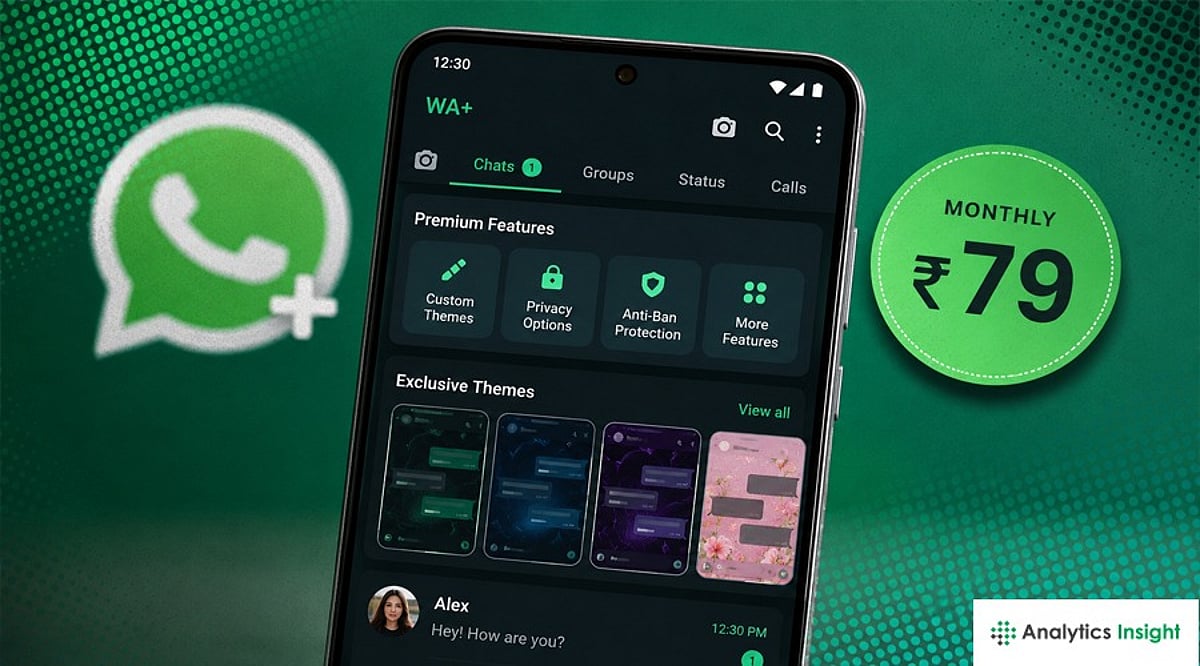
    Meta has officially introduced WhatsApp Plus, a new optional subscription service in India, priced at just Rs. 79 per month. This move marks the company’s first premium tier for WhatsApp, offering users enhanced customization without altering the core free experience.

    Subscribers to WhatsApp Plus gain access to 18 exclusive color themes, 14 customized app icons, unique notification ringtones, premium sticker packs, and the ability to pin up to 20 chats. Additionally, the package includes advanced chat organization tools and early access to select features as Meta continues to roll out updates.

    Users who do not subscribe will still enjoy all standard WhatsApp features, including messaging, voice and video calls, and end-to-end encryption — completely unchanged.

    To activate WhatsApp Plus, users can navigate to Settings > Subscriptions within the app and complete the payment. The feature is being phased out gradually, so not all users may see the option immediately.

    Industry experts view this launch as Meta’s strategic first step toward building a premium ecosystem around WhatsApp while maintaining its free core offering. The subscription is currently available only in India, with potential expansion in the future.

  • Google Restricts Meta’s Gemini AI Access Amid Global Compute Crunch

    Google Restricts Meta’s Gemini AI Access Amid Global Compute Crunch

    Google has reportedly limited Meta’s access to its Gemini AI models after the social media giant requested more computing capacity than Google could provide. The move highlights mounting infrastructure challenges faced by even the world’s biggest AI companies as demand for generative AI continues to surge.

    According to a Financial Times report, Google informed Meta around March that it could not fulfill the company’s full request for Gemini capacity, disrupting some of Meta’s internal AI projects. Reuters has not independently verified the report.

    Compute Shortage Hits AI Expansion

    The report says Meta has been affected more than other Google Cloud customers because of its unusually high demand for Gemini models. The restrictions have reportedly delayed several internal projects that rely on Google’s AI infrastructure.

    In response, Meta has encouraged employees to use AI tokens more efficiently. AI tokens measure how much computing power AI applications consume, making them a key factor in managing large-scale AI workloads.

    Meta Pushes Ahead with Its Own AI Strategy

    Meta has used Gemini for content moderation, scam detection, customer service, advertising tools, and software development. It is said that Meta began using Gemini because it outperformed some of its own AI models on certain tasks.

    Nonetheless, Meta has recently been moving some of its workloads from Gemini to its own Muse Spark model, thereby reducing its dependence on external AI providers while still investing billions of dollars in building its infrastructure.

    AI Infrastructure Emerges as Next Battleground

    The reported restrictions reflect a broader challenge across the AI industry. Companies are investing billions in chips, servers, and data centers, yet demand for AI computing continues to outpace supply.

    Google has previously acknowledged that limited computing capacity has constrained growth in its cloud business despite strong customer demand. If the report is accurate, the latest development suggests that access to AI infrastructure is becoming as strategically important as the AI models themselves, with compute power emerging as one of the industry’s most valuable resources. Neither Google nor Meta has publicly commented on the report.

  • Meta Tests New Instagram Controls for Personalized Algorithm Recommendations

    Meta Tests New Instagram Controls for Personalized Algorithm Recommendations

    Instagram is rolling out expanded algorithm controls that give users more say over the content recommendations they receive. The feature, part of Meta’s ‘Your Algorithm’ initiative, allows users to adjust the interests, creators, and themes that shape their feeds.

    Adam Mosseri, head of Instagram, announced that the company is testing broader application of these controls beyond Reels and Explore, which were the original test grounds. Users can now edit topics they like, choose to see more from specific influencers, or filter by content type, mood, and interests—such as travel videos or fitness images—to fine-tune their experience.

    This update leverages large language models (LLMs) to categorize posts by theme, making it easier for users to modify preferences without dealing with complex algorithms. Mosseri emphasized that the goal is to empower users to control their Instagram experience, moving beyond past reliance on viewing habits.

    The move reflects a broader social media trend toward transparency and user control over algorithmic feeds, as companies face growing scrutiny over curated content. Instagram has not yet announced a global launch date, but user-driven recommendations are expected to become a key feature.

  • Meta Reports Talks with Polymarket and Kalshi as It Develops Arena Prediction App

    Meta Reports Talks with Polymarket and Kalshi as It Develops Arena Prediction App

    Meta is pursuing a dual-track strategy to enter the prediction market space, simultaneously testing its own internal product, Arena, while exploring potential partnerships with established platforms Polymarket and Kalshi. CEO Mark Zuckerberg has reportedly instructed senior executives to engage in discussions with both operators, according to a New York Times report cited by The Block.

    The exploratory talks come just days after news broke that Zuckerberg had directed a small team to build Arena, a standalone prediction-market app separate from Facebook, Instagram, and WhatsApp. Insiders describe Arena as experimental yet a top company priority, suggesting Meta may choose to either launch its own platform, strike distribution deals, or pursue both options simultaneously.

    Meta’s Dual Strategy: Build and Partner

    Meta’s interest in prediction markets is not new. The company previously operated Forecast from 2020 to 2022, a points-based platform that allowed crowdsourced predictions but was shut down due to low usage and high manual question-selection costs. Arena represents Meta’s second known consumer prediction product and would likely use a similar points model, differentiating it from the real-money services offered by Polymarket and Kalshi.

    Even without cash trading, Arena could drive engagement, advertising opportunities, and valuable user-interest data. However, challenges remain regarding misinformation, market manipulation, sensitive event categories, and protections for younger users. Meta has not yet detailed how Arena would generate revenue.

    Prediction Market Landscape Grows

    If Meta secures a partnership, it would follow X (formerly Twitter), which chose Polymarket as its official prediction-market partner in June 2025. That integration placed live market probabilities and Grok-powered annotations directly in posts. A similar deal could put prediction markets across Meta’s massive social-media network, which reported 3.56 billion daily users in the first quarter of 2026.

    Meanwhile, Polymarket and Kalshi have expanded rapidly. Their combined event-contract trading volume exceeded $60 billion in 2026. Institutional market makers like Wintermute have provided liquidity. Kalshi raised $1 billion at a $22 billion valuation in May and reportedly seeks a $40 billion valuation. Both platforms operate under CFTC regulation: Kalshi has been a designated contract market since 2020, and Polymarket’s U.S. business also uses a CFTC-regulated designated contract market.

    What’s Next?

    Meta has not announced any agreements or a public launch for Arena. The talks remain exploratory, and neither Polymarket nor Kalshi has commented publicly. Market participants should watch for official details on Arena’s structure, distribution model, and regulatory compliance. The company’s renewed interest comes after a quarterly decline in daily users across its Family of Apps, which Meta attributed to internet disruptions in Iran and WhatsApp restrictions in Russia.

    Prediction markets allow participants to trade contracts tied to future events, with prices reflecting market-implied probabilities across politics, monetary policy, sports, entertainment, and financial developments. As Meta explores both internal development and external partnerships, the prediction market industry’s growth trajectory appears set to intersect with mainstream social media.

  • Meta Grants Executives Up to $921 Million in Stock Awards as It Cuts 8,000 Jobs

    Meta Grants Executives Up to $921 Million in Stock Awards as It Cuts 8,000 Jobs

    Meta Platforms reported its strongest first quarter on record while preparing a workforce reduction tied to AI restructuring. The company posted $56.31 billion in revenue for the quarter, up 33% from a year earlier. It later carried out layoffs affecting about 8,000 workers.

    The cuts followed a new equity plan for six senior executives. The awards gain value only if Meta’s share price reaches steep targets before the options expire. Meanwhile, Meta raised its 2026 capital spending forecast as it expands AI infrastructure.

    Record Revenue Comes with Higher AI Spending

    Meta generated most of its first-quarter revenue from advertising. Ad impressions rose 19%, while the average price per ad increased 12%. The company also reported $26.8 billion in net income, although an $8.03 billion tax benefit lifted that total.

    After adjusting for the tax item, earnings reached $7.31 per share, above analysts’ $6.79 estimate. Nevertheless, Meta shares fell in extended trading after the report. Investors focused on rising costs, a higher spending plan and weaker user growth.

    Meta now expects 2026 capital expenditures of $125 billion to $145 billion. Its earlier range stood at $115 billion to $135 billion. The company said the increase reflects “higher component pricing” and extra data center costs needed for future capacity.

    Executive Awards Depend on Steep Share Targets

    Meta granted 653,865 options to each of six executives in March. The recipients include Susan Li, Andrew Bosworth, Chris Cox, Javier Olivan, Dina Powell McCormick and Curtis Mahoney. Chief Executive Mark Zuckerberg did not receive an award under the plan.

    The options carry exercise prices ranging from $1,116.08 to $3,727.12. They expire in March 2031 if executives do not exercise them. At the highest target, each option package could be worth about $625.6 million, according to an Equilar analysis.

    Some executives also received restricted stock grants. When those shares are included, Bosworth, Cox and Olivan could each receive about $921.2 million at the top share-price target. Li’s potential total could reach about $786.9 million. Therefore, the $921 million figure does not apply equally to all six recipients.

    Meta described the packages as a ‘big bet’ that will pay only if the company achieves large gains for shareholders. Reaching the highest option price would place Meta’s market value above $9 trillion.

    Meta Layoffs Join a Wider Technology Shift

    Meta began cutting about 10% of its workforce on May 20. Its March headcount stood at 77,986. The company also closed about 6,000 open roles and moved around 7,000 employees into teams focused on AI workflows and internal automation.

    Chief People Officer Janelle Gale said Meta aimed “to run the company more efficiently” and offset other investments. The company reorganized teams into smaller groups and removed some management roles as part of the process.

    Meanwhile, Oracle’s workforce fell by about 21,000 employees in its latest fiscal year. Oracle said AI adoption formed one part of its restructuring, though management changes, acquisitions and performance issues also contributed.

    Still, Nvidia Chief Executive Jensen Huang questioned claims that AI alone explains job losses. He called that explanation ‘lazy’ and said companies should not use the technology as a simple reason for layoffs. Challenger, Gray & Christmas reported that employers cited AI in 87,714 planned cuts through May 2026.

  • Meta Relaunches Facebook Creator Studio as AI-Powered App with Smart Insights and Automated Replies

    Meta Relaunches Facebook Creator Studio as AI-Powered App with Smart Insights and Automated Replies

    Meta has relaunched Facebook’s Creator Studio as a standalone AI-powered companion app, marking the return of a platform it discontinued in 2023 when it shifted creators to Meta Business Suite. The revamped app is designed to help creators grow their audiences with AI-driven insights, engagement tools, and personalized recommendations.

    At the heart of the new experience is the AI Creator Assistant, which provides creators with performance insights, answers questions about audience engagement, suggests ways to improve reach, and recommends the best times to post. The assistant can also identify the most important audience comments and draft replies in the creator’s own tone, allowing users to review and publish responses quickly.

    The application will also feature a daily priorities feed that will show top priorities such as following up on recently published post performance and interactions. According to Meta, the application will make it easy for content creators to work without using third-party applications when coming up with ideas.

    The new Creator Studio has been tested by some selected creators while users who are willing to be part of the creators can enroll on the waitlist. Thus far, there is no update about any wider release dates by Meta. Besides the app, Meta has redesigned its creator dashboards on Facebook.

  • Top AI Stories This Week: Anthropic Halts Claude, SpaceX Acquires Cursor, Meta Admits Mistakes

    Top AI Stories This Week: Anthropic Halts Claude, SpaceX Acquires Cursor, Meta Admits Mistakes

    Anthropic Disables Claude Models After US Export Control Order

    Anthropic recently launched Claude Fable 5, touted as the world’s most powerful cybersecurity model. However, just days after its release on June 9, the US government issued a sudden export control order over concerns that the model’s automated hacking capabilities were evading regulatory boundaries. Both Mythos 5 and Fable 5, the two variants of Anthropic’s advanced AI tier, were affected. While Mythos 5 remains restricted for government use under Project Glasswing, the public-facing Fable 5 was recalled on June 12, leaving users and developers questioning the balance between AI power and safety.

    SpaceX to Acquire Cursor Developer Anysphere for $60 Billion

    Following its blockbuster Nasdaq debut, SpaceX is making a bold move into enterprise AI by acquiring Anysphere, the company behind the popular AI coding agent Cursor. The deal, valued at $60 billion in SpaceX shares, is expected to close by September 2026. This acquisition comes shortly after SpaceX’s IPO, which valued the company at over $2 trillion and propelled it past Amazon to become the world’s fifth-largest company by market cap. The move signals SpaceX’s ambition to integrate cutting-edge AI tools into its operations.

    Meta CEO Acknowledges Mistakes in AI Restructure

    Meta CEO Mark Zuckerberg has admitted to internal missteps during the company’s aggressive reorganization toward an AI-native structure. In a company memo, he acknowledged the friction caused by rapid changes and consecutive layoffs, but assured employees that no more company-wide layoffs are expected this year. Meta has invested billions in AI technology to optimize operations, mirroring industry trends, but the speed of transformation has created unprecedented challenges. Zuckerberg emphasized his focus on providing stability while acknowledging that mistakes were made and more may follow.

    AMD Partners with Imperial College London to Boost UK AI Research

    AMD has formed a partnership with Imperial College London to advance AI research infrastructure and computational capacity in the UK. The collaboration will combine AMD’s computing platforms with Imperial’s research strengths in scientific and healthcare disciplines. Key focus areas include AI model development, sovereign computing infrastructure, and talent programs. AMD will provide access to its accelerated computing systems and ROCm open software platform, enabling researchers to optimize AI models for engineering design, multi-physics simulation, and materials discovery.

    Gartner: AI Servers Drive 26% Spike in Data Center Energy Consumption

    Global data center electricity consumption is projected to reach 565 TWh in 2026, a 26% increase from 447 TWh in 2025, according to Gartner. The surge is driven by compute-intensive AI workloads, and power availability is becoming a critical constraint for scaling AI capacity. Linglan Wang, Lead Economist at Gartner, warns that data center power security is now the new battleground for protecting margins in the global AI race.