Tag: NSE

  • Artemis Medicare Stock Hits Record High, Surges 14% on Heavy Trading Volume

    Artemis Medicare Stock Hits Record High, Surges 14% on Heavy Trading Volume

    Shares of Artemis Medicare Services reached a new all-time high on Friday, September 25, climbing as much as 14% to Rs. 378.40 on the BSE. The rally pushed the stock past its previous peak of Rs. 361.50, set on September 10, and extended a strong year for the hospital operator.

    The stock has gained nearly 40% in 2026, while the broader Sensex index has dropped around 12% over the same period. From its 52-week low of Rs. 202.85 touched in April, Artemis Medicare has now recovered approximately 87%.

    Heavy Trading Drives the Rally

    Trading volumes were notably high on Friday. Around 11:38 AM, the stock was trading 10% higher at Rs. 365.55 even as the broader market remained flat. Approximately 12.75 million shares changed hands across the NSE and BSE, representing nearly 8% of the company’s total equity.

    Artemis Medicare operates more than 800 hospital beds, primarily in the Delhi-NCR region. Its flagship hospital in Gurugram has over 700 beds and holds both JCI and NABH accreditation. The company also runs a cardiac-care joint venture with Philips and has a presence in Mauritius.

    The Gurugram facility continues to benefit from improved bed utilization, higher earnings per bed, and steady demand for specialized treatments. A new hospital in Raipur, which opened in July, adds another growth market. International patients from the Middle East, Africa, and the CIS region continue to contribute to demand.

    Brokerage Sees More Room to Grow

    InCred Equities has initiated coverage on the stock with a target price of Rs. 437. The brokerage expects revenue, EBITDA, and profit to grow between 23% and 28% annually through FY28, supported by new beds from the Raipur hospital and the upcoming Gurgaon Tower IV project.

    Artemis has also approved a plan to raise up to Rs. 700 crore through a qualified institutional placement (QIP) for future acquisitions, though no specific deal has been announced yet. With new capacity coming online and funds available for acquisitions, Artemis Medicare appears well-positioned to remain in the spotlight in the coming months.
  • NSE Shares Climb 5% on Debut, Boosting Market Value by Rs 22,000 Crore

    NSE Shares Climb 5% on Debut, Boosting Market Value by Rs 22,000 Crore

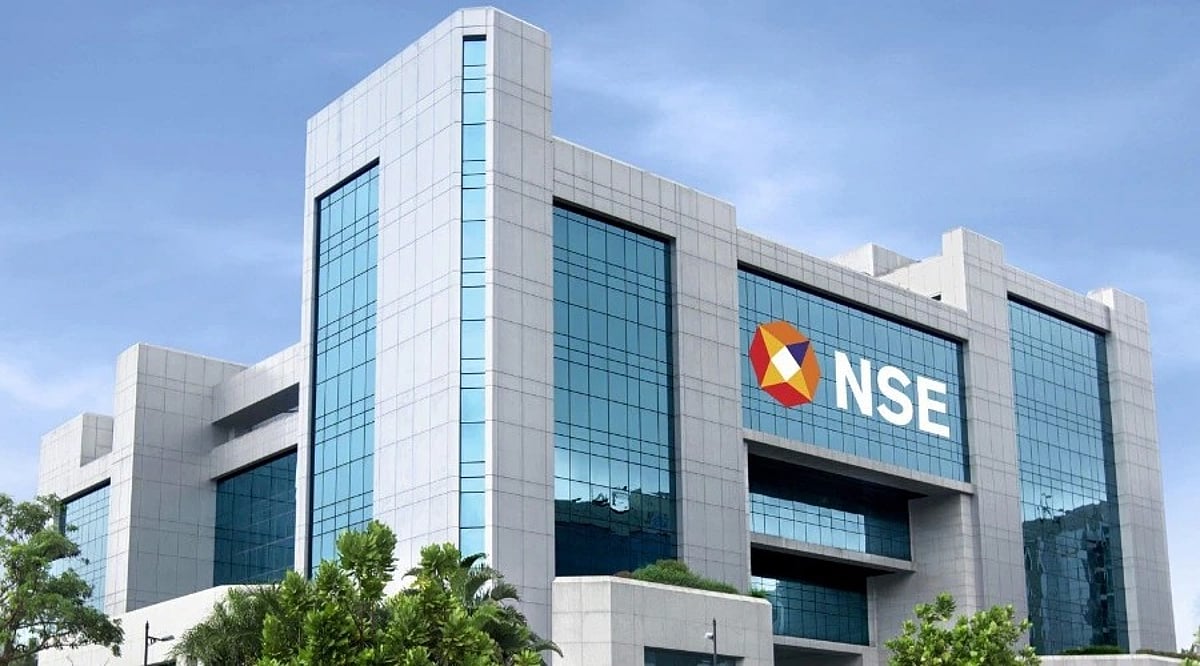
    The National Stock Exchange of India (NSE) made a strong entrance into the public market on Thursday, September 24, with shares rising 5.21% above their initial public offering (IPO) price on the first day of trading. The stock opened at Rs 1,800 on the BSE, surpassing the IPO price of Rs 1,785, and later peaked at Rs 1,878. This performance added approximately Rs 22,000 crore to the exchange’s market capitalization, pushing it to about Rs 4.64 lakh crore.

    NSE Stock Climbs Above IPO Price

    NSE shares started trading 0.84% above the issue price and quickly gained momentum, reaching a high of Rs 1,878. At this level, the exchange’s market value stood at roughly Rs 4.64 lakh crore, nearly Rs 22,000 crore above its valuation at the issue price. By 11:04 a.m., the stock traded at Rs 1,839, giving NSE a market cap of about Rs 4.56 lakh crore—placing it among the world’s 10 largest listed exchanges and India’s 10 most valuable listed companies at that moment. In comparison, rival exchange BSE, which listed in 2017, had a market value of approximately Rs 1.32 lakh crore.

    NSE’s debut contrasted sharply with other major Indian IPOs. Hyundai Motor India fell more than 7% on its first trading day in 2024, Life Insurance Corporation of India dropped nearly 8% in 2022, and Paytm shares lost over 27% on their 2021 debut.

    IPO Attracts Nearly Six Times the Shares on Offer

    NSE’s Rs 22,560-crore IPO (about USD 2.4 billion) was the country’s second-largest, after Hyundai Motor India’s offering. The public portion drew bids for 505.81 million shares against 88.64 million available, resulting in overall demand of about 5.7 times the shares offered. Institutional and large investors led the charge. Before the public offer, NSE allotted 37.79 million shares to anchor investors at Rs 1,785 each, raising Rs 6,746 crore. Existing shareholders sold shares through the IPO, with NSE receiving no new capital from the sale. Retail investors bid for only slightly more shares than their reserved portion.

    NSE first filed for an IPO in 2016, but regulatory disputes and legal proceedings delayed the listing for years. Recent tighter rules for derivatives trading and lower trading volumes prompted the exchange to reduce the offer size and lower its IPO price.

    Analysts Comment on NSE’s Longer-Term Prospects

    Deven Choksey, managing director of DRChoksey Finserv, described NSE as a ‘deep value’ investment, highlighting the exclusive nature of the exchange business, the trading activity on established platforms, and the potential for new products. ‘The exchange business is exclusive. It’s not a common business,’ he said. Choksey advised investors who missed an IPO allotment to buy shares gradually and hold them for three to five years. He also projected that NSE could benefit if India’s total stock market value rises over the next decade.

    VK Vijayakumar, chief investment strategist at Geojit Investments, noted that NSE could offer a long-term opportunity ‘if the NSE stock becomes available in today’s trade at a fair price.’

  • NSE IPO Shares Debut at Rs 1,809 on BSE, Marking a 1.35% Premium Over Issue Price

    NSE IPO Shares Debut at Rs 1,809 on BSE, Marking a 1.35% Premium Over Issue Price

    The National Stock Exchange of India (NSE) made its public-market debut on Thursday, September 24, with shares listing on the BSE at Rs 1,809.10, a modest 1.35% premium over the IPO issue price of Rs 1,785. This milestone marks the first time India’s largest stock exchange has traded publicly, following a massive Rs 22,561.57-crore initial public offering.

    The IPO, which opened for subscription on September 17 and closed on September 21, saw strong demand across investor categories. The overall subscription stood at 5.71 times, with bids for 50.58 crore shares against 8.86 crore shares on offer. Qualified institutional buyers led the charge with a 12.68 times subscription, while non-institutional investors subscribed 6.55 times and retail investors 1.39 times. The allotment was finalized on September 22.

    Since the IPO was entirely an offer for sale (OFS), NSE itself will not receive the proceeds. Instead, the funds will go to existing selling shareholders after applicable expenses and taxes.

    Grey-market premiums had signaled a relatively subdued opening, with unofficial estimates suggesting an indicative price of around Rs 1,825. However, the actual listing at Rs 1,809.10 fell slightly below that mark. The stock later touched Rs 1,844 in early trading, pushing the gain over the issue price to about 3.31%.

    The listing gives investors direct exposure to one of India’s most critical market infrastructure institutions and is seen as a landmark event for the country’s capital markets.

  • Hero Motors IPO Listing: Shares Open 2.4% Below Issue Price Despite 6.66x Subscription

    Hero Motors IPO Listing: Shares Open 2.4% Below Issue Price Despite 6.66x Subscription

    Hero Motors shares made a subdued stock-market debut on September 23, 2026, opening below their initial public offering (IPO) price despite strong demand during the subscription period.

    Soft Listing on NSE and BSE

    The stock opened at Rs. 82 on the National Stock Exchange (NSE), a 2.38% discount to the final IPO price of Rs. 84 per share. On the Bombay Stock Exchange (BSE), Hero Motors listed at Rs. 82.10, down 2.26% from the issue price.

    The muted listing was broadly in line with grey market signals ahead of the debut. However, grey market premium (GMP) data is unofficial and does not guarantee actual listing performance.

    IPO Subscription: 6.66 Times Covered

    The Rs. 1,000-crore Hero Motors IPO attracted bids for 58.97 crore shares against 8.86 crore shares on offer, translating to an overall subscription of 6.66 times.

    • Non-institutional investors: 9.86 times
    • Retail investors: 8.23 times
    • Qualified institutional buyers (QIBs): 1.49 times

    The bidding window opened on September 16 and closed on September 18. The company set the price band at Rs. 79-84 per share and fixed the final issue price at the upper end.

    Fresh Issue, Offer-for-Sale and Fund Utilization

    The IPO combined a fresh issue of Rs. 600 crore with an offer-for-sale (OFS) of Rs. 400 crore. Selling shareholders included O P Munjal Holdings and Hero Cycles.

    Hero Motors plans to use part of the fresh proceeds to repay or prepay borrowings. It has also earmarked funds to buy equipment for expanding capacity at its Gautam Buddha Nagar facility in Uttar Pradesh. Remaining proceeds will support acquisitions, strategic initiatives, and general corporate purposes.

  • NSE IPO Opens September 17 Alongside Six Stock Debuts: Key Details for Investors

    NSE IPO Opens September 17 Alongside Six Stock Debuts: Key Details for Investors

    NSE IPO Opens for Subscription

    Dalal Street is bracing for a busy session on Thursday, September 17, as the National Stock Exchange’s long-awaited initial public offering opens for subscription. The same day, six companies that completed their IPOs last week are scheduled to begin trading on the NSE and BSE.

    The NSE IPO is an offer for sale, meaning existing shareholders are selling their shares and the exchange itself will not receive any proceeds from the offering. The issue is valued at around Rs. 22,568 crore, making it one of India’s largest public offerings, with a price band fixed at Rs. 1,700 to Rs. 1,785 per share. The subscription window remains open from September 17 to September 21.

    Ahead of the public issue, 189 institutional investors participated in the anchor allocation, buying shares worth approximately Rs. 6,746 crore at Rs. 1,785 per share.

    Six Companies Ready for Listing Day

    Investors will also track the stock-market debut of six companies that wrapped up their IPOs last week:

    • RentoMojo
    • LCC Projects
    • Manipal Payment & Identity Solutions
    • Asset Reconstruction Company (India)
    • Karamtara Engineering
    • Steamhouse India

    Collectively, these six issues generated strong demand. According to the Times of India, the offerings drew total bids of around Rs. 1.4 lakh crore, against a combined mobilisation target of about Rs. 7,100 crore.

    Among the debutants, RentoMojo raised about Rs. 1,255.6 crore, Karamtara Engineering Rs. 875 crore, Manipal Payment & Identity Solutions Rs. 805 crore, Asset Reconstruction Company (India) Rs. 733 crore, LCC Projects Rs. 427 crore and Steamhouse India Rs. 414 crore.

    Derivatives Market in Focus

    The NSE listing also comes at a time of change in the derivatives segment, a key revenue source for the exchange. Reuters reported that investors are weighing recent regulatory changes and softer derivatives volumes while assessing the offer.

    With the primary market buzzing, Thursday’s session is expected to keep Dalal Street active as both the exchange’s IPO and the new listings take centre stage.

    This article is for informational purposes only and does not constitute investment advice. Readers should conduct their own research before making investment decisions.

  • SEBI Clarifies No Proposal to Trade NSE Shares Post-IPO Amid Exchange’s Rs 22,569 Crore Listing

    SEBI Clarifies No Proposal to Trade NSE Shares Post-IPO Amid Exchange’s Rs 22,569 Crore Listing

    The Securities and Exchange Board of India (SEBI) has confirmed that it has not received any request from the National Stock Exchange (NSE) to permit trading of its own shares after listing. SEBI Chairman Tuhin Kanta Pandey made the clarification on Thursday, addressing market speculation surrounding the highly anticipated NSE IPO, which opened for subscription on September 17.

    No Proposal Received from NSE

    Speaking on the sidelines of the NaBFID Infrastructure Conclave 2026, Pandey stated that no such letter has been submitted by NSE. “No, there is no such letter, and there is no such requirement,” he said, adding that such trading is not currently allowed. The clarification comes as NSE begins its three-day IPO subscription period, which remains open until September 21.

    NSE IPO Opens for Subscription

    The NSE IPO is valued at Rs 22,569 crore and consists entirely of an offer-for-sale (OFS) of 12.64 crore equity shares held by existing shareholders. The price band is set at Rs 1,700–1,785 per share. Since the IPO is fully an OFS, NSE will not receive any proceeds from the sale; after deducting expenses, the funds will go to the selling shareholders. Shares are expected to list on the BSE on September 24.

    NSE’s public offering arrives after a prolonged wait for India’s largest stock exchange to enter the listed market. The exchange has led the country in cash-market and equity-derivatives turnover from FY01 to FY26. As of June 2026, NSE had 132.4 million unique registered investors, 1,328 trading members, and 3,005 listed entities, with a market capitalization of approximately Rs 474.1 trillion.

    SEBI to Examine UPI MDR Concerns

    During the interaction, Pandey also addressed concerns raised by brokers and asset management companies regarding the new UPI Merchant Discount Rate (MDR). “I think there are some important issues there. We will certainly look into it and see how we can ease them,” he said. The government recently introduced a 0.4% MDR on eligible UPI merchant transactions above Rs 2,000, capped at Rs 300 for transactions of Rs 75,000 and above, marking a shift from the zero-MDR framework in place since January 2020.

  • SS Retail IPO Day 1: Subscription at 30%, GMP Points to 30% Listing Premium

    SS Retail IPO Day 1: Subscription at 30%, GMP Points to 30% Listing Premium

    SS Retail IPO Subscription Status on Day 1

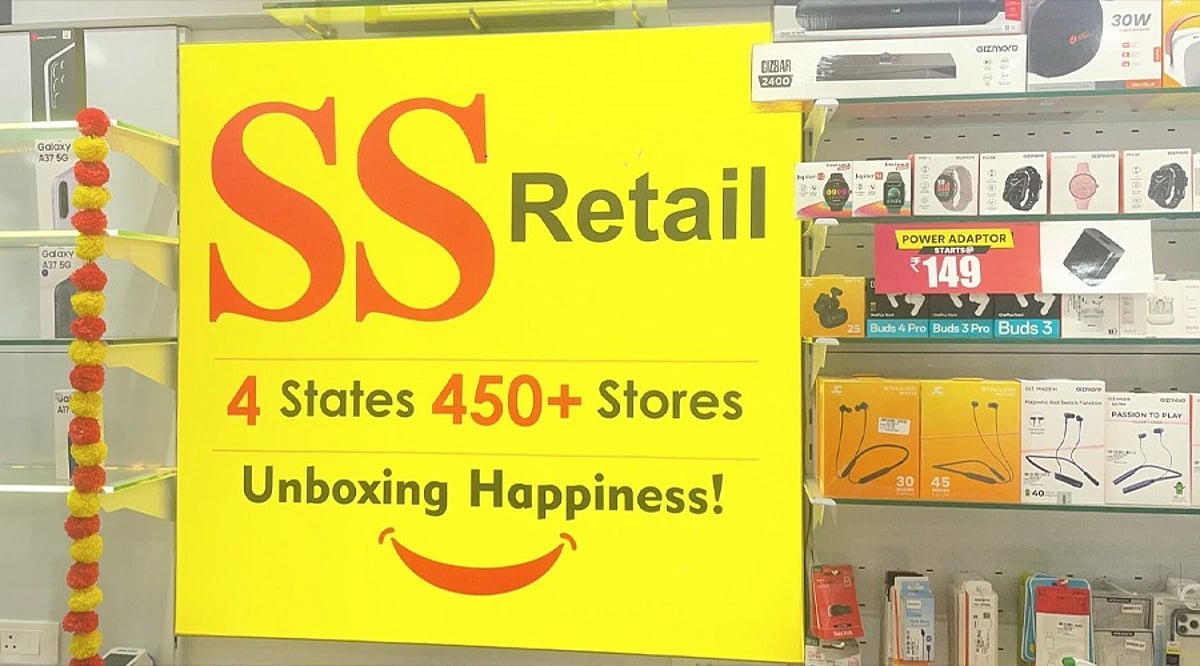
    SS Retail’s initial public offering got off to a steady start on Wednesday, September 16, with the issue subscribed 30% by 11:00 am on the first day of bidding, according to NSE data. The multi-brand mobile and electronics retailer is looking to raise approximately Rs. 500 crore through the public offer, which remains open until September 18.

    Bids were received for 26,84,080 shares against 87,93,884 shares on offer. Meanwhile, the grey market premium (GMP) hovered near 30% above the upper end of the IPO price band, signaling strong investor interest ahead of listing.

    Retail Investors Lead Early Bidding

    Retail investors showed stronger interest during the opening session. The retail portion was subscribed 52% by 11:00 am, while the non-institutional investor category saw 26% subscription.

    The IPO has reserved 35% of the offer for retail investors, 50% for qualified institutional buyers, and the remaining portion for non-institutional investors. Bidding closes on Friday, September 18.

    Price Band and Lot Size

    The company has fixed the IPO price band at Rs. 403 to Rs. 424 per share. Investors can bid for a minimum lot of 35 shares. At the upper end of the price band, one lot would require an investment of Rs. 14,840.

    GMP Stays Near 30%

    According to InvestorGain, SS Retail shares were trading at a grey market premium of around Rs. 128, representing a premium of roughly 30% over the upper IPO price of Rs. 424.

    Grey market prices are unofficial and can change before listing; they do not guarantee the opening price on the exchanges. The company’s shares are scheduled to list on the NSE and BSE on September 23, subject to completion of the allotment process.

    The company raised Rs. 146.4 crore from anchor investors on September 15, allotting 34.52 lakh shares to 14 institutional investors at Rs. 424 per share.

    Use of IPO Proceeds

    The SS Retail IPO comprises a fresh issue of about Rs. 360.75 crore and an offer for sale of Rs. 140 crore. The company plans to allocate Rs. 241.3 crore from the fresh issue proceeds for incremental working capital requirements and around Rs. 12.4 crore to establish new stores during FY27 and FY28. The remaining funds will be used for general corporate purposes.

    SS Retail plans to add 120 stores in each of FY27 and FY28. As of July 31, 2026, the retailer operated 536 stores across Maharashtra, Karnataka, Madhya Pradesh, Goa and Gujarat, up from 503 stores as of March 31.

    Brokerage Views Mixed

    Brokerages are divided on the issue. Swastika Investmart assigned a ‘neutral’ view, citing the IPO valuation of around 46.5 times FY26 earnings and the company’s higher exposure to lower-margin mobile hardware.

    SBI Securities, however, recommended investors ‘subscribe’ at the cut-off price, citing revenue growth, store expansion, improving store economics and return ratios.

    SS Retail reported consolidated revenue of Rs. 2,351 crore and profit of Rs. 59.2 crore for FY26. Its revenue, adjusted EBITDA and profit after tax recorded compound annual growth rates of 39.6%, 49.1% and 49.2%, respectively, between FY24 and FY26. The store network expanded from 236 stores in FY24 to 503 stores in FY26. Anand Rathi Advisors and Emkay Global Financial Services are managing the IPO.

  • Shankesh Jewellers Shares Rally 18% to Record High: What’s Behind the Surge

    Shankesh Jewellers Shares Rally 18% to Record High: What’s Behind the Surge

    Shankesh Jewellers has grabbed the spotlight on Dalal Street, with its shares surging 18% to a record high after a strong market debut. The newly listed jewelry company has drawn significant investor attention, trading well above its IPO issue price of Rs. 93.

    Shankesh Jewellers Share Price Rally

    The company listed on stock exchanges on August 25, opening at Rs. 103.30 on the NSE — an 11.08% premium over the issue price. On listing day, the stock touched a high of Rs. 110.99 on the BSE.

    IPO Details

    The IPO, which was open from August 18 to August 20, 2026, had a price band of Rs. 88–Rs. 93 per share. The issue comprised a fresh issue of Rs. 274.18 crore and an offer for sale of Rs. 93 crore, bringing the total issue size to Rs. 367.18 crore.

    The overall subscription stood at 2.80 times. The retail portion was subscribed 2.42 times, the non-institutional investor category 5.68 times, and the qualified institutional buyer portion 1.32 times. The company priced the IPO at the upper end of the price band, with a minimum retail investment of Rs. 14,880 for one lot of 160 shares.

    What’s Driving Investor Interest?

    Shankesh Jewellers specializes in handcrafted gold jewelry and offers customization services, manufacturing customized 22-karat and 18-karat gold jewelry. The company has also posted a sharp improvement in financial performance, with revenue rising to Rs. 1,630.93 crore in FY2026 from Rs. 1,403.94 crore in FY2025. Net profit jumped to Rs. 106.68 crore in FY2026 from Rs. 40.31 crore in the previous fiscal.

    With a strong earnings uptick, robust IPO demand, and growing investor interest, Shankesh Jewellers has quickly become one of the most closely watched new listings on the Street.

  • SS Retail IPO Listing Date, Price Band, and Lot Size Announced

    SS Retail IPO Listing Date, Price Band, and Lot Size Announced

    SS Retail, a leading mobile and electronics retailer in India, is set to launch its initial public offering (IPO) on September 16, 2026. The company aims to raise approximately Rs. 500 crore through this public issue, which includes both a fresh issue and an offer for sale.

    IPO Details and Key Dates

    The three-day subscription period will run from September 16 to September 18, 2026. The price band has been fixed at Rs. 403 to Rs. 424 per equity share, with a face value of Rs. 10 each. Investors can bid for a minimum lot of 35 shares, and in multiples of 35 thereafter. At the upper price band, one lot will cost Rs. 14,840.

    The anchor book will open on September 15, one day before the public bidding begins. The basis of allotment is expected to be finalized on September 21, with refunds and share credits scheduled for September 22. The company anticipates its shares will start trading on the BSE and NSE on September 23.

    Offer Structure and Allocation

    The IPO comprises a fresh issue of shares worth Rs. 360.75 crore and an offer for sale worth Rs. 140 crore. For the net offer, up to 50% has been reserved for qualified institutional buyers, at least 35% for retail investors, and at least 15% for non-institutional investors. Additionally, shares worth up to Rs. 12 crore have been reserved for eligible employees, who will receive a Rs. 25 discount per share.

    Use of IPO Proceeds

    SS Retail plans to utilize Rs. 241.3 crore from the fresh issue for additional working capital requirements. Another Rs. 12.4 crore has been earmarked for store fit-outs as the company expands its retail network during fiscal 2027 and fiscal 2028. The remaining proceeds will be used for general corporate purposes.

    The company intends to open 57 new stores in fiscal 2027 and 58 new stores in fiscal 2028, allocating approximately Rs. 5.81 crore and Rs. 6.6 crore for these expansions, respectively.

    Business Overview and Financial Performance

    SS Retail operates a multi-brand retail network selling mobile phones, accessories, and other electronic products. As of March 2026, it operated 503 stores across Maharashtra, Karnataka, Madhya Pradesh, Goa, and Gujarat, with 458 stores in Maharashtra alone. The company identifies itself as the largest mobile phone retail chain in West India and the third-largest in India among its peers.

    For the year ended March 2026, SS Retail reported consolidated revenue of approximately Rs. 2,352.85 crore and a profit after tax of Rs. 59.28 crore. In fiscal 2025, standalone revenue stood at Rs. 1,597.9 crore, with a profit of Rs. 39.86 crore.

    The IPO is being managed by Anand Rathi Advisors and Emkay Global Financial Services as the book-running lead managers.

  • Global Stock Exchange Trading Hours: A Complete Guide to Major Markets

    Global Stock Exchange Trading Hours: A Complete Guide to Major Markets

    Stock market trading hours vary across countries because of different time zones, regulations, and market practices. Understanding these schedules is essential for investors who trade international stocks, monitor global market movements, or react to overnight economic developments. Knowing when major exchanges open and close helps traders plan investments, execute orders efficiently, and stay updated with global financial trends.

    New York Stock Exchange and Nasdaq

    The New York Stock Exchange (NYSE) and Nasdaq are the world’s largest stock exchanges by market capitalization. Both operate from 9:30 AM to 4:00 PM Eastern Time (ET) on weekdays. They also offer pre-market and after-hours trading sessions, allowing investors to react to earnings announcements, economic data, and breaking news outside regular trading hours.

    London Stock Exchange

    The London Stock Exchange (LSE) is Europe’s leading financial marketplace and operates from 8:00 AM to 4:30 PM Greenwich Mean Time (GMT). It serves companies from around the world and is an important hub for international investors. The exchange also conducts opening and closing auctions that help determine fair market prices and improve trading efficiency.

    Indian Stock Exchanges

    India’s two primary exchanges—the National Stock Exchange (NSE) and Bombay Stock Exchange (BSE)—operate from 9:15 AM to 3:30 PM Indian Standard Time (IST). A pre-opening session begins at 9:00 AM, allowing price discovery before regular trading starts. Both exchanges remain closed on weekends and designated public holidays announced by market regulators.

    Asian Market Trading Hours

    Asia is home to several influential stock exchanges. The Tokyo Stock Exchange (TSE) trades from 9:00 AM to 3:00 PM JST, with a lunch break between sessions. Meanwhile, the Hong Kong Stock Exchange (HKEX) operates from 9:30 AM to 4:00 PM HKT, also including a midday trading break, unlike most Western exchanges.

    How Time Zones Affect Global Investors

    Global investors often monitor multiple exchanges throughout the day because markets open sequentially across different regions. Asian markets begin trading first, followed by European exchanges and finally North American markets. This continuous cycle means economic events in one region can influence investor sentiment and stock prices in another before local markets even open.

    Choosing the Right Time to Trade

    Successful investing isn’t only about selecting the right stocks—it also involves understanding when markets are active. Higher trading volumes during opening and closing hours often create greater price movements and liquidity. By tracking global stock market timings, investors can better manage risk, seize opportunities, and make informed decisions across international financial markets.