Tag: Payments

  • Agentic AI Reshapes Banking, Payments, and Fintech: Key Insights

    Agentic AI Reshapes Banking, Payments, and Fintech: Key Insights

    Agentic AI is poised to revolutionize the financial sector by moving beyond simple customer service to autonomously handling complex banking tasks, payments, and fraud detection. This technology enables AI agents to analyze spending, execute transactions, and offer personalized financial advice, all while reducing manual effort and improving efficiency.

    Smarter Banking Decisions

    Agentic AI can analyze a customer’s spending habits, understand their financial goals, compare available options, and take approved actions. From moving money between accounts to managing recurring payments, these systems make everyday banking more automated, faster, and user-friendly.

    AI-Powered Payments

    Instead of manually completing every step of a payment, an AI agent can identify bills, check payment details, and complete transactions after receiving permission. It also monitors upcoming expenses and reminds users about payments, making digital transactions more convenient and organized.

    Fraud Detection Gets Proactive

    Traditional fraud systems react to unusual activity after it occurs. Agentic AI continuously monitors transactions, customer behavior, and account activity to spot risks earlier. It can investigate unusual patterns, request additional verification, and alert financial institutions, enabling faster threat response.

    Personalized Financial Services

    By studying a customer’s financial activity, Agentic AI offers tailored services such as spending pattern analysis, expense management suggestions, and savings planning. Unlike basic recommendation tools, AI agents can follow through on approved actions, turning suggestions into practical steps.

    Faster Fintech Operations

    Fintech companies handle large volumes of customer requests, transactions, compliance checks, and data. Agentic AI automates repetitive processes and coordinates tasks across systems, reducing manual work and allowing teams to focus on complex issues, product development, and business decisions.

    A New Role for Human Bankers

    Agentic AI does not eliminate the need for human employees. Instead, it handles routine tasks while bankers focus on areas requiring judgment, relationships, and complex financial advice. Human oversight remains essential, especially when AI agents make decisions involving money, sensitive data, or financial risk.

    The Road Ahead for Agentic Finance

    Agentic AI is pushing banking and fintech toward services that act rather than simply respond. Customers may increasingly rely on AI agents to manage routine financial tasks across accounts and services. This shift raises important questions about security, privacy, accountability, consent, and the degree of control customers grant AI systems.


  • Velocity Secures $10M Extension as Visa and Circle Join Its Stablecoin Infrastructure Push

    Velocity Secures $10M Extension as Visa and Circle Join Its Stablecoin Infrastructure Push

    Velocity, a London-based stablecoin payments startup, has added $10 million to its Series A round, bringing the total to $48 million. The extension was joined by Visa Ventures, Circle Ventures, and Ripple, alongside three other investors. The funding will support the company’s infrastructure for enterprise treasury, settlement, and liquidity operations using stablecoins.

    The latest raise comes just over two months after Velocity announced its initial $38 million Series A on July 14, led by Dragonfly and FirstMark, with participation from Ripple. The new extension adds Visa Ventures, Circle Ventures, Haun Ventures, Translink Capital, and Mirana Ventures to the cap table.

    Velocity builds systems that allow banks, acquirers, merchants, and payment providers to integrate stablecoin settlement, liquidity, and treasury operations without replacing existing payment infrastructure. The company aims to make money movement more continuous and reduce reliance on prefunding and settlement outside traditional banking hours.

    Visa has noted that stablecoins are playing an increasingly important role in moving value across its ecosystem. Rubail Birwadker of Visa stated that companies like Velocity can help expand stablecoin use for customers and partners. Velocity founder and CEO Eric Queathem emphasized that the new investors bring valuable insight as the company scales its stablecoin infrastructure.

    With the backing of Circle Ventures and Ripple, Velocity gains investors directly tied to regulated stablecoins, payments, and institutional finance. Translink Capital adds connections to corporate and institutional partners across Asia. The company plans to use the new capital to support issuers, acquirers, payment providers, financial institutions, and merchants worldwide, connecting stablecoins with existing banking, treasury, and settlement systems.

  • PayU Unveils AI Agent Store to Help Indian SMBs Automate Commerce and Payments

    PayU Unveils AI Agent Store to Help Indian SMBs Automate Commerce and Payments

    PayU has launched Agent HQ, a dedicated AI agent store designed specifically for small and medium-sized businesses (SMBs) in India. The platform enables merchants to deploy specialized AI agents across various stages of commerce, from improving product discoverability on AI shopping platforms to simplifying payment operations and creating conversational AI experiences.

    According to PayU, the platform helps SMBs adapt to shifting consumer behavior, noting that nearly 50% of search traffic is moving to AI agents. Shoppers referred by AI can also achieve conversion rates up to three times higher than traditional channels.

    What Agent HQ Offers

    Agent HQ is built on over a decade of PayU’s commerce intelligence, covering more than 450,000 merchants, over 700 million shopper journeys, and Rs. 7,800 billion in processed transactions.

    Through the platform, merchants can make their products and services discoverable and transactable on AI platforms such as Claude and ChatGPT, as well as messaging channels including WhatsApp. Businesses can also create custom conversational AI assistants for their websites, apps, and customer journeys. These assistants provide real-time shopper support and handle post-purchase queries.

    AI Agents for Payments and Operations

    Agent HQ includes AI agents designed to automate operational tasks such as transaction follow-ups, chargeback reconciliations, refund escalations, and settlements. The agents use merchant transaction data—including success and failure patterns, chargeback histories, and shopper behavior—to suggest targeted sales and marketing campaigns while helping merchants reduce fraud, disputes, and operational effort.

    Integration with PayU Merchant Dashboard

    Agent HQ is integrated directly into the PayU merchant dashboard. Merchants can hire an AI agent in a few clicks, choose its frequency, monitor its activity, and receive outputs through email and WhatsApp. PayU emphasizes that all agents operate strictly within boundaries defined by merchants.

    Manas Mishra, Chief Product Officer at PayU & Wibmo, said Agent HQ expands PayU’s value-added offerings by providing merchants with a personalized team of AI agents to improve discoverability, drive growth, and manage payment operations.

    Merchants including Policybazaar, Daily Objects, and Pinq Polka are already using Agent HQ to enhance their commerce workflows.

  • How Modern Technology Is Making Payments Faster and More Secure

    How Modern Technology Is Making Payments Faster and More Secure

    Technology is transforming the way we pay, making transactions both faster and safer. From real-time settlement to biometric verification, here are the key innovations driving this change.

    Real-Time Payments

    Real-time payment systems enable money to move between accounts within seconds. Services like UPI have made instant transactions practical for everyday purchases, bills, and transfers. This reduces waiting periods and provides immediate confirmation. Businesses benefit from quicker settlements, improved cash flow, and smoother customer payment experiences.

    Biometric Authentication

    Biometric authentication adds an extra security layer by using fingerprints, facial recognition, or other unique characteristics. Instead of relying solely on passwords or PINs, payment systems can verify the person making a transaction. This deters unauthorized access while allowing users to complete transactions quickly without repeatedly entering lengthy credentials.

    Tokenization

    Tokenization replaces sensitive card information with unique digital tokens during transactions. Merchants and payment platforms process payments without directly exposing the actual card number. Even if transaction data is intercepted, the token generally cannot be used like the original card details, reducing risks associated with stolen payment information.

    Artificial Intelligence

    Artificial intelligence helps payment companies identify unusual transaction patterns and potential fraud. Systems analyze transaction behavior, location, device information, and other signals to detect suspicious activity quickly. This allows financial institutions to flag or block potentially fraudulent payments while minimizing unnecessary interruptions for legitimate transactions.

    Contactless Payments

    Contactless payments use technologies like near-field communication (NFC) so users can pay by tapping compatible cards, phones, or wearables. Transactions complete within seconds without inserting a card or re-entering details. Secure authentication and transaction limits provide additional protection, making contactless payments convenient for everyday use.

    Encryption and Security

    Encryption protects payment information as it moves between devices, banks, and payment networks. Modern payment platforms also use secure authentication, fraud monitoring, and layered security controls. These measures help safeguard sensitive financial data from unauthorized access while allowing legitimate transactions to flow efficiently between customers, merchants, and financial institutions.

    Digital Wallets

    Digital wallets bring payment cards, bank accounts, and other payment options together in one application. Users can transact through smartphones or wearable devices without carrying physical cards. Wallets often incorporate device authentication, tokenization, and transaction monitoring, combining convenience with multiple security measures for everyday digital payments.

  • Embedded Finance Leaders to Watch in 2026: Top Companies Reshaping Digital Payments and Banking

    Embedded Finance Leaders to Watch in 2026: Top Companies Reshaping Digital Payments and Banking

    Embedded finance is rapidly transforming the way businesses integrate financial services into their platforms. As we look ahead to 2026, several companies stand out for their innovative infrastructure, seamless payment solutions, and banking-as-a-service capabilities. Here are the key players to keep an eye on.

    Stripe

    Stripe continues to expand its embedded payments, treasury, lending, and financial infrastructure, enabling businesses to integrate seamless financial services into digital platforms globally.

    Adyen

    Adyen delivers unified payment processing, embedded financial products, issuing solutions, and merchant services that support businesses across multiple international markets efficiently.

    Marqeta

    Marqeta specializes in modern card issuing infrastructure, embedded payment capabilities, and customizable financial products for fintech companies and enterprise platforms worldwide.

    Solaris

    Solaris provides Banking-as-a-Service infrastructure, allowing businesses to launch embedded banking, payments, lending, and digital financial solutions with full regulatory compliance.

    Unit

    Unit helps software companies embed checking accounts, cards, payments, and lending products directly into applications through developer-friendly banking infrastructure solutions.

    Treasury Prime

    Treasury Prime offers API-driven banking infrastructure that enables fintech firms and enterprises to integrate embedded banking services with regulated financial institution partnerships seamlessly.

    Mambu

    Mambu provides cloud-native core banking technology supporting embedded finance, digital banking transformation, lending operations, and scalable financial product innovation across industries.

    Finastra

    Finastra delivers financial software solutions that enable banks and businesses to create embedded finance ecosystems with payment, lending, and banking capabilities efficiently.

    BaaSis

    BaaSis focuses on Banking-as-a-Service technology, helping enterprises integrate embedded financial products, digital banking features, and payment services into customer experiences successfully.

    These companies are at the forefront of the embedded finance revolution, powering the next generation of digital financial services. Watch them closely in 2026 as they continue to innovate and expand.

  • Stablecoin Transaction Volumes Hit All-Time High of $1.79 Trillion in June, USDC Leads Growth

    Stablecoin Transaction Volumes Hit All-Time High of $1.79 Trillion in June, USDC Leads Growth

    Stablecoin Transaction Volume Reaches Record $1.79 Trillion in June

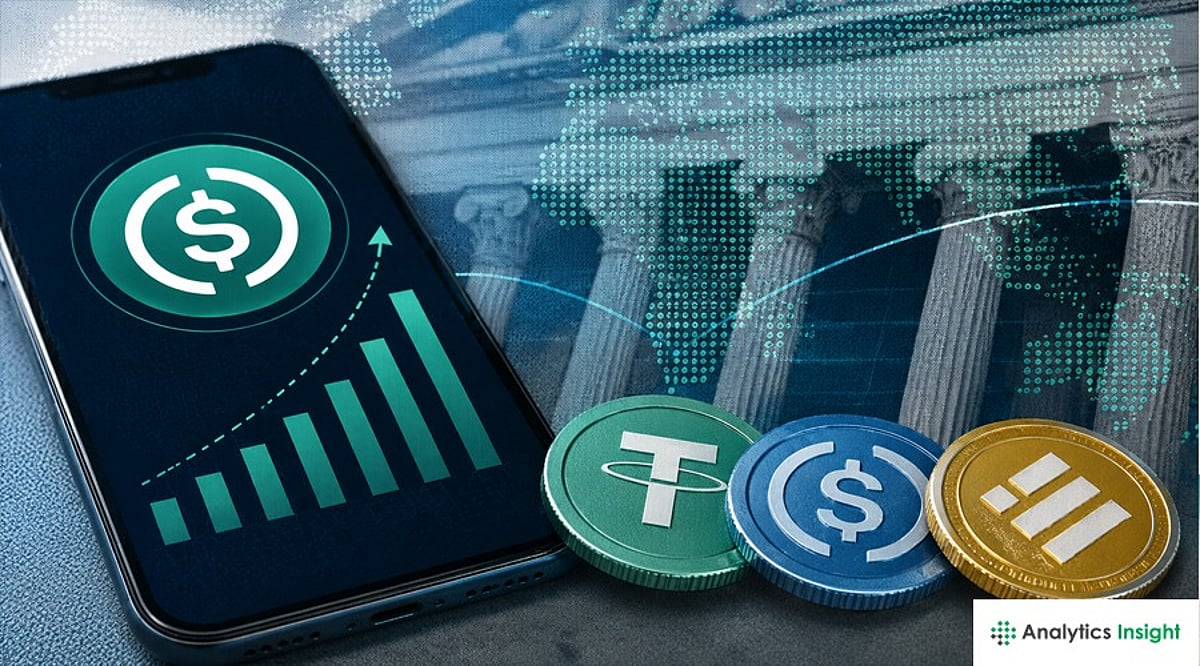
    Stablecoin transaction volume hit a record $1.79 trillion in June, marking the highest monthly level ever recorded. According to Visa’s stablecoin analytics dashboard, which uses Allium data, the figure represents a 63% increase from May’s $1.1 trillion total. The June total also surpassed the previous record of $1.78 trillion set in February 2026. On an annual basis, stablecoin transaction volume rose 125%, reflecting broader adoption of dollar-pegged crypto assets across payments, DeFi activity, and cross-border transfers.

    Record Monthly Volume Driven by Real User Activity

    Visa’s on-chain analytics dashboard reported $1.79 trillion in adjusted stablecoin transaction volume for June. The dashboard filters out inorganic activity, including bot-driven transfers and wash transactions, providing a clearer view of genuine user and institutional activity. The latest reading comes as stablecoins play an increasingly central role in crypto market infrastructure, being widely used for trading, lending, settlement, and payments. They also act as a bridge between traditional money and blockchain-based services.

    “June 2026 was another record month for stablecoin transaction volume, slightly ahead of February 2026,” said Grayscale Head of Research Zach Pandl, highlighting the narrow gap between the two record months. Notably, stablecoin usage grew even as the broader crypto market faced weaker price action, suggesting that stablecoins are used for more than just trading. Their role in payments and transfers has expanded as blockchain networks offer faster settlement and lower costs for certain use cases.

    USDC Leads Monthly Stablecoin Activity

    USDC accounted for the largest share of stablecoin transaction volume in June, processing about $1.21 trillion — nearly 67% of total adjusted volume. USDT, issued by Tether, ranked second with approximately $576 billion, or about 32% of the monthly total. PayPal’s PYUSD followed in third place with $2.42 billion in June volume.

    Although USDT still holds the largest stablecoin market capitalization, the June volume data shows stronger transaction activity for USDC. Regulatory conditions in Europe, particularly the Markets in Crypto-Assets (MiCA) rules, have added pressure on some stablecoins, leading several European platforms to reduce or end support for tokens that do not meet the new requirements. Circle has positioned USDC for regulated markets, including Europe, making the token more attractive for exchanges, payment firms, and institutions seeking clear compliance standards. Meanwhile, Tether has increased USDT supply, including a recent $2 billion mint on Ethereum.

    Base, Ethereum, and Tron Carry Most Stablecoin Transfers

    Base, Coinbase’s Ethereum Layer 2 network, processed the largest share of stablecoin transaction volume in June at approximately $565 billion (31.5% of the total). Ethereum followed closely with around $562 billion in volume. Tron ranked third among networks, with about $320 billion (close to 18% of the monthly total). Solana also saw strong activity, supported by low fees and fast settlement times.

    The network data reveals that stablecoin usage is spread across multiple blockchain systems. Ethereum remains central, while Base has grown rapidly as a major rail for USDC transfers. Tron continues to serve users moving stablecoins across borders and between exchanges. The broader stablecoin market has expanded, with total market capitalization crossing $322 billion. Visa’s dashboard shows about $10.2 trillion in adjusted stablecoin volume over the past 12 months. Additionally, Visa has expanded its stablecoin settlement pilot across several blockchain networks, with an annualized run rate of about $7 billion as of April.

    The June record underscores that stablecoins have become a fundamental part of digital asset activity, driven by payments, DeFi use, exchange transfers, and cross-border flows.

  • XRP Hovers Near $1 as Ripple Broadens Blockchain Finance Strategy

    XRP Hovers Near $1 as Ripple Broadens Blockchain Finance Strategy

    XRP is trading near the $1 mark after falling roughly 70% from last year’s highs, even as Ripple continues to expand its blockchain infrastructure and financial services. The world’s sixth-largest cryptocurrency faces weak sentiment and renewed doubts about its recovery, but Ripple’s business is moving well beyond its original cross-border payments focus.

    Ripple Expands Beyond Cross-Border Payments

    Ripple initially built its business around helping financial institutions move money across borders faster and at lower cost. It has since widened its operations across blockchain finance. The company now works in real-world asset tokenization, which places traditional financial assets on blockchain networks. Financial firms are also exploring faster settlement and lower operating expenses.

    At the same time, Ripple has formed relationships with major institutions and reportedly built a business valued at nearly $50 billion. It has also invested billions in acquisitions and partnerships. These investments aim to create more services across Ripple’s broader ecosystem. Increased activity could support greater network use and additional demand over time.

    AI Payments Add Another Possible Growth Area

    Ripple has also explored possible links between blockchain payments and artificial intelligence. Some industry observers expect AI agents to use blockchain networks for automated transactions. Those observers have mentioned XRP Ledger as one possible settlement layer for such payments. The opportunity remains speculative and has not yet become a proven demand source.

    Even so, the discussion reflects Ripple’s search for applications beyond traditional payment services. The company continues positioning itself as a wider blockchain infrastructure provider. Its long-term strategy now spans payments, tokenization, acquisitions, and financial services. Each area could increase activity across the XRP ecosystem if adoption expands.

    Large Supply Complicates XRP Price Forecasts

    XRP price forecasts vary widely, ranging from a return toward $4 to aggressive projections between $20 and $100. Each target requires different adoption and investment levels. About 62 billion XRP coins remain in circulation. At $4 per token, XRP’s market value would approach $250 billion under the current supply. That valuation would place XRP above the current market value of many leading crypto projects. Higher targets would require far larger amounts of new capital.

    Can Ripple’s expanding infrastructure create enough demand to support a lasting XRP recovery? Many investors view a gradual $1 to $4 range as a more realistic multi-year scenario. Longer-term performance may depend on blockchain finance adoption, regulatory developments, and competition. Real-world asset tokenization remains early, although financial institutions continue investing in the sector.

    Conclusion

    XRP remains under pressure near $1, yet Ripple continues expanding across payments, tokenization, and blockchain infrastructure. Its broader strategy may support future network demand, although XRP’s large circulating supply limits extreme price projections. Investors should track adoption, regulation, and ecosystem growth before assessing its long-term potential.

  • Checkout.com Adopts Microsoft Azure to Fuel AI-Powered Payments and Agentic Commerce

    Checkout.com Adopts Microsoft Azure to Fuel AI-Powered Payments and Agentic Commerce

    Checkout.com has announced a multi-year agreement with Microsoft to migrate its payment infrastructure to Azure cloud services, positioning both companies for the rise of agentic commerce—where AI agents complete transactions without human intervention.

    Azure Infrastructure for AI-Driven Payments

    The payments provider will leverage Azure’s cloud infrastructure to process digital payments for enterprise merchants including eBay, ASOS, Vinted, Pinterest, and Klarna. Central to the migration is Azure Payment HSM, which uses Thales payShield 10K hardware security modules meeting PCI DSS, PCI 3DS, and PCI PIN certifications, along with FIPS 140-2 Level 3 security.

    Mariano Albera, CTO of Checkout.com, stated: “We’re thrilled to collaborate with Microsoft and adopt Azure, bringing this mission-critical platform into our technology stack. The Azure platform has leading machine learning capabilities—and Microsoft has long been a pioneer of embedding trust into every layer of cloud innovation.”

    Machine Learning Optimizes Transaction Acceptance

    Checkout.com already uses machine learning to improve transaction acceptance rates in real time. Its Intelligent Acceptance feature analyzes payment data, adjusts strategies, and applies successful optimizations across all merchants, creating network effects that reduce declines and processing costs. Azure’s ML capabilities will integrate with this existing AI engine, and Azure’s confidential computing solutions enhance fraud prevention and risk assessment.

    Preparing for Agentic Commerce

    The partnership aims to prepare for a future where AI systems search products, compare options, and complete purchases based on user preferences without human oversight. This requires payment infrastructure capable of handling high volumes of machine-initiated transactions with minimal latency and robust security.

    Tyler Pichach, Global Head of Payments at Microsoft Financial Services, commented: “The payments industry is a constant source of AI-powered innovation and by collaborating with Microsoft, Checkout.com will be able to further enhance payment performance for merchants around the world.”

    Albera added: “Our combined commitment to relentless innovation sets merchants up for success, enabling them to explore and embrace the agentic commerce models where AI agents search and shop on behalf of consumers.”