Tag: personalized learning

  • How AI Agents Will Reshape Everyday Life: A Glimpse Into the AI-First Future

    How AI Agents Will Reshape Everyday Life: A Glimpse Into the AI-First Future

    Artificial intelligence is moving beyond chatbots and recommendation engines. In an AI-first world, intelligent systems become the default layer of daily life — helping people set goals while AI agents quietly handle tasks across apps, devices, and digital services.

    Your Personal AI Agent Could Run Your Day

    Imagine a personal AI assistant that manages your calendar, books travel, pays bills, plans meals, tracks spending, and handles everyday errands. Instead of juggling multiple apps and reminders, you simply express an intention and your AI agent coordinates the rest.

    AI Could Become a Digital Coworker

    In the workplace, AI agents are expected to manage multi-step workflows such as research, report generation, coding, and customer support. That shift lets people focus on higher-value activities: making decisions, exercising judgment, and overseeing outcomes rather than performing routine execution.

    Learning Could Become Fully Personalized

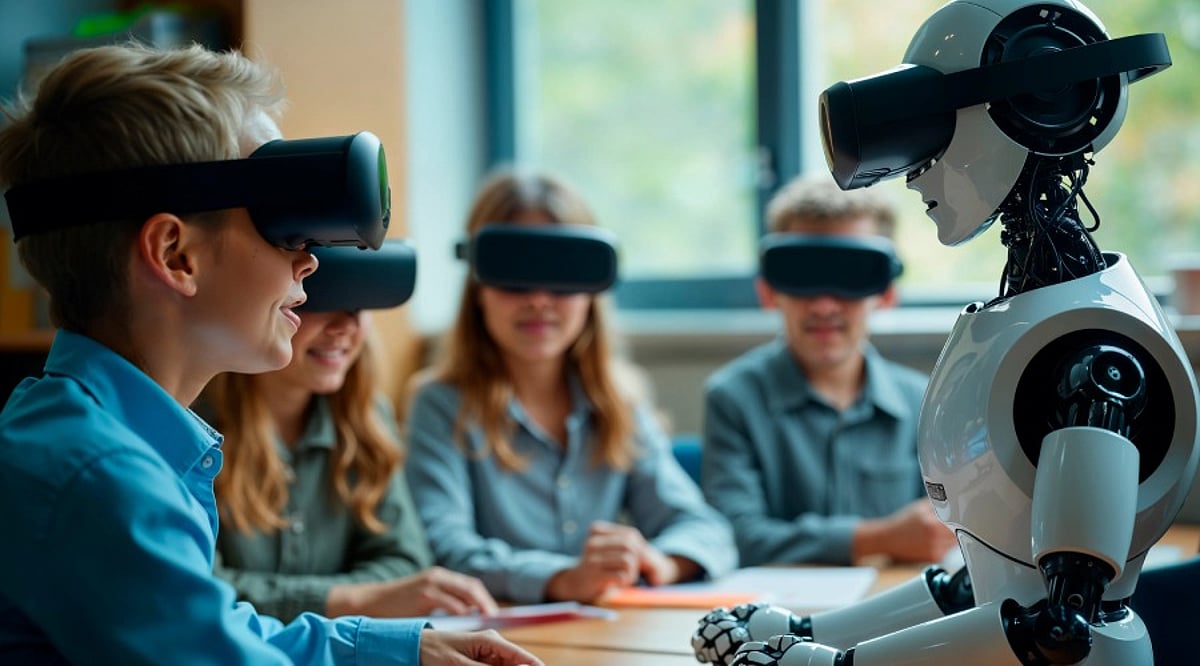
    Education is another area poised for transformation. AI tutors could explain difficult concepts, generate practice questions, and adapt lessons to each student’s pace, level, and learning goals. This kind of personalization could make education more accessible and effective for learners of all ages.

    Healthcare Could Become More Proactive

    AI systems could combine wearable data, medical records, and broader health information to flag potential risks, track medications, and schedule follow-ups automatically. Instead of reacting to symptoms, patients and providers could work together to prevent problems before they escalate.

    Smart Homes Could Anticipate Your Needs

    Connected homes powered by AI could adjust energy use, control appliances, manage shopping lists, and optimize household routines based on daily habits and preferences. The home becomes an active participant in comfort and efficiency rather than a collection of manual devices.

    AI Could Change Jobs and Skills

    As agents take on more routine work, human roles will shift toward strategy, creativity, critical thinking, and reviewing AI-generated results. Microsoft reports that AI users in India are placing strong emphasis on human judgment and quality control — a sign that oversight skills will become increasingly valuable.

    More AI Access Also Means More Risks

    AI-first systems require access to sensitive data and digital accounts. That raises serious concerns about privacy loss, incorrect decisions, biased outputs, excessive permissions, and job disruption. Building trust will require careful governance, transparency, and safeguards.

    The most likely future is not one where AI replaces people, but one where daily life becomes human-led and AI-executed. The biggest shift will be moving from doing every task manually to setting goals, checking AI decisions, and retaining control over the choices that matter most.

  • How AI Is Transforming Education: Personalized Learning, Virtual Tutors, and the Future of Teaching

    How AI Is Transforming Education: Personalized Learning, Virtual Tutors, and the Future of Teaching

    Artificial intelligence is reshaping the educational landscape, influencing how students learn, how teachers work, and how institutions manage their operations. From personalized learning platforms to automated grading and virtual tutors, AI is making education more adaptive, accessible, and data-driven.

    The Shift in Skills Demand

    This transformation aligns with changing workforce needs. According to the World Economic Forum’s Future of Jobs Report 2025, 39% of core skills required by workers will change over the next decade, with AI and big data among the fastest-growing skill areas. This underscores the urgent need for schools, universities, and training providers to redesign curricula around digital literacy and lifelong learning.

    Personalized Learning at Scale

    Traditional classrooms follow a one-size-fits-all curriculum. AI-powered platforms can analyze each student’s responses, learning pace, and specific difficulties to adjust lessons and practice problems in real time. A student struggling with math might receive additional explanations and simpler exercises, while an advanced learner can move on to more challenging material. This allows institutions to cater to diverse learning levels without requiring separate programs for each student.

    AI tutors and chat-based learning assistants provide immediate feedback outside class hours. They can explain concepts, solve practice questions, summarize chapters, and offer editing advice. However, their outputs still need supervision, as generative AI can sometimes produce inaccurate or misleading information.

    Supporting Teachers and Institutions

    AI is increasingly used to automate repetitive tasks such as attendance tracking, basic grading, timetable creation, and handling routine student inquiries. This frees up teachers to focus on lesson planning, mentoring, and direct student interaction.

    Predictive analytics helps identify students at risk of falling behind by analyzing attendance, assessment scores, and engagement patterns. Administrators can intervene before a student drops out. The technology also influences curriculum design: the WEF found that 86% of employers expect AI and information-processing technologies to transform their businesses by 2030. Education providers must therefore prepare students for careers in AI, cybersecurity, data analysis, and digital transformation.

    Expanding Access to Education

    AI can deliver content in multiple languages through translation, and assist students with language barriers or disabilities via speech recognition and text-to-speech tools. Virtual classrooms and automated support systems can bring learning opportunities to regions lacking qualified teachers.

    Yet access remains uneven. Not everyone has the necessary devices, internet connectivity, or digital skills to benefit from AI-supported learning. UNESCO has acknowledged that while AI can enhance access and personalization, it may also deepen inequalities and raise concerns about privacy, safety, and governance.

    The Road Ahead

    AI will not replace teachers, but it will change what they do. The most successful education systems will combine AI’s power with human insight and creativity. Effective implementation requires robust privacy protections, transparent algorithms, and teacher training to ensure AI does not undermine equity or student confidence.

    Frequently Asked Questions

    • How is artificial intelligence changing education? AI makes education more personalized, accessible, and data-driven by adapting lessons to individual needs, providing instant feedback, and automating routine tasks like grading and attendance.
    • Can AI replace teachers in the classroom? No. Education requires empathy, judgment, creativity, and personal interaction. AI supports teachers by reducing administrative work and improving lesson planning.
    • What is personalized learning through AI? AI-powered platforms analyze student performance, learning speed, and areas of difficulty, then recommend suitable lessons, explanations, and practice questions tailored to each learner.
    • How can AI improve access to education? AI-powered translation, speech recognition, and text-to-speech tools help learners with language barriers or disabilities. Virtual classrooms can reach students in areas with limited access to qualified teachers.
    • What are the risks of using AI in education? Risks include inaccurate information, data privacy concerns, algorithmic bias, and unequal access to devices or internet. Strong governance, transparency, and teacher supervision are essential.
  • How AI-Driven Tools Are Transforming Financial Education for Retail Traders

    How AI-Driven Tools Are Transforming Financial Education for Retail Traders

    AI financial education is transforming how people develop the knowledge needed to participate in modern financial markets. In the past, learning about investing often meant reading lengthy textbooks, attending seminars, or spending years gaining experience through trial and error. Today, artificial intelligence is making investment education more interactive, personalized, and accessible to retail traders around the world.

    The rapid growth of financial technology has introduced new ways to understand complex market concepts. AI-powered tools can organize large amounts of financial data, explain technical indicators, summarize economic news, and generate educational content tailored to different experience levels. Instead of searching through dozens of articles, learners can receive structured explanations that match their current understanding.

    As financial markets become increasingly connected and data-driven, AI is helping make financial literacy more achievable for individuals interested in stocks, forex, commodities, indices, and cryptocurrencies.

    Personalized Learning Through Artificial Intelligence

    One of the biggest advantages of artificial intelligence is its ability to personalize education. Every retail trader begins with different levels of knowledge, learning styles, and investment goals. Traditional educational materials often follow a fixed structure that may not suit everyone.

    Machine learning allows educational systems to adapt based on a learner’s progress. Beginners can receive simplified explanations of concepts such as market trends, diversification, or technical analysis, while more experienced traders can explore advanced topics involving macroeconomic indicators, algorithmic trading concepts, or risk management strategies.

    AI-powered learning platforms can also identify knowledge gaps by analyzing quizzes, study habits, and user interactions. Instead of presenting the same lessons to every learner, they can recommend relevant educational materials that strengthen weaker areas.

    At the same time, many investors continue using trusted educational resources alongside AI. As they expand their understanding of financial markets, some also explore ScoreCM to access publicly available market insights and educational materials that support continuous learning without replacing independent research.

    Smarter Market Analysis and Information Processing

    Financial markets generate enormous volumes of information every day. Economic reports, corporate earnings, geopolitical events, central bank announcements, and breaking news all influence market sentiment across multiple asset classes.

    Artificial intelligence is helping retail traders process this information more efficiently. Natural language processing enables AI systems to summarize lengthy reports, identify recurring themes in financial news, and explain how major events could influence different markets.

    For educational purposes, this creates a valuable learning environment. Rather than simply presenting raw data, AI can explain why inflation reports matter, how interest rate decisions affect currencies, or why commodity prices respond to changes in global supply chains.

    This educational approach encourages users to understand relationships between economic events instead of memorizing isolated facts. Whether studying stocks, forex, commodities, indices, or cryptocurrencies, learners gain broader context that improves their overall market awareness.

    Machine learning models can also recognize historical patterns and organize complex datasets into visual formats that are easier to interpret. While these insights should never be treated as predictions, they provide useful educational examples for understanding market behavior.

    AI Should Support Critical Thinking, Not Replace It

    Despite its growing capabilities, AI should be viewed as a learning assistant rather than a substitute for human judgment.

    Artificial intelligence can organize information, explain financial concepts, and highlight patterns within historical data. However, markets remain influenced by human behavior, unexpected geopolitical developments, regulatory changes, and emotional decision-making that cannot always be captured through algorithms.

    Retail traders benefit most when they use AI to strengthen their analytical skills instead of relying on automated conclusions. Critical thinking remains essential when evaluating information, questioning assumptions, and managing investment risk.

    Structured learning continues to play an important role in building these skills. Platforms such as ScoreCM Academy demonstrate how organized educational resources can complement learning by helping traders gradually build stronger market knowledge through structured courses and continuous education.

    Combining AI-generated insights with independent research allows learners to develop confidence while maintaining realistic expectations about the uncertainty of financial markets.

    Financial Literacy Matters More Than Ever

    The growing accessibility of investing has created new opportunities for individuals worldwide. Mobile applications, online trading platforms, and digital financial services have reduced many of the traditional barriers to entering financial markets.

    However, easier access also increases the importance of financial literacy. Understanding concepts such as portfolio diversification, volatility, leverage, inflation, and risk management remains essential regardless of the technology available.

    AI financial education can support this objective by making difficult subjects easier to understand. Interactive explanations, conversational learning tools, personalized quizzes, and real-world examples help learners absorb information more effectively than static educational materials alone.

    Better financial literacy also reduces the likelihood of making decisions based solely on social media trends, rumors, or emotional reactions. As AI continues improving educational accessibility, it can encourage more informed participation across global financial markets.

    The Future of AI in Financial Education

    The possibilities that lay ahead for AI in the field of finance do not just end at automation and analytics. Technology in education can become one of the most important uses of artificial intelligence, especially in cases where retail traders need to acquire practical knowledge before getting involved in the financial markets.

    Learning programs of the future may include elements of conversational AI, adaptive courses, market simulation, multilingual instruction, and visual interaction all within a single digital learning system.

    Concurrently, ethical AI development will be equally important. It is imperative that the educational material provides clear explanations about the underlying concepts and teaches users to double-check the received information using several sources.

    AI will not replace conventional education, but it will help open more opportunities for acquiring knowledge and learning in an efficient manner. Combined with financial literacy and critical thinking, AI can revolutionize the understanding of complex financial markets by retail traders.

    In light of the ongoing technology development, one can say that the most efficient learner will be one who embraces the assistance of AI and makes his/her own judgments independently from it. In that regard, the use of AI for financial education is a combination of technological innovation and steps forward towards improving knowledge of the market.


  • How AI Tutors Are Personalizing Education and Transforming the Classroom

    How AI Tutors Are Personalizing Education and Transforming the Classroom

    Traditional classrooms have long operated on a one-size-fits-all model, where every student learns at the same pace regardless of individual strengths or weaknesses. AI tutors are changing that paradigm by delivering personalized lessons tailored to each learner’s unique needs, learning speed, and areas for improvement.

    These intelligent systems can explain difficult topics in multiple ways, provide instant feedback, and generate custom practice questions that reinforce understanding and memory retention. With AI tutors, students gain access to 24/7 support for homework, revision, exam preparation, and skill-building—without having to wait for the next class session.

    Popular AI-powered learning tools such as Khanmigo, Socratic, and Duolingo are already adapting lessons to individual needs, making education more engaging and effective. However, AI is not poised to replace human teachers entirely. Educators bring empathy, motivation, critical thinking, classroom discussions, and real-world mentorship—elements that technology cannot replicate.

    The future of education lies in a hybrid model where AI handles personalized practice and routine tasks, while teachers lead creativity, collaboration, and emotional support. This balanced approach promises to make learning more accessible, efficient, and human-centered.

  • How Business Data Is Revolutionizing Corporate Training Programs

    How Business Data Is Revolutionizing Corporate Training Programs

    Data has become one of the most valuable assets within modern organizations. Businesses use analytics to improve customer experiences, streamline operations, identify market opportunities, and support strategic decision-making. Increasingly, that same data is also transforming how companies approach employee development.

    Corporate training has evolved far beyond generic learning modules delivered uniformly across the workforce. Organizations now have access to performance metrics, workflow insights, skills assessments, and operational data that can help create more targeted and effective learning experiences.

    This article explores how business data is reshaping corporate training and why organizations are increasingly using analytics to build smarter learning strategies.

    Data Helps Create Personalized Learning Experiences

    One of the most significant advantages of data-driven training is personalization. Organizations can use employee performance metrics, learning progress, assessment results, and workflow data to create more tailored development pathways. Rather than delivering identical content to everyone, businesses can provide training aligned with individual needs and objectives.

    LMS for business incorporates analytics capabilities that help organizations understand how employees engage with learning content, where challenges arise, and which resources produce the strongest outcomes. Personalized learning often improves engagement because employees spend more time developing skills directly relevant to their roles.

    Why Traditional Training Often Falls Short

    Corporate training has been following a similar pattern for many years now. All employees attended the same courses despite their personal level of experience, skills, and responsibility. The approach was consistent but did not always cover the gap in the knowledge. Employees found themselves working on something that they already knew about while getting inadequate help in those areas where they could really benefit from it.

    Modern companies have much more visibility regarding how well their employees perform. Analyzing data helps managers find certain patterns, which show where an employee requires help, coaching, or training.

    Connecting Training to Business Outcomes

    Training programs are useful only when they are linked to tangible business goals. Through data, companies are able to go past mere participation numbers. Instead, they are able to assess how learning programs affect productivity, customer satisfaction, efficiency, and performance of employees. This link enables learning professionals to prove the return on their investments and make sure that training is aligned with business goals.

    Companies which successfully link data from their learning programs to operational data understand which programs create an impact.

    Skills Development Becomes More Strategic

    The growing demand for technical skills has accelerated interest in specialized training programs. Professionals pursue certifications and structured learning opportunities to remain competitive in data-driven industries. The Best SAP Training Programs and Certifications in 2026 and Best BigQuery Training Programs and Certifications to Take in 2026 are great resources for individuals looking to strengthen their expertise in widely used enterprise technologies and analytics platforms.

    Organizations benefit when employees acquire skills that directly support evolving business priorities. Data helps identify which competencies are becoming increasingly valuable and where future gaps may emerge. This allows businesses to prepare proactively rather than reacting after skills shortages become operational challenges.

    Analytics Reveals Hidden Learning Needs

    The most valuable characteristic of business data is its capacity to reveal hidden issues. For instance, the dashboard system may reveal that some particular teams are prone to having some lags in their work process, less efficient or more prone to making mistakes. It is not just about the operations but about investigating whether the problem can be solved with training.

    Data makes learning a proactive rather than reactive process. Organizations do not have to wait for the problems to emerge in performance but can act earlier when the warning signs arise.

    AI Is Expanding the Role of Learning Analytics

    Learning data is becoming even more valuable thanks to artificial intelligence. New solutions enable organizations to process huge amounts of data in order to spot certain patterns, make recommendations, and even predict learning needs in the future. More and more AI platforms allow for an adaptive learning experience where content is changed depending on the progress of the employees.

    Nevertheless, availability of AI tools does not always mean that their usage will be successful; they are more popular than one might think. It shows how difficult it is for companies to achieve results from technology spending. The right use of learning programs with correct data may help solve this issue.

    Data Supports Continuous Learning Cultures

    Organizations increasingly recognize that learning should not occur only during onboarding or annual training cycles. Rapid technological change requires employees to update their skills throughout their careers. Data enables businesses to support this approach by monitoring evolving skill requirements and identifying new development opportunities as they arise.

    Cloud technology trends also provide a useful example. As cloud platforms continue evolving, employees require ongoing education to keep pace with new tools, security practices, and operational models. Organizations that use data to monitor these changes can build more agile and responsive learning strategies.

    Measuring What Matters

    One of the biggest advantages of data-driven training is improved measurement. Historically, many organizations struggled to determine whether training programs actually improved performance. Today, businesses can track learning outcomes against operational metrics and business objectives. This enables more informed decisions about future investments and helps ensure resources are directed toward initiatives that create genuine value.

    Research from HBR highlights how effective employee development benefits both individual performance and broader organizational success. Data then helps organizations demonstrate those connections more clearly than ever before.

    The Future of Corporate Training Is Data-Driven

    With the help of business data, corporate learning is moving away from a standardization practice and becoming a strategic asset for organizations. With analytics, an organization can tailor learning programs, anticipate emerging skill requirements, measure the business impact, and make the learning experience more effective. As the technology evolves and employee expectations shift, organizations will be using data to inform their decisions regarding learning.

    Organizations that will win in this competition will not just gather information but will also apply it to develop a more precise training approach. In the age of rapidly changing skills, data-driven learning provides organizations with a huge advantage. It helps an organization to invest more accurately in the development of employees.

  • How AI Companions Are Reshaping Human Connection in the Digital Era

    How AI Companions Are Reshaping Human Connection in the Digital Era

    AI companions are increasingly becoming a part of everyday life, helping people communicate, learn, work, and manage emotional well-being. These digital assistants are no longer just tools—they are trusted partners in daily activities.

    Many users now turn to AI companions for conversation, motivation, and mental wellness support throughout the day. Students use them for tutoring, explanations, and personalized learning experiences anytime. Professionals rely on AI assistants to summarize meetings, draft emails, and organize daily work more efficiently.

    Modern AI companions remember preferences and adapt responses, making interactions feel increasingly natural. In healthcare, they are supporting patients through medication reminders, health information, and wellness monitoring. Families are using AI assistants to manage schedules, answer questions, and support children’s education.

    However, ethical challenges such as privacy, emotional dependence, and responsible AI use remain important concerns as adoption continues to grow. As AI improves, digital companions are expected to become even more helpful, responsive, and integrated into daily life.