Tag: Polymarket

  • Top 6 Decentralized Prediction Markets to Watch in 2026

    Top 6 Decentralized Prediction Markets to Watch in 2026

    Top 6 Decentralized Prediction Markets to Watch in 2026

    Prediction markets have emerged as one of the fastest-growing segments in Web3, enabling users to bet on the probability of real-world events—from elections and sports to cryptocurrency prices and macroeconomic trends. By 2026, institutional participation and surging trading volumes are driving monthly activity into the tens of billions of dollars. Here are the top six decentralized prediction platforms to keep an eye on this year.

    1. Polymarket

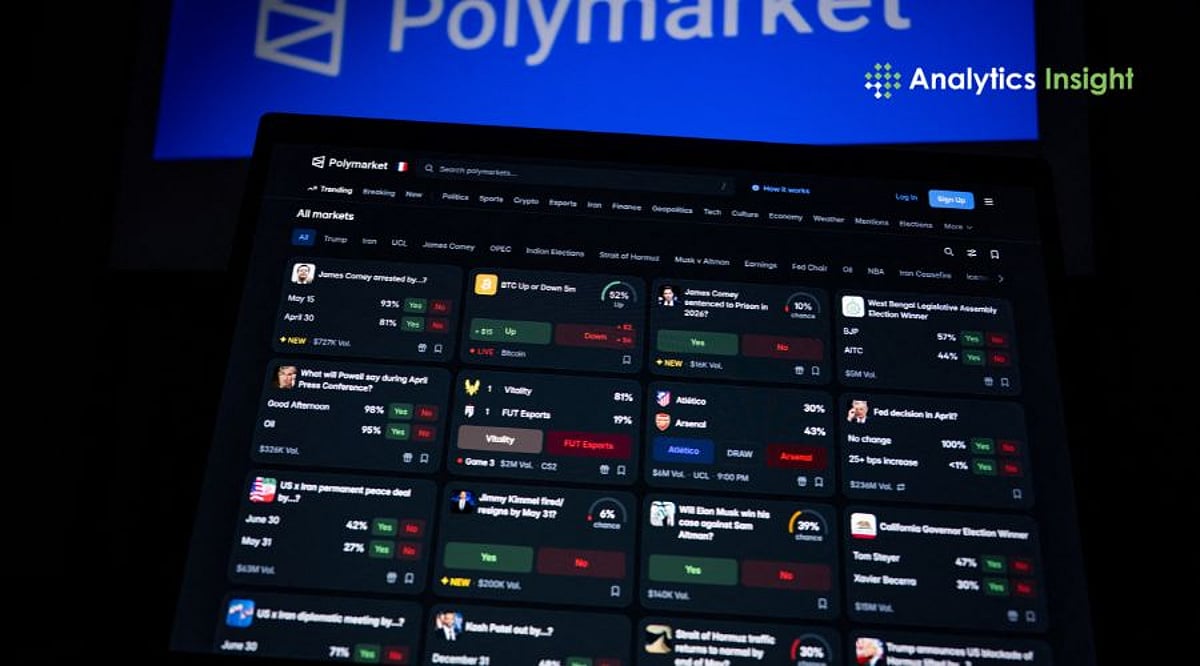
    Polymarket remains the largest decentralized prediction market, operating on Polygon and settling in USDC. It hosts thousands of markets spanning politics, crypto, sports, economics, and global events. With deep liquidity and a strong user base, Polymarket continues to be the go-to choice for crypto-native traders seeking high-volume event trading.

    Best for: High liquidity and broad market coverage.

    2. Azuro

    Azuro is an open prediction market protocol that provides blockchain infrastructure for building decentralized prediction applications. Unlike a simple front-end, Azuro powers multiple prediction and sports forecasting platforms through smart contracts, emphasizing transparency and composability within the DeFi ecosystem.

    Best for: Developers and sports prediction markets.

    3. Predict.fun

    Built on BNB Chain, Predict.fun offers markets for crypto, politics, and sports, with integrated yield-generating mechanisms for open positions. The platform aims to merge prediction trading with DeFi incentives, allowing users to earn passive income while participating in event forecasting.

    Best for: DeFi users seeking yield and prediction opportunities.

    4. Gnosis Protocol Ecosystem

    Gnosis remains a key infrastructure player in decentralized prediction markets. While its original prediction market products have matured, its blockchain capabilities, oracle connections, and smart-contract development tools continue to power a variety of Web3 prediction platforms.

    Best for: Developers building custom prediction market solutions.

    5. Zeitgeist

    Zeitgeist is a decentralized prediction market built on the Polkadot ecosystem, allowing anyone to create markets on politics, finance, sports, and social events. It combines automated market makers with community governance, enabling permissionless market creation and decentralized dispute resolution.

    Best for: Permissionless market creation and Polkadot users.

    6. SX Bet

    SX Bet initially focused on decentralized sports betting but has expanded to predict outcomes across a range of events. It uses blockchain settlement, reduced fees, and self-custody to offer transparent event trading across many categories.

    Best for: Sports-focused decentralized prediction markets.

    Why This Matters

    Prediction markets have evolved from niche Web3 tools into multi-billion-dollar financial platforms. Understanding the leading protocols enables traders and developers to capitalize on growing institutional liquidity, permissionless event trading, and yield-generating Web3 infrastructure.

    Final Thoughts

    As blockchain infrastructure continues to advance and institutional interest grows, prediction markets are maturing rapidly. While Polymarket dominates with its liquidity and market selection, other protocols like Azuro, Zeitgeist, and Predict.fun are carving out niche use cases and providing developer-friendly infrastructure. The Web3 finance space is expanding, and decentralized prediction markets are playing a major role alongside other innovations.

    FAQs

    What is a decentralized prediction market?

    A decentralized prediction market is a blockchain-based platform where users trade on the outcome of future events. Smart contracts automatically settle payouts without relying on a central authority.

    Which is the largest prediction market platform in 2026?

    Polymarket remains the largest decentralized prediction market by liquidity and trading activity, offering thousands of markets covering crypto, politics, sports, and macroeconomic events.

    Are decentralized prediction markets legal?

    Legality depends on the country and local regulations. Some jurisdictions permit prediction markets, while others restrict or regulate them similarly to betting or derivatives platforms.

    How do prediction markets make money?

    Most platforms generate revenue by charging small trading or settlement fees. Some protocols also earn through liquidity pools, token incentives, or ecosystem services.

    What are the risks of using decentralized prediction markets?

    Users face risks including smart contract vulnerabilities, regulatory uncertainty, market volatility, oracle failures, and liquidity constraints. Conducting thorough research before participating is essential.

  • Minnesota Court Temporarily Blocks State Ban on Prediction Markets Kalshi and Polymarket

    Minnesota Court Temporarily Blocks State Ban on Prediction Markets Kalshi and Polymarket

    Kalshi and Polymarket can continue operating in Minnesota after securing a temporary court order that blocks the state from enforcing its prediction market ban. The dispute could shape how states regulate event contracts tied to sports, politics, macroeconomic trends, and cryptocurrencies.

    Prediction markets let users trade contracts linked to future events. Contract prices reflect the market’s estimated probability of an outcome, according to Pew Research Center. Crypto contracts now form a major part of the sector. Pew estimates they represent about 20% of Polymarket’s volume and roughly 7% of Kalshi’s volume since July 2024.

    Crypto Links Raise the Stakes

    The Minnesota case reaches beyond two trading platforms because Polymarket settles on-chain margin through stablecoins. Both companies also handle substantial cryptocurrency-related activity. Polymarket has moved toward more advanced crypto infrastructure through its high-performance central limit order book, known as CLOB v2. It also launched pUSD, a new USDC-backed token.

    As a result, the court order preserves access to a large pool of crypto-native activity in Minnesota. It also keeps the broader legal dispute active.

    How far can states go when federally regulated prediction exchanges increasingly combine event contracts with blockchain settlement?

    Prediction Market Volume Hits Record Levels

    Artemis data shows monthly prediction market volume stayed between $25 billion and $30 billion during the first five months of 2026. Volume then reached a record $52.8 billion in June. July month-to-date volume climbed to $50.9 billion. Activity remained high after the FIFA World Cup, one of the year’s largest trading events.

    Sports, macroeconomic expectations, central bank activity, and crypto market developments have driven this year’s expansion. Political events had played a larger role in earlier years.

    Galaxy Research estimates that lifetime prediction market volume has exceeded $150 billion. Bernstein analysts cited by Galaxy said the market could reach $1 trillion by 2030 if regulation improves.

    Kalshi Gains Ground as Regulatory Divide Widens

    Token Terminal data gives Kalshi 61.1% of cumulative prediction market notional volume over the past five years. Kalshi recorded $159.5 billion, compared with Polymarket’s $101.7 billion. Kalshi also generated $39.5 billion in notional volume during the last 30 days. Polymarket recorded $8.7 billion during the same period.

    Their regulatory structures differ. Kalshi operates as a Commodity Futures Trading Commission-regulated Designated Contract Market, while Polymarket’s international platform lacks CFTC oversight.

    Galaxy estimates Polymarket’s US operations produced about $1.3 billion in April volume. Its international platform generated about $9 billion during the same month. Polymarket is pursuing broader US regulatory approval for its flagship platform. This effort could affect how the company expands under federal derivatives rules.

    The Minnesota order remains temporary. Courts have not settled whether states can restrict federally regulated prediction exchanges through gambling laws. Minnesota’s next move, similar actions from other states, and Polymarket’s regulatory expansion will shape market access. The dispute may also affect institutional views of blockchain-based financial infrastructure.

    The Minnesota order keeps Kalshi and Polymarket operating while courts examine whether federal derivatives rules can override state gambling restrictions. The decision could affect prediction markets, stablecoin settlement and broader crypto access. Traders should watch Minnesota’s next filing and similar actions from other states.

  • Dogecoin Faces Slim Odds of Hitting $0.10 in July as Crowded Longs Signal Downside Risk

    Dogecoin Faces Slim Odds of Hitting $0.10 in July as Crowded Longs Signal Downside Risk

    Dogecoin has rebounded above $0.07 after a 7% weekend recovery, but prediction markets are pricing in only a 1% chance of the meme coin reaching $0.10 by the end of July. According to Polymarket, those odds have collapsed from 50% just three weeks ago, reflecting a sharp shift in trader sentiment. The platform also shows a mere 2% probability of a drop below $0.05, indicating limited expectations for a severe breakdown in the near term.

    Polymarket Odds Reject a July Breakout

    To reach $0.10, Dogecoin would need to rally roughly 37% from its current level—a daunting task given the current market dynamics. The weekend bounce erased earlier weekly losses and pushed DOGE above $0.07, aided by a broader crypto recovery following a pause in geopolitical tensions between the United States and Iran. Despite this, Polymarket traders remain skeptical, assigning slim probabilities to both a breakout above $0.10 and a plunge below $0.05.

    Technical Indicators Send Mixed Signals

    Technical analysis offers conflicting cues. Crypto analyst Ali Martinez issued a buy signal on Saturday as Dogecoin approached support near $0.056, setting a rebound target of $0.16 and an upper channel boundary near $0.45. Since then, DOGE has climbed above $0.07 but remains well short of the first target. Meanwhile, TradingView’s Moving Average Convergence Divergence (MACD) indicator flashed a buy signal, while the Bull Bear Power indicator showed a sell, and the Relative Strength Index (RSI) stayed neutral.

    Falling Open Interest Adds Pressure

    Derivatives positioning remains heavily skewed toward long exposure. Top traders recorded a long-to-short ratio of 3.54, with 78% holding long positions. Retail traders showed a 73.6% long share. At the same time, open interest fell 4.31% over 24 hours, and the taker buy-to-sell ratio stood at 0.985, indicating slightly stronger sell-side activity in live order flow.

    Market analysis assigns a 65% probability to a break below $0.0725, followed by a test of the $0.065–$0.068 zone. A potential entry range is identified between $0.066 and $0.069 after confirmed support, with a recovery target near the 50-day simple moving average around $0.08. Further extension could reach $0.085–$0.09 under supportive broader conditions. A daily close below $0.062 would deepen downside risk.

    The alternative scenario, with a 35% probability, requires DOGE to hold $0.073. Under that path, the coin would need to reclaim $0.076 as open interest stabilizes and taker buying strengthens. The outlined entry range stands at $0.073–$0.075, with $0.069 as the stop level. CoinPriceForecast projects a $0.10 Dogecoin price by the end of 2026 as of July 25. CoinMarketCap AI describes the asset as balancing its meme origins with possible utility and institutional use.

    Conclusion

    Dogecoin’s rebound above $0.07 has improved short-term sentiment, but Polymarket traders still see little chance of a July move beyond $0.10. Mixed technical indicators, falling open interest, and crowded long positions raise the risk of another pullback. Traders should watch the $0.065 support zone before taking fresh positions.

  • North Carolina Enacts Landmark Law Recognizing Federal Oversight of Prediction Markets

    North Carolina Enacts Landmark Law Recognizing Federal Oversight of Prediction Markets

    North Carolina has become the first U.S. state to formally recognize federal oversight of prediction markets in state law, allowing platforms such as Kalshi and Polymarket to operate legally if they register with the Commodity Futures Trading Commission (CFTC). The change is part of Senate Bill 257, known as Session Law 2026-41, which is included in the state’s roughly $34 billion budget.

    The measure introduces a 6% tax on net revenue from transactions involving North Carolina residents starting January 1, 2027, while eliminating separate state licensing requirements for CFTC-registered operators. This development comes as prediction market platforms continue to defend their operations against legal challenges in several states.

    Budget Creates New Framework for Prediction Markets

    The new law relies on the Commodity Exchange Act, which grants the CFTC exclusive federal regulatory authority over prediction markets. As a result, CFTC-registered operators meet North Carolina’s regulatory requirements without seeking additional state licenses or complying with separate gaming rules.

    Instead, the legislation requires prediction market operators to pay a 6% tax on net revenue earned from North Carolina users starting in 2027. Meanwhile, the same budget raises the sports betting tax to 23% of gross betting revenue from the previous 18%. Licensed sportsbooks also continue to pay a $1 million licensing fee to operate in the state, while prediction market platforms do not face that cost under the new framework.

    Critics have questioned the difference between the tax rates. Mick Mulvaney, who leads Gambling Is Not Investing and previously served as acting White House chief of staff, told Axios that prediction markets operate as unlicensed sports gambling applications. He also argued that the policy could encourage operators to bypass state gambling rules while allowing minors to participate in sports-related markets.

    Lawmakers Weigh Revenue and Industry Impact

    Republican leaders described the measure as recognition of existing market activity. House Speaker Destin Hall said prediction market activity already occurs in North Carolina and that lawmakers decided it was time to address it. Senate leader Phil Berger also commented on the industry’s future but stopped short of predicting whether prediction markets could eventually replace traditional sports betting.

    Some Democrats expressed concerns despite supporting the overall budget. Senator Julie Mayfield warned that sports betting revenue could decline if operators shift toward prediction markets. According to WRAL, North Carolina has collected more than $287 million from sports betting since legalization in March 2024. The report also noted that the University of North Carolina and North Carolina State University may each receive up to $5.8 million annually to support athletic programs.

    Other States Continue Legal Challenges

    Gaming analyst Dustin Gouker wrote in his Next Event Horizon newsletter that North Carolina became the first state to allow CFTC-approved prediction markets without requiring separate state licensing. He described the law as affirming federal oversight while applying a relatively low tax rate and predicted that other states could consider similar legislation.

    Other states have adopted different approaches. Kentucky introduced a 14.25% excise tax in April, prompting legal action from the CFTC. Illinois later approved taxes on betting transactions while maintaining state licensing requirements, after which Kalshi filed a lawsuit.

    Court decisions have also varied. Kalshi secured preliminary injunctions in New Jersey and Tennessee, which the Third Circuit upheld in April. However, the company lost similar cases in Maryland, Nevada, Arizona, Ohio, and recently in New York, where Judge Analisa Torres ruled that Kalshi had not demonstrated a likely success under federal preemption law.

    Kalshi has appealed that decision to the Second Circuit Court of Appeals. Sports law attorney Daniel Wallach said the ruling could affect the company’s remaining legal disputes. Meanwhile, the CFTC has challenged nine states over event contracts, and some legal observers believe the issue could ultimately reach the U.S. Supreme Court.

    North Carolina Attorney General Jeff Jackson also signed an April letter opposing federal regulation, according to Axios. Even so, the state’s budget focuses on taxation while broader legal questions continue in federal courts. A Polymarket spokesperson told Axios that the company follows CFTC rules and expects state regulation efforts to face significant federal preemption challenges.

    What’s Next?

    North Carolina has become the first state to recognize federal oversight of prediction markets through state law. The measure allows CFTC-registered platforms to operate without separate licenses while introducing a 6% tax. Meanwhile, legal disputes over federal authority and state regulation continue across several jurisdictions.

  • Polymarket’s Fake Trading Videos Spark Federal Investigation Amid Record World Cup Volumes

    Polymarket’s Fake Trading Videos Spark Federal Investigation Amid Record World Cup Volumes

    Prediction market platform Polymarket is under increased regulatory scrutiny following reports that it used deceptive influencer campaigns to promote its services. Simultaneously, the company recorded surging trading activity during the 2026 FIFA World Cup, placing it at the intersection of regulatory debate and growing market interest.

    Report Reveals Fabricated Trades and Misleading Content

    A Wall Street Journal investigation alleged that Polymarket paid college-age content creators to produce over 1,100 promotional videos between December 2025 and May 2026. According to the report, the videos showcased fabricated prediction market trades worth approximately $1.9 million, using replica versions of the Polymarket website rather than the live platform. The creators reportedly displayed fake profits of nearly $900,000 while concealing their financial relationship with the company. The staged content gave viewers the impression that large profits were routine, while hiding potential losses that could have exceeded $166,000. Creators were instructed to use imitation websites closely resembling the official Polymarket interface and were told not to disclose payments, making the sponsored content appear as ordinary social media posts.

    Following the investigation, Polymarket launched an internal review of its promotional activities but has not publicly released its findings.

    Lawmakers Call for CFTC Investigation

    Regulatory pressure escalated after U.S. Senators John Curtis and Adam Schiff sent a letter on June 26 requesting the Commodity Futures Trading Commission (CFTC) to investigate Polymarket’s advertising practices. The request focused on whether the campaigns complied with advertising rules. Polymarket has a history with the CFTC: in 2022, it reached a settlement involving a $1.4 million civil penalty and agreed to stop offering services to U.S. users.

    Beyond regulatory agencies, a consumer advocacy group filed a lawsuit in late June against Polymarket and several executives, alleging deceptive advertising targeting college students. Federal authorities are also reportedly examining the company’s marketing activities.

    World Cup Drives Record Trading Volume

    Amid the regulatory attention, prediction markets experienced a surge in trading activity during the 2026 FIFA World Cup. Data from DefiLlama showed that Kalshi generated nearly $9.4 billion in June trading volume, up from about $5.3 billion in May. Polymarket International’s monthly volume rose to roughly $4.3 billion from approximately $3.5 billion. Separate market data indicated even stronger figures, with Kalshi exceeding $30 billion in notional trading volume in June and Polymarket International reaching more than $10.8 billion. Polymarket’s U.S. platform recorded over $3.5 billion in monthly volume.

    Knockout-stage matches attracted heavy participation. Canada’s Round of 16 match against Morocco generated over $48 million in trading volume on Kalshi and more than $26.8 million on Polymarket. U.S. markets also drew millions of dollars in trading activity.

    The rapid growth has coincided with broader regulatory discussions. Nearly a dozen U.S. states have taken action involving platforms such as Kalshi and Polymarket, while European regulators have reminded firms that some event contracts may already fall under existing financial rules. CFTC Chair Michael Selig criticized state enforcement efforts, stating, “To any state that seeks to nullify federal law and seize authority over these markets, we will see you in court.”

    Polymarket’s dual narrative—of regulatory risk and market momentum—underscores the volatile intersection of cryptocurrency, prediction markets, and consumer protection in the digital age.

  • Meta Builds Arena Prediction Market App After Kalshi Acquisition Talks Collapse

    Meta Builds Arena Prediction Market App After Kalshi Acquisition Talks Collapse

    Meta Platforms is developing a new prediction market application called Arena, following the breakdown of acquisition discussions with Kalshi. Instead of purchasing an existing platform, the company has opted to build its own product, adding another major technology player to a rapidly growing sector that already includes Kalshi and Polymarket.

    Points-Based System Avoids Immediate Regulatory Hurdles

    Arena is expected to launch as a mobile app that uses virtual points rather than real-money wagers. This approach allows Meta to enter the prediction market space while sidestepping many of the regulatory issues that surround cash-based platforms. However, reports indicate that Meta has not ruled out adding real-money features in future updates.

    From Acquisition Talks to Internal Development

    According to reports, Meta CEO Mark Zuckerberg met with Kalshi CEO Tarek Mansour last year to discuss a potential acquisition, as interest in prediction markets accelerated. The negotiations did not result in a deal, although the two companies later partnered to integrate Kalshi into Threads. Different accounts offer varying explanations for the failed talks: one suggests Mansour preferred to keep Kalshi independent, while another indicates Meta viewed the company’s legal and regulatory challenges as too complex. Neither company has publicly confirmed the details.

    Meta has since assigned a small internal team to develop Arena. Unlike Kalshi and Polymarket, which allow real-money predictions, Arena will begin with a points-based model. Artificial intelligence will generate prediction questions and determine outcomes within the platform. This move aligns with Meta’s long-standing strategy of building products internally when acquisition opportunities fall through.

    Prediction Market Sector Experiences Explosive Growth

    Prediction markets have expanded rapidly over the past year. Monthly trading volume across leading platforms surged from approximately $28 billion to nearly $220 billion. Analysts at Bernstein estimate annual prediction market volume could reach $1 trillion by 2030. Investor interest continues to climb: Kalshi is reportedly discussing a new funding round that could value the company at around $40 billion, while Polymarket is valued at approximately $10.7 billion. Other financial firms, including Robinhood, Interactive Brokers, and Charles Schwab, have also shown interest in offering prediction market products.

    Meta enters the sector with a significant advantage: its existing user base of billions across Facebook, Instagram, and WhatsApp. This reach could allow Arena to attract a much wider audience than current prediction market platforms, without requiring cryptocurrency wallets or complex onboarding steps.

    Regulatory and Competitive Landscape

    Arena’s virtual points model may reduce immediate regulatory concerns compared with cash-based trading platforms. However, prediction markets continue to face legal scrutiny across the United States. Several states have challenged operators, arguing that certain products resemble gambling. At the federal level, questions remain over regulatory authority involving the Commodity Futures Trading Commission and other agencies. Court cases related to prediction markets are ongoing, including matters involving alleged insider information.

    For the cryptocurrency industry, Arena introduces both new competition and broader exposure. Polymarket currently settles predictions using stablecoins, while Arena removes that requirement through its points-based system. At the same time, increased public awareness of prediction markets could drive interest in blockchain-based platforms if users later seek real-money participation.

    Meta has not announced a launch date for Arena, nor confirmed whether real-money trading will become part of the product in future updates. For now, the project marks Meta’s latest expansion into digital consumer services after choosing internal development over acquiring Kalshi.

  • Meta Reports Talks with Polymarket and Kalshi as It Develops Arena Prediction App

    Meta Reports Talks with Polymarket and Kalshi as It Develops Arena Prediction App

    Meta is pursuing a dual-track strategy to enter the prediction market space, simultaneously testing its own internal product, Arena, while exploring potential partnerships with established platforms Polymarket and Kalshi. CEO Mark Zuckerberg has reportedly instructed senior executives to engage in discussions with both operators, according to a New York Times report cited by The Block.

    The exploratory talks come just days after news broke that Zuckerberg had directed a small team to build Arena, a standalone prediction-market app separate from Facebook, Instagram, and WhatsApp. Insiders describe Arena as experimental yet a top company priority, suggesting Meta may choose to either launch its own platform, strike distribution deals, or pursue both options simultaneously.

    Meta’s Dual Strategy: Build and Partner

    Meta’s interest in prediction markets is not new. The company previously operated Forecast from 2020 to 2022, a points-based platform that allowed crowdsourced predictions but was shut down due to low usage and high manual question-selection costs. Arena represents Meta’s second known consumer prediction product and would likely use a similar points model, differentiating it from the real-money services offered by Polymarket and Kalshi.

    Even without cash trading, Arena could drive engagement, advertising opportunities, and valuable user-interest data. However, challenges remain regarding misinformation, market manipulation, sensitive event categories, and protections for younger users. Meta has not yet detailed how Arena would generate revenue.

    Prediction Market Landscape Grows

    If Meta secures a partnership, it would follow X (formerly Twitter), which chose Polymarket as its official prediction-market partner in June 2025. That integration placed live market probabilities and Grok-powered annotations directly in posts. A similar deal could put prediction markets across Meta’s massive social-media network, which reported 3.56 billion daily users in the first quarter of 2026.

    Meanwhile, Polymarket and Kalshi have expanded rapidly. Their combined event-contract trading volume exceeded $60 billion in 2026. Institutional market makers like Wintermute have provided liquidity. Kalshi raised $1 billion at a $22 billion valuation in May and reportedly seeks a $40 billion valuation. Both platforms operate under CFTC regulation: Kalshi has been a designated contract market since 2020, and Polymarket’s U.S. business also uses a CFTC-regulated designated contract market.

    What’s Next?

    Meta has not announced any agreements or a public launch for Arena. The talks remain exploratory, and neither Polymarket nor Kalshi has commented publicly. Market participants should watch for official details on Arena’s structure, distribution model, and regulatory compliance. The company’s renewed interest comes after a quarterly decline in daily users across its Family of Apps, which Meta attributed to internet disruptions in Iran and WhatsApp restrictions in Russia.

    Prediction markets allow participants to trade contracts tied to future events, with prices reflecting market-implied probabilities across politics, monetary policy, sports, entertainment, and financial developments. As Meta explores both internal development and external partnerships, the prediction market industry’s growth trajectory appears set to intersect with mainstream social media.