
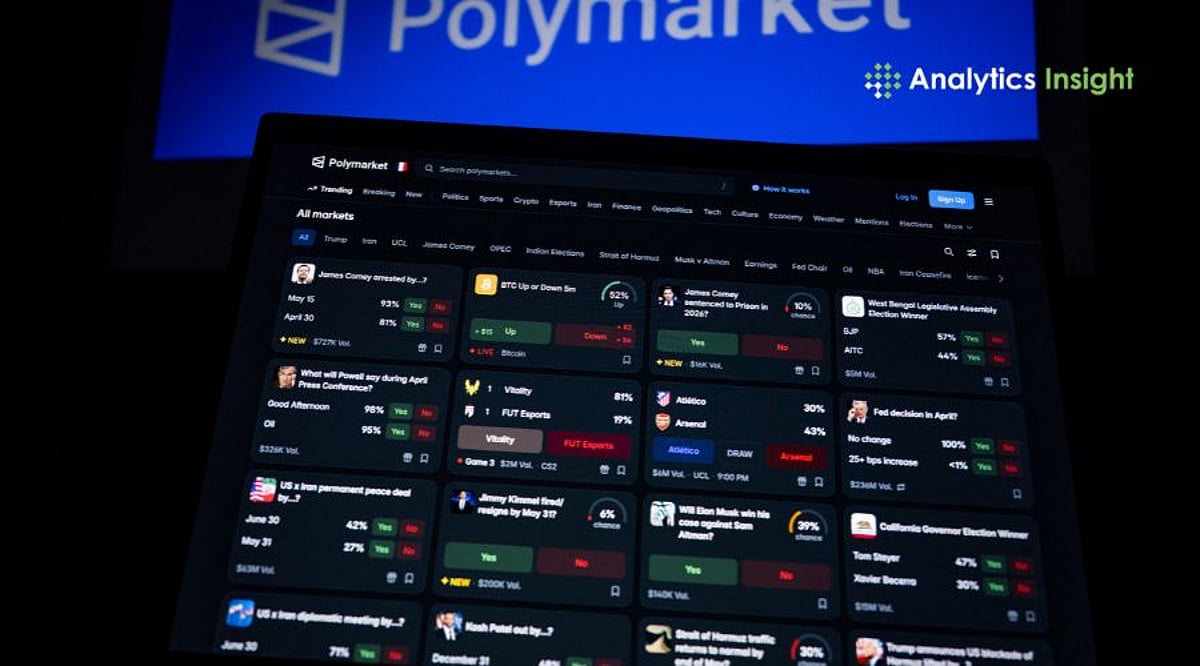
Prediction market platform Polymarket is under increased regulatory scrutiny following reports that it used deceptive influencer campaigns to promote its services. Simultaneously, the company recorded surging trading activity during the 2026 FIFA World Cup, placing it at the intersection of regulatory debate and growing market interest.
Report Reveals Fabricated Trades and Misleading Content
A Wall Street Journal investigation alleged that Polymarket paid college-age content creators to produce over 1,100 promotional videos between December 2025 and May 2026. According to the report, the videos showcased fabricated prediction market trades worth approximately $1.9 million, using replica versions of the Polymarket website rather than the live platform. The creators reportedly displayed fake profits of nearly $900,000 while concealing their financial relationship with the company. The staged content gave viewers the impression that large profits were routine, while hiding potential losses that could have exceeded $166,000. Creators were instructed to use imitation websites closely resembling the official Polymarket interface and were told not to disclose payments, making the sponsored content appear as ordinary social media posts.
Following the investigation, Polymarket launched an internal review of its promotional activities but has not publicly released its findings.
Lawmakers Call for CFTC Investigation
Regulatory pressure escalated after U.S. Senators John Curtis and Adam Schiff sent a letter on June 26 requesting the Commodity Futures Trading Commission (CFTC) to investigate Polymarket’s advertising practices. The request focused on whether the campaigns complied with advertising rules. Polymarket has a history with the CFTC: in 2022, it reached a settlement involving a $1.4 million civil penalty and agreed to stop offering services to U.S. users.
Beyond regulatory agencies, a consumer advocacy group filed a lawsuit in late June against Polymarket and several executives, alleging deceptive advertising targeting college students. Federal authorities are also reportedly examining the company’s marketing activities.
World Cup Drives Record Trading Volume
Amid the regulatory attention, prediction markets experienced a surge in trading activity during the 2026 FIFA World Cup. Data from DefiLlama showed that Kalshi generated nearly $9.4 billion in June trading volume, up from about $5.3 billion in May. Polymarket International’s monthly volume rose to roughly $4.3 billion from approximately $3.5 billion. Separate market data indicated even stronger figures, with Kalshi exceeding $30 billion in notional trading volume in June and Polymarket International reaching more than $10.8 billion. Polymarket’s U.S. platform recorded over $3.5 billion in monthly volume.
Knockout-stage matches attracted heavy participation. Canada’s Round of 16 match against Morocco generated over $48 million in trading volume on Kalshi and more than $26.8 million on Polymarket. U.S. markets also drew millions of dollars in trading activity.
The rapid growth has coincided with broader regulatory discussions. Nearly a dozen U.S. states have taken action involving platforms such as Kalshi and Polymarket, while European regulators have reminded firms that some event contracts may already fall under existing financial rules. CFTC Chair Michael Selig criticized state enforcement efforts, stating, “To any state that seeks to nullify federal law and seize authority over these markets, we will see you in court.”
Polymarket’s dual narrative—of regulatory risk and market momentum—underscores the volatile intersection of cryptocurrency, prediction markets, and consumer protection in the digital age.
Leave a Reply