Tag: prompt engineering

  • Top AI Certifications for Professionals in 2026: Boost Your Career and Salary

    Top AI Certifications for Professionals in 2026: Boost Your Career and Salary

    Artificial intelligence has become an integral part of daily work across industries. Companies now rely on AI for writing, research, customer support, data analysis, software development, and business planning. As a result, many professionals are eager to learn AI and validate their skills with a certification. According to Pearson’s 2026 Value of IT Certification Report, 35% of employees plan to earn an AI certification in 2026—up from just 17% the previous year.

    Why AI Certifications Matter

    Earning an AI certification demonstrates not only knowledge but also practical understanding of AI in the workplace and a commitment to responsible AI practices. Research from Revelio Labs shows that certified AI professionals earn an average of $79,800 per year, compared to $72,300 for non-certified peers—a difference of about $7,500 annually. Additionally, 38.9% of certified professionals reach executive positions, versus 32.5% of those without certification.

    What Employers Want

    Employers now seek professionals who can solve real business problems with AI, not just recite terminology. They value skills such as reviewing AI responses critically, protecting company data, practicing responsible AI, and improving workflows with smart tools. Consequently, modern AI certifications emphasize practical skills like prompt writing, workflow optimization, responsible AI use, and business applications over theoretical knowledge.

    Best AI Certifications for Working Professionals

    Google Generative AI Leader

    Ideal for managers, marketers, product teams, and business professionals. Exam cost: $99. Duration: 50–60 questions. Valid for three years. Covers AI strategy, prompt optimization, business use cases, and Google’s AI ecosystem.

    AWS Certified AI Practitioner

    For IT professionals, business analysts, cloud teams, and project managers. Exam: 65 questions, $100, valid three years. Topics include AI basics, machine learning, generative AI, and responsible AI.

    NVIDIA Certified Associate – Generative AI LLMs

    Designed for developers and AI enthusiasts. Exam cost: $125, valid two years. Covers prompt engineering, large language models, Python, neural networks, and AI application development.

    Databricks Certified Generative AI Engineer Associate

    For AI engineers and ML professionals. Exam: 45 questions, $200. Requires about six months of hands-on experience. Covers advanced generative AI topics.

    Great Choices for Beginners

    No coding experience? No problem. These certifications welcome beginners:

    • Google AI Professional Certificate (Coursera): Seven courses covering AI fundamentals, communication, productivity, research, and responsible AI. No technical prerequisites.
    • IBM Generative AI Engineering Professional Certificate (Coursera): Six-month program covering LLMs, prompt engineering, RAG, AI agents, LangChain, and deployment.
    • IBM AI Developer Professional Certificate: Focuses on Python, chatbots, Watson AI, and generative AI. Also six months.
    • DeepLearning.AI AI for Everyone: Explains AI strategy, business opportunities, and organizational adoption without coding.

    Time and Cost Considerations

    Short AI courses typically take 5–10 hours. Beginner certificates require 10–20 hours. Professional certificate programs take 3–6 months. Cloud certification prep needs 20–40 hours. Exam fees remain affordable: Google Generative AI Leader ($99), AWS AI Practitioner ($100), NVIDIA Associate ($125), Databricks Engineer ($200). Coursera subscriptions vary by pace.

    Long-Term Value

    AI skills demand is growing across sectors. Employers seek talent in prompt engineering, LLMs, responsible AI, automation, cloud AI, LangChain, RAG, machine learning basics, and AI productivity tools. An AI certification provides systematic training and signals competence to employers. The statistics—higher salaries, better promotion rates, and rising employee interest—confirm the value. For working professionals, an AI certification is a practical investment in their future.

    FAQs

    1. Which AI certification is best for beginners?
    Google AI Professional Certificate and DeepLearning.AI’s AI for Everyone are top choices as they require no coding experience.

    2. Do AI certifications increase salary?
    Yes. Certified professionals earn an average of $79,800 vs. $72,300 for non-certified peers.

    3. How long does an AI certification take?
    Short courses: 5–10 hours; professional certificates: 3–6 months.

    4. Which certification is best for developers?
    NVIDIA Certified Associate – Generative AI LLMs, IBM AI Developer Professional Certificate, or Databricks Certified Generative AI Engineer Associate.

    5. Are AI certifications worth it in 2026?
    Yes. As AI adoption accelerates, certifications validate skills, improve job prospects, and prepare for future opportunities.

  • 10 Essential DeepSeek Prompts to Supercharge Your Writing in 2026

    10 Essential DeepSeek Prompts to Supercharge Your Writing in 2026

    AI has become an indispensable tool for modern writers, but the quality of its output hinges on one critical factor: the prompt. Whether you’re a blogger, marketer, copywriter, or technical writer, well-crafted prompts can save hours of editing and produce content that is accurate, engaging, and human-like. Here are ten powerful DeepSeek prompts every writer should have in their toolkit for 2026.

    1. Blog Writing Prompt

    Generate a complete, SEO-friendly article from scratch.
    Act as an experienced content writer. Write a 1,200-word SEO-optimized blog post about [Topic] for [Target Audience]. Use a conversational tone, include an engaging introduction, H2 and H3 headings, practical examples, actionable tips, and a compelling conclusion. Naturally incorporate the primary keyword throughout the article while maintaining readability.

    2. Humanize AI-Generated Content Prompt

    Make robotic text sound natural and engaging.
    Rewrite the following content so it reads like it was written by an experienced human writer. Remove repetitive phrases, improve sentence flow, vary sentence lengths, maintain the original meaning, and use a conversational yet professional tone. Ensure the content passes AI detection while preserving clarity and accuracy.

    3. SEO Optimization Prompt

    Improve existing content without sacrificing readability.
    Optimize the following article for SEO. Improve keyword placement, rewrite headings for better search visibility, enhance readability, suggest internal linking opportunities, and naturally include related keywords without keyword stuffing. Preserve the original meaning and writing style.

    4. Social Media Content Prompt

    Turn one article into multiple platform-specific posts.
    Create engaging social media posts based on the following article. Generate separate versions for LinkedIn, X (Twitter), Facebook, Instagram, and Threads. Each post should include a strong hook, concise messaging, relevant hashtags, and a compelling call to action tailored to the platform.

    5. Email Copywriting Prompt

    Craft professional emails that drive action.
    Write a persuasive marketing email promoting [Product/Service]. Include an attention-grabbing subject line, engaging introduction, key benefits, social proof where appropriate, and a clear call to action. Keep the tone friendly, professional, and customer-focused.

    6. Article Summarization Prompt

    Quickly extract key points from lengthy content.
    Summarize the following article into five key takeaways. Highlight the most important insights, explain them in simple language, and maintain the original context. Present the summary using concise bullet points.

    7. Technical Documentation Prompt

    Create beginner-friendly documentation.
    Act as a technical writer. Create step-by-step documentation explaining how to use [Software/Tool]. Include prerequisites, installation steps, usage instructions, troubleshooting tips, frequently asked questions, and best practices. Use simple language and clear formatting.

    8. Research Assistant Prompt

    Speed up research before writing.
    Act as a research assistant. Gather the latest information on [Topic], summarize current trends, identify key challenges and opportunities, list important statistics, and suggest credible sources for further reading. Organize the findings into clear sections for easy reference.

    9. Creative Storytelling Prompt

    Make content more engaging with narrative.
    Write a compelling story about [Topic] using a relatable character, a realistic challenge, practical solution, and memorable ending. Keep the writing conversational, emotionally engaging, and suitable for an online audience while naturally delivering the intended message.

    10. Proofreading and Editing Prompt

    Give your content a professional polish.
    Act as a professional editor. Review the following content for grammar, spelling, punctuation, readability, consistency, tone, and sentence flow. Correct all errors, improve clarity, eliminate unnecessary words, and preserve the author’s original voice while making the content publication-ready.

    Final Thoughts

    Prompting is the key to unlocking the full value of AI content. These DeepSeek prompts will help you write blogs, marketing copy, social media posts, technical documentation, and summaries faster and more accurately. Instead of staring at a blank page, leverage these templates to get your job done quickly. As AI continues to evolve, mastering prompt engineering will remain one of the most important skills for content creators. Save these prompts and use them to reduce editing time and improve your writing quality.

  • Top AI Skills Employers Will Demand Most in 2026

    Top AI Skills Employers Will Demand Most in 2026

    The artificial intelligence job market is heating up, and employers are already signaling which skills will be most valuable in 2026. From engineering robust AI systems to ensuring ethical governance, professionals who master these competencies will stand out. Here are the top AI skills that will shape career opportunities in the near future.

    AI Engineering

    Employers are prioritizing professionals who can build, deploy, optimize, and maintain scalable AI systems. Expertise in modern frameworks, cloud platforms, and automation tools is essential for this role.

    Prompt Engineering

    Crafting accurate prompts for generative AI models dramatically improves productivity, workflow automation, content quality, and enterprise AI application performance. This skill is becoming a cornerstone of efficient AI use.

    Machine Learning

    Strong machine learning expertise remains critical for developing predictive models, improving algorithms, handling large datasets, and solving complex business challenges effectively.

    Data Engineering

    Organizations are seeking experts who can manage data pipelines, ensure data quality, handle storage, integrate systems, and process information reliably to support AI model training and deployment.

    AI Governance

    As AI adoption grows, businesses increasingly value professionals who can ensure ethical AI practices, regulatory compliance, transparency, risk management, and responsible deployment across enterprise environments.

    Python Programming

    Python continues to be the preferred language for AI development, enabling automation, model building, data analysis, and seamless integration with AI frameworks efficiently.

    Cloud AI Platforms

    Experience with cloud-based AI services helps professionals deploy scalable applications, optimize infrastructure costs, and accelerate enterprise AI implementation across industries.

    Natural Language Processing (NLP)

    NLP expertise enables organizations to create advanced chatbots, language models, intelligent search systems, and multilingual customer engagement solutions successfully.

    Business Intelligence

    Employers favor professionals who combine AI knowledge with business intelligence to transform analytics into strategic decisions, operational improvements, and measurable organizational growth.

  • 7 Free AI Courses with Certificates to Boost Your Skills in July 2026

    7 Free AI Courses with Certificates to Boost Your Skills in July 2026

    Build AI skills without spending a rupee. Here are the top free AI courses offering certificates in July 2026:

    • Google AI Essentials – Learn practical AI skills and prompt engineering with beginner-friendly lessons.
    • Microsoft AI Skills Challenge – Gain hands-on experience with Azure AI tools and earn a free certificate.
    • IBM AI Fundamentals – Understand machine learning, generative AI, and business AI applications.
    • Harvard CS50 AI – A rigorous introduction to artificial intelligence using Python programming.
    • DeepLearning.AI Short Courses – Master prompting, LLMs, and generative AI through concise practical lessons.
    • Coursera AI for Everyone – Andrew Ng’s popular course explains AI concepts without coding experience.
    • NVIDIA Deep Learning Institute – Access free AI workshops focused on GPUs, deep learning, and computer vision.
    • LinkedIn Learning AI Courses – Explore workplace AI productivity, Copilot, ChatGPT, and automation topics.

    Read more stories and join our WhatsApp Channel to get the latest news, exclusives, and videos.

  • Top 8 Fastest-Growing AI Careers to Watch in 2025

    Top 8 Fastest-Growing AI Careers to Watch in 2025

    The artificial intelligence industry is evolving at an unprecedented pace, creating a wave of new, high-demand job roles. Professionals looking to future-proof their careers should consider specializing in one of these rapidly growing AI positions. Below, we break down the key roles that are shaping the future of technology.

    AI Engineer

    AI Engineers design, develop, and deploy intelligent applications that leverage machine learning, cloud platforms, and automation. They solve complex business challenges by building scalable AI systems that drive efficiency and innovation.

    Machine Learning Engineer

    Machine Learning Engineers create predictive models and self-learning algorithms that power recommendation engines, fraud detection, automated decision-making, and operational optimization across industries.

    Generative AI Engineer

    Generative AI Engineers build chatbots, virtual assistants, content generators, and enterprise solutions using large language models, prompt engineering, and retrieval-augmented generation techniques.

    Data Scientist

    Data Scientists extract actionable insights from massive datasets using statistics, machine learning, and visualization. Their work supports strategic business decisions and drives innovation.

    AI Research Scientist

    AI Research Scientists conduct advanced research in deep learning, natural language processing, and reinforcement learning to develop next-generation AI models and technologies.

    AI Product Manager

    AI Product Managers bridge business objectives and technical development. They define product strategies, coordinate teams, prioritize features, and ensure successful AI product delivery.

    Prompt Engineer

    Prompt Engineers craft optimized prompts that improve AI-generated responses, increase model accuracy, and streamline enterprise workflows across diverse applications.

    AI Ethics Specialist

    AI Ethics Specialists ensure AI systems remain fair, transparent, secure, and compliant by implementing responsible AI practices, governance frameworks, and regulatory standards.

    Computer Vision Engineer

    Computer Vision Engineers develop AI systems that analyze images and videos, enabling breakthroughs in autonomous vehicles, healthcare diagnostics, robotics, surveillance, and industrial automation.

    As AI continues to reshape industries, these roles offer exciting opportunities for growth and innovation. Staying current with emerging skills and technologies is essential for success in this dynamic field.

  • Proven Strategies to Build Smarter, Faster, and More Reliable AI Agents

    Proven Strategies to Build Smarter, Faster, and More Reliable AI Agents

    AI agents are getting better fast, but most of them still fail in small ways that matter a lot. They miss details, forget context, pick the wrong tool, or sound confident when they are wrong. The good news is that agent performance can be improved with clear design choices, better prompts, stronger memory handling, and careful testing. Recent 2026 guidance on agent evaluation shows that teams now look at task completion, latency, hallucination rate, and cost together instead of relying on one score alone.

    What is an AI Agent? How Autonomous AI Agents Work

    An AI agent is a system that can take a goal, break it into steps, and act on its own with some level of control. Unlike a simple chatbot that only replies to a question, an agent may plan, use tools, read files, search the web, or call APIs before answering. It can also revise its next step based on what it learns along the way. This is what makes it more than a text generator. It is a task-doer.

    At the core, most agents follow a loop. First, they receive a goal from a user. Next, they think about what to do, choose a tool if needed, observe the result, and then decide the next step. This cycle can repeat many times until the job is done. In stronger systems, the agent also keeps short-term memory, tracks state, and checks whether the result matches the goal. That makes the agent feel more autonomous.

    Autonomous agents work well when the task is clear and the steps can be broken down. For example, an agent can gather market data, compare sources, draft a summary, and flag risks. But if the task is vague or the rules are weak, the agent can drift off course. This is why good agent design is not just about model size. It is also about structure, control, and guardrails.

    The best agents are built with a clear purpose. They do not try to do everything at once. They are given the right tools, a simple flow, and limits on what they can change. When that happens, the agent becomes more useful, more stable, and much easier to trust in real work.

    How to Improve AI Agent Accuracy and Response Quality

    Accuracy improves when the agent has better input, better tools, and better checks. A weak response is often not the model’s fault alone. The prompt may be unclear, the context may be too large, or the agent may not have the right data source. If the input is messy, the output will usually be messy too. So the first step is to make the task clear and narrow.

    One strong method is to give the agent a specific role, a goal, and a format. This reduces confusion and helps it focus on what matters. It also helps to provide examples of good answers. When the agent sees the shape of the output, it is more likely to match it. For fact-heavy tasks, you should also connect the agent to trusted sources instead of asking it to guess.

    Another way to improve quality is to add a review step. The agent can draft an answer, then check it for missing points, bad logic, or weak evidence. This second pass often catches errors that a single run misses. For multi-step work, it helps to make the agent verify each step before moving on. This is slower, but the quality is better.

    Response quality also improves when the agent is not overloaded. Too many instructions can make it lose focus. Too much context can hide the useful parts. Keep the task tight, use clean prompts, and remove anything that does not help the job. A simpler setup often gives better results than a complex one.

    Best Prompt Engineering Techniques for AI Agents

    Prompting for agents is different from prompting for a single reply. The prompt must guide action, not just language. A strong agent prompt should state the goal, available tools, limits, and expected output. If the agent is expected to plan, act, and report, each part should be stated clearly. This reduces random behavior.

    One useful method is to split instructions into stages. Start with the goal, then add rules, then add the output format. This makes the prompt easier to follow. It also helps to ask for one step at a time when the task is complex. If the agent tries to do everything in one go, it may miss important details. Stepwise prompting keeps the process steady.

    Examples are also powerful. A short sample of the kind of answer you want often does more than a long paragraph of rules. The agent can more easily match style, length, and structure. This is especially useful when you want a certain tone, such as plain language, business style, or technical writing. Good examples save time and reduce guesswork.

    Another smart technique is to use constraints. Tell the agent what to avoid, such as unsupported claims, extra filler, or overly long replies. Constraints help the model stay inside the lane. You can also use checklists in which the agent must confirm that each key point has been covered. This improves consistency and makes the result easier to trust.

    How to Reduce AI Agent Hallucinations and Improve Reliability

    Hallucinations occur when an agent states something that sounds true but is not. This is one of the biggest problems in AI systems. The agent may invent facts, misread a source, or fill in missing parts with a guess. The more open-ended the task, the higher the risk. That is why reliability has to be designed in, not hoped for.

    The best fix is to reduce free guessing. If the agent needs facts, give it access to verified data and tell it to use those sources first. If it cannot find proof, it should say so instead of making up an answer. This simple rule cuts down on many errors. It is also useful to ask the agent to quote or reference the source of a claim when possible.

    Another strong method is to separate generation from verification. First, the agent creates a draft. Then a second step checks whether each claim is supported. This can be done by the same model or by a different review model. The key is to force a pause before the final answer. This makes it harder for false statements to slip through.

    Reliability also improves when prompts are precise. A vague prompt invites a vague answer. A narrow prompt tells the agent exactly what kind of response is safe. For high-stakes use, it helps to add refusal behavior. If the agent is unsure, it should ask for more context or say the answer is incomplete. This is better than sounding certain while being wrong.

    How to Optimize AI Agent Memory and Context Management

    Memory helps an agent stay on track throughout a conversation or task. Without memory, the agent may forget the user’s goal, repeat work, or contradict itself. However, memory is tricky. If you store too much, the context gets noisy. If you store too little, the agent loses the thread. Good memory design is about balance.

    A useful pattern is to split memory into short-term and long-term parts. Short-term memory holds the current task, recent steps, and active facts. Long-term memory stores stable details like user preferences, project goals, or past decisions. This keeps the working context lighter and more useful. It also lowers the chance of the agent pulling in old, irrelevant details.

    Context management is just as important as memory itself. The agent should not see every past message if only a few lines matter. Instead, summarize the key points and pass forward only what is needed. This keeps prompts shorter and cheaper to run. It also helps the model focus on the right thing. A clean context usually gives a cleaner answer.

    Another good practice is to refresh memory at the right time. If the task changes, old context may no longer help. The agent should drop stale details and keep only what still matters. This is especially useful in long workflows, where the goal can shift. Strong memory is not about remembering everything. It is about remembering the right things at the right time.

    Best AI Agent Frameworks for Building High-Performance Agents

    A framework gives structure to agent building. It helps with tool calls, state, memory, planning, and multi-step logic. The best framework depends on the kind of agent you want to build. Some are better for simple tool use. Others are better for complex workflows, chains, or multi-agent setups. The right choice can save weeks of trial and error.

    Teams usually prefer frameworks that are easy to test and easy to observe. If you cannot see what the agent is doing, it is hard to improve it. A good framework should show the flow of steps, the tool used, and the output at each stage. This makes debugging much easier. It also helps teams compare versions and spot where performance drops.

    Speed matters too. A high-performance agent should not waste time on extra steps. Some frameworks are lighter and better for direct work. Others support deeper planning and better control. The best one is not always the biggest one. It is the one that fits your task, your tools, and your budget. A simple system that works well is often better than a heavy one that is hard to maintain.

    When choosing a framework, consider memory support, retry logic, tool handling, and monitoring. These are the parts that affect day-to-day quality. A framework should help the agent stay stable under pressure. It should also make it easier to update prompts, swap models, and add checks. This kind of flexibility matters when the agent grows.

    How Retrieval-Augmented Generation (RAG) Improves AI Agent Performance

    RAG helps an agent answer using current or trusted information instead of relying only on what the model remembers. In simple terms, the agent first looks up useful content, then uses it to build the answer. This is helpful because model memory can be stale or incomplete. RAG makes the system more grounded in real data.

    For agents, RAG is especially useful in tasks that need facts, company data, policies, manuals, or product details. Instead of guessing, the agent can search a document set or knowledge base. This makes answers more accurate and more useful. It also lowers hallucinations because the model has something concrete to work with. The answer becomes tied to sources, not just pattern matching.

    RAG also helps with updates. If a document changes, the agent can use the new version without retraining the whole model. This saves time and cost. It is also easier to control what the agent sees. You can limit it to approved sources and reduce the chance of bad data. This gives teams more confidence in the output.

    This said, RAG works best when the retrieval step is good. If the wrong text is fetched, the answer may still be weak. So the search method, chunk size, and ranking rules matter a lot. Good retrieval is not just a support step. It is a big part of the final result.

    How to Evaluate AI Agent Performance Using Benchmarks and Metrics

    You cannot improve what you do not measure. Agent evaluation should cover more than one score. Recent 2026 benchmark guidance shows that teams now track task success, speed, cost, and hallucination rate collectively rather than relying on a single metric. This gives a better view of real performance. A model that is accurate but slow may still be a poor fit for production.

    Benchmarks help compare agents in a repeatable way. They test how well an agent handles tasks such as tool use, browsing, coding, and long-horizon work. Different workloads require different tests, so a single benchmark is rarely enough. A broad evaluation mix is better for real systems. It shows where the agent is strong and where it breaks.

    Useful metrics include task completion rate, response time, error rate, and cost per task. You can also track whether the agent needed help, how often it failed, and how often it gave unsupported claims. These numbers tell you more than a simple pass or fail. They show the trade-offs between quality, speed, and cost. This is critical for production planning.

    The best evaluation also includes real user tasks. Benchmarks are useful, but your own workflow matters most. Test the agent with your data, tools, and business rules. That way, the score reflects real work, not just a lab setting. A good evaluation plan combines public benchmarks with private tests.

    How Multi-Agent Systems Improve AI Agent Performance

    A multi-agent system uses more than one agent to solve a task. One agent may plan, another may research, and a third may check the work. This split can improve quality because each agent has a narrower scope of work. Narrow jobs are usually easier to do well. They also make errors easier to spot.

    Multi-agent setups are useful when the task has several parts. For example, one agent can gather facts, another can write the draft, and another can review for mistakes. This creates a kind of teamwork inside the system. It also reduces the load on a single model, which can reduce confusion. When well designed, the result is more stable and complete.

    The main benefit is specialization. A reviewer agent can focus on safety, a planner on logic, and a writer on style. This can improve both speed and quality. It also makes debugging easier because you can see which step caused the issue. Instead of one black box, you get a set of smaller boxes with clearer roles.

    Still, multi-agent systems can become slow or noisy if overbuilt. Too many agents can lead to endless debate or repetitive work. So the design should stay simple. Only add agents when they solve a real problem. A small, well-tuned team of agents is often better than a large one that talks too much.

    Best Tools for Monitoring, Testing, and Optimizing AI Agents

    Monitoring tools help you see what the agent is doing in real time. They can show tool calls, prompt changes, response times, and failure points. This is important because many agent bugs are hidden inside long chains of steps. If you cannot trace the path, you cannot fix it well. Good visibility is the first step to better performance.

    Testing tools are just as useful. They let you run the same task many times and compare results. This helps you catch weak prompts, bad tool usage, and unstable behavior. It also makes version control easier. When you change the prompt or model, you can see whether the update helped or hurt. This saves a lot of guesswork.

    Optimization tools can help with prompt tuning, cost control, and latency reduction. Some tools focus on logs and traces, while others help with test sets and scoring. The best choice depends on where your agent most often fails. If the issue is speed, focus on latency. If the issue is trust, focus on accuracy and support checks. If the issue is cost, look at token use and tool calls.

    A good practice is to monitor both technical and user-facing results. The agent may look fine in logs but still frustrate users. So track answer quality, user satisfaction, and task success together. This gives a fuller view of performance. A solid tool stack should help you find problems early and fix them fast.

    Common AI Agent Performance Problems and How to Fix Them

    One common problem is poor planning. The agent may jump into action too fast or miss an important step. The fix is to add a clearer plan stage and require the agent to outline the task before acting. Another problem is a bad tool choice. The agent may call the wrong source or use a tool in the wrong order. Better tool rules and examples can help here.

    Another issue is context overload. When the prompt becomes too long, the agent may lose focus. The fix is to shorten the input, summarize old details, and keep only what matters. Many failures come from noise, not from the model itself. Cleaner context usually means cleaner output. This is one of the easiest improvements to make.

    Hallucination is another major issue. The agent may make up facts or exaggerate certainty. To fix this, connect it to trusted sources, add a verification step, and tell it to say “I do not know” when needed. This makes the system safer and more honest. It may feel slower, but it is far more useful in real use.

    Latency and cost are also common pain points. Some agents take too long because they do too many steps. Others burn tokens with long prompts or repeated calls. To fix this, reduce unnecessary loops, tighten instructions, and choose the simplest model that still meets the task. Performance is not only about accuracy; it is about balance.

  • Essential Prompt Engineering Techniques for Reliable AI Agents

    Essential Prompt Engineering Techniques for Reliable AI Agents

    Prompt engineering for AI agents is a distinct discipline that goes beyond writing simple instructions. It involves defining how an agent should think, act, and respond when conditions become unpredictable. A well-designed prompt reduces ambiguity, improves task accuracy, and ensures consistent performance across complex, multi-step workflows.

    Define a Clear Agent Identity

    Instead of a generic “You are a helpful assistant,” assign a concrete job with defined scope. For example, a support triage agent that sorts tickets into three categories and never resolves billing disputes on its own. Identity defines operational ownership, not just tone. Place this instruction in the system prompt to maintain consistency across interactions.

    Set Decision Boundaries

    Agents must decide when to act, wait, or ask a clarifying question. A well-built prompt states what the agent may do, what it must never do, when to call a tool, and when to hand off to a human. Strong boundaries also resolve conflicts, like when retrieved information contradicts earlier conversation history. Clear constraints prevent compounded errors in multi-step loops.

    Use Few-Shot Prompting

    Few-shot examples help models infer behavior faster than explanations alone. Choose examples that cover a normal case, an ambiguous case, and a failure case. This shows the agent how decisions are made under different conditions. Structured prompts separate identity, objectives, constraints, and output requirements, and examples connect those sections to real behavior.

    Specify Output Schemas and Handle Uncertainty

    When an agent’s output feeds a workflow or database, format is critical. Define a schema (JSON, ordered steps, labeled fields) so downstream systems can parse results reliably. Also address uncertainty: what happens when input is incomplete, contradictory, or outside scope? A clarifying question, safe default, or escalation path works better than a confident guess.

    Test and Evaluate

    Version prompts like code, splitting role, boundaries, formatting, and safety into separate modules. Test against a fixed set of inputs with repeatable runs, checking accuracy, tool selection, and format compliance before shipping. Reliability comes from combining all techniques, not any single line of instruction.

    Common Mistakes to Avoid

    • Vague Instructions: “Be helpful” leaves too much open to interpretation.
    • Missing Guardrails: Without limits, agents act when they shouldn’t.
    • No Examples: Long explanations don’t teach decision patterns as well as examples.
    • No Defined Output Structure: Unstructured responses are hard for APIs and workflows to handle.
    • Skipping Real Evaluation: Testing against one or two scenarios is insufficient.

    Final Thoughts

    The best AI agent prompts are built with clear responsibilities, explicit boundaries, structured outputs, and ongoing evaluation. When prompt engineering is treated as an engineering discipline rather than a writing exercise, agents become reliable systems ready for real deployment.

    Frequently Asked Questions

    What is prompt engineering for AI agents?

    It is the process of designing clear instructions that define an agent’s role, constraints, decision-making, tool usage, and output format to improve reliability across multi-step tasks.

    What are the best techniques?

    Techniques include defining a precise role, adding guardrails, using few-shot examples, specifying structured outputs, planning for uncertainty, and continuously evaluating performance.

    Why are structured prompts important?

    Structured prompts organize instructions into clear sections, helping agents produce more consistent, predictable, and machine-readable responses.

    How do few-shot examples help?

    They show agents how to handle typical, ambiguous, and edge-case scenarios, teaching reasoning patterns and decision boundaries more effectively than instructions alone.

    How to evaluate prompt effectiveness?

    Test against a benchmark set of tasks to measure accuracy, output consistency, format compliance, tool selection, and exception handling.

  • Top Generative AI Certification Courses for 2026: From Beginner to Advanced

    Top Generative AI Certification Courses for 2026: From Beginner to Advanced

    Generative AI has become one of the most transformative technologies in today’s digital landscape. Businesses across industries are leveraging AI to enhance customer service, automate workflows, generate content, analyze data, and boost productivity. As demand for AI expertise grows, employers actively seek professionals who understand generative AI and can apply it effectively.

    Learning AI has never been more accessible. Numerous trusted platforms now offer certification programs tailored to both beginners and seasoned professionals. Some courses focus on foundational concepts, while others dive into advanced topics like large language models, prompt engineering, AI agents, and application development. Choosing the right certification depends on your career goals, current skill level, and the knowledge you need to succeed.

    Below are some of the best generative AI certification courses to consider in 2026.

    Coursera – Generative AI: Introduction and Applications

    This introductory course is ideal for anyone wanting to understand generative AI from the ground up. It explains core concepts in simple language and illustrates how different industries apply AI in real-world scenarios. Topics include popular AI tools, foundation models, prompt engineering basics, and responsible AI practices. Real-world examples make the material accessible even to non-technical learners.

    Coursera – Generative AI for Everyone Specialization

    Designed for business professionals, students, managers, and educators, this specialization emphasizes practical uses of generative AI in the workplace. It covers how organizations use AI to improve productivity and decision-making, along with prompt design, responsible AI, ethical considerations, and digital transformation. No programming knowledge is required.

    Coursera – Generative AI for Content Creation

    Content creation is one of the most common applications of generative AI. This course focuses on leveraging AI to produce blogs, marketing copy, social media posts, presentations, emails, and more. Lessons cover writing effective prompts, refining AI-generated content, maintaining quality, and the ongoing importance of human creativity.

    Udemy – Complete Generative AI Course with LangChain and Hugging Face

    This advanced, hands-on course is perfect for developers. It covers developing modern applications using LangChain and Hugging Face, including retrieval-augmented generation, vector databases, embeddings, prompt engineering, AI agents, and large language models. Numerous practical exercises help you build real AI-powered apps.

    BITS Pilani Digital – Generative AI and Agentic AI Course

    Offered by BITS Pilani Digital, this certification blends generative AI with the emerging field of agentic AI. The structured curriculum combines theory with practical business applications, covering foundation models, AI agents, autonomous workflows, prompt engineering, and enterprise AI solutions. Industry case studies and projects reinforce learning.

    FutureSkills Prime – Fundamentals in Generative AI and Machine Learning

    This beginner-friendly certification builds a solid foundation in machine learning and generative AI. It starts with simple concepts and gradually introduces more advanced topics like neural networks, foundation models, and responsible AI. The course prepares learners for future advanced certifications.

    Microsoft Learn – Generative AI for Beginners

    Microsoft provides a free, self-paced course featuring tutorials and learning materials for hands-on learners. Topics include large language models, prompt engineering, semantic search, vector databases, AI agents, and responsible AI. The course is regularly updated to reflect the latest trends.

    Great Learning – IIT Bombay Certificate in Generative AI

    This certification combines academic rigor with practical experience. It covers fundamentals before progressing to advanced topics like prompt engineering, large language models, and industry applications. Expert guidance, live sessions, and project-based learning help learners understand real-world AI use cases.

    How to Choose the Right Generative AI Certification

    The best certification depends on your career goals and background. Beginners may prefer introductory courses from Coursera, Microsoft Learn, or FutureSkills Prime. Business-oriented learners who want to understand AI’s impact may benefit from “Generative AI for Everyone.” Developers and technical professionals should consider courses covering LangChain, Hugging Face, and agentic AI. Before deciding, compare curricula, practical projects, instructor expertise, certification value, and how often content is updated.

    Final Thoughts

    Generative AI is now an essential skill across many industries. Certification programs provide a clear path to learning this technology, but hands-on projects are what truly build expertise. The demand for AI skills continues to grow, making now a great time to invest in your education.

    Frequently Asked Questions

    1. Which is the best Generative AI certification course for beginners? Courses from Coursera, Microsoft Learn, and FutureSkills Prime provide a strong foundation.
    2. Are Generative AI certifications worth it in 2026? Yes. They help build practical AI skills and improve career opportunities across many industries.
    3. Which course is best for developers? The Udemy course with LangChain and Hugging Face is a strong choice for developers seeking hands-on experience.
    4. Do these courses require coding knowledge? Not all of them. Many are suitable for non-technical learners, while others focus on programming and AI development.
    5. What should I consider before choosing a certification? Compare the curriculum, practical projects, certification value, instructor expertise, and how often the content is updated.
  • 7 Nano Banana Prompts to Transform Your Photos Into Video Game Avatars

    7 Nano Banana Prompts to Transform Your Photos Into Video Game Avatars

    AI-generated gaming avatars are taking over social feeds, and Google’s Nano Banana model is the engine behind many of these viral creations. With a simple prompt formula, anyone can turn a regular selfie into a GTA protagonist, a cyberpunk mercenary, or an anime RPG hero in seconds.

    This guide breaks down the exact prompt structure you need and highlights seven of the most popular gaming styles to try right now using Google Gemini.

    The Nano Banana Prompt Formula

    The key to great results is a structured prompt that includes: a base photo description, the desired game genre or art style, and any specific character traits. Nano Banana interprets these instructions to generate a stylized avatar that keeps your facial features while adopting the look and feel of your chosen game world.

    7 Viral Styles to Try

    • GTA Protagonist – Edgy, urban look with a gritty cinematic filter.
    • Cyberpunk Mercenary – Neon lights, augmented gear, and a futuristic city backdrop.
    • Anime RPG Hero – Bright colors, oversized weapons, and manga-inspired expressions.
    • Fantasy Warrior – Medieval armor, magical auras, and epic landscapes.
    • Retro Arcade Character – Pixelated aesthetics with 8-bit color palettes.
    • Sci-Fi Explorer – Space suits, alien planets, and advanced tech gadgets.
    • Horror Survivor – Dark, atmospheric scenes with distressed clothing and eerie lighting.

    To get started, upload a clear front-facing photo and use a prompt like: “Turn this person into a [style] character, Nano Banana style, keeping facial features intact.” Experiment with adjectives like “detailed, cinematic, high-resolution” for better results.

    These Nano Banana prompts make it incredibly easy to create stunning AI-powered gaming avatars. Whether you want to be the hero of your favorite game or just have fun with friends, these seven styles are the best options to explore right now.

  • Mastering Prompt Engineering: How to Write Effective Prompts for High-Performing AI Agents

    Mastering Prompt Engineering: How to Write Effective Prompts for High-Performing AI Agents

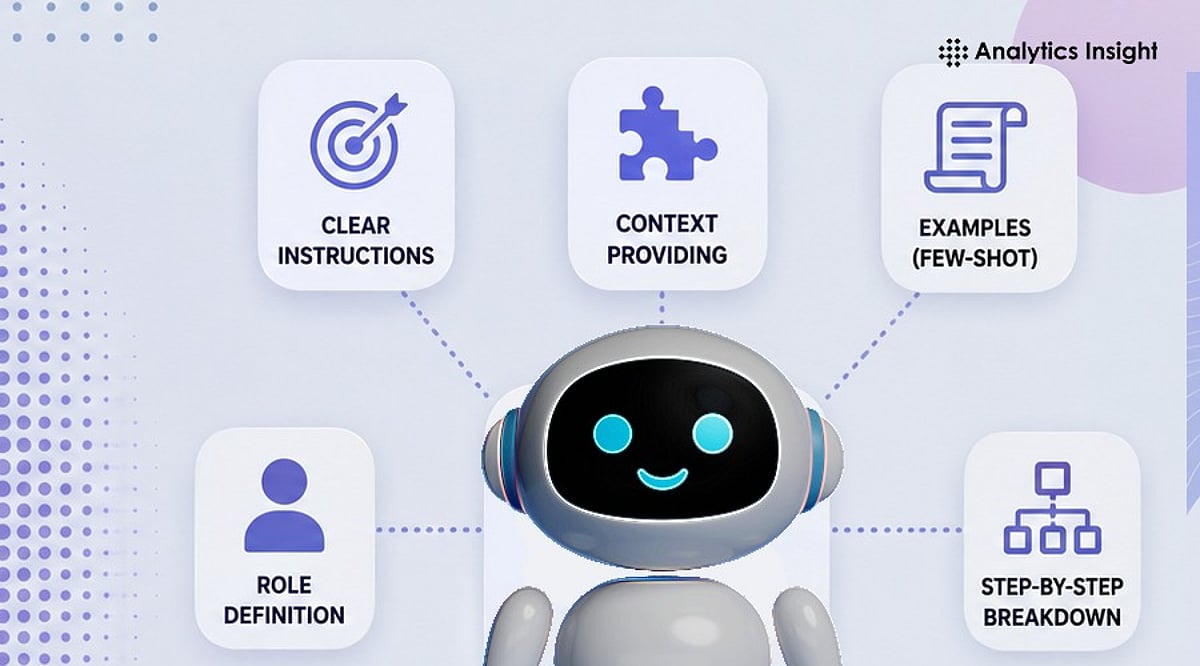
    Modern AI agents depend heavily on prompt quality. Clear instructions, proper context, logical structure, defined limits, and self-review methods help AI systems deliver stronger, faster, and more reliable results.

    Overview

    Clear and specific prompts help AI agents produce more accurate and reliable results. Step-by-step instructions improve reasoning quality and reduce mistakes in complex tasks. Modern prompt engineering has become a critical skill as autonomous AI systems become more powerful.

    AI Agents Have Changed How Prompts Work

    In the past, prompts were simple. Most people asked direct questions and received direct answers. Modern AI agents work differently. These systems can handle tasks that require planning, reasoning, and decision-making. Large technology companies have already started using advanced AI agents in their businesses. Recent reports from 2026 show that companies such as OpenAI, Google, and Anthropic now use AI agents for software development, customer service, legal document review, research work, and financial analysis. As AI agents become more powerful, prompt writing now looks less like asking a question and more like writing a set of instructions for a machine that can think through a process.

    Clear Role Creates Better Results

    One of the biggest mistakes in prompt writing is lack of clarity. AI performs better when it clearly understands what role it must take before starting the task. For example, a weak prompt may simply ask an AI system to analyze business data. This type of instruction often creates general answers with little value. A stronger prompt gives the AI a clear identity. For example, the prompt can state that the AI should act as a senior financial expert who studies company revenue and finds business risks. Recent research shows that role-based prompts improve accuracy, especially for technical and professional work.

    Specific Goals Improve Accuracy

    AI systems often fail when instructions remain vague. A broad prompt usually creates broad answers. Better prompts clearly explain what final result is expected. For example, a cybersecurity task should not simply ask AI to study security problems. A stronger prompt clearly states that the system must find five security risks, rank them by danger level, and suggest solutions. When the goal becomes specific, AI has less confusion. This usually leads to stronger and more reliable output.

    Step-by-Step Instructions Help AI Think Better

    Complex tasks often need several stages before a good answer becomes possible. AI agents perform better when prompts divide work into smaller parts. Instead of asking for an instant answer, prompts should guide the system through a process. The system may first collect information, then study the facts, compare possible solutions, and finally create the best answer. This method has become extremely important in modern AI systems. Experts now call this method Chain of Thought reasoning. Many enterprise AI systems use this reasoning structure because it improves logical accuracy and reduces mistakes.

    Limits Help AI Stay Focused

    Powerful AI systems need clear boundaries. Without limits, AI may produce answers that go beyond the original task. A strong prompt clearly defines restrictions. For example, a business prompt may ask AI to create a marketing plan with a budget limit of $50,000 while avoiding television advertising. These limits help AI stay focused on the real task. Cybersecurity experts recently warned that weak prompt structure can create security risks. Prompt injection attacks have become one of the fastest-growing concerns for companies that depend on autonomous AI systems.

    Context Makes Answers More Relevant

    Background knowledge helps AI do its job better. The little things can sometimes have huge impacts. For example, a prompt asking AI to write marketing content for a product would do much better if it explained what the product is, who the customer is, what the price point is, and at whom the product is targeted. As an example, if I told the AI that I’m making a premium smartwatch for a well-to-do Health and Fitness professional in their 30s through 40s, then the AI can help me create even better work. Generally speaking, the more information you provide to the AI, the smarter and more helpful the AI’s output will be.

    Why Output Structure is Important

    Modern AI agents often connect with software tools, databases, websites, and business systems. This makes output format extremely important. A good prompt clearly tells AI how the final answer should look. Some tasks may require a report. Others may require tables, JSON format, summaries, technical documentation, or structured business analysis. When format rules remain clear, AI produces cleaner output that works better inside automated systems.

    Self-Review Makes AI More Powerful

    Loop engineering is one of the latest trends. This method allows AI systems to review their own work before producing a final answer. Instead of stopping after one response, the AI first creates a solution, checks for mistakes, improves weak sections, tests assumptions, and then produces a better version. Technology experts now believe loop engineering may soon become more important than traditional prompt engineering. This process creates far more reliable results, especially for difficult tasks.

    Why Prompt Engineering Matters

    Prompt writing is no longer a simple skill used for chatbots. It has become an important part of modern artificial intelligence systems. New research published in June 2026 introduced advanced prompt frameworks that divide prompts into categories such as goals, priorities, limits, execution plans, and expected results. These frameworks help AI systems understand tasks more clearly. As AI agents become a bigger part of business, education, healthcare, finance, and software development, prompt quality will decide how useful these systems become. Better prompts create smarter AI agents. In the future, the ability to write strong prompts may become one of the most valuable digital skills in the world.

    FAQs

    1. What is prompt engineering?

    Prompt engineering is the process of writing clear instructions that help AI systems understand tasks and produce better results.

    2. Why do AI agents need better prompts?

    AI agents depend on prompts to understand goals, make decisions, and complete tasks accurately.

    3. What makes a prompt effective?

    An effective prompt contains a clear role, specific goal, proper context, defined limits, and expected output format.

    4. What is Chain of Thought reasoning in AI?

    It is a method where AI solves a task through logical steps instead of producing an instant answer.

    5. Why is prompt engineering important in 2026?

    As businesses adopt autonomous AI agents for complex work, prompt quality directly affects speed, accuracy, and overall performance.