Tag: Python

  • Master Quantum Computing Without a CS Degree: A Step-by-Step Guide

    Master Quantum Computing Without a CS Degree: A Step-by-Step Guide

    Quantum computing is a rapidly evolving field that promises to revolutionize how we solve complex problems. You don’t need a computer science degree to dive in—here’s a practical roadmap to get started.

    Build Strong Fundamentals

    Understand basic concepts like qubits, superposition, entanglement, and quantum gates before exploring advanced algorithms or practical quantum programming applications.

    Learn Essential Mathematics

    Focus on linear algebra, probability, complex numbers, and basic calculus. These mathematical concepts form the theoretical foundation of quantum computing.

    Start with Python Programming

    Python is the lingua franca of quantum computing frameworks. Learn the basics to make experimentation, simulations, and algorithm implementation easier.

    Explore IBM Quantum Platform

    Use IBM Quantum Experience to run real quantum circuits online. This gives you practical exposure without needing expensive quantum hardware.

    Study Quantum Computing Frameworks

    Practice with Qiskit, Cirq, or PennyLane to understand circuit design, quantum algorithms, and machine learning applications through interactive coding exercises.

    Take Beginner-Friendly Online Courses

    Enroll in structured courses from universities and educational platforms covering quantum mechanics, programming, and practical quantum computing projects.

    Read Books and Research Papers

    Combine beginner books with simplified research papers to understand quantum principles, industry developments, and emerging technologies.

    Join Quantum Learning Communities

    Participate in forums, hackathons, webinars, and open-source communities where experts and learners exchange ideas and share resources.

    Build Practical Quantum Projects

    Create simple quantum algorithms, simulations, and portfolio projects that demonstrate your skills and deepen your understanding, making you more attractive to employers or academic institutions.

  • Essential Programming Languages for Modern Database Administrators

    Essential Programming Languages for Modern Database Administrators

    Every institution—banks, hospitals, online stores, schools, and government offices—depends on huge amounts of information. Database administrators (DBAs) ensure this data stays safe, organized, and available at all times. They also fix performance issues, manage security, recover lost data, and keep databases running without interruptions.

    The role of a DBA has evolved. Today, database professionals handle cloud platforms, automation, security checks, database migration, and system monitoring alongside traditional tasks. Programming skills have become as important as database knowledge. The 2025 Stack Overflow Developer Survey, with over 49,000 respondents from 177 countries, shows Python (66%) and SQL (59%) among the most widely used languages, and PostgreSQL remains the most admired database platform.

    SQL Builds Every Database Career

    SQL is the first language any DBA must learn. It is used for relational database systems—designing schemas, creating tables, updating records, and deleting unwanted data. SQL helps identify slow queries and speed up the database. Modern systems handle millions of transactions daily; efficient SQL queries reduce server load and improve response time. SQL is recognized as one of the most important skills for a successful DBA career.

    Python Saves Time Through Automation

    Python is popular because it automates repetitive tasks that could take days or weeks. DBAs use Python for backups, health checks, performance audits, data transfers, and log monitoring. Python’s libraries—SQLAlchemy, Psycopg, Pandas, PyMySQL, PyODBC, and cx_Oracle—make ETL (extract, transform, load) operations easy. It also supports AWS, Microsoft Azure, and Google Cloud, offering flexibility for modern database solutions. The 2025 Stack Overflow Survey shows a 7% rise in Python adoption.

    PowerShell Makes SQL Server Management Easier

    Many organizations use Microsoft SQL Server. PowerShell helps DBAs complete routine work faster—server setup, database deployment, backup schedules, security audits, system updates, and Availability Group management. Large organizations manage hundreds of SQL Server instances; PowerShell scripts control all servers instead of manual work. It also integrates with Microsoft Azure, simplifying cloud migrations and reducing errors.

    Bash Helps Linux Database Administrators

    A large number of enterprise databases run on Linux servers—PostgreSQL, MySQL, MariaDB, and Oracle. Bash remains important for DBAs. Bash scripts automate backups, schedule maintenance, monitor storage, review system logs, and restart services. Linux command-line tools like grep, awk, sed, and find help locate problems quickly. Strong Bash skills allow DBAs to manage Linux servers with speed and confidence, especially in cloud environments.

    Java Helps Solve Enterprise Database Problems

    Java does not replace SQL or Python but adds value for DBAs supporting enterprise applications. Many business apps use Java to connect with databases via JDBC. A DBA who understands Java can identify connection problems, review slow database calls, and work with developers to improve performance. This is especially useful in large organizations running ERP, banking platforms, or healthcare systems.

    R Supports Data Analysis and Reporting

    Some DBAs collaborate with business intelligence or analytics teams. R focuses on statistics and data analysis, helping DBAs monitor database growth, detect anomalies, anticipate storage needs, and generate detailed reports. Organizations that rely on data for strategy value these skills. Although not every DBA uses R, those supporting reporting and analytics gain an advantage.

    Go Powers Modern Cloud Infrastructure

    Go (Golang) has grown popular because many infrastructure tools are built with it. Cloud platforms, monitoring tools, and database utilities rely on Go for speed and efficiency. Go handles multiple tasks simultaneously without heavy system use, making it suitable for cloud databases, distributed systems, and Kubernetes. As organizations adopt cloud-native technologies, Go continues to gain importance.

    Why This Matters

    Programming proficiency equips DBAs to use modern database technology efficiently. It minimizes workload, improves security, eases administration, and bolsters cloud processing. As data becomes increasingly critical, DBAs with programming knowledge will remain competitive, solve complex problems, and advance their careers.

    Final Thoughts

    Database administration is no longer just SQL queries and backups. Modern DBAs handle cloud platforms, automation, security, performance optimization, and monitoring. Programming knowledge helps complete these tasks with greater speed and accuracy. SQL remains the foundation; Python simplifies automation; PowerShell and Bash improve server management; Java strengthens enterprise support; R and Go add value for analytics and cloud infrastructure. DBAs who build expertise in these languages stay ready for current demands and improve career opportunities.

    FAQs

    • Which language should a beginner DBA learn first? SQL—every relational database relies on it.
    • Why is Python popular among DBAs? It automates repetitive tasks like backups, monitoring, and data migration, saving time and reducing errors.
    • Do DBAs need to learn Java? Java helps troubleshoot enterprise apps and understand application-database communication, though it’s not mandatory for every role.
    • Is Bash useful for database administration? Yes, for Linux DBAs to automate maintenance, backups, and server management.
    • Which language is best for cloud database environments? Python stands out because it works well with AWS, Azure, and Google Cloud.
  • Essential Django Libraries for Python Developers in 2026

    Essential Django Libraries for Python Developers in 2026

    Why Django Libraries Matter

    Django’s greatest strength is its ecosystem. Rather than reinventing the wheel, developers can leverage mature, well-tested packages that have been deployed in thousands of production environments. This approach improves maintainability, reduces costs, and allows teams to focus on business logic instead of building common features from scratch.

    Top Django Libraries for Python Developers

    Build Modern APIs with Django REST Framework

    Django REST Framework (DRF) is the industry standard for creating RESTful web services. It provides serialization, authentication, permissions, pagination, and API versioning out of the box, making it ideal for websites, mobile apps, and SaaS applications.

    Improve Performance with Asynchronous Processing

    Many applications need to send emails, upload files, or generate reports without blocking the user. Celery, combined with Redis or RabbitMQ, handles background tasks efficiently and scales well in production environments.

    Simplify Authentication and User Management

    Building authentication from scratch can compromise security and take significant time. django-allauth offers a robust solution with email confirmation, password recovery, and social logins via Google, GitHub, and more.

    Speed Up Development and Debugging

    Tools like django-debug-toolbar provide detailed insights into SQL queries, request handling, caching, and template rendering. django-crispy-forms helps create responsive, professional forms with minimal code.

    Prepare Your Applications for Production

    Deploying safely is crucial. Whitenoise simplifies static file management, while django-environ keeps sensitive credentials out of the codebase. For API projects, drf-spectacular automatically generates OpenAPI documentation.

    Choosing the Right Django Libraries

    Not every project needs all libraries. A simple portfolio site might only need authentication and forms, while an enterprise SaaS solution benefits from asynchronous processing, API documentation, filtering, and real-time communication. Always evaluate documentation and compatibility with your Django version before adding a library.

    FAQs

    What are Django libraries?

    Django libraries are third-party packages that extend Django’s built-in functionality, adding features like authentication, REST APIs, background task processing, debugging tools, filtering, and real-time communication.

    Which Django library is best for building REST APIs?

    Django REST Framework (DRF) is the most widely used library for building RESTful APIs, offering serializers, authentication, permissions, pagination, and browsable APIs.

    Why should Python developers use third-party Django packages?

    Using trusted packages reduces development time, improves code reliability, follows industry best practices, and lets developers focus on application logic instead of reinventing common functionality.

    Which Django library is best for authentication?

    django-allauth is a popular choice, supporting user registration, email verification, password recovery, multi-factor authentication, and social logins.

    How do Django Channels improve web applications?

    Django Channels enables real-time communication via WebSockets, commonly used for chat apps, live notifications, multiplayer games, and collaborative tools.

  • Top 5 AI and Machine Learning Courses to Enroll in 2026

    Top 5 AI and Machine Learning Courses to Enroll in 2026

    Artificial intelligence and machine learning have become essential skills across industries, from software development and healthcare to finance, manufacturing, and cybersecurity. As organizations continue integrating AI into their products and operations, employers are actively looking for professionals who understand both the theory and practical application of these technologies.

    With hundreds of online courses available, finding one that matches your career goals can be challenging. The best programs combine strong conceptual foundations with hands-on projects, modern AI tools, and industry-recognized certifications. Here are five AI and machine learning courses worth considering in 2026.

    Why Choosing the Right AI Course Matters

    A certificate alone will not land you a job in AI. Today, recruiters seek people who can put machine learning techniques into practice, work within frameworks, and create AI solutions. A well-thought-out curriculum can give you the opportunity to improve your knowledge of math, Python, data analysis, model building, and deployment, and to develop your own projects.

    Prerequisites Before Starting an AI and Machine Learning Course

    You do not need a computer science major to start learning about AI and machine learning, but acquiring some skills beforehand will simplify the process. Basic knowledge of Python programming is very useful since it is widely used in AI platforms. A basic understanding of mathematics—including probability and statistics—will also help you understand how machine learning models operate.

    If you are a beginner, you also need some basic knowledge of handling data, such as working with simple datasets and spreadsheets. If you have no programming experience, it is better to spend a few weeks learning Python basics before starting a machine learning course.

    Top AI and Machine Learning Courses at a Glance

    Course Name Provider Best For Key Features
    Machine Learning Specialization Stanford & DeepLearning.AI Beginners Foundational concepts, hands-on projects
    IBM AI Engineering Professional Certificate IBM via Coursera Beginners to Intermediate Practical skills, industry recognition
    AI for Everyone DeepLearning.AI Non-technical professionals AI strategy, no coding required
    Deep Learning Specialization DeepLearning.AI Intermediate Neural networks, TensorFlow, PyTorch
    Professional Certificate in Machine Learning & AI MIT xPRO Advanced professionals Rigorous curriculum, real-world case studies

    What to Do After Completing Your First AI Course

    Completing the course is just the start. Employers are interested in practical knowledge, not just certifications. Begin by developing small-scale projects—movie recommendation systems, sentiment analysis tools, spam classifiers, chatbots, or image recognition apps—using publicly available datasets.

    Upload your code to GitHub and build a portfolio that showcases your projects. Participating in Kaggle competitions, contributing to open-source AI projects, and gaining experience with frameworks like TensorFlow, PyTorch, and Hugging Face will help your resume stand out.

    How to Choose the Right Course

    The most suitable route depends on your experience level and career goals. Beginners should take programs that cover Python, mathematics, and machine learning before moving to advanced topics like deep learning or large language models.

    Programmers aiming for AI engineering roles should opt for programs that include projects, deployment, cloud computing, and portfolio building. Business professionals may find more value in courses focused on AI strategy and implementation rather than coding.

    Why This Matters

    Artificial intelligence is reshaping almost every industry, but employers increasingly value practical skills over certificates alone. Choosing a course that combines strong fundamentals with hands-on projects gives learners a better opportunity to build confidence, create a portfolio, and stay competitive as AI continues to evolve.

    Final Thoughts

    The field of AI and machine learning continues to transform industries, leading to rising demand for skilled individuals. Taking a good course is a great starting point, but long-term success requires applying those skills. Whether you’re starting your AI journey or advancing your expertise, choosing a course that combines theory with practice will help you build confidence, strengthen your portfolio, and stay competitive.

    FAQs

    Which is the best AI and machine learning course for beginners?

    The IBM AI Engineering Professional Certificate and the Machine Learning Specialization by Stanford & DeepLearning.AI are among the best beginner-friendly programs because they combine foundational concepts with hands-on projects.

    Do I need programming experience before learning AI?

    Not necessarily. However, learning basic Python programming before starting an AI course makes it much easier to understand machine learning concepts and complete practical assignments.

    What prerequisites are required for machine learning courses?

    Most beginner courses recommend basic Python programming, elementary mathematics (including algebra, probability, and statistics), and familiarity with handling datasets using spreadsheets or Python libraries.

    Which AI course is best for working professionals?

    AI for Everyone by DeepLearning.AI is an excellent choice for managers, business leaders, product managers, and professionals who want to understand AI strategy without focusing heavily on coding.

    Which programming language should I learn for AI and machine learning?

    Python is the most widely used programming language for AI and machine learning because of its rich ecosystem of libraries, including TensorFlow, PyTorch, Scikit-learn, Pandas, and NumPy.

  • 10 Must-Read Data Structures and Algorithms Books for Programmers in 2026

    10 Must-Read Data Structures and Algorithms Books for Programmers in 2026

    Artificial intelligence can generate code in seconds, but it cannot replace a programmer’s deep understanding of data structures and algorithms (DSA). Whether you’re preparing for coding interviews, building scalable applications, or competing in programming contests, DSA remains one of the most valuable skills in software development. While AI can suggest solutions, knowing why an algorithm works and when to use it comes only through structured learning and practice. The right books make all the difference.

    Essential DSA Books to Build Strong Fundamentals

    These books establish the fundamentals of data structures and algorithms, helping readers build strong problem-solving skills before tackling advanced concepts.

    Introduction to Algorithms (CLRS) – The Definitive Reference

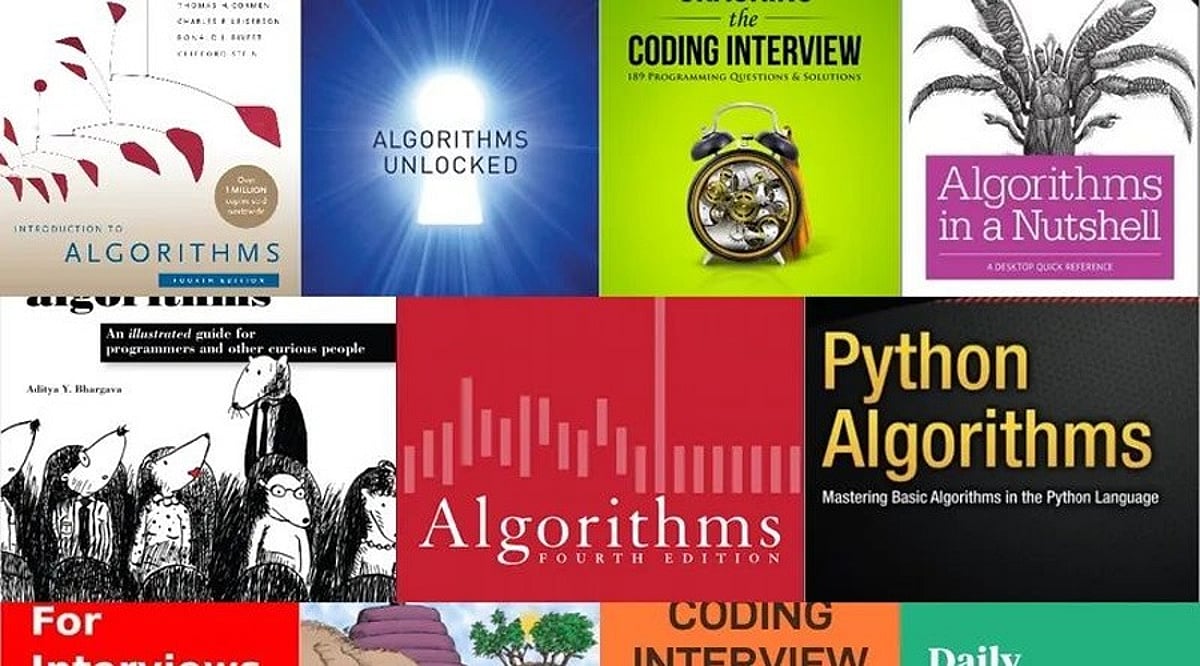
    CLRS, written by Thomas H. Cormen, Charles E. Leiserson, Ronald L. Rivest, and Clifford Stein, remains the standard guide to learning algorithms. It covers topics from graph and sorting algorithms to dynamic programming and computational complexity. Though challenging, no other book is as comprehensive.

    Grokking Algorithms – Where to Start Your Journey

    Aditya Bhargava’s book uses colorful illustrations and clear explanations to introduce binary search, recursion, graph traversal, and more. It’s one of the best books for beginners.

    Algorithms (4th Edition) – Learn Through Practice

    Robert Sedgewick and Kevin Wayne strike a balance between theory and practice, covering essential algorithm concepts and their implementation in real programs.

    Books Built for Coding Interviews

    Technical interviews focus on problem-solving rather than memorization. These titles help candidates build that mindset.

    Cracking the Coding Interview – The Interview Must-Have

    Gayle Laakmann McDowell’s book explains DSA concepts and includes nearly 200 interview questions, solutions, and tips for handling technical interviews at top tech companies.

    Data Structures and Algorithms Made Easy – Practice-Driven Learning

    Narasimha Karumanchi’s book uses a Q&A approach, reinforcing concepts through examples. It’s popular among engineering students preparing for placements and coding tests.

    Elements of Programming Interviews – Up the Difficulty Factor

    This book is designed for experienced programmers and includes various problems on arrays, linked lists, trees, graphs, and dynamic programming.

    Books That Sharpen Problem-Solving

    These books help programmers apply critical thinking to unfamiliar problems.

    The Algorithm Design Manual – Problem-Solving Application

    Steven S. Skiena merges theoretical concepts with practical problems solved using algorithms, providing insights across different industries. The algorithm catalog is especially helpful for finding the best way to solve different kinds of problems.

    Algorithm Design – Strong Academic Background

    Jon Kleinberg and Éva Tardos teach algorithm design using mathematical logic and well-chosen examples. It’s perfect for those who want to learn the principles of efficient computing.

    Books for Python Learners and Self-Study

    Not every programmer learns the same way. These books cater to different preferences and skill levels.

    Data Structures and Algorithms in Python – Learn DSA with Python

    Goodrich, Tamassia, and Goldwasser introduce basic DSA concepts via Python, focusing on ideas that apply across programming languages.

    A Common-Sense Guide to Data Structures and Algorithms – Simple and Accessible

    Jay Wengrow introduces difficult concepts in simple words with practical examples, avoiding complicated mathematical formulas. Its conversational style makes it one of the easiest DSA books.

    Choosing the Right DSA Book

    Depending on your goals, you can start with Grokking Algorithms and then move to Algorithms (4th Edition) or Introduction to Algorithms (CLRS). For placement preparation, choose Data Structures and Algorithms Made Easy and Cracking the Coding Interview. For experienced developers, The Algorithm Design Manual and Elements of Programming Interviews are excellent choices. Even in the era of AI, learning DSA is necessary, and practicing with these books is one of the best ways to improve your skills.

  • 10 Essential Data Science Tools for Modern Analytics in 2026

    10 Essential Data Science Tools for Modern Analytics in 2026

    Modern analytics depends on an integrated ecosystem of programming languages, big data engines, machine learning platforms, and business intelligence tools. The top 10 data science tools highlighted here enable efficient data processing, AI model development, visualization, and scalable analytics workflows, helping organizations turn complex data into actionable business insights.

    How the Pieces Fit Together

    A typical analytics setup layers four pieces. Python or R handles exploration and modeling. Apache Spark processes data at scale. A platform such as Databricks or SAS Viya ties data engineering and model building into one pipeline. Tableau or Power BI turns the output into dashboards that non-technical teams can actually read. Few organizations build all four from scratch. Most pick tools that already work well together and layer new ones in as needs grow.

    The Ten Tools, Ranked by Role

    • Python + Jupyter Notebooks – The default workspace for cleaning data, building models, and automating reports. Teams stay with it because they can move from exploration to production code without switching tools.
    • R + RStudio – Still strong in statistics-heavy fields like pharmaceuticals and finance. Its deep library of specialized statistical methods makes it the better pick for formal statistical work.
    • Apache Spark – Handles large-scale and streaming datasets that go beyond a single machine. Mature ecosystem and wide cloud support keep it central to distributed processing.
    • Databricks – Brings data engineering, shared notebooks, and model deployment in one platform. Cuts down manual work of managing pipelines and scales easily.
    • SAS Viya – Fits regulated industries needing audit-ready analytics. Its edge comes from built-in governance, security, and compliance.
    • KNIME Analytics Platform – Visual, node-based interface to build analytics pipelines with minimal coding. Great for teams wanting open-source with reusable workflows.
    • RapidMiner – Offers guided, reusable workflows from data prep to deployment. Works well for organizations valuing commercial support and polished interface.
    • Tableau – Interactive dashboards built for exploration and storytelling. Stands out when visual customization and analytical flexibility matter.
    • Power BI – Ties closely into Microsoft ecosystem. Low cost and familiarity keep it widely used for business reporting.
    • ThoughtSpot + Qlik Sense – Let business users ask questions in plain language and get governed answers. Close the gap between technical teams and decision-makers.

    Choosing the Right Stack

    Start with the team’s skill mix. Code-heavy teams lean on Python, R, and Spark. Mixed teams benefit from more visual tools. Match the stack to data scale: smaller datasets work fine in notebooks with a BI tool, while large or streaming data calls for a Spark-based platform. Watch for tool sprawl—adding overlapping tools without a clear reason slows a team down.

    What This Means Going Forward

    The tools on this list will keep evolving, but the underlying logic will not. Teams that match their stack to actual data volume, skill set, and reporting needs will keep outpacing those chasing every new platform release.

    Final Thoughts

    The best analytics stacks come from intent, not size. Organizations get the most out of their tools when each one has a clear job, fits into the wider workflow without friction, and can grow alongside rising data and AI demands.

  • How to Launch a Data Science Career Without a College Degree

    How to Launch a Data Science Career Without a College Degree

    Data science no longer requires a traditional degree to launch a successful career. Employers now prioritize practical skills, GitHub portfolios, certifications, and real-world projects. With 34% job growth projected through 2034 and salaries of Rs. 6–14 LPA in India, opportunities remain strong for those who take the right approach.

    Why Employers Are Reconsidering Requirements

    Hiring managers today look past pedigree and straight toward proof of ability. One survey found that 67% of practicing data scientists did not major in computer science. Portfolios and GitHub repositories now get reviewed before transcripts ever come up. The US Bureau of Labor Statistics projects data science jobs will grow 34% between 2024 and 2034, leaving companies short on qualified applicants and loosening entry requirements.

    The Financial Case Remains Strong

    Pay in this field stays competitive no matter which route a candidate took to enter it. Fresher salaries in India typically range between six and fourteen lakh rupees annually, based on Glassdoor figures. Professionals a few years in, with sharper technical depth, often clear that range comfortably.

    How To Become A Data Scientist Without A Degree

    Getting there without a formal degree takes more patience than most guides admit upfront. Below is a sequence that has worked for many self-taught professionals already in the field.

    • Start with mathematics, statistics, and probability, using structured platforms rather than scattered videos.
    • Pick up Python and SQL first, then move into specialized machine learning libraries.
    • Earn one recognized certification so employers have something concrete to check against.
    • Build projects on real datasets and post the finished work publicly on GitHub.
    • Target entry-level analyst roles before aiming straight for a data scientist title.
    • Update your resume after every interview, based on what the feedback actually revealed.

    Certifications Still Carry Weight

    Free tutorials teach the material well, but a certificate gives a hiring manager something to verify quickly. One solid credential from a known platform can separate an application from a stack of similar ones. Analyst roles often work as a practical bridge toward a full data scientist position later.

    Portfolios Do The Talking

    A portfolio with three or four solved problems says more than a transcript ever could. Projects tied to real business questions show judgment that coursework alone rarely reveals. Interviewers tend to favor candidates who can walk through why they made each modeling choice.

    What Skills Do I Need?

    A handful of core skills stay fixed no matter which path a candidate takes to learn them. Programming proficiency in Python and R, alongside data visualization and advanced statistics, forms the essential skill set.

    Technical And Analytical Skills

    Coding alone will not carry a candidate through interviews or the job itself later. Cleaning messy data, choosing the right algorithm, and evaluating model output all matter just as much. These are the tasks that fill most working weeks in an entry-level role.

    Communication And Business Understanding

    A finding buried in code means little until someone can explain it to a business team. Employers value analysts who tie a model’s output back to a decision worth making. Domain knowledge in one industry, paired with clear explanation, often separates strong hires from average ones.

    Final Words

    A missing degree no longer closes the door on a data science career the way it once did. Structured learning, a verified certificate, and a portfolio of real projects can carry a candidate through hiring rounds. What employers reward now is proof of output, not a line on a certificate. Anyone willing to put in steady hours over months, not weeks, can realistically get there. Data science still rewards curiosity and applied thinking well above where a person studied. Those building portfolios today are setting themselves up for solid, well-paid careers ahead.

    Frequently Asked Questions

    Can someone realistically become a data scientist without any formal degree? Yes, many professionals have built successful careers through self-study, certifications, and strong portfolios, since employers increasingly prioritize demonstrated skills over academic credentials during hiring decisions.

    How long does this alternative path typically take to complete? The timeline varies based on prior background and daily commitment, though most learners need between six months and a few years to reach genuine job readiness.

    Are certifications actually necessary for someone without a degree? Certifications are not mandatory, but they give employers a verifiable marker of competency, which carries more weight than informal, purely self-taught learning claims alone.

    What matters more to recruiters, degrees or project portfolios? Recruiters increasingly favor well-documented portfolios showing applied problem-solving, since practical project work demonstrates readiness better than transcripts or classroom coursework alone ever could.

  • A Beginner’s Roadmap to Data Science Tools: Python, SQL, and Visualization Libraries

    A Beginner’s Roadmap to Data Science Tools: Python, SQL, and Visualization Libraries

    Key Takeaways

    • Python, SQL, and Pandas form the foundation of modern data science.
    • Hands-on practice with Kaggle and Google Colab strengthens practical skills.
    • Visualization and version control tools improve project quality and career readiness.

    Data science can seem overwhelming at first, but selecting the appropriate tools simplifies the learning curve. Each tool serves a distinct purpose: some gather data, some organize it, while others create charts or build machine learning models. Rather than trying to learn dozens of programs at once, beginners see better results by focusing on a core set of essential tools. Recent learning guides and industry experts recommend this approach, as it builds strong practical skills before tackling advanced topics. A solid grasp of these tools also makes project work easier and prepares learners for internships and entry-level jobs.

    Python: The First Language to Learn

    Python has become the most popular programming language in data science because of its readability and simplicity. Even people with no coding background can learn its basics without much difficulty. Python helps clean raw data, analyze information, automate tasks, and create machine learning models. It also supports artificial intelligence projects, making it useful beyond beginner-level work. Another reason for its popularity is its vast collection of libraries. Instead of writing long programs from scratch, learners can use ready-made libraries that save time and reduce effort.

    Pandas and NumPy Make Data Easy to Handle

    Pandas and NumPy are two essential Python libraries that beginners should know. Pandas helps organize and clean datasets using simple commands. It can combine files, handle missing (NaN) values, and prepare data for analysis. These tasks are part of almost every data science project, so becoming familiar with Pandas is important early on. NumPy works with numbers and mathematical calculations. It is much faster than standard Python code when working with arrays and matrices. Moreover, many machine learning libraries are built on NumPy, so understanding it is necessary.

    Jupyter Notebook Creates a Better Learning Experience

    Jupyter Notebook offers an interactive workspace where code, text, and charts appear on the same page. This format helps beginners understand every step of a project, as explanations stay next to the code. Many teachers, researchers, and data scientists use Jupyter Notebook for tutorials, reports, and experiments. When mistakes appear, small sections of code can run separately, making debugging much easier than traditional programming methods.

    SQL Remains an Essential Skill

    Most companies store business information inside databases. SQL helps access that information quickly and efficiently. Beginners should learn basic commands such as SELECT, JOIN, GROUP BY, filtering, and aggregate functions, as these appear regularly in real business tasks. Industry reports continue to list SQL among the most requested skills for entry-level data science and data analytics jobs. Strong SQL knowledge also helps professionals work with large datasets without depending on spreadsheets.

    Excel Still Has an Important Place

    Even with advanced tools in the spotlight, Microsoft Excel still plays an important role in data science. Many firms use Excel for report generation, quick calculations, and simple analyses. Excel features such as Pivot Tables, Charts, Lookup Functions, and Data Cleaning tools make it easy to explore data without writing complex programs. For anyone starting out, Excel is a solid first step toward data analysis.

    Data Visualization Brings Numbers to Life

    Charts often explain data better than large tables. Matplotlib and Seaborn help create clear visualizations from Python data. These libraries produce bar charts, line charts, scatter plots, histograms, and heatmaps with just a few lines of code. Good visualizations help identify trends, compare values, and discover hidden patterns. Before building any machine learning model, data scientists usually study charts to understand the information more clearly.

    Scikit-learn Opens the Door to Machine Learning

    Once learners understand the basics of data analysis, Scikit-learn provides a reliable and simple introduction to machine learning. It offers popular algorithms such as Linear Regression, Logistic Regression, Decision Trees, Random Forests, and K-Means Clustering. Beginners can build predictive models without needing deep mathematical knowledge. Thanks to its simplicity and effective documentation, Scikit-learn is a great choice for newcomers.

    Git, GitHub, and Cloud Learning Platforms

    GitHub helps track project changes and maintain version history. It also enables collaboration when multiple developers work on the same project. Google Colab allows beginners to code without installing any software, and it provides free access to GPUs, making projects more accessible. Projects can be shared with classmates or mentors via a simple link. Kaggle is another excellent tool, offering thousands of datasets, coding notebooks, and tutorials for hands-on practice.

    Power BI and Tableau for Business Reporting

    Many organizations expect data specialists to present findings clearly and compellingly. Power BI and Tableau allow users to create responsive dashboards that illustrate business results, sales patterns, customer habits, and performance metrics. Beginners do not need to learn both platforms; mastering one visualization tool is enough for most entry-level positions. Using such dashboards improves communication, making key findings obvious to decision-makers regardless of their technical background.

    Why This Matters

    Learning the right data science tools from the beginning saves time and builds practical skills that employers value. Knowledge of Python, SQL, Jupyter Notebook, and Power BI helps solve real business problems, complete projects with confidence, and create a strong foundation for advanced analytics, machine learning, and future career growth.

    A Smart Learning Path

    A practical learning order makes the journey smoother. Start with Excel to build basic data understanding, then move to Python fundamentals, NumPy, Pandas, and SQL. After that, visualization libraries like Matplotlib and Seaborn help present insights clearly. Jupyter Notebook supports project work, while Scikit-learn introduces machine learning. Git and GitHub help organize projects, and Power BI or Tableau improve reporting skills. Google Colab and Kaggle complete the toolkit with cloud-based practice and real datasets. Recent learning roadmaps also encourage project-based learning instead of endless theory, as practical experience creates stronger skills and better job opportunities.

    Frequently Asked Questions

    1. Which programming language should beginners learn first for data science? Python is the best starting language because its simple, readable syntax makes it easy to learn while offering powerful data science libraries.
    2. Is SQL necessary for data science? Yes. SQL is essential for querying, retrieving, and managing large datasets stored inside relational databases.
    3. Should Excel be learned before Python? Learning basic Excel first helps build foundational data analysis skills, such as filtering and pivot tables, before transitioning to programming with Python.
    4. Is Google Colab better than installing Python locally? Google Colab is ideal for beginners as it runs entirely in your web browser with zero local installation or complex environment setup required.
    5. Why is Kaggle useful for beginners? Kaggle provides free access to real-world datasets, community code notebooks, and tutorials that help beginners build practical experience and strong portfolios.
  • Why Major Companies Choose Python for Their Tech Stack

    Why Major Companies Choose Python for Their Tech Stack

    Python has become a core technology for many global companies. Its simple design, powerful frameworks, and rich ecosystem help businesses build scalable applications, AI systems, automation tools, and reliable backend services.

    Key Takeaways:

    • Python supports products that serve millions and even billions of users.
    • Companies use Python for AI, automation, backend development, and data engineering.
    • Frameworks like Django and FastAPI help developers build reliable applications faster.

    Python has become one of the most popular programming languages in the software industry. It has clean syntax, easy readability, and a huge collection of libraries that help developers build software faster. These qualities have made Python a trusted option for startups as well as global technology companies. Today, many famous businesses use Python as an important part of their technology stack, even though most large organizations combine several programming languages for different tasks.

    Google Uses Python Across Many Business Areas

    Google has relied on Python for many years. The company uses it for internal tools, automation, artificial intelligence, backend services, and cloud infrastructure. Python allows engineers to create software quickly while keeping projects easy to maintain. The language also works well with Google’s machine learning technologies, including TensorFlow, which has become one of the world’s most popular AI frameworks. Although Google also uses languages such as C++, Java, and Go, Python remains an important part of many engineering teams as it supports rapid development and reliable automation.

    Instagram Built a Massive Platform With Django

    Instagram stands as one of the biggest success stories for Python. The social media platform built its backend on Django, a web framework written in Python. Even after the platform reached billions of users, Django continued to support high traffic with excellent performance. Python gave Instagram developers a fast way to release new features without slowing product development. Strong database support through PostgreSQL also helped the platform manage huge amounts of user data. Instagram continues to prove that Python can support one of the world’s largest social networking services.

    Netflix Depends on Python for Automation and Machine Learning

    Netflix uses Python in several important business areas. The company relies on it for machine learning, recommendation systems, automation, backend tools, and cloud operations. Recommendation algorithms help viewers discover movies and television shows that match personal interests, and Python plays an important role in this process. Frameworks such as Flask and FastAPI support internal services, while Jupyter notebooks assist data scientists during research and model development. Python also works with PyTorch, one of the leading machine learning frameworks used by Netflix.

    Spotify, Uber, and Dropbox Continue to Trust Python

    Using Python, Spotify provides backend services, recommendation algorithms, and reporting as well as workflow management. In addition to Python, the company uses Luigi and Apache Airflow for data processing and workflow scheduling. Python allows Spotify to manage a huge amount of listener information while relying on the system for personalized music recommendations. Uber has deployed Python in its technical framework as well for the backend microservices, machine learning, data engineering, and automated processes. The application of Python frameworks such as Tornado and Flask makes it possible to operate numerous backend services. Dropbox started being based on Python at its inception when it developed its desktop application and backend system. The company later designed tools such as PyAnnotate as well as contributed to the development of MyPy, which improves static typing of Python-based software. Despite its significant size, Dropbox keeps using Python today.

    Reddit, Pinterest, Quora, and Lyft Show Python Can Scale

    Reddit became one of the earliest examples of a large website built with Python. The platform originally moved its backend to Python and still depends on the language for many services today. This long history proves that Python can support millions of active users and large online communities. Pinterest also relies on Python for recommendation systems, backend APIs, and machine learning. The company uses Django and Flask to support different services across its platform. Python helps Pinterest process huge collections of images and user activity. Quora selected Python for backend services, ranking systems, and APIs. Django and Tornado allow the platform to deliver fast responses while handling large volumes of questions and answers. Lyft uses Python for backend development, data pipelines, and machine learning. The language supports many internal systems that improve ride matching, operational efficiency, and data analysis.

    Amazon and Meta Also Depend on Python

    Amazon uses Python for automation, cloud services, machine learning, and internal development tools. Amazon Web Services offers Boto3, a Python software development kit that allows developers to work with cloud resources through code. Python also supports services connected with Amazon SageMaker, which helps businesses build and deploy machine learning models. Meta also uses Python across artificial intelligence research, automation, and software development. PyTorch, one of the world’s most popular machine learning frameworks, came from Meta and remains a major part of AI development across many industries.

    Python Fits Modern Technology Needs

    A Python technology stack refers to a combination of technologies and tools that are particularly effective in running web applications. The commonly used technologies in the Python technology stack include Django, FastAPI, or Flask, which manage backend development. In addition, the technology stack is supplemented with PostgreSQL or MySQL for data management, and Redis for better performance through caching. RabbitMQ and Kafka take care of processing messages between the different services of a web application. Elasticsearch enhances the search capabilities of the application, while Celery serves for background task management. The deployment of applications is simplified by Docker and Kubernetes, while the processes of software delivery and continuous integration are ensured by GitHub Actions and Jenkins. In addition, the technology stack encompasses Airflow, Pandas, TensorFlow, and PyTorch.

    Python Continues to Lead the Industry

    When it comes to artificial intelligence, machine learning, and similar tasks, Python is one of the leading programming languages. Corporations often use Python in combination with such languages as Go, Java, Rust, and C++ to accomplish their tasks more effectively and gain maximum performance. Even with those languages in use, Python stays in the circle of attention given the increased productivity of developers, faster development time, and having one of the most extensive software environments available today. The success of such companies as Google, Instagram, Netflix, Spotify, Uber, Dropbox, Reddit, Pinterest, Quora, Lyft, Amazon, and Meta demonstrates how useful the technology might be for products designed for millions and even billions of individuals all over the globe. It is thanks to flexibility, mature frameworks, and powerful libraries that Python is one of the best programming languages for software development today.


  • Top Quantum Programming Languages and Frameworks Developers Should Learn in 2026

    Top Quantum Programming Languages and Frameworks Developers Should Learn in 2026

    Quantum computing is shifting from laboratory experiments into enterprise pipelines, and the software stack developers pick now will shape their careers for years. The quantum programming language market expanded from $0.43 billion in 2025 to $0.61 billion in 2026, growing at a 39.8% annual rate. Python skills appear in about 70% of quantum job postings, making it the most practical entry point for new developers. Analysts expect the broader market to reach $20.2 billion by 2030, even as a shortage of 5,000-plus quantum-ready developers persists worldwide.

    Quantum computing has moved well past its early reputation as a physics curiosity confined to university basements. Pharmaceutical researchers, financial analysts, and materials scientists now test quantum algorithms against problems classical machines handle poorly. Software tooling has become the practical entry point into this field, ahead of the hardware debates that once dominated industry discussion.

    Developers exploring quantum programming for the first time often expect an unfamiliar syntax to be waiting for them. Instead, they find frameworks built on languages they already know, particularly Python, layered over circuit compilers and cloud simulators. Picking the right framework early shortens the path toward writing working quantum code on genuine hardware, rather than staying stuck in tutorials.

    Best Quantum Programming Languages

    Quantum development today happens mostly through software development kits rather than dedicated languages built entirely from scratch. These kits let developers design circuits, test them through simulation, and send finished jobs to real quantum processors hosted in the cloud. Each kit carries its own strengths, shaped by the hardware provider behind it.

    Qiskit Leads Adoption

    Qiskit holds the largest user base among current quantum frameworks, and its lead has held steady for several years. IBM released it as an open-source Python library, giving developers tools to build circuits and simulate them through Qiskit Aer. Jobs then run directly on IBM’s connected quantum hardware through the cloud.

    Cirq and PennyLane Serve Different Needs

    Google built Cirq for developers who need precise, low-level control over quantum circuits, particularly on processors like Sycamore. Xanadu’s PennyLane instead targets hybrid workflows, blending quantum circuits with machine learning models used across applied research settings. Both frameworks stay close to Python conventions, easing the learning curve for newcomers.

    Q# and CUDA-Q Round Out the Stack

    Microsoft’s Q# connects directly with Azure Quantum and suits developers who prefer a guided, step-by-step introduction to qubits and gates. NVIDIA’s CUDA-Q links quantum circuits with GPU-accelerated classical systems, appealing to teams already working in high-performance computing environments. Both tools reflect a broader trend toward pairing quantum logic with existing infrastructure.

    Quantum Framework Adoption at a Glance

    Amazon Braket Adds Cross-Platform Reach

    Amazon Braket does not tie developers to a single hardware provider, unlike most other frameworks on this list. It routes circuits toward processors from IonQ, Rigetti, and other partners through one unified cloud interface. Teams comparing hardware performance often prefer this flexibility over committing early to one vendor.

    Which Quantum Computing Framework Should Developers Learn First?

    Developers already comfortable with Python gain the quickest start through Qiskit or Cirq. Neither requires learning a new language, so learners can focus directly on circuit logic instead of wrestling with unfamiliar syntax rules.

    Developers without a programming background often find Q# more approachable than the alternatives. Its guided structure introduces qubits, gates, and operations gradually, which suits students and professionals switching careers into quantum development.

    One principle holds true across every framework choice available today. Simulation should come first, with hardware access treated as a validation step rather than an early requirement for meaningful learning.

    • Python coders can begin with Qiskit or Cirq for immediate circuit-building
    • Complete beginners can start with Q# for a paced, structured introduction
    • Run every circuit through simulation first, hardware access second
    • Compare at least two vendor ecosystems before committing long-term

    What are the Best Quantum Programming Languages in 2026

    Python continues to anchor nearly every major quantum framework in some form, and that pattern shows no sign of shifting soon. Roughly seventy percent of quantum job listings now ask for Python proficiency, confirming its role as the practical gateway into the discipline.

    The quantum software stack follows a consistent layered pattern across nearly every provider in the market. A host language connects to an SDK, which then routes instructions through a circuit compiler before reaching a simulator or an actual processor.

    This layered structure explains why quantum programming feels different from classical software work in practice. Circuit outputs depend on repeated measurements rather than fixed execution paths, making probability a central design consideration for developers building anything beyond a tutorial exercise.

    Final Words

    Quantum programming favors developers who build layered fluency rather than betting everything on one dominant language. Python remains the practical foundation across the field, while Qiskit, Cirq, and Q# each offer distinct paths suited to different backgrounds and career goals. Framework choice matters less than consistent, hands-on practice with real circuits.

    The widening talent gap in this field signals genuine opportunity rather than distant speculation about a future market. Developers who start with quantum fundamentals now, moving steadily from simulation toward real hardware, place themselves ahead in a discipline still actively shaping its own direction and standards.