Tag: Quantum Computing

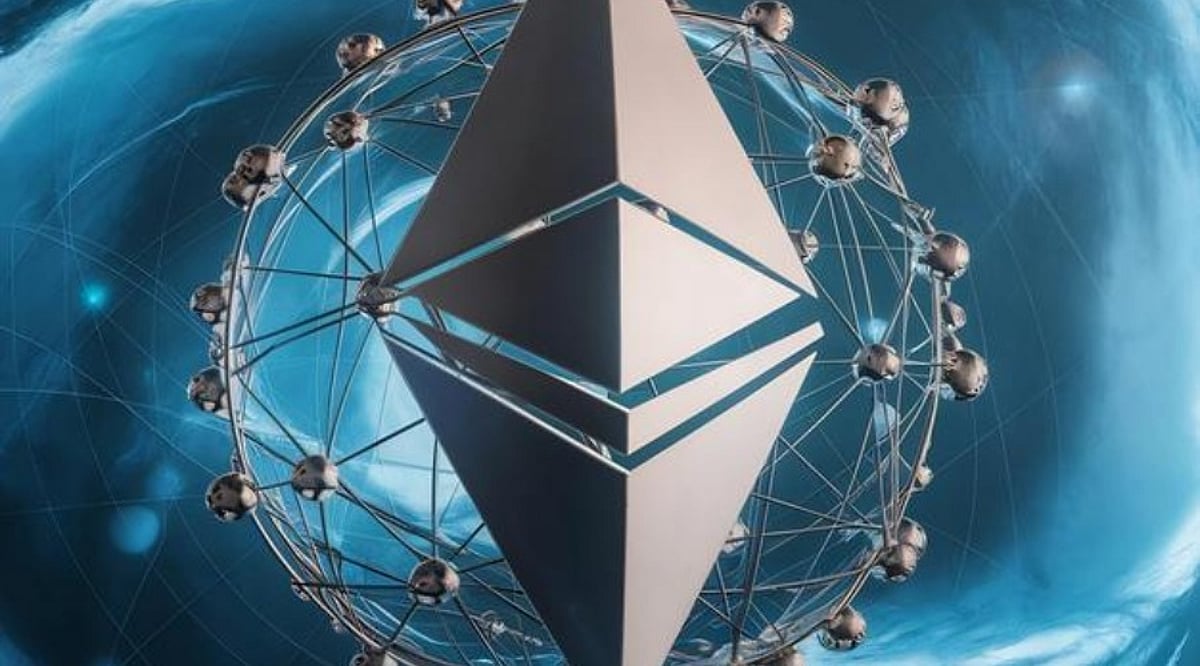
  • How Ethereum’s Quantum-Safe Roadmap Protects ETH Investors: What You Need to Know

    How Ethereum’s Quantum-Safe Roadmap Protects ETH Investors: What You Need to Know

    Quantum computing remains a long-term rather than immediate threat to Ethereum, but developers are already preparing for a world where today’s cryptography may no longer be sufficient. For ETH investors, the key question is whether Ethereum can migrate safely before quantum computers become powerful enough to break existing protections.

    Why Ethereum Needs Quantum Resistance

    Ethereum currently relies on several cryptographic systems that future quantum computers could threaten. These include ECDSA signatures used by accounts, BLS signatures used by validators, KZG commitments for data availability, and some zero-knowledge proof systems.

    No quantum computer today can break Ethereum’s cryptography, but research from Google Quantum AI (March 2026) indicates that breaking 256-bit elliptic-curve cryptography may require roughly 1,200 logical qubits — about 20 times fewer than earlier estimates. This has accelerated Ethereum’s planning.

    Ethereum’s Post-Quantum Roadmap

    The Ethereum Foundation has established a dedicated post-quantum team and a structured roadmap targeting approximately 2029 for core post-quantum infrastructure. The upgrade is phased:

    • Milestone I: A post-quantum key registry for validators.
    • Milestone J: Post-quantum signature-verification precompiles, designed as a minimal viable post-quantum Layer 1 safeguard that could keep Ethereum operating through a potential “Q-day” — when cryptographically relevant quantum computers emerge.
    • Later milestones: Post-quantum attestations, real-time consensus proofs, signature aggregation, and quantum-safe blob commitments.

    Ethereum’s September 2026 protocol update explicitly identifies Milestone J as a temporary safeguard to bridge the gap until a full transition.

    Testing is Already Underway

    The roadmap isn’t just theoretical. More than 10 client teams are participating in weekly post-quantum interoperability devnets. Open-source projects including leanXMSS, leanVM, leanSig, and leanMultisig are under active development.

    Funding signals commitment: The Poseidon Prize offers $1 million for improvements to hash-based cryptographic primitives, and the Foundation continues to support post-quantum consensus and signature research.

    What This Means for ETH Investors

    Quantum readiness matters as Ethereum secures far more than ETH itself. Stablecoins, DeFi protocols, tokenized assets, and smart contracts all depend on the network’s cryptographic security.

    Migration will be complex. Post-quantum signatures tend to be larger and harder to aggregate efficiently than existing ones, potentially increasing bandwidth and computation. Ethereum must also offer a practical migration path for existing accounts. Its 2026 protocol priorities highlight native account abstraction as one route away from ECDSA-based authentication.

    Ethereum does not face an immediate quantum emergency. Its advantage is preparation time. The 2029 roadmap, active devnets, and dedicated research funding show that quantum resistance is moving from discussion to implementation. For ETH investors, progress on these milestones could become an increasingly important measure of Ethereum’s long-term security.


  • Ethereum’s 2029 Deadline: How the Network Plans to Defeat Quantum Computing Threats

    Ethereum’s 2029 Deadline: How the Network Plans to Defeat Quantum Computing Threats

    Ethereum developers have stopped treating quantum computing as a distant theoretical concern. The network now runs a dedicated post-quantum program with a target for core quantum-resistant infrastructure around 2029.

    No quantum computer today can break Ethereum’s cryptography. But replacing cryptographic systems across wallets, validators, and scaling infrastructure could take years, making early preparation essential before powerful quantum machines arrive.

    Four Major Quantum Risks for Ethereum

    Ethereum relies on several cryptographic systems that could become vulnerable to sufficiently powerful quantum computers:

    • ECDSA – protects ordinary user accounts
    • BLS signatures – secure validator consensus
    • KZG commitments – support data availability
    • Zero-knowledge systems – many rely on elliptic-curve assumptions

    Shor’s algorithm running on a powerful quantum computer could undermine these systems. Google Quantum AI research from March estimated that breaking 256-bit elliptic-curve cryptography might require roughly 1,200 logical qubits — substantially lower than earlier estimates. Current quantum machines remain far from that level.

    Ethereum’s Dedicated Post-Quantum Team

    The Ethereum Foundation formed its post-quantum security team in January 2026. By April, more than ten client teams were participating in weekly interoperability devnets. The Foundation also launched a USD 1 million Poseidon Prize to support research into hash-based cryptographic primitives.

    The proposed migration is gradual rather than one massive network upgrade. Validators could eventually register quantum-resistant keys alongside their current BLS credentials, with later upgrades adding native verification and transitioning consensus toward post-quantum signatures.

    Hash-Based Signatures Could Replace BLS

    Ethereum is developing leanXMSS, a hash-based signature scheme intended to replace quantum-vulnerable BLS validator signatures. The challenge is size: a leanXMSS signature can be roughly 3,000 bytes compared with 96 bytes for BLS. To solve this, Ethereum plans to use leanVM to aggregate larger signatures into compact proofs, potentially compressing data by about 250 times. KZG commitments could eventually be replaced by STARK- or lattice-based alternatives.

    Wallet Flexibility Through Account Abstraction

    User accounts pose another challenge. Ethereum is considering native account abstraction via EIP-8141, which would allow individual wallets to adopt different signature schemes instead of requiring every account to migrate simultaneously. The Ethereum Foundation’s September protocol priorities now rank the post-quantum transition as near-term engineering work, citing a December 2029 commitment for critical deliverables.

    Why 2029 Matters

    Ethereum does not need quantum resistance because ETH is unsafe today. It needs it because cryptographic migrations cannot be completed overnight. The 2029 target is a planning milestone rather than a guarantee. The real test will be whether Ethereum can migrate consensus, wallets, and data commitments without sacrificing performance or fragmenting users. Preparing years early gives the network substantially more room to solve that problem before quantum computing becomes an actual security threat.

    Frequently Asked Questions

    1. Can quantum computers break Ethereum today? No. Current quantum computers are not powerful enough, but sufficiently advanced machines could eventually threaten signatures and other cryptographic systems.
    2. What parts of Ethereum are vulnerable? ECDSA, BLS signatures, KZG commitments, and some elliptic-curve-based zero-knowledge systems.
    3. What is leanXMSS? A hash-based signature scheme being developed to replace BLS validator signatures. Its main challenge is larger signature sizes.
    4. How could Ethereum wallets become quantum-resistant? Through native account abstraction (EIP-8141), allowing wallets to adopt new signature schemes without simultaneous migration.
    5. Why is 2029 important? The Ethereum Foundation identified December 2029 as a key target for critical post-quantum work, providing a planning milestone for ecosystem migration.
  • 8 Sci-Fi Technologies That Are Now a Reality

    8 Sci-Fi Technologies That Are Now a Reality

    From Fiction to Function: Technologies That Are Reshaping Our World

    The line between science fiction and reality continues to blur as once-fantastical concepts become part of our everyday lives. From humanoid robots to quantum computers, these eight technologies are no longer just the stuff of movies—they are actively being developed and deployed today. Here’s a closer look at how these innovations are transforming the world around us.

    Humanoid Robots: From Screen to Workspace

    Humanoid robots have made the leap from movie sets to real-world environments, including laboratories, factories, and warehouses. With advances in artificial intelligence, computer vision, and robotics, these machines can now navigate complex spaces and perform tasks that were once thought to be exclusively human. Companies are developing robots that can carry objects, assist human workers, and learn repetitive activities. As these machines become more sophisticated, their eventual integration into homes could revolutionize how we approach daily chores and personal assistance.

    Brain-Computer Interfaces: Mind Meets Machine

    The idea of controlling technology with our thoughts is no longer just a futuristic fantasy. Brain-computer interfaces (BCIs) are making this possible by interpreting neural signals and translating them into digital commands. This technology holds immense potential for individuals with paralysis, enabling them to communicate and operate devices using only their minds. While consumer applications are still a ways off, the medical implications alone could redefine assistive technology and human-computer interaction.

    Self-Driving Cars: The Road to Autonomy

    Autonomous driving has evolved from a science-fiction trope to a technology being tested on real roads around the globe. Modern vehicles are equipped with advanced cameras, sensors, and artificial intelligence systems that assist drivers and perform certain driving functions. While fully autonomous vehicles still face technical, regulatory, and safety hurdles, the ongoing development suggests that transportation will gradually become less reliant on human control, promising a future with fewer accidents and more efficient travel.

    AI Personal Assistants: Your Digital Sidekick

    Fictional computers that can understand and respond to natural language are becoming increasingly realistic, thanks to generative artificial intelligence. Today’s AI assistants can answer questions, summarize information, create content, and perform a variety of digital tasks. As these systems become more capable and integrated with other applications, they are poised to evolve into personalized digital agents that manage schedules, conduct research, facilitate communication, and streamline everyday workflows.

    Quantum Computing: Unlocking Unprecedented Power

    Quantum computing is set to solve complex problems that are currently beyond the reach of conventional computers. By leveraging the principles of quantum mechanics, researchers are developing machines with potential applications in medicine, materials science, optimization, and cybersecurity. Although today’s quantum systems are still experimental and face significant technical challenges, ongoing advances in quantum hardware and error correction are bringing this futuristic technology closer to practical use.

    Artificial Organs: Bridging the Gap in Medicine

    Science fiction has long imagined a world where damaged body parts can be replaced with artificial or laboratory-grown alternatives. Modern medicine is already making this a reality with the development of artificial hearts, advanced prosthetics, tissue engineering, and lab-grown organs. Researchers are focused on making these technologies safer, more durable, and biologically compatible. While fully replacing complex human organs remains a challenge, breakthroughs in regenerative medicine could one day transform transplantation and revolutionize healthcare.

    Augmented Reality Glasses: The Digital Overlay

    Augmented reality (AR) glasses are bringing digital information into our physical surroundings, much like the futuristic interfaces depicted in sci-fi films. Modern AR devices can display navigation cues, digital objects, and contextual instructions while allowing users to interact with virtual content. With improvements in lightweight hardware, displays, sensors, and AI, AR glasses are becoming more practical for use in workplaces, education, entertainment, and everyday communication.

    Conclusion

    These eight technologies are no longer just figments of our imagination—they are real, tangible innovations that are already shaping our present and will continue to define our future. As they evolve and become more integrated into our lives, we can expect to see even more incredible advancements that were once thought impossible. The future is indeed here, and it’s more exciting than we ever imagined.

  • Quantum Computing Threat to Bitcoin: How Close Are Hackers to Breaking BTC?

    Quantum Computing Threat to Bitcoin: How Close Are Hackers to Breaking BTC?

    Bitcoin cannot currently be hacked by available quantum computers, but sufficiently advanced quantum machines could eventually threaten some of the cryptography protecting BTC ownership. The risk is serious enough that researchers are already testing quantum-resistant ways to protect Bitcoin before such computers become practical.

    What Quantum Computers Could Attack

    Bitcoin ownership depends on digital signatures. A wallet uses a private key to authorize spending, while cryptographic mathematics allows the network to verify the signature without revealing that private key.

    The potential problem is Shor’s algorithm. According to StarkWare, a sufficiently capable quantum computer running Shor’s algorithm could work backward from certain exposed public keys and calculate the corresponding private key. An attacker could then create a valid signature and spend the BTC.

    This does not mean Bitcoin’s blockchain itself suddenly disappears. The primary concern is unauthorized spending from vulnerable addresses.

    Which Bitcoin Is Most Exposed?

    Risk varies according to address usage. Bitcoin addresses where the public key has never been revealed have additional protection, as the blockchain initially exposes only a hash of that key. Once coins are spent, however, the public key may become visible.

    Older address structures and reused addresses can therefore present greater long-term concerns. A quantum attacker would still require hardware capable of completing the calculation before the legitimate owner safely moves the funds. Today’s quantum computers are nowhere near that capability.

    A Quantum-Safe Bitcoin Transaction Is Already Live

    Researchers have nevertheless begun preparing. On August 26, StarkWare researcher Avihu Levy demonstrated what the company describes as the first quantum-safe Bitcoin transaction on mainnet. It was confirmed in Bitcoin block 964,199 without changing Bitcoin’s consensus rules or introducing a soft fork.

    The Quantum-Safe Bitcoin method protected a 10,000-satoshi output using a construction designed to remain secure against a working quantum adversary. However, the demonstration was experimental. The transaction was non-standard, required direct submission to MARA Pool, and reportedly cost roughly USD 150-200 when computation and transaction expenses were considered.

    Does This Make Bitcoin Quantum-Proof?

    No. StarkWare itself argues Bitcoin will ultimately need protocol-level changes to provide comprehensive quantum resistance. Existing exposed public keys remain a separate challenge. Bitcoin developers would also need wallets, exchanges and users to migrate before a cryptographically relevant quantum computer becomes available.

    Final Thoughts

    Quantum computing is not an immediate Bitcoin security emergency, but waiting until an attack becomes practical would be dangerous. The recent mainnet experiment shows that researchers can already test defensive mechanisms on Bitcoin itself.

    For BTC holders, the key issue is therefore preparation: developing standards, upgrading wallet infrastructure and eventually migrating vulnerable funds before quantum hardware becomes powerful enough to threaten existing signature systems.

    FAQs

    1. Can quantum computers hack Bitcoin today? No. Current quantum computers are not powerful enough to break Bitcoin’s cryptography. The threat is considered a long-term risk rather than an immediate security emergency.
    2. How could quantum computers threaten Bitcoin? A sufficiently powerful quantum computer using Shor’s algorithm could potentially derive a private key from certain exposed public keys. That could allow an attacker to authorize unauthorized BTC transactions.
    3. Which Bitcoin addresses are most vulnerable to quantum attacks? Older or reused addresses with exposed public keys could face greater long-term risk. Addresses whose public keys have not yet been revealed have an additional layer of protection.
    4. What was StarkWare’s quantum-safe Bitcoin transaction? StarkWare researcher Avihu Levy demonstrated a quantum-resistant Bitcoin transaction on mainnet in block 964,199. The experiment protected a 10,000-satoshi output without requiring a Bitcoin soft fork.
    5. Does the quantum-safe transaction make Bitcoin quantum-proof? No. The demonstration was experimental and does not protect the entire Bitcoin network. Broader quantum resistance would likely require protocol upgrades, wallet changes and migration of vulnerable funds.
  • Top 5 Mathematics Career Paths in 2026: From Data Science to Cryptography

    Top 5 Mathematics Career Paths in 2026: From Data Science to Cryptography

    Choosing a Math Career: Start With the Problem, Not the Industry

    Every math graduate eventually faces the same crossroads: a path toward prediction and pattern-finding or a path toward logic, structure, and proof. Most career guides sort jobs by industry, which leads students to choose a sector before understanding the type of thinking the work requires. The five career clusters below fix that by starting with the problem you enjoy solving.

    1. Data Science and Machine Learning

    Modern AI systems depend on vectors, matrices, and probability distributions. A student fluent in linear algebra builds models faster than someone who only knows a programming language. Gradient descent is a calculus problem wearing code as a disguise; backpropagation is the chain rule applied millions of times per second. Data science, business analysis, and AI engineer roles are essentially extensions of applied math, with Python serving as the delivery layer. Entry-level salaries typically range from mid-single-digit to low-double-digit lakhs. The real difference between an average hire and a strong one is whether they can explain the math behind a model—not just run the library that built it.

    2. Actuarial Science and Quantitative Finance

    Actuarial work is built on a formal exam ladder rather than a degree alone. Insurers and pension funds rely on actuaries and economists to price uncertainty using mortality tables and probability models. Professional exams, not a transcript, determine how quickly you rise. Quant roles in trading firms follow a similarly credential-heavy path, rewarding a solid grounding in stochastic calculus over a finance MBA.

    3. Cybersecurity and Cryptography

    Every encrypted message a bank sends depends on a number-theory problem deliberately hard to reverse without a key. Cryptographers design those problems; security analysts and penetration testers defend the systems built on them. A math graduate enters this field with strong discrete structures and modular arithmetic skills—the math behind encryption protocols in banking, defense, and blockchain. Demand has outpaced supply for years, keeping entry-level roles open to graduates without a formal CS background as long as their math foundation is solid.

    4. Quantum Computing Research

    Quantum computing follows an unusually strict education path. Researchers design quantum algorithms, improve hardware, and tackle optimization problems beyond classical computers. Most research roles require a PhD, as the field involves open mathematical problems rather than settled engineering practice. A shorter route exists through quantum-adjacent software roles, but the core research track often stretches eight years or more past an undergraduate degree.

    5. Statistics and Academia

    Statisticians work far beyond the classroom. Pharmaceutical companies rely on biostatisticians to design drug trials and judge when a result is real rather than noise. Government agencies model census data and forecast public spending. Market and operations research teams test which changes actually move outcomes before committing a budget. Teaching offers long-term security that fast-moving tech roles rarely match, but it is one branch among several—not the default path.

    Comparing the Five Paths

    A math degree rarely opens any of these doors by itself. What moves a graduate from qualified to hired is pairing that degree with targeted skills: a programming language, an actuarial exam, or a research publication. Choose prediction, and you head toward data science, defense, or healthcare analytics. Choose structure and logic, and you move toward security, cryptography, or systems research. The same math underlies all of them—only the application changes.

    Final Thoughts

    The best career options for math students in 2026 start with naming the kind of problem you enjoy. As AI, finance, and healthcare rely more heavily on data every year, mathematical thinking remains one of the most transferable skills a graduate can carry between industries.

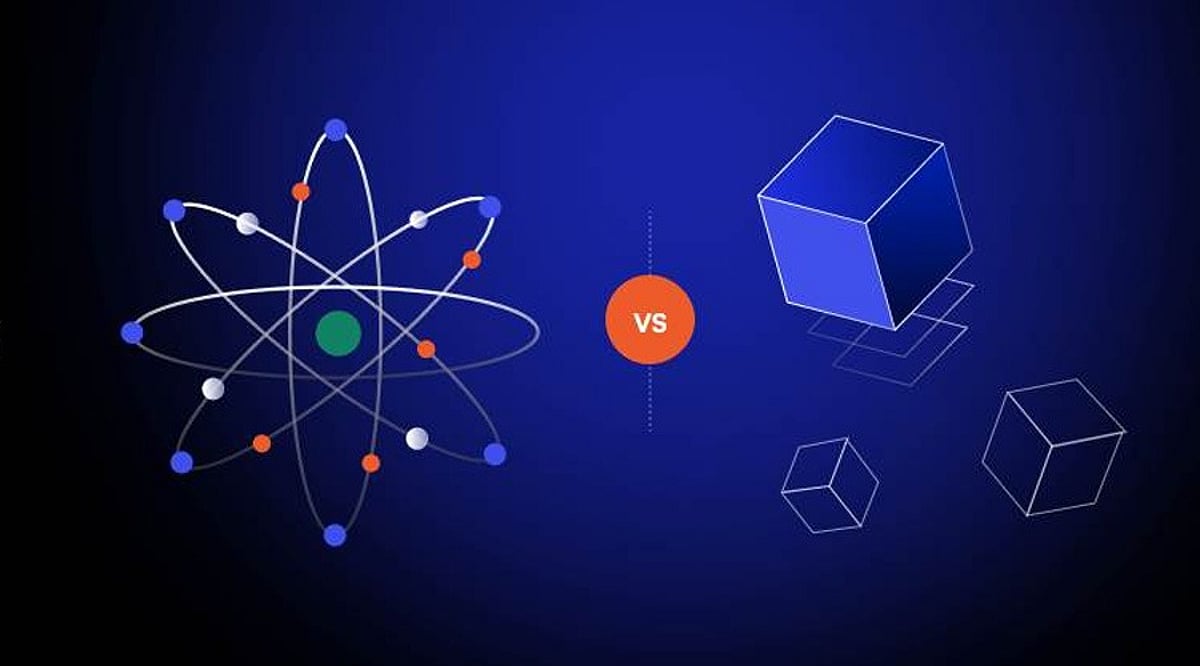
  • Quantum Computing vs. Blockchain: Separating Cryptography Myths from Real-World Risks

    Quantum Computing vs. Blockchain: Separating Cryptography Myths from Real-World Risks

    Quantum computing does not pose an immediate threat to blockchain, but it does challenge the cryptography behind digital signatures and wallets. The industry is already preparing with post-quantum cryptography and migration strategies. Understanding the real risks helps separate technical reality from common misconceptions.

    How Blockchain Security Works

    Blockchain security relies on cryptographic algorithms, consensus rules, a distributed network, and incentive structures. Quantum computing only affects cryptography, not consensus or network integrity. The real quantum risk is concentrated in the cryptographic layer that secures digital signatures and wallet control.

    Shor’s vs. Grover’s Algorithm

    Two quantum algorithms drive this conversation, but they are not equally significant. Shor’s algorithm can theoretically break elliptic curve cryptography, allowing attackers to derive private keys from exposed public keys. This would enable forged signatures and fraudulent transactions. In many networks, public keys remain hidden until a transaction is signed, limiting exposure for unused addresses. Grover’s algorithm accelerates brute-force searches against hash functions, but its impact is modest and can be offset by longer hash outputs. Treating these two threats as identical is a common mistake.

    Is Blockchain at Risk Today?

    No existing quantum computer is capable of running Shor’s algorithm at the scale needed to threaten current signatures. Researchers refer to a “cryptographically relevant quantum computer” (CRQC) as the threshold, and current hardware remains far short due to error rates and qubit instability. The migration conversation is urgent because building and testing replacement cryptography takes years. Waiting for a CRQC to appear would leave networks exposed during the transition.

    Where Quantum Risk Exists

    Quantum risk is not evenly distributed across a blockchain network. It is concentrated in identity and authorization—specifically the cryptographic algorithms used for digital signatures and wallet security. Consensus mechanisms and ledger validation remain unaffected.

    Post-Quantum Blockchain Upgrades

    The response is already underway. NIST finalized its first set of post-quantum cryptography (PQC) standards in 2024, giving developers real building blocks. Blockchain researchers are testing quantum-resistant signature schemes, and some projects have begun hybrid migrations that layer new cryptography alongside existing systems. This phased approach enables upgrades without breaking compatibility. Enterprise blockchain applications—such as supply chain tracking and identity systems—face the same cryptographic exposure as cryptocurrency wallets.

    What This Means for Users

    Investors should evaluate a project’s readiness for post-quantum migration alongside traditional metrics. Projects actively testing quantum-resistant signatures signal stronger planning. Builders should monitor signature scheme upgrades and wallet compatibility. Crypto asset holders do not need to act today; the transition will likely happen gradually through wallet updates. Exchanges and custodians will probably lead the shift, rolling out new signature standards before individual users notice changes.

    Final Thoughts

    The quantum threat to blockchain is real, specific, and manageable. It sits almost entirely in the cryptographic layer, driven by Shor’s algorithm. The industry has years of runway before a CRQC becomes a practical concern. Post-quantum cryptography is not a hypothetical defense—it is standardized, tested, and already being integrated into next-generation blockchain infrastructure.

    Frequently Asked Questions

    1. Will quantum computing break blockchain?
    Not immediately. It threatens certain cryptographic algorithms used for digital signatures. Most experts expect networks to transition to PQC before CRQCs become widely available.

    2. What is the biggest quantum threat to blockchain?
    The greatest risk is to public-key cryptography, especially elliptic curve cryptography (ECC), which secures wallets and verifies transactions. Consensus mechanisms are not directly broken.

    3. What is post-quantum cryptography?
    PQC refers to algorithms designed to resist attacks from both classical and quantum computers. It is the leading strategy for protecting blockchain and other digital systems against future quantum threats.

    4. Are today’s blockchains already preparing?
    Yes. Many projects, researchers, and standards organizations are exploring quantum-resistant signature schemes, hybrid approaches, and migration strategies.

    5. Should investors and developers worry now?
    No immediate panic is needed, but preparation is important. Investors should follow projects with clear upgrade plans; developers should design adaptable systems and monitor PQC advances.

  • Master Quantum Computing Without a CS Degree: A Step-by-Step Guide

    Master Quantum Computing Without a CS Degree: A Step-by-Step Guide

    Quantum computing is a rapidly evolving field that promises to revolutionize how we solve complex problems. You don’t need a computer science degree to dive in—here’s a practical roadmap to get started.

    Build Strong Fundamentals

    Understand basic concepts like qubits, superposition, entanglement, and quantum gates before exploring advanced algorithms or practical quantum programming applications.

    Learn Essential Mathematics

    Focus on linear algebra, probability, complex numbers, and basic calculus. These mathematical concepts form the theoretical foundation of quantum computing.

    Start with Python Programming

    Python is the lingua franca of quantum computing frameworks. Learn the basics to make experimentation, simulations, and algorithm implementation easier.

    Explore IBM Quantum Platform

    Use IBM Quantum Experience to run real quantum circuits online. This gives you practical exposure without needing expensive quantum hardware.

    Study Quantum Computing Frameworks

    Practice with Qiskit, Cirq, or PennyLane to understand circuit design, quantum algorithms, and machine learning applications through interactive coding exercises.

    Take Beginner-Friendly Online Courses

    Enroll in structured courses from universities and educational platforms covering quantum mechanics, programming, and practical quantum computing projects.

    Read Books and Research Papers

    Combine beginner books with simplified research papers to understand quantum principles, industry developments, and emerging technologies.

    Join Quantum Learning Communities

    Participate in forums, hackathons, webinars, and open-source communities where experts and learners exchange ideas and share resources.

    Build Practical Quantum Projects

    Create simple quantum algorithms, simulations, and portfolio projects that demonstrate your skills and deepen your understanding, making you more attractive to employers or academic institutions.

  • 8 Breakthroughs Quantum Computing Could Deliver by 2030

    8 Breakthroughs Quantum Computing Could Deliver by 2030

    Quantum computing is no longer a distant theoretical concept—it is rapidly advancing toward practical applications that could transform industries. By 2030, these powerful machines may solve some of the most complex problems facing humanity. Here are eight real-world challenges quantum computers are expected to tackle.

    Drug Discovery

    Quantum computers can simulate complex molecular interactions with unprecedented accuracy. This capability will help researchers identify promising drug candidates much faster than traditional computing methods, potentially accelerating the development of treatments for diseases like cancer and Alzheimer’s.

    Battery Development

    Advanced quantum simulations may revolutionize the design of batteries. By modeling chemical reactions at the quantum level, scientists could create longer-lasting, safer, and more efficient batteries for electric vehicles and renewable energy storage.

    Supply Chain Optimization

    Businesses face enormous complexity in logistics. Quantum algorithms can optimize shipping routes, warehouse operations, and inventory management, reducing costs and improving efficiency across global supply chains.

    Financial Modeling

    Banks and investment firms will use quantum computers to analyze risk scenarios and market trends far faster than classical systems. This will support more informed portfolio management and better forecasting of economic shifts.

    Climate Research

    Modeling Earth’s climate involves countless variables. Quantum computers can simulate atmospheric interactions with greater precision, improving weather forecasts and deepening our understanding of long-term climate change patterns.

    Cybersecurity Research

    Quantum systems offer both challenges and solutions for security. They can strengthen encryption research and help develop communication methods that are resistant to future cyber threats, safeguarding digital infrastructure.

    Material Science

    Designing new materials requires understanding molecular structures. Quantum simulations will enable researchers to create stronger, lighter, and more efficient materials for aerospace, electronics, and manufacturing.

    Traffic Management

    Urban congestion is a growing problem. Quantum-powered optimization algorithms could help cities design smarter traffic signals, improve transportation networks, and enhance public transit systems, reducing travel times and emissions.

  • How to Launch a Career in Quantum Computing as Job Opportunities Surge

    How to Launch a Career in Quantum Computing as Job Opportunities Surge

    Quantum computing is one of the fastest-growing fields in technology, with increasing investments across healthcare, finance, cybersecurity, manufacturing, and pharmaceuticals driving strong demand for skilled professionals. Whether you’re a software developer, hardware engineer, or mathematician, there are multiple pathways to enter this exciting domain.

    Quantum Software Development

    Learn quantum programming languages like Qiskit and Cirq to build algorithms for emerging quantum computers. These skills are essential for developing applications across multiple industries successfully.

    Quantum Hardware Engineering

    Design and improve quantum processors, cryogenic systems, and superconducting circuits that power next-generation quantum computing technologies and research innovations.

    Quantum Algorithms Research

    Develop algorithms that solve complex optimization, simulation, and cryptography problems faster than classical computers in specialized computing environments.

    Mathematics and Physics Foundation

    Build strong knowledge of linear algebra, probability, quantum mechanics, and computer science to understand core quantum computing principles effectively.

    Hands-On Quantum Platforms

    Practice on cloud-based quantum systems using platforms from leading technology companies to gain practical experience with real quantum hardware remotely.

    Quantum Computing Certifications

    Complete recognized quantum computing courses and certifications to validate technical expertise and improve employability in the growing quantum technology industry.

    Programming Skills Development

    Master Python alongside quantum frameworks to create, test, and optimize quantum applications while strengthening overall software engineering capabilities effectively.

    Industry Collaboration Opportunities

    Participate in hackathons, research projects, internships, and open-source communities to build practical experience and expand professional quantum computing networks.

    Future Career Prospects

    Growing investments across healthcare, finance, cybersecurity, manufacturing, and pharmaceuticals continue creating strong demand for skilled quantum computing professionals worldwide.

  • Top Free Quantum Computing Courses for Beginners to Explore in 2026

    Top Free Quantum Computing Courses for Beginners to Explore in 2026

    Quantum computing is rapidly emerging as a transformative field, and 2026 offers an abundance of free resources for beginners eager to dive in. From industry giants like IBM, Microsoft, and Google to academic platforms such as edX and Coursera, learners can access high-quality courses without spending a dime. Below is a curated list of the best free quantum computing courses and learning platforms available this year.

    IBM Quantum Learning

    IBM’s free learning platform remains a premier starting point for newcomers. It covers the fundamentals of quantum mechanics, quantum circuits, and Qiskit programming. Learners gain hands-on experience by accessing real quantum computers through the cloud. Interactive labs and guided learning paths help bridge theory and practical skills.

    Microsoft Azure Quantum Learning

    Microsoft offers free modules that introduce quantum computing concepts, quantum algorithms, and the Azure Quantum ecosystem. The content includes quantum-inspired computing and programming fundamentals via structured tutorials. The self-paced format is ideal for students, developers, and tech enthusiasts entering the field.

    Google Quantum AI Resources

    Google provides free educational materials explaining quantum computing principles, qubits, error correction, and quantum algorithms. Resources include research articles, tutorials, videos, and open-source tools, helping learners understand how quantum differs from classical computing while staying current with cutting-edge developments.

    Qiskit YouTube Channel and Documentation

    IBM’s Qiskit documentation and YouTube tutorials offer an accessible path into quantum programming. Learners explore quantum gates, circuits, simulations, and algorithms through detailed examples. The active developer community contributes additional tutorials, projects, and troubleshooting guides for self-paced study.

    edX Quantum Computing Courses

    edX hosts several free audit courses from leading universities covering quantum mechanics, computing principles, and introductory programming. While certificates require payment, all course materials are freely accessible. These structured academic programs combine lectures, quizzes, and assignments, making them ideal for university-level instruction.

    Coursera Free Audit Courses

    Coursera allows learners to audit many introductory quantum computing courses from top universities at no cost. Topics include foundational theories, quantum algorithms, and applications in computing and cryptography. Auditing provides access to video lectures and reading materials, offering an affordable way to start learning.

    Class Central Course Directory

    Class Central aggregates free quantum computing courses from universities, educational platforms, and tech companies worldwide. Rather than offering a single course, it helps learners compare ratings, duration, difficulty, and providers. This makes it easy for beginners to find the most suitable learning path in 2026.

    Whether you’re a student, developer, or hobbyist, these free resources provide a solid foundation in quantum computing without financial barriers. Start exploring today and build skills for the next computing revolution.