Tag: Quantum Computing

  • Essential Skills for a Career in Quantum Computing

    Essential Skills for a Career in Quantum Computing

    Quantum computing represents a transformative field in technology, and building a career in this area requires a deliberate approach to skill development. To help you get started, here are the key competencies that aspiring quantum computing professionals should focus on.

    Build a Strong Mathematics Foundation

    Linear algebra, probability, calculus, and complex numbers are essential for understanding quantum states, operations, and algorithmic principles. A solid grasp of these mathematical concepts forms the bedrock of quantum computing expertise.

    Learn Quantum Mechanics Fundamentals

    Basic knowledge of superposition, entanglement, measurement, and quantum states provides the conceptual grounding needed for a quantum computing career. These principles are the building blocks of quantum theory and its practical applications.

    Master Python Programming Skills

    Python remains the most widely used language for quantum software development, simulations, algorithm design, and working with quantum computing frameworks. Proficiency in Python is a non-negotiable skill for anyone entering the field.

    Explore Quantum Programming Frameworks

    Gain hands-on experience by learning platforms such as Qiskit, Cirq, or PennyLane. These tools allow you to build and test quantum circuits, giving you practical insight into quantum computing workflows.

    Understand Quantum Algorithms

    Study foundational algorithms like Grover’s algorithm for search and Shor’s algorithm for factoring. Understanding how quantum computing approaches complex computational problems is critical to advancing in the field.

    Develop Classical Computing Expertise

    Strong knowledge of algorithms, data structures, computer architecture, and computational complexity supports effective quantum computing development. Classical computing skills are indispensable, as they provide the context and tools for quantum innovation.

    Learn Quantum Hardware Principles

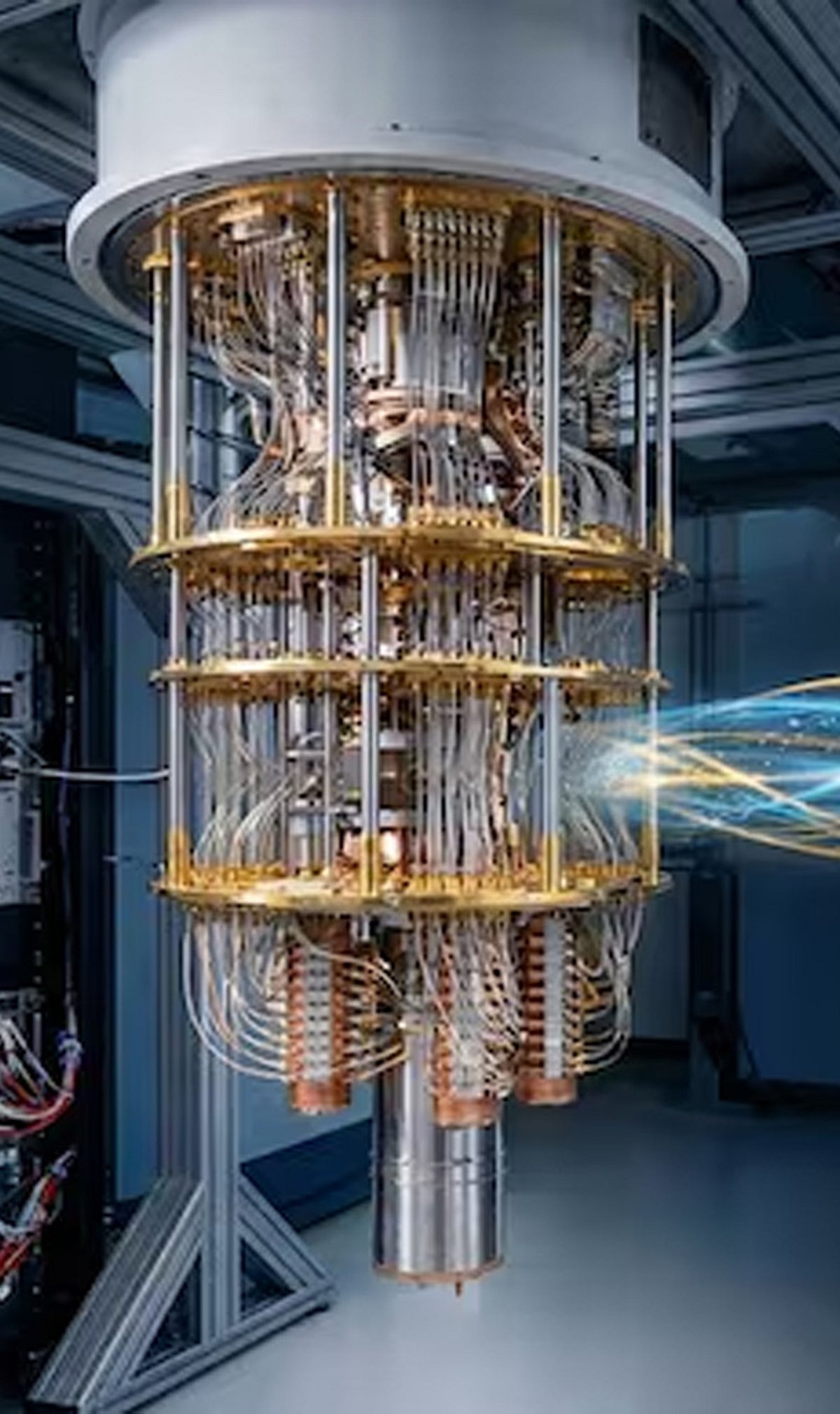
    Understanding superconducting qubits, trapped ions, photonic systems, and quantum processors helps connect software with physical technologies. This knowledge bridges the gap between theory and real-world implementation.

    Build Problem-Solving and Research Skills

    Quantum computing demands analytical thinking, experimentation, mathematical reasoning, and the ability to solve highly complex technical problems. Cultivating these skills will set you apart in the field.

    Gain Practical Project Experience

    Build quantum circuits, simulate algorithms, contribute to open-source projects, and complete hands-on work to strengthen your professional portfolio. Real-world experience is invaluable for demonstrating your capabilities to employers.

    By focusing on these essential skills, you can position yourself for a rewarding career in the rapidly evolving world of quantum computing.

  • 7 Leading Technology Stocks for July 2026: From Apple’s Ecosystem to IonQ’s Quantum Leap

    7 Leading Technology Stocks for July 2026: From Apple’s Ecosystem to IonQ’s Quantum Leap

    Overview

    Technology stocks continue to benefit from AI, cloud computing, data storage, and quantum computing advancements. The global tech industry is worth over $21 trillion, and investors are looking for companies with strong earnings and scalable business models. This July 2026, we highlight seven stocks with market caps above $1 billion and EPS growth over 20% in the past year.

    Top Technology Stocks for July 2026

    1. Apple Inc. (AAPL)

    Market Cap: $4.88 trillion | EPS Growth: 28.6%. Apple’s ecosystem of iPhone, Mac, iPad, Apple Watch, and services provides recurring revenue. AI integration into devices is expected to fuel the next growth phase.

    2. Sandisk Corporation (SNDK)

    Market Cap: $208.9 billion | EPS Growth: 370%. Sandisk leads in flash memory storage for consumer devices, AI servers, and enterprise systems, benefiting from increasing demand for high-speed storage.

    3. Dell Technologies Inc. (DELL)

    Market Cap: $253.66 billion | EPS Growth: 96.71%. Dell provides PCs, servers, storage, and IT infrastructure. Its data center solutions are critical for AI workloads.

    4. Seagate Technology Holdings plc (STX)

    Market Cap: $167.1 billion | EPS Growth: 51.4%. Seagate is a key supplier of hard disk drives for computers and data centers, important for global data creation.

    5. Western Digital Industries Ltd (WDI)

    Market Cap: $160.9 billion | EPS Growth: 267.47%. Western Digital specializes in HDDs and enterprise storage, driven by demand from data centers and cloud platforms.

    6. Everpure, Inc. (P)

    Market Cap: $22.73 billion | EPS Growth: 73.68%. Everpure offers enterprise data-storage and management solutions, focusing on all-flash storage for AI and analytics.

    7. IonQ, Inc. (IONQ)

    Market Cap: $13.1 billion | EPS Growth: 125.83%. IonQ works on trapped-ion quantum computers, providing cloud access. Though early-stage, it offers exposure to transformative quantum technology.

    Final View

    Apple provides ecosystem scale, Dell leads in AI infrastructure, and storage demand benefits Sandisk, Seagate, Western Digital, and Everpure. IonQ introduces high-growth quantum computing. These seven stocks cover the technology stack from devices to next-gen computing.

    Disclaimer: This article is for informational purposes only and does not constitute investment advice. Always conduct your own research before investing.

  • 7 Deep Tech Startups in India Poised for Global Impact in 2026

    7 Deep Tech Startups in India Poised for Global Impact in 2026

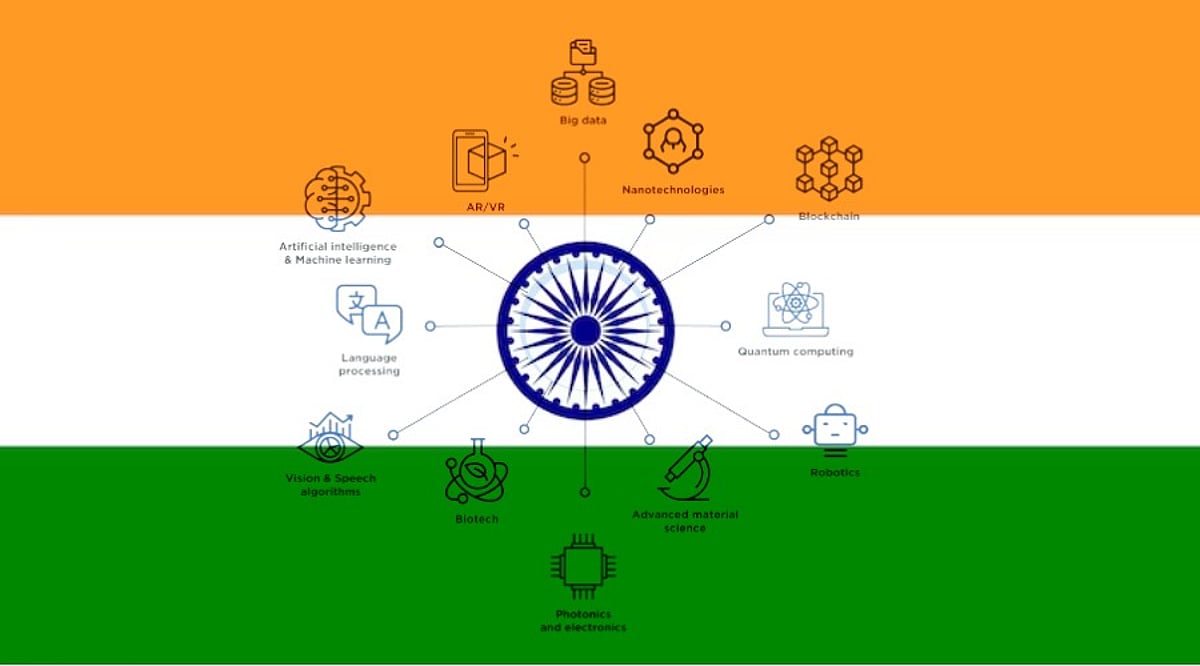
    India’s deep-tech ecosystem is entering a transformative phase as artificial intelligence, space technology, quantum computing, robotics, and advanced manufacturing move from research labs to commercial markets. Backed by rising venture capital investments, government initiatives such as the National Deep Tech Startup Policy discussions and IndiaAI Mission, and growing global demand for frontier technologies, 2026 is shaping up to be a defining year for Indian startups building intellectual property with worldwide impact.

    Leading Deep Tech Companies in India

    Deep-tech ventures are driving innovation through supportive government policies, research institutions, and increased funding. Unlike typical software startups, these companies develop intellectual property in fields like AI, space technology, quantum computing, robotics, and mobility. Here are seven startups to watch in 2026:

    1. Pixxel (Space Technology)

    Founded in 2019 by Awais Ahmed and Kshitij Khandelwal, Bengaluru-based Pixxel is building the world’s largest hyperspectral satellite constellation. Its Earth Observation Platform delivers high-quality imagery for agriculture, climate monitoring, mining, and defense. With global investments and commercial satellite launches, Pixxel has strengthened its international position and advanced analytical capabilities. As demand for geospatial intelligence soars, Pixxel stands out as one of India’s most promising space tech companies in 2026.

    2. Agnikul Cosmos (Space Launch)

    Set up in 2017 by Srinath Ravichandran and Moin SPM, Chennai-based Agnikul Cosmos offers custom-built launch vehicles for small satellites. The company gained worldwide attention by demonstrating a rocket launch using a 3D-printed engine made from a single piece. Supported by institutional and individual investors, Agnikul serves the commercial space sector, research institutions, and defense.

    3. QpiAI (Quantum Computing & AI)

    Founded in 2019 by Dr. Nagendra Nagaraja, QpiAI specializes in using AI and quantum computing to solve complex optimization problems. The company develops quantum computers, software, and AI for enterprise applications in manufacturing, pharma, logistics, and finance. With significant investments and government partnerships, QpiAI is accelerating India’s quantum sector.

    4. Sarvam AI (Generative AI)

    Founded in 2023 by Vivek Raghavan, Pratyush Kumar, and Ankit Jain, Bengaluru-based Sarvam AI focuses on developing sovereign generative AI models tailored for India’s multilingual environment. Its large language models, enterprise AI, and conversational systems support business and government initiatives. Having attracted funding from prominent investors and being selected for the IndiaAI Mission to build sovereign AI, Sarvam AI is poised to become a key player in India’s AI landscape in 2026.

    5. Qure.ai (Healthcare AI)

    Formed in Mumbai in 2016 by Prashant Warier and Pooja Rao, Qure.ai enhances medical imaging using AI. Its diagnostic tools help doctors identify diseases such as tuberculosis, lung conditions, and strokes from radiology images. The company operates in multiple countries, expanding through partnerships, and is one of the most commercially successful Indian healthcare AI firms.

    6. Ati Motors (Autonomous Industrial Robotics)

    Established in 2017 by Saurabh Chandra, Saurabh Agarwal, and Sikander Khan, Bengaluru-based Ati Motors specializes in Autonomous Mobile Robots (AMRs) for material movement in factory floors and warehouses. With enterprise adoption worldwide and additional funding, the company has gained a strong market position. As smart factories become more common, Ati Motors is well-positioned for growth in industrial automation.

    7. Vecmocon Technologies (EV Deep Tech)

    Headquartered in New Delhi and founded in 2016 by Peeyush Asati, Pallav Gupta, and Aman Raj, Vecmocon Technologies provides intelligent electronics, battery management systems, IoT platforms, and vehicle control units for electric vehicles. Serving two-wheelers, three-wheelers, and commercial EVs, the company continues to attract investment amid India’s growing electric mobility push, making it a leading innovator in clean mobility.

    Deep Tech Market Overview

    Rising enterprise adoption, defense requirements, and global demand for frontier technologies are accelerating commercialization. As startups increasingly collaborate with academia, industry, and public institutions, India’s deep-tech ecosystem is expected to expand further. For enterprise AI, Sarvam AI leads the way, while Pixxel and Agnikul Cosmos are reshaping space and defense technologies. Qure.ai continues transforming healthcare diagnostics, Ati Motors strengthens industrial automation, Vecmocon advances clean mobility, and QpiAI represents India’s growing ambitions in quantum computing. Together, these companies showcase the breadth and maturity of India’s rapidly evolving deep-tech ecosystem heading into 2026.

    Frequently Asked Questions

    What are deep tech companies?

    Deep tech companies create breakthrough technologies rooted in scientific research and engineering, including artificial intelligence, robotics, quantum computing, biotechnology, semiconductors, and space systems with strong intellectual property.

    Why is India’s deep tech sector growing rapidly?

    India’s deep tech sector is expanding due to increasing venture capital, government initiatives, research collaboration, skilled talent, and rising enterprise demand for frontier technologies across multiple industries.

    Which Indian company is leading in space technology?

    Pixxel specializes in hyperspectral Earth observation satellites, while Agnikul Cosmos develops customizable launch vehicles, making both companies pioneers in India’s rapidly growing private space industry.

    Which startups are driving AI innovation in India?

    Sarvam AI develops multilingual foundation models for enterprises, while Qure.ai uses artificial intelligence to improve medical imaging, disease detection, and clinical decision-making across healthcare systems worldwide.

    Which deep tech sectors offer the biggest opportunities in 2026?

    Artificial intelligence, quantum computing, space technology, robotics, healthcare AI, clean mobility, and semiconductor innovation are expected to drive investment, commercialization, and global competitiveness throughout India’s deep tech ecosystem in 2026.

  • Top Quantum Programming Languages and Frameworks Developers Should Learn in 2026

    Top Quantum Programming Languages and Frameworks Developers Should Learn in 2026

    Quantum computing is shifting from laboratory experiments into enterprise pipelines, and the software stack developers pick now will shape their careers for years. The quantum programming language market expanded from $0.43 billion in 2025 to $0.61 billion in 2026, growing at a 39.8% annual rate. Python skills appear in about 70% of quantum job postings, making it the most practical entry point for new developers. Analysts expect the broader market to reach $20.2 billion by 2030, even as a shortage of 5,000-plus quantum-ready developers persists worldwide.

    Quantum computing has moved well past its early reputation as a physics curiosity confined to university basements. Pharmaceutical researchers, financial analysts, and materials scientists now test quantum algorithms against problems classical machines handle poorly. Software tooling has become the practical entry point into this field, ahead of the hardware debates that once dominated industry discussion.

    Developers exploring quantum programming for the first time often expect an unfamiliar syntax to be waiting for them. Instead, they find frameworks built on languages they already know, particularly Python, layered over circuit compilers and cloud simulators. Picking the right framework early shortens the path toward writing working quantum code on genuine hardware, rather than staying stuck in tutorials.

    Best Quantum Programming Languages

    Quantum development today happens mostly through software development kits rather than dedicated languages built entirely from scratch. These kits let developers design circuits, test them through simulation, and send finished jobs to real quantum processors hosted in the cloud. Each kit carries its own strengths, shaped by the hardware provider behind it.

    Qiskit Leads Adoption

    Qiskit holds the largest user base among current quantum frameworks, and its lead has held steady for several years. IBM released it as an open-source Python library, giving developers tools to build circuits and simulate them through Qiskit Aer. Jobs then run directly on IBM’s connected quantum hardware through the cloud.

    Cirq and PennyLane Serve Different Needs

    Google built Cirq for developers who need precise, low-level control over quantum circuits, particularly on processors like Sycamore. Xanadu’s PennyLane instead targets hybrid workflows, blending quantum circuits with machine learning models used across applied research settings. Both frameworks stay close to Python conventions, easing the learning curve for newcomers.

    Q# and CUDA-Q Round Out the Stack

    Microsoft’s Q# connects directly with Azure Quantum and suits developers who prefer a guided, step-by-step introduction to qubits and gates. NVIDIA’s CUDA-Q links quantum circuits with GPU-accelerated classical systems, appealing to teams already working in high-performance computing environments. Both tools reflect a broader trend toward pairing quantum logic with existing infrastructure.

    Quantum Framework Adoption at a Glance

    Amazon Braket Adds Cross-Platform Reach

    Amazon Braket does not tie developers to a single hardware provider, unlike most other frameworks on this list. It routes circuits toward processors from IonQ, Rigetti, and other partners through one unified cloud interface. Teams comparing hardware performance often prefer this flexibility over committing early to one vendor.

    Which Quantum Computing Framework Should Developers Learn First?

    Developers already comfortable with Python gain the quickest start through Qiskit or Cirq. Neither requires learning a new language, so learners can focus directly on circuit logic instead of wrestling with unfamiliar syntax rules.

    Developers without a programming background often find Q# more approachable than the alternatives. Its guided structure introduces qubits, gates, and operations gradually, which suits students and professionals switching careers into quantum development.

    One principle holds true across every framework choice available today. Simulation should come first, with hardware access treated as a validation step rather than an early requirement for meaningful learning.

    • Python coders can begin with Qiskit or Cirq for immediate circuit-building
    • Complete beginners can start with Q# for a paced, structured introduction
    • Run every circuit through simulation first, hardware access second
    • Compare at least two vendor ecosystems before committing long-term

    What are the Best Quantum Programming Languages in 2026

    Python continues to anchor nearly every major quantum framework in some form, and that pattern shows no sign of shifting soon. Roughly seventy percent of quantum job listings now ask for Python proficiency, confirming its role as the practical gateway into the discipline.

    The quantum software stack follows a consistent layered pattern across nearly every provider in the market. A host language connects to an SDK, which then routes instructions through a circuit compiler before reaching a simulator or an actual processor.

    This layered structure explains why quantum programming feels different from classical software work in practice. Circuit outputs depend on repeated measurements rather than fixed execution paths, making probability a central design consideration for developers building anything beyond a tutorial exercise.

    Final Words

    Quantum programming favors developers who build layered fluency rather than betting everything on one dominant language. Python remains the practical foundation across the field, while Qiskit, Cirq, and Q# each offer distinct paths suited to different backgrounds and career goals. Framework choice matters less than consistent, hands-on practice with real circuits.

    The widening talent gap in this field signals genuine opportunity rather than distant speculation about a future market. Developers who start with quantum fundamentals now, moving steadily from simulation toward real hardware, place themselves ahead in a discipline still actively shaping its own direction and standards.

  • 9 Breakthrough Technologies Set to Transform Our World by 2026

    9 Breakthrough Technologies Set to Transform Our World by 2026

    From artificial general intelligence to fusion energy, the next few years will witness the real-world deployment of technologies that were once confined to science fiction. Here are nine groundbreaking innovations becoming reality in 2026.

    Artificial General Intelligence

    AI systems are evolving to perform increasingly complex reasoning, automate professional workflows, and assist industries with faster, smarter, and more reliable decision-making capabilities.

    Quantum Computing

    Quantum processors are now tackling specialized computational problems beyond the reach of traditional computers, accelerating scientific research, cryptography, logistics, and pharmaceutical discoveries worldwide.

    Humanoid Robots

    Human-like robots are entering workplaces, assisting in manufacturing, healthcare, hospitality, and logistics with improved mobility, intelligence, adaptability, and collaborative automation capabilities.

    6G Connectivity

    Next-generation wireless networks promise ultra-fast communication, minimal latency, immersive experiences, and seamless connections supporting billions of smart devices globally.

    Fusion Energy

    Experimental fusion reactors are achieving significant milestones, bringing cleaner, sustainable electricity generation closer while reducing dependence on fossil fuels worldwide.

    Brain-Computer Interfaces

    Advanced neural interfaces improve communication, rehabilitation, accessibility, and medical treatments by enabling direct interaction between human brains and digital devices.

    Autonomous Transportation

    Self-driving vehicles, delivery robots, and autonomous drones are expanding commercial deployment, improving logistics efficiency, urban mobility, and transportation safety significantly.

    Spatial Computing

    Mixed reality technologies merge physical and virtual environments, transforming education, entertainment, engineering, healthcare, and collaborative workplace experiences across industries.

    AI Drug Discovery

    Artificial intelligence accelerates pharmaceutical research by identifying promising compounds, reducing development timelines, improving precision, and supporting personalized medicine innovations.

  • How We Curated the Definitive Quantum Computing Book List for 2026

    How We Curated the Definitive Quantum Computing Book List for 2026

    Quantum computing reading lists multiply faster than most readers can keep up with. New titles, updated editions, and reissued classics compete for attention every year. Rather than hand you another list of favorites, we want to show the process behind ours: how we selected books that stand up to scrutiny using clear editorial standards rather than reputation alone.

    Who is This List For

    We built three reader tracks into the selection from the start. Beginners need books that explain qubits and superposition without demanding a physics degree first. Working engineers and undergraduates need texts that pair math foundations with real code. Researchers and graduate students need depth in quantum information theory, error correction, or quantum machine learning. A book earns a place on our list only if it serves one of these readers clearly, not by being vaguely useful to everyone.

    What Do We Mean by Worth Reading

    A book worth reading has to meet three essential expectations. It must be technically accurate, teach concepts clearly enough for readers to apply them, and remain relevant to the way the field is practiced today. Those principles formed the foundation of the six criteria we used to evaluate every title. Older books could still meet every expectation, while newer ones sometimes did not. Age was never the deciding factor, but practical value was.

    How We Evaluated Each Book

    Authority and Academic Influence

    We started with authority. If a book has stayed on university reading lists for years, it has been tested by generations of students, which tells you more about how well it actually teaches than any single review could. We also looked at citations. Michael Nielsen and Isaac Chuang’s Quantum Computation and Quantum Information has been cited over 58,000 times on Google Scholar, and it remains the benchmark against which other advanced quantum computing texts are measured.

    Teaching Quality

    Next, we looked at how well each book actually teaches. Does it build up ideas step by step? Are there exercises that gradually get harder, along with real coding examples? Does it balance intuition with formal math, instead of just throwing equations at readers? Ultimately, this is what separates books readers finish from those they abandon after only a few chapters.

    Depth and Scope

    We also checked how thoroughly each book covers its subject. That could mean the basics, like quantum gates and core algorithms, or going further into areas like quantum error correction and quantum information theory. Either way, the book needed to actually deliver on its promises.

    Currency and Technical Relevance

    This is where some otherwise good books lose points. Take cryptography as an example. NIST finalized its first three post-quantum cryptography standards in 2024, and by mid-2026, that work had already translated into policy, with a June 2026 executive order setting concrete deadlines for federal agencies to migrate. A cryptography book that has not been updated since before this shift describes a field that has already moved on. So instead of assuming a book had aged well on its own, we checked its publication and revision dates against developments like these.

    Accessibility

    We also made sure every book was upfront about what readers need to know before starting. Good books clearly explain the math or programming background required, helping readers choose a title that matches their experience.

    Edition Quality

    Finally, edition quality mattered. When a book had multiple editions, we usually went with the newest one, since later editions tend to reflect updated research, current tools, and recent industry developments. The exception was when an older edition remained the accepted academic reference in its own right, in which case we stuck with that one.

    Balancing the Three Tracks

    The beginner track leans on accessible, low-math introductions built for curious non-specialists. The intermediate track favors applied books that connect theory to coding platforms like Qiskit or Q#, an approach well represented by Jack Hidary’s work. The advanced track holds the graduate-level material: Nielsen and Chuang for the field as a whole and specialist texts like Mark Wilde’s work on quantum information theory for readers going deeper into the mathematics.

    Covering More Than Algorithms

    Textbooks on core algorithms are only part of the picture. We also looked for strong coverage of quantum information theory, post-quantum cryptography, quantum machine learning, and finance and materials-science applications, where quantum computing is starting to show practical results outside the lab.

    How We Checked Our Own Work

    We cross-referenced every pick against independent reading lists, university syllabi, and citation counts and weighed the results against our own six criteria rather than accepting any single source’s ranking at face value. No book made the list on reputation alone.

    Final Thoughts

    A good reading list should be built on clear standards, not just popularity. By evaluating books for authority, teaching quality, depth, technical relevance, accessibility, and edition quality, we can identify titles that continue to provide value as quantum computing evolves.

    Frequently Asked Questions

    1. What criteria were used to select the top quantum computing books in 2026?

    The selection was based on technical accuracy, author expertise, conceptual clarity, topic coverage, educational value, and relevance to current developments. Books were also evaluated for their suitability across different learning levels.

    2. Why is the author’s expertise important when choosing a quantum computing book?

    Authors with academic, research, or industry experience are more likely to present accurate concepts, reliable insights, and well-structured explanations, making their books more valuable for learning quantum computing.

    3. How were books evaluated for different types of readers?

    Each book was assessed based on its intended audience, including beginners, students, developers, researchers, and professionals. Factors such as readability, technical depth, and prerequisite knowledge were considered.

    4. Were both classic and recently published quantum computing books included?

    Yes. The selection includes established reference books as well as newer titles that reflect recent advances in quantum hardware, software, algorithms, and real-world applications, providing a balanced and up-to-date reading list.

    5. What makes a quantum computing book worth reading in 2026?

    A valuable quantum computing book should combine technical accuracy, clear explanations, practical insights, comprehensive topic coverage, and relevance to today’s evolving quantum computing landscape, helping readers build knowledge with confidence.

  • India’s AI Chip Push, Brekfuz Funding, and Trump’s Crypto Income: Top Tech News Today

    India’s AI Chip Push, Brekfuz Funding, and Trump’s Crypto Income: Top Tech News Today

    Today’s Tech Roundup

    From artificial intelligence and startups to cryptocurrency and employment debates, here are the key stories shaping the tech landscape today.

    India Doubles Down on AI Chips and Quantum Computing

    India is accelerating its digital transformation with a renewed focus on AI chips, semiconductors, and quantum technology. The government aims to boost domestic innovation, strengthen digital infrastructure, and support startups to position the country as a global tech leader.

    Gurugram AI Startup Brekfuz Secures Fresh Funding

    Brekfuz, an AI startup based in Gurugram, has raised $525,000 in a funding round that values the company at $7.5 million. The funds will be used to enhance its AI solutions, expand the team, and grow its customer base.

    Trump Reports $1.4 Billion in Cryptocurrency Income

    US President Donald Trump disclosed approximately $1.4 billion in earnings from cryptocurrency in a government financial filing. The report underscores the growing role of digital assets in his business portfolio and highlights crypto’s significance as a major income source.

    Delhi University Graduate’s Low Salary Sparks Campus Placement Debate

    A University of Delhi graduate’s post about receiving a monthly salary of Rs. 12,000 has ignited online discussions about the quality of campus placements and entry-level pay in India. Critics point to rising education costs and limited job opportunities for fresh graduates.

    OpenClaw Launches AI Agents for Android Smartphones

    OpenClaw has introduced an Android app that turns smartphones into personal automation hubs. The app supports voice commands, automation, and remote task management, aiming to make AI assistants more practical for everyday users while maintaining user control over permissions.

    Stay tuned for more updates on these rapidly evolving stories.

  • Exploring the Frontiers of 2D Materials: MIT’s Latest Breakthroughs in Superconductivity, Transistors, and Quantum Computing

    Exploring the Frontiers of 2D Materials: MIT’s Latest Breakthroughs in Superconductivity, Transistors, and Quantum Computing

    MIT researchers continue to push the boundaries of two-dimensional (2D) materials, unveiling a series of groundbreaking discoveries that promise to revolutionize electronics, quantum computing, and material science. From terahertz microscopes revealing superconducting electron motion to atom-thin transistors grown directly on silicon chips, these advances highlight the immense potential of 2D materials.

    Terahertz Microscope Reveals Superconducting Electron Motion

    For the first time, physicists used a novel terahertz microscope to observe the ‘jiggling’ of superconducting electrons in a fluid state. This breakthrough, reported on February 4, 2026, offers unprecedented insights into the dynamics of superconductivity.

    FabObscura: Turning Everyday Objects into Animated Displays

    On September 10, 2025, MIT introduced FabObscura, a software tool that enables users to design and print barrier-grid animations without electronics. This system transforms household items into dynamic, eye-catching displays, blending creativity with technology.

    Unexpected Magnetism in Atomically Thin Materials

    Physicists discovered and explained unexpected magnetism in an atomically thin material on January 23, 2025. This finding opens a new platform for studying quantum materials and their exotic properties.

    High-Rise 3D Chips: Stacking Transistors for AI Hardware

    On December 18, 2024, MIT engineers unveiled a technique to grow ‘high-rise’ 3D chips, exponentially increasing transistor density. This innovation could lead to more efficient AI hardware by stacking electronic components vertically.

    Non-Abelian Anyons: Exotic Matter for Quantum Computing

    MIT physicists predicted the formation of non-Abelian anyons without a magnetic field on November 18, 2024. These fractionalized electrons could enable robust quantum computing and open new avenues for basic research.

    Superlative Transistor Properties for Broad Electronics

    On July 26, 2024, researchers demonstrated a new transistor made from an ultrathin material that meets or exceeds industry standards. It offers superfast switching and extreme durability, promising broad applications in electronics.

    Superconductivity from Quasicrystals

    On October 11, 2023, physicists coaxed superconductivity from quasicrystals, creating a flexible platform for studying exotic phenomena and potentially leading to new materials.

    Powerful Tool for Tuning Atomically Thin Materials

    An international team reported a powerful tool for studying and tuning atomically thin materials on June 27, 2023. This work could lead to novel electronic applications.

    Atomically Thin Transistors Grown on Computer Chips

    On April 27, 2023, MIT engineers developed a low-temperature growth technique to integrate 2D materials directly onto silicon circuits, enabling denser and more powerful chips.

    Skyrmions: Recipe for Exotic Phenomena

    Physicists predicted new phenomena involving skyrmions on March 17, 2023, offering a recipe for realizing them. These could have applications in future computers and beyond.

    Superconductivity Switching in Magic-Angle Graphene

    On January 30, 2023, a study showed that a quick electric pulse can flip the electronic properties of magic-angle graphene, enabling ultrafast, brain-inspired superconducting electronics.

    Perfect Atom-Thin Materials on Industrial Silicon Wafers

    MIT engineers grew ‘perfect’ atom-thin materials on industrial silicon wafers on January 18, 2023, allowing chip manufacturers to produce next-generation transistors beyond silicon.

    Dresselhaus Lecture on Moiré Quantum Matter

    On December 21, 2022, Professor Pablo Jarillo-Herrero delivered the Dresselhaus Lecture, discussing moiré quantum matter and its potential for investigating strongly correlated and topological physics.

    Expanding 2D Materials: New Measurement Technique

    A new technique reported on November 18, 2022, accurately measures how atom-thin materials expand when heated, aiding the development of faster, more powerful electronic devices.

    Family of Robust Superconducting Graphene Structures

    On July 8, 2022, physicists discovered a family of robust superconducting graphene structures, which could inform the design of practical superconducting devices.

  • Latest MIT Research in Artificial Intelligence: From Fake News Detection to AI Chemistry Models

    Latest MIT Research in Artificial Intelligence: From Fake News Detection to AI Chemistry Models

    MIT News: Artificial Intelligence

    Massachusetts Institute of Technology continues to lead cutting-edge research in artificial intelligence, with recent breakthroughs spanning fake news detection, AI ethics, workforce impacts, and chemistry modeling. Below is a roundup of the latest developments from MIT’s AI and computing labs.

    The Consequences of Relying on AI for Accurate News

    A Media Lab study reveals that dependence on AI, similar to how GPS has weakened navigation skills, can reduce our ability to detect fake news. The findings underscore the importance of human oversight in information verification.

    The Crucial Human Component in Computing and AI

    The MIT Ethics of Computing Research Symposium brought together experts to discuss ethical and social impacts of technology, emphasizing that human judgment remains essential in AI development.

    PATH Initiative: Boosting AI Training for Industry Jobs

    MIT RAISE and Georgia State University announced a collaborative initiative to connect universities, community colleges, industry, and government, expanding industry-aligned AI training and career pathways.

    NSF Renews Support for AI and Physics Institute

    The Institute for Artificial Intelligence and Fundamental Interactions (IAIFI) enters its second phase with increased funding, broader ambitions, and a growing community at the frontier of AI and fundamental physics.

    Teaching AI Agents to Ask Better Questions with ‘Battleship’

    MIT researchers used the classic game Battleship as a test bed for AI agents, discovering a small AI model can outperform the biggest ones at just 1% of the cost, demonstrating efficiency gains in AI reasoning.

    Tod Machover Receives George Peabody Medal

    The renowned composer and technologist was honored for his contributions to music and technology, receiving the highest distinction from the Peabody Institute.

    MIT Researchers Teach AI Models to Interpret Charts

    The new ChartNet training dataset aims to improve the accuracy of vision-language models, enabling better analysis of business trends and scientific figures.

    Media Advisory: MIT to Establish Regional Quantum Hub

    With a $25 million investment from Massachusetts, MIT will build a new shared-use facility serving as a statewide quantum toolbox, advancing quantum computing and AI integration.

    Will AI Create Jobs for Young, Skilled Workers?

    A study of postwar U.S. labor trends shows which workers historically filled new tech-enabled jobs, offering insights into AI’s potential impact on employment.

    Building AI Models That Understand Chemical Principles

    Connor Coley works at the intersection of chemistry and machine learning to discover and design new drug compounds, showcasing AI’s potential in scientific discovery.

    Justin Solomon Appointed Associate Dean of Engineering Education

    The MIT electrical engineering and computer science faculty member will focus on innovation in engineering education and new pedagogical approaches.

    Two from MIT Named 2026 Knight-Hennessy Scholars

    The prestigious fellowship funds graduate studies at Stanford University, recognizing MIT’s talent in AI and related fields.

    Expanding MIT’s Global Reach Through Universal Learning

    Dimitris Bertsimas and Megan Mitchell discuss the motivation behind Universal Learning, a new MIT Open Learning educational initiative that leverages AI for accessible education worldwide.

    Universal AI: A Pathway to AI Fluency for Everyone

    New AI education program from MIT Open Learning debuts with AI-powered personalization and a free introductory course, making AI accessible to learners everywhere.

    Study: Firms Often Use Automation to Control Wages

    MIT economists found that companies tend to target employees earning a ‘wage premium’ with automation, increasing inequality but not necessarily productivity.

    Source: Massachusetts Institute of Technology. Visit MIT News for the full articles and more.

  • MIT Affiliates Shine in Boston Globe’s Tech Power Players List, Underscoring State’s Leadership Potential

    MIT Affiliates Shine in Boston Globe’s Tech Power Players List, Underscoring State’s Leadership Potential

    The Boston Globe released its 2026 “Tech Power Players” list on June 9, recognizing 50 influential leaders in technology and business across Massachusetts. Eight MIT affiliates are among the honorees, including President Sally Kornbluth, CSAIL Director Daniela Rus, Professors Regina Barzilay, Yet-Ming Chiang, and Max Tegmark, along with Ana Bakshi (Executive Director of the Martin Trust Center for MIT Entrepreneurship), Katie Rae (CEO of Engine Ventures), and Senior Lecturer Brian Halligan. The list also features numerous MIT alumni.

    The coverage goes beyond individual accolades, spotlighting MIT’s research labs, innovation culture, industry ties, new AI initiatives, and the Institute’s commitment to maintaining Massachusetts’ technological edge. “Massachusetts can absolutely lead in this next wave,” President Kornbluth told the Globe, emphasizing opportunities in manufacturing, life and health sciences, quantum technologies, and energy.

    AI and Entrepreneurship at the Forefront

    MIT is driving artificial intelligence forward in sectors where the region excels, from biotechnology and robotics to defense and clean energy. The Institute is also broadening entrepreneurship through a “dorm-to-startup” push, creating a pipeline of support services that include hackathons, venture funding, and more than 150 courses and 85 centers dedicated to fostering entrepreneurial ventures.

    President Kornbluth is reinvigorating MIT’s support for the local innovation ecosystem by unveiling new online AI classes—offering free entry-level courses for anyone—and encouraging more on-campus entrepreneurship. The Globe notes that these free courses could help local tech leaders ensure that people, not just corporations, benefit from AI.

    MIT is carving a specialty in applied AI, sometimes called “AI+X,” deploying the technology to help businesses, hospitals, and research institutions supercharge productivity and innovation. Aman Narang ’04, CEO of Toast, commented, “The superpower has always been the university system. The best thing Boston can do is keep these people around.”

    To further support student entrepreneurs, President Kornbluth and Provost Anantha Chandrakasan formed the Committee on Accelerating Translation and Entrepreneurship (CATE) to explore how MIT can accelerate the movement of ideas from research into new ventures. Applications for the Martin Trust Center’s startup accelerator program have doubled from last year, and nearly 800 undergraduates attended a recent startup career fair.

    Startups Driving Innovation Beyond Campus

    MIT startup Liquid AI is developing models inspired by the brain structure of a simple worm, which could significantly reduce AI energy consumption. The models, capable of detecting financial fraud and piloting autonomous drones, require far less electricity than large language models. Liquid AI recently signed a deal with Mercedes-Benz to integrate its technology into vehicles sold in North America.

    In energy, Professor Yet-Ming Chiang’s lab is developing long-duration batteries that enable greater use of wind, solar, and other clean energy sources. The lab and other MIT research centers are also working on innovations in microchips, critical minerals, fusion technology, and defense tech—examples of “tough tech” that Chiang says are in the sweet spot of the Boston ecosystem.

    Eighty MIT students will work as summer interns at GE Vernova through the MIT-GE Vernova Climate and Energy Alliance, a $50 million, five-year collaboration funding internships and research projects. GE Vernova CEO Scott Strazik emphasized the importance of plugging into MIT’s innovation culture.

    Quantum and the Future

    When asked about the most promising aspect of the Greater Boston tech scene, Daniela Rus pointed to talent: “Boston has the best AI researchers in the world, and they’re producing genuinely new ideas, not incremental ones.” Bob Mumgaard SM ’15, co-founder of Commonwealth Fusion Systems, noted that Massachusetts’ expertise in engineering and manufacturing made it the only place he could build his fusion energy company. “The ecosystem has the building blocks,” he said. “Massachusetts is the strongest in the nation in innovation in energy.”

    President Kornbluth highlighted quantum science and technology: “There isn’t a more important technological field right now than quantum science and technology, and the Boston area has the greatest concentration of quantum talent anywhere in the world.”