Tag: quick-commerce

  • Amazon Commits $48 Billion to India’s Digital Future with AI, Cloud, and Quick Commerce Expansion

    Amazon Commits $48 Billion to India’s Digital Future with AI, Cloud, and Quick Commerce Expansion

    Amazon has announced a massive $48 billion investment plan for India through 2030, focusing on artificial intelligence, cloud infrastructure, e-commerce, and quick commerce. The commitment follows a June 2026 meeting between Amazon CEO Andy Jassy and Indian Prime Minister Narendra Modi in New Delhi.

    More than $21 billion of the total will be directed toward AI and cloud infrastructure, with AWS expanding data center capacity in Mumbai and Hyderabad. Amazon plans to add fulfillment centers and last-mile delivery stations nationwide, targeting India’s rapidly growing digital economy. The company also intends to invest an additional $3 billion specifically in quick commerce by 2030, scaling its Amazon Now service to compete in the ultra-fast delivery segment.

    The latest pledge includes a $13 billion top-up for AI and cloud announced in June, building on a previous $35 billion commitment across Indian businesses in 2025. AWS remains central to the strategy as Indian enterprises, startups, and government entities increase adoption of cloud computing and AI tools. Amazon will provide custom AI chips, managed AI services, and developer tools, along with support for local data storage to help organizations build AI applications within India’s cloud ecosystem.

    Amazon’s cloud business is already showing strong momentum: AWS sales reached $42.2 billion in the second quarter of 2026, up 37% year over year, and the company’s AI business annual revenue run rate exceeded $25 billion. Jassy said the investment addresses strong demand across Amazon’s Indian operations and aligns with goals to digitize small businesses, create jobs, and boost exports.

    On the retail front, Amazon plans to open more than 20 new fulfillment centers and over 100 last-mile delivery stations, with expanded capacity in smaller Indian cities. The quick-commerce push, reported by Reuters on September 24, 2026, intensifies competition in the minutes-delivery space. Amazon also targets bringing AI benefits to 15 million small businesses and providing AI education to 4 million government-school students by 2030. Cumulative investment in India is expected to exceed $88 billion through the end of the decade.
  • iPhone 18 Pro Hits Quick Commerce: Blinkit, Zepto, and Instamart Now Deliver Apple’s Latest Flagship in Minutes

    iPhone 18 Pro Hits Quick Commerce: Blinkit, Zepto, and Instamart Now Deliver Apple’s Latest Flagship in Minutes

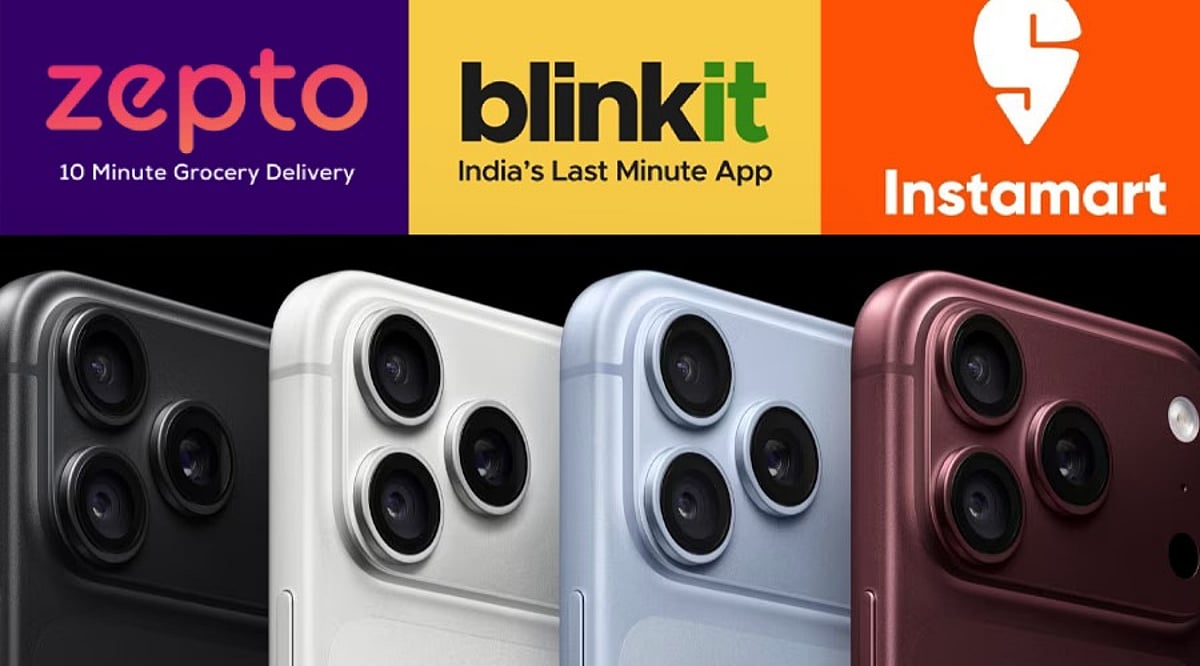
    Apple’s iPhone 18 Pro and iPhone 18 Pro Max are now available on quick-commerce platforms in India, giving buyers a faster alternative to queuing at physical stores. Zepto, Blinkit, and Swiggy Instamart have started offering the premium handsets in select cities, marking a significant shift for the quick-commerce sector as it moves from daily essentials to high-end electronics.

    The iPhone 18 Pro starts at ₹1,64,900 for the 256GB model, while the Pro Max begins at ₹1,79,900 for the same storage. At the top end, the 2TB versions cost ₹3,14,900 and ₹3,29,900 respectively. The phones went on sale in India on September 18.

    Zepto is delivering the new iPhones in Delhi NCR, Mumbai, Bengaluru, and Chennai. Blinkit offers coverage across Delhi NCR, Mumbai, Bengaluru, Hyderabad, Chennai, Pune, Kolkata, Ahmedabad, Jaipur, and Lucknow. Swiggy Instamart also stocks the Pro models, with availability and delivery times varying by location. The platforms are offering storage variants from 256GB to 2TB, subject to stock.

    The partnership underscores how quick-commerce apps—originally built for groceries and household items—are increasingly catering to high-value purchases. Instead of waiting in line at an Apple Store, customers in supported areas can now order the latest iPhone from their phones and receive it within minutes.

    Quick commerce is unlikely to make traditional retail obsolete overnight. Apple Stores and authorized retailers still provide product demos, trade-in offers, and customer support. However, the iPhone 18 Pro launch highlights a new sales channel for premium brands during peak demand periods. Retailers leveraging quick-commerce platforms can reach customers who prioritize speed over the in-store experience.

    This move also reflects a broader trend: as consumers grow accustomed to instant gratification, even expensive gadgets are entering the quick-commerce ecosystem. The iPhone 18 Pro’s availability on Blinkit, Zepto, and Instamart could pave the way for more luxury electronics to follow suit.

  • Recode Studios Stock Jumps After Launching 60-Minute Delivery via Nykaa Now

    Recode Studios Stock Jumps After Launching 60-Minute Delivery via Nykaa Now

    Recode Studios shares rose on September 11 after the company entered the quick-commerce segment through Nykaa Now, Nykaa’s 60-minute delivery service. The beauty and cosmetics company said the move will make its products available through a faster delivery channel across seven major cities.

    The stock traded at Rs. 372.00 on the BSE, up 2.39% from its previous close of Rs. 363.30. It opened at Rs. 380.00 and touched the same level during the session intraday, marking a new 52-week high.

    Recode Studios Enters Nykaa Now Quick-Commerce Network

    Recode Studios has expanded its online retail presence by joining Nykaa Now. The service offers 60-minute delivery for selected beauty and personal care products. Through this channel, Recode plans to offer its portfolio to customers in seven major cities where Nykaa Now operates.

    The company already sells through Nykaa’s main platform and is among the trending brands on the marketplace. Its entry into Nykaa Now gives the brand another digital sales channel while using Nykaa’s existing retail and fulfilment network. The move also allows customers to discover and order Recode products through a faster delivery option.

    Recode said the quick-commerce expansion will not require additional spending on logistics or infrastructure. The company will use the supply chain and fulfilment setup already in place with Nykaa. As a result, the same network that supports regular Nykaa orders will also handle Nykaa Now deliveries for Recode products.

    Shares Rise as Stock Reaches New 52-Week High

    Recode Studios shares gained during the session following the quick-commerce announcement. Recode Studios shares traded at Rs. 372.00 on the BSE, up Rs. 8.70, or 2.39%, from the previous close of Rs. 363.30.

    The stock opened at Rs. 380.00 and touched a high of Rs. 380.00. It also recorded a low of Rs. 372.00. Around 3,200 shares changed hands on the counter. The Rs. 380.00 level also became the stock’s new 52-week high on September 11, 2026.

    Recode Studios had touched a 52-week low of Rs. 171.00 on June 8, 2026. Over the previous week, the stock moved between Rs. 327.10 and Rs. 380.00. The company’s market capitalisation stood at about Rs. 401.29 crore.

    Promoters held 65.02% of the company, while institutional investors held 13.41%. Non-institutional investors accounted for 21.58% of the shareholding.

    Quick Commerce Adds Another Sales Channel for Recode

    Recode Studios operates in the beauty and cosmetics market. Its product range includes make-up, skincare, body care and beauty accessories. The company serves customers through different retail and digital channels.

    By joining Nykaa Now, Recode adds a quick-commerce option to its existing online presence. The service focuses on shorter delivery times, which gives customers another way to buy the company’s products in urban markets.

    The arrangement also allows Recode to use Nykaa’s established technology, retail network and fulfilment system. Therefore, the company can enter quick commerce without setting up a separate delivery network or adding new infrastructure for the service.

    The expansion comes as quick-commerce platforms continue to widen their product categories beyond groceries and daily essentials. Beauty and personal care products have become part of these faster delivery models, especially in large cities where customers increasingly use app-based shopping for routine purchases.

    Recode’s move into Nykaa Now links its existing beauty portfolio with a faster delivery channel while keeping its current supply arrangement with Nykaa in place.

  • Flipkart Minutes Launches Standalone App for 10-Minute Delivery Across 250+ Categories

    Flipkart Minutes Launches Standalone App for 10-Minute Delivery Across 250+ Categories

    Flipkart has officially launched its standalone Flipkart Minutes app in India, intensifying the race for quick-commerce dominance. The Android app, rolled out on September 9, promises 10-minute deliveries across groceries, electronics, gadgets, and daily essentials.

    A New Identity for Flipkart Minutes

    The launch gives Flipkart Minutes a separate identity as competition heats up in India’s fast-delivery market. With the standalone app, Flipkart aims to attract urgent shoppers through faster access, a broader product range, and targeted offers and discounts.

    The app is currently listed on the Google Play Store for Android devices. The listing, updated September 8, shows the app occupies around 20MB. Previously, the service operated as a dedicated section inside the main Flipkart shopping app. The standalone app is expected to boost visibility around quick purchases.

    What Can Shoppers Buy?

    Flipkart Minutes covers a wide range of products, including:

    • Fresh fruits and vegetables
    • Groceries and dairy products
    • Breakfast items, snacks, and beverages
    • Home supplies and cleaning products
    • Gifts and festive essentials
    • Flowers and chocolates
    • Headphones, Bluetooth earphones, smartwatches, and LED lights

    The app description promises “everything you need & want in just 10 minutes,” while highlighting deals and discounts across its expanding catalogue.

    Expanding Fulfilment Network

    The standalone launch follows rapid expansion of the Flipkart Minutes fulfilment network. Flipkart now operates more than 1,000 micro-fulfilment centres across over 130 cities and 8,000 PIN codes. The service has also grown beyond basic groceries to cover more than 250 categories.

    Flipkart reported fivefold order growth over the previous year, with smaller cities gaining significant momentum. This expanded footprint gives Flipkart a stronger base to challenge established quick-commerce leaders such as Blinkit, Zepto, and Swiggy Instamart.

    Competing Beyond Speed

    The competitive fight now extends beyond delivery speed and grocery availability. Electronics and higher-value products could give Flipkart Minutes another route toward larger customer baskets. Recent industry data also shows Minutes narrowing the order-value gap with Blinkit. Excluding mobile phones, Minutes reportedly records a net order value of Rs. 500 to Rs. 530.

    The standalone app marks more than a branding change for Flipkart Minutes. It signals a sharper push to make quick commerce a major part of Flipkart’s growth strategy. The next phase could depend on store density, delivery reliability, and adoption across smaller Indian cities.

  • 9 Visionary Entrepreneurs Driving India’s Fastest-Growing Startup Ecosystem

    9 Visionary Entrepreneurs Driving India’s Fastest-Growing Startup Ecosystem

    India’s startup ecosystem continues to thrive, powered by visionary founders who are disrupting industries and redefining business norms. From beauty and fintech to quick-commerce and wireless communication, these nine entrepreneurs have built some of the country’s fastest-growing companies, each bringing a unique blend of innovation, strategy, and execution.

    Falguni Nayar – Nykaa

    Falguni Nayar transformed Nykaa into India’s leading beauty platform by executing a strong omnichannel strategy and curating premium brands. Her vision reshaped online cosmetics retail, making Nykaa a household name.

    Vineeta Singh – SUGAR Cosmetics

    Vineeta Singh scaled SUGAR Cosmetics into a top beauty brand by targeting young, style-conscious consumers with innovative products and a digital-first marketing approach. Her brand resonates with the modern Indian woman.

    Neha Satak – Astrome

    Neha Satak founded Astrome to develop advanced wireless communication technologies that improve broadband connectivity in underserved regions of India. Her work bridges the digital divide, bringing high-speed internet to remote areas.

    Roshni Mahatani – Greylabs AI

    Roshni Mahatani created AI-powered fintech solutions at Greylabs AI, enabling financial institutions to enhance decision-making, automate processes, and deepen customer engagement through intelligent analytics.

    Shashank Kumar – Razorpay

    Shashank Kumar co-founded Razorpay, a platform that simplified digital payments for businesses across India. With secure, scalable fintech solutions, Razorpay now serves millions of merchants nationwide.

    Nithin Kamath – Zerodha

    Nithin Kamath revolutionized stock investing in India by introducing low-cost brokerage services and technology-driven trading platforms. Zerodha empowered retail investors with accessible, affordable investment tools.

    Nikhil Gupta – Neo Group

    Nikhil Gupta built Neo Group into a rapidly expanding wealth management platform catering to high-net-worth clients. His focus on modern investment solutions and personalized service has driven impressive growth.

    Nitin Gupta – Uni Cards

    Nitin Gupta launched Uni Cards to redefine credit experiences in India. The platform offers flexible payment options, digital-first services, and simplified financial management tools for a new generation of users.

    Aadit Palicha – Zepto

    Aadit Palicha scaled Zepto into a leading quick-commerce platform by pioneering ultra-fast grocery deliveries. Through efficient logistics and technology innovation, Zepto has set new standards for convenience in e-commerce.

  • Nandita Sinha Steps In as Swiggy Instamart CEO: Former Myntra Chief Takes the Helm

    Nandita Sinha Steps In as Swiggy Instamart CEO: Former Myntra Chief Takes the Helm

    Swiggy has appointed Nandita Sinha, the former Chief Executive Officer of Myntra, as the new CEO of its quick-commerce business, Instamart. The move marks a significant leadership transition at a time when competition in India’s rapid-delivery market is intensifying. Sinha will officially begin the role on August 3, succeeding Amitesh Kumar Jha, who has stepped down to pursue opportunities outside the company.

    Who is Nandita Sinha?

    Nandita Sinha is one of India’s leading executives in the consumer internet segment, with over two decades of leadership experience in e-commerce, retail, and fast-moving consumer goods. Under her leadership, Myntra witnessed consistent growth and improved its market positioning.

    Sinha’s work experience also includes serving in leadership roles at organizations such as Flipkart, Britannia Industries, and Hindustan Unilever, giving her broad exposure to digital commerce, branding, and consumer-facing business, according to her LinkedIn profile. This varied experience will help Instamart scale its operations.

    Leadership Change Comes at a Crucial Time

    Sinha’s appointment follows the resignation of Amitesh Kumar Jha, who led Instamart during an important phase of expansion. Swiggy acknowledged his contribution in strengthening the platform, enhancing its differentiated offerings, and improving operational efficiency during his tenure.

    Swiggy’s Managing Director and Group CEO, Sriharsha Majety, said, “I am delighted to welcome Nandita Sinha as the CEO of Instamart. Nandita is one of India’s most accomplished consumer internet leaders, and I’m enthusiastic about the vision, customer obsession, and operational rigor she brings to the team we’ve built at Instamart.”

    What Her Appointment Means for Instamart

    With competitors investing heavily in expansion and customer acquisition, Swiggy is betting on Sinha’s operational expertise and consumer-focused approach to drive Instamart’s next phase of growth.

    Speaking on her new role, Sinha said, “I have long admired what the team at Instamart has built. It’s a business with a strong customer-first culture, great talent and significant opportunities ahead. Instamart sits at the heart of how India shops for its everyday needs, and I look forward to working with our colleagues, partners and consumers to shape its next chapter of growth.”

    Industry experts believe that her background in creating large consumer brands might help the company formulate a competitive strategy. Product expansion and customer experience are expected to be among the key areas of focus.

  • Zepto IPO Faces Investor Resistance Over Aggressive Valuation

    Zepto IPO Faces Investor Resistance Over Aggressive Valuation

    Zepto is encountering fresh resistance from institutional investors as it prepares for its highly-anticipated initial public offering. While the company has already lowered its valuation expectations from last year’s peak, several domestic mutual funds remain unconvinced. They argue that the proposed pricing still fails to reflect the company’s business profile and long-term profitability prospects. The disagreement could complicate the timeline of India’s most closely-watched startup listings.

    Institutional Investors Seek Steeper Valuation Cut

    According to reports, Zepto previously achieved a private market valuation of around $7 billion, but has since reduced its IPO expectations to approximately $4 billion – $5 billion. Even at those levels, several institutional investors believe the valuation remains aggressive under prevailing market conditions.

    Fund managers are reportedly seeking a further 30%-40% reduction in valuation before committing capital. Their cautious stance reflects a broader shift in India’s IPO market, where investors are placing greater emphasis on profitability, sustainable growth and realistic pricing rather than rapid revenue expansion alone.

    Business Model Under Scrutiny

    A major issue investors pointed out is that Zepto has a fairly limited business model. Unlike its listed peers like Swiggy and Eternal (Blinkit), the company continues to focus on fast commerce and does not have any sizable food delivery service.

    Market players believe that the lack of another high-traffic vertical makes it difficult for Zepto to have valuations at par with those of its peers. Another factor behind the hesitation is the poor performance various new-age technology firms show post-listing.

    Company Continues Preparations for IPO

    Zepto has already submitted updated draft documents with the Securities and Exchange Board of India (SEBI) and is expected to raise more than Rs. 8,000 crore through a combination of fresh equity issuance and an Offer for Sale. The funds are expected to support expansion of its dark-store network and business growth initiatives.

    Reports also suggest that the company has intensified discussions with high-net-worth individuals, family offices and institutional investors to strengthen demand ahead of the issue. However, bankers may first need to bridge the gap between Zepto’s pricing expectations and investors’ valuation benchmarks.

    IPO Timeline Hinges on Investor Consensus

    India’s stock market appears alive, with several firms looking to raise capital from investors in the next few months. Zepto’s IPO filing shows how institutional investors are becoming more significant for deciding a company’s valuation. Although high-growth tech companies are in demand, markets are less willing to pay a premium price without assurance of their profitability. As negotiations are ongoing, the final price and issue will be determined by whether Zepto gains investors’ support.

  • Eternal Q1 FY27: Profit Slips 47% Sequentially as Blinkit Drives Record Revenue Growth

    Eternal Q1 FY27: Profit Slips 47% Sequentially as Blinkit Drives Record Revenue Growth

    Eternal, the parent company of Zomato, Blinkit, Hyperpure, and District, reported its financial results for the quarter ended June 30, 2026. Despite a surge in revenue driven by its quick commerce arm Blinkit, the company’s consolidated net profit fell 47.1% sequentially to ₹92 crore, compared to ₹174 crore in the same quarter last year. The decline was attributed to continued investments in business expansion, particularly in Blinkit.

    Revenue Surge Fueled by Blinkit and Model Change

    Revenue from operations soared to ₹20,211 crore, up from ₹7,167 crore in the prior-year period. Eternal attributed this increase primarily to the shift to a first-party (1P) operating model, which recognizes the full value of goods sold as revenue. Consolidated adjusted revenue grew 173% year-on-year to ₹20,648 crore, while adjusted EBITDA more than doubled to ₹555 crore.

    The B2C segment’s net order value (NOV) rose 54% YoY to ₹31,120 crore, underpinned by strong demand in food delivery, quick commerce, and the going-out business.

    Blinkit Continues to Lead Growth

    Blinkit remained Eternal’s fastest-growing business, with NOV climbing 86% YoY to ₹17,132 crore. The quick commerce platform posted an adjusted EBITDA profit of ₹102 crore, marking its fifth consecutive quarter of margin improvement. Blinkit expanded its store network by 200 net new stores, reaching 2,443 locations, and focused on assortment expansion, geographic coverage, and demand densification.

    Deepinder Goyal, Founder of Eternal, commented: “If we’re doing our job well, growth and margins should compound together – because growth in this business comes from making the platform more useful to more people, which drives frequency, which drives density, which drives efficiency. The flywheel doesn’t ask you to choose.”

    Food Delivery and Other Segments Hold Steady

    Eternal’s food delivery business also maintained momentum, with NOV crossing ₹10,769 crore, up over 20% YoY. The segment reported an adjusted EBITDA profit of ₹606 crore, with margins improving to 5.6%. The going-out platform, District, achieved 60% YoY revenue growth to ₹3,218 crore, while Hyperpure posted revenue of ₹1,034 crore, a 27% increase on a like-for-like basis.

    Additionally, Eternal entered into a Business Transfer Agreement with its wholly owned subsidiary Carthero Technologies Private Limited to transfer the business under the brand name ‘Nugget by Zomato’ as part of an internal restructuring to streamline operations.

  • Britannia Little Hearts Celebrates World Emoji Day with AI-Powered AR Campaign

    Britannia Little Hearts Celebrates World Emoji Day with AI-Powered AR Campaign

    Britannia Little Hearts has unveiled an innovative AI-powered augmented reality (AR) campaign titled ‘Share the OG Heart’ to mark World Emoji Day. The campaign blends browser-based AI, XR technology, and quick-commerce partnerships to transform the brand’s iconic heart-shaped biscuit into a digital symbol of affection.

    How the Campaign Works

    The initiative kicks off with QR-code-enabled print advertisements. Consumers simply scan the QR code using their smartphone camera to launch the ‘OG Heart Selfie’ experience directly in a web browser—no app download required. The AI-driven tool recognizes the popular Korean Heart gesture in real time, allowing users to capture a selfie and share it with friends and family.

    Britannia has extended the campaign beyond print by teaming up with quick-commerce platforms Zepto and Blinkit. On Zepto, shoppers who add Britannia Little Hearts to their cart encounter the Korean Heart animation alongside the brand’s signature ‘Ting Ting Ti-Ding’ sonic identity during checkout.

    Blending Nostalgia with Youth Culture

    Puneet Das, Chief Marketing Officer at Britannia Industries, explained that the campaign is a natural extension of Little Hearts’ brand identity of affection. By leveraging the Korean Heart gesture—a wildly popular expression among young people—the brand creates a fun, shareable experience that bridges traditional advertising and modern digital interaction.

    This campaign reflects a broader trend in FMCG marketing, where brands are combining print, AI, AR, and digital commerce to build interactive consumer journeys. For Little Hearts, the strategy not only celebrates a beloved product shape but also brings the brand closer to the moment of purchase through print media, browser-based technology, and quick commerce.

    The technology behind the campaign was ideated by Monks, with AI and XR development by Xtendr.

  • Blinkit Surpasses 55 Million Weekly Active Users, Extending Lead Over Zepto in Quick Commerce

    Blinkit Surpasses 55 Million Weekly Active Users, Extending Lead Over Zepto in Quick Commerce

    Blinkit has strengthened its grip on India’s quick commerce market after adding 2.7 million weekly active users, pushing its total user base to a record 55.2 million, according to new data from CLSA. The Eterntal-owned platform now holds a commanding lead over competitors Zepto and Swiggy Instamart, signaling a shift from rapid expansion to sustainable growth and customer retention.

    The latest figures indicate that Blinkit’s user growth momentum remains robust. Over the past four weeks, the platform posted an average weekly active user growth rate of 13%, compared to 9% for Swiggy Instamart. BigBasket, DMart Ready, and JioMart also saw gains but from a smaller base, with JioMart showing faster percentage growth.

    Blinkit’s delivery network is also expanding. CLSA noted a rise in delivery partner downloads alongside customer growth, reflecting infrastructure ramp-up. The company now operates 2,243 dark stores — the largest network in India — and processed over 916 million orders during fiscal year 2026. For perspective, Zepto handled roughly 640 million orders, while Swiggy Instamart managed about 412 million orders in the same period.

    Financially, Blinkit parent Eterntal remains the only major quick commerce player reporting positive earnings per share. Smaller operating losses compared to rivals have strengthened Blinkit’s position as the industry increasingly emphasizes profitability alongside expansion.

    Competitors are not standing still. Zepto continues to attract premium urban customers with faster deliveries and higher average order values, while Swiggy Instamart maintains a strong presence in South India by leveraging Swiggy’s large food delivery customer base and competitive commission structures.

    Overall, the quick commerce race has entered a new phase where user base and sustainable growth matter more than sheer expansion. Blinkit’s steady gains highlight its ability to retain customers and scale efficiently, setting a benchmark for the sector.