Tag: RBI

  • S&P Global Ratings Upgrades India’s FY27 GDP Forecast to 7%; RBI Rate Hike Expected

    S&P Global Ratings Upgrades India’s FY27 GDP Forecast to 7%; RBI Rate Hike Expected

    S&P Global Ratings raised India’s GDP growth forecast for fiscal year 2027 (FY27) to 7% on September 23, 2026, up from the previous estimate of 6.6%. The upgrade reflects stronger-than-expected economic activity, driven by robust consumption, industrial output, goods exports, and government investment.

    The ratings agency also expects the Reserve Bank of India (RBI) to implement a 25-basis-point rate hike during FY27, citing persistent inflation pressures and strong growth momentum. India recorded 7.8% growth in the June quarter, supporting the upward revision.

    S&P forecasts consumer inflation to average 5.1% in FY27, which could influence the RBI’s monetary policy. The agency noted that the balance of considerations is shifting toward higher interest rates, with risks from West Asia tensions and weather conditions adding to the outlook.

    Weather remains a concern, as cumulative rainfall stood 15% below normal through early September, potentially pressuring agricultural output and food inflation. Higher energy prices could further strain the rupee and inflation.

    The latest S&P forecast is above the RBI’s own projection of 6.7% and Fitch Ratings’ estimate of 6.4%, but aligns with Moody’s expectation of 7% growth for India in FY27. Looking ahead, S&P expects India’s growth to reach 7.2% in FY28 before easing to 7% in FY29, with domestic consumption and investment remaining central to the trajectory.

  • N Chandrasekaran Reappointed Tata Sons Chairman for Five Years in Leadership Reversal

    N Chandrasekaran Reappointed Tata Sons Chairman for Five Years in Leadership Reversal

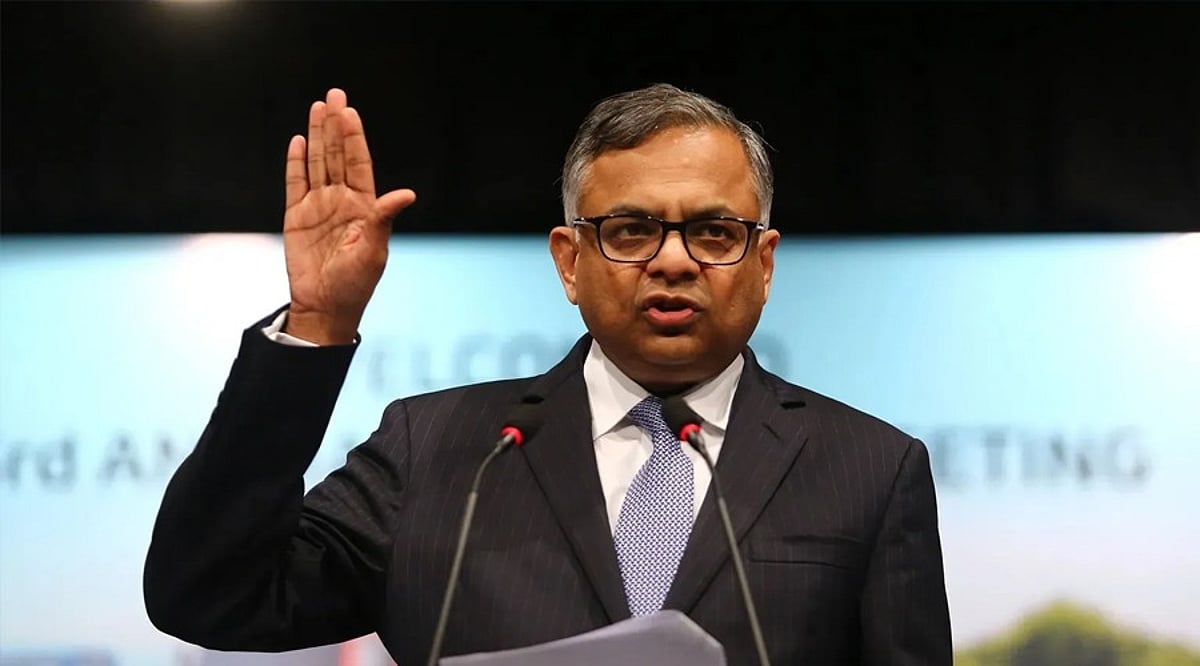
    Tata Sons has reappointed N Chandrasekaran as chairman for a five-year term, overturning his decision to step down in August. The board approved the move on September 17 after asking Chandrasekaran to reconsider, citing the group’s broader interests during a significant corporate transition.

    Chandrasekaran, who first took the helm in 2017 following Ratan Tata, had announced on August 12 that he would not seek another term. The Nomination and Remuneration Committee later urged him to stay, highlighting his contributions and the need for continuity. He accepted, and the board confirmed the reappointment by a majority vote, effective after his current term ends on February 20, 2027.

    The leadership reversal comes as Tata Sons navigates regulatory hurdles with the Reserve Bank of India (RBI). The RBI rejected the company’s request to surrender its registration as an upper-layer nonbanking financial company, imposing enhanced compliance and potential listing obligations. Tata Sons stated it would begin compliance steps and seek guidance from stakeholders.

    The RBI dispute has deepened divisions between Tata Sons and Tata Trusts, which controls 66% of the conglomerate. Tata Trusts opposed Chandrasekaran’s reappointment and a possible public listing. Reports indicate that Noel Tata voted against the reappointment, and Tata Trusts called the decision ‘illegal’ under the company’s articles of association.

    Despite the board’s resolution, unresolved questions around succession planning, governance, and regulatory compliance continue to loom. The reappointment settles the immediate leadership question, but the broader governance challenges remain open.

  • Tata Sons IPO Standoff: SP Group Pushes for Listing While Noel Tata Objects

    Tata Sons IPO Standoff: SP Group Pushes for Listing While Noel Tata Objects

    The debate over a potential Tata Sons initial public offering (IPO) intensified on September 18, 2026, as the Shapoorji Pallonji (SP) Group publicly backed a listing while Noel Tata, chairman of Tata Trusts, firmly opposed it. The dispute centers on regulatory compliance, ownership structure, and the future governance of one of India’s most prominent conglomerates.

    Pressure for a listing mounted after the Reserve Bank of India (RBI) rejected Tata Sons’ deregistration request on September 11. The RBI classifies Tata Sons as an upper-layer non-banking financial company (NBFC), which imposes enhanced regulatory requirements, including mandatory listing obligations.

    Ownership Breakdown and Conflicting Interests

    Tata Trusts holds approximately 66% of Tata Sons, while the SP Group owns around 18.4%. Other Tata Group companies collectively hold nearly 13%. This ownership structure creates divergent priorities: the Trusts emphasize philanthropic continuity, while the SP Group seeks liquidity and transparency.

    SP Group’s Case for Listing

    The SP Group has long advocated for a public listing, citing transparency and shareholder value. Chairman Shapoor Mistry called the IPO a “social and moral imperative,” arguing that it would strengthen public accountability while preserving Tata’s philanthropic mission. For the SP Group, which holds a significant minority stake, a public market offers a route to monetize holdings and provides greater visibility for investors.

    Noel Tata and Tata Trusts’ Opposition

    Noel Tata, speaking for Tata Trusts, has taken a starkly different position. He warned that a listing would “destroy the character” of Tata Sons, which he described as an institution built around philanthropy rather than profit maximization. In a board statement, Noel Tata argued that the company’s privately held structure is central to its identity and purpose.

    Tata Trusts has proposed an alternative: a transaction worth at least ₹25,000 crore to provide liquidity to the SP Group without immediately altering the privately held structure. This proposal, reported by Telangana Today, offers a compromise that could delay or avoid an IPO.

    Governance and Leadership Dispute

    The disagreement extends beyond listing strategy. The Tata Sons board has backed a second five-year term for Chairman N. Chandrasekaran, but Noel Tata and the Trusts have challenged the validity of that decision. This governance clash adds another layer of complexity to the IPO debate.

    Regulatory Pressure and Market Implications

    An IPO would introduce public shareholders, mandatory disclosures, and heightened market scrutiny. Analysts such as Abhishek Bhilwaria of BhilwariaFinserv note that valuation, governance, shareholder rights, and potential dilution will be key factors in the coming months. The immediate hurdle remains compliance with the RBI’s September 11 ruling, which forces Tata Sons to navigate listing requirements while facing internal opposition.

    The board’s next steps will determine whether the IPO moves forward or if an alternative arrangement satisfies all stakeholders. The outcome will have significant implications for Tata Sons’ corporate structure and India’s broader IPO landscape.

  • Tata Group Stocks Rally 20% After RBI Denies Tata Sons Deregistration

    Tata Group Stocks Rally 20% After RBI Denies Tata Sons Deregistration

    Tata Group stocks surged across Mumbai markets on September 15 after the Reserve Bank of India rejected Tata Sons’ deregistration request. The RBI decision keeps Tata Sons under upper-layer NBFC rules and revives expectations of a mandatory listing.

    The development lifted companies holding Tata Sons stakes as investors assessed potential value gains. Tata Chemicals led the rally with a 20% jump, while Tata Investment gained sharply during Tuesday’s trading session.

    Tata Sons sought to surrender its registration as a Core Investment Company with the central bank. The RBI rejected that request and retained the regulatory route requiring compliance with stricter NBFC-Upper Layer requirements.

    The listing prospect matters for Tata Group stocks holding direct interests in the unlisted parent. Seven listed Tata companies together hold about 11.94% of Tata Sons, according to market reports.

    Tata Chemicals holds roughly 2.5% of Tata Sons, while Tata Steel and Tata Motors Passenger Vehicles each hold about 3.1%. Their holdings could gain greater market visibility through a potential listing.

    Tata Chemicals closed at Rs. 734.50 after hitting its 20% upper circuit during trading. Its Tata Sons stake could carry substantial value compared with the company’s current market capitalization.

    Tata Investment Corporation also advanced strongly, while Tata Motors Passenger Vehicles gained about 4%. Several other Tata companies moved higher as listing expectations spread across the group.

    The impact also reached Shapoorji Pallonji Group companies, which hold an estimated 18.37% stake in Tata Sons. Afcons Infrastructure and Forbes & Co posted sharp gains during Tuesday’s session.

    A Tata Sons listing could create a market benchmark for its previously unlisted value. Analysts also expect greater financial visibility once Tata Sons faces public-market disclosure requirements.

    However, the rally does not guarantee immediate cash gains for shareholder companies. Manish Bhandari of Vallum Capital said a listing would establish a valuation benchmark rather than automatically unlock cash.

    The next focus remains on Tata Sons’ regulatory response and potential legal proceedings. Reuters also reported that the RBI approached courts regarding possible challenges linked to the listing.

  • RBI Backs 0.4% UPI Fee on Transactions Over ₹2,000 Starting October 15

    RBI Backs 0.4% UPI Fee on Transactions Over ₹2,000 Starting October 15

    New UPI Charge Approved for High-Value Merchant Payments

    The Reserve Bank of India has endorsed a new fee structure for select high-value UPI transactions, aiming to sustain the long-term growth of the country’s digital payments ecosystem. Starting October 15, a 0.4% Merchant Discount Rate (MDR) will apply to person-to-merchant UPI payments exceeding ₹2,000.

    Key Details of the New Fee

    • Rate: 0.4% MDR on merchant UPI payments above ₹2,000.
    • Cap: For payments of ₹75,000 or more, the charge is limited to ₹300.
    • Special sectors: Railways, telecom, insurance, fuel, and farm input payments above ₹2,000 incur a flat charge of ₹5. Mutual funds, securities, and stockbroking payments face a reduced rate of 0.02%, also capped at ₹300.
    • Exemptions: Person-to-person transfers remain free at any amount. Small merchant payments already under the zero-fee rule stay free, along with all merchant payments up to ₹2,000.

    Why the RBI Is Backing This Move

    The central bank believes the fee will provide UPI with the necessary funds to continue investing in technology and infrastructure. Officials said this support will help the payment system expand further and introduce new features over time. The change follows updates to the Payment and Settlement Systems Act, 2007, which created a legal pathway for adding such fees to UPI and other digital payment modes.

    The National Payments Corporation of India (NPCI) has set October 15 as the deadline for banks, fintech firms, and payment platforms to update their systems and comply with the new structure. The government expects about 96% of merchant transactions to remain unaffected by this change.

    Implications for Users and the Ecosystem

    For years, UPI operated on a zero-fee model for merchants. This shift marks a significant change in that approach, even as everyday users continue to enjoy free transactions. The new fee structure aims to strike a balance: keeping UPI free for common people while giving the ecosystem a sustainable way to fund its own growth and innovation.

  • Agentic AI in Indian Banking: From Chatbots to Autonomous Decision-Making

    Agentic AI in Indian Banking: From Chatbots to Autonomous Decision-Making

    Artificial intelligence in Indian banking has largely meant chatbots that answer balance queries, recommendation engines that suggest the next product, and fraud models that flag suspicious transactions for a human to review. That era is ending quickly. What is emerging now is agentic AI: a class of systems that does not just respond to a prompt, but plans, decides and acts across multiple steps without waiting for a human to approve each move.

    The shift is not cosmetic. It changes how credit gets underwritten, how KYC gets verified, how fraud gets stopped, and how service teams spend their day. The numbers behind it are large enough to demand attention. The operational details are messy enough to demand caution.

    From Prompt-Response to Plan-and-Act

    Traditional automation in banking, including robotic process automation and early generative AI tools, worked on a simple pattern: a human triggers a task, the system executes a fixed script, and the output goes back to a human for the next step. Agentic AI breaks that pattern. An agent is given a goal—something like “resolve this customer dispute” or “underwrite this loan application”—and then independently queries APIs, pulls data from multiple systems, applies reasoning and takes the next action, often chaining several steps together before a human ever sees the result.

    This matters technically because RPA breaks the moment an interface or a data format changes. Agentic systems, built on reasoning loops that plan, act and adjust based on outcomes, can handle edge cases a rules-based script cannot. That flexibility is precisely why banks are willing to give these systems more autonomy, and precisely why the risk profile looks different from anything that came before.

    The global market for agentic AI in financial services is estimated at close to $7.8 billion in 2026, up from around $5.5 billion a year ago, on a path toward more than $43 billion by 2031. That implies a compound annual growth rate above 41 percent. Even accounting for the usual noise in market-sizing reports, growth at that scale signals genuine capital commitment rather than marketing enthusiasm.

    More telling than the headline number is the adoption curve inside institutions. Around 44 percent of financial services teams report actively using agentic AI in 2026, several hundred percentage points higher than early 2025. Among the largest global banks, more than seven in ten now have programs that have moved past proof-of-concept into production or advanced piloting. Fintechs and neobanks, unburdened by decades-old core banking systems, are moving faster still. A parallel market has emerged around governance: platforms that monitor, audit and constrain what autonomous agents are allowed to do are already valued near $9 billion in 2026 and expected to cross $14 billion within five years. That the oversight layer is growing almost as fast as the core technology tells you banks understand autonomy without control is not a viable strategy in a regulated industry.

    Where Agentic AI Is Actually Being Used

    Fraud detection and anti-money laundering account for the largest functional share of agentic deployments, roughly a third of all use cases by some estimates. Fraud patterns shift constantly, transaction volumes are enormous, and the cost of a missed signal is high. Agents that correlate cross-border transaction patterns, flag anomalies and take a first action such as placing a temporary hold offer a meaningful edge over static rule engines.

    Credit underwriting has moved from experimental to operational. Rather than a loan officer manually pulling GST filings, bank statements and alternate data sources, an agent queries multiple verification APIs in parallel and produces a draft underwriting memo within seconds. The human role shifts from gathering data to reviewing a structured recommendation.

    Onboarding and KYC verification follow a similar pattern. Multi-agent architectures orchestrate biometric de-duplication, registry lookups against systems like CKYC, and fraud checks simultaneously instead of sequentially, cutting what used to take hours down to near real time. For insurers, agentic workflows validate first-notice-of-loss claims, cross-check damage documentation and trigger payouts on small claims without human intervention.

    This is no longer confined to individual institutions. NPCI is developing a Unified Agent Protocol that would let verified AI agents execute UPI payments without the user approving every transaction, having already piloted agentic payments publicly at the last Global Fintech Fest. When the country’s payment rails are themselves being redesigned for agents, the question for banks is not whether to participate but how quickly they can be ready.

    Across these use cases, institutions report autonomous resolution rates exceeding 80 percent for structured tasks such as dispute triage and routine compliance checks. That is a real productivity gain, but it carries a specific risk. When 80 percent of the easy work disappears, what remains is disproportionately the hard, ambiguous and emotionally charged work that agents are not yet trusted to handle alone. Support staff are left with an inbox of complex disputes and fraud complaints from customers who have already been through an automated flow that failed them. Industry estimates put the AI and data skills gap inside BFSI global capability centres at around 42 percent, meaning a significant share of the workforce lacks the combination of financial domain knowledge and technical fluency these systems demand.

    The Design Problem Hiding Inside the Technology Problem

    Most of this conversation treats agentic AI as an engineering problem. It is at least as much a design problem. Autonomy only creates value if a customer can understand what an agent is about to do on their behalf, and a supervisor can see why it did what it did. That is interface work: consent screens that make agent permissions legible rather than buried inside a mandate flow, explanations that surface the two or three factors behind a credit decision instead of a confidence score, and override controls that are obvious under pressure rather than three taps deep.

    In Indian retail banking, where a large share of users transact in a second language on an entry-level device, this is not polish. It is the difference between an agent people trust with a payment and one they switch off. Banks that ship autonomy without designing the visible layer around it will find adoption stalling for reasons no amount of model retraining can fix.

    Security and Governance Cannot Be an Afterthought

    Giving an autonomous agent the ability to query core banking systems, move funds or freeze accounts introduces a new category of cybersecurity concern. Agent permissioning, meaning precisely defining what each agent may do and rate-limiting how often it can act, is now a primary vulnerability that did not exist in the same form when humans initiated every transaction. Meanwhile fraud itself is becoming more sophisticated, with a large share of advanced attempts involving generative AI or synthetic voice, pushing banks to deploy defensive agents that evaluate behavioural biometrics and liveness signals in real time.

    Regulators in India have been explicit that autonomy does not remove accountability. Under SEBI’s updated Cybersecurity and Cyber Resilience Framework, regulated entities such as brokers, asset managers and depositories remain directly liable for the actions of their AI systems, closing off any defence built around blaming the algorithm. The Reserve Bank of India has taken a similarly clear position that high-stakes decisions, including credit rejections, loan restructuring and account closures, must retain a human in the loop and remain explainable, even as agentic systems handle the surrounding workflow. India’s data protection framework adds another layer, requiring that every autonomous action, data query and API call an agent makes be logged into an auditable trail a human can review after the fact.

    Agentic AI in BFSI is not a distant trend. It is already running fraud checks, assembling credit memos and triaging disputes inside real institutions today, and it is moving into the payment rails themselves. The technology has proven it can compress work that used to take hours into seconds. What remains unresolved is whether BFSI organizations can build the governance, workforce readiness and design discipline to match the pace of deployment.

    The institutions that get this right will be the ones treating agentic AI as a governance, people and design problem as much as a technology problem, measuring success not by how much work an agent completes on its own, but by how well the humans on both sides of it—customers and supervisors alike—can understand, correct and take responsibility for what it does.


  • Tata Sons Faces Growing Pressure for Listing After RBI Rejects Deregistration Bid

    Tata Sons Faces Growing Pressure for Listing After RBI Rejects Deregistration Bid

    Tata Sons may challenge the Reserve Bank of India’s rejection of its application to surrender its core investment company registration. However, any legal challenge would face limits because courts typically grant financial regulators broad discretion when reviewing economic and regulatory decisions.

    The RBI rejected Tata Sons’ deregistration request on September 11, according to reports. The decision keeps the Tata Group holding company under the central bank’s upper-layer non-banking financial company (NBFC) framework and intensifies pressure for a potential stock market listing.

    Tata Sons Has Legal Route to Challenge RBI Decision

    Tata Sons could approach the Bombay High Court under Article 226 of the Constitution and challenge the RBI’s decision through a writ petition. The company could ask the court to examine whether the regulator followed the correct process and properly considered the facts presented in the deregistration application.

    A petition under Article 32 before the Supreme Court would provide another legal route. However, Tata Sons would need to establish a violation of a fundamental right. Therefore, the Bombay High Court could offer the more direct route for questioning the RBI’s regulatory decision.

    Tata Sons may argue that its financial position changed after it repaid its borrowings and became debt-free. It may also ask whether its current activities continue to meet the legal definition of a core investment company or NBFC.

    However, the RBI does not assess such companies only based on outstanding debt. Its framework also considers the company’s size, business activities, and access to public funds, either directly or indirectly.

    Public Funds Rule Could Shape Tata Sons Case

    The RBI clarified in April that money received through associates or group companies that have access to public funds can count as indirect access to public funds. Several Tata Group companies linked to Tata Sons are listed or have access to public debt markets.

    Tata Sons could therefore focus a legal challenge on the process followed by the RBI rather than only on its debt-free status. It could ask whether the regulator gave sufficient reasons, considered all relevant documents, and applied its rules consistently.

    One question may be whether the RBI fully considered Tata Sons’ changed financial structure before rejecting the application. Another could be whether the regulator applied the same deregistration standards used in comparable cases. Shanghvi Finance could form part of that argument. The Sun Pharma promoter group company appeared in the RBI’s first NBFC-Upper Layer list in 2022. After repaying its debt, Shanghvi Finance surrendered its registration in February 2023, and the RBI canceled the registration with effect from May that year.

    RBI Rejection Keeps Tata Sons Listing Issue Open

    Tata Sons remains classified as an upper-layer NBFC. The RBI placed the company in that category in September 2022, with rules requiring such entities to list within three years. Tata Sons did not list by the September 2025 deadline while its deregistration application remained under review.

    The company had applied to exit the CIC category in 2024 after becoming debt-free. However, the RBI again included Tata Sons in its August 2026 list of upper-layer NBFCs and said the deregistration request was still pending.

    A previous dispute involving Kotak Mahindra Bank also shows that regulated companies can challenge RBI decisions. The bank approached the Bombay High Court in 2018 over promoter shareholding rules. The case ended in a settlement with the RBI in January 2020, and the bank withdrew its petition.

    For Tata Sons, the position now depends on whether it seeks judicial review, asks the RBI to reconsider its decision, or proceeds under the existing NBFC-UL requirements. Unless a court or the RBI changes the position, Tata Sons will remain subject to the regulatory framework linked to a stock market listing.

  • India’s Foreign Exchange Reserves Hit Record High of $785.7 Billion After Weekly Surge

    India’s Foreign Exchange Reserves Hit Record High of $785.7 Billion After Weekly Surge

    India’s foreign exchange reserves rose by a record USD 44.9 billion in the week ended September 4, reaching an all-time high of USD 785.7 billion, according to data released by the Reserve Bank of India (RBI) on Friday.

    The sharp increase followed a USD 11.475 billion rise in the previous week, when reserves stood at USD 740.8 billion. The latest weekly addition was the largest ever recorded, driven by stronger foreign-currency inflows under measures introduced by the RBI in June.

    RBI Measures Boost Reserves

    Earlier this year, India’s forex reserves faced pressure as the rupee weakened during the West Asia conflict. The RBI sold dollars in the foreign exchange market to curb sharp currency movements. Total reserves had fallen to USD 666.9 billion in the week ended June 26.

    However, the trend reversed after the central bank introduced concessional foreign exchange swap measures aimed at attracting foreign-currency funds and improving domestic market liquidity. By August 31, the programme had brought in about USD 136.4 billion.

    Foreign Currency Non-Resident Bank (FCNR(B)) deposits accounted for the bulk of these flows. Banks mobilized USD 127.226 billion through the scheme, while overseas foreign-currency borrowings and external commercial borrowings added to the total.

    The RBI launched the FCNR(B) window on June 8 with an initial closing date of September 30, but closed it on August 31 after stating the programme had achieved its objective ahead of schedule.

    Forex Assets Surge

    Foreign currency assets—the largest component of India’s foreign exchange reserves—increased by USD 47.498 billion during the week to USD 648.168 billion, RBI data showed. These assets include currencies such as the euro, pound, and yen, though the RBI reports their value in US dollars, so exchange rate fluctuations can affect the reported value.

    A private bank treasury head commented, “This rise in foreign exchange reserves was expected given the amount of FCNR(B) flow.” The person added, “If we exclude gold, we almost had a USD 48 billion addition to the reserves.”

    Gold reserves moved in the opposite direction, falling by USD 2.594 billion to USD 113.816 billion during the week. Special drawing rights with the International Monetary Fund declined by USD 4 million to USD 18.806 billion, while India’s reserve position with the IMF rose by USD 2 million to USD 4.916 billion.

    India Moves to No. 4

    The latest increase pushed India above Russia to become the world’s fourth-largest holder of foreign exchange reserves, behind China, Japan, and Switzerland, according to Bloomberg data. India’s reserves have increased by about USD 120 billion in the current financial year. Foreign currency assets also recovered sharply from USD 541 billion in the week ended June 26.

    Meanwhile, the rupee remained under pressure despite the reserve boost. It fell for a fourth consecutive session on Friday, September 11, closing at 95.56 against the US dollar, compared with 94.45 in the previous session. Higher crude oil prices and rising US Treasury yields weighed on the currency. Dealers said RBI intervention, including a swap alongside spot intervention, helped the rupee recover some losses.

    Foreign-currency inflows may continue through some RBI facilities. External commercial borrowings and overseas foreign-currency bonds remain eligible under the programme until December 31.

  • Indian Rupee Slides 27 Paise to 95.79 as Soaring Oil Prices and Foreign Outflows Bite

    Indian Rupee Slides 27 Paise to 95.79 as Soaring Oil Prices and Foreign Outflows Bite

    The Indian rupee faced renewed selling pressure on Friday (September 11, 2026), weakening by 27 paise to Rs. 95.79 against the U.S. dollar in early trade. The decline extended the currency’s recent losing streak, driven by surging crude oil prices and sustained foreign portfolio outflows.

    Crude Oil Crosses USD 108

    A key factor weighing on the rupee is the sharp rise in international crude prices. Brent crude climbed above USD 108 a barrel, raising India’s import bill since the nation relies heavily on imported oil to meet its energy needs. The oil surge also hit broader financial markets, with the Nifty 50 and Sensex sliding to their lowest levels in about three months amid inflation and global interest-rate concerns.

    Foreign Outflows Add to Currency Pressure

    Continued foreign investor selling has added another layer of pressure on the rupee. Portfolio outflows increase demand for dollars as investors withdraw funds from Indian assets, making it harder for the currency to recover. The rupee has now been under pressure for several consecutive sessions, with traders closely watching developments in global oil markets and West Asia.

    The Reserve Bank of India (RBI) has been conducting dollar/rupee sell-buy swaps for a second consecutive day, with much of the activity concentrated in December maturities. “Such operations can drain excess rupee liquidity and support forward premiums, potentially offering some cushion to the currency,” said Amit Pabari, MD and CEO of CrForex Advisors. “These operations help drain surplus rupee liquidity and support forward premiums, which can provide support to the currency. Yet, the rupee continued to depreciate.”

    What Lies Ahead for the Rupee?

    The near-term outlook will depend heavily on how long crude prices remain elevated. A prolonged period above USD 100 could increase India’s energy import costs, widen external-sector pressures, and make the rupee more vulnerable. Markets are also watching U.S. bond yields and expectations around global monetary policy. Higher inflation risks linked to oil could limit the scope for easier interest rates worldwide. Unless oil prices ease or investor flows improve, the domestic currency is likely to remain volatile in the near term.

  • RBI’s New Rules on Remote Locking of Financed Devices: What Borrowers Must Know

    RBI’s New Rules on Remote Locking of Financed Devices: What Borrowers Must Know

    The Reserve Bank of India (RBI) has unveiled a regulatory framework that governs how banks and other regulated lenders can remotely restrict smartphones, tablets, and laptops that were financed through specific loans. Slated to take effect on January 1, 2027, these rules aim to strike a balance between lenders’ recovery rights and stronger consumer protections.

    Under the new guidelines, lenders cannot block a device immediately after a missed EMI. Restrictions may only be imposed after a loan is overdue for at least 30 days, and even then, lenders are expected to use a phased approach rather than an immediate lock. A full device restriction can only occur after 60 days of overdue repayments, giving borrowers additional time to regularize payments.

    The RBI has also mandated that certain essential services must remain operational even under restrictions. These include incoming phone calls, SMS services, emergency SOS functions, and work-related features. Furthermore, lenders are prohibited from accessing personal information on the financed device—such as contact lists, photos, videos, SMS, call logs, or location history—unless directly related to loan recovery.

    Borrowers must receive prior intimation before any restriction is applied, and lenders must clearly explain the terms at the time of loan sanction. If a borrower clears their overdue payment, the lender must restore full device access within one hour of payment clearance. Failure to do so results in a penalty of Rs. 250 per hour of delay, up to the outstanding loan amount.

    The framework also preserves borrowers’ contractual rights to prepay or foreclose loans. Overall, the RBI’s new rules provide a balanced approach to using technology in loan recovery without imposing undue restrictions on consumers or compromising their data privacy.