Tag: RBI

  • India’s Forex Reserves Rise to $675.16 Billion After Weekly Gain

    India’s Forex Reserves Rise to $675.16 Billion After Weekly Gain

    India’s foreign exchange reserves increased for the second consecutive week, rising by $964 million to reach $675.16 billion for the week ending July 10, according to data released by the Reserve Bank of India (RBI). This follows a much larger jump of $7.26 billion in the previous week, signaling a recovery in the country’s external financial position.

    The primary driver of the increase was foreign currency assets, which grew by $930 million to $546.51 billion during the reporting period. These assets, which include major global currencies such as the euro, pound sterling, and Japanese yen, fluctuate in value against the US dollar. Additionally, gold reserves rose by $24 million to $105.23 billion, while Special Drawing Rights (SDRs) with the International Monetary Fund (IMF) increased by $3 million to $18.626 billion. India’s reserve position with the IMF also edged up by $7 million to $4.793 billion.

    The back-to-back weekly gains come after several weeks of decline, which had been driven by RBI’s intervention in the foreign exchange market to stabilize the rupee amid geopolitical tensions in the Middle East. Earlier this year, India’s forex reserves hit a record high of $728.494 billion in late February, but subsequent volatility led to sell-offs by the central bank to curb sharp currency fluctuations.

    The RBI has reiterated that it does not target a specific exchange rate for the rupee but will continue to monitor market conditions and act as needed to ensure stability. Strong forex reserves are crucial for the country to manage import payments, meet external financial obligations, and navigate global economic uncertainties. Although reserves remain below the peak, the latest increase underscores an improving external financial landscape.

  • Why India Must Replace Crypto Prohibition with a Clear Regulatory Framework

    Why India Must Replace Crypto Prohibition with a Clear Regulatory Framework

    For nearly a decade, India has debated cryptocurrency as a binary choice: ban it or allow it. That framing has outlived its usefulness. With roughly 39 million Indians holding an estimated $2.1 billion in digital assets, according to Indian tax-department estimates cited by Reuters in July 2026, the country now ranks among the world’s largest crypto markets by user base.

    The debate flared again this month when the Reserve Bank of India told a parliamentary panel that it favors prohibition, warning that a formal framework might lend crypto legitimacy. It’s an understandable instinct from a central bank guarding monetary sovereignty. But it misreads the problem. Prohibition does not erase demand; it relocates it. Push activity underground and it flows to precisely the channels regulators fear most: offshore exchanges, private wallets, and peer-to-peer transfers that are far harder to trace than a registered domestic platform.

    Uncertainty Is the Real Cost

    The status quo—legal to trade, but unregulated as a product, taxed heavily, and periodically threatened with a ban—is the worst of all worlds. It punishes everyone who plays by the rules while rewarding those who route around them.

    Startups feel it first. A founder cannot raise capital, hire, or build a compliance function around a policy that has been drafted, shelved, and redrafted more times than anyone can count. India’s own crypto discussion paper has reportedly been postponed on multiple occasions. Talent and companies that could have built here have simply incorporated in Dubai, Singapore, or elsewhere. That is innovation leaving, not innovation being contained.

    Consumers feel it too. Without a licensing regime that sets standards for custody, disclosure, and how exchanges use client funds, users have little protection when a platform fails or a scam unfolds. “Buyer beware” is not a consumer-protection strategy; it is the absence of one.

    Indians Will Use Crypto Regardless

    Here is the fact that should anchor the entire policy conversation: Indian users will be pushed further into international platforms if there is a ban or if a regulatory grey area persists. The tax department has already flagged this. In the year ending March 2023, fewer than one in four Indians who transacted in crypto reported it on their returns—largely because overseas exchanges and non-custodial wallets make beneficial owners nearly impossible to identify.

    A ban does not fix that gap; it widens it. Every user driven off a compliant, FIU-registered Indian exchange and onto an anonymous foreign one is a user the taxman can no longer see. Prohibition would hand the government the compliance nightmare it claims to be solving.

    Regulation Is the Visibility the State Actually Wants

    The paradox is that a clear framework serves the government’s own goals better than a ban ever could. Regulation is what produces visibility, accountability, and tax compliance.

    India already has the scaffolding. Exchanges must register with the Financial Intelligence Unit and follow KYC and anti-money-laundering rules. A 30% tax on gains and a 1% TDS are in place. From April 2026, stricter transaction-reporting standards carry real penalties. What is missing is the connective tissue: a licensing regime, a token-classification system that separates payment tokens from securities and utility tokens, and clarity on who regulates what. SEBI has already floated a multi-regulator model—a far more workable path than an outright ban.

    Onshoring is the prize. If compliant domestic platforms operate under clear, enforceable rules, capital and trading volume return to where they can be taxed and traced. That is how India protects consumers and revenue at the same time.

    The world is not waiting. Institutional adoption abroad keeps accelerating, and the OECD’s cross-border reporting framework arrives in 2027. India can shape sensible rules now, or inherit someone else’s later. A ban is a decision to look away. A policy is a decision to govern. India should choose to govern.

  • Top 10 Cross-Border Payment Platforms in India for 2026: Key Players and Insights

    Top 10 Cross-Border Payment Platforms in India for 2026: Key Players and Insights

    Cross-border payment platforms now offer faster settlements and more transparent pricing than traditional banking channels. Indian exporters, freelancers, and SaaS businesses have more payment options than ever before. RBI approvals and growing competition continue to improve security, compliance, and customer experience.

    Sending and receiving money across countries has become much easier than it was a few years ago. Businesses no longer depend only on traditional banks that often charge high fees and take several days to complete a transaction. Today, many Indian companies, freelancers, exporters, software firms, and online sellers work with clients across the world. This change has created strong demand for payment platforms that offer quick transfers, fair exchange rates, and simple compliance. India’s cross-border payment market continues to grow as more businesses enter global markets and digital trade reaches new records. Several fintech companies now compete to offer faster settlements, lower costs, and a smoother payment experience.

    Wise Keeps International Transfers Simple

    Wise has earned its place as one of the most trusted names in international payments. The company became popular because it uses the real market exchange rate instead of adding a hidden markup. This approach helps businesses save money on every transaction. Wise also supports dozens of currencies and allows customers to receive money through local bank account details in several countries. Quick transfers, clear pricing, and an easy-to-use platform make Wise a preferred choice for startups, consultants, and businesses that deal with overseas clients on a regular basis.

    Payoneer Remains a Strong Choice for Exporters

    Payoneer continues to play an important role in India’s export economy. Thousands of freelancers, agencies, software companies, and marketplace sellers depend on the platform to receive international payments. It works with global platforms such as Amazon, Fiverr, Upwork, and Walmart, which makes payment collection much easier for online businesses. The company recently strengthened its position after it received in-principle approval from the Reserve Bank of India to operate as a Cross-Border Payment Aggregator. This development allows Payoneer to expand its services further in the Indian market.

    Skydo Focuses on Lower Costs

    Skydo has quickly become one of the fastest-growing Indian fintech companies in this space. Instead of charging a percentage on every transaction, the company follows a flat-fee model and removes foreign exchange markups. This pricing structure attracts exporters and freelancers who receive payments frequently. Skydo also provides instant FIRA documents, which simplify regulatory requirements for businesses. The company now serves more than 25,000 Indian businesses and processes payment volumes of nearly $500 million every year. Its recent licence in GIFT City has added another milestone to its expansion journey.

    Razorpay Expands Beyond Domestic Payments

    Razorpay built its reputation through online payment solutions in India, but the company has also developed a strong international payment business. Today, exporters and service companies use Razorpay to collect payments from customers across different countries without switching between multiple platforms. Foreign currency collection, virtual accounts, and payment gateway services have become key parts of its offering. The company also attracted attention after confidentially filing for a public listing, following an earlier valuation of about $7.5 billion.

    Xflow Builds for Modern Export Businesses

    Xflow entered the market with a clear goal of making international payments easier for Indian businesses. The platform supports exporters, agencies, software companies, and startups that receive payments from overseas clients. Local collection accounts in different countries allow customers to pay through domestic bank transfers instead of expensive international wire transfers. Automated compliance and quick settlements reduce paperwork and save valuable time. After securing RBI approval, Xflow also announced plans to expand its international network.

    BriskPe Offers a Fresh Alternative

    BriskPe has become a popular option for small and medium-sized businesses that need simple international payment solutions. The platform combines payment collection, foreign exchange support, and compliance services under one system. Businesses appreciate its transparent pricing because unexpected charges often create problems in cross-border transactions. As India’s export sector grows, BriskPe continues to attract companies that want affordable and reliable payment services without unnecessary complexity.

    PayPal Continues to Benefit from Global Trust

    Despite facing numerous new players in the payment market, PayPal is still one of the most respected payment services worldwide. Most international consumers already possess a PayPal account, which simplifies the collection of payments for Indian firms. Its services are accessible in many countries and currencies. Although PayPal may charge higher fees than some recent fintech competitors, it continues to be chosen by numerous companies, owing to its worldwide acceptance and long credit history.

    Airwallex Helps Businesses Grow Internationally

    Airwallex has built a strong presence among companies that operate in several countries. Multi-currency accounts, international payment collection, business cards, and global expense management make the platform suitable for larger businesses with international operations. Support for more than 60 currencies gives businesses greater flexibility while dealing with customers and suppliers across different markets. Strong technology and developer-friendly tools have also made Airwallex a preferred choice for fast-growing companies.

    Nium Strengthens Global Payment Infrastructure

    Nium focuses on payment infrastructure rather than simple money transfers. Banks, financial institutions, and businesses use its technology to move money across international markets quickly and securely. The company offers API-based payment services, treasury solutions, and real-time transfers through an extensive global network. Strong banking partnerships allow Nium to support businesses that handle large international payment volumes every day.

    PayGlocal Simplifies International Collections

    PayGlocal has carved out a strong position by helping Indian merchants accept payments from customers worldwide. The platform supports multiple currencies, international card payments, and several local payment methods. Easy integration with online stores and strong compliance support reduce technical challenges for businesses. Companies that sell products or digital services to overseas customers often choose PayGlocal because it offers a smooth payment experience without complicated setup.

    The Market Will Become More Competitive

    India’s cross-border payment industry has changed rapidly over the last few years, and the pace shows no sign of slowing down. Higher exports, global freelancing, software services, online commerce, and digital businesses continue to create fresh demand for international payment solutions. At the same time, RBI regulations have pushed companies to improve compliance and customer protection. Competition among payment providers has also reduced costs while improving speed and transparency. As more Indian businesses enter global markets, cross-border payment companies will remain an important part of the country’s digital economy in 2026 and beyond.

    FAQs

    1. What is a cross-border payment company? A cross-border payment company helps businesses and individuals send or receive money between different countries quickly and securely.
    2. Which industries benefit the most from these platforms? Exporters, freelancers, SaaS companies, e-commerce sellers, agencies, and startups benefit the most from cross-border payment services.
    3. Why are fintech payment platforms becoming more popular than banks? Many fintech platforms offer faster transfers, lower fees, better exchange rates, and simpler digital processes.
    4. Which company is best for freelancers in India? Popular choices include Payoneer, Wise, and Skydo because they offer simple payment collection and competitive pricing.
    5. What should businesses compare before choosing a payment platform? Transaction fees, exchange rates, settlement speed, supported currencies, compliance features, customer support, and global coverage are the most important factors.

  • Indian Rupee Weakens Past 96 Against US Dollar for First Time Since May Amid Rising Oil Prices and Dollar Strength

    Indian Rupee Weakens Past 96 Against US Dollar for First Time Since May Amid Rising Oil Prices and Dollar Strength

    The Indian rupee slipped below the 96-mark against the US dollar on Monday, reaching its weakest level since May, as a sharp rally in global crude oil prices and rising US bond yields reignited pressure on the domestic currency. The latest decline comes after the rupee had briefly recovered in recent weeks, supported by Reserve Bank of India (RBI) measures aimed at attracting dollar inflows.

    The renewed weakness follows escalating geopolitical tensions in the Middle East, which have pushed Brent crude prices to their highest level in over a month. As India imports nearly 85% of its crude oil requirements, higher energy prices typically widen the country’s import bill, increase demand for dollars, and weigh on the rupee.

    Oil Prices and US Yields Drive Currency Weakness

    Currency dealers mentioned that the rupee came under pressure from a mix of rising oil prices and a firmer US dollar. Brent crude has climbed by more than 20% compared with its recent lows. At the same time, US Treasury yields have moved higher after hawkish signals from Federal Reserve officials, making dollar-denominated assets more attractive to investors.

    The stronger greenback has also helped push down several currencies across Asia, including the rupee. As India is heavily reliant on crude oil imports, the ripple effect is felt throughout the exchange market.

    RBI Intervention Expected to Curb Volatility

    It is expected that the RBI will monitor rupee movements and, if it sees the situation becoming volatile, intervene to stabilize the currency. Earlier, it had sold dollars in the forex market to avoid a sharp devaluation. Analysts feel that intervention might curtail losses, but it will not change the trend if oil prices remain high.

    What Does This Mean for Consumers?

    As the rupee falls, its impact will be felt in the prices of imports such as crude oil and electronics. Over time, this will result in higher fuel prices and transport expenses.

    For now, traders will closely watch developments in the Middle East, movements in global crude prices, and the Federal Reserve’s policy outlook, all of which are expected to determine the rupee’s near-term direction. Unless oil prices ease or foreign capital inflows improve, the Indian currency is likely to remain under pressure in the coming sessions.

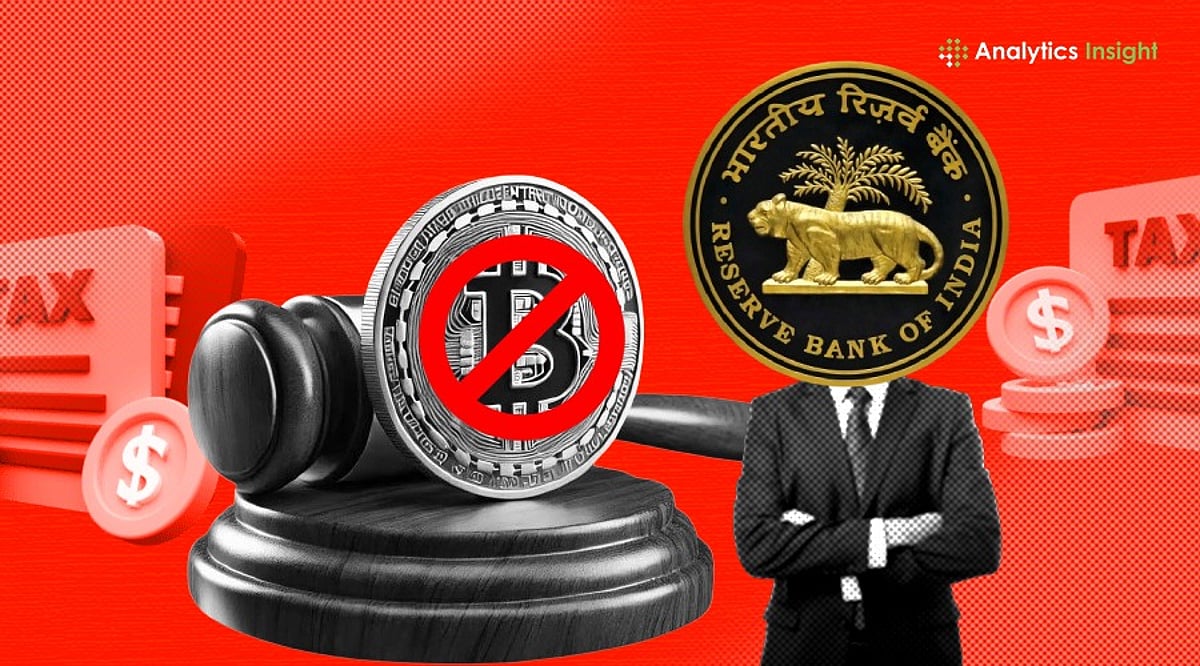
  • India’s Crypto Policy Hardens: RBI Pushes for Ban as Tax Department Flags Offshore Tracking Risks

    India’s Crypto Policy Hardens: RBI Pushes for Ban as Tax Department Flags Offshore Tracking Risks

    India’s cryptocurrency policy remains in flux, but internal government documents reviewed by Reuters indicate that authorities are increasingly leaning toward stricter control over digital assets. The Reserve Bank of India (RBI) has reiterated its stance favoring a policy that ‘leans toward prohibition,’ while the Income Tax Department has raised serious concerns about regulating transactions conducted through offshore exchanges and private wallets.

    The RBI believes that banks and financial institutions should be barred from holding, trading, or gaining any exposure to cryptocurrencies and privately issued stablecoins. The central bank is particularly worried about the potential impact of crypto-related exposures on the broader financial system. Although there is no official ban preventing Indian banks from transacting with crypto assets, most top lenders have voluntarily avoided the sector following multiple RBI alerts.

    A source familiar with the RBI’s thinking, who spoke on condition of anonymity, told Reuters that the central bank prefers keeping cryptocurrencies entirely outside the regulated financial system.

    Stablecoins remain a major concern. According to the RBI, foreign currency-backed stablecoins could threaten India’s monetary sovereignty, while rupee-backed tokens would result in lost government revenue from currency issuance and pose risks during periods of market stress.

    The Income Tax Department has also warned that monitoring cryptocurrency trading conducted through overseas exchanges is extremely difficult. As of May 31, India had approximately 39 million cryptocurrency traders holding about $2.1 billion in digital assets, according to the documents.

    The department identified significant gaps in tax reporting. Fewer than 25% of the 645,000 individuals who conducted crypto transactions during the financial year ending March 2023 reported those transactions in their tax returns. Foreign exchanges, private wallets, and peer-to-peer rupee trades make it challenging to identify beneficial owners and collect taxes.

    India’s current tax regime imposes a 30% rate on crypto asset gains, but volatility and a lack of uniform valuation methods complicate assessment. The Ministry of Corporate Affairs is also reviewing accounting standards and guidance for virtual digital assets.

    India has allowed cryptocurrencies to exist in a legal gray zone since a 2018 court ruling struck down RBI policies that effectively banned them. A 2021 draft bill to ban private cryptocurrencies was never introduced in Parliament, while a broader discussion paper has been repeatedly delayed.

    The newly surfaced documents suggest that India’s policy debate is shifting from light-touch regulation toward tighter restrictions, as unresolved issues around financial stability, tax compliance, and monetary sovereignty continue to mount.

  • RBI Warns Against Crypto Legalization, Citing Threats to India’s Financial Stability

    RBI Warns Against Crypto Legalization, Citing Threats to India’s Financial Stability

    The Reserve Bank of India (RBI) has firmly opposed the legalization of virtual digital assets (VDAs), warning that cryptocurrencies pose significant risks to the country’s monetary and financial stability. During a parliamentary briefing on Thursday, the central bank urged lawmakers to maintain the prohibition on private crypto assets as India reviews its digital currency strategy.

    RBI Flags Crime Risks and Offshore Enforcement Gaps

    The Parliamentary Standing Committee on Finance examined virtual digital assets and possible policy responses during its seventh meeting on the subject. BJP lawmaker Bhartruhari Mahtab chaired the session, which included representatives from the RBI and the Institute of Chartered Accountants of India (ICAI). The meeting also reviewed progress in India’s central bank digital currency pilot, commonly known as the digital rupee.

    The RBI told the panel that privately issued digital assets create complex regulatory, tax, and enforcement challenges. It also warned that criminals could use digital money for terror financing, narcotics smuggling, and other illegal activities. The central bank said offshore crypto entities remain difficult for Indian authorities to track, as cross-border platforms can operate outside domestic oversight.

    To support its position, the RBI cited China and Qatar as countries that prohibit similar financial activities. It also noted that the European Union allows VDAs through a strict regulatory framework with extensive controls.

    “It is encouraging to see the RBI reinforce the critical distinction between speculative crypto assets and Real-World Asset (RWA) tokenisation before the Parliamentary Standing Committee on Finance,” said Edul Patel, CEO at Mudrex.

    ICAI Backs Regulation as Digital Rupee Adoption Slows

    ICAI supported a comprehensive legal framework for virtual digital assets instead of continued uncertainty. The accounting body said clear rules could improve financial reporting, compliance, and the treatment of VDAs across different business activities. It offered to research the various forms of digital assets and examine their economic characteristics to guide recognition, measurement, presentation, and disclosure standards within company financial statements.

    Mahtab said the RBI remained firmly against legalizing VDAs in India. He also noted that existing income tax rules already cover parts of the sector and allow authorities to examine related financial activity. The committee considered the slower adoption of the digital rupee compared with privately issued digital assets. Mahtab said the RBI’s digital asset had not achieved the same level of market traction.

    As a result, the panel examined possible policy measures that could expand India’s digital financial ecosystem while protecting consumers and financial institutions. Members also reviewed the need to safeguard the broader economy from emerging risks. The discussion covered taxation, enforcement, investor protection, offshore access, and stablecoin use. It also placed the digital rupee within India’s wider effort to promote financial innovation without weakening monetary control or financial stability.

    What’s Next?

    The RBI remains firmly opposed to crypto legalization, citing financial stability, offshore enforcement, and illicit finance risks. Meanwhile, ICAI supports a clear regulatory framework as Parliament reviews India’s digital asset policy. Lawmakers must now decide how to protect the economy while supporting responsible financial innovation.

  • RBI Upholds NBFC Regulations, Tata Sons Faces Renewed Listing Pressure

    RBI Upholds NBFC Regulations, Tata Sons Faces Renewed Listing Pressure

    The Reserve Bank of India (RBI) has decided not to ease the regulatory framework for upper-layer non-banking financial companies (NBFCs), keeping Tata Sons under strict listing obligations. This move narrows the conglomerate’s options as it continues to seek approval to surrender its core investment company (CIC) license.

    Why Tata Sons Remains in Focus

    Tata Sons was classified as an upper-layer NBFC in 2022 under the RBI’s scale-based regulatory framework, which mandates a public listing within three years. The company has resisted going public, arguing that its private status better suits the Tata Group’s ownership and governance model. It has also claimed debt-free status after repaying borrowings, but the RBI has yet to approve its request to surrender the CIC license, keeping it under the current regime.

    RBI Rejects Proposed Relaxations

    Industry participants had urged the RBI to raise the asset threshold for upper-layer NBFC classification from Rs. 1 lakh crore to Rs. 2.5 lakh crore, which could have exempted Tata Sons. Instead, the central bank retained the existing benchmark, signaling continued oversight for systemically important shadow lenders. However, government-owned upper-layer NBFCs were exempted from the mandatory listing requirement due to their developmental role—a privilege not extended to private entities like Tata Sons.

    Wider Impact on the Tata Group

    A potential listing of Tata Sons could have broad consequences for the Tata Group and its shareholders, including the Shapoorji Pallonji Group, which holds an 18.4% stake. Regulatory uncertainty has also drawn investor attention to publicly listed Tata Group companies; for example, shares of Tata Chemicals—which holds a small stake in Tata Sons—recently rose on hopes that a public listing could unlock shareholder value.

    What Lies Ahead

    The fate of Tata Sons now depends on the RBI’s decision on its application to relinquish CIC registration. Unless the regulator removes the company from the upper-layer NBFC category, the listing requirement remains in place. The central bank’s latest policy stance has effectively narrowed Tata Sons’ options, keeping the spotlight on one of India’s most closely watched unlisted companies.

  • Indian Rupee Surges 37 Paise to 94.30 Against US Dollar as Brent Crude Dips Below $73

    Indian Rupee Surges 37 Paise to 94.30 Against US Dollar as Brent Crude Dips Below $73

    The Indian rupee opened 37 paise higher at Rs. 94.30 against the US dollar on Wednesday, recovering from the previous close of 94.67. The jump was fueled by a steep decline in global crude oil prices, with Brent crude futures falling 1.80% to $72.41 a barrel and US West Texas Intermediate (WTI) dropping 1.59% to $69.22 per barrel.

    Falling Crude Oil Strengthens the Rupee

    The rupee’s rally was driven by a sharp correction in global crude oil prices. Oil prices slipped below $73 a barrel, matching levels seen before the Middle East conflict, after reports indicated that oil tankers had resumed transit through the Strait of Hormuz following progress in US-Iran ceasefire negotiations. For India, which imports around 85% of its energy requirements, lower energy prices provide significant relief by reducing the import bill, improving the current account deficit, and easing inflationary pressure. This fundamental support bolsters the domestic currency.

    RBI Intervention Prevents Slide Beyond 95

    The rupee traded in a wide 50-paise range on Wednesday, briefly approaching the 95 mark before recovering sharply. Dealers believe the Reserve Bank of India (RBI) intervened in the foreign exchange market via public-sector banks to curb excessive volatility. Analysts at Finrex Treasury Advisors noted, “With oil prices near $72.50 per barrel, the rupee is in the most comfortable zone despite a higher dollar index and weaker Asian currencies. While the RBI does not target a specific exchange rate, it intervenes to prevent excessive volatility.” Additionally, remarks from RBI Governor Sanjay Malhotra calmed forward premium markets, further boosting sentiment.

    Strong US Dollar Continues to Limit Upside

    The US Dollar Index (DXY) remained near 101.50, close to a one-year high, as investors priced in more rate hikes from the Federal Reserve. Markets are pricing in a high chance of additional US monetary tightening this year, keeping US Treasury yields near multi-month highs and supporting dollar-denominated assets. According to the CME FedWatch Tool, traders now expect three rate hikes from the Fed in 2026, with a 67% probability of a September hike.

    Rupee Outlook

    Pinky Yadav, Commodity Fundamental Analyst at Choice Broking, said the rupee started the day strong at 94.30 against the dollar, aided by a correction in global crude prices to pre-Iran war levels. The immediate direction of the rupee will depend on crude oil prices, US dollar strength, foreign portfolio investment flows, and the RBI’s intervention strategy.