Tag: real-world assets

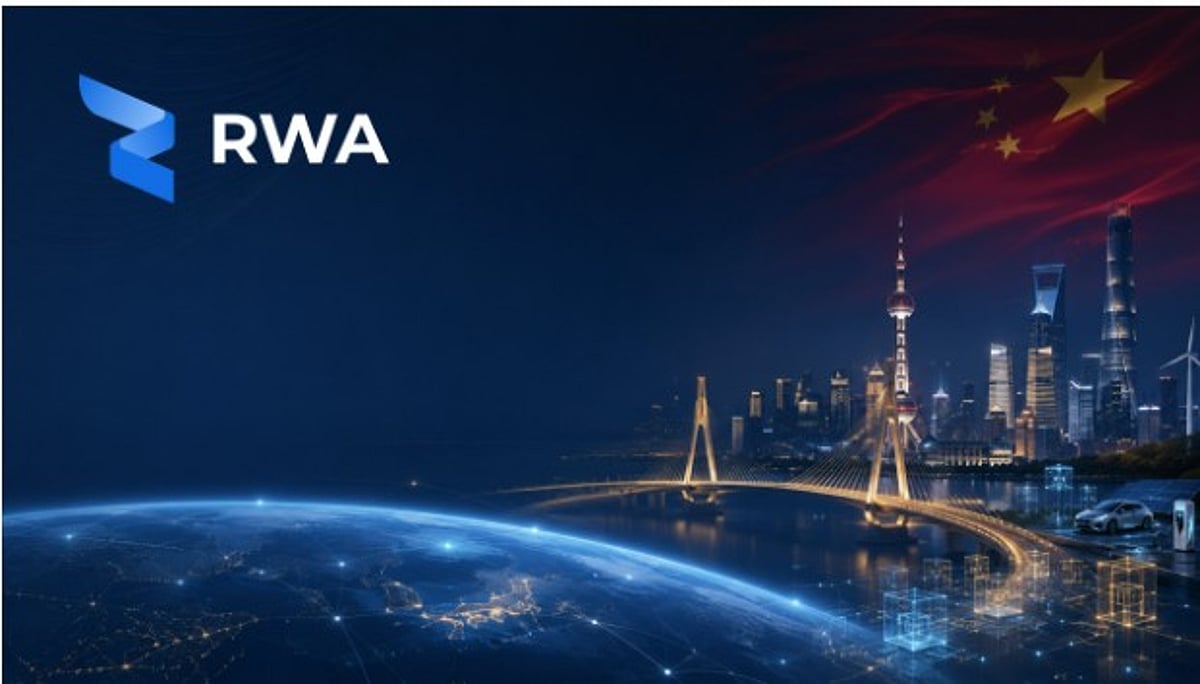
  • RWA Global Inc Forges $300M Tokenization Deal to Open China’s New-Energy Market to Global Investors

    RWA Global Inc Forges $300M Tokenization Deal to Open China’s New-Energy Market to Global Investors

    For over a decade, foreign investors have watched China’s electric-vehicle boom from a distance, locked out by capital controls and strict regulatory barriers. A new advisory agreement between RWA Global Inc and Golden Dolphin Trading L.L.C. aims to change that by tokenizing approximately $300 million in real-world assets tied to China’s new-energy mobility infrastructure.

    RWA Global Inc, a real-world asset tokenization consultancy based in the British Virgin Islands and the UAE, has signed a formal advisory engagement with Golden Dolphin Trading, a UAE-registered company that owns new-energy mobility assets in mainland China. The plan involves wrapping economic rights to assets such as EV charging stations into regulated digital securities that can be offered to global investors while staying within China’s compliance framework.

    The key enabler is a regulatory shift that occurred on February 6, 2026, when the People’s Bank of China, the CSRC, and six other agencies issued a notice (Yin Fa [2026] No. 42) and accompanying CSRC guidelines. While the document tightens rules on onshore tokenization and renminbi stablecoins, it also introduces for the first time a filing-based route for issuing tokens offshore that are backed by onshore Chinese assets, provided the issuer obtains prior CSRC approval. It is not an open door, but it is a real opening.

    The assets under consideration are substantial. China sold roughly 16.5 million new-energy vehicles in 2025, more than half of all new car sales in the country. The charging network has expanded to over 19 million points, and the domestic charging market is valued north of $25 billion. These physical, cash-generating assets are ideally suited for tokenization, which can broaden the investor base, reduce fundraising friction, and add liquidity to traditionally illiquid holdings.

    The global market for real-world asset tokenization is growing rapidly. Excluding stablecoins, tokenized real-world assets reached an estimated $24–30 billion on-chain by the end of 2025, more than tripling year-over-year. Including stablecoins, the broader figure surpassed $300 billion, according to CoinGecko’s 2026 report. Major financial institutions like BlackRock and Franklin Templeton are already active in the space.

    RWA Global Inc CEO Kevin Yunai stated: “China’s new-energy economy is among the most dynamic in the world, yet global investors have had few compliant ways to participate in it directly. This engagement is a first step toward a transparent, regulated bridge between international capital and Chinese real-world assets.” Donna Tang of Esquare Legal described the deal as “an early step toward a compliant offshore bridge between China’s industrial value and global capital,” offering a cleaner path for outside exposure to the country’s clean-energy push.

    Whether the model scales depends on how the CSRC handles filings in practice. Initial deals under any new regime tend to move slowly. But if successful, the template — onshore assets, offshore tokens, regulator in the loop — could extend far beyond a single $300 million deal.

    Disclaimer: This article is for informational purposes only and does not constitute an offer or solicitation to buy any security, token, or financial instrument. The advisory engagement described is indicative and subject to client decisions, qualified counsel, and regulatory approval. Market figures are from third-party sources and have not been independently verified.

  • Which Real-World Assets Are Best Suited for Tokenization? A $30 Trillion Opportunity

    Which Real-World Assets Are Best Suited for Tokenization? A $30 Trillion Opportunity

    Tokenization is no longer a fringe experiment — it is rapidly becoming one of the defining battlegrounds for the future of global finance. As giants like JP Morgan, BlackRock, and Franklin Templeton roll out tokenized funds and governments test digital securities, the debate has moved beyond whether real-world assets (RWAs) belong on-chain to a far more consequential question: which assets will dominate the next era of capital markets?

    Some forecasts suggest the tokenized asset market could exceed $30 trillion by 2030. But beneath the excitement lies a practical question: Is every asset class equally suited to blockchain infrastructure? The winners will be the assets that combine predictable cash flows, clear legal structures, and operational compatibility with digital ownership — not those that simply target the largest total value of assets.

    Real Estate: Huge Market, Heavy Friction

    Real estate has long been the poster child for tokenization. It is an enormous global asset class, investors understand it, and fractional ownership promises to make traditionally expensive properties accessible to smaller investors. Platforms such as RealT have demonstrated growing demand by enabling investors to buy fractional interests in commercial and residential properties through blockchain-based marketplaces.

    The challenge is that real estate carries significant operational complexity. Every property sits within its own legal jurisdiction, requires ongoing management, and often suffers from limited liquidity. Tokenizing a building does not remove the paperwork surrounding ownership transfers, tenant agreements, taxes, or local regulations. The result is that while tokenization can improve capital formation and investor access, it does not fundamentally change the operational realities of the underlying asset.

    Private Credit: Institutional Momentum

    Private credit has emerged as one of the fastest-growing RWA sectors, largely because the assets already exist in digital financial workflows. Projects like Maple Finance have demonstrated how blockchain can facilitate institutional lending and private credit markets. Loans generate predictable cash flows, documentation is standardized, and institutional investors are familiar with securitized debt structures. Bringing these assets on-chain primarily improves settlement, transparency, and transferability rather than reinventing the asset itself.

    This is why many of today’s largest tokenization projects focus on Treasury products, money market funds, and private credit portfolios. The regulatory framework is comparatively well understood, even if access remains largely restricted to accredited investors.

    Commodities: Simple Exposure, Complex Delivery

    Commodities appear straightforward to tokenize, particularly assets such as gold, oil, or agricultural products. In reality, physical delivery, storage, insurance, and custody bring considerable complexity. Projects like PAX Gold (PAXG) and Tether Gold (XAUT) have become leading examples of tokenized precious metals, giving investors blockchain-based exposure to physical gold held in regulated vaults. Most commodity tokens therefore represent claims on assets held by custodians rather than direct ownership of the underlying commodity itself. While this model works well for certain markets, it often introduces centralized counterparties that blockchain alone cannot eliminate.

    Maritime Assets: A New Contender

    Shipping rarely appears in discussions around RWAs, despite moving more than 80% of global trade by volume. Yet from a tokenization perspective, commercial vessels possess many of the characteristics institutional investors typically seek. Ethra Ship is one of the first to build credible blockchain infrastructure around operating dry bulk vessels. Operating vessels generate recurring revenue through charter agreements, creating cash flows that can be distributed to investors. Fleet performance is measurable, asset values are independently assessed, and vessel ownership has long relied on structured legal entities such as Special Purpose Vehicles (SPVs).

    Freight revenues reflect real economic activity, unlike speculative assets. Demand for transporting iron ore, grain, coal, and other essential commodities continues regardless of market cycles, making shipping a comparatively resilient sector. Gaining exposure to commercial shipping has required institutional relationships, specialist knowledge, and substantial amounts of capital, but that is beginning to change.

    The Next Phase of Tokenization

    The race for trillions of dollars in tokenized assets is unlikely to produce a single dominant asset class. Real estate offers familiarity but remains operationally complex. Private credit is attracting institutional adoption thanks to standardized financial structures. Commodities benefit from global demand but still rely heavily on custodians. Maritime assets occupy an interesting middle ground: they combine tangible infrastructure, recurring cash flows, established ownership structures, and a market that has historically been inaccessible to retail investors.

    The next generation of RWA platforms will likely be judged less by how many assets they tokenize and more by whether they build systems capable of serving both crypto-native users and institutional investors. In that respect, architecture — not just asset selection — will prove to be the industry’s greatest competitive advantage.

  • Top Polkadot Projects to Watch in 2026: DeFi, RWA, Privacy, and Infrastructure Growth

    Top Polkadot Projects to Watch in 2026: DeFi, RWA, Privacy, and Infrastructure Growth

    Polkadot’s ecosystem is experiencing robust growth in 2026, driven by expansion in decentralized finance (DeFi), rising tokenization of real-world assets (RWAs), privacy-focused blockchain applications, and major network upgrades that enhance adoption and long-term utility.

    Overview:
    Hydration and Acala lead Polkadot’s rapidly growing DeFi sector. Centrifuge provides strong exposure to the booming real-world asset tokenization market. Manta, Phala, and Hyperbridge strengthen privacy, security, and cross-chain infrastructure.

    The Polkadot ecosystem has entered a pivotal phase. Following the launch of Polkadot 2.0, the network now offers improved speed, stronger scalability, and smoother cross-chain communication. This major upgrade has shifted market attention from early blockchain experiments toward projects solving real-world problems.

    The greatest growth within the ecosystem is concentrated in three major sectors: decentralized finance, real-world assets, and privacy-focused applications. Several projects now stand out with strong development activity, rising adoption, and major updates across the network.

    Hydration Becomes a Strong DeFi Project

    Hydration has emerged as one of the most important DeFi projects within the Polkadot ecosystem. The platform acts as a central liquidity hub where users can swap assets, provide liquidity, and access various financial services in one place. Its greatest strength lies in Polkadot’s cross-chain technology, enabling assets from different parachains to move more seamlessly across the network. Many analysts now view Hydration as one of the strongest DeFi protocols built on Polkadot. As blockchain markets continue to expand, many ecosystems struggle with fragmented liquidity across chains. Hydration addresses this by creating greater capital efficiency and easier asset movement. Developer interest and user activity have steadily risen throughout the year.

    Acala Continues to Lead Financial Infrastructure

    Acala remains one of the oldest and most established financial projects on Polkadot. The platform offers various blockchain financial services, including stablecoins, lending systems, decentralized trading, and liquid staking solutions. Despite strong competition from newer projects, Acala maintains its important position in the ecosystem. The biggest focus has shifted toward liquid staking, which allows DOT holders to continue earning staking rewards while using their assets in DeFi applications. This has become more significant after Polkadot introduced major tokenomics changes in March 2026, altering validator rewards and staking economics across the entire network. As a result, protocols like Acala may experience stronger capital inflows in the coming months.

    Centrifuge Expands Real-World Asset Adoption

    Centrifuge has established itself as a leading contender in the rapidly expanding real-world asset marketplace. The project focuses on tokenizing traditional financial assets such as invoices, private debt, treasury-backed instruments, and trade receivables, enabling these assets to participate in blockchain-based lending. The RWA sector has become one of the fastest-growing areas in cryptocurrency. As of 2026, major financial institutions are increasingly interested in tokenization of finance, as blockchain offers transparency and high-speed settlement. By creating a direct pathway for Polkadot to access this growing market, Centrifuge has emerged as one of the year’s most significant long-term ecosystem projects.

    Manta Network Strengthens Privacy Technology

    Manta Network has established itself as one of the strongest privacy-focused blockchain projects on Polkadot. The project uses advanced zero-knowledge proof technology, enabling confidential transactions while maintaining secure network verification. Privacy has become a major topic because institutions and enterprise users need blockchain systems that protect sensitive financial data. Manta addresses this challenge by allowing selective data sharing without exposing complete transaction details. As blockchain adoption grows among larger institutions, privacy technology like Manta’s has become far more valuable.

    Phala Network Brings Private Cloud Computing

    Phala Network has gained significant attention for its focus on confidential computing. Unlike traditional privacy projects that primarily protect transaction data, Phala enables secure off-chain computation through trusted execution environments. This creates a distinct use case within the Polkadot ecosystem. The project opens new opportunities in sectors such as artificial intelligence, healthcare systems, financial services, and private smart contract execution. As blockchain and AI technology converge, confidential computing solutions have become an important part of future Web3 infrastructure. This trend ensures Phala continues to attract strong market attention.

    Hyperbridge Pushes Cross-Chain Expansion

    Hyperbridge has quickly become one of the most popular infrastructure projects on Polkadot. The project focuses on secure cross-chain communication via zero-knowledge cryptographic proofs (ZK proofs) instead of traditional validator-based bridges. Hyperbridge processed over 10 million finality proofs and managed approximately $92 million worth of transactions in 2026, demonstrating strong ecosystem adoption. However, in April 2026, a security exploit occurred involving bridged DOT pools, resulting in approximately $2.5 million in losses, prompting large-scale security reviews throughout the ecosystem. Despite this incident, Hyperbridge remains a vital component of Polkadot’s long-term interoperability strategy.

    Final Outlook for Polkadot in 2026

    Polkadot has entered a much stronger phase. The ecosystem now focuses less on early blockchain experiments and more on real products with practical value. DeFi projects like Hydration and Acala continue to expand financial activity across the network. Centrifuge provides exposure to the fast-growing real-world asset market. Privacy-focused projects such as Manta and Phala support enterprise blockchain adoption, while Hyperbridge helps improve cross-chain infrastructure. With the arrival of Polkadot 2.0, major tokenomics changes in March 2026, and stronger developer activity across the ecosystem, these projects stand out as some of the most important names to watch as Polkadot moves toward its next stage of growth.

    FAQs

    1. Why is Polkadot important in 2026? Polkadot 2.0 upgrades have improved network speed, scalability, and ecosystem growth.
    2. Which is the top DeFi project on Polkadot? Hydration and Acala remain the strongest DeFi projects in the ecosystem.
    3. What is Centrifuge used for? Centrifuge helps convert real-world assets like invoices and credit markets into blockchain assets.
    4. Which Polkadot project focuses on privacy? Manta Network and Phala Network are major privacy-focused blockchain projects.
    5. Why are these projects worth watching? They represent the strongest sectors driving Polkadot adoption in 2026.