Tag: renewable energy

  • 10 Breakthrough Technologies Driving a Sustainable Future

    10 Breakthrough Technologies Driving a Sustainable Future

    The path to a sustainable future is being paved by remarkable innovations across multiple sectors. From energy generation to waste management, these technologies are transforming how we interact with our planet. Below, we explore ten revolutionary advancements that promise to reduce environmental impact and build a greener world.

    Next-Generation Solar Panels

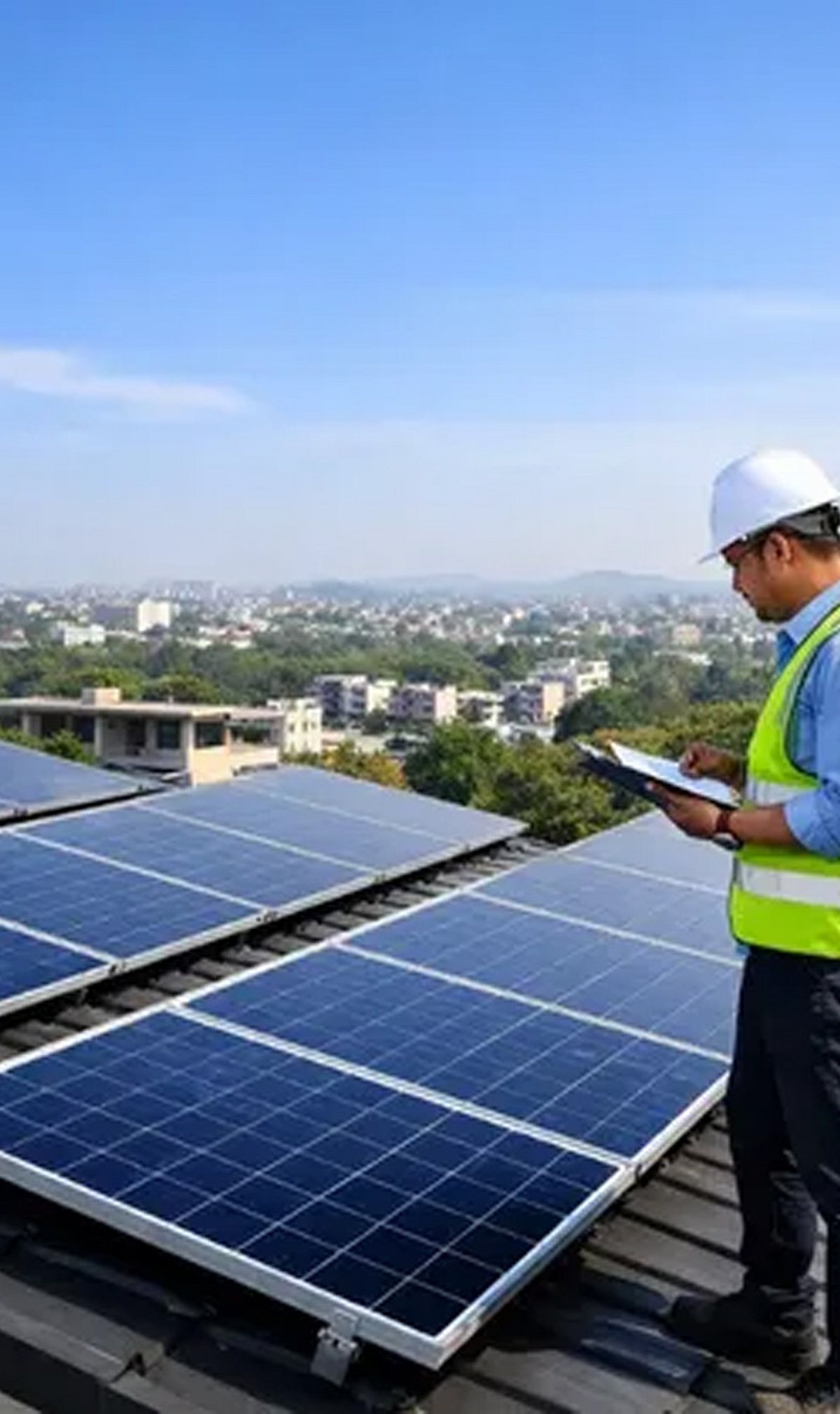
    Innovations in solar power are delivering higher efficiency and lower costs, making renewable electricity more accessible worldwide. Advanced photovoltaic materials and manufacturing techniques are pushing the boundaries of energy generation from sunlight.

    Green Hydrogen

    Produced using renewable energy sources, green hydrogen offers a clean fuel alternative for transportation, heavy industries, and long-term energy storage. It has the potential to decarbonize sectors that are hard to electrify directly.

    Carbon Capture Technology

    Advanced systems now capture carbon dioxide directly from industrial emissions and the atmosphere. These technologies help reduce greenhouse gas concentrations and support global climate goals by enabling carbon removal at scale.

    Vertical Farming

    Indoor farming using controlled environments dramatically reduces water consumption and land requirements while enabling year-round food production in urban areas. This approach minimizes transportation emissions and ensures local food security.

    Smart Grids

    Intelligent electricity networks optimize energy distribution, seamlessly integrate renewable sources, and improve overall efficiency. Smart grids reduce power outages and transmission losses while enabling better demand management.

    Electric Vehicles

    Modern electric vehicles are reducing dependence on fossil fuels and lowering emissions. Improving battery technology and expanding global charging infrastructure are making EVs more practical and affordable for everyday use.

    Biodegradable Materials

    Sustainable alternatives to conventional plastics are being developed that naturally decompose without harming the environment. These materials support environmentally responsible packaging and manufacturing across industries worldwide.

    Ocean Cleanup Systems

    Innovative technologies are being deployed to remove floating plastic waste from our oceans. These cleanup systems help restore marine ecosystems and protect aquatic biodiversity from the growing threat of plastic pollution.

    AI for Sustainability

    Artificial intelligence is being harnessed to optimize energy usage, predict climate patterns, improve agricultural practices, and enhance resource management. Data-driven decision-making powered by AI is unlocking new efficiencies in sustainability efforts.

    These technologies represent just a glimpse of the innovations shaping a sustainable future. As research continues and adoption scales, their collective impact will be instrumental in addressing the environmental challenges of our time.

  • Best Solar Panels in Australia 2026: Top 10 Ranked for Efficiency, Warranty & Value

    Best Solar Panels in Australia 2026: Top 10 Ranked for Efficiency, Warranty & Value

    Australia’s residential solar market has entered a more mature phase. Customers are no longer making decisions based solely on whether a system is ‘cheap’ or ‘expensive’; instead, they evaluate its overall value relative to its upfront cost. With leading companies developing better efficiency and warranties, the competitiveness is moving into reliability, post-sale services, and trust in installation. This means a good solar panel system cannot be judged by a single specification.

    Modern modules also deliver better performance during hot summers and challenging weather conditions. This ranking considers panel efficiency, durability, warranty coverage, value for money, performance in Australian conditions, and the reputation of manufacturers and installers to help homeowners choose the right system.

    Top 10 Best Solar Panels in Australia 2026

    1. SunPower Maxeon 7

    Produced by Maxeon Solar Technologies, the SunPower Maxeon 7 continues to be the best model in 2026. It offers more than 24% efficiency and output up to 475W with the use of the latest Interdigitated Back Contact (IBC) technology. With a warranty period of 40 years, it is ideal for people looking for top-notch efficiency and energy generation.

    2. REC Alpha Pure-RX

    Based in Singapore, REC manufactures the Alpha Pure-RX that utilizes Heterojunction Cells (HJT), with efficiency above 22%. The Alpha Pure-RX has power output ranging from 430W to 470W, and is offered with a 25-year warranty and good degradation figures. It is known to perform reliably in Australia’s high temperatures, making it ideal for premium domestic projects.

    3. Aiko Neostar

    Solar panels in the Aiko Solar Neostar range boast All Back Contact (ABC) Technology that enables efficiencies of over 24%. The panels provide output ranges between about 460 W and 490 W and come with warranties that last up to 30 years. They stand out for their excellent performance in low light conditions and elegant design.

    4. Jinko Tiger Neo

    Jinko Solar continues to be a highly favored brand in Australia for its dependable Tiger Neo series. Its cell technology employs the N-Type TOPCon technology, which achieves an efficiency of almost 23%, with power ratings ranging from 440W up to 490W. With a 25-year warranty on the product, the line represents great value.

    5. LONGi Hi-MO X10

    The Hi-MO X10 is LONGi’s latest high-performance panel designed for residential installations that is expected to be available by 2026. The use of back-contact technology makes this solar panel more efficient than any other, with an efficiency rate greater than 24% and power output of around 470W to 500W.

    6. Trina Vertex S+

    The Trina Solar Vertex S+ is a module made using the N-Type TOPCon Technology and is built using a resilient dual-glass panel structure. It provides an efficiency of 22.5% and a power output range of 430W to 460W along with a warranty for 25 years.

    7. Canadian Solar – TOPHiKu6 Series

    The TOPHiKu6 series from Canadian Solar is made using N-Type TOPCon technology. It gives an output ranging between 440W and 485W with efficiencies exceeding 22%. It comes with a 25-year product warranty and provides great performance and durability at an affordable price.

    8. JA Solar – DeepBlue 4.0 Pro

    JA Solar is expanding its presence in Australia through the introduction of the DeepBlue 4.0 Pro model. Using the N-Type BYCIUM+ cell technology, the model provides efficiencies of around 23% with outputs ranging between 440W and 490W. It is accompanied by a 25-year warranty.

    9. Qcells – Q.TRON

    Renowned for its reliability, South Korean company Qcells’ Q.TRON series is made using the latest N-Type technology and comes with efficiencies exceeding 22% with outputs of around 430W to 470W. With a 25-year warranty, it performs well even at high temperatures.

    10. Risen – Hyper-ion

    Risen Energy’s Hyper-ion panels use Heterojunction (HJT) technology and give efficiencies of more than 24% with outputs close to 500W. With performance warranties and excellent resistance to efficiency loss from heat, they are a perfect choice for homeowners in Australia.

    Quick Comparison: Which Panel Fits Your Home?

    When choosing solar panels in Australia, look beyond the purchase price. Higher panel efficiency is valuable if roof space is limited, while a low temperature coefficient helps maintain output during hot summers. Compare product and performance warranties carefully, choose Clean Energy Council (CEC)-approved products, and work with an experienced local installer who offers reliable after-sales support. Premium panels cost more initially but often deliver greater long-term savings and durability.

    The winning solar panel isn’t defined by a single specification. It’s the combination of quality hardware, sound system design and a manufacturer that’s likely to be standing behind its warranty 20 years from now. For homeowners, that’s the difference between simply owning solar and making a genuinely profitable energy investment.

    FAQs

    1. Which is the best solar panel in Australia for 2026?

    SunPower Maxeon 7 ranks among the best for efficiency and longevity, while REC, Aiko, and Jinko offer excellent alternatives depending on budget, roof space, and energy needs.

    2. Are premium solar panels worth the extra cost?

    Premium panels are worthwhile for homes with limited roof space, high electricity consumption, or long-term ownership, thanks to higher efficiency, lower degradation, and stronger warranty coverage.

    3. How many solar panels does an average Australian home need?

    Most Australian households install a 6.6kW system with around 15–16 panels, while larger homes with higher electricity demand often benefit from systems around 10kW.

    4. What should I look for when buying solar panels?

    Prioritise panel efficiency, product warranty, performance warranty, degradation rate, CEC-approved products, and an experienced installer who can design a system based on your electricity usage.

    5. Do government rebates still apply to solar in 2026?

    Yes. Eligible systems continue to receive upfront savings through the Small-scale Technology Certificate (STC) scheme, with rebate values varying by system size and installation location.


  • AI-Enabled Smart Microgrids: Transforming Energy Systems with Predictive Intelligence and Autonomous Optimization

    AI-Enabled Smart Microgrids: Transforming Energy Systems with Predictive Intelligence and Autonomous Optimization

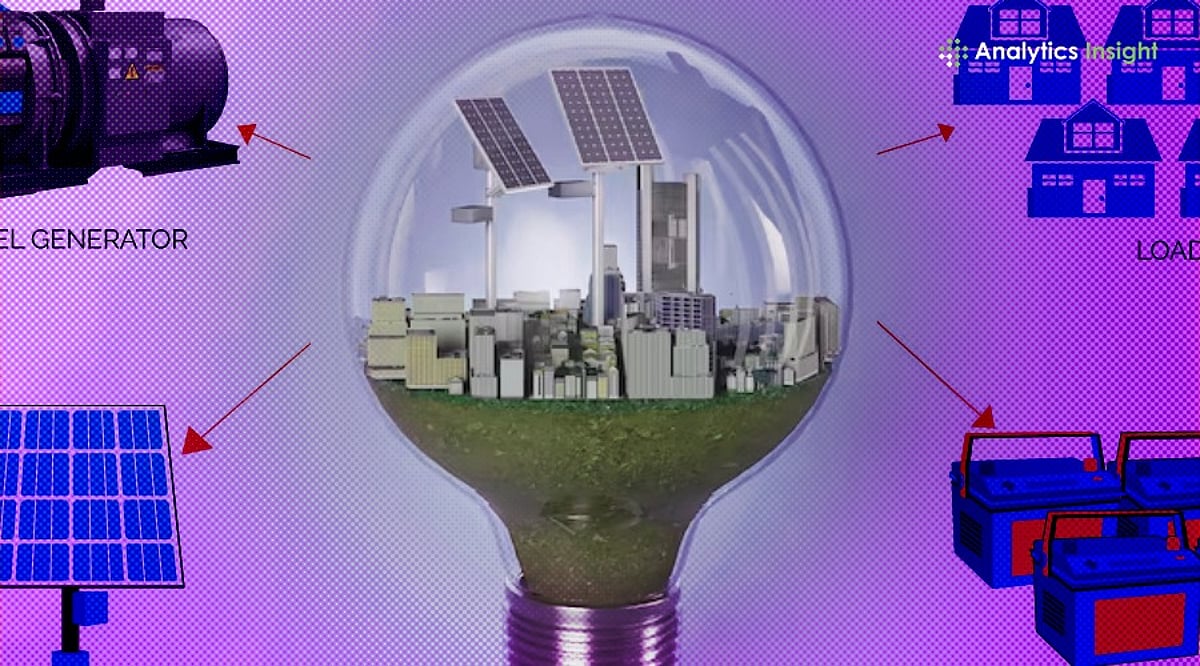
    AI is transforming microgrids from rule-based energy systems into intelligent, self-optimizing networks. By combining predictive analytics, renewable forecasting, and autonomous energy management, AI improves grid reliability, lowers operating costs, and supports the growing power demands of data centers, industries, and smart communities.

    From Passive Systems to Predictive Ones

    Traditional microgrids relied on relatively simple rule-based controllers: if battery storage drops below a threshold, switch to backup generation. AI-enabled systems operate very differently, using machine learning models such as LSTM neural networks to forecast solar and wind output, anticipate demand spikes hours in advance, and adjust dispatch decisions before a shortfall occurs. Research comparing forecasting techniques has shown LSTM networks achieving strong accuracy for wind generation prediction, while random forest models have performed particularly well for solar forecasting—both feeding directly into how confidently a microgrid can rely on renewable sources rather than falling back on diesel generation as a safety net.

    The Market Is Scaling Fast, and AI Is the Reason Why

    The global microgrid market was valued at roughly $28.9 billion in 2025 and is projected to grow at a compound annual rate of around 18% through the early 2030s, according to Global Market Insights. A narrower but faster-growing segment—AI-integrated microgrids purpose-built for data centers—is expected to expand from $4.8 billion in 2025 to $20.9 billion by 2034. That growth is being driven largely by AI’s own power appetite: hyperscale data centers need reliable, high-density power that public grids increasingly can’t guarantee, making AI-optimized microgrids as much an enabler of the broader AI boom as a beneficiary of it.

    Who’s Building the Intelligence Layer

    A handful of established industrial players and newer software specialists are shaping how AI actually gets embedded into microgrid operations. Key companies include:

    • Schneider Electric
    • Siemens
    • Tesla Energy
    • ABB
    • Eaton
    • Heila Technologies

    Predictive Maintenance Is Quietly Cutting Costs

    Beyond forecasting and dispatch, AI is reshaping how microgrids stay operational in the first place. By continuously analyzing sensor data from batteries, inverters, and generation assets, machine learning models can flag early signs of equipment degradation well before a failure actually occurs. This shifts maintenance from a fixed, calendar-based schedule to a condition-based one, reducing unplanned downtime and avoiding the kind of costly emergency repairs that used to be treated as simply unavoidable in distributed energy systems.

    Real-World Deployments Show the Financial Case

    The economic argument for AI-driven microgrids is no longer theoretical. Schneider Electric’s EcoStruxure Microgrid deployment at a California winery, Domaine Carneros, cut carbon emissions by 375 tonnes and saved roughly $70,000 annually through smarter load management alone. At a larger scale, research into hydrogen-integrated microgrids combining LSTM forecasting with optimization algorithms has shown grid import reductions of over 35% and improvements in energy self-sufficiency from roughly 71% to nearly 90%—figures that would be difficult to reach with static, rule-based control systems.

    What’s Next for AI-Driven Microgrids

    The next phase of development looks likely to center on two things: tighter integration with digital twins that simulate microgrid behavior before changes are made in the real world, and deeper participation in energy markets, where systems like Tesla’s Autobidder let storage assets buy and sell power autonomously based on real-time price signals. As renewable penetration keeps climbing and AI’s own electricity demand keeps growing in parallel, the pressure on microgrids to get smarter is only going to intensify.

    Why This Matters

    As renewable energy adoption accelerates and electricity demand rises from AI workloads and data centers, intelligent microgrids have become essential for grid resilience. AI enables real-time optimization, predictive maintenance, and efficient energy distribution, helping businesses and communities reduce costs, improve reliability, and support a more sustainable energy future.

  • Key Factors for Selecting a Top Solar Panel Manufacturer

    Key Factors for Selecting a Top Solar Panel Manufacturer

    Choosing the right solar panel manufacturer is critical for long-term energy savings and system reliability. Below are the essential criteria to guide your decision.

    Manufacturer Reputation

    Research brand credibility, industry experience, customer reviews, and successful installations before selecting a manufacturer. A trusted provider ensures reliable long-term solar performance.

    Product Certifications

    Verify international quality certifications that confirm panels meet recognized safety, efficiency, durability, and environmental standards. This step is non-negotiable before making a purchase.

    Panel Efficiency

    Compare efficiency ratings to maximize electricity generation, especially when rooftop space is limited for residential or commercial installations. Higher efficiency often translates to better return on investment.

    Warranty Coverage

    Choose manufacturers offering comprehensive product and performance warranties. These protect against manufacturing defects and guarantee long-term output degradation.

    Technology Used

    Evaluate advanced technologies like TOPCon, HJT, or bifacial panels. These deliver higher efficiency, improved durability, and superior energy production capabilities.

    After-Sales Support

    Reliable technical assistance, maintenance services, and prompt warranty claims ensure hassle-free ownership throughout the solar system’s operational lifespan.

    Pricing Transparency

    Compare complete installation costs without hidden charges. Balance affordability with quality, efficiency, and long-term value for money.

    Installation Network

    Prefer manufacturers with certified installation partners. This ensures professional setup, compliance with standards, and optimal system performance after commissioning.

    Customer Reviews

    Read verified customer feedback to understand real-world performance, service quality, installation experience, and long-term satisfaction before finalizing your purchase.

  • Adani Energy Solutions Shares Jump 2% to ₹1,553 Following ₹10,000 Crore QIP Announcement

    Adani Energy Solutions Shares Jump 2% to ₹1,553 Following ₹10,000 Crore QIP Announcement

    Adani Energy Solutions Ltd (AESL) shares climbed approximately 2.12% to trade around ₹1,553.60 during Thursday’s session, after the company announced plans to raise up to ₹10,000 crore through a Qualified Institutional Placement (QIP). The stock touched an intraday high of ₹1,570.30, reflecting renewed investor confidence in the company’s long-term expansion strategy.

    ₹10,000 Crore QIP to Fuel Infrastructure Growth

    The board of Adani Energy Solutions has approved raising ₹10,000 crore via a QIP or other eligible securities, subject to shareholder and regulatory approvals. A QIP allows listed firms to raise equity capital from institutional investors without the lengthy process of a public issue. Shareholders will vote on the proposal at an Extraordinary General Meeting (EGM) scheduled for July 25, while the board will review the company’s June-quarter results on July 21.

    Why the Capital Raise Matters

    India’s power sector is undergoing significant expansion, driven by rising electricity consumption, growth in renewable energy, and grid modernization. The fresh capital will help Adani Energy Solutions compete for large transmission and distribution projects, accelerate ongoing initiatives, and maintain a strong balance sheet without over-reliance on debt.

    Potential Deployment of Funds

    Although the company has not disclosed a detailed utilization plan, industry experts anticipate the capital will support expansion across key business segments, including power transmission, electricity distribution, and smart meters. The infusion is expected to strengthen financial flexibility and enable the firm to bid for additional infrastructure contracts.

    Investor Sentiment and Stock Performance

    The fundraising news has bolstered investor sentiment. The stock has recovered sharply from its 52-week low of approximately ₹745.45 and recently reached a 52-week high of around ₹1,614, indicating robust long-term interest. The proposed QIP may lead to some equity dilution, but analysts believe efficient deployment could accelerate growth and enhance shareholder value over time.

    Industry Tailwinds

    India’s heavy investments in renewable energy will require substantial transmission assets to connect new solar and wind plants to the grid. Adani Energy Solutions, with its expanding footprint in transmission, distribution, and smart metering, is well-positioned to capitalize on these trends. Key indicators for investors include project progress, regulated asset base growth, earnings per share impact, and debt management.

    Market Outlook

    The ₹10,000 crore QIP signals Adani Energy Solutions’ ambition to strengthen its position in India’s evolving power infrastructure landscape. While equity dilution is a near-term consideration, the additional capital could support sustained expansion, provided it is deployed efficiently. The upcoming June-quarter results will provide further clarity on the company’s financial health and growth trajectory.

    Disclaimer: This article is for informational purposes only and does not constitute investment advice. Readers should conduct their own research before making any investment decisions.

  • Tata Power-DDL and Ashoka Centre Forge Five-Year Partnership to Drive India’s Energy Transition Research

    Tata Power-DDL and Ashoka Centre Forge Five-Year Partnership to Drive India’s Energy Transition Research

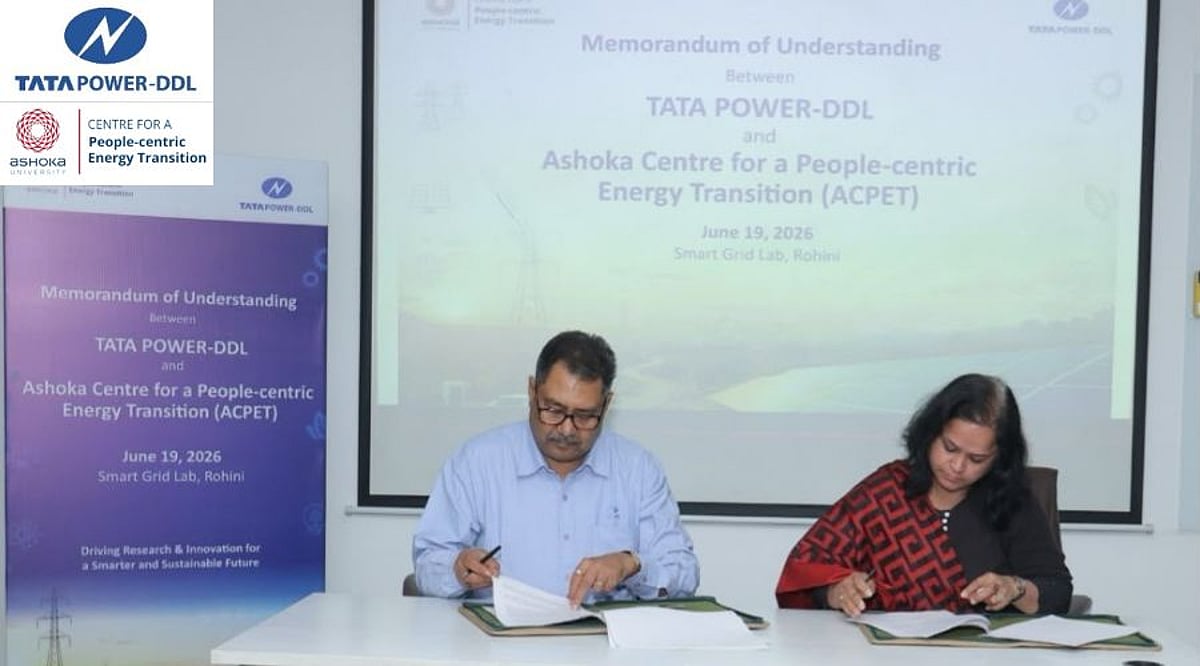
    New Delhi, June 26, 2026 — The Ashoka Centre for a People-centric Energy Transition (ACPET) and Tata Power Delhi Distribution Limited (Tata Power-DDL) have signed a five-year Memorandum of Understanding (MoU) to accelerate research, innovation, and capacity building across India’s energy and power sector. The collaboration aims to create scalable solutions that support the country’s broader energy transition goals.

    The partnership unites ACPET’s expertise in research, data analysis, energy policy, and sustainable transitions with Tata Power-DDL’s operational experience as a leading Indian power distribution utility. Joint activities will include research projects, technology demonstrations, policy engagement, and knowledge-sharing initiatives designed to build a more sustainable, secure, and equitable energy future.

    This collaboration arrives at a pivotal moment for India’s power sector, which is undergoing rapid technological and regulatory transformation. Key focus areas include smart grids, electric vehicles, distributed energy resources, energy storage, demand-side management, and consumer engagement. The MoU creates a structured platform for both organizations to explore these opportunities and contribute to industry best practices.

    Specific initiatives under the partnership include joint research and learning, development of policy briefs and technical reports, expert dialogues, training programs, and the potential establishment of a Centre of Excellence to drive innovation and strengthen institutional capabilities.

    “India’s energy transition presents a unique opportunity to bring together research, policy, innovation and real-world implementation. As the sector evolves over the coming years, meaningful progress will depend on stronger collaboration between academia, industry, policymakers, startups and innovators,” said Dr. Praveer Sinha, CEO & Managing Director, Tata Power.

    “Technology alone will not deliver India’s energy transition — the human capacity to deploy, operate, and innovate around that technology is equally decisive. This partnership between Tata Power-DDL and ACPET brings together operational depth and research rigour to address both,” said Vaibhav Chowdhary, Director, ACPET.

    “India’s electricity sector is undergoing a profound transformation. We want renewable energy to scale rapidly, but we also recognise that transitions of this magnitude are shaped by historical realities, market dynamics, and technological constraints. Together, we can bridge evidence and practice to shape more effective pathways for India’s energy transition,” added Rakesh Kacker, Senior Advisor, ACPET.

    “The power sector is undergoing a fundamental transformation driven by rapid technological advancements, growing renewable energy integration, distributed energy resources, and evolving consumer expectations. Our partnership with ACPET will bring together industry experience and academic excellence to develop innovative solutions, strengthen policy and regulatory frameworks, and contribute meaningfully to India’s energy transition journey,” said Dwijadas Basak, CEO, Tata Power Delhi Distribution Limited (Tata Power-DDL).

    Under the agreement, Tata Power-DDL will support dedicated research personnel and provide infrastructure access, while both institutions will jointly design and implement research projects, consumer awareness programs, and disseminate outcomes. A Joint Steering Committee with representatives from both organizations will provide strategic oversight.

    The collaboration reflects a shared commitment to addressing the complex technological, regulatory, and societal dimensions of the energy transition, contributing to India’s vision of a sustainable and secure energy future.

    About Tata Power-DDL

    Tata Power Delhi Distribution Limited is a joint venture between Tata Power and the Government of NCT of Delhi. It distributes electricity in North Delhi, serving a population of around 9 million. The utility has been a frontrunner in power distribution reforms, achieving a record reduction in Aggregate Technical & Commercial (AT&C) losses from 53% in July 2002 to 5.42% today. It has been awarded the highest ‘A+’ rating by the Ministry of Power under the Consumer Service Rating of Discoms (CSRD) framework for FY 2024–25.

    About ACPET

    The Ashoka Centre for a People-centric Energy Transition (ACPET) supports energy transition toward a net-zero economy, addressing critical knowledge gaps for India and the Global South. ACPET builds context-responsive, people-centric frameworks and solutions that advance economic, social, and governance pillars of sustainable growth. It collaborates with industry, government, and community leaders to test and evaluate practical interventions.

    For more information, visit acpet.ashoka.edu.in.

  • MIT Civil and Environmental Engineering: Pioneering Sustainable Infrastructure and Climate Solutions

    MIT Civil and Environmental Engineering: Pioneering Sustainable Infrastructure and Climate Solutions

    The MIT Department of Civil and Environmental Engineering (CEE) continues to lead groundbreaking research that addresses some of the world’s most pressing challenges, from climate change to infrastructure resilience. Recent developments highlight the department’s commitment to innovation, sustainability, and real-world impact.

    Building Smarter, Greener Structures

    MIT researchers have developed a computer model that could enable bridges and buildings to use less material while maintaining structural integrity. This approach bridges the gap between optimized design and practical construction, promising significant cost and environmental savings.

    Climate and Environmental Breakthroughs

    In a major advance for sustainable construction, new research reveals how injecting carbon dioxide into cement paste triggers a chemical sequence that rewires how cement sets. Using real-time Raman spectroscopy, scientists captured a fleeting intermediate reaction for the first time, opening pathways to carbon-negative building materials.

    MIT is also tackling methane emissions head-on. PhD student Audrey Parker is studying mitigation strategies for dairy farms and coal mines, targeting this potent greenhouse gas. Meanwhile, ocean bacteria have been observed teaming up to break down biodegradable plastics, offering insights into natural waste decomposition processes.

    AI and Automation Innovations

    MIT engineers have designed an AI model that generates novel proteins based on their motion and vibration patterns, not just their shape. This breakthrough could lead to dynamic biomaterials and adaptive therapeutics. Another AI system learns to keep warehouse robot traffic flowing smoothly by deciding which robots get right-of-way, reducing congestion and increasing throughput.

    A parking-aware navigation system developed at MIT minimizes the need to circle for spots, saving drivers up to 35 minutes and reducing emissions by providing realistic travel time estimates.

    Energy and Sustainability

    Active Surfaces, an award-winning startup with roots at the MIT Energy Initiative, is developing peel-and-stick solar panels that are lightweight, flexible, and high-efficiency. These films can be applied to roofs, walls, and curved surfaces, making solar energy more accessible.

    Recognition and Leadership

    MIT has once again been ranked the world’s No. 1 university by QS for 2026-27, marking the 15th consecutive year at the top. The Institute also placed first in 12 subject areas. The School of Engineering recognized faculty with tenure and awards in winter and fall 2025-2026, celebrating scholarship, service, and excellence. Desirée Plata, a CEE faculty member, was appointed associate dean of engineering to advance research and entrepreneurial initiatives.

    These achievements underscore MIT Civil and Environmental Engineering’s role as a global leader in creating sustainable, intelligent solutions for the built and natural environments.

  • UN Chief Unveils AI Environmental Transparency Initiative to Curb Rising Energy and Water Use

    UN Chief Unveils AI Environmental Transparency Initiative to Curb Rising Energy and Water Use

    United Nations Secretary-General António Guterres has launched a new environmental initiative aimed at holding the technology sector accountable for the growing resource consumption of artificial intelligence. Speaking at London Climate Action Week, Guterres drew attention to what he called a ‘Tale of Two Crises’—the climate emergency and the global energy crisis—and positioned AI as a major driver of escalating demand for power and water.

    The proposed ‘AI Environmental Transparency Initiative’ calls on major AI companies to measure and publicly disclose the carbon, water, and land footprints of their systems. Guterres emphasized that data centers already consume more electricity than most individual nations and predicted that by 2030 their power usage could surpass that of all but five countries worldwide. He also warned that AI infrastructure could consume enough water by the end of the decade to meet the basic needs of all 1.3 billion residents of sub-Saharan Africa for a full year, while occupying vast land areas that often see little benefit.

    To address these hidden costs, Guterres urged every major AI firm to commit to powering all data centers with renewable energy by 2030. He stressed that clean energy—particularly solar and wind, whose costs have fallen dramatically since 2010—offers the most scalable solution to feed strained power grids. The initiative also calls for upgrades to outdated transmission systems, faster permitting for renewable projects, and treating electrical grids as strategic infrastructure.

    The UN initiative is part of a broader strategy to manage the inevitable energy transition while ensuring that AI contributes to climate solutions rather than exacerbating environmental burdens on vulnerable communities.

  • MIT Researchers Unveil Ways to Cut Data Center Energy Use and Boost Sustainability

    MIT Researchers Unveil Ways to Cut Data Center Energy Use and Boost Sustainability

    A new study from MIT suggests that flexibility in the timing of electricity consumption at data centers could lower consumer costs. The research highlights how adjusting when energy is used can help manage demand and reduce strain on the grid.

    In related work, MIT researchers have developed a system called Murakkab that improves the speed and energy-efficiency of AI agents. This innovation optimizes the design and deployment of multistep workflows powering AI applications.

    Another project introduces a computer model that enables bridges and buildings to use less material while remaining buildable. The approach bridges the gap between optimized design and real-world construction constraints.

    MIT Professor Susan Solomon was named a 2026 Tang Prize laureate for her groundbreaking work on atmospheric chemistry, which helped lay the foundation for ozone layer recovery and demonstrated the lasting impacts of carbon emissions on climate.

    The MIT Environmental Solutions Journalism Fellowship has expanded climate reporting through local messengers, reaching nearly 3 million readers and listeners with community-centered coverage.

    A startup co-founded by two MIT researchers, Ferveret, uses a nuclear-inspired cooling system to reduce energy and water needed for cooling chips that power AI, making data centers more sustainable.

    Other MIT projects explore low-cost personal cooling and emissions-free air conditioning to address extreme heat, while researchers develop innovative carbon capture methods and a low-cost technique to extract lithium from rocks.

    A study on wetlands preservation shows that tradeoffs between conservation and development can be less stark with a policy featuring tradeable offsets and taxes. The MIT Asia Real Estate Initiative expands into booming Asian cities, and MIT Sloan fellows share insights on leading a sustainable future.

    For most U.S. drivers, electric vehicles offer emissions benefits and cost savings, with individual driving patterns and regional electricity mix playing key roles.