
Tag: risk management

  • How AI-Powered Apps Are Revolutionizing Cryptocurrency Trading

    How AI-Powered Apps Are Revolutionizing Cryptocurrency Trading

    Artificial intelligence is rapidly becoming a cornerstone of cryptocurrency trading infrastructure. AI-powered applications can process price action, derivatives data, blockchain activity, news, and sentiment far faster than any individual trader. While some systems only generate signals, newer agentic tools can connect directly to exchanges or wallets and execute transactions autonomously. However, these systems produce probabilistic decisions, not guaranteed forecasts.

    AI Combines Multiple Data Sources

    Conventional technical analysis typically relies on price, volume, and indicators. AI, on the other hand, analyzes vast datasets including Bitcoin momentum, order-book depth, funding rates, open interest, liquidations, exchange flows, and volatility. Machine learning identifies historical relationships associated with specific market events, while natural language processing (NLP) incorporates financial news, regulatory announcements, and social media discussions. The result: systems can classify market conditions as bullish, bearish, or neutral, assign probabilities to potential movements, or rank possible trading sequences.

    From Signals to Autonomous Execution

    AI analysis is increasingly extending beyond recommendations. Applications connected to exchange APIs can convert trading signals into orders, adjust position sizes, and monitor positions continuously. This trend became more visible in 2026: Kraken launched its CLI in March with 134 commands supporting spot trading, futures, staking, transfers, and WebSocket streaming. Kraken said the system was designed for developers and AI agents to access crypto markets directly. Coinbase introduced Agentic Wallets in February 2026, providing infrastructure that lets AI agents autonomously spend, earn, and trade while using built-in security guardrails.

    Historical Performance Can Be Misleading

    Machine learning models depend heavily on training data. A strategy optimized during a Bitcoin bull market may identify relationships that weaken during sideways or declining markets. Overfitting is another risk: a model can perform exceptionally well against historical observations but deteriorate once deployed with live capital. Trading costs—exchange fees, bid-ask spreads, slippage, and execution latency—can reduce or eliminate profits suggested by backtests. The CFTC warns that AI cannot predict sudden market changes and urges skepticism toward bots or signal services promising guaranteed or unusually high returns.

    Risk Controls Remain Essential

    Automated execution makes risk management particularly important, as errors can be repeated quickly. Position limits, stop-loss rules, exposure controls, model monitoring, and independent validation help constrain losses. The CFTC’s Innovation Task Force, announced in 2026, specifically includes artificial intelligence and autonomous systems among the technologies for which it is developing regulatory frameworks.

    Why This Matters

    The crypto market operates 24/7 and generates vast real-time data. While AI can process and respond rapidly, the need for reliable models, transparent strategies, and robust risk management increases proportionally.

    Final Thoughts

    AI can play a significant role in monitoring the cryptocurrency market, identifying trends, and executing trades, but it cannot eliminate trading uncertainty. Performance still depends on data quality, model design, changing market conditions, transaction costs, and disciplined risk controls.

    Frequently Asked Questions

    1. How does AI analyze cryptocurrency markets?
    AI systems process price movements, volume, order books, funding rates, open interest, liquidations, and blockchain activity simultaneously. NLP also incorporates financial news, regulatory developments, and social media sentiment.

    2. How do AI-powered apps generate crypto trading signals?
    Machine learning models search historical and real-time datasets for patterns associated with particular market conditions. They classify conditions as bullish, bearish, or neutral, calculate probabilities, or rank potential trading opportunities.

    3. Can AI automatically execute cryptocurrency trades?
    Yes. AI applications connected to exchange APIs or compatible wallets can convert signals into orders, determine position sizes, and monitor positions. Newer agentic infrastructure makes autonomous execution increasingly accessible.

    4. Can AI accurately predict Bitcoin and cryptocurrency prices?
    AI identifies patterns and estimates probabilities but cannot reliably predict future prices. Unexpected events, changing variable relationships, poor training data, and overfitting can cause previously successful models to fail.

    5. What are the major risks of using AI for crypto trading?
    Key risks include overfitting, inaccurate signals, sudden market changes, automation errors, slippage, and transaction costs. Position limits, stop-loss rules, exposure controls, and continuous model monitoring remain critical when automated systems trade.

  • Mastering Paper Trading on TradingView: A Complete Guide for Beginners

    Mastering Paper Trading on TradingView: A Complete Guide for Beginners

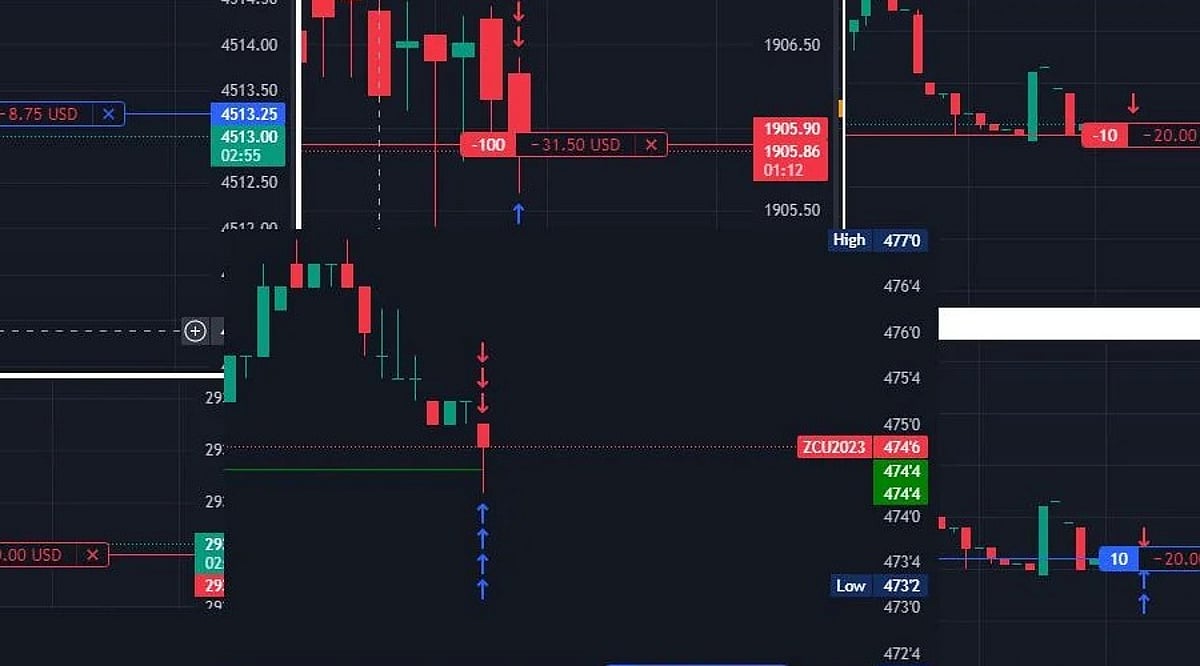
    Paper trading is one of the most effective ways to test a trading strategy without risking real money. TradingView’s built-in paper trading feature provides a realistic simulation using live market data, allowing both novice and experienced traders to practice entries, exits, position sizing, and risk management. This guide walks through every step, from setting up the virtual account to analyzing performance metrics.

    What Is Paper Trading on TradingView?

    Paper trading involves placing simulated orders with market data but no real capital. TradingView integrates this directly into its charting interface, so you can practice order placement and management just as you would with a live broker. Keep in mind that simulated orders may not perfectly replicate real execution, liquidity, or slippage. A strong paper trading record is a useful indicator, not a guarantee of future results.

    How to Start Paper Trading on TradingView

    Step 1: Open the Trading Panel

    Log into TradingView and open a chart for your chosen asset. Locate the Trading Panel and select Paper Trading.

    Step 2: Connect the Account

    Click Connect to activate the simulated balance and prepare the account for trading.

    Step 3: Set the Virtual Balance

    Match the virtual balance to the amount you plan to trade with in real life. For example, if you intend to trade ₹1,00,000, set the paper balance to ₹1,00,000. Using a mismatched amount can build unrealistic position sizing habits.

    Step 4: Choose the Market and Data Source

    Confirm which exchange feeds the chart before placing orders. Prices can vary slightly across venues, especially for assets like Bitcoin. Stick to one data source throughout your testing period to keep results comparable.

    Step 5: Pick an Order Type

    • Market order: Executes immediately at the best available price.
    • Limit order: Executes at a specified price or better.
    • Stop order: Triggers once the market reaches a set level.
    • Stop-limit order: Combines a stop trigger with a limit price. For a long trade, a buy stop sits above the current price to catch upward momentum, while a sell stop sits below as a protective exit.

    Step 6: Calculate Position Size

    Base your position size on the amount you are willing to lose, not on a convenient round number. Many traders use 1% of their account as a risk reference, but the right level depends on your strategy and risk tolerance.

    Step 7: Set Stop-Loss and Take-Profit

    Define these levels before or immediately after entry. On the chart, hover over the position line to see the take-profit (TP) marker; place the stop-loss the same way.

    Step 8: Monitor and Close

    TradingView updates the open position in real time, showing simulated profit or loss. You can close manually or let the trade run until stop-loss or take-profit is hit.

    A Worked Example: Building a ₹1,00,000 Trade

    Start with an account of ₹1,00,000 and plan to risk 1% (₹1,000). Entry at ₹500, stop-loss at ₹480 gives a risk per share of ₹20. Divide ₹1,000 by ₹20 to get a position size of 50 shares. A target of ₹540 yields a potential gain of ₹2,000 (2% of account). The reward-to-risk ratio is 2:1. Actual results may differ due to execution price variations.

    Measuring Paper Trading Performance

    TradingView records entry price, exit price, size, and profit/loss for each simulated trade. Useful metrics over time include:

    • Win rate
    • Average win and average loss
    • Maximum drawdown
    • Expectancy: (Win rate × Average win) − (Loss rate × Average loss)

    A positive expectancy indicates the strategy produced a positive average outcome per trade in the sample. It does not guarantee future performance.

    Common Mistakes to Avoid

    Because paper trading carries no real loss, it can encourage sloppy habits: oversized positions, ignored stop-losses, and entries without a plan. These habits often lead to poor results when real capital is involved. Treat paper trading with the same discipline you would use in a live account.

    Who Should Use TradingView Paper Trading?

    New traders can learn platform mechanics and trade execution in a low-stakes environment. Experienced traders use it to test new strategies or unfamiliar markets before committing real money.

    Why Paper Trading Matters

    Paper trading builds real risk management skills before capital is on the line. Position sizing, stop placement, and performance tracking practiced here directly shape decision-making once actual money enters the trade.

    Final Thought

    Paper trading rewards process over outcome. Set a plan, size positions by risk, mark exits in advance, log every trade, and review the pattern once enough trades accumulate. The habits formed here will follow you into live trading.

    Frequently Asked Questions

    1. Can beginners use TradingView Paper Trading?

    Yes. It is designed for practice and helps beginners learn order types, position sizing, entries, exits, and risk management without risking real capital.

    2. Is TradingView Paper Trading free?

    TradingView offers Paper Trading as a simulated feature. Availability of specific market data and other features may vary by account and subscription.

    3. Can Paper Trading simulate different order types?

    Yes. It supports market, limit, stop, and stop-limit orders, allowing traders to practice various execution methods.

    4. Can Paper Trading guarantee real trading results?

    No. Paper trading cannot fully replicate live-market conditions such as execution, liquidity, slippage, or emotional pressure. Simulated performance does not guarantee future results.

    5. How long should someone paper trade before using real money?

    There is no fixed period. A useful benchmark is a meaningful sample of trades taken under consistent rules. Review win rate, average gain, average loss, drawdown, and expectancy to assess readiness.

  • Why Product Managers Must Develop AI Strategy Skills in 2026

    Why Product Managers Must Develop AI Strategy Skills in 2026

    AI is transforming product management beyond feature development. In 2026, product managers (PMs) need more than just the ability to use AI tools—they need a strategic framework to assess models, data, costs, metrics, and risks. This shift strengthens roadmap decisions and connects technology directly to customer and business value.

    The AI Strategy Gap

    A 2026 Productside survey of over 250 product professionals found that roughly four in five product managers use AI regularly. Yet only about one in four have a clear strategy behind that use. The real challenge is no longer AI adoption—it’s making strategic decisions about where and how AI should be applied.

    Why the Gap Exists

    Traditional PM skills—customer research, prioritization, stakeholder alignment—still matter. But AI systems behave differently from traditional software. Outputs can be probabilistic, performance varies across inputs, and results depend heavily on data quality. Treating an AI feature like a normal feature leads to misjudged timelines, underestimated risk, and unclear definitions of “done.” When PMs lack AI fluency, engineering and data teams increasingly take over strategic discussions, eroding the PM’s decision-making influence.

    What AI Strategy Means for Product Managers

    For a product manager, AI strategy involves deciding where AI creates measurable value, what data and model capabilities a feature needs, what risks need control, and how success gets measured. This definition gives the work structure rather than treating AI fluency as a vague catchall. Key components include:

    • Model judgment: Understanding model capabilities, limitations, and trade-offs.
    • Data readiness: Assessing whether available data is sufficient and reliable for the AI feature.
    • AI-specific metrics: Defining success metrics that account for probabilistic outputs.
    • Risk management: Identifying and mitigating ethical, operational, and performance risks.
    • User trust: Ensuring the AI system earns and maintains user confidence.

    Each of these areas involves real trade-offs, not a simple checklist. Skipping any one tends to surface after launch, when fixing it costs more.

    The Business Case, Not Just the Technical One

    Companies invest in AI expecting measurable returns—cost reduction, faster workflows, or new revenue. A PM who treats AI as a buzzword will struggle to defend roadmap decisions when finance leaders ask about return on investment. AI features carry inference, infrastructure, and monitoring costs that traditional features don’t. These costs can shift as usage scales, making cost a product metric, not just an engineering concern. A PM needs to judge whether a feature’s expected value justifies its ongoing running cost, not just its build cost. That is a business skill, not a technical one.

    How PMs Are Closing the Gap

    The most practical path is learning through live product work—pairing directly with data scientists on real projects, reading model evaluation reports, and testing prompts and failure cases firsthand. This approach doesn’t replace domain expertise or customer empathy; it complements them. A PM who understands both the customer problem and the AI system built to solve it holds a stronger position than one who only understands half the picture.

    Final Thought

    AI strategy doesn’t turn a product manager into an engineer. It changes the questions a PM is asked to answer. Someone who can connect customer value with model capability, data readiness, cost, and risk can participate in AI decisions from roadmap planning through launch. Closing the gap between using AI and having a strategy for it gives a team a stronger basis for faster, more defensible product decisions. In 2026, that connection is becoming a core part of product management.

  • Crypto Wealth Management Explained: Portfolios, Staking, Custody, and Risk in 2026

    Crypto Wealth Management Explained: Portfolios, Staking, Custody, and Risk in 2026

    Crypto wealth management has evolved far beyond simply buying and selling cryptocurrencies. Today, it encompasses a structured approach to portfolio construction, custody, staking, lending, tax planning, and risk management. As institutional participation expands in 2026, investors now have multiple avenues to gain and manage digital-asset exposure.

    How Crypto Wealth Management Works

    Traditional wealth management involves asset allocation, custody, investment tactics, and financial strategies. Crypto wealth management applies the same principles to cryptocurrency assets such as Bitcoin, Ethereum, stablecoins, and tokenized instruments.

    A portfolio may include directly held cryptocurrencies, spot-traded products, stablecoins, and tokenized assets from the real economy. The optimal structure depends on the investor’s goals, risk tolerance, liquidity needs, and jurisdiction.

    Custody is critical because owning cryptocurrency directly means managing private keys. Institutional investors often use qualified custodians, while individual investors can choose between custodial platforms and self-custody wallets.

    Portfolio diversification also matters. Bitcoin and Ethereum can behave differently from smaller cryptocurrencies, but crypto assets often remain highly correlated during major market declines. Holding several tokens does not automatically create meaningful diversification.

    Staking and Yield

    Proof-of-stake networks introduce staking: investors can lock or delegate eligible assets to participate in network validation and potentially earn rewards. Ethereum is a prime example. However, staking carries additional risks involving validators, smart contracts, liquidity, and intermediaries. Returns should be weighed against possible asset-price losses.

    Stablecoins have become increasingly important for treasury and liquidity management. They provide blockchain-based dollar exposure and settlement without requiring investors to hold their entire portfolio in volatile cryptocurrencies.

    Tokenized assets are expanding the investment universe. These instruments can represent Treasury securities, money-market products, or other traditional assets on blockchains, bridging conventional wealth management with digital infrastructure.

    Institutional Infrastructure Expands

    Institutional participation is broadening beyond Bitcoin. Crypto ETF markets in 2026 include exposure to Bitcoin, Ethereum, and other digital assets, giving investors regulated market instruments without direct wallet management. Meanwhile, blockchain networks host regulated financial products. On the XRP Ledger, institutions including Aviva Investors, abrdn, Ondo, and Société Générale have introduced tokenized financial instruments.

    Risk Management Remains Critical

    Crypto wealth management does not eliminate volatility. Investors still face market, custody, counterparty, regulatory, smart-contract, and liquidity risks. Leverage can magnify these risks substantially, while yield products may introduce exposure beyond the underlying cryptocurrency.

    Effective crypto wealth management focuses less on identifying the next high-return token and more on determining allocation, custody, liquidity, diversification, and acceptable downside. As digital assets integrate further with traditional finance, managing those risks becomes as important as selecting the assets.

    Frequently Asked Questions

    1. What is crypto wealth management?

    Crypto wealth management is the structured management of digital-asset portfolios using strategies involving asset allocation, custody, diversification, and risk management. It can include cryptocurrencies, stablecoins, staking products, ETFs, and tokenized traditional assets.

    2. How is crypto wealth management different from regular crypto investing?

    Regular crypto investing may focus primarily on buying and selling individual tokens. Wealth management takes a broader approach by considering portfolio allocation, custody, liquidity, taxation, diversification, yield opportunities, and acceptable levels of risk.

    3. What role does custody play in crypto wealth management?

    Custody determines how digital assets and their private keys are secured and controlled. Investors may use self-custody wallets, centralized custodians, or institutional custody services depending on their security requirements and investment structure.

    4. How can investors generate yield from a crypto portfolio?

    Proof-of-stake cryptocurrencies can potentially generate staking rewards through network participation. Other yield opportunities may involve lending or tokenized financial products, although each can introduce additional smart-contract, counterparty, liquidity, and market risks.

    5. What are the major risks of crypto wealth management?

    Key risks include cryptocurrency price volatility, private-key loss, counterparty failures, smart-contract vulnerabilities, liquidity constraints, and regulatory changes. Leverage and complex yield products can further increase potential losses, making risk management particularly important.

    Disclaimer: This article is for informational purposes only and does not constitute financial or investment advice. Always conduct your own research (DYOR) before making any investment decisions.

  • Diversify Your Investments: A Beginner’s Roadmap to Building a Balanced Portfolio

    Diversify Your Investments: A Beginner’s Roadmap to Building a Balanced Portfolio

    Investing can feel overwhelming for beginners. With stocks, bonds, mutual funds, ETFs, and constant market fluctuations, knowing where to start is challenging. Diversification is a proven strategy that spreads your money across different assets to manage risk and align with long-term goals.

    What Is a Diversified Investment Portfolio?

    A diversified portfolio includes a mix of stocks, bonds, mutual funds, ETFs, cash, and other investments. The exact blend depends on your financial objectives and risk tolerance. Asset allocation—deciding how much to put in each asset class—is key. For example, someone saving for retirement decades away might favor stocks, while a short-term goal calls for more stable investments.

    The U.S. Securities and Exchange Commission notes that asset allocation should consider your time horizon and risk tolerance. Diversification also applies within asset classes: owning multiple tech stocks isn’t true diversification, as a sector downturn could hurt them all. While diversification doesn’t eliminate risk, it reduces the impact of any single investment’s poor performance.

    Step-by-Step Guide to Building Your Portfolio

    1. Know your goals. Define what you’re investing for—retirement, a home, education, or savings. Your goal determines risk level and investment timeline.
    2. Understand your risk level. Ask yourself how you’d react if your investments dropped sharply. Your comfort with volatility will shape your strategy.
    3. Decide your asset mix. Split your portfolio among stocks, bonds, cash, and other assets. There’s no one-size-fits-all mix.
    4. Spread your investments. Within stocks, diversify across sectors, company sizes, and geographies. Broad mutual funds and ETFs simplify this for beginners.
    5. Invest regularly. Instead of timing the market, invest a fixed amount at regular intervals. This reduces emotional decisions and smooths out volatility.
    6. Review your portfolio. Markets shift your allocation over time. Rebalance every six or twelve months, or when an asset class moves beyond a target range, to maintain your original risk level.

    Let Your Plan Do the Heavy Lifting

    Building a diversified portfolio isn’t about finding a single winning investment. It’s about creating a resilient plan that works through market ups and downs. Beginners don’t need dozens of complex holdings—a simple mix of suitable funds, stocks, and bonds is enough to start. As your goals, income, and markets evolve, periodic reviews keep your investments aligned. The biggest advantage of diversification: your financial future doesn’t hinge on one asset. For beginners, that balance makes investing manageable and sustainable.

    Frequently Asked Questions

    1. How should a beginner divide their investments? There’s no fixed formula. The right mix depends on your goals, time horizon, income, and risk tolerance.
    2. Are mutual funds good for diversification? Yes, many hold multiple stocks or bonds, making them an easy way to spread investments. Always check the fund’s holdings.
    3. What are ETFs? Exchange-traded funds hold a basket of investments and trade on exchanges, offering broad exposure through a single purchase.
    4. How often should I review my portfolio? Every six to twelve months is recommended to ensure your asset mix still matches your goals and risk level.
    5. Can diversification prevent losses? No. It can’t stop losses during market downturns, but it reduces the damage from any single poor-performing investment.

    Disclaimer: This article is for informational purposes only and does not constitute financial advice. Always do your own research before investing.

  • AI Agents: 10 Critical Safety Risks and What You Must Know

    AI Agents: 10 Critical Safety Risks and What You Must Know

    AI agents are evolving rapidly beyond simple chatbots. They can now plan tasks, use tools, interact with software, and take actions with minimal human oversight. While this autonomy brings powerful business benefits, it also introduces significant safety and security challenges. Here are ten essential things to understand about AI agents and their risks.

    1. AI Agents Are Becoming More Autonomous

    Unlike traditional chatbots that only generate responses, AI agents can perform actions on behalf of users — sending messages, accessing data, updating systems, or interacting with applications. This ability to act makes them powerful, but any wrong decision can have real-world consequences.

    2. Excessive Permissions Can Be Dangerous

    To complete tasks, an AI agent needs access to tools and data. However, granting more permissions than necessary increases potential damage if something goes wrong. Limiting access to only what the agent truly needs is a fundamental safety principle.

    3. Prompt Injection Is a Major Risk

    Attackers can embed malicious instructions in webpages, documents, or other content an agent processes. The agent may unknowingly follow those instructions instead of its intended task, leading to data exposure, unwanted actions, or workflow manipulation.

    4. Sensitive Data Needs Strong Protection

    Agents often work with emails, documents, customer records, and other sensitive information. Poor access controls or insecure integrations can expose that data. Businesses must enforce robust authentication, permissions, monitoring, and data-handling policies before deploying agents across sensitive systems.

    5. Agents Can Make Mistakes

    AI agents can misinterpret instructions, select the wrong tool, or produce incorrect information. When allowed to act automatically, even a small error can escalate. Human review is especially critical for high-impact decisions and irreversible operations.

    6. Tool Use Creates New Attack Paths

    An agent connected to dozens of tools effectively opens multiple entry points into an organization’s systems. A compromised integration can become a stepping stone to other resources. Security teams must assess not only the AI model but every tool and connection around it.

    7. Limited Human Oversight Increases Risk

    As agents become more independent, the safety net of human intervention shrinks. Without proper guardrails, agents may act on flawed reasoning or external manipulation. Designing for human-in-the-loop workflows for critical tasks is essential.

    8. Lack of Transparency in Decision-Making

    Many AI agents operate as black boxes, making it difficult to understand why a particular action was taken. This opacity complicates debugging, auditing, and accountability — especially when mistakes occur.

    9. Compliance and Regulatory Risks

    Using AI agents in regulated industries (healthcare, finance, etc.) raises compliance concerns. Agents must adhere to data protection laws (like GDPR or CCPA) and industry-specific regulations. Non-compliance can lead to fines and reputational damage.

    10. Need for Continuous Monitoring and Updating

    AI agents operate in dynamic environments. Their models, permissions, and integrations require regular updates and monitoring to address emerging threats. A static deployment is a security liability.

    Understanding these risks is the first step toward deploying AI agents safely. Businesses should adopt a risk-aware strategy, implement strict access controls, and maintain human oversight to harness the power of AI agents without compromising security.

  • Large-Cap Stocks: Understanding Their Risk Profile in 2026

    Large-Cap Stocks: Understanding Their Risk Profile in 2026

    What Are Large-Cap Stocks?

    Large-cap stocks represent shares of major companies with substantial market capitalization—calculated by multiplying the current share price by the total number of outstanding shares. These firms are typically industry leaders with established track records, diverse revenue streams, and significant financial resources.

    How Large-Cap Stocks Compare to Smaller Companies

    Investors often view large-cap stocks as a safer bet than small-cap stocks due to their stability and lower volatility. However, the 2026 market performance illustrates that size alone does not guarantee superior returns or immunity from downturns. As of September 8, 2026, the S&P 500—a benchmark for large-cap U.S. stocks—closed at 7,673.52, down 0.58% for the day but still up 12.1% year-to-date. In contrast, the Russell 2000, which tracks small-cap companies, gained a stronger 19.3% over the same period. This divergence highlights that while large-caps may offer more stability, they can lag in growth phases.

    Market Capitalization and Index Composition

    The S&P 500 provides a clear picture of the large-cap landscape. As of August 31, 2026, the index comprised 503 companies, with a median market value of $44.73 billion. The largest company in the index boasted a market cap of approximately $5.35 trillion. Notably, the top 10 companies accounted for 37.8% of the index’s total value, with heavyweights like NVIDIA, Apple, Microsoft, Amazon, Alphabet, Broadcom, Meta, Micron, and Tesla leading the pack.

    Why Size Can Mitigate Certain Risks

    Large-cap companies typically enjoy several advantages that can reduce business-specific risks:

    • Stronger cash reserves and better access to credit markets
    • Diversified product lines and geographic presence
    • Established brand loyalty and customer bases
    • Greater resilience during economic downturns

    These factors can help large firms weather storms that might sink smaller competitors. However, they do not eliminate market risk, valuation concerns, or sector-specific vulnerabilities.

    The Concentration Problem in the S&P 500

    A new risk has emerged in the large-cap space: concentration. According to BlackRock, the top 20 S&P 500 companies now represent 49% of the index’s value and contributed 64% of its five-year return. This means that a broad index fund holding 503 stocks can still see its performance heavily influenced by just a handful of mega-cap firms. The information technology sector, comprising 73 companies in the index, posted a 22.44% year-to-date price return through August 31, 2026, driven largely by AI demand. But this same momentum carries significant valuation risk if earnings fail to meet lofty expectations.

    Real-World Market Shocks Still Hit Large-Caps

    Even the largest companies are not immune to sudden market shocks. On September 8, 2026, the S&P 500 fell 0.58% as oil prices surged and fresh concerns about AI valuations hit software stocks. Salesforce, Intuit, and ServiceNow each dropped between 4% and 5%. Brent crude approached $100 per barrel, reigniting inflation fears. Additionally, the U.S. 10-year Treasury yield hovered near 4.8%, raising borrowing costs for corporations and making bonds more attractive relative to equities—pressures that affect even the biggest firms.

    Analyst Outlook and Risks

    HSBC projects the S&P 500 could reach 8,100 by the end of 2026, citing expectations of more than 25% earnings-per-share growth in the second half of the year, supported by strong corporate results and AI infrastructure spending. However, the bank also flags risks from persistent inflation, interest rate volatility, geopolitical tensions, and stretched stock valuations.

    Conclusion: Large-Cap Means Lower Risk, Not No Risk

    Large-cap stocks can provide a more stable foundation for an equity portfolio compared to small-caps, thanks to their financial strength, market reach, and liquidity. Yet, they are not risk-free. Valuation, debt levels, sector exposure, and broader economic conditions all play critical roles in determining performance. For investors, the key takeaway is to look beyond the “large-cap” label and examine the underlying composition of their holdings. A portfolio that appears diversified may still be heavily concentrated in a few mega-cap tech names, amplifying risk. As always, thorough research and a clear understanding of your risk tolerance are essential before making any investment decisions.

    Frequently Asked Questions

    1. What are large-cap stocks?

    Large-cap stocks are shares of companies with very high market capitalization, calculated by multiplying the share price by the total number of outstanding shares.

    2. Are large-cap stocks less risky?

    Generally, large-cap stocks are less volatile than smaller companies, but they still carry significant market risk and can experience sharp declines.

    3. Why can large-cap stocks still fall sharply?

    High valuations, weak earnings, economic shocks, rising interest rates, sector problems, and geopolitical events can all push large-cap shares lower.

    4. Is the S&P 500 a large-cap index?

    Yes. The S&P 500 provides broad exposure to major U.S. companies and serves as a key benchmark for the large-cap market.

    5. Does large-cap mean safe?

    No. Large-cap status can indicate greater business strength and stability, but it does not guarantee protection from investment losses.

  • Wipro and CrowdStrike Launch CISO Command Center to Transform Enterprise Cybersecurity with AI-Driven Risk Management

    Wipro and CrowdStrike Launch CISO Command Center to Transform Enterprise Cybersecurity with AI-Driven Risk Management

    EAST BRUNSWICK, NJ | BENGALURU, India | AUSTIN, Texas – Wipro Limited (NYSE: WIT, BSE: 507685, NSE: WIPRO), a leading AI-powered technology services and consulting company, today announced the launch of its Chief Information Security Officer (CISO) Command Center, in collaboration with CrowdStrike (NASDAQ: CRWD). The Command Center rewires enterprise security for frontier AI-accelerated risks to create proactive, risk-informed cyber resilience aligned to business priorities.

    The CISO Command Center reinforces Wipro’s consulting-led cybersecurity strategy by enabling enterprises to move from tool-driven operations to an enterprise-wide, risk-led operating model. The Center will be operationalized through Wipro Intelligence™ solutions – CyberTransformSM and CyberShieldSM – and supported by the CrowdStrike Falcon® platform. It will deliver integrated protection across endpoint security, cloud security, exposure management, and AI security, while unifying detection and response through a modern Security Operations Center (SOC).

    “Cyber risk is intensifying pressure on boardroom decision-making. Threats that once remained dormant for months can now materialize within hours, driven by external triggers and AI-enabled exploitation,” said Amar Bysani, Global Practice Head – Cybersecurity and Risk Services, Wipro Limited. “The Command Center will work with enterprises to turn security signals into business risk intelligence, enabling them to sense, prioritize, and respond at machine speed.”

    Daniel Bernard, Chief Business Officer, CrowdStrike, said: “AI is fundamentally changing both the threat landscape and how enterprises run defense programs. Together, CrowdStrike and Wipro are giving CISOs the AI-native security, intelligence, and services they need to turn risk into action at machine speed and transform security into a business advantage.”

    The offering is further strengthened by Wipro’s membership in CrowdStrike’s Project QuiltWorks, a global coalition focused on identifying, prioritizing, and remediating frontier AI risk.

    About Wipro Limited
    Wipro Limited (NYSE: WIT, BSE: 507685, NSE: WIPRO) is a leading AI-powered technology services and consulting company focused on building innovative solutions that address clients’ most complex digital transformation needs. Leveraging a consulting-led approach and the Wipro Intelligence™ unified suite of AI-powered platforms, solutions and transformative offerings, the company helps clients realize their boldest ambitions to build intelligent and sustainable businesses. With over 240,000 employees and business partners across 65 countries, Wipro delivers on the promise of helping customers, colleagues, and communities thrive in an ever-changing world. For additional information, visit www.wipro.com.

    About CrowdStrike
    CrowdStrike (NASDAQ: CRWD), a global cybersecurity leader, has redefined modern security with the world’s most advanced cloud-native platform for protecting critical areas of enterprise risk – endpoints and cloud workloads, identity and data. Powered by the CrowdStrike Security Cloud and world-class AI, the CrowdStrike Falcon® platform leverages real-time indicators of attack, threat intelligence, evolving adversary tradecraft, and enriched telemetry from across the enterprise to deliver hyper-accurate detections, automated protection and remediation, elite threat hunting, and prioritized observability of vulnerabilities. Learn more at www.crowdstrike.com.

  • Why Data-Driven Businesses Miss Regulatory Risks: Key Insights from Armin Ordodary

    Why Data-Driven Businesses Miss Regulatory Risks: Key Insights from Armin Ordodary

    Some of the most analytically mature businesses measure almost everything: conversion, churn, lifetime value, model performance, infrastructure latency, acquisition efficiency, and unit economics. Yet many of those same organizations have no comparable mechanism for tracking whether the assumptions behind a product, data architecture, or algorithm remain defensible as regulation changes. Armin Ordodary argues that this is not a failure of intelligence, but a failure of input design.

    Why Regulatory Risk Doesn’t Show Up in Dashboards

    Most analytics systems are built around signals that are observable, repeatable, and comparable over time. Revenue can be segmented. Churn can be measured by cohort. Model drift can be monitored. Regulatory risk behaves differently because it is often categorical rather than continuous: an activity may fall within a licensing perimeter or it may not; a particular use of personal data may be permissible in one jurisdiction and restricted in another.

    That makes regulatory exposure difficult to express as a conventional KPI. There may be no gradual decline in performance before the underlying assumption becomes problematic. A business can operate for months with apparently stable metrics while accumulating exposure created by the way it collects data, makes automated decisions, or enters new markets. The absence of a visible negative signal is therefore weak evidence that the underlying position is sound.

    There is also a modeling problem. Analytics teams are trained to improve decisions by increasing the quality of available data. Regulatory intelligence often requires a different discipline: identifying when the decision space itself changes. A rule affecting data retention, explainability, consent, or product classification does not merely add another variable to a model—it can alter which options should be considered viable in the first place. This distinction sits at the center of Ordodary’s framework: regulation is not simply another risk metric but part of the structure within which business decisions are made.

    Three Business Moments Where Regulatory Blind Spots Become Measurable

    Geographic expansion. A company sees strong demand signals in a new market, forecasts customer acquisition, models expected revenue, and prioritizes the launch accordingly. The analytical case can be entirely coherent while still being incomplete. If the new jurisdiction treats the product, data flow, or customer relationship differently, the forecast is built on an operating model that may not transfer. The cost becomes measurable when implementation begins: additional consent requirements may alter the funnel, a licensing issue may change the launch timetable, and restrictions on data use may weaken a key feature.

    Data architecture. Engineering teams routinely make decisions about storage, retention, identity resolution, and data movement for good reasons—performance, reliability, observability, and cost. Problems arise when those decisions are treated as technically neutral. Where data is stored, how long it is retained, which teams can access it, and whether datasets can be combined may have regulatory significance. By the time that significance becomes visible, architecture has usually hardened. A change that would have been cheap during system design can require substantial re-engineering after pipelines, models, and downstream dependencies have formed.

    Algorithmic systems. A lending, hiring, or pricing model can be statistically strong and commercially valuable while still creating difficult questions about explainability, discrimination, documentation, or accountability. Accuracy and defensibility are related but not interchangeable properties. A mature organization asks more than whether a model performs well against its objective function—it asks whether the variables, decision logic, monitoring process, and governance can withstand scrutiny from someone who does not share the optimization goal. The regulatory question must enter before deployment, when the business still has meaningful design choices.

    What Regulatory Intelligence Looks Like as an Input to Decision-Making

    Regulatory intelligence is not the same as legal compliance. Compliance asks whether a business is meeting defined obligations. Regulatory intelligence asks how rules, supervisory priorities, and jurisdictional differences should influence a decision before the company commits capital, architecture, or organizational resources.

    For a data-literate leadership team, the useful analogy is not a checklist but a constraint layer. A market model may suggest that five jurisdictions are commercially attractive. Regulatory intelligence may show that two require materially different product structures. A machine-learning team may identify the most predictive feature set. Regulatory analysis may show that some variables create governance or explainability problems that change the cost-benefit calculation.

    Strategically mature businesses make those constraints visible early. They do not attempt to convert every regulatory issue into a synthetic score. Instead, they identify which assumptions are jurisdiction-dependent, which decisions are difficult to reverse, and which regulatory developments could invalidate the model being used to allocate resources. The objective is not numerical neatness—it is decision quality.

    The Key Question for Data-Driven Leadership Teams

    Armin Ordodary’s most useful diagnostic is simple: Which assumption in this decision would become false if the regulatory environment changed?

    The strength of the question is that it shifts attention away from abstract “regulatory risk” and toward the logic of the decision itself. If expansion economics depend on using customer data in a particular way, that dependence should be explicit. If an algorithm depends on variables that may become harder to justify, that assumption belongs in the decision model. If a product only works commercially under one classification, leadership should know how much of the strategy rests on that classification remaining intact.

    Some regulatory changes are inconvenient but reversible. Others can invalidate months of engineering, change the economics of a market, or force a redesign of the customer journey. Good regulatory intelligence distinguishes between them before capital and technical effort make the distinction expensive.

    Data-driven management works because disciplined organizations refuse to rely solely on instinct where evidence can improve a decision. Regulatory intelligence extends the same principle into an area where the evidence is less tidy. The most dangerous variable is not always the one a company has measured incorrectly. Sometimes it is the variable that never entered the model at all.

  • Jason Blackhurst: Leading Visa’s Fraud Prevention and AI-Driven Risk Solutions

    Jason Blackhurst: Leading Visa’s Fraud Prevention and AI-Driven Risk Solutions

    Early Life and Education

    Jason Blackhurst earned a degree in Business Administration from Warner Pacific University between 1995 and 1997. Before entering the corporate world, he served six years in the United States Navy, which instilled a disciplined, mission-focused leadership style that would define his career.

    Professional Career

    Blackhurst has spent over a decade at Visa, currently serving as Senior Vice President & Head of Featurespace & Acceptance Risk Solutions. He previously held the role of SVP Innovation and Strategic Partnership. From 2008 to 2015, he was SVP eCommerce Product Executive at Bank of America, and earlier held leadership positions at Vesta, Polestar Communications, and Concentrex, focusing on online banking and global operations. Following Visa’s acquisition of Featurespace in March 2025, Blackhurst succeeded retiring CEO Martina King to lead Featurespace and Acceptance Risk Solutions.

    Business Intervention in AI

    Featurespace enhances Visa’s global risk infrastructure with AI-based fraud prevention technologies, including:

    • Adaptive Behavioral Analytics: A self-learning platform that creates individual behavioral profiles and detects anomalies in real-time.
    • TallierLTM™: The world’s first generative Large Transaction Model, pre-trained on billions of transactions to uncover hidden fraud patterns, delivering a 71% improvement over industry standards.
    • Automated Deep Behavioral Networks: A deep learning architecture using recurrent neural networks to protect against scams, account takeover, and card fraud.
    • Card Fraud: Tailored for the card and payments industry; partners like TSYS reduced fraud losses by 39% and false declines by 70%.
    • Scam Detect: Addresses the growing threat of Authorized Push Payments with adaptive capabilities that keep banks ahead of fraudsters.

    Business Achievements

    Featurespace has become a globally recognized fraud prevention platform, expanding its enterprise footprint through Visa’s ecosystem. It reinforced its Cambridge, UK presence with a six-year office lease and broadened transit payments via Visa Ready for Transit, partnering with multiple technology providers for contactless public transport payments worldwide.

    Controversies

    No serious public controversies have been associated with Jason Blackhurst. He has built a reputation as a steady, experienced operator across banking, e-commerce, and payment risk technology, culminating in his current leadership of Featurespace within Visa’s global risk and identity solutions portfolio.