Tag: risk management

  • Optimize Your LLC Structure for Scalable Digital Business Growth

    Optimize Your LLC Structure for Scalable Digital Business Growth

    When scaling a digital business, new customers, ideas, and opportunities often appear faster than you can manage. However, growth brings challenges that may not have been considered when you first formed your LLC. Early-stage entrepreneurs typically focus on product development, revenue growth, and customer loyalty. Yet, the legal structure underlying your business is equally critical for long-term success.

    Your LLC is more than initial paperwork—it’s the framework that enables your business to adapt to change. The decisions you make today can determine whether future growth feels manageable or becomes fraught with obstacles. The most valuable LLC strategies involve thinking ahead and preparing for opportunities, risks, and transitions that haven’t yet occurred.

    How can you design your LLC to isolate risks?

    When your entire operation runs through a single LLC, every product, service, and asset is connected to that same legal structure. This works for startups, but growth often requires a more nuanced approach. Digital businesses rarely remain simple—you may launch multiple products, create intellectual property, partner with others, or expand into new markets. Each opportunity carries different risk levels. A single LLC means a problem in one area can affect the entire company.

    A strategic solution is to use separate LLCs for different brands, investments, or product categories. This isolates liabilities so that one challenge doesn’t jeopardize everything. The goal isn’t complexity but alignment with your current business structure. If you’re reviewing your setup, resources like a Northwest coupon code can help explore registered agent services and LLC support. Remember, multiple LLCs only work when treated as separate entities—maintain distinct ownership records, contracts, bank accounts, and operating agreements.

    What happens to your LLC when you step back?

    Many founders build companies around their personal involvement. As your business grows, your role may shift—hiring management, taking a strategic position, selling part of the business, or moving on. A strong LLC structure should support these transitions without relying on your daily presence.

    Your operating agreement should clearly outline decision-making, authority, ownership rights, and how major changes are handled. Without clear rules, leadership changes can become difficult. The strongest businesses are built on systems and processes that allow the company to thrive even when one person steps away.

    How do you prepare your LLC for international growth?

    Digital businesses often start locally but can serve customers globally. International expansion brings new considerations: different payment systems, banking relationships, and customer expectations. Before accepting customers worldwide, think about how money will flow through your company. Payment processors, financial reporting, and banking can become more complex. Strong contracts that define responsibilities—such as services, refunds, disputes, and legal obligations—are essential.

    A well-designed LLC doesn’t need to be rebuilt with each growth phase. The strongest structures are flexible because they were created with expansion in mind from the start.

    Your LLC should empower your business, not hold it back. It gives you confidence to pursue new opportunities while knowing your foundation can support the next stage. Growth comes down to building a company that adapts, evolves, and moves forward—and the questions you ask today shape the options available tomorrow.

  • The Evolving Role of the Chief Strategy Officer in 2026: From Planner to Strategic Operator

    The Evolving Role of the Chief Strategy Officer in 2026: From Planner to Strategic Operator

    The Chief Strategy Officer (CSO) role is undergoing a significant transformation in 2026. No longer confined to long-term planning, today’s CSOs are driving real-time business execution and enabling faster decision-making across their organizations.

    AI at the Core of Strategy

    Artificial intelligence is now central to strategic initiatives. CSOs are leading the charge to scale AI across operations, product development, customer experience, and business decision-making. This shift requires a deep understanding of AI capabilities and their practical applications.

    From Five-Year Plans to Agile Cycles

    Traditional five-year strategic plans are being replaced by agile strategy cycles. This new approach allows companies to respond quickly to market shifts, economic changes, and emerging opportunities. CSOs now focus on fewer, high-impact priorities by directly linking strategy to financial results and operational performance.

    Collaboration and Execution

    Modern CSOs work closely with CEOs, technology leaders, and business teams to turn strategic plans into measurable business outcomes. This collaborative approach ensures that strategy is not just a document but a living, actionable framework.

    Expanded Responsibilities

    Managing geopolitical risks, cybersecurity threats, supply chain disruptions, and sustainability goals has become a core part of the CSO’s role. These responsibilities demand a broad skill set and the ability to navigate complex, interconnected challenges.

    Challenges and Opportunities

    More than half of strategy leaders report handling too many initiatives, while many still lack authority over key business decisions. Successful CSOs are those who combine AI knowledge, data-driven decision-making, resilience planning, and people-focused leadership to stay competitive.

    The Future CSO

    The future CSO is no longer just a planner but a strategic operator who connects business, technology, capital, and execution. This evolution requires a shift in mindset, skills, and organizational influence.

  • Why XXKK Crypto Exchange Stands Out as a Trustworthy Platform for Digital Asset Traders

    Why XXKK Crypto Exchange Stands Out as a Trustworthy Platform for Digital Asset Traders

    Choosing a platform for trading digital assets is a critical decision. Security, liquidity, and compliance separate a safe exchange from a risky one. The XXKK Crypto Exchange is built around trader protection and practical use, offering a robust environment for both novice and experienced users.

    This article examines what makes a trading venue trustworthy, how security layers protect funds, which trading features matter most, and how regulation and risk management shape a safer experience. By the end, you’ll know exactly what to check before committing capital.

    What Actually Makes a Cryptocurrency Exchange Reliable?

    Reliability has nothing to do with flashy interfaces or loud marketing. It comes down to whether a platform can protect money, execute trades fast, and hold up under heavy traffic. Key signals include:

    • Deep liquidity so orders fill at expected prices.
    • Clear fee structures with no hidden charges.
    • Strong custody practices for storing digital assets.
    • Support that actually responds when something goes wrong.
    • Regulatory alignment in the markets it serves.

    When these basics hold up under pressure, a platform earns trust. When they fail during volatility, users pay the price.

    Security Measures for Safeguarding Digital Assets

    The core of a reliable trading platform is security. Bitcoin (BTC) and Ethereum (ETH) transactions are irreversible, so good exchanges deploy multiple layers of protection.

    Multi-Factor Authentication (MFA)

    MFA adds an extra layer of security that helps prevent attackers from gaining access even if a password is compromised. Authenticator apps are more effective than SMS because SIM-swap attacks remain widespread.

    Cold Wallets vs. Hot Wallets

    How an exchange holds money speaks volumes about its priorities. Most assets should be stored in cold wallets—offline and shielded from internet-based attacks. Hot wallets handle daily withdrawals and trading. A good platform keeps only a fraction of holdings in hot wallets, minimizing risk while ensuring smooth withdrawals.

    KYC and AML Safeguards

    Know Your Customer (KYC) and Anti-Money Laundering (AML) checks are more than paperwork. They protect the ecosystem against fraud, credit abuse, and identity theft. A trustworthy exchange verifies identities and monitors for suspicious activity, fostering user trust and regulatory consistency.

    Trading Features That Matter for Active Users

    Once security is settled, trading performance becomes the deciding factor.

    Spot Trading and Trading Pairs

    Spot trading is the entry point for most users. A strong platform offers many trading pairs, allowing direct movement between BTC, ETH, stablecoins, and altcoins without extra conversions. More pairs mean less friction, lower fees, and reduced slippage.

    Futures Trading and Advanced Tools

    Futures trading appeals to experienced users who want to hedge or trade with leverage. Clear margin data and risk controls are essential. Platforms that pair futures with educational resources help traders avoid costly mistakes.

    Order Books and Liquidity

    A deep order book signals healthy liquidity. When buy and sell orders stack on both sides, trades fill closer to expected prices. Thin order books lead to wide spreads and shaky execution—making liquidity a top priority when choosing a venue.

    Regulatory Compliance and Why It Builds Trust

    Crypto regulations keep tightening across major markets, which mostly benefits users. Compliance shows a platform plans to stick around, not disappear overnight. Key indicators include:

    • Regular audits and financial transparency.
    • Clear terms around deposits and withdrawals.
    • Cooperation with financial authorities.
    • Established processes for dispute resolution.

    For anyone treating crypto as a real part of their portfolio, regulatory posture is a practical filter. A compliant platform lowers the risk of sudden shutdowns, frozen accounts, or legal trouble.

    Managing Market Volatility and Risk

    Market volatility is the normal state of crypto. Prices can shift rapidly, requiring self-control from both platforms and users. Good exchanges provide tools to control exposure, such as stop-loss orders, limit orders, and clear position tracking.

    From the user’s side, a few habits make a huge difference:

    • Risk no more than you can afford to lose.
    • Diversify investments across digital assets.
    • Place stop-loss orders before trades.
    • Avoid emotional decisions during drastic changes.

    The combination of platform tools and personal discipline is the most effective way to avoid panic selling during volatility.

    How XXKK Fits Into the Modern FinTech Landscape

    The line between traditional finance and crypto keeps blurring. As FinTech grows, users expect platforms that combine Web3 ease with the steadiness of older financial systems. The XXKK Crypto Exchange aims to deliver trading infrastructure covering security, liquidity, and compliance in one place. As DeFi and stablecoins attract more participants, platforms that treat cybersecurity and user protection as non-negotiable will earn lasting trust.

    Conclusion

    When selecting a platform, remember the fundamentals: robust security, comprehensive liquidity and custody, and genuine regulatory compliance. Security measures like MFA, cold storage, KYC, and AML safeguard funds. Features like spot trading, futures, and healthy order books enhance the daily trading experience. Combine that with structured risk management, and you have a solid approach to navigating volatile markets. The XXKK Crypto Exchange reflects these priorities, focusing on trader protection and practical application. Take all these factors into account before investing anywhere—invest slowly and let actual performance guide your decisions.

  • How AI Is Reshaping the Insurance Industry: From Underwriting to Customer Retention

    How AI Is Reshaping the Insurance Industry: From Underwriting to Customer Retention

    Artificial intelligence is rapidly transforming the insurance industry, enabling carriers to streamline operations, reduce costs, and improve customer experiences. From underwriting to claims processing, AI-powered tools are being deployed across the value chain. Below are the key areas where AI is making a significant impact.

    AI Underwriting

    AI analyzes vast datasets to assess risk faster, allowing insurers to make accurate policy decisions while reducing manual processing time.

    Fraud Detection

    Machine learning identifies suspicious claims, minimizing financial losses and improving the integrity of insurance operations across multiple sectors.

    Claims Automation

    AI-powered document analysis processes insurance claims quickly, reducing settlement times while improving customer satisfaction and operational efficiency.

    Personalized Policies

    By evaluating customer behavior and risk profiles, AI enables insurers to offer customized insurance plans with more competitive pricing and relevant coverage.

    Customer Chatbots

    AI chatbots provide instant policy assistance, claim updates, and personalized support around the clock, enhancing customer engagement and reducing service costs.

    Predictive Risk Analysis

    Using historical and real-time data, AI forecasts potential risks, helping insurers improve pricing strategies and proactive risk management.

    Image-Based Damage Assessment

    AI evaluates vehicle and property damage from uploaded images, accelerating claims processing while improving assessment consistency and accuracy.

    Regulatory Compliance

    AI-powered analytics monitor evolving regulations, helping insurers maintain compliance while reducing administrative burdens and operational risks.

    Customer Retention Analytics

    AI identifies policyholders likely to switch providers, enabling targeted engagement strategies that improve loyalty and long-term business growth.

  • Goat Academy Review: Felix Prehn’s Practical Investing Skills for Everyday Investors

    Goat Academy Review: Felix Prehn’s Practical Investing Skills for Everyday Investors

    Buy-and-hold investing worked for a previous generation, but today’s markets move faster. Money shifts rapidly from one sector to the next, and investors who simply buy and wait may end up holding names that big money has already left behind. Felix Prehn, a former investment banker and economist, created Goat Academy to help everyday investors learn how professionals approach the market—using clear, plain-language lessons that teach you to follow the money rather than chase it.

    Key Takeaways

    • Index funds include both strong and weak companies; the average hides the split.
    • Lessons focus on identifying where institutional money is flowing.
    • Students learn professional tools like positioning analysis and crowded trade reversals.
    • Felix Prehn is not a registered financial adviser; the platform never recommends specific buys or sells.
    • The teaching style works for both stock pickers and index-fund investors.

    What Is Inside Your Index Fund

    When you buy an index fund, you own every company in the index—winners, losers, and names you would never choose yourself. The fund shows an average return but hides the underlying divergence. Two stocks may move in opposite directions while your statement prints a single calm number. Felix points out what Wall Street already knows: big institutions shift money between sectors rather than buying a basket and waiting a decade. Goat Academy teaches you to read where the money is flowing, so one number stops covering the true picture. Learning to read the move is the first skill the program delivers.

    The Core Skill Felix Teaches

    The core skill is simple: read where the money is going. Each week, Felix scans the entire market, sector by sector, asking one question: where is money entering, and where is it leaving? Money rarely spreads evenly; it piles into a few sectors and drains from others, even when the overall index looks calm. A record-high index only tells you that the market is up—it never reveals which sectors the money moved into. Felix teaches you to spot that movement for yourself.

    Professional Tools Students Learn

    Goat Academy breaks professional tools into plain language. Positioning analysis counts how many traders are betting on a stock rising versus falling. When a crowd is heavily on one side, pressure builds until the move snaps back in the opposite direction. Felix also explains how much cash money managers hold, because a fully invested market has little spare cash to push prices higher. He covers short selling and forced buying: a heavily shorted stock rises, sellers rush to buy back, and that buying drives the price even higher.

    How Goat Academy Teaches

    Goat Academy shares research and shows students how to think—not what to click. Felix Prehn, the founder, is not a registered financial adviser, and the platform never tells students what to buy or sell. Students also learn from coaches who focus on different parts of the market. A free investing masterclass is available before any payment is required.

    Who the Teaching Fits

    The method works for both cautious and confident learners. Cautious investors can lean on a single ETF to hold an entire sector, such as a software fund that includes more than 130 companies. Those who want more control can study individual companies with Felix’s reasoning laid out for each. The framework remains the same in either case, so anyone can follow the same steps.

    Frequently Asked Questions

    What does Goat Academy teach?

    Goat Academy provides financial education for everyday people through its flagship program, the Wall Street Protocol. The method is built on five disciplines: technical structure, capital flow analysis, condition-aware positioning, risk and exit management, and execution. Students learn to read price by rules, follow where institutional money moves, and plan entries and exits in advance. The goal is a clear, repeatable method for managing money.

    Who runs Goat Academy?

    Felix Prehn, a former investment banker and economist, founded the platform. He teaches alongside coaches who focus on different parts of the market. Together they have taught over 25,000 students.

    Is there free content to try first?

    Yes. Goat Academy publishes free educational videos on its YouTube channel, which has surpassed 670,000 subscribers, 2,700+ videos, and 80 million+ views. Beginners can also join a free trading masterclass before paying anything.

    What is the Wall Street Protocol?

    The Wall Street Protocol is the decision-making framework used at Goat Academy. It gives students a structured way to read financial markets and guides how members weigh a position before acting.

    How does the learning path work?

    Students follow a structured path from basics to advanced skills. Live coaching sessions and webinars cover current market topics. Members also join Q&A sessions and receive support to track progress each week.

    Does Goat Academy cover risk management?

    Yes, risk management is central to the teaching. Felix stresses financial literacy and clear exit strategies. Students learn how a single mispriced position can undo weeks of progress and how to avoid it.

    What kind of support do members get?

    Members gain community access and daily live sessions. Many students value the one-on-one mentoring and direct coaching. Members stay in touch through the community between sessions.

    Can I check Goat Academy reviews independently?

    Yes. Goat Academy holds a 4.6 rating on Trustpilot from over 600 reviews, growing weekly. The profile reads “Goat Academy by Felix Prehn” under the Adult Education School category.

    What is Goat Academy’s mission?

    The mission is to give everyday people the tools professionals use. Felix wants to get a million people on the path to real financial education. He shares how he thinks, and he is not a registered financial adviser.

    What do students say about the experience?

    Reviews commonly highlight the quality of the staff and their support. Members report more confidence in reading the market after working through the material. Success depends on each student’s effort and how they apply what they learn.

    Disclaimer: This article is for informational purposes only and does not constitute financial advice. Cryptocurrencies and investments mentioned may be risky. Always conduct your own research before making any investment decisions.

  • How Data Analytics Reveals Hidden Infrastructure Risks: Paulson Geo Philip’s Approach

    How Data Analytics Reveals Hidden Infrastructure Risks: Paulson Geo Philip’s Approach

    An experienced project manager outlines three ways to identify risks before they impact critical infrastructure operations. As data volumes surge, organizations struggle to act on insights—65% of teams still make decisions without leveraging available data, according to the Sisense State of Analytics report. The question is: how can organizations turn information into a tool for risk management and operational reliability?

    Paulson Geo Philip, a Project & Maintenance Manager at UAE Television & Radio (Channel 4 Group), has tackled this challenge for over 14 years. He has applied analytics-driven approaches to infrastructure initiatives valued at more than AED 120 million, leading teams of over 800 professionals and improving project efficiency and cost performance by nearly one-third. Philip is also an author of multiple scientific publications, an invited evaluator at the AITEX Summit Winter 2026, and a Senior Member of the Institute of Electrical and Electronics Engineers.

    Philip believes that the most important project risks reveal themselves through patterns. “I have learned to look at information as a connected system,” he explains. “The most valuable insights rarely come from a single metric. They emerge when you understand how different parts of a project influence one another. Analytics helps create that perspective and allows leaders to make decisions with greater confidence.”

    At UAE Television & Radio, Philip oversaw infrastructure projects worth over AED 120 million, coordinating multidisciplinary teams of engineers, contractors, and technical specialists. His analytics-driven approach helped major infrastructure projects move faster and operate more efficiently, improving schedule performance and reducing costs by 20–30%.

    The role of the infrastructure project leader is evolving beyond managing schedules and budgets. Today’s leaders are expected to make sense of growing volumes of information and translate it into better operational decisions. Another key issue is the high cost of unplanned equipment and infrastructure failures. As infrastructure assets become more connected, maintenance is evolving into a data-driven discipline. Operational data can reveal how equipment performance changes over time, allowing organizations to improve asset utilization, extend service life, and make more informed maintenance decisions.

    Drawing on his experience, Philip has explored these questions through publications. In The American Journal of Engineering and Technology, he introduced concepts such as a Multi-Layer Cognitive Energy Twin and an Adaptive Predictive Resilience Index to forecast system conditions and evaluate infrastructure resilience. In his paper “Artificial Intelligence and Machine Learning Applications in Project Schedule Forecasting” (Earth Science Research Network, SSRN), Philip presented a predictive framework to identify schedule risks before they affect project outcomes.

    “Today, more and more organizations view operational data not as a record of past performance, but as a tool for forecasting future conditions,” notes Philip. “That shift from reactive management to predictive management is becoming one of the defining trends across infrastructure and operations.”

    Philip also served on the judging panel at the AITEX Summit Winter 2026, an international forum for artificial intelligence, digital technologies, innovation, and sustainable development. He holds Senior Member status in the IEEE. “I would encourage organizations to create more opportunities for collaboration between practitioners, researchers, and technology specialists,” he says. “Some of the best ideas I have come across were developed by people working in very different fields.”

    Looking ahead, Philip sees analytics becoming an increasingly important part of how organizations manage risk and reliability. His experience points to three priorities: recognizing patterns before problems escalate, using data to anticipate future conditions, and carefully evaluating the technologies that guide operational decisions. Together, these capabilities transform information from a byproduct of operations into a tool for managing reliability and performance.

  • A Comprehensive Guide to Shorting Bitcoin During Market Declines

    A Comprehensive Guide to Shorting Bitcoin During Market Declines

    When cryptocurrency prices tumble, most holders can only watch their portfolios shrink. However, traders who understand how to short Bitcoin can position themselves to profit from falling markets, not just rising ones. Shorting is not reserved for professionals; it is a standard trading tool that provides a way to act in both up and down markets.

    What Does It Mean to Short Bitcoin?

    Going long means buying an asset hoping its price will rise. Shorting is the opposite: you profit if the price falls. A short position gains value as the asset declines and loses value as it climbs. In short selling Bitcoin, you are effectively betting against the price, and your profit comes from the difference between where you open the position and where you close it at a lower level. Many wonder whether you can short crypto without actually owning any coins. The answer is yes—derivatives make it possible to take a short position without holding the underlying asset first, making shorting accessible to anyone with the right products.

    How to Short Crypto: The Main Methods

    There are several ways to short crypto. The most common for retail traders is through derivatives, where you open a short position on a contract whose value tracks Bitcoin. You can also short on margin by borrowing the asset, selling it, and buying it back later at a lower price—though that process is more involved. For most traders, the simplest route is to use perpetual contracts, which allow you to open a leveraged short position that profits directly from falling prices without worrying about an expiry date. Perpetuals are popular because they offer flexibility: you can open and close at will, use leverage to size the position, and hold as long as your market view plays out, paying only the funding cost along the way.

    Where You Can Short Bitcoin

    Shorting takes place on derivatives platforms rather than simple spot exchanges. When choosing an exchange that supports short positions, consider liquidity, available contracts, fees, and the platform’s track record for reliability and security. A liquid venue ensures your short fills and closes at fair prices—critical during the fast, volatile moves that shorting aims to capture.

    The Risks of Shorting

    Shorting carries a unique danger. When you are long, your maximum loss is the amount you invested because a price can only fall to zero. When you are short, the price can theoretically rise without limit, so losses are unbounded. A sudden rally—especially a short squeeze, where rising prices force shorts to buy back and push prices even higher—can be brutal. Adding leverage multiplies the risk. A leveraged short can be liquidated quickly if the market rallies, and shorting against a strong uptrend is one of the fastest ways to lose money. Disciplined shorts use stop-loss orders, modest leverage, and careful position sizing, and they respect that markets can rise irrationally for longer than expected.

    Shorting Responsibly

    Shorting is a tool, not a worldview. Traders who use it well treat it as one side of a two-sided market, deploy it when the evidence supports a decline, and always define their risk before entering. Knowing where you will exit if you are wrong is even more important when shorting than when going long, because the downside is open-ended. Knowing how to short Bitcoin turns a falling market from a threat into an opportunity. Through derivatives such as perpetual contracts, you can profit from declines, hedge existing holdings, or simply trade both directions of the market. But the open-ended risk of shorting, amplified by leverage, demands real discipline. Use it deliberately, size it carefully, and never short without a plan for being wrong.

    Disclaimer: This article is for informational purposes only and does not constitute financial advice. Leveraged trading carries a high level of risk and can result in the loss of your entire capital. Always conduct your own research before making any investment decisions.

  • Leveraging Crypto Market News for Smarter Trading Decisions

    Leveraging Crypto Market News for Smarter Trading Decisions

    In the fast-paced world of cryptocurrency, traders require timely and accurate information to make informed decisions. Crypto market news provides critical insights into price movements driven by economic indicators, institutional flows, and shifting sentiment. By integrating fundamental and technical analysis with robust risk management, traders can reduce impulsive behavior and improve their overall strategy.

    Why Crypto Market News Matters

    All crypto market movements are influenced by supply and demand, investor confidence, and the broader economic outlook. While technical charts reveal price patterns, crypto market news explains the underlying factors driving those patterns. Positive developments such as institutional adoption, blockchain upgrades, regulatory clarity, and strategic partnerships foster investor optimism, leading to buying pressure. Conversely, negative events like exchange violations, fraud investigations, restrictive regulations, or economic weakness can trigger selling. Since the crypto market operates 24/7, new information is absorbed almost instantly, making up-to-date news essential for identifying opportunities as sentiment shifts.

    Macroeconomic Events Have a Growing Impact

    Cryptocurrencies are no longer isolated from the global economy. Digital asset prices are increasingly sensitive to central bank decisions, employment data, interest rates, and inflation. For example, the U.S. Core Personal Consumption Expenditures (PCE) inflation report for September remained unchanged at 3.4%, allowing the Federal Reserve to maintain a restrictive policy. Higher interest rates can reduce liquidity and make investors less willing to risk capital on assets like cryptocurrencies. Institutional activity also plays a role: Bitcoin ETFs have experienced net outflows as some investors reduce holdings amid a strengthening economy. These macroeconomic signals help traders gauge whether the market is being fueled by institutional buying or selling.

    Market Sentiment Can Reveal Trading Opportunities

    Investor psychology is a key driver of crypto price movements. The Crypto Fear and Greed Index is a simple tool that measures overall market confidence. Low readings indicate widespread fear, while high readings suggest optimism. However, sentiment indicators are most useful when combined with market news. For instance, headlines about positive economic data, rising trading volume, and ETF inflows provide stronger confirmation than isolated news. Traders should evaluate multiple indicators to get a more accurate picture before entering or exiting trades.

    Combine Fundamental and Technical Analysis

    Successful traders know that no single indicator tells the whole story. Fundamental analysis involves studying economic trends, regulations, blockchain improvements, and institutional adoption. Technical analysis examines support and resistance levels, trend direction, volume, and momentum. These two approaches complement each other, making trading decisions more reliable. For example, a favorable announcement accompanied by volume growth and a confirmed breakout is much more significant than either signal alone. This combination also helps traders avoid relying on rumors or market volatility.

    Choose Reliable Sources for Crypto Market News

    Not all news is created equal. Accurate information is critical for crypto trading. Trustworthy sources include established financial publications, official blockchain announcements, exchange updates, economic reports, and institutional research. Platforms like X, Reddit, Telegram, and Discord may break news first, but traders should always verify facts before making investment decisions. Using credible sources helps differentiate important news from mere speculation.

    Risk Management Should Never Be Overlooked

    Even the most thorough market analysis cannot eliminate uncertainty. Risk management is a cornerstone of profitable trading. Strategies such as position sizing, diversification, leverage control, and stop-loss orders protect trading capital during volatile periods. When major news breaks, it is often best to wait for confirmation before reacting to rapid price changes.

    Conclusion

    Cryptocurrency remains in its developmental stage, and market updates are vital for traders. Economic indicators, institutional capital flows, government regulations, blockchain innovation, and investor sentiment all influence the direction of the crypto market. By pairing timely news with disciplined risk management, fundamental analysis, and technical analysis, traders can better navigate changing conditions and identify opportunities while remaining mindful of the inherent risks.

  • How AI-Native Lending Is Reshaping Credit Delivery: An Interview with Vartis Platforms’ Dipesh Karki

    How AI-Native Lending Is Reshaping Credit Delivery: An Interview with Vartis Platforms’ Dipesh Karki

    Artificial intelligence, machine learning, predictive analytics, and automation are transforming India’s digital lending ecosystem. Lenders are shifting from traditional assessments to data-driven decision-making, enhancing underwriting, fraud detection, collections, and portfolio monitoring. This technological evolution supports broader financial inclusion by allowing lenders to assess underserved and new-to-credit borrowers through alternative data and a comprehensive view of financial behavior.

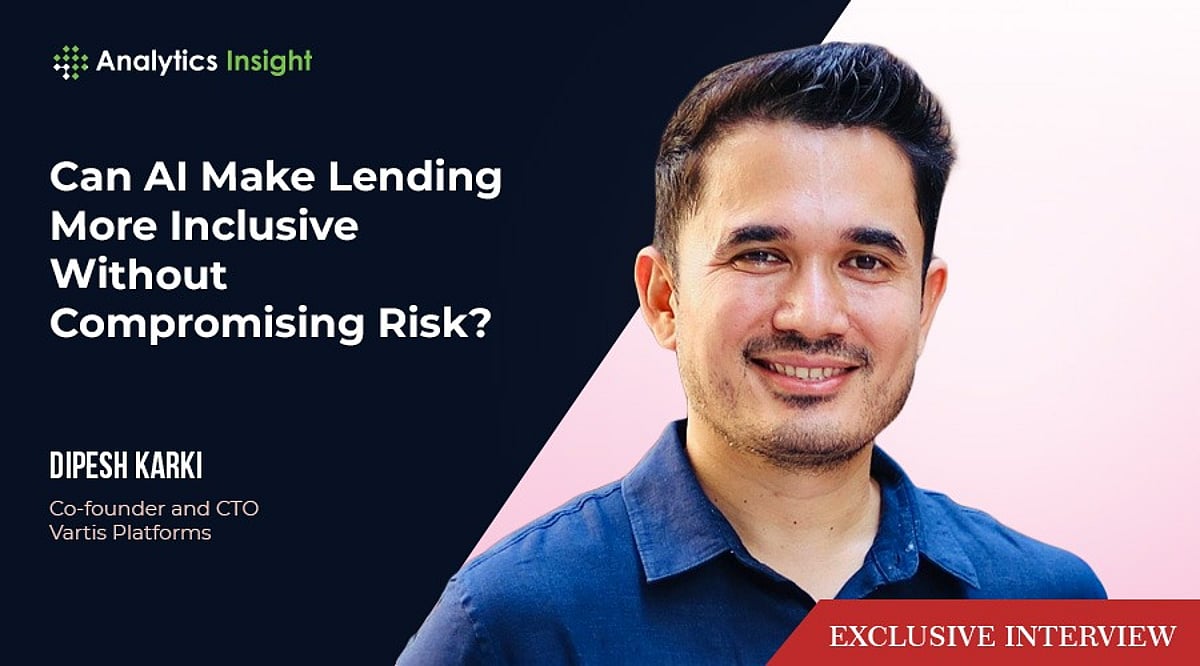
    Dipesh Karki, Co-founder and CTO of Vartis Platforms, emphasizes that the future of lending lies in AI-native ecosystems that embed intelligence throughout the credit delivery process. In an exclusive interview with Analytics Insight, he discusses the impact of these technologies on underwriting, risk management, compliance, and how Vartis Platforms is using data science to foster a more efficient and inclusive lending environment. Here are the excerpts from the interview:

    How are AI, Machine Learning, and Automation Transforming Underwriting and Risk Management in Digital Lending?

    The biggest shift we are seeing in digital lending is the move from static, rules-based underwriting to intelligent, data-driven decision-making. Traditionally, lending decisions relied heavily on bureau scores and predefined eligibility criteria. While those remain important, they often provide only a partial view of a borrower’s financial profile.

    AI and machine learning allow lenders to analyse a much broader set of signals and identify patterns that are difficult to detect through conventional methods. These models can continuously learn from repayment behaviour, portfolio performance, and changing market conditions, helping improve risk assessment over time.

    From a risk management perspective, AI is enabling more proactive monitoring. Rather than assessing risk only at the point of loan origination, lenders can continuously evaluate portfolio health, identify early warning signals, and take corrective action before risks escalate.

    Automation complements this by streamlining operational processes such as application screening, verification, fraud checks, and policy enforcement. This not only improves efficiency but also ensures greater consistency in decision-making. Ultimately, the combination of AI, machine learning, and automation is helping the industry build lending systems that are faster, more scalable, and better equipped to manage risk.

    Why is Alternative Data Becoming Increasingly Important in Expanding Credit Access Beyond Traditional Bureau-Led Assessment Models?

    India has made significant strides in expanding access to formal credit, but a large segment of the population remains either new-to-credit or underrepresented in traditional credit bureau systems. If lenders rely solely on bureau data, they risk excluding many creditworthy individuals who simply lack an extensive borrowing history.

    Alternative data helps address this challenge by providing additional insights into a borrower’s financial behaviour and repayment capacity. With the growth of digital financial services, lenders today can evaluate indicators such as cash-flow patterns, income consistency, transaction behaviour, and other consent-based financial data points to build a more comprehensive risk profile.

    The emergence of digital public infrastructure and frameworks that enable secure data sharing is further accelerating this shift. Instead of assessing borrowers based only on their past credit history, lenders can increasingly evaluate their current financial health and behavioural patterns.

    This approach creates a win-win outcome. Borrowers gain access to formal credit opportunities, while lenders can make more informed risk decisions and expand responsibly into previously underserved segments. In many ways, alternative data is becoming a key enabler of financial inclusion at scale.

    What Role does Predictive Analytics Play in Improving Borrower Assessment, Repayment Forecasting, and Collections Efficiency?

    Predictive analytics has become a critical component of modern lending because it allows organisations to move from reactive decision-making to proactive risk management.

    In underwriting, predictive models help estimate the likelihood of repayment by analysing relationships between historical borrower behaviour and future outcomes. This enables lenders to make more accurate credit decisions and improve portfolio quality.

    Beyond loan origination, predictive analytics plays an important role in portfolio monitoring and repayment forecasting. By identifying behavioural patterns and early indicators of financial stress, lenders can anticipate potential delinquencies and take preventive measures before accounts deteriorate.

    Collections is another area where predictive analytics is creating significant value. Rather than applying a uniform collections strategy across all borrowers, lenders can prioritise accounts based on risk levels, predict repayment propensity, and optimise engagement strategies accordingly. This improves operational efficiency while also creating a better borrower experience.

    As lending portfolios become larger and more complex, predictive analytics will continue to be a foundational capability for improving decision-making across the entire credit lifecycle.

    How is Automation Helping Reduce Turnaround Times While Ensuring Consistency, Governance, and Regulatory Compliance?

    Historically, lending operations involved multiple manual touchpoints, which increased processing times and introduced variability in outcomes.

    Today, automated workflows can manage activities such as onboarding, KYC verification, document validation, eligibility checks, underwriting workflows, and loan servicing with far greater speed and accuracy. This significantly reduces turnaround times and improves the customer experience.

    Equally important is the role automation plays in governance and compliance. Automated systems ensure that policies are applied consistently across all applications and that decisions are made within predefined risk and regulatory frameworks. This reduces the possibility of operational errors and strengthens control mechanisms.

    From a regulatory standpoint, automation also improves transparency by creating clear audit trails and documentation for every stage of the lending process. As lending volumes continue to grow, automation will remain critical for balancing operational efficiency with accountability and compliance.

    How Could AI-Native Lending Models Reshape the Future of Credit Delivery in India?

    We are moving towards a future where AI is not simply supporting lending processes but is becoming embedded across the entire lending lifecycle. That is what defines an AI-native lending model.

    In such a model, intelligence is integrated into customer acquisition, underwriting, risk assessment, fraud detection, servicing, collections, and portfolio management. Decisions become more dynamic because models can continuously learn from new data and adapt to changing borrower behaviour and build foresights.

    For India, the opportunity is particularly significant. The combination of digital public infrastructure, increasing digital adoption, and access to richer financial datasets creates a strong foundation for AI-driven innovation in credit delivery. AI-native lending can help reduce friction in the borrowing journey, improve risk assessment accuracy, and enable a better personalization tailored to their need. At the same time, the industry must ensure that AI adoption is responsible and transparent. Explainability, fairness, data privacy, and regulatory compliance will be critical considerations as these models become more prevalent. The goal should not simply be faster lending, but smarter and more inclusive lending that benefits both borrowers and financial institutions.

    How is Vartis Platforms Leveraging Technology and Data Science to Create a More Efficient, Inclusive, and Sustainable Lending Ecosystem?

    At Vartis Platforms, technology and data science are at the core of how we build financial products and scale lending operations. With LenDenClub, InstaMoney, and Vartis One operating within a unified ecosystem, we could leverage shared technology infrastructure, AI-driven credit intelligence, and advanced analytics across multiple parts of the lending value chain.

    Our focus is on creating systems that enable faster decision-making, stronger risk management, and improved customer experiences. We use data science and machine learning to enhance credit assessment, monitor portfolio performance, strengthen fraud detection capabilities, and drive operational efficiencies.

    Through Vartis One, we are also investing in scalable technology architecture that supports both current business needs and future growth opportunities. This allows us to build modular, adaptable platforms capable of supporting evolving lending models and increasing transaction volumes.

    A key objective for us is to make lending more accessible without compromising risk discipline. By combining technology, data-driven insights, and automation, we aim to expand responsible credit access, improve operational efficiency, and create a more sustainable lending ecosystem. We believe the future of lending will be defined by organisations that can successfully balance innovation, risk management, and financial inclusion, and that is the direction we are building towards at Vartis Platforms.