Tag: Samsung Wallet

  • Samsung Wallet Adds Fingerprint Authentication for UPI Payments in India

    Samsung Wallet Adds Fingerprint Authentication for UPI Payments in India

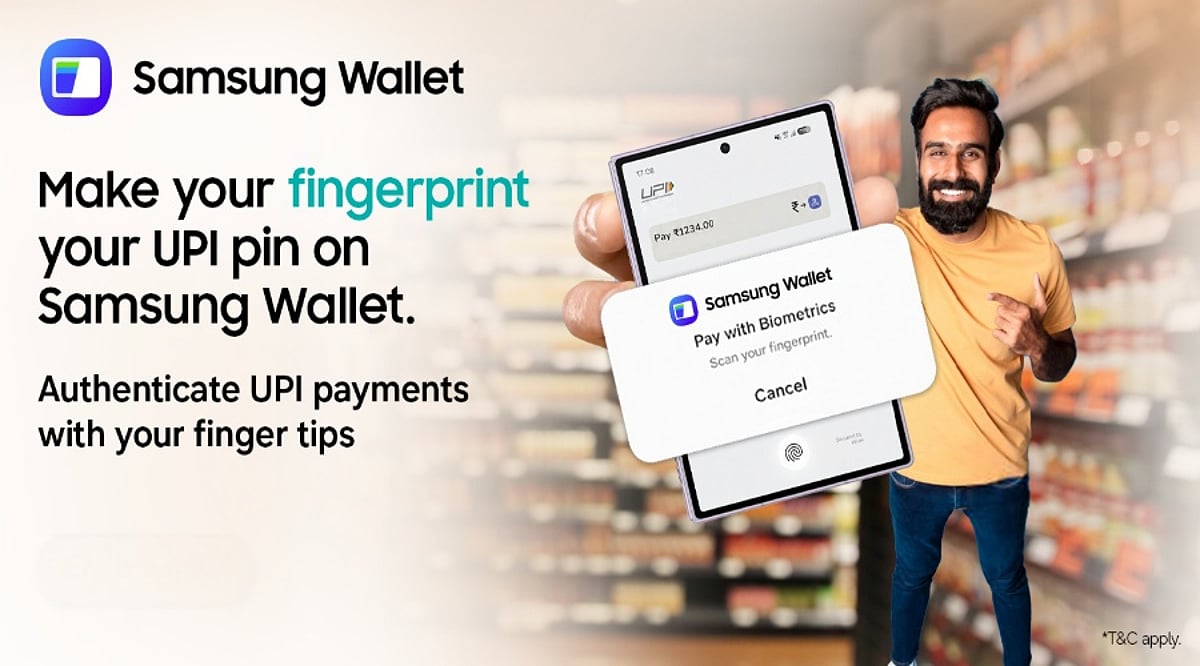
    Samsung has introduced a new fingerprint-based authentication feature for UPI payments through its Samsung Wallet app in India. The update allows users of compatible Galaxy smartphones to approve eligible transactions using the device’s built-in fingerprint sensor, eliminating the need to manually enter a UPI PIN for qualifying payments.

    How Fingerprint UPI Payments Work

    The authentication process is designed to be as seamless as unlocking a Galaxy phone. When a user initiates an eligible UPI payment of up to Rs. 10,000 via Samsung Wallet, the app prompts them to authenticate using the fingerprint sensor. Once the fingerprint is recognized, the transaction proceeds without requiring the user to type their UPI PIN on the screen.

    Samsung has confirmed that the biometric verification occurs entirely on the device. The company leverages its Knox security platform and encryption to protect sensitive payment information, ensuring that fingerprint data is stored securely.

    Enhanced Convenience and Privacy

    This update is particularly beneficial for frequent small-ticket UPI transactions. By removing the manual PIN entry step, Samsung aims to make routine payments faster. The feature also enhances privacy in crowded public spaces, where entering a PIN on a phone screen can risk exposure.

    According to Samsung, on-device biometric authentication can help reduce payment failures caused by incorrect UPI PIN entries. The move aligns with the National Payments Corporation of India’s (NPCI) broader initiative to introduce additional authentication methods for UPI transactions.

    More Than Just UPI

    Samsung Wallet serves as a comprehensive digital wallet. Beyond UPI, it supports contactless payments using tokenized credit and debit cards, utility bill payments, and storage for digital keys, boarding passes, tickets, and ID cards. Samsung emphasizes that the Knox security platform, combined with fingerprint recognition and encryption, creates a secure environment designed to protect sensitive data from both digital and physical threats.

    For Galaxy users in India, this update brings the UPI payment experience closer to the simplicity of unlocking their phone: a simple fingerprint scan is all it takes to complete an eligible payment.

  • Samsung Wallet Adds On-Device Fingerprint Authentication for UPI Payments in India

    Samsung Wallet Adds On-Device Fingerprint Authentication for UPI Payments in India

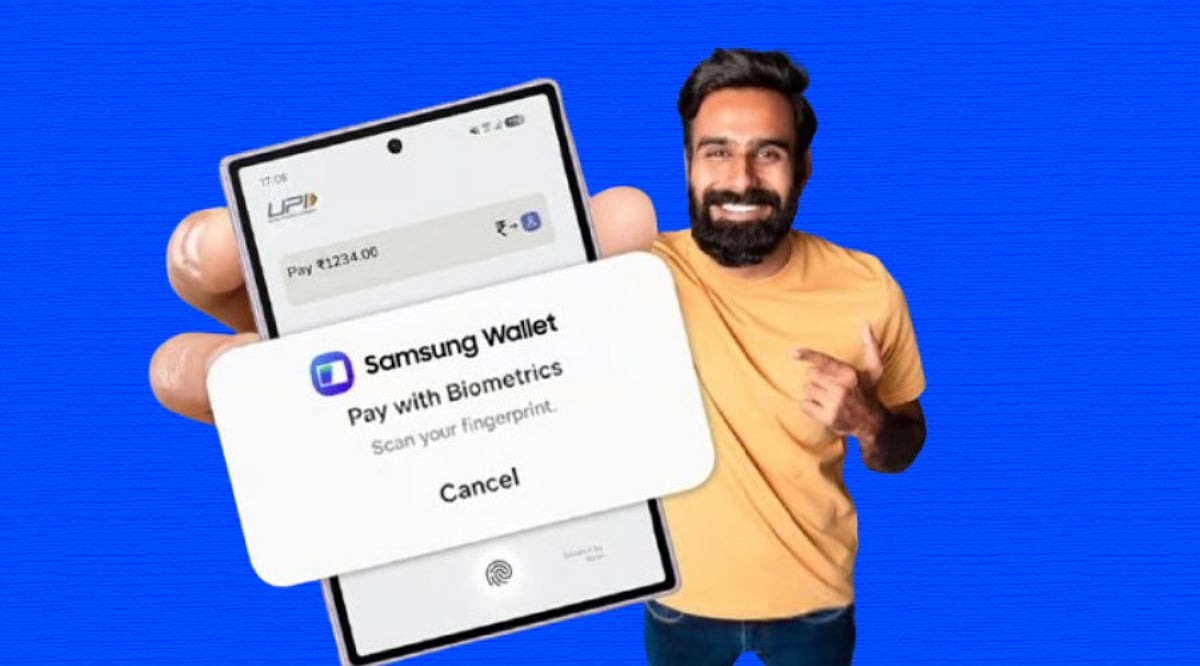
    Samsung India has announced a significant update to its Samsung Wallet service, enabling users to make UPI payments using their Galaxy device’s fingerprint sensor. The new on-device biometric authentication eliminates the need to enter a UPI PIN for transactions up to ₹10,000, making digital payments as simple as unlocking a phone.

    This feature enhances user privacy by keeping biometric data on the device and reduces transaction failures caused by mistyped PINs. By combining convenience, speed, and robust security, Samsung Wallet aims to simplify everyday UPI payments for Indian consumers.

    The update is part of Samsung’s ongoing efforts to improve digital payment experiences in India, where UPI has become the dominant payment method. Users with compatible Galaxy devices can now enjoy a frictionless payment process without compromising security.

  • Samsung Electronics Shares Slide as Tariff Concerns and Stablecoin Plans Emerge

    Samsung Electronics Shares Slide as Tariff Concerns and Stablecoin Plans Emerge

    Samsung Electronics stock fell sharply on Friday as investors weighed fresh tariff risks and the company’s announcement of native stablecoin support for Samsung Wallet. Shares dropped 7.6% to ₩249,500, joining a broader sell-off of South Korean chipmakers amid escalating trade tensions.

    Stablecoin Integration for Samsung Wallet

    During Galaxy Unpacked 2026 on July 22, Samsung announced plans to integrate stablecoin functionality into its Samsung Wallet, allowing Galaxy users to send, receive, and hold stablecoins directly within the app. The update will expand the wallet beyond payment cards, digital IDs, rewards, cash, and savings. A USDC interface was shown during the event, though Samsung did not confirm that USDC will launch with the service. Product manager Lee Dinham stated the goal to unify payments, rewards, and digital assets in one application, secured by Samsung Knox device encryption. This follows Samsung’s October 2025 partnership with Coinbase, which gave over 75 million US Galaxy users crypto access through Samsung Wallet and a three-month Coinbase One subscription.

    Tariff Pressures Weigh on Samsung Stock

    New US tariffs on imports from more than 60 economies have heightened concerns over global supply chains. Samsung, which sells consumer electronics, memory chips, displays, and other components across markets including the Americas, China, and Europe, faces direct exposure to customs costs, compliance rules, and potential trade retaliation. Higher duties could impact device pricing and component margins. The company is investing heavily in memory capacity and AI-related chips, but also faces legal disputes involving memory products and board-level changes, adding uncertainty for investors.

    Citi Maintains Buy Rating on Memory Demand

    Citi Research retained Buy ratings on Samsung Electronics and SK Hynix, calling the sell-off “unfounded fears” of a memory-cycle downturn. The bank noted that memory inventory remains “materially low” at suppliers and customers, and rising demand could keep supply below orders. Citi expects AI infrastructure to drive the next phase of memory demand, citing NVIDIA’s Vera Rubin platform as a potential driver for Samsung’s NAND and advanced DRAM businesses. The report also pointed to growing use of context memory extension systems and high-capacity SSDs near graphics processors.

    Samsung’s stablecoin plan adds a new service to its mobile ecosystem, but launch details remain unclear. Meanwhile, tariff risks and supply-chain costs persist. Citi’s positive rating reflects tight memory supply and expanding AI server demand.

  • Crypto Market Roundup: Bitcoin ETF Outflows, Dogecoin Volume Surges, Samsung Wallet Stablecoin Support, Bitfinex El Salvador License, and Poolin Bankruptcy

    Crypto Market Roundup: Bitcoin ETF Outflows, Dogecoin Volume Surges, Samsung Wallet Stablecoin Support, Bitfinex El Salvador License, and Poolin Bankruptcy

    The cryptocurrency market saw a flurry of major developments on July 24, 2026, including significant outflows from spot Bitcoin ETFs, a sharp rise in Dogecoin trading volume, Samsung’s plan to integrate stablecoins into its mobile wallet, Bitfinex securing a license in El Salvador, and the former mining giant Poolin filing for Chapter 11 bankruptcy.

    Bitcoin ETFs See $225 Million in Outflows

    According to SoSoValue, spot Bitcoin ETFs recorded $225 million in net outflows on July 23. BlackRock’s iShares Bitcoin Trust (IBIT) led the outflows with $202 million exiting the fund. In contrast, the Morgan Stanley ETF MSBT saw the highest single-day inflow at $5.01 million, bringing its historical total net inflow to $400 million. Despite the daily redemptions, the cumulative historical net inflow across all spot Bitcoin ETFs remains robust at $51.626 billion, with total net assets of $78.817 billion and an ETF net asset ratio of 6.03%.

    Dogecoin Trading Volume Surges 123%

    Dogecoin (DOGE) experienced a remarkable spike in trading activity, with 24-hour spot volume jumping more than 123% to approximately $219 million. Futures volume also surged, reaching nearly $1.5 billion. Open interest exceeded $1.1 billion, indicating that leveraged traders remain heavily exposed despite the token’s struggle to break through key resistance. DOGE was trading at around $0.069, having faced yet another rejection below the 26-day exponential moving average at approximately $0.074.

    Samsung Wallet to Add Stablecoin Support

    During the Galaxy Unpacked event, Samsung Electronics announced plans to add stablecoin support to Samsung Wallet. Samsung product manager Lee Dinham stated that the wallet will expand beyond cash and savings to include stablecoins, enabling users to transfer digital value directly from their smartphones. The move positions Samsung as one of the first major smartphone brands to offer native stablecoin functionality, bridging traditional payments with blockchain-based digital assets.

    Bitfinex Secures El Salvador License

    Bitfinex has obtained a Digital Asset Service Provider (DASP) license in El Salvador, covering spot trading, crypto derivatives, and tokenized securities. The approval, announced on May 12, follows the registration of two Bitfinex-linked operating entities by the National Commission of Digital Assets on April 23. The license brings the core Bitfinex trading platform, Bitfinex Securities El Salvador, and Bitfinex Derivatives El Salvador under a single regulated framework in one of the world’s most crypto-friendly jurisdictions.

    Poolin Files for Chapter 11 Bankruptcy

    Poolin Technology Pte. Ltd., the Singapore-based parent of what was once a leading Bitcoin mining pool, filed for Chapter 11 bankruptcy protection in the U.S. Bankruptcy Court for the District of New Jersey after its Texas Bitcoin mining and hosting operations ceased on July 10. The filing includes U.S. affiliates Lonestar Dream Inc. and Lonestar Taproot LLC. Poolin lists estimated creditors between 10,001 and 25,000, assets of $1 million to $10 million, and liabilities of $100 million to $500 million. Chief Restructuring Officer Michael DuFrayne disclosed prepetition obligations of approximately $173.1 million, with $163.7 million in unsecured IOUs issued to Poolin Wallet customers after withdrawals were suspended during the 2022 crypto downturn.

    Frequently Asked Questions

    Why did Bitcoin ETFs record large outflows?

    Spot Bitcoin ETFs experienced net redemptions as investors booked profits and adjusted exposure amid volatile market conditions. Despite the outflows, cumulative historical inflows above $51.6 billion signal continued long-term institutional interest.

    Why is Dogecoin’s trading volume increasing?

    Dogecoin saw a surge in spot and futures trading activity as traders positioned for potential price movements. However, the token remains below key technical resistance levels, suggesting limited bullish momentum.

    What does Samsung Wallet’s stablecoin support mean?

    Samsung plans to integrate stablecoins into its wallet, enabling direct blockchain-based value transfers from smartphones. This marks growing mainstream adoption of digital assets through consumer technology.

    Why is Bitfinex’s El Salvador license important?

    The license allows Bitfinex to operate a regulated ecosystem for spot trading, derivatives, and tokenized securities in a crypto-friendly jurisdiction, enhancing its global regulatory standing.

    Why did Poolin file for Chapter 11?

    Poolin filed for bankruptcy after prolonged financial difficulties stemming from the 2022 crypto market downturn. The company reported liabilities up to $500 million, mostly tied to customer IOUs from suspended wallet withdrawals.

  • Samsung Wallet to Integrate Native Stablecoin Support, Galaxy Card Expands Financial Services

    Samsung Wallet to Integrate Native Stablecoin Support, Galaxy Card Expands Financial Services

    Samsung Electronics has announced plans to integrate native stablecoin support into Samsung Wallet, a move that could give millions of Galaxy device owners direct access to dollar-pegged digital currencies. The initiative was revealed during the Galaxy Unpacked 2026 event on July 22, alongside the introduction of the Samsung Galaxy Card.

    Samsung Wallet Evolves into a Financial Hub

    Samsung describes its Wallet as a unified financial hub that combines payments, identity verification, digital assets, and Galaxy services. According to South Korean publication Digital Asset, the stablecoin plan aims to extend the wallet beyond everyday payments and savings, allowing users to transfer digital assets without needing a separate cryptocurrency app.

    The company has not yet specified which stablecoin will be supported, nor has it announced a launch date or issuer. Regional availability also remains unclear.

    Galaxy Card Expands Samsung’s Finance Role

    The Samsung Galaxy Card, accessible through Samsung Wallet, will be issued by Barclays in the United States and powered by Visa’s payment network. The product ties payments and rewards into Samsung’s device ecosystem, with security provided by Samsung Knox through end-to-end encryption.

    Samsung Wallet has grown steadily since merging Samsung Pay and Samsung Pass in 2022. It now stores payment cards, digital IDs, boarding passes, and digital keys, and can display cryptocurrency holdings. Native stablecoin support would bring the service closer to enabling full digital currency transactions within the platform.

    Stablecoins Gain a Major Consumer Gateway

    Samsung’s plan comes as stablecoins become more integrated into mainstream payments. A Fireblocks survey of about 300 banks and payment providers found that nearly half viewed real-time payments as the primary benefit of stablecoins, while 85% said improved regulation now encourages adoption.

    Visa and blockchain data firm Allium have also launched a website tracking fiat-backed stablecoins like USDC and USDT across major blockchain networks. Until now, the market has lacked a consumer gateway tied to a global smartphone manufacturer. Samsung Wallet could fill that role.

    Visa executive Kirk Stuart noted that the Galaxy Card combines Samsung’s technology, Barclays’ co-brand capabilities, and Visa’s network, offering rewards, payment security, and broad merchant acceptance.

    Samsung’s stablecoin initiative, together with the Galaxy Card, signals a broader push into payments and financial services. Users should watch for further details on supported stablecoins, launch timelines, and regional availability.