Tag: SanDisk

  • SanDisk Optimus Series Signals Shift in Gaming Hardware Priorities: Speed and Capacity Take Center Stage

    SanDisk Optimus Series Signals Shift in Gaming Hardware Priorities: Speed and Capacity Take Center Stage

    SanDisk is making a stronger push into the gaming and esports sector as modern games demand increasingly more storage for downloads and updates. With the Indian gaming market surpassing the USD 1 billion mark in 2025 and projected to have over 550 million gamers in 2026, the company is entering the ecosystem with two powerful new SSDs: the SanDisk Optimus GX SSD and the SanDisk Optimus GX PRO SSD. Launched in 2026, these drives are built for gamers and developers, respectively, offering the capacity and speed required by demanding titles.

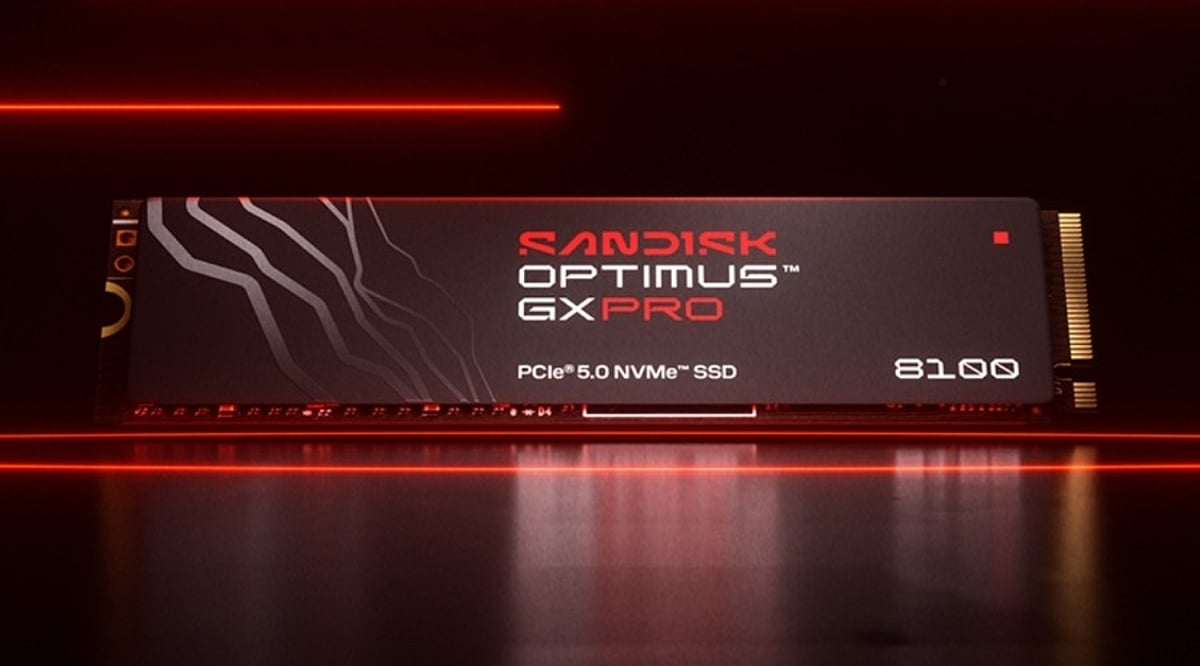
    Traditional gaming hardware discussions often center on GPUs and CPUs, but the SanDisk Optimus GX PRO 8100, a PCIe 5.0 NVMe SSD, aims to deliver a friction-free experience. Players can run games, multitask, and transfer files without lag. For console gamers, SanDisk introduced microSD Express cards for handheld gaming consoles, boasting read speeds up to 880 MB/s and the ability to store up to 36 games.

    As AAA games grow and digital libraries expand, storage is becoming a regular part of gaming upgrades rather than an afterthought. The Optimus range illustrates how gaming hardware priorities are evolving: performance is no longer just about graphics and processing power. For players with extensive libraries, fast and spacious storage is now one of the most practical upgrades available. As games continue to expand, the humble SSD may play an increasingly critical role in any gaming setup.

  • SanDisk Launches NAS-Optimized SSDs in India: NAS 600 SATA and NAS 800 NVMe

    SanDisk Launches NAS-Optimized SSDs in India: NAS 600 SATA and NAS 800 NVMe

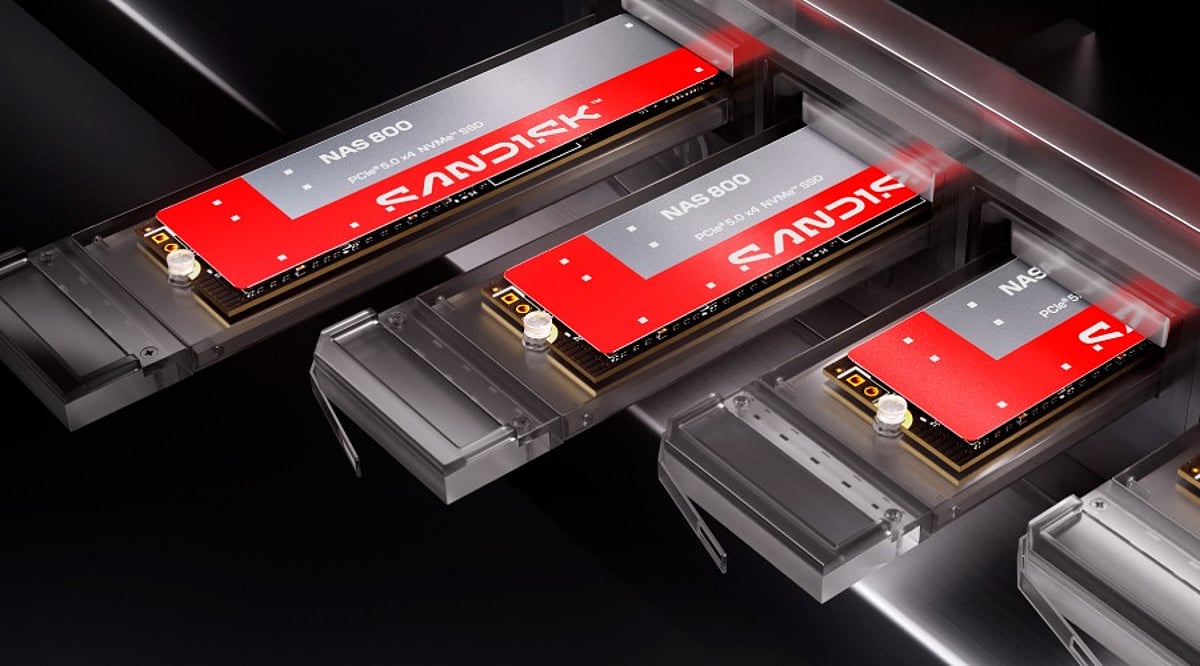
    SanDisk has launched a new lineup of NAS-focused SSDs in India, catering to home users, small businesses, and creative professionals. The two models introduced are the NAS 600 SATA SSD and the NAS 800 NVMe SSD, both engineered for reliable, high-performance storage in network-attached storage (NAS) environments.

    NAS 600 SATA SSD: Affordable Upgrades for Existing Systems

    The NAS 600 SATA SSD is designed as a drop-in replacement for traditional hard drives in older NAS units. It comes in a 2.5-inch, 7mm form factor and fits into 3.5-inch drive bays without additional adapters. Key specifications include:

    • Read speeds up to 560 MB/s
    • Capacities from 500GB to 4TB
    • Top endurance of 2,500 TBW (for the 4TB model)
    • Suitable for storage expansion or cache duties

    NAS 800 NVMe SSD: High-Speed Performance for Demanding Workloads

    The NAS 800 NVMe SSD targets heavier workloads such as databases, virtual machines, AI processing, and content creation. It leverages PCIe 5.0 in an M.2 2280 form factor. Highlights include:

    • Capacities from 960GB up to 7.68TB
    • Maximum read speed of 14,900 MB/s
    • Maximum write speed of 13,200 MB/s (actual speeds vary by model)
    • Endurance rating of up to 14 PBW for the top SKU

    Both SSDs are optimized for 24/7 operation in NAS systems, providing consistent performance and reliability. SanDisk states that the new drives will be available from September through its official channels and select retailers.

  • S&P 500 Holds Steady as Chip and Software Declines Offset Broader Market Gains

    S&P 500 Holds Steady as Chip and Software Declines Offset Broader Market Gains

    The S&P 500 traded near the flatline on Thursday as steep losses in chip and software stocks offset gains across most other sectors. Investors weighed corporate earnings, labor data, and ongoing negotiations over reopening the Strait of Hormuz.

    At 11:20 a.m. ET, the S&P 500 slipped 0.08% to 7,723. The Dow Jones Industrial Average added 0.49% to 54,350, while the Nasdaq Composite edged up 0.05% to 26,380.

    Western Digital and Sandisk Shares Tumble

    Western Digital shares fell 18.5% in early trading despite reporting fourth-quarter results above Wall Street estimates. Its fiscal first-quarter forecast disappointed investors. Sandisk shares dropped 11.3% after releasing its fiscal fourth-quarter results. Both companies forecast quarterly revenue above estimates, driven by demand for artificial intelligence infrastructure. However, investors focused on valuations after significant gains earlier this year — Western Digital had climbed about 200%, and Sandisk had gained around 400%.

    Hank Smith, investment strategy director at Haverford Trust, noted that expectations had reached demanding levels, calling the price action “some digestion going on in the market.”

    The Philadelphia Semiconductor Index declined 1.5% during early trading. Intel and AMD also traded lower, adding pressure to the technology sector. However, several chip stocks later recovered: Broadcom gained nearly 2%, Marvell Technology rose about 3%, and NVIDIA moved higher during the session.

    Software Earnings Add Pressure to Technology

    Software stocks also recorded steep declines following several earnings reports. Atlassian, Salesforce, Adobe, and Zscaler traded lower. AppLovin shares fell about 17% after missing quarterly revenue estimates. The stock had previously benefited from investor demand for AI-linked companies. Datadog dropped roughly 17% after management forecast slower revenue growth in the third quarter, raising questions about enterprise software demand and valuations.

    Peloton shares fell more than 14% after forecasting lower sales in the coming fiscal year, citing higher prices for equipment and subscriptions. Still, Microsoft and Amazon each gained around 1%, helping limit broader losses across major indexes.

    Most S&P 500 Sectors Trade Higher

    Despite technology weakness, nine of the S&P 500’s 11 sectors traded higher during the morning session. Energy, consumer staples, and healthcare led the gains. Parker-Hannifin rose 8.5% after forecasting annual profit above analysts’ estimates. Albemarle gained 6.7% after beating quarterly profit estimates. Diageo rose about 6% after announcing a three-year plan targeting $1.2 billion in savings.

    Restaurant Brands International reported adjusted earnings of $1.07 per share, above the expected $1.03. Revenue reached $2.52 billion, matching estimates. Burger King recorded an 8.5% increase in comparable restaurant sales, though other brands within the group delivered weaker results.

    Labor Data Sets Up July Jobs Report

    New applications for unemployment benefits increased slightly to 199,000 for the week ending August 1, below the Dow Jones estimate of 204,000. Layoffs fell to their lowest level in two years during July. Second-quarter productivity increased 1.4% (versus 0.8% prior), while unit labor costs rose 1.3% (below the 2.1% estimate). Investors will now examine Friday’s July employment report for clues about the Federal Reserve’s policy path. Fed Chairman Kevin Warsh has reduced forward guidance, increasing the market’s focus on incoming economic data.

    Iran Talks Keep Oil and Gold in Focus

    Brent crude traded near $80 per barrel as investors monitored negotiations involving Iran and Oman focused on reopening shipping routes through the Strait of Hormuz. An Iranian official said a temporary agreement would allow ships to travel without fees or tolls, but final conditions had not been settled. Deutsche Bank strategist Jim Reid noted “unresolved questions” about whether Iran could later charge vessels.

    Gold rose for a fourth consecutive session as geopolitical uncertainty supported demand. Spot gold gained 0.6% to $4,271.33 per ounce, and US gold futures rose 0.6% to $4,330.20. Earlier, spot prices reached their highest level since June 18.

    Conclusion

    Technology losses kept the S&P 500 near the flatline, despite gains across nine of its 11 sectors. Western Digital, Sandisk, AppLovin, and Datadog recorded the sharpest declines following earnings updates. Meanwhile, investors monitored Iran-Oman shipping talks and Friday’s July employment report, both of which could shape energy prices and Federal Reserve rate expectations.

  • 7 Leading Technology Stocks for July 2026: From Apple’s Ecosystem to IonQ’s Quantum Leap

    7 Leading Technology Stocks for July 2026: From Apple’s Ecosystem to IonQ’s Quantum Leap

    Overview

    Technology stocks continue to benefit from AI, cloud computing, data storage, and quantum computing advancements. The global tech industry is worth over $21 trillion, and investors are looking for companies with strong earnings and scalable business models. This July 2026, we highlight seven stocks with market caps above $1 billion and EPS growth over 20% in the past year.

    Top Technology Stocks for July 2026

    1. Apple Inc. (AAPL)

    Market Cap: $4.88 trillion | EPS Growth: 28.6%. Apple’s ecosystem of iPhone, Mac, iPad, Apple Watch, and services provides recurring revenue. AI integration into devices is expected to fuel the next growth phase.

    2. Sandisk Corporation (SNDK)

    Market Cap: $208.9 billion | EPS Growth: 370%. Sandisk leads in flash memory storage for consumer devices, AI servers, and enterprise systems, benefiting from increasing demand for high-speed storage.

    3. Dell Technologies Inc. (DELL)

    Market Cap: $253.66 billion | EPS Growth: 96.71%. Dell provides PCs, servers, storage, and IT infrastructure. Its data center solutions are critical for AI workloads.

    4. Seagate Technology Holdings plc (STX)

    Market Cap: $167.1 billion | EPS Growth: 51.4%. Seagate is a key supplier of hard disk drives for computers and data centers, important for global data creation.

    5. Western Digital Industries Ltd (WDI)

    Market Cap: $160.9 billion | EPS Growth: 267.47%. Western Digital specializes in HDDs and enterprise storage, driven by demand from data centers and cloud platforms.

    6. Everpure, Inc. (P)

    Market Cap: $22.73 billion | EPS Growth: 73.68%. Everpure offers enterprise data-storage and management solutions, focusing on all-flash storage for AI and analytics.

    7. IonQ, Inc. (IONQ)

    Market Cap: $13.1 billion | EPS Growth: 125.83%. IonQ works on trapped-ion quantum computers, providing cloud access. Though early-stage, it offers exposure to transformative quantum technology.

    Final View

    Apple provides ecosystem scale, Dell leads in AI infrastructure, and storage demand benefits Sandisk, Seagate, Western Digital, and Everpure. IonQ introduces high-growth quantum computing. These seven stocks cover the technology stack from devices to next-gen computing.

    Disclaimer: This article is for informational purposes only and does not constitute investment advice. Always conduct your own research before investing.

  • 7 High-Growth US Tech Stocks to Watch in 2026: Key Drivers and Risks

    7 High-Growth US Tech Stocks to Watch in 2026: Key Drivers and Risks

    The US technology sector continues to be shaped by artificial intelligence, cloud software, and semiconductor innovation. Companies delivering consistent revenue and earnings growth remain in focus. These high-growth tech stocks stand out for their strong business momentum and long-term potential.

    Overview

    Seven US tech companies posted verified double- or triple-digit revenue growth in their most recent 2026 quarterly reports. Each stock carries a distinct growth driver, from AI infrastructure demand to NAND storage contracts, rather than a repeated AI narrative. Every pick comes with a specific, company-disclosed risk factor investors should track before buying.

    Revenue separates market leaders from market stories. The strongest US tech companies are proving their growth through earnings rather than expectations. From AI infrastructure to cybersecurity and digital commerce, these seven stocks are backed by measurable performance instead of market hype.

    NVIDIA Stock: Why it Remains a Top High-Growth AI Stock in 2026

    NVIDIA posted first-quarter fiscal 2027 revenue of $81.6 billion, up 85% year over year, with data center revenue up 92%. The Blackwell ramp is still driving that growth, and the Rubin platform is set to contribute revenue for the first time next quarter. The clearest risk sits in the guidance itself: NVIDIA is assuming zero data center compute revenue from China going forward, a quantified exposure rather than a vague valuation concern.

    Palantir Stock: Enterprise AI Growth Makes it a Top Tech Stock in 2026

    Palantir grew revenue 85% year over year in Q1 2026, its fastest pace since 2020, with US commercial revenue up 133%. The company raised its full-year guidance to 71% growth and reported a Rule of 40 score of 145. Operating expenses rose 32% in the same quarter, so any slowdown in commercial deal velocity would hit margins faster than revenue could offset it.

    Shopify Stock: Commerce Growth and AI Innovation Drive 2026 Performance

    Shopify crossed $100 billion in quarterly GMV for the second straight quarter, with revenue up 34%. The Universal Commerce Protocol, now backed by Amazon, Meta, Microsoft, Salesforce, and Stripe, is the structural story here. Investors should still note that the stock fell 8.7% on the print itself, as rising transaction losses and a price-to-earnings ratio near 135 offset the headline growth.

    Zscaler Stock: Cybersecurity Growth Powered by AI Demand

    Zscaler grew revenue 25% and ARR 25% in its third fiscal quarter, positioning itself as the cybersecurity layer for AI agents. Strip out the Red Canary acquisition, and organic ARR growth drops to 21%, and the company’s own early guidance for fiscal 2027 points to a step down to 16 to 17% growth.

    HubSpot Stock: AI-Powered CRM Growth Supports Long-Term Potential

    HubSpot grew revenue 23% in Q1 2026, with total customers approaching 300,000 and active AI seat users up 90% year over year. The company’s push into agentic tools, including its new Customer, Prospecting, and Data Agents, is driving upmarket deal sizes higher, with deals above $120,000 in ARR up 64%. But pricing and go-to-market changes made in April slowed sales capacity, and management has already guided Q2 growth down to 18%. That is a declaration the company disclosed itself, not a market guess.

    SanDisk Stock: AI-Driven NAND Demand Fuels Revenue Growth

    Revenue more than tripled to $5.95 billion as AI workloads drove NAND demand, and the company locked in $42 billion of long-term supply contracts covering a third of its fiscal 2027 bit shipments. Management has flagged the risk directly: the variable-priced portions of those contracts could erode margins fast if NAND supply outpaces demand.

    Reddit Stock: Advertising and AI Data Licensing Drive Growth

    Reddit rounds out the list with a genuinely different growth driver. Revenue grew 69% in Q1 2026, its seventh straight quarter above 60% growth, powered by advertising revenue up 74% and a data licensing relationship with AI model builders built on more than 25 billion posts and comments. Active advertisers on the platform grew more than 75% year over year, and the company’s own automated campaign product, Reddit Max, is already showing measurable results for advertisers. The gap to watch: US daily active users sit at 53.5 million, approximately half of management’s own stated target of 100 million.

    What is Driving High-Growth US Tech Stocks in 2026?

    None of these seven stocks is growing for the same reason. NVIDIA and SanDisk are riding AI infrastructure demand from opposite ends of the supply chain. Palantir and HubSpot are monetizing AI inside enterprise software. Shopify is building a two-decade-old commerce network. Zscaler is selling security for a threat landscape that did not exist five years ago. Reddit is turning its content archive into a licensing asset.

    Final Thoughts

    Every stock on this list beat growth expectations this year, and every one of them also handed investors a specific reason to stay disciplined. The market has stopped rewarding growth on its own; it now waits to see whether a China exposure, a slowing organic ARR line, or a guided deceleration actually shows up in the next print. The companies that manage their own disclosed risk will separate from the ones that only manage the headline. Watch the risk column as closely as the growth column, because that is where the real verdict gets written.

  • Top SanDisk SD Cards for 2026: Fast and Dependable Storage Options

    Top SanDisk SD Cards for 2026: Fast and Dependable Storage Options

    SanDisk continues to lead the memory card market with a wide range of SD and microSD cards tailored for different use cases. Whether you’re a professional photographer shooting in 4K, a drone enthusiast, or a casual user looking for reliable storage, there’s a SanDisk card for you. Here are the best options available in 2026.

    SanDisk Extreme PRO SDXC UHS-I

    Ideal for photographers who need fast burst shooting and smooth 4K video recording, this card delivers top-tier read and write speeds. It’s a go-to choice for demanding workflows.

    SanDisk Extreme SDXC

    This card strikes a balance between speed, reliability, and affordability. It’s a solid mid-range option for everyday content creators who need dependable performance without breaking the bank.

    SanDisk Ultra SDXC

    A budget-friendly alternative for casual photographers and Full HD video recording. It offers ample storage and decent speeds for non-professional use.

    SanDisk Extreme PRO microSDXC

    Perfect for drones, action cameras, and mobile gaming devices. This microSD card brings the same high-speed performance of its full-size counterpart in a compact form factor.

    SanDisk High Endurance microSD

    Designed specifically for security cameras and dash cams that require continuous recording. It withstands heavy write cycles and harsh conditions.

    SanDisk MAX Endurance

    Built for long-term, demanding recording environments, this card offers exceptional durability and longevity, making it ideal for surveillance systems.

    SanDisk Extreme PLUS

    Offering some of the fastest read and write speeds in the lineup, the Extreme PLUS is aimed at advanced users who need maximum performance for high-resolution content.

    SanDisk Nintendo Switch microSD

    Officially licensed for Nintendo Switch, this card is optimized for storing games, updates, and downloadable content. It ensures quick load times and seamless gameplay.

    From professional photography to everyday storage, SanDisk’s 2026 lineup covers every need with speed and reliability.