Tag: Solana

  • Blockchain’s Centralization Paradox: Why Decentralized Networks Risk Becoming the Very System They Sought to Replace

    Blockchain’s Centralization Paradox: Why Decentralized Networks Risk Becoming the Very System They Sought to Replace

    Decentralization has been crypto’s defining promise since Bitcoin introduced a peer-to-peer alternative to traditional finance. Ethereum expanded that vision with programmable smart contracts, and newer blockchains have continued pushing the boundaries of scalability and performance. But as the industry matures, a different question is beginning to emerge: can a blockchain remain decentralized if the infrastructure supporting it becomes increasingly concentrated?

    Almost all conversations about decentralization are based on validator numbers, governance structures, or token distribution. This is an important factor, but it doesn’t tell the entire story. The infrastructure behind transaction routing, block building, and MEV has become an equally important consideration. When a significant portion of the validator set depends on the same infrastructure to stay competitive, then it will be less decentralized, even if there are lots of online nodes.

    But this is not just a theoretical discussion. All blockchains provide different incentives that determine the way ecosystems are developing. While the validators aim to maximize their revenue, developers try to get reliable infrastructure, searchers fight for profitable activities, and users need fast transactions. These incentives will eventually favor reliable solutions.

    The problem starts when one or two providers are so powerful that others cannot establish themselves. Network effects make incumbents stronger and more difficult to beat. Even if validators have freedom of choice, leaving the leading provider might mean earning less money, having lower uptime, or not getting any transactions at all.

    Many historical cases are related to such development. Search engines, cloud services, digital advertising, and payment processing became centralized even though initially they were highly competitive industries. Blockchain cannot change this by itself – even decentralized protocols can create centralized infrastructure through certain economic incentives.

    This problem is important for high-performance networks like Solana because its architecture allows fast confirmations and cheap transactions; thus, the network has become one of the most active ecosystems for decentralized trading. On the other hand, it caused a discussion about transaction ordering and validator economics.

    MEV has become a major source of validator revenue, encouraging operators to integrate with specialized infrastructure that helps optimize block production. While these systems have improved efficiency, they have also concentrated parts of the transaction supply chain among relatively few participants. As a result, validators often find themselves balancing decentralization ideals with practical business decisions.

    Healthy competition is one of the best ways to prevent excessive concentration. When multiple infrastructure providers compete for validator participation, innovation accelerates, pricing becomes more efficient, and validators gain greater flexibility in choosing the services that best match their needs. Open competition also reduces systemic risk by ensuring that no single provider becomes indispensable to the network.

    Transparency plays an equally important role. Open markets lower barriers for new participants by reducing the informational advantages enjoyed by incumbents. Instead of relying on privileged relationships or proprietary access, infrastructure providers compete based on execution quality, performance, and economic value.

    Several teams across the Solana ecosystem are now exploring ways to create a more competitive transaction marketplace. One of them is Flowra, which is building an Open Orderflow Auction designed to expose transaction flow to a broader group of searchers while allowing validators to define their own Programmable Block Policies. Rather than requiring validators to depend on a single infrastructure stack, the model aims to increase optionality while encouraging open competition for blockspace.

    The success of this model of validation remains to be seen. However, what we know for sure is that decentralization cannot be defined exclusively by the number of nodes validating transactions. Another aspect of decentralization will also depend on whether or not these nodes will have real choice when choosing their infrastructure and whether or not competition will be high enough to allow innovations.

    The field of infrastructure can become one of the key areas for competition, with blockchain becoming more popular. The winners will not only be the fastest or the cheapest networks but also those that manage to uphold the open market principles inherent to decentralized technologies.
  • Solana and Hyperliquid ETF Inflows Surge as XRP Funds Face Steady Outflows

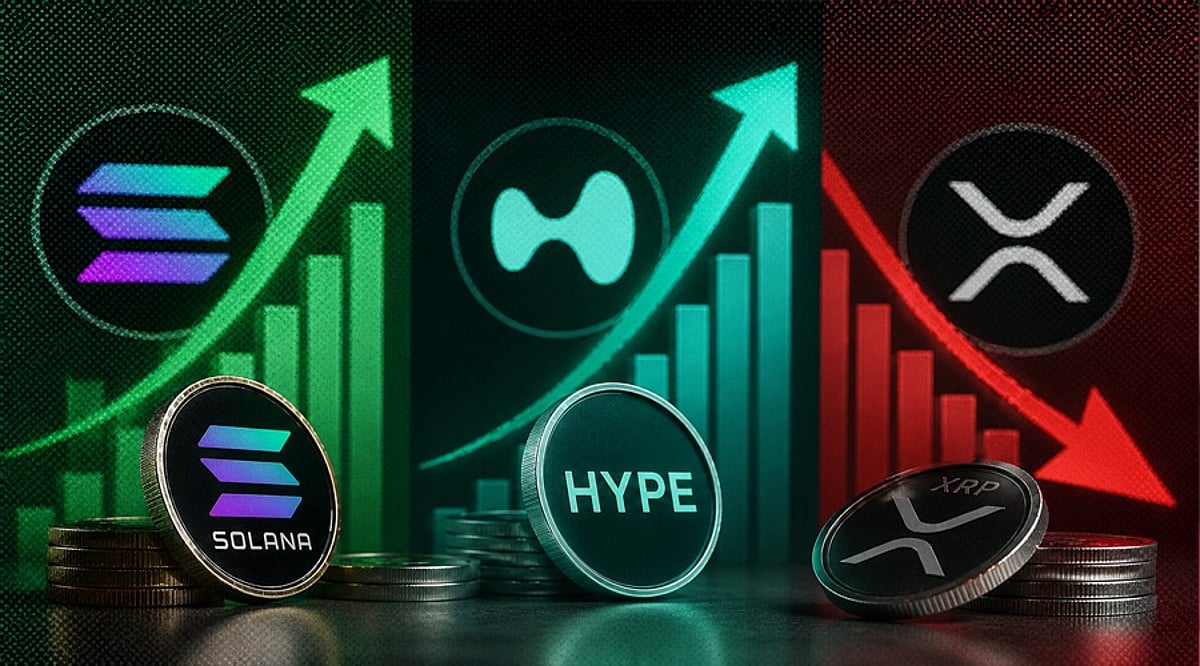
    Solana and Hyperliquid ETF Inflows Surge as XRP Funds Face Steady Outflows

    Spot cryptocurrency ETFs tied to Solana and Hyperliquid saw fresh capital inflows on July 1, while XRP funds recorded withdrawals amid selective demand across digital asset markets. Data from SoSoValue shows Solana spot ETFs posted approximately $500,000 in net inflows, while Hyperliquid funds gained $2.9 million. In contrast, XRP spot ETFs registered $1.86 million in net outflows.

    The divergent flows highlight that investors continue to direct capital toward specific assets rather than the broader crypto market. Daily ETF flows often reflect shifting demand, portfolio rebalancing, profit-taking, or reduced risk appetite.

    Solana Price Recovery Attracts Renewed Interest

    Solana traded above $78 on Thursday, gaining nearly 10% over the week. Stronger derivatives data, modest fund demand, and improving technical momentum supported the recovery. CoinGlass data shows Solana’s long-to-short ratio at 1.11, its highest level in more than a month. A ratio above one indicates bullish positions outnumber bearish positions.

    Solana’s funding rate also turned positive, reaching 0.0017% on Thursday. Positive funding means long traders pay short traders, signaling stronger demand for upward price exposure.

    According to SoSoValue, Solana spot ETFs attracted $521,070 on Wednesday, contributing to a cumulative $3.55 million in net inflows through Wednesday. While the flow remains modest, it aligns with improving market indicators. Further inflows could support price demand if the trend continues and strengthens.

    Hyperliquid Gains While XRP Funds Experience Capital Losses

    Hyperliquid spot ETFs recorded $2.9 million in net inflows on July 1, surpassing Solana’s daily total. The protocol has gained attention among traders using on-chain derivatives. Meanwhile, XRP spot ETFs moved in the opposite direction, posting $1.86 million in withdrawals. The outflows reflect weaker daily demand compared with Solana and Hyperliquid products.

    XRP remains linked to ongoing legal proceedings between Ripple Labs and the U.S. Securities and Exchange Commission, and the uncertainty has contributed to cautious investor sentiment. At the same time, the Solana Foundation introduced Solana Governance Proposals, establishing an on-chain process for major network decisions. Validators can submit, support, and vote on broad governance questions.

    The framework limits proposals to high-level network direction rather than detailed technical changes. Validators use the svmgov program to conduct stake-weighted voting. A validator vote account must hold at least 100,000 SOL in delegated stake before placing a proposal on-chain. The proposal then requires support from 15% of active stakeholders. Validators prove voting weight through Merkle proofs linked to an on-chain stake snapshot. The process gives validators a formal avenue to shape major questions about Solana’s future direction.

    What’s Next for Crypto ETFs?

    Solana and Hyperliquid ETFs attracted fresh capital, while XRP funds recorded notable withdrawals. Solana also gained support from improved derivatives data, price recovery, and new validator governance measures. Investors should monitor ETF flows, market positioning, and network developments for clearer signals about future demand.

  • Bitcoin Rebounds to $60,700, Solana Surges Past $78 as Fed Chair Warsh Eases Inflation Concerns

    Bitcoin Rebounds to $60,700, Solana Surges Past $78 as Fed Chair Warsh Eases Inflation Concerns

    Bitcoin is stabilizing above the crucial $60,000 level as long-term holders absorb heavy ETF outflows, while the upcoming US jobs report and shifting dollar strength are expected to shape the crypto market’s next major move.

    Bitcoin Price Today: $60,677

    Bitcoin is trading near $60,677, up 2.63% over the past 24 hours and holding above the $60,000 mark. The token slid to a 21-month low of $57,950 earlier this week but has since clawed back above $60,000, a level that dominated traders’ conversation through most of June.

    Market sentiment improved after Fed Chair Kevin Warsh told an ECB forum panel that inflation risks appear to be easing, even as he avoided firm guidance on rate policy. A weaker US dollar and crude oil sliding to a four-month low have also removed some pressure from risk assets. Robinhood’s launch of its own public blockchain added further momentum, pulling fresh attention toward crypto infrastructure plays just as the broader market searched for a positive catalyst.

    Market Analysis and Expert Insights

    Akshat Siddhant, Lead Quant Analyst at Mudrex, noted: “Bitcoin is stabilising near the $60,000 psychological level after rebounding from a 21-month low of $57,950. A weaker U.S. dollar and crude oil prices falling to a four-month low have improved risk sentiment, helping BTC recover.” He added, “Although spot Bitcoin ETFs ended June with $4.5 billion in net outflows, long-term holders have absorbed some of the selling pressure, accumulating 270,000 BTC over the past two weeks.”

    The CoinSwitch Markets Desk commented: “BTC reclaimed the key $60K level after dipping to $58K. On the macro side, the US dollar pulled back from its highs, a tailwind for BTC. The long-dollar trade is crowded at +$34.3B, an 18-month high, hinting a dollar reversal may be near. Long-term holders added roughly 270K BTC in two weeks, showing big players are buying the dip.”

    Crypto Prices Today: Top 10 Coins at a Glance

    Based on CoinMarketCap data as of July 2:

    • Biggest Gainers: Solana leads with a 3.85% gain, followed by Hyperliquid at 2.98% and Bitcoin at 2.63%.
    • Biggest Laggards: TRON is the weakest mover among the top ten, up just 0.29%. USDC and Tether stayed near their dollar pegs.

    Crypto News Today Driving Market Sentiments

    Fed Chair Warsh Signals Cooling Inflation Risk

    Kevin Warsh told an ECB forum panel that inflation pressures appear to be easing. He declined to offer forward guidance on rates but described the upcoming July Fed meeting as likely to bring a real internal debate over policy direction. Bond yields stayed elevated after his remarks, with the 10-year Treasury near 4.50%.

    Spot Bitcoin ETFs Post Record Monthly Outflow

    US spot Bitcoin ETFs shed roughly $4.5 billion in June, their worst month since launching in January 2024. BlackRock’s IBIT absorbed a large share of the redemptions. XRP and Hyperliquid funds bucked the trend, pulling in $59.4 million and $161 million, respectively, suggesting investors are growing selective rather than exiting crypto altogether.

    Robinhood Launches Public Blockchain and Expands Crypto Suite

    Robinhood unveiled Robinhood Chain, a public layer-2 blockchain built on Arbitrum, at a London event this week. The launch brings tokenized stock trading live across more than 120 countries. A new lending product, Robinhood Earn, is part of the rollout too. Robinhood shares jumped 8% on the announcement.

    Investor and Market Outlook

    Bitcoin enters July with cautious optimism after a historically weak first half. The token fell in both Q1 and Q2, only the third time that has happened since 2018. In the two earlier instances, the second half brought little relief. July has historically been kind to Bitcoin, with the token closing green in 9 of the last 13 years, with average returns near 7.25%. That seasonal pattern, paired with Warsh’s softer tone, leaves room for further upside if ETF flows stabilize.

    Investors should track daily ETF flow data from SoSoValue and Treasury yield movement this week. Bitcoin’s ability to hold above $60,000 remains the key signal to watch. A confirmed break past $62,000 would strengthen the bullish case, while a slip under $58,000 would revive downside risk toward $55,000.

  • Solana Price Analysis: $60 Support Holds, $80 Breakout in Sight

    Solana Price Analysis: $60 Support Holds, $80 Breakout in Sight

    Solana has once again entered the spotlight after successfully defending the critical $60 support level. The recent price action has sparked fresh debate: can SOL move higher and reclaim the $80 resistance zone — one of the most important short-term price levels?

    At the time of writing, Solana trades near $75, marking a weekly gain of roughly 8%. Daily trading volume remains robust at over $2.9 billion, while the project holds a market capitalization of around $44 billion, cementing its status as a top cryptocurrency.

    The $60 Support Level Prevented Further Decline

    Solana’s strong defense of the $60–$62 range was the main catalyst for the recent recovery. During market weakness, sellers repeatedly tested that zone, but buyers stepped in each time, preventing further downside. This behavior reflects strong investor confidence — large holders and long-term investors see value at that level.

    After bouncing from support, SOL recorded nearly a 20% price recovery, improving short-term sentiment. The ability to hold above that floor has built a stronger base for the next upward move.

    $80 Remains the Next Major Hurdle

    Despite the rebound, $80 remains formidable resistance. For much of the second quarter of 2026, SOL traded in a range between $70 and $95. A clean break above $80 could shift market sentiment, opening the door to $90 or even $100.

    Price charts show a pattern of higher lows, signaling that buyers are gradually gaining control. Analysts believe several daily closes above $80 could attract stronger interest from traders and spark fresh momentum across the altcoin sector.

    Solana Network Growth Supports Positive Sentiment

    Beyond price, Solana’s blockchain continues to expand. The network now handles nearly 3.5 billion transactions per month and remains one of the fastest in the industry. Monthly active wallet addresses recently surpassed 50 million, reflecting steady ecosystem activity.

    Key developments have also bolstered confidence: MoneyGram expanded its partnership within Solana’s developer ecosystem, and the USDC Treasury minted $250 million in stablecoins on Solana — a vote of trust in the network’s infrastructure.

    ETF Growth Creates Mixed Market Reaction

    Spot Solana ETFs, though still less popular than Bitcoin or Ethereum ETFs, have drawn institutional attention. Total inflows have crossed $1.1 billion, showing growing interest from larger investors. However, some analysts note that ETF demand hasn’t been strong enough to fully sustain a major rally — earlier in June, selling pressure pushed SOL below $70 despite ETF inflows.

    Technical Indicators Show Recovery Potential

    The Relative Strength Index (RSI) has recovered from oversold conditions, signaling that selling pressure is waning. Rising trading volumes also suggest more buyers are entering the market. Key levels remain: strong support near $60, next support around $68, immediate resistance at $80, and the next major barrier near $90. If SOL clears and holds above $80, the market could target $100.

    Why This Matters

    Defending $60 proves strong investor conviction despite market corrections. With booming network growth and $1.1 billion in ETF inflows, reclaiming $80 is more than a short-term rally — it’s the definitive breakout signal needed to target $100.

    Final Outlook

    Solana has shown impressive resilience after defending the $60 support level. Strong price recovery, rising on-chain activity, increasing institutional participation, and healthy ecosystem growth have all improved sentiment. The focus now is on $80 resistance, which may decide Solana’s next major move. A successful breakout could drive SOL toward $90 and possibly $100.

    FAQs

    1. Why is the $60 level important for Solana?
    The $60 zone acted as a strong support floor where buyers consistently stepped in, preventing further decline.

    2. Can Solana reach $80 soon?
    If buying pressure continues to rise, SOL has a good chance of testing the $80 resistance barrier in the short term.

    3. How much is Solana trading at now?
    Solana currently trades near $75, with a weekly gain of about 8% and daily volume exceeding $2.9 billion.

    4. What role do ETFs play in Solana’s price?
    Spot Solana ETFs have attracted over $1.1 billion in inflows, proving institutional interest, but demand isn’t yet strong enough to prevent short-term dips below $70.

    5. What happens if SOL breaks above $80?
    A successful breakout could shift market sentiment, attract stronger trader interest, and open the path toward $90 and $100.

  • Bitcoin Holds Near $59K as Solana Rallies 2% Ahead of Fed Chair’s ECB Speech — Market Overview

    Bitcoin Holds Near $59K as Solana Rallies 2% Ahead of Fed Chair’s ECB Speech — Market Overview

    Bitcoin Steadies, Solana Leads Gains as Markets Await Fed Chair Warsh

    Bitcoin opened July on firmer footing, trading near $59,190 after a rough June. The cryptocurrency is up 0.30% in the past 24 hours and 5.64% over the week, as bargain hunters begin to step back in. Meanwhile, Solana outperformed major coins, surging 2.05% on renewed DeFi activity. All eyes now turn to Federal Reserve Chair Kevin Warsh’s remarks at the ECB Forum, which could set the tone for the week ahead.

    Bitcoin Price Today

    Bitcoin is currently at $59,190.41, with a market cap near $1.18 trillion and 24-hour volume of $35.11 billion. Key support sits between $58,000 and $59,000, while resistance is at $61,800–$62,500. A breakout above $62,500 could open the door to $64,000.

    Akshat Siddhant, Lead Quant Analyst at Mudrex, notes that nearly 45% of Bitcoin’s supply is now at a loss — a level not seen since 2019. He warns that a hawkish Warsh could push Bitcoin to $55,000, while a dovish tone might fuel a rally back to $60,000.

    Solana and Other Top Movers

    • Solana (SOL): Up 2.05% daily, 8.55% weekly, driven by rising decentralized finance activity.
    • TRON (TRX): Gained 0.86%, supported by steady stablecoin settlement volumes.
    • Stablecoins (USDT, USDC): Traded flat near $1.00, behaving as expected.

    Key News Driving Sentiment

    • Circle shares slide after Stripe, Coinbase, and BlackRock back a competitor stablecoin network, Open USD, threatening USDC’s dominance.
    • Strategy (formerly MicroStrategy) nears its 11th losing month out of 12, with shares down 41% in June. The firm unveiled a $2 billion buyback plan and flexibility to sell Bitcoin if needed.
    • Spot Bitcoin ETFs posted their worst month ever in June, with $4.06 billion in outflows, driven by a hawkish Fed meeting and a stronger dollar.
    • SEC opens comment period on ETF rule changes that could reshape how crypto funds operate.
    • Jefferies warns the CLARITY Act faces a make-or-break Senate test; passage could boost institutional adoption, while failure keeps regulatory fog in place.

    Market Outlook

    This week hinges on two catalysts: Fed Chair Warsh’s ECB Forum remarks and the US payrolls report. A dovish surprise from either could send Bitcoin back toward $60,000. Traders should also monitor daily ETF flows, dollar strength, and whether Solana’s momentum spreads to other altcoins.

    FAQs

    What is the Bitcoin price today?

    Bitcoin is trading at $59,190.41, up 0.30% in 24 hours and 5.64% on the week. Support is at $58,000–$59,000; resistance is $61,800–$62,500.

    Why did Bitcoin fall in June?

    A record $4.06 billion in spot Bitcoin ETF outflows, a hawkish Fed meeting, a stronger dollar, and rising Treasury yields combined to pressure Bitcoin lower.

    What’s the biggest crypto story today?

    The launch of a rival stablecoin network (Open USD) backed by Stripe, Coinbase, and BlackRock is challenging Circle’s USDC. Also, the SEC’s ETF rule review could have long-term implications.

    Which coins are leading gains?

    Solana leads with a 2.05% daily gain, followed by TRON at 0.86%. Stablecoins remain flat.

    What should traders watch this week?

    Fed Chair Warsh’s ECB speech and US payroll data will be key. Also track ETF flows and Bitcoin’s ability to hold above $59,000.

    Disclaimer: This article is for informational purposes only and does not constitute financial advice. Always do your own research before investing.

  • Ethereum’s 2026 Growth Slowdown: Price, Network Activity and Competition Shake Confidence

    Ethereum’s 2026 Growth Slowdown: Price, Network Activity and Competition Shake Confidence

    Key Takeaways

    • Ethereum price sits nearly 68% below previous cycle highs, reflecting weakened market confidence.
    • Active wallet addresses have dropped 46% since February 2026, signaling lower network participation.
    • Competition from Solana, Avalanche, and Base intensifies pressure on Ethereum’s dominance.

    Ethereum has long been a cornerstone of the digital asset market. As the second-largest cryptocurrency by market cap, it pioneered decentralized finance (DeFi), NFTs, blockchain gaming, and smart contracts. For years, rapid adoption and innovation fueled the narrative of unstoppable growth. However, recent trends indicate that momentum is slowing.

    In 2026, Ethereum faces a tougher environment. Weak price performance, declining network activity, rising competition, and shifting investor sentiment have raised doubts about whether it can maintain its previous growth trajectory.

    Ethereum Price Remains Under Pressure

    One of the clearest signs of slowing momentum is Ethereum’s market performance. Currently trading near $1,570, ETH has fallen roughly 68% from its cycle highs. This weak performance has disappointed many investors, especially as Bitcoin has fared much better in the same period.

    Ethereum’s total market capitalization now stands around $190 billion, with daily trading volume between $9 billion and $10 billion. Although price swings persist, a sustained upward move has yet to materialize. The lack of a strong recovery has created uncertainty, with many investors waiting for clearer signals before committing capital.

    Network Activity Has Fallen Sharply

    On-chain activity is a critical health metric for any crypto network, and Ethereum’s metrics are flashing red. Since February 2026, the number of active wallet addresses has plummeted nearly 46% — from a peak of about 795,000 to just 420,000.

    This decline is significant because active wallets represent real user engagement. Fewer transactions and lower participation suggest waning demand for the network. Ethereum’s success has always depended on heavy usage; the current slowdown raises concerns about organic growth.

    Competition Has Intensified

    Ethereum once dominated the blockchain sector with little competition, but that has changed. Networks like Solana, Avalanche, and Base now aggressively court developers and users with faster transactions and lower fees. These advantages attract projects seeking better user experience and cost efficiency.

    While Ethereum still leads in Total Value Locked (TVL) — a measure of capital deployed in DeFi — its lead is no longer as secure as it once was.

    Questions Around Ethereum’s Value Model

    The successful transition to Proof-of-Stake (The Merge) reduced energy consumption by over 99%, a major achievement. However, questions remain about Ethereum’s economic model. Unlike Bitcoin, which is increasingly viewed as digital gold, Ethereum’s value proposition is more complex.

    The network supports applications, but investors debate whether higher usage directly translates into ETH price appreciation. Additionally, the rise of Layer 2 solutions moves many transactions off the main blockchain. While this improves efficiency, it also creates uncertainty about how much value flows back to the native ETH token.

    Institutional Investors Show Mixed Signals

    Despite market weakness, some large institutions still show confidence. Crypto treasury company Sharplink recently purchased 10,000 ETH ($16 million), and Bitmine Immersion Technologies bought over 71,000 ETH — one of the largest purchases in 2026.

    Development Work Continues at a Strong Pace

    Ethereum still leads in developer activity. The Ethereum Foundation is working on the Glamsterdam network upgrade, which aims to restructure data processing and block building to improve base-layer performance. Developers also introduced Reth v0.1.0-alpha, a modular node system designed to boost overall efficiency.

    Investor Confidence Has Weakened

    Sentiment around Ethereum has clearly deteriorated. The ETH/BTC ratio has fallen to multi-year lows, meaning Ethereum continues to underperform Bitcoin. Analysts increasingly view Bitcoin as the stronger institutional asset, especially after spot ETF products drove demand.

    Global economic uncertainty and tighter liquidity have also reduced risk appetite across crypto. Altcoins like Ethereum typically suffer more during such periods.

    Why This Matters

    Ethereum’s slowdown represents a major structural shift in Web3. With active mainnet addresses dropping 46% and the ETH/BTC ratio hitting multi-year lows, the second-largest cryptocurrency must defend its market share against faster, cheaper competitors like Solana and Base.

    The Growth Story Has Slowed, But Not Ended

    Ethereum is not losing relevance, but its rapid growth phase has clearly decelerated. The network still leads in innovation, developer activity remains strong, and some institutional investors continue to accumulate.

    Nevertheless, Ethereum faces a difficult period. Dropping user activity, fierce competition, and shaken investor confidence pose serious challenges. The old narrative of unstoppable growth no longer holds the same weight.

    Frequently Asked Questions

    1. What are the main drivers behind Ethereum’s momentum loss in 2026?

    The slowdown stems from a 46% drop in active wallet addresses since February 2026, prolonged price stagnation, and aggressive competition from low-cost blockchains like Solana and Avalanche.

    2. Where does Ethereum’s price and market valuation stand right now?

    Ethereum trades near $1,570, roughly 68% below its historic highs. Market capitalization is about $190 billion, with daily trading volumes between $9–10 billion.

    3. Are institutional investors still buying ETH despite declining user activity?

    Yes. Sharplink acquired 10,000 ETH ($16 million), and Bitmine Immersion Technologies bought over 71,000 ETH — one of 2026’s largest trades.

    4. Why are Layer 2 solutions causing debate over Ethereum’s economic value?

    Layer 2 networks improve speed and cost by moving activity off the main chain, but they complicate the investment narrative by making it unclear whether Layer 2 growth boosts ETH’s price.

    5. How are developers responding to Ethereum’s growth challenges?

    Development remains highly active. The Ethereum Foundation is progressing with the Glamsterdam upgrade and launching Reth v0.1.0-alpha, a modular node system to improve network efficiency.

  • Solana Developer Activity Surges: What It Means for the Blockchain’s Future

    Solana Developer Activity Surges: What It Means for the Blockchain’s Future

    The crypto market has once again turned its attention to Solana as a surge in development activity across its network generates excitement throughout the blockchain industry. Over the past few months, Solana has achieved major technical progress, infrastructure upgrades, and significant ecosystem expansion, leading many analysts to believe the network could be entering a pivotal new growth phase.

    Developer Activity Accelerates

    One of the primary drivers of this renewed interest is a sharp uptick in developer activity. Blockchain analytics platforms report a substantial increase in the number of developers building on Solana compared to previous months, with GitHub activity also climbing—a reliable indicator of deeper development work. Teams are actively building tools for decentralized finance, blockchain payments, staking services, and trading infrastructure. The validator network is also growing, enhancing security and overall blockchain performance.

    Network Performance Remains a Key Advantage

    Solana’s speed and low transaction costs continue to attract developers. The network processes thousands of transactions per second with average fees below a fraction of a cent, giving it a major edge over competing blockchains that often suffer from higher fees and slower processing. This creates an ideal environment for building large-scale applications.

    Jito Launch Sparks Fresh Momentum

    A significant recent milestone came from Jito Labs, a major infrastructure provider in the Solana ecosystem. This week, Jito announced that three key pillars of Solana’s expanding market layer have gone live, focusing on stronger liquidity systems and improved decentralized market operations—essentially building a more robust financial structure within the ecosystem.

    Institutional Interest Continues to Rise

    Growing institutional adoption is another major factor behind the buzz. Reports from the second quarter of 2026 indicate that several large financial institutions have begun blockchain integrations directly tied to Solana. Market research shows Solana’s real-world asset market capitalization has grown nearly 43% quarter-over-quarter, approaching $2 billion.

    SOL Market Performance Reflects Confidence

    Solana’s market price reflects this positive trend. Current data places SOL near $74 per token, with a total market capitalization close to $43 billion. Daily trading volume has exceeded $3.8 billion, signaling strong market activity despite overall volatility in the broader crypto market.

    Partnerships Strengthen Real-World Use Cases

    Partnerships with major financial firms such as Visa, PayPal, and Circle have bolstered Solana’s credibility. These collaborations have shifted market perception: Solana is no longer seen as a network driven purely by retail speculation but as infrastructure built for legitimate financial use.

    What This Means for the Ecosystem

    The surge in development activity suggests Solana is transitioning from a rapid growth phase into a mature, utility-driven ecosystem. With new developers, improved infrastructure, rising institutional investment, and expanding financial applications, Solana is evolving from a ‘hype’ narrative to a focus on real-world blockchain utility. Historically, periods of strong development have often preceded significant increases in network adoption and market value. If this trend continues, Solana could solidify its position as a leading Layer-1 blockchain and play an increasingly central role in the digital asset economy.

    Disclaimer: This article is for informational purposes only and does not constitute investment advice. Cryptocurrency investments carry risk; always conduct your own research before investing.

  • Bitcoin ETFs See $231M Outflow, XRP Holds $1, AAVE Surges 21%: Crypto Market Update

    Bitcoin ETFs See $231M Outflow, XRP Holds $1, AAVE Surges 21%: Crypto Market Update

    Market Overview

    The crypto market witnessed major developments as Bitcoin spot ETFs logged $231.10 million in net outflows, while XRP held $1 support and AAVE jumped 21% over seven days. Meanwhile, Solana teamed up with Toss Bank, and Strategy authorized Bitcoin sales.

    Bitcoin Saw $231 Million in Outflows

    According to SoSoValue, Bitcoin spot ETFs saw a total net outflow of $231.10 million yesterday. The Bitcoin spot ETF with the highest net inflow was Ark Invest and 21Shares’ ETF ARKB, with a daily net inflow of $49.97 million, bringing its total historical net inflow to $1.21 billion. Grayscale’s ETF GBTC followed with a daily net inflow of $35.10 million, though its total historical net outflow stands at $27.11 billion. BlackRock’s ETF IBIT recorded the largest daily outflow at $300.38 million, with a total historical net inflow of $60.47 billion. The total net asset value of Bitcoin spot ETFs is $73.19 billion, with an ETF net asset ratio of 6.05%. The historical cumulative net inflow has reached $51.37 billion.

    Solana Partners with Toss Bank on Cross-Border Payments

    The Solana Foundation and South Korean digital lender Toss Bank have signed a memorandum of understanding to explore blockchain-powered remittance and settlement services. The agreement establishes a framework for developing a proof-of-concept that could use Solana’s blockchain infrastructure to support faster and lower-cost international payments for Toss Bank’s 15 million customers. This partnership represents the first direct collaboration between a South Korean internet-only bank and the Solana ecosystem, highlighting growing interest among financial institutions in blockchain-based payment infrastructure. The initial phase centers on a proof-of-concept designed to evaluate Solana as a platform for cross-border remittance and settlement services.

    XRP Holds $1 Support

    XRP held above $1 and traded marginally higher during the session, while network activity rose sharply and ETF inflows continued. XRP daily active addresses rose from 23,000 on June 14 to nearly 39,500 by June 27, a 72% increase in two weeks. Activity increased on June 29, when volume reached 86.5 million XRP, about 67% above the 24-hour average. Open interest across major exchanges fell below 150 million from a 1.3 billion peak, and XRP ETFs added $15.34 million in net inflows on June 29. The $1 level remains key support, with $1.06 as the first short-term resistance, followed by $1.09-$1.10.

    AAVE Price Is Up 21% in 7 Days

    Aave climbed back above the $90 level. The token rose nearly 21% in the last seven days; at press time, AAVE was up 3.4%, trading at $91.48. During the rally, AAVE’s market capitalization and 24-hour trading volume surged by 3.4% and 3.66%, respectively, to $1.4 billion and $279.41 million. The price surge followed Aave founder Stani Kulechov’s rejection of claims tied to a discounted AAVE token sale and his announcement that the protocol is working on Aavenomics 3.0, which will include an automated buyback mechanism. Kulechov stated, “There is NO WAY we’d sell AAVE at a 70% discount lol.”

    Strategy Authorized BTC Sale

    In a press release and 8-K filing dated June 29, the firm formerly known as MicroStrategy unveiled a “Digital Credit Capital Framework,” a five-part overhaul of how it manages its balance sheet. This is the first time Strategy’s board has authorized the sale of Bitcoin, up to $1.25 billion to build a cash reserve, plus further sales to cover preferred dividends, interest, and stock buybacks. Strategy holds 847,363 BTC, bought for about $64.1 billion at an average price near $75,650. With bitcoin trading below $60,000 this week, that stack is worth roughly $50 billion, leaving the company with $13 billion in unrealized loss on paper.

    FAQs

    1. How much outflow did Bitcoin spot ETFs record? According to SoSoValue, Bitcoin spot ETFs recorded total net outflows of $231.10 million yesterday. BlackRock’s IBIT saw the largest outflow at $300.38 million.

    2. Which Bitcoin ETF saw the highest inflow? Ark Invest and 21Shares’ ARKB recorded the highest daily inflow at $49.97 million. Its total historical net inflow now stands at $1.21 billion.

    3. Why is XRP’s $1 level important? The $1 level is a key support zone for XRP and has helped stabilize short-term sentiment. The next resistance levels are seen at $1.06 and then $1.09-$1.10.

    4. Why did AAVE rise 21% in seven days? AAVE rallied as the token moved back above $90 and investor attention returned to Aavenomics 3.0. Founder Stani Kulechov also rejected claims of a discounted token sale, saying, “There is NO WAY we’d sell AAVE at a 70% discount lol.”

    5. What did Strategy announce about Bitcoin sales? Strategy authorized Bitcoin sales of up to $1.25 billion to build cash reserves under its Digital Credit Capital Framework.

  • Solana Foundation and Toss Bank to Pilot Blockchain Remittance Service in South Korea

    Solana Foundation and Toss Bank to Pilot Blockchain Remittance Service in South Korea

    The Solana Foundation and South Korea’s Toss Bank have signed a memorandum of understanding to test blockchain-based remittance and settlement services. The pilot program is designed to serve the bank’s 15 million customers, aiming to deliver faster and lower-cost international payments.

    This partnership marks the first direct collaboration between a South Korean internet-only bank and the Solana ecosystem. Both organizations will explore whether blockchain infrastructure can enhance the cross-border transfer services Toss Bank currently provides across 30 countries.

    Proof-of-Concept Targets Cross-Border Payments

    The initial phase will assess Solana’s capability to support cross-border remittance and settlement. Toss Bank already handles international transfers in seven major currencies through its digital platform. The bank aims to reduce settlement costs and shorten transfer times compared with traditional correspondent banking networks.

    Executives described the initiative as an upgrade to existing financial services rather than a move into speculative cryptocurrency activity. The pilot will measure whether blockchain settlement can deliver clear operational advantages over conventional systems.

    Compliance and Stablecoin Research Take Priority

    The memorandum covers four key areas: the remittance pilot, joint research into blockchain-based payment systems, stablecoin services and digital assets, international banking links, and long-term compliance cooperation. Both organizations plan to integrate anti-money laundering and know-your-customer controls throughout the project to address regulatory duties.

    Solana continues to position its network as infrastructure for financial services beyond decentralized applications. Its low transaction fees and near-instant settlement are central to the project’s technical appeal.

    South Korea Strategy Gains a Major Banking Partner

    The agreement expands Solana’s presence in South Korea, where earlier initiatives involved local fintech companies and research into Korean won-denominated stablecoin infrastructure. Toss Bank now brings a major banking institution into that effort.

    Toss Bank is South Korea’s third-largest internet-only bank, serving about 15 million users through the broader Toss ecosystem. Its parent company, Viva Republica, is preparing for a potential public offering in the United States, with industry reports citing a valuation above $10 billion.

    South Korea is also developing additional oversight for crypto-related cross-border transactions, while the central bank continues exploring digital currency and tokenized deposit initiatives.

    What’s Next?

    The Solana Foundation and Toss Bank will test blockchain remittances for faster international payments and lower settlement costs. The initiative also covers stablecoin research, regulatory compliance, and future banking integrations. Results could guide similar partnerships between regulated financial institutions and blockchain networks.

  • May Stablecoin Volume: Polygon Records $80 Billion, Tops Solana and BNB Chain

    May Stablecoin Volume: Polygon Records $80 Billion, Tops Solana and BNB Chain

    Polygon processed nearly $80 billion in stablecoin transfer volume during May, recording 198 million transactions and surpassing both Solana and BNB Chain in transaction count. The milestone marks the network’s second-highest monthly stablecoin volume on record.

    According to Polygon’s data, the network handled approximately $79.25 billion in stablecoin transfers during the month. Cumulative stablecoin transfer volume on Polygon has now exceeded $2.4 trillion. Average transaction fees remain around $0.002, with settlement times of about two seconds. The network also reports more than seven billion lifetime transactions and 99.99% uptime.

    The vast majority of activity came from USDC and USDT transfers, reflecting the growing use of stablecoins for blockchain-based payments and settlement. Polygon has continued to strengthen its payment infrastructure through acquisitions and partnerships. Earlier this year, Polygon Labs acquired Coinme and Sequence in deals valued at a combined $250 million, aimed at expanding consumer payments and developer services.

    Visa added Polygon to its stablecoin settlement pilot in April, a program that has reportedly reached a $7 billion annualized run rate. Meta also introduced USDC payouts on Polygon and Solana for eligible creators. Payment-focused applications built on Polygon generated about $9.9 billion in transaction volume during the first half of 2026, exceeding the network’s total payment-related volume for all of 2025.

    In emerging markets, Polygon processed approximately $309 million in Latin American stablecoin transfers during May, with an increasing focus on cross-border payments. Despite these growing on-chain metrics, the POL token has not mirrored the surge in usage, trading broadly in line with broader cryptocurrency market conditions.

    Solana also posted strong on-chain data during the same period, generating about $2.17 million in daily application revenue. Derivatives data showed SOL funding rates turning positive and the long-to-short ratio rising above one, indicating bullish positioning among traders. However, institutional demand remained weaker, with spot Solana ETFs recording about $3.8 million in net outflows during the previous week.

    SOL traded around $71.82, remaining below its 50-day, 100-day, and 200-day exponential moving averages. Analysts noted resistance near $74.75 and $75.14, while support sits near $69.16 and the recent cycle low around $60.13. Singapore Gulf Bank also announced a limited-time waiver of gas and banking fees for stablecoin minting and redemption on Solana, aiming to encourage greater use of stablecoins on the network.

    Competition remains intense, with Ethereum and Tron holding the largest stablecoin balances. Polygon recently reported about 28 million weekly USDC transactions, placing it ahead of Solana in that category. Both blockchains continue to expand payment services while vying for a larger share of stablecoin settlement activity.